
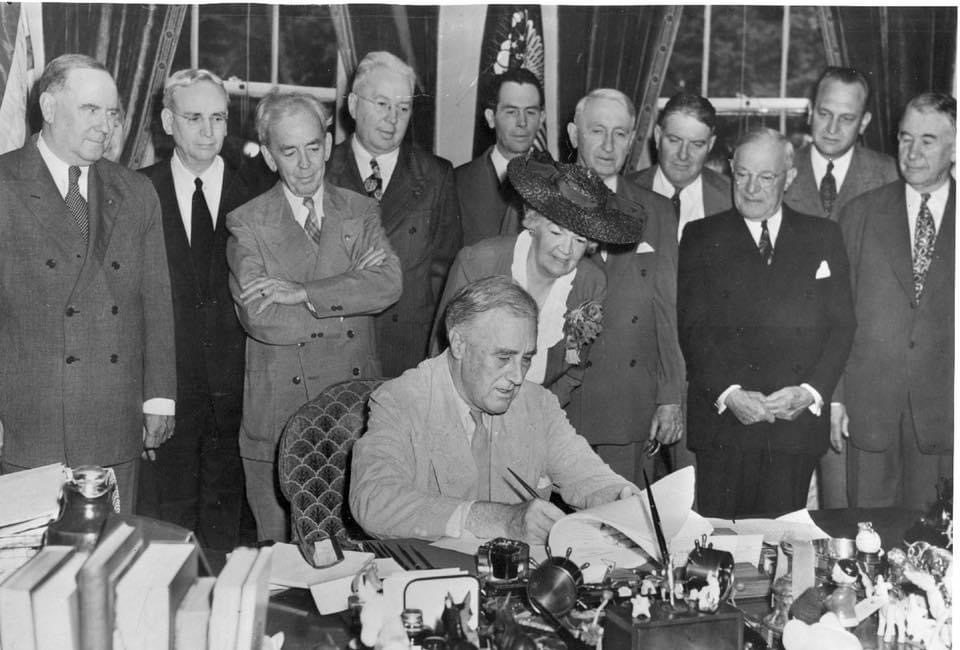
– June 22, 1944 –
With World War II still raging across two oceans, President Roosevelt signed the Servicemen’s Readjustment Act, an unprecedented piece of social legislation widely known as the G.I. Bill. Designed to prevent a repeat of the economic stagnation and veteran bonus marches that followed World War I, the bill provided returning servicemen with tuition assistance, low-interest home loans, and temporary unemployment benefits. It was a massive financial gamble aimed at successfully reintegrating millions of citizens back into a peacetime economy.
The G.I. Bill completely transformed the socio-economic landscape of post-war America, serving as a primary driver of suburban expansion and industrial growth. By funding higher education and vocational training for millions of returning troops, the legislation altered the demographics of American universities and turned higher education into an accessible path for the broader working class. The resulting surge in home ownership and consumer spending established a foundation for decades of sustained economic prosperity, fulfilling the bill’s grand intentions to build a robust peacetime middle class.
Image from FDR Library via Wikimedia Commons, public domain in the US.
