
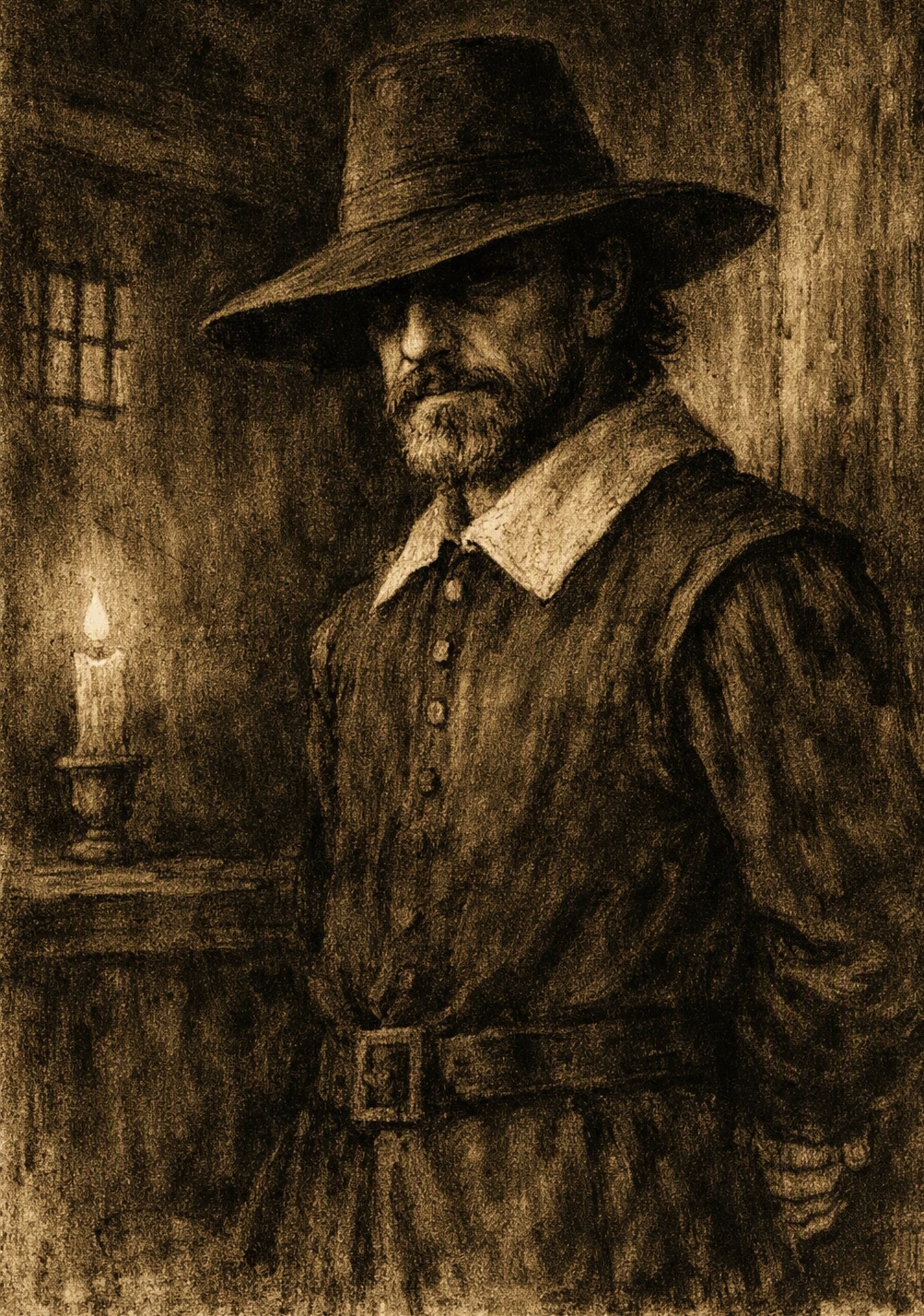
Plymouth Colony’s fragile legal and social order was tested in 1630, when John Billington—a Mayflower passenger and signer of the Mayflower Compact—was executed for the murder of fellow colonist John Newcomen. Governor William Bradford later described the case as “the first execution amongst them.”
Bradford recorded that Billington had waylaid Newcomen after “a former quarrel” and shot him with a gun, causing his death. Billington was arraigned and found guilty of willful murder by both a grand jury and a petty jury, on what Bradford called “plain and notorious evidence.”
Billington had already developed a reputation as a troublesome member of the small settlement, having been involved in earlier disputes with colonial authorities. Yet the killing of Newcomen presented Plymouth’s leaders with their most consequential criminal case to date. Before imposing the death sentence, Governor William Bradford and other Plymouth leaders sought the advice of John Winthrop and leading men of the newly established Massachusetts Bay Colony. Bradford wrote that they agreed Billington “ought to die, and the land be purged from blood.”
Billington was hanged in September 1630. The execution was a grave moment for Plymouth: it showed that even an original colonist who had arrived on the Mayflower could be held accountable for willful murder under the colony’s developing legal authority.
