
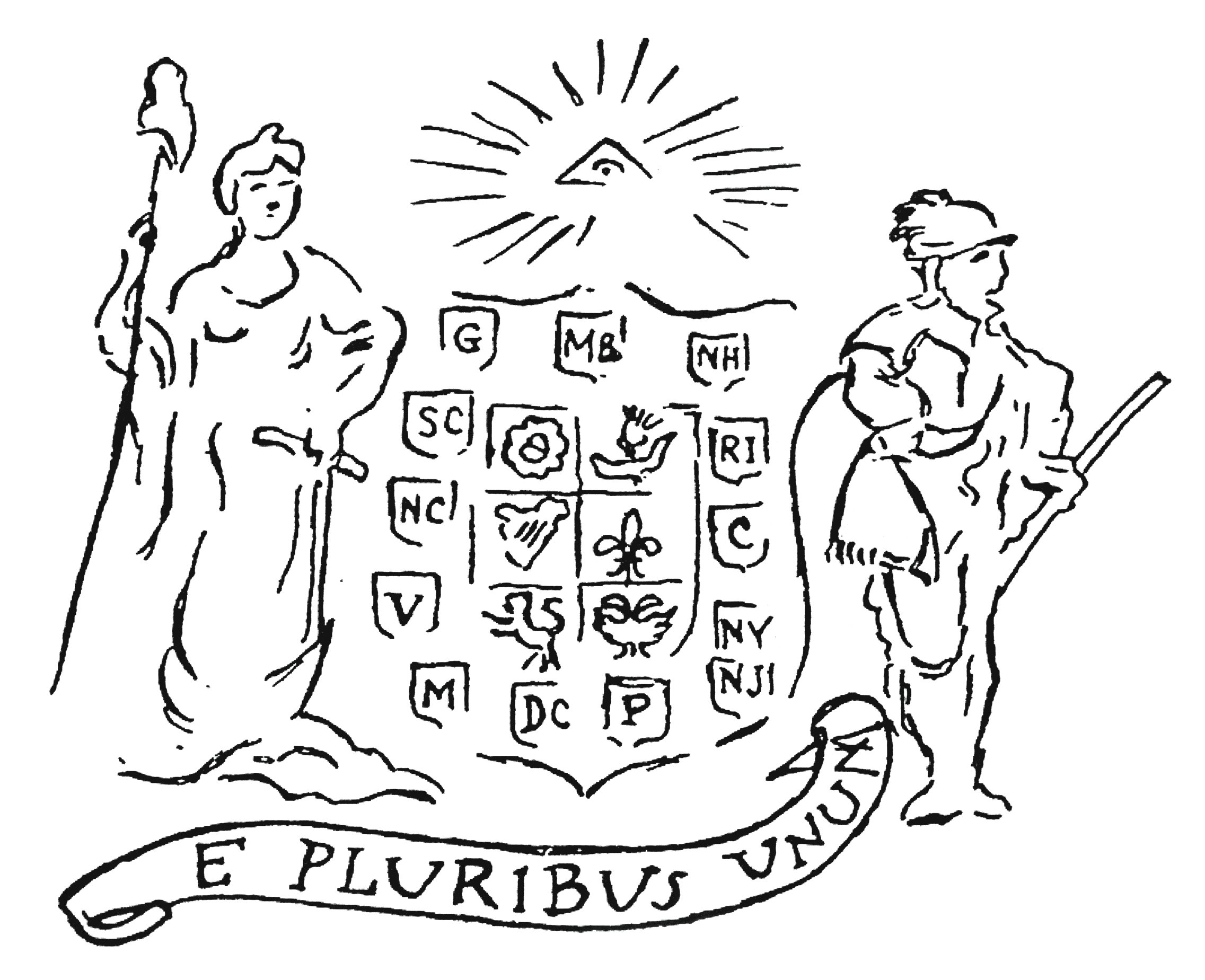
On August 20, 1776, a committee that included Thomas Jefferson, John Adams, and Benjamin Franklin submitted its recommendations to Congress for the first official Seal of the United States. Each man contributed his own design, but the submission also included a striking proposal by Pierre Eugene du Simitière, a Swiss‑born artist and immigrant living in Philadelphia. His design introduced the motto E pluribus unum—“Out of many, one”—the phrase that would become the enduring heartbeat of American identity.
Two days earlier, on August 18th, the committee had wrestled through a contentious design debate that exposed deep philosophical divides among the Founders. Jefferson envisioned a sweeping biblical tableau of the Israelites fleeing Egypt, while Franklin favored Moses parting the Red Sea—grand, symbolic scenes that proved too visually dense for a national emblem. Du Simitière offered a cleaner, more unified classical shield incorporating symbols of the various nations that had settled the colonies. His masterstroke was the motto itself, borrowed from a British gentleman’s periodical, capturing with elegant simplicity the fragile union of thirteen distinct colonies standing together against an empire.
