
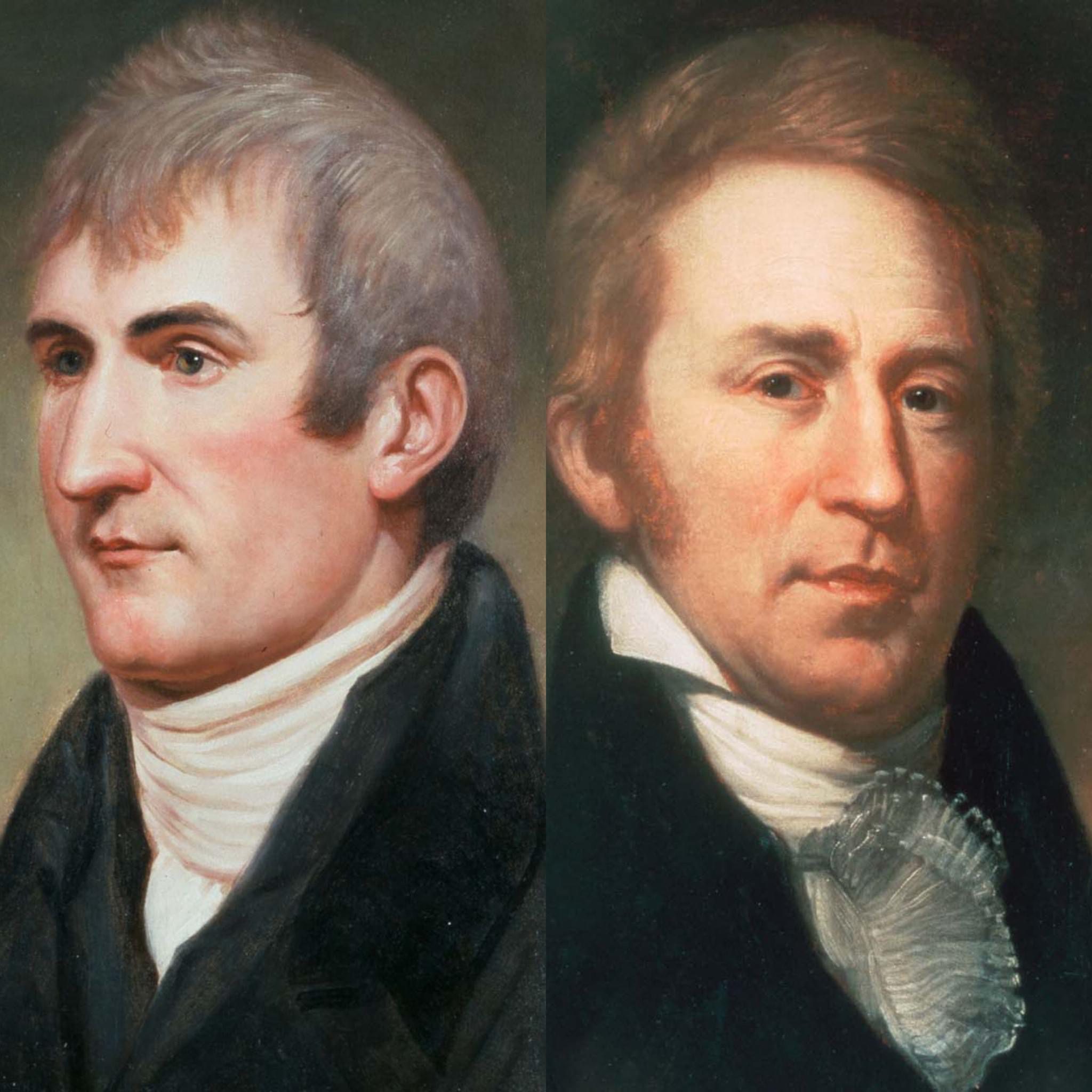
On September 23, 1806 Lewis and Clark arrive at St. Louis after traveling nearly 8,000 miles during their famous expedition. “The next day they came to the village of St. Charles; and on the 22d they stopped at a cantonment of United States soldiery, three miles above the mouth of the Missouri, where they passed the day. The concluding paragraphs of the journals must be quoted literally from Captain Clark : — “September 23rd. Took an early breakfast with Colo Hunt and set out, descended to the Mississippi and down that river to St. Louis at which place we arrived about 12 o’clock. We suffered the party to fire off their pieces as a Salute to the Town. We were met by all the village and received a hardy welcome from its inhabitants & here I found my old acquaintance Maj W. Christy who had settled in this town in a public line as a Tavern Keeper. He furnished us with storeroom for our baggage and we accepted of the invitation of Mr. Peter Choteau and took a room in his house. We payed a friendly visit to Mr. Auguste Choteau and some of our old friends this evening. As the post had de- parted from St. Louis Capt. Lewis wrote a note to Mr. Hay in Kahoka to detain the post at that place until 12 tomorrow which was rather later than his usual time of leaving it.” From: Lewis and Clark by William R. Lighton, published in 1910 https://archive.org/details/lewisclark00ligh/page/145/mode/2up Source says not in copyright Images of Lewis and Clark via Wikimedia Commons, public domain
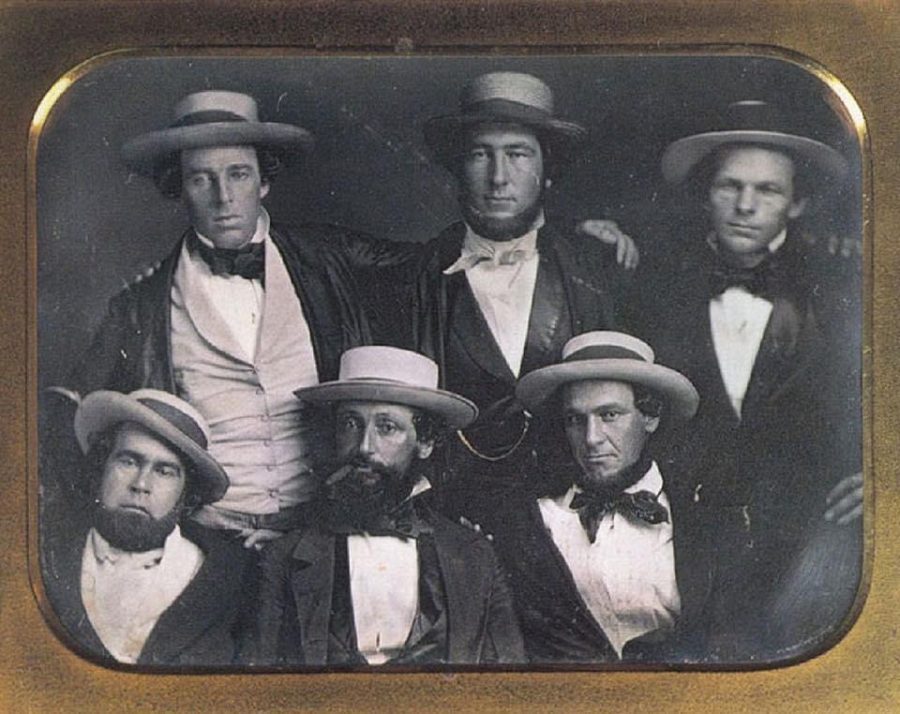
The New York Knickerbocker base ball club was officially organized on September 23, 1845. Image: likely members of The New York Knickerbocker base ball club, c. 1847 via Wikimedia Commons, public domain
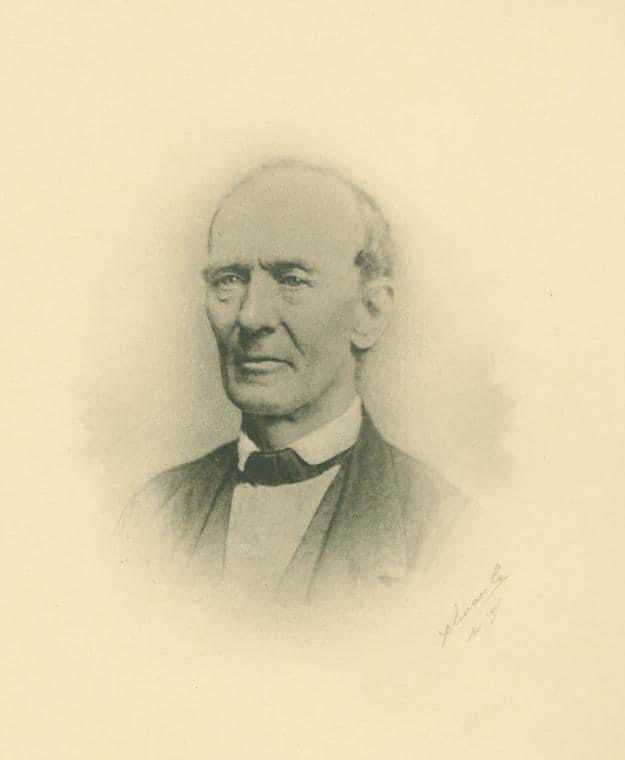
Author of McGuffey Readers, William Holmes McGuffey was born on September 23, 1800 in Claysville, Pennsylvania. Image of William Holmes McGuffey via NYPL Digital Collections, no known restrictions
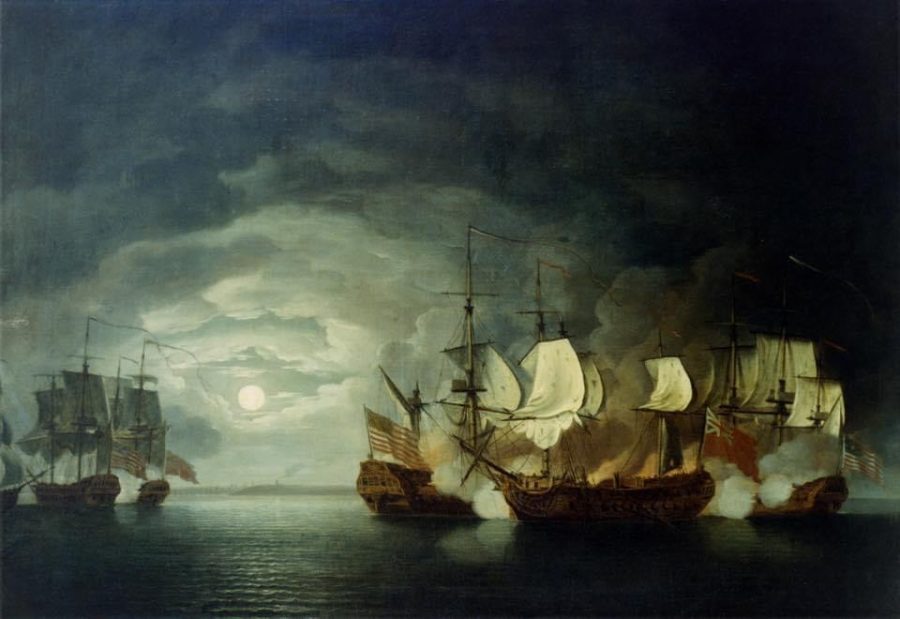
September 23, 1779… “The vessel in which Captain Jones sailed was the biggest of the five ships. It had forty guns and a crew of three hundred sailors. Captain Jones thought so much of the great Dr. Benjamin Franklin, who wrote a book of good advice, under the name of “Poor Richard,” that he named his big ship for Dr. Franklin. He called it the “Bon Homme Richard,” which is French for “good man Richard.” The “Bon Homme Richard ” was not a good boat, if it was a big one. It was old and rotten and cranky, but Captain Jones made the best of it. The little fleet sailed up and down the English coasts, capturing a few prizes, and greatly frightening the people by saying that they had come to burn some of the big English sea towns. Then just as they were about sailing back to France, they came — near an English cape, called Flamborough Head— upon a great English fleet of forty merchant vessels and two war ships. One of the war ships was a great English frigate, called the “Serapis,” finer and stronger every way than the ”Bon Homme Richard.” But Captain Jones would not run away. “What ship is that?” called out the Englishman. ”Come a little nearer, and we’ll tell you,” answered plucky Captain Jones. The British ships did come a little nearer. The forty merchant vessels sailed as fast as they could to the nearest harbor, and then the war ships had a terrible sea fight. At seven o’clock in the evening the British frigate and the “Bon Homme Richard” began to fight. They banged and hammered away for hours, and then, when the British captain thought he must have beaten and broken the Americans, and it was so dark and smoky that they could only see each other by the fire flashes, the British captain, Pearson, called out to the American captain: ”Are you beaten? Have you hauled down your flag?” And back came the answer of Captain John Paul Jones: “I haven’t begun to fight yet!” So they went at it again. The two ships were now lashed together, and they tore each other like savage dogs in a terrible fight. O, it was dreadful! At last, when the poor old “Richard” was shot through and through, and leaking, and on fire, and seemed ready to sink. Captain Jones made one last effort. It was successful. Down came the great mast of the “Serapis,” crashing to the deck. Then her guns were quiet ; her flag came tumbling down, as a sign that she gave in. At once, Captain Jones sent some of his sailors aboard the defeated “Serapis.” The captured vessel was a splendid new frigate, quite a different ship from the poor, old, worm-eaten and worn-out “Richard.” One of the American sailors went up to Captain Pearson the British commander, and asked him if he surrendered. The Englishman replied that he had, and then he and his chief officer went aboard the battered “Richard,” which was sinking even in its hour of victory. But Captain Jones stood on the deck of his sinking vessel, proud and triumphant. He had shown what an American captain and American sailors could do, even when everything was against them. The English captain gave up his sword to the American, which is the way all sailors and soldiers do when they surrender their ships or their armies. The fight had been a brave one, and the English King knew that his captain had made a bold and desperate resistance, even if he had been whipped. So he rewarded Captain Pearson, when he at last returned to England, by giving him the title of “Sir,” and when Captain Jones heard of it he laughed and said: “Well, if I can meet Captain Pearson again in a sea fight, I’ll make a ‘lord’ of him.” For a “lord” is a higher title than “sir.” The poor “Bon Homme Richard” was shot through and through, and soon sank beneath the waves. But even as she went down, the Stars and Stripes floated proudly from the masthead, in token of victory. Captain Jones, after the surrender, put all his men aboard the captured ” Serapis,” and then off he sailed to the nearest friendly port, with his great prize and all his prisoners. This victory made him the greatest sailor in the whole American war.” From: True stories of great American men for young Americans; telling in simple language for boys and girls the inspiring stories of the lives of George Washington, John Paul Jones, Benjamin Franklin … and others by Elbridge Streeter Brooks, published in 1905 https://archive.org/details/truestoriesofgre00bro/page/46 Source says not in copyright Image: Bonhomme Richard closely engages the HMS Serapis off Flamborough Head via Wikimedia Commons, public domain
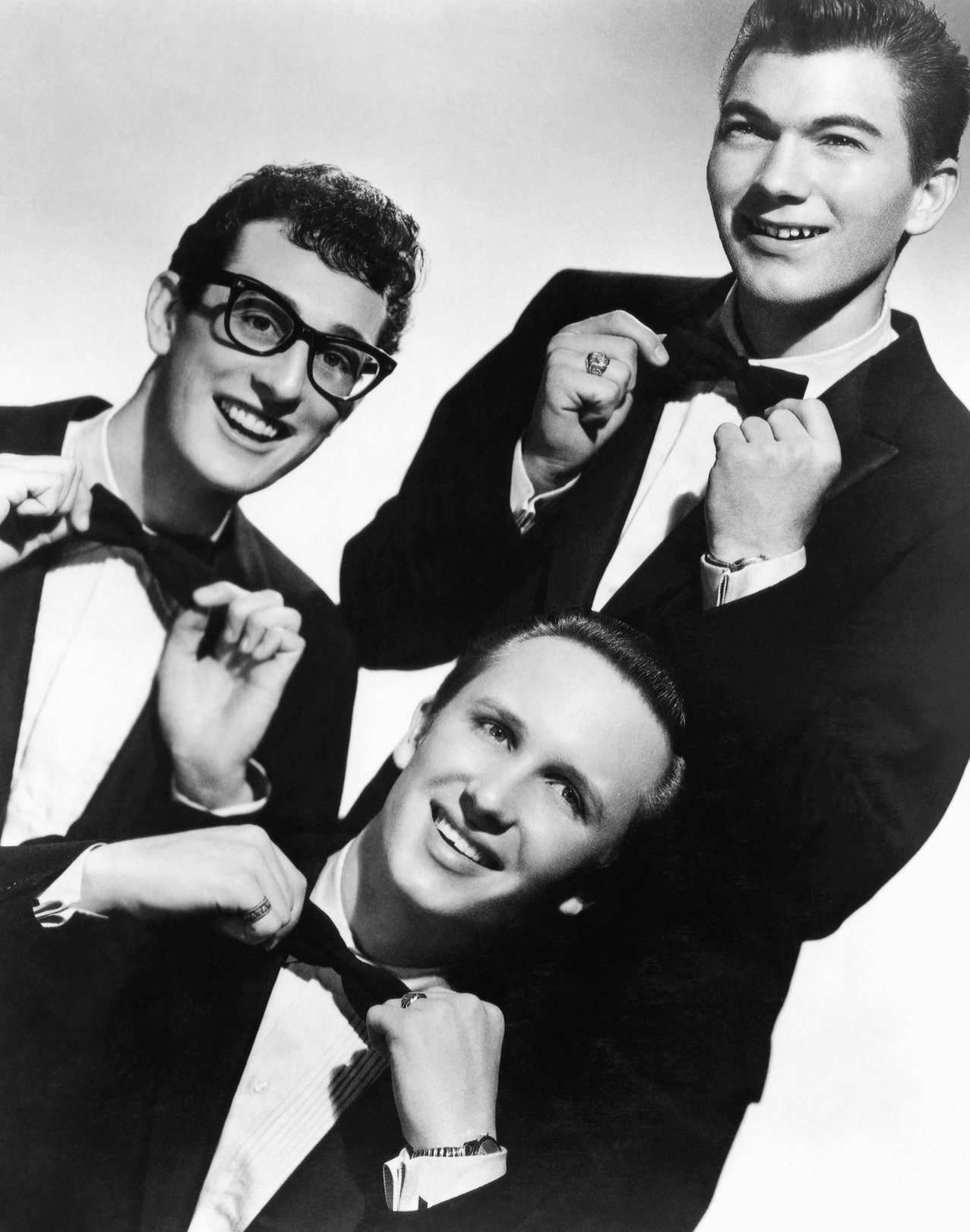
On September 23, 1957, “That’ll Be the Day” by Buddy Holly and the Crickets became the number one song in America. Image: Buddy Holly & The Crickets: Buddy Holly, Jerry Allison, Joe Maudlin (bottom), circa mid 1950’s via Alamy
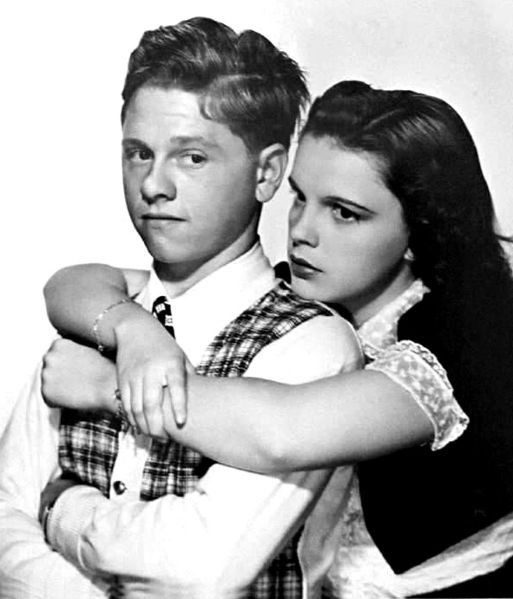
Born September 23, 1920, Mickey Rooney entertained in vaudeville, on television and Broadway, and in over 300 films, some of them silent. He’s shown here with co-star Judy Garland in 1938’s “Love Finds Andy Hardy.” Image via Wikimedia Commons, no known copyright, public domain in the US
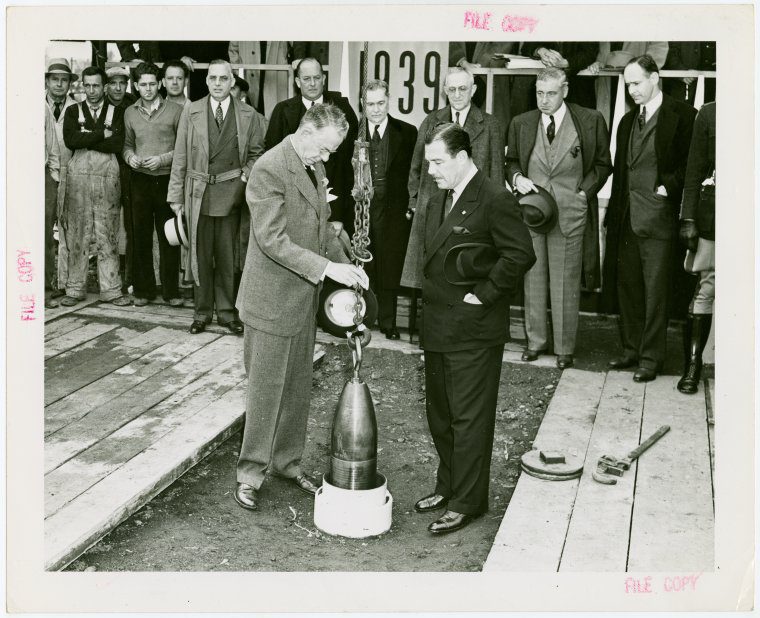
On September 23, 1938 a time capsule was lowered 50 feet into the ground at the location of where the New York World’s Fair would take place the following year. The capsule is not to be opened until the year 6,939! Image: Westinghouse – Time Capsule – Grover Whalen and official lowering time capsule in ground while crowd watches via NYPL, no known restrictions
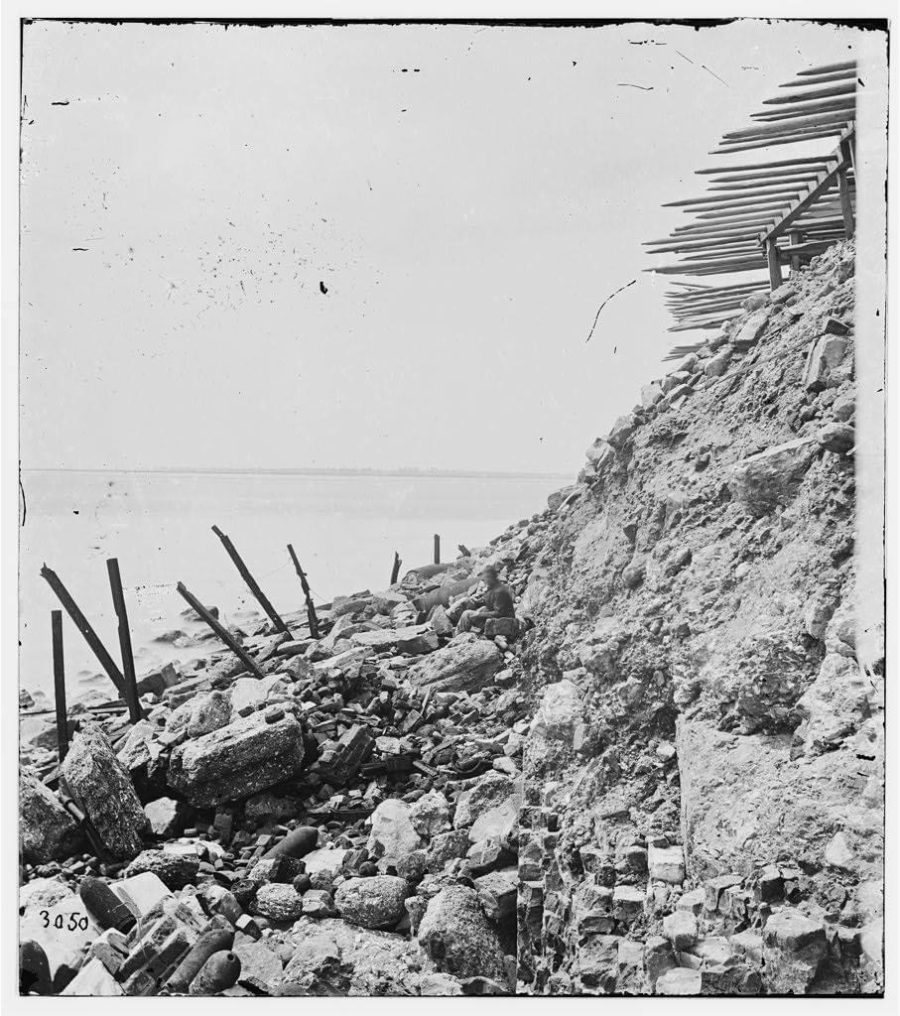
“Charleston, South Carolina. Exterior view of Fort Sumter showing result of bombardment from August 17 to September 23, 1863 and chevaux-de-frise for protection against assault” via Library of Congress, no known restrictions
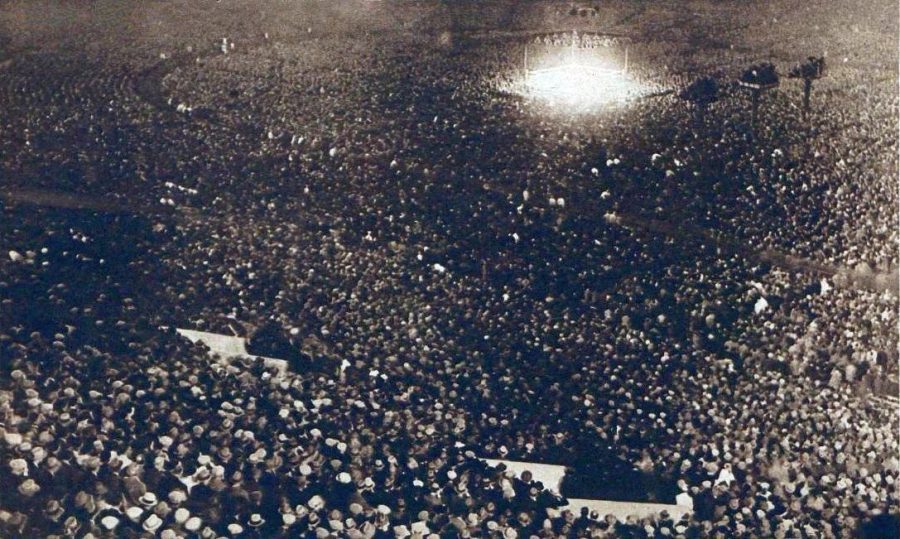
A view of Sesquicentennial Stadium in Philadelphia on September 23, 1926 when more than 120,000 spectators watched Gene Tunney defeat Jack Dempsey for boxing’s Heavyweight title. Exactly 26 years later, at the same place, on September 23, 1952, Rocky Marciano defeated Jersey Joe Walcott to win the Heavyweight title. Forty years later, on September 23, 1992, the same stadium which became known as John F. Kennedy Stadium was demolished. Image via Wikimedia Commons, public domain
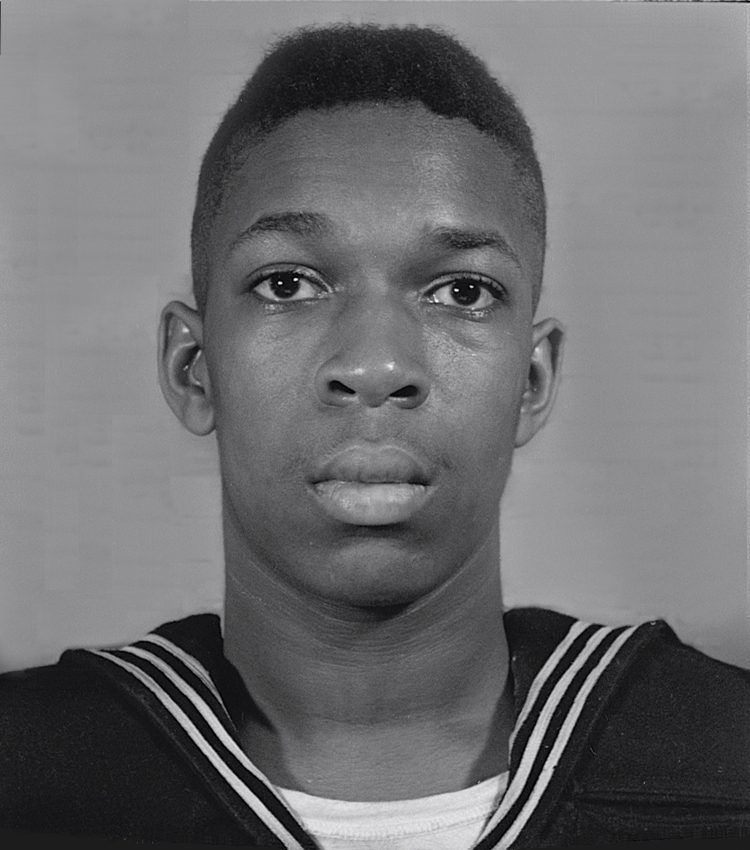
WWII U.S. Navy Veteran and Jazz extraordinaire, John Coltrane, was born on September 23, 1926 in Hamlet, North Carolina. Image via Wikimedia Commons, public domain
