
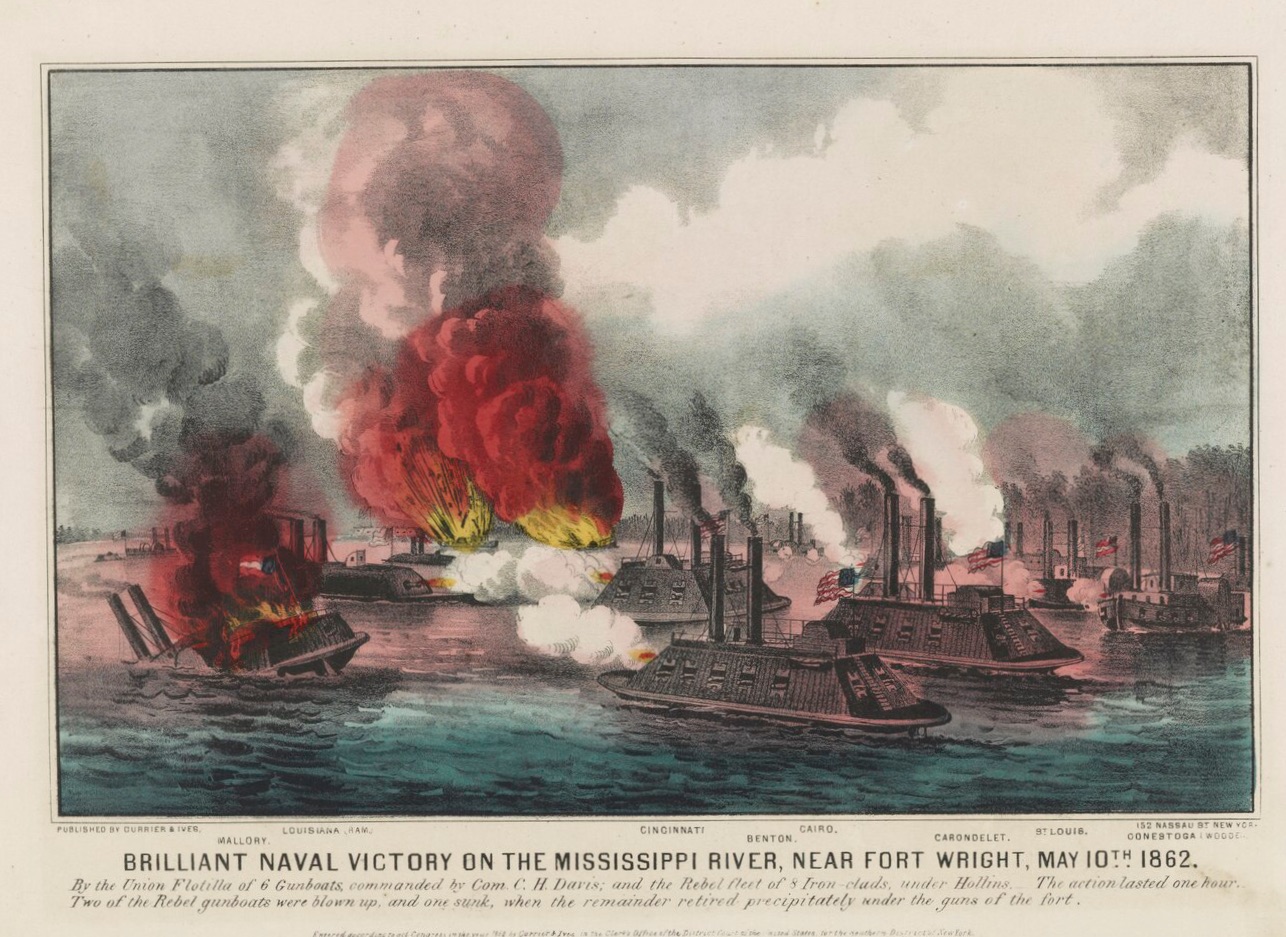
The Battle of Plum Point Bend
On May 10, 1862, the Confederate River Defense Fleet launched a surprise attack on the Union Mississippi River Squadron at Plum Point Bend, Tennessee. Using eight “cottonclad” rams, the Confederates struck with speed and force, ramming and sinking the Union ironclads Cincinnati and Mound City in the shallows. Though both vessels were later raised and repaired, the fight was a rare tactical victory for the Confederate fleet — proof that their unconventional wooden rams could, under the right conditions, challenge the North’s ironclad supremacy.
Image via Wikimedia Commons, public domain in the US
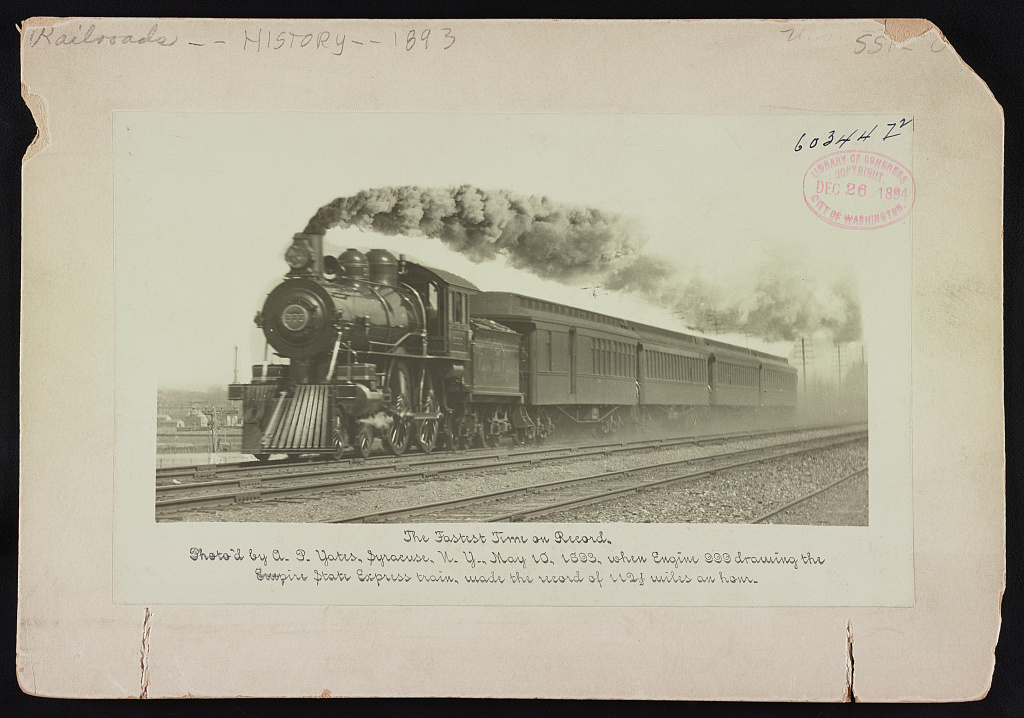
Speed Record of Engine 999
On May 10, 1893, Engine 999—a steam locomotive operated by the New York Central Railroad—set a world land speed record while pulling the Empire State Express between Syracuse and Buffalo, New York. Designed with massive driving wheels more than seven feet tall, the locomotive became the first man‑made vehicle to exceed 100 miles per hour. During this historic run, it reached a recorded speed of 112.5 miles per hour, making Engine 999 the fastest land vehicle in the world at the time—a distinction it held for nearly a decade.
Image from LOC, no known restrictions
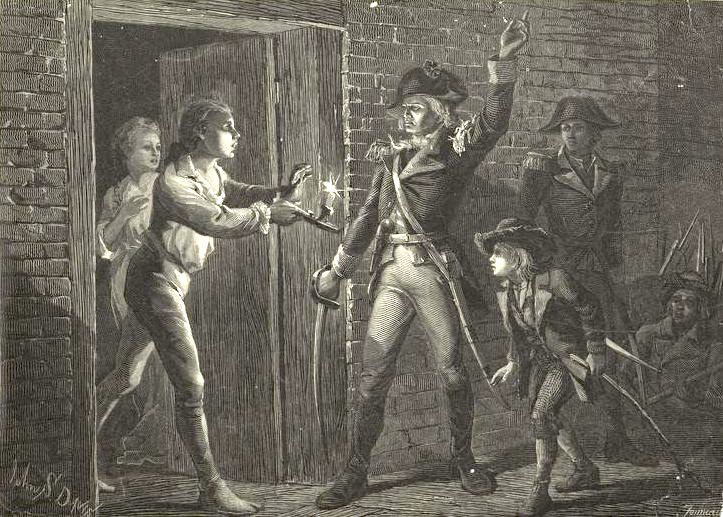
Capture of Fort Ticonderoga
At dawn on May 10, 1775, Ethan Allen and his Green Mountain Boys seized Fort Ticonderoga in a swift surprise attack. When a British officer demanded to know by what authority he acted, Allen later claimed he answered “in the name of the Great Jehovah and the Continental Congress.” The victory delivered the Continental Army its first major prize: the fort’s heavy artillery. In the winter that followed, those guns were hauled hundreds of miles through snow and ice and placed on Dorchester Heights—an act that compelled the British to evacuate Boston and ended the siege.
Image from NYPL Digital Library
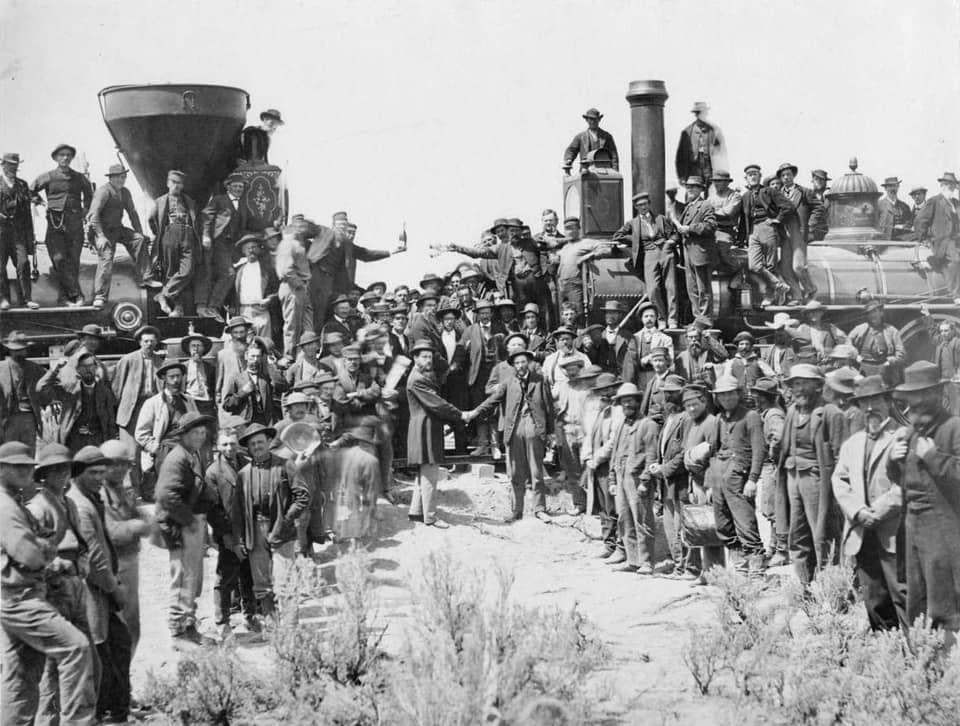
The Golden Spike at Promontory Summit
The Central Pacific and Union Pacific railroads met at Promontory, Utah, on May 10, 1869, with the joining of the locomotives Jupiter and No. 119. This event completed the first transcontinental railroad across the United States. The famous gold spike driven that day was actually so soft that it was removed immediately after the ceremony to prevent theft and replaced with a standard iron spike.
Image via Wikimedia Commons, public domain
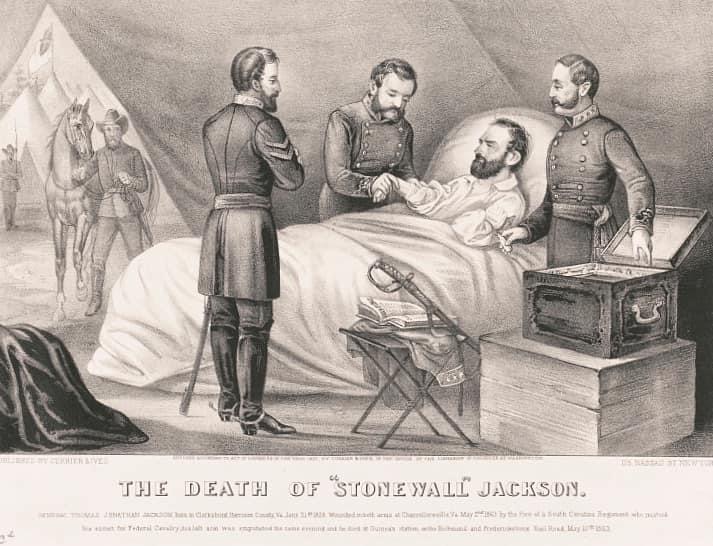
The Passing of Stonewall Jackson
Confederate General Thomas Stonewall Jackson died on May 10, 1863, in Virginia. He had been accidentally shot by his own men a week earlier during the Battle of Chancellorsville. A strange fact of history is that Jackson’s left arm, which had been amputated in an attempt to save his life, was buried in its own separate grave with a small monument at a nearby farm before the rest of him was interred in Lexington.
Image via Library of Congress, no known restrictions
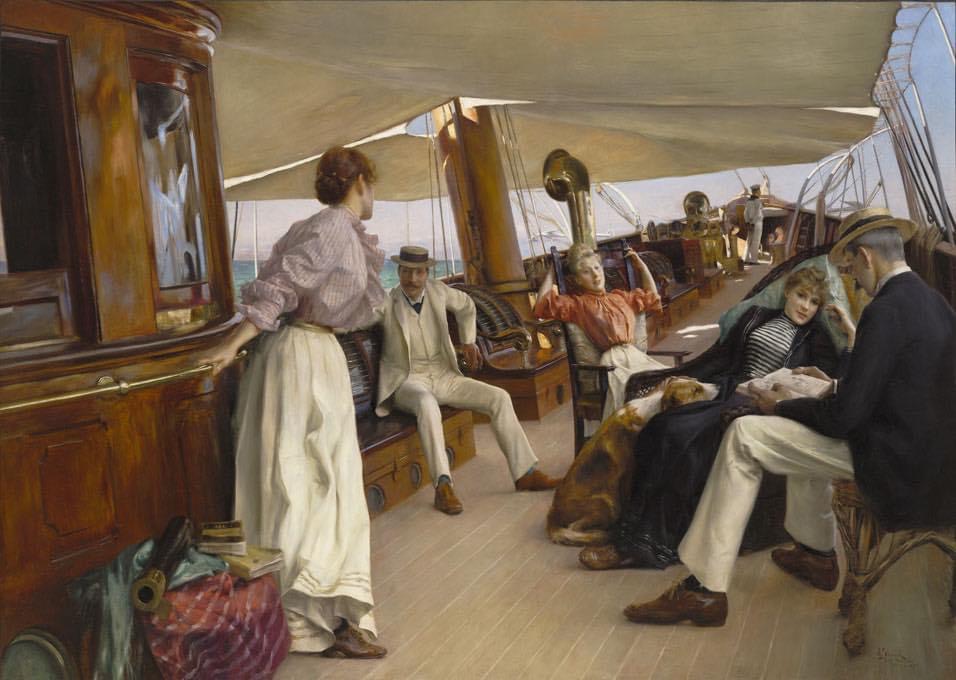
“On the Yacht Namouna, Venice”
Publisher James Gordon Bennett Jr. was born on May 10, 1841. Known for his lavish lifestyle on his yacht Namouna, he was a true eccentric who once funded Henry Morton Stanley’s expedition to find David Livingstone in Africa. Perhaps his most notorious legend is the claim that he broke off his engagement after arriving at his fiancée’s family party so intoxicated that he mistook the fireplace for a bathroom — a story repeated for generations, though never verified in primary sources.
Painting by Julius LeBlanc Stewart via Wikimedia public domain
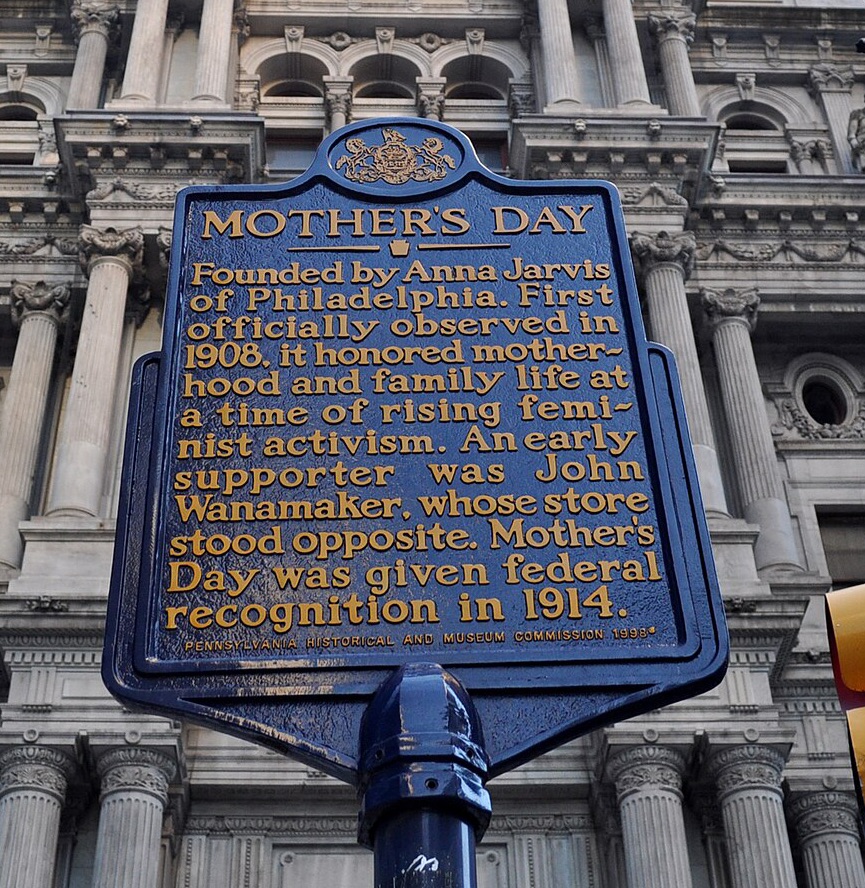
The First Mother’s Day
The very first official observances of Mother’s Day took place on May 10, 1908, in West Virginia and Pennsylvania. Anna Jarvis founded the holiday to honor her own mother’s work. Ironically, Jarvis spent the later years of her life and her entire inheritance fighting against the commercialization of the holiday, eventually becoming so bitter about its success that she was once arrested for protesting a Mother’s Day festival.
Image from NMGiovannucci CC BY 4.0 via Wikimedia Commons
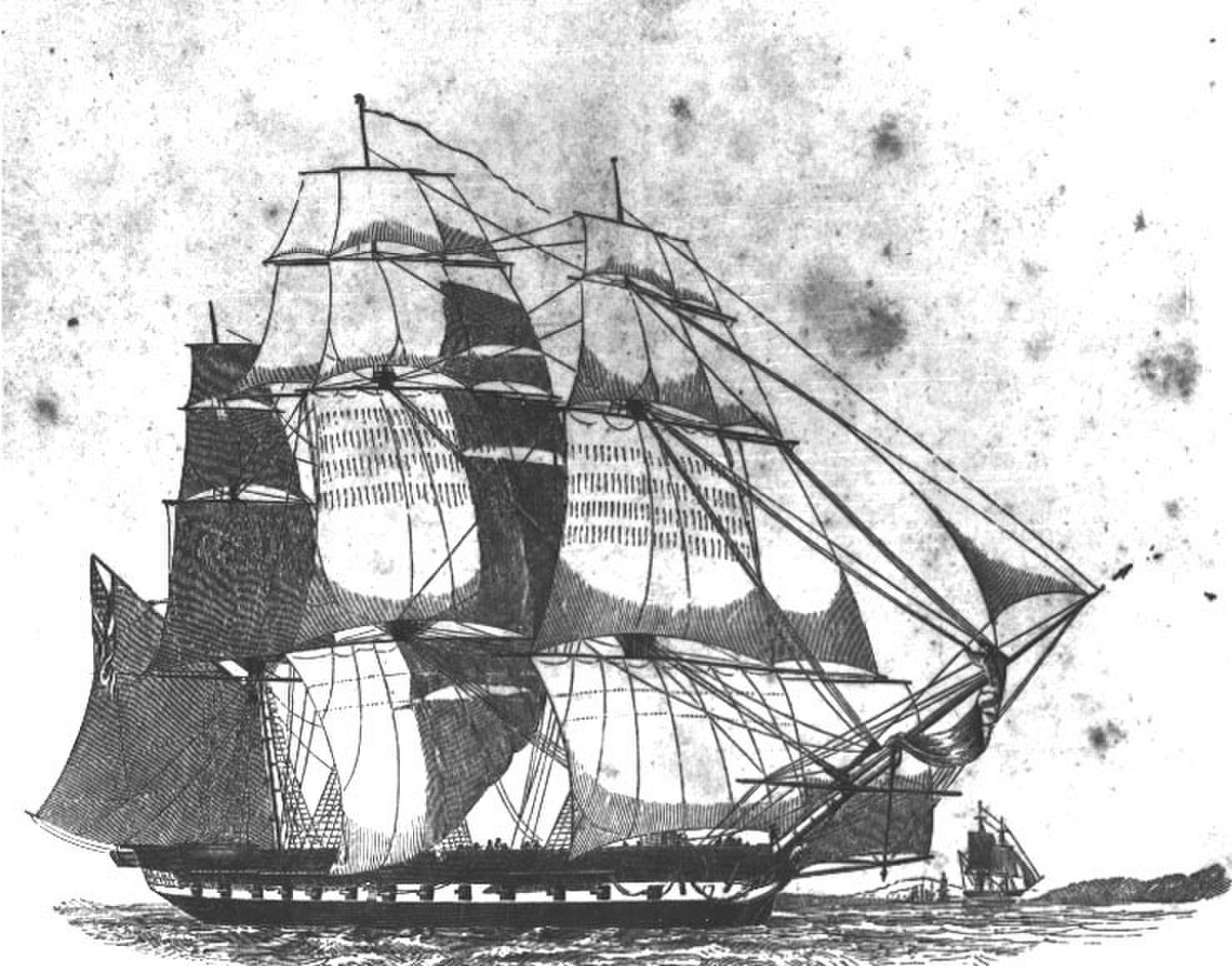
Launch of the USS United States
The USS United States was launched on May 10, 1797, as the first of the original six frigates authorized for the U.S. Navy. Designed to be more powerful than standard frigates of the era, it later earned the nickname Old Wagon. This was not because it was slow, but because it was built so sturdily that it could carry an enormous amount of sail and weaponry through heavy seas.
Image via Wikimedia Commons, public domain
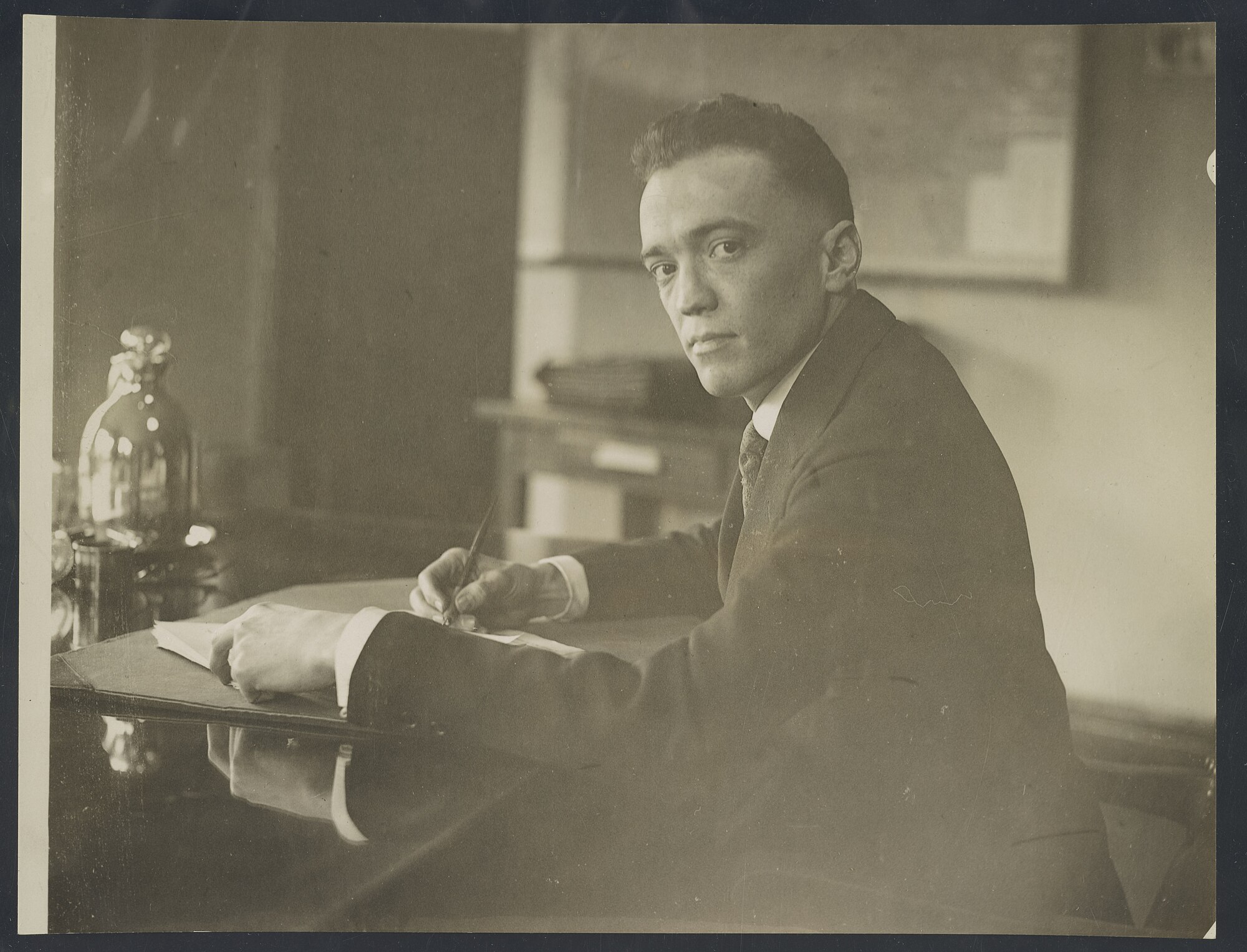
J. Edgar Hoover Takes Command
On May 10, 1924, J. Edgar Hoover became the Director of the Bureau of Investigation, which later became the FBI. He held this powerful position for 48 years until his death in 1972. One of his most enduring legacies was the creation of the Ten Most Wanted list, an idea that actually began after a reporter asked the bureau for names of the toughest guys they were looking for.
Image via LOC, no known restrictions
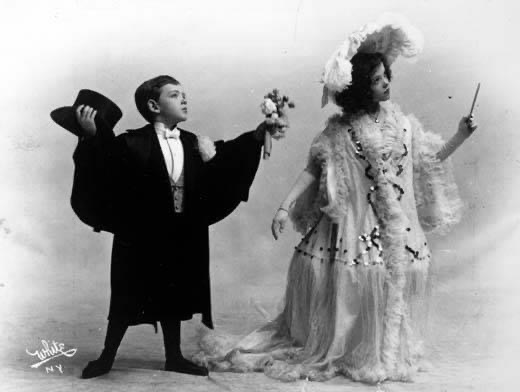
Birth of Fred Astaire
Iconic entertainer Fred Astaire was born on May 10, 1899, in Omaha, Nebraska. He started his career in a vaudeville act with his sister Adele. According to Hollywood legend, his first screen test at RKO resulted in a memo that read: Can’t act. Can’t sing. Balding. Can dance a little. He went on to become one of the most influential dancers in film history.
Photo: Fred (left) and his sister Adele Astaire shown in a publicity photograph for “A Rainy Saturday” in 1906 via Wikimedia Commons, public domain
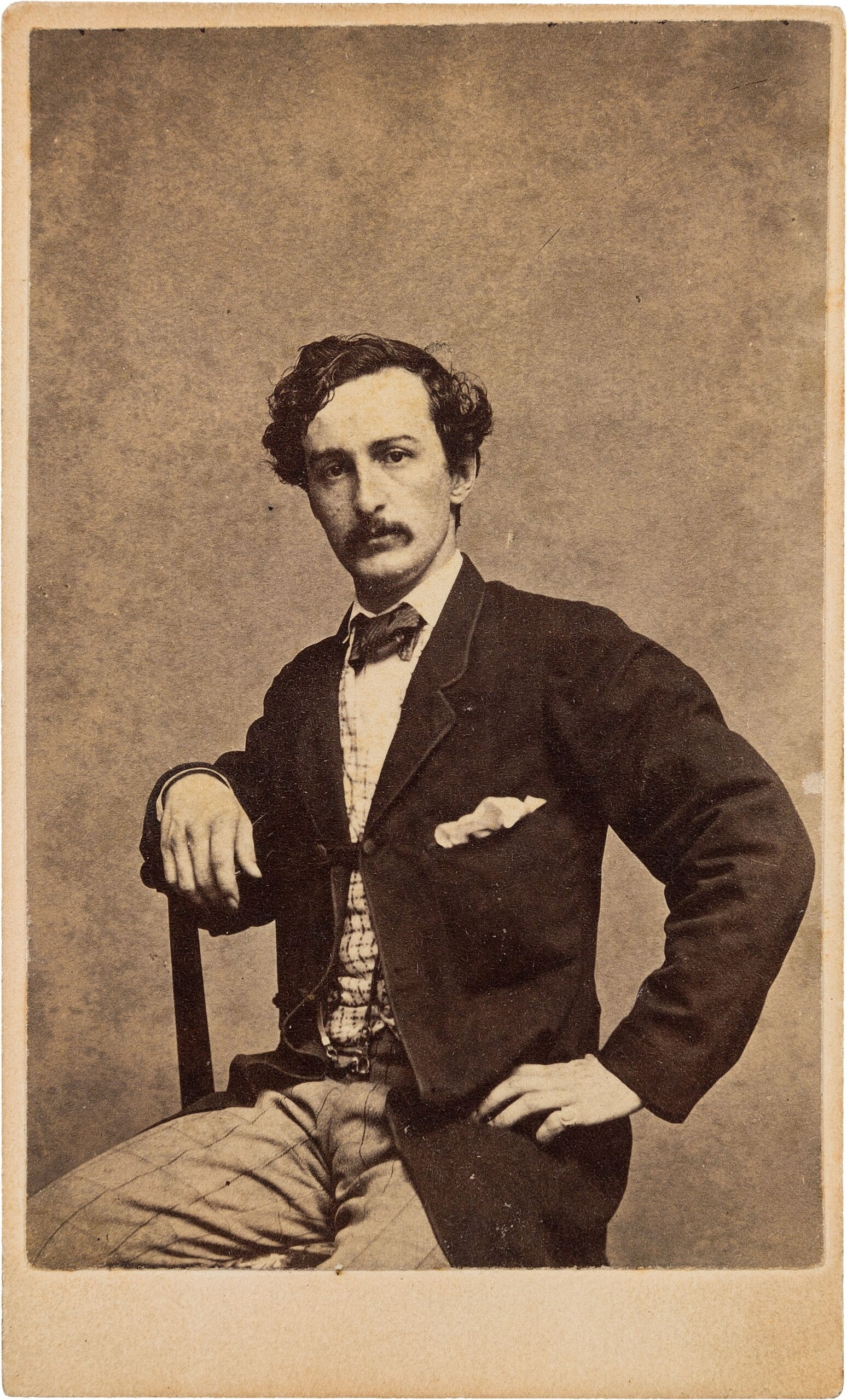
The Marriage of the Booths
On John Wilkes Booth’s 13th birthday, May 10, 1851, his parents finally wed in Baltimore after his father’s previous marriage officially ended. His father, Junius Brutus Booth, was a legendary Shakespearean actor known for being so intense that he sometimes forgot he was acting and would actually attack his fellow performers on stage with real swords.
Image of John Wilkes Booth via Wikimedia Commons, public domain
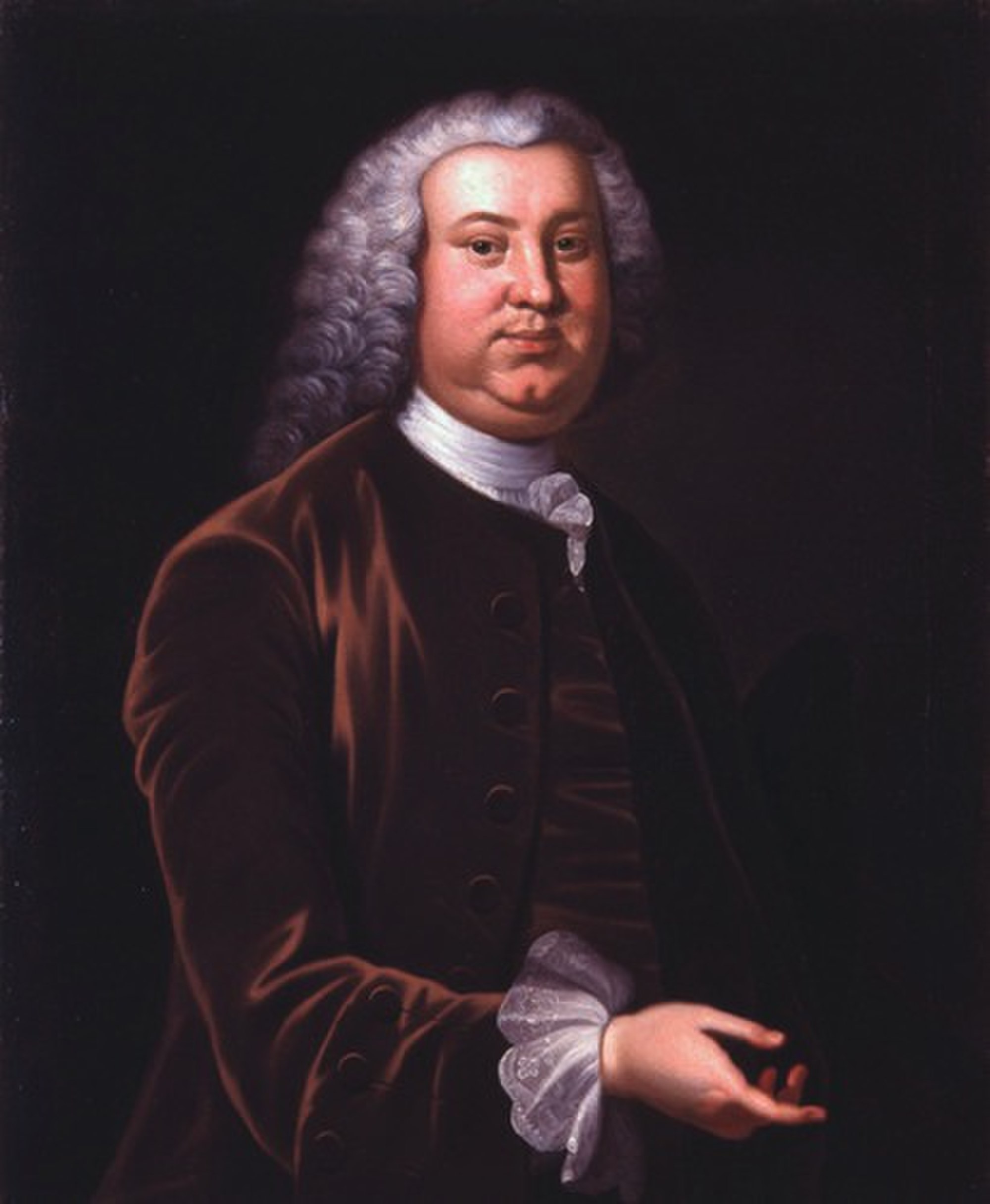
Peyton Randolph’s Presidency
Peyton Randolph began his term as the President of the Continental Congress on May 10, 1775. Though his term lasted only two weeks, he was a massive figure in early American politics. Because he presided over the first gatherings of the colonies, he was often referred to as the Father of His Country before that title was ever associated with George Washington.
Image of Peyton Randolph via Wikimedia Commons, public domain
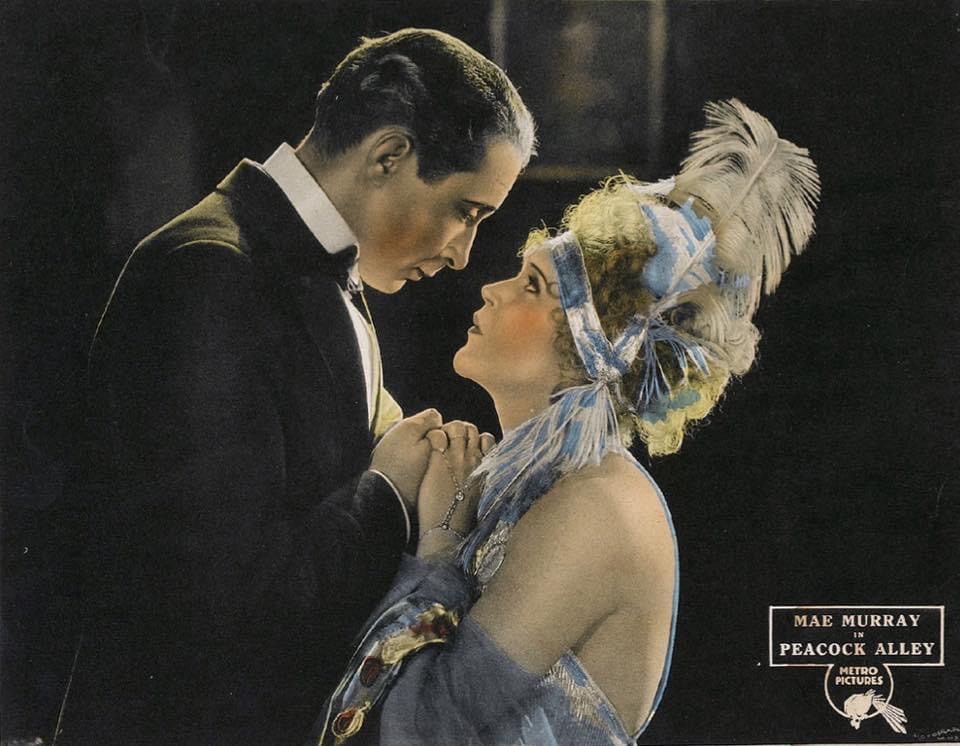
The Career of Mae Murray
Silent film star Mae Murray was born on May 10, 1885. Known as The Girl with the Bee-Stung Lips, she was a major fashion icon of the 1920s. At the height of her fame, she was so wealthy and popular that she walked away from her MGM contract in a fit of rage against studio head Louis B. Mayer, a move that effectively ended her career in Hollywood.
Image: Tiffany Productions / Metro Pictures Corporation via Wikimedia Commons, public domain
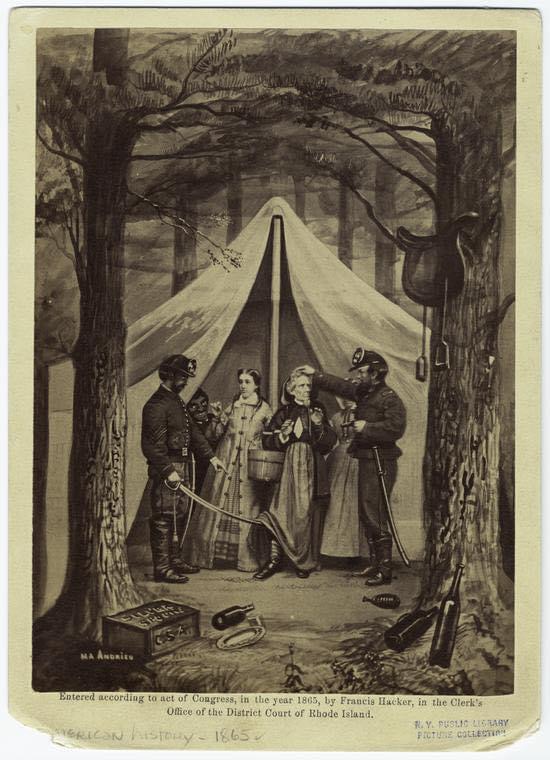
The Capture of Jefferson Davis
Confederate President Jefferson Davis was captured by Union cavalry on May 10, 1865, near Irwinsville, Georgia. Reports at the time claimed he was wearing his wife’s clothes to evade capture. While it is true he was wearing a woman’s overcoat and a shawl his wife had placed on him for warmth, Northern cartoonists jumped on the story to depict him in full dresses and petticoats to humiliate him.
“Two miles n. Jefferson Davis, President of the Confederate States of America, disguised as a woman and captured by Union soldiers, Georgia, 1865.” New York Public Library Digital Collections.
No known restrictions
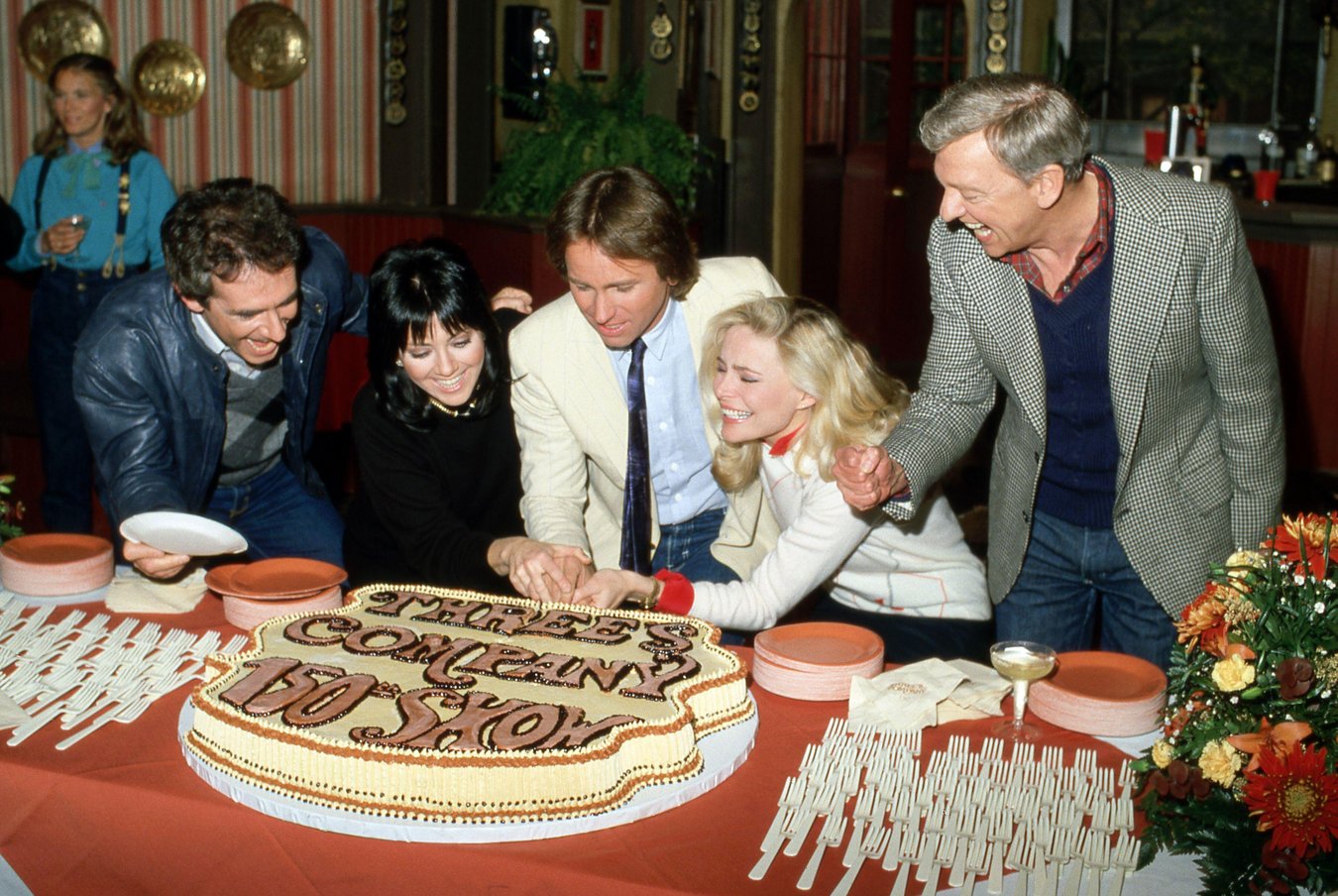
Three’s Company Milestone
The 150th episode of the sitcom Three’s Company aired on May 10, 1983. Titled Borrowing Trouble, it featured the classic misunderstandings the show was famous for. A fascinating piece of behind-the-scenes trivia is that John Ritter was so skilled at physical comedy that he often did his own stunts, including the famous pratfalls that became the show’s signature.
Richard Kline, Joyce DeWitt, John Ritter, Don Knotts and Priscilla Barnes at the Three’s Company 150th Episode Party in May 1983. Image via Alamy
Voice of Gary Owens
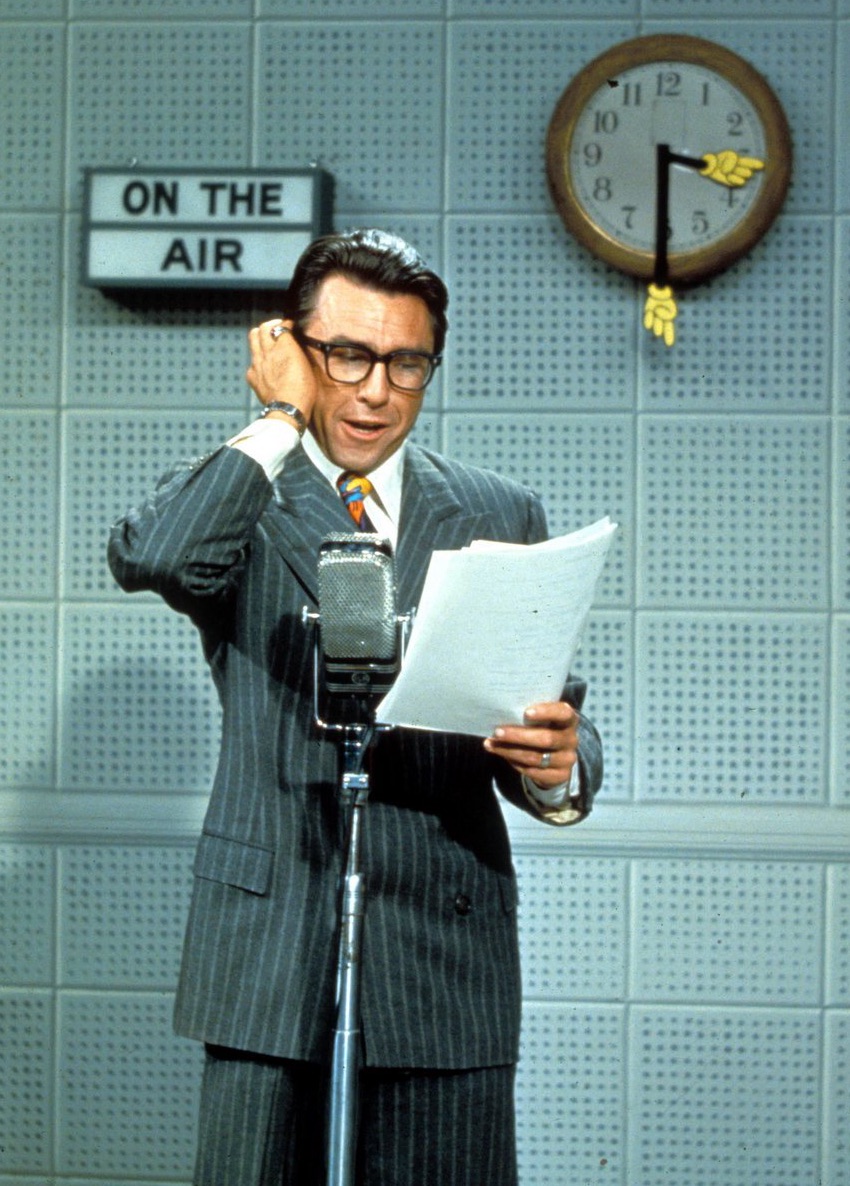
Gary Owens, the baritone-voiced announcer for Laugh-In, was born on May 10, 1934. He was famous for his signature pose with a hand over his ear. This was not just a gag; Owens was actually a prolific voice actor who provided the original voice for the superhero Space Ghost and narrated hundreds of cartoons, making him one of the most heard voices in television history.
Image via Alamy
Founding of the Society of American Magicians
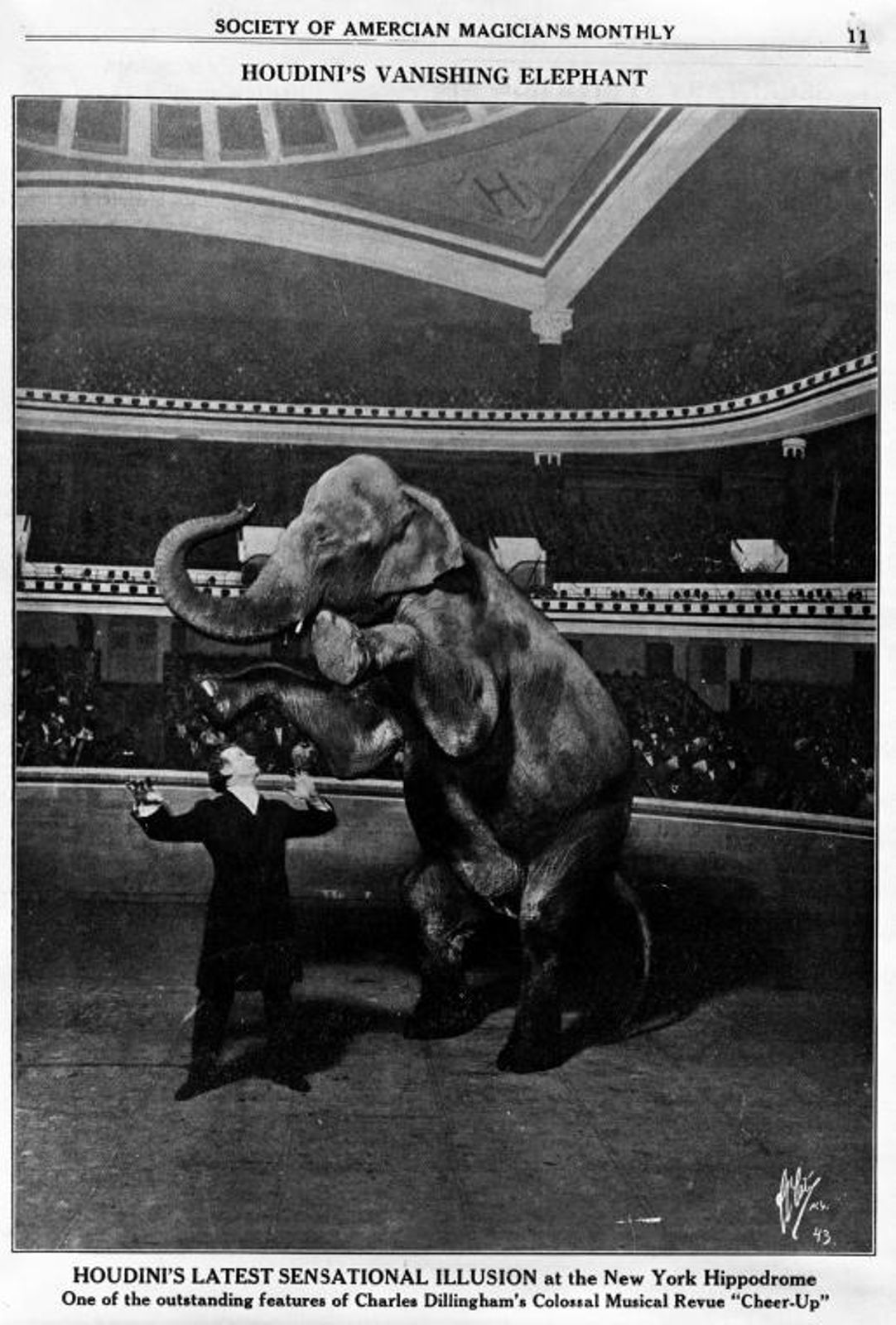
The Society of American Magicians was established on May 10, 1902. Harry Houdini eventually served as its president for many years. One of the society’s most enduring traditions is the Broken Wand ceremony, performed at the funeral of a member, where a wooden wand is physically snapped to symbolize that the magician’s power has passed.
Image of “Houdini’s Vanishing Elephant” that appeared in the Society of American Magicians Monthly in 1918 via NYPL Digital Collections, no known restrictions

The Birth of Ellen Ochoa
Ellen Ochoa, the first Hispanic woman to go into space, was born on May 10, 1958, in Los Angeles. She flew on four space shuttle missions, starting with the Discovery in 1993, and later became the first Hispanic director of the Johnson Space Center. An accomplished musician, Ochoa famously took her flute into orbit and played it while looking down at the Earth from the shuttle’s windows.
The Founding of Baylor University’s Namesake
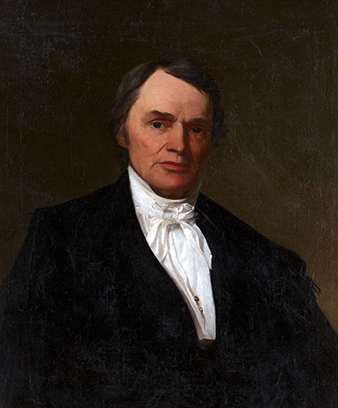
Robert Emmett Bledsoe Baylor, the American politician and jurist who co-founded and gave his name to Baylor University, was born on May 10, 1793. Though he was a prominent judge and lawmaker, he was also an ordained minister who traveled on horseback to preach. He famously helped charter the university in the Republic of Texas before it even became a U.S. state, making it the oldest continuously operating university in Texas today.
The Camp Jackson Affair
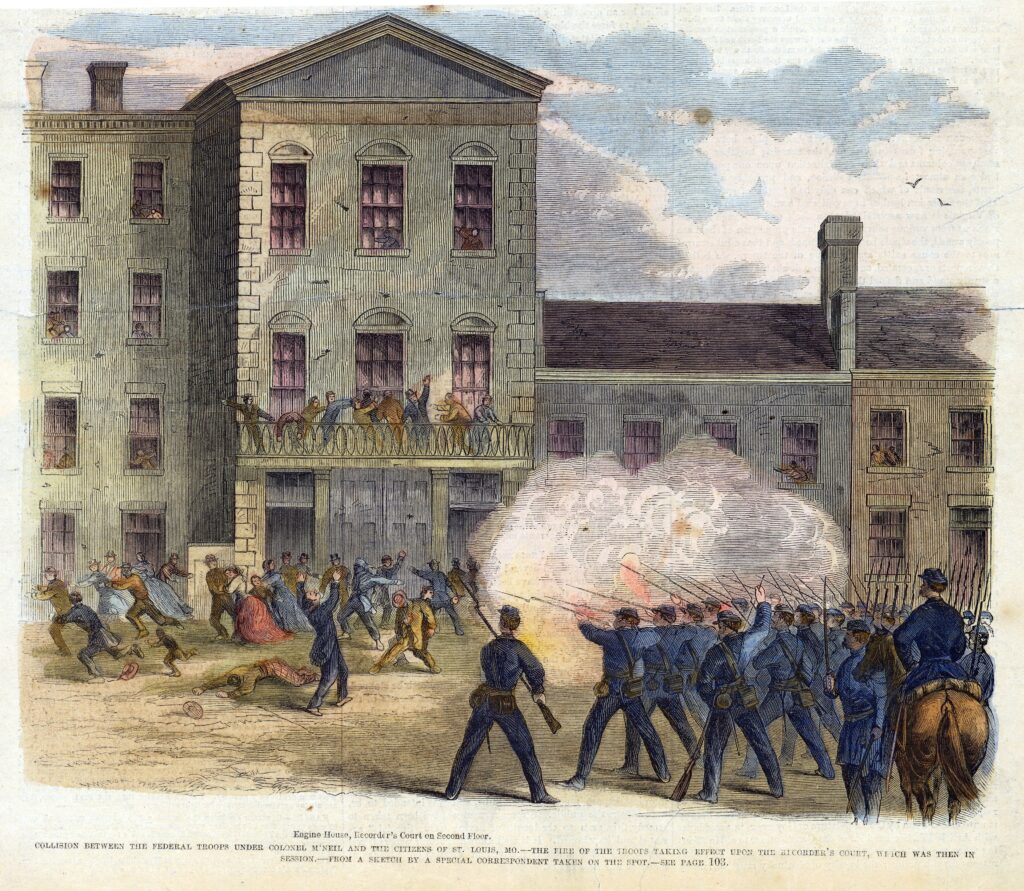
On May 10, 1861, a volatile standoff in St. Louis erupted into a deadly confrontation that helped decide the fate of Missouri in the Civil War. Union Captain Nathaniel Lyon, fearing a local militia intended to seize the federal arsenal, surrounded their camp and forced a peaceful surrender. A fascinating piece of lore from that day is that Lyon supposedly scouted the camp ahead of time by disguising himself as an elderly woman in a dress and heavy veil to hide his red beard. The peace didn’t last long, however; as the prisoners were marched through the city, a riot broke out among the civilian crowds, leading to gunfire that killed nearly thirty people and pushed the state into a bitter internal conflict.
