
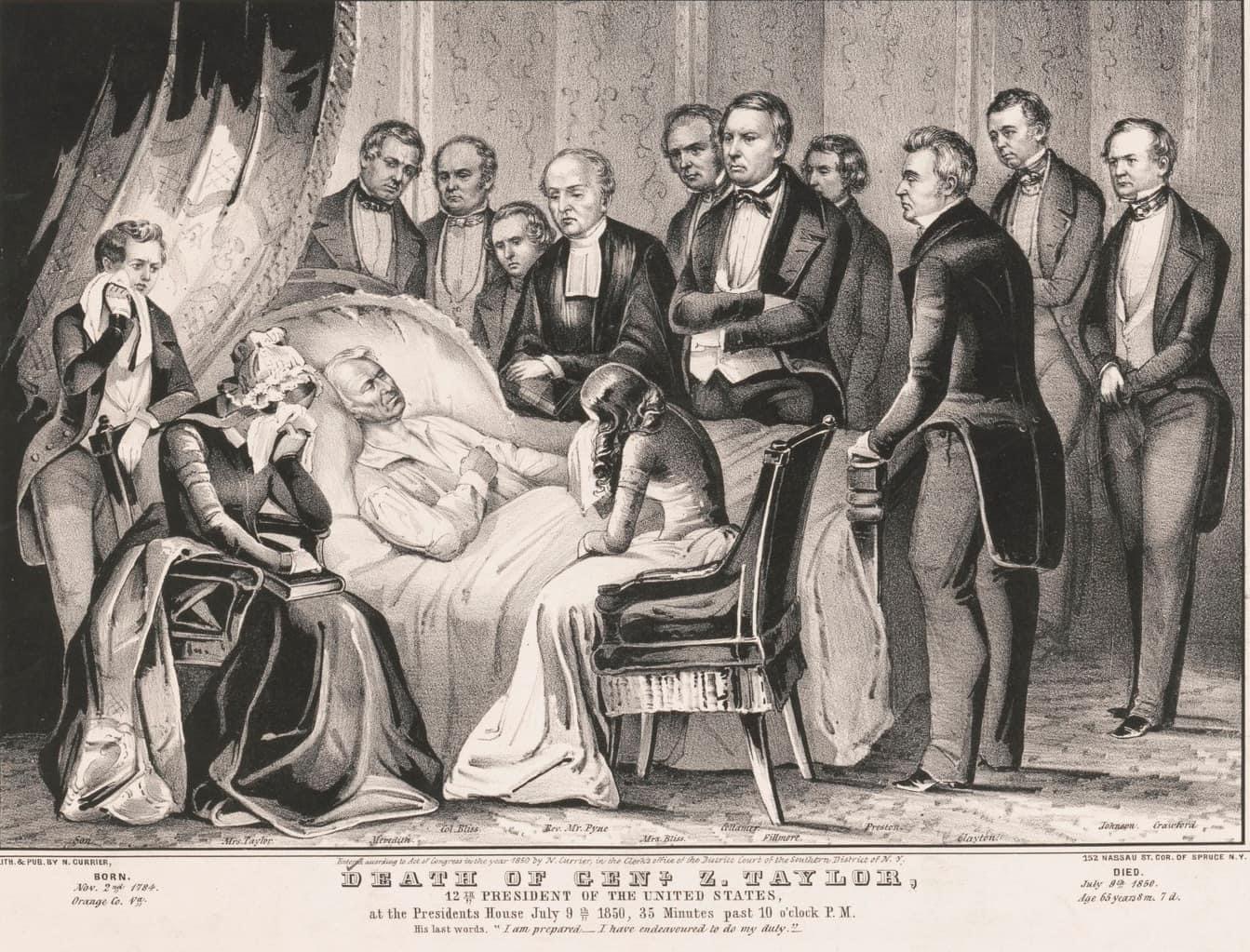
On July 9, 1850, 12th President of The United States and Mexican-American war hero Zachary Taylor passed away while in office.
During Independence Day festivities earlier that week he consumed large amounts of fruit (cherries) and frozen milk.
He suddenly became very ill and the cause of his death is believed to be a stomach disease.
Print via Wikimedia Commons, public domain
Washington the Soldier
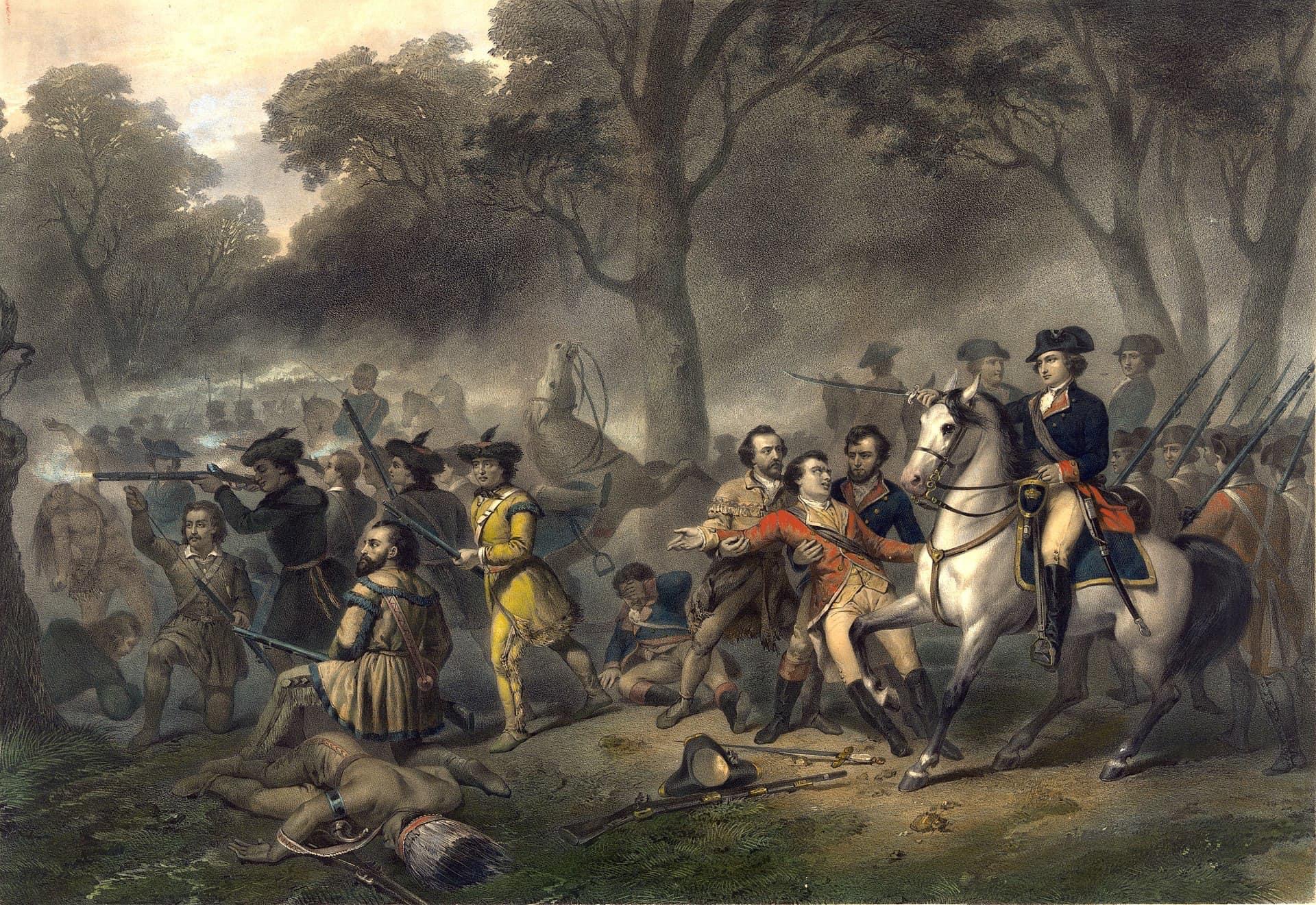
A painting depicts a young Colonel George Washington on horseback during the Battle of the Monongahela, near present-day Braddock, Pennsylvania, on July 9, 1755.
On this day, a smaller, more nimble coalition of French and Native American warriors encountered British forces led by Major-General Edward Braddock in a sudden, chaotic clash—later known as the Battle of the Monongahela. Though often called an ambush, the engagement was more accurately a meeting encounter, with the outnumbered defenders exploiting terrain and tactics to devastating effect.
After Braddock was mortally wounded and command broke down, Washington rose to the moment. In an early demonstration of the leadership that would shape his legacy, he rallied the surviving troops and organized a rear-guard retreat, even as two horses were shot from beneath him and bullets pierced his coat.
Before his death days later, Braddock reportedly gave Washington his ceremonial sash—and it’s believed that Washington carried the sash with him into the Revolution.
Image via Wikimedia Commons, public domain
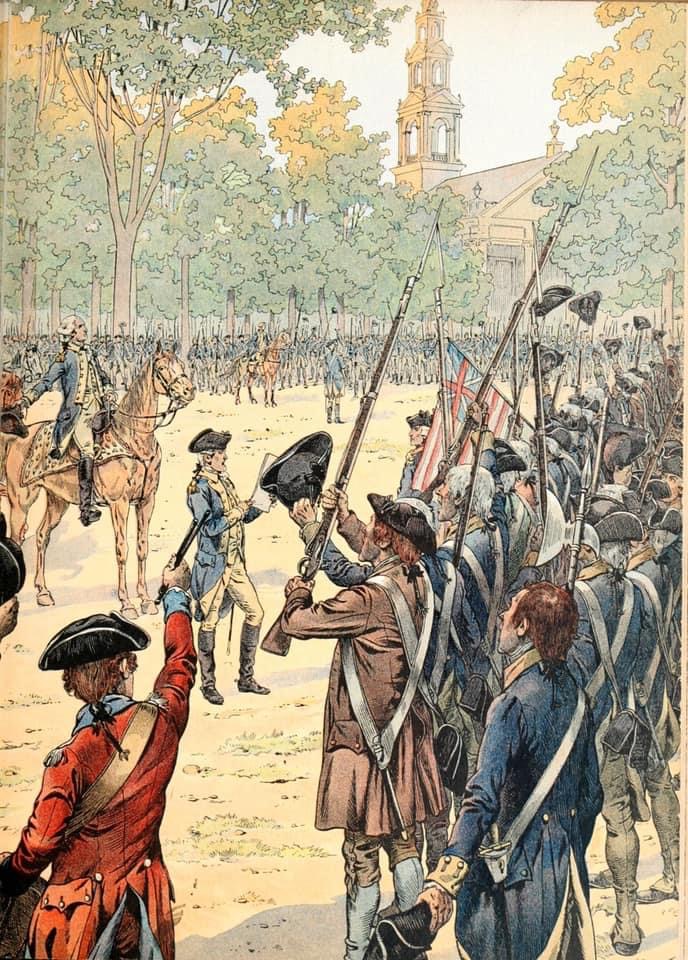
On July 9, 1776, George Washington authorized that The Declaration of Independence be read out loud to the Continental Army.
Image via Wikimedia Commons, public domain
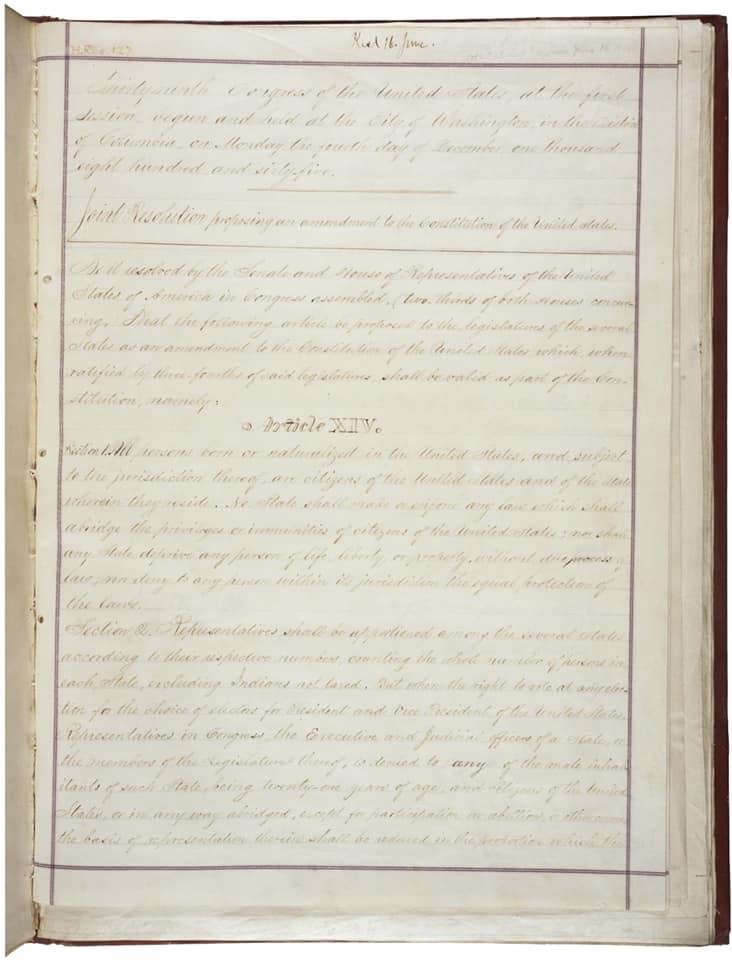
On July 9, 1868 the 14th Amendment was ratified:
Section 1 says:
“All persons born or naturalized in the United States, and subject to the jurisdiction thereof, are citizens of the United States and of the State wherein they reside. No State shall make or enforce any law which shall abridge the privileges or immunities of citizens of the United States; nor shall any State deprive any person of life, liberty, or property, without due process of law; nor deny to any person within its jurisdiction the equal protection of the laws.”
Image: 14th Amendment of the United States Constitution via Wikimedia Commons, public domain
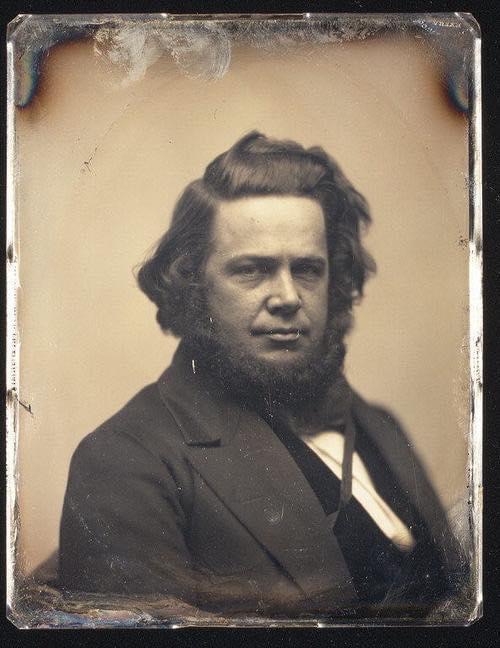
Elias Howe Jr. was born on July 9, 1819 in Spencer, Massachusetts.
Howe made significant improvements to the sewing machine and is considered to be the inventor of the basic concepts that are used in today’s models.
“During the winter of 1844-45, Howe labored steadily at his machine. So clear and vivid was his imagination that he seemed to be copying a model as it stood before him, instead of giving form to conceptions which were as yet conceptions only. This picturing faculty had the happy effect that Howe was not delayed by a single misfit as part
joined part week after week. By April, 1845, the stitch- forming mechanism was advanced to the point where it sewed with evenness and smoothness. Within less than a month Howe finished his model, and his invention, in every
essential feature, was complete. In July it sewed a suit of clothes for Fisher, and another suit for himself. These garments were of strong material, yet their stitches out-lasted the cloth. Every contrivance in Howe’s original model has since his day been bettered or transmuted, for what is one inventor as compared with all other inventors?
And many new devices which never entered the head of Elias Howe have been added to his model during the past sixty years. But at this hour no successful sewing machine plies in freedom from debt to Howe’s design of 1845.”
From: Leading American inventors by George Iles, published in 1912
https://archive.org/details/leadingamericani00ilesrich/page/348
Source says not in copyright
Image of Elias Howe Jr. by Southwarth and Hawes via Wikimedia Commons, public domain, c. 1850
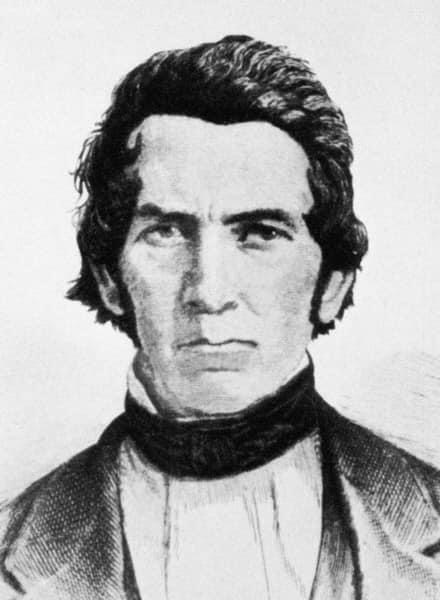
On July 9, 1802 Thomas Davenport was born in Williamstown, Vermont.
Thirty-two years later Thomas invented the first direct current electric motor in America.
Image via Wikimedia Commons, public domain
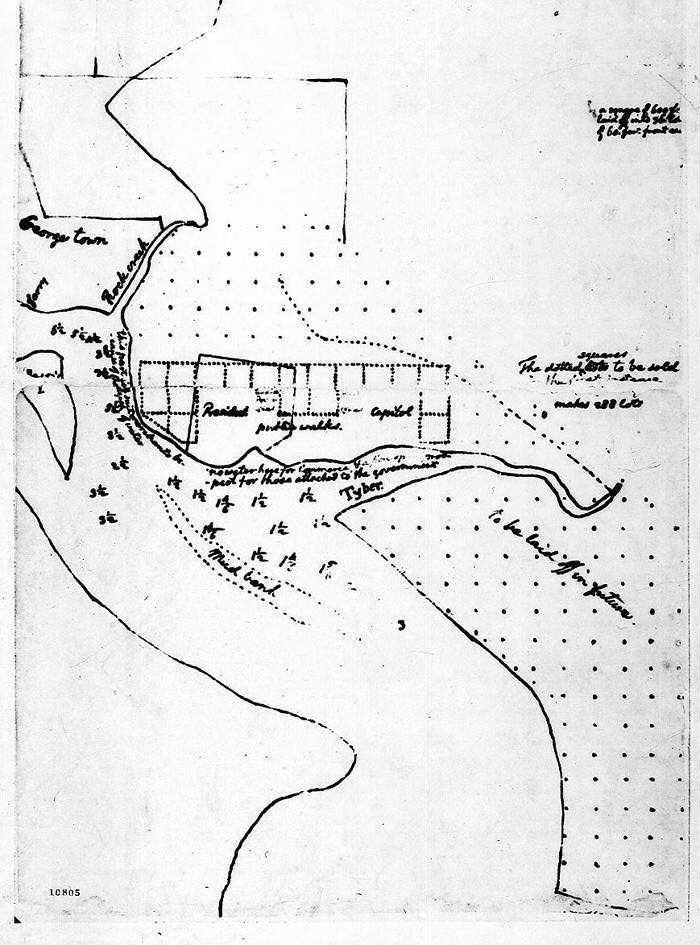
On July 9, 1790, an act establishing the temporary and permanent seat of the Government of the United States was approved by the House of Representatives.
The federal government was based in New York City at the time and the act established Washington D.C. as the permanent capital and Philadelphia as the temporary capital as D.C. was being constructed.
The act was signed into law by George Washington a week later.
Image: A sketch from 1791 of Washington, D.C. by Thomas Jefferson via Wikimedia Commons, public domain
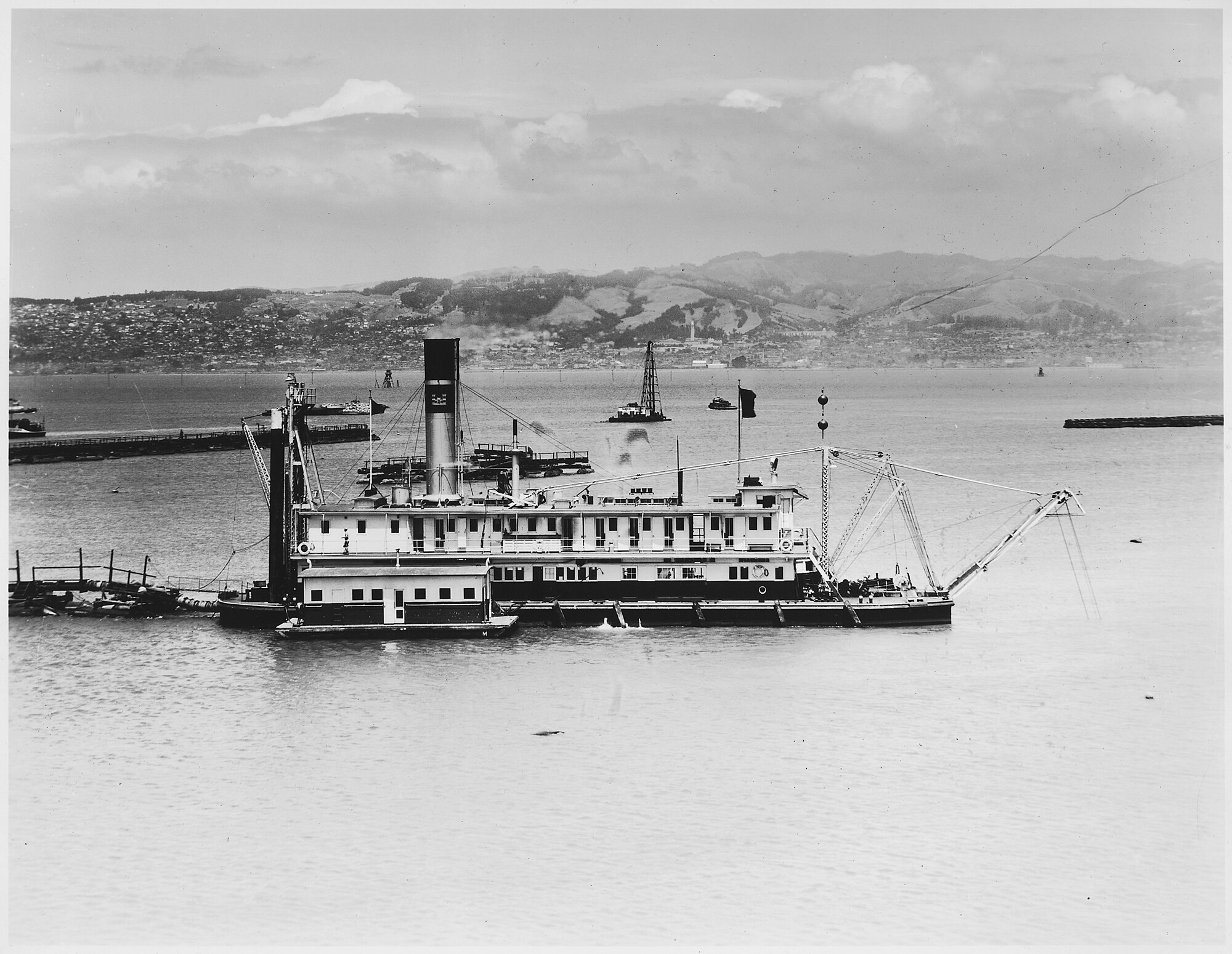
Yerba Buena Shoals Dredger San Joaquin, view of San Francisco Bay
July 9, 1936 Time 1 PM
Moving seabed sand from one location to another
via Wikimedia Commons, public domain
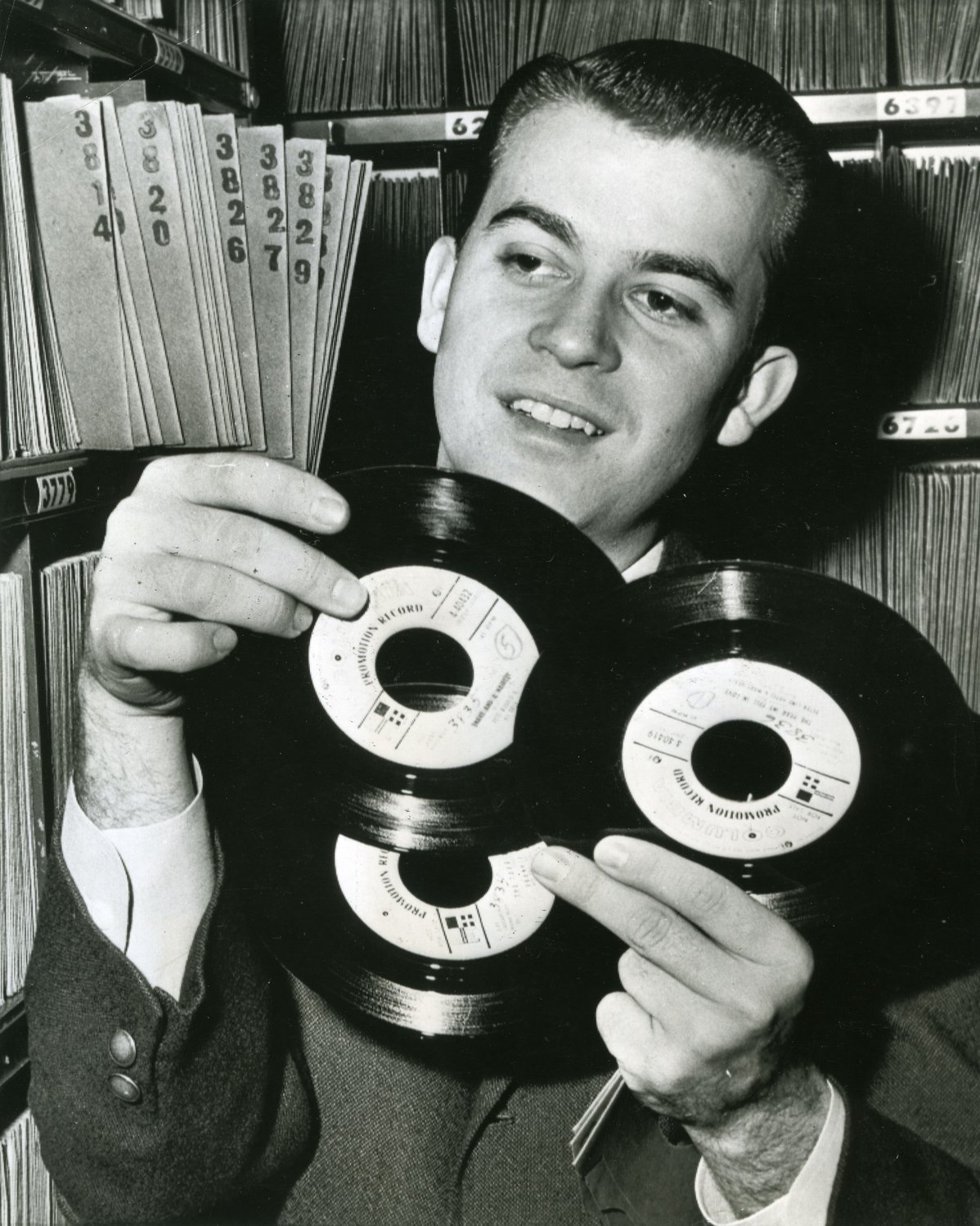
Dick Clark became host of “Bandstand” on July 9, 1956.
The name of the program became “American Bandstand” the following year.
Image of Dick Clark from the late 1950s via Alamy
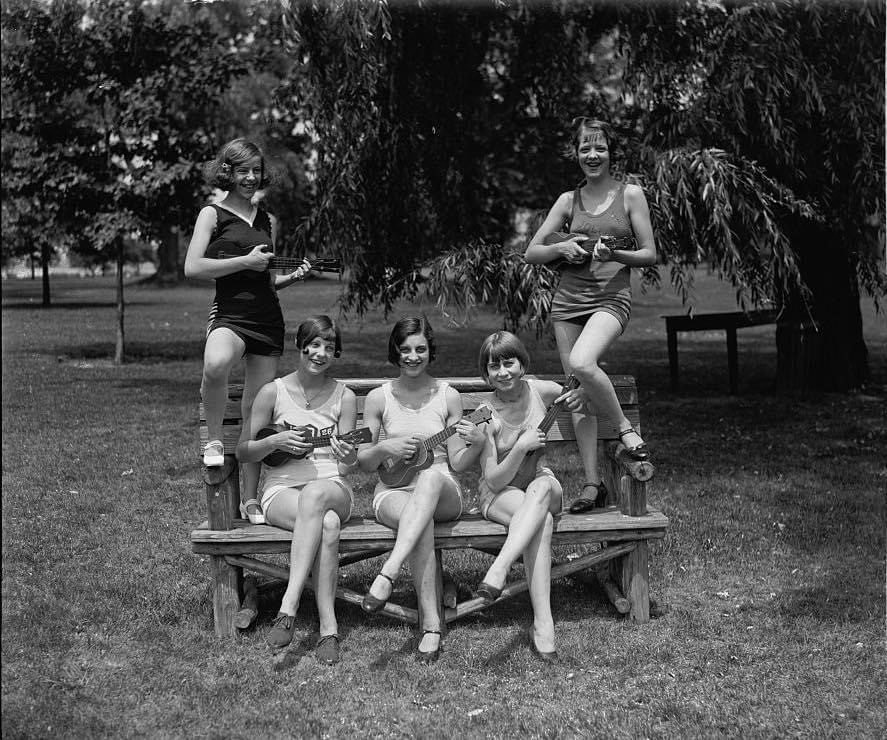
“Women in bathing suits with ukuleles”
– July 9, 1926
via Library of Congress, no known restrictions
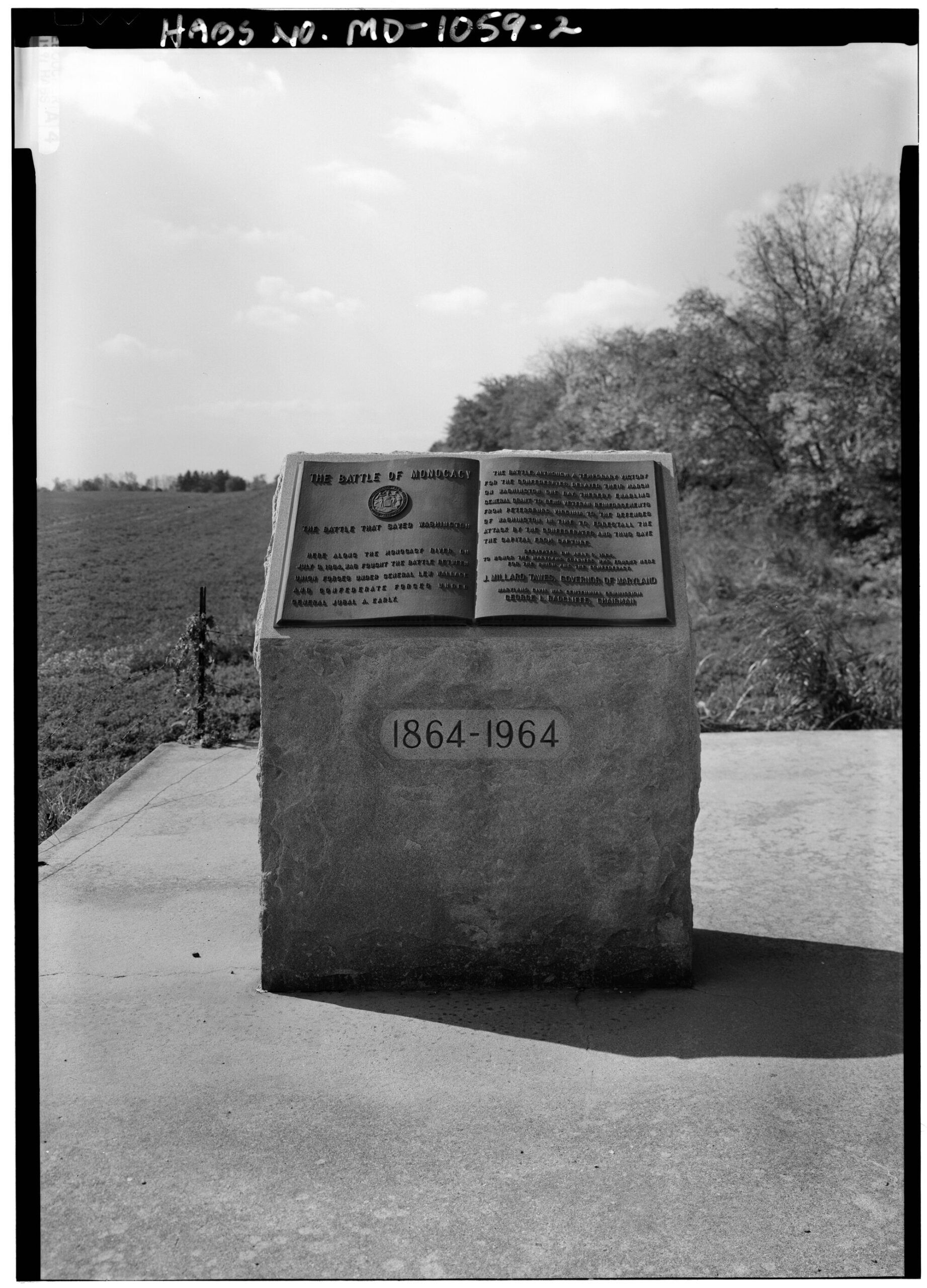
The Battle That Saved Washington
A monument commemorating the July 9, 1864, Battle of Monocacy, which took place close to Frederick, Maryland. Confederate General Jubal A. Early threatened Washington, D.C., in the summer of 1864 by conducting a daring raid through the Shenandoah Valley and entering Maryland. Early’s path was blocked at Monocacy Junction by a hastily organized Union force led by Major General Lew Wallace, who was outnumbered by almost two to one. Wallace’s forces bought valuable time for Union reinforcements to fortify the capital by delaying the Confederate advance by a full day, despite their tactical defeat. Marylanders who served on both sides of the conflict are honored by this monument, which was dedicated in 1964 on the centennial of the battle. It represents a moment of reconciliation as well as strategy and sacrifice.
Image via Wikimedia Commons, public domain
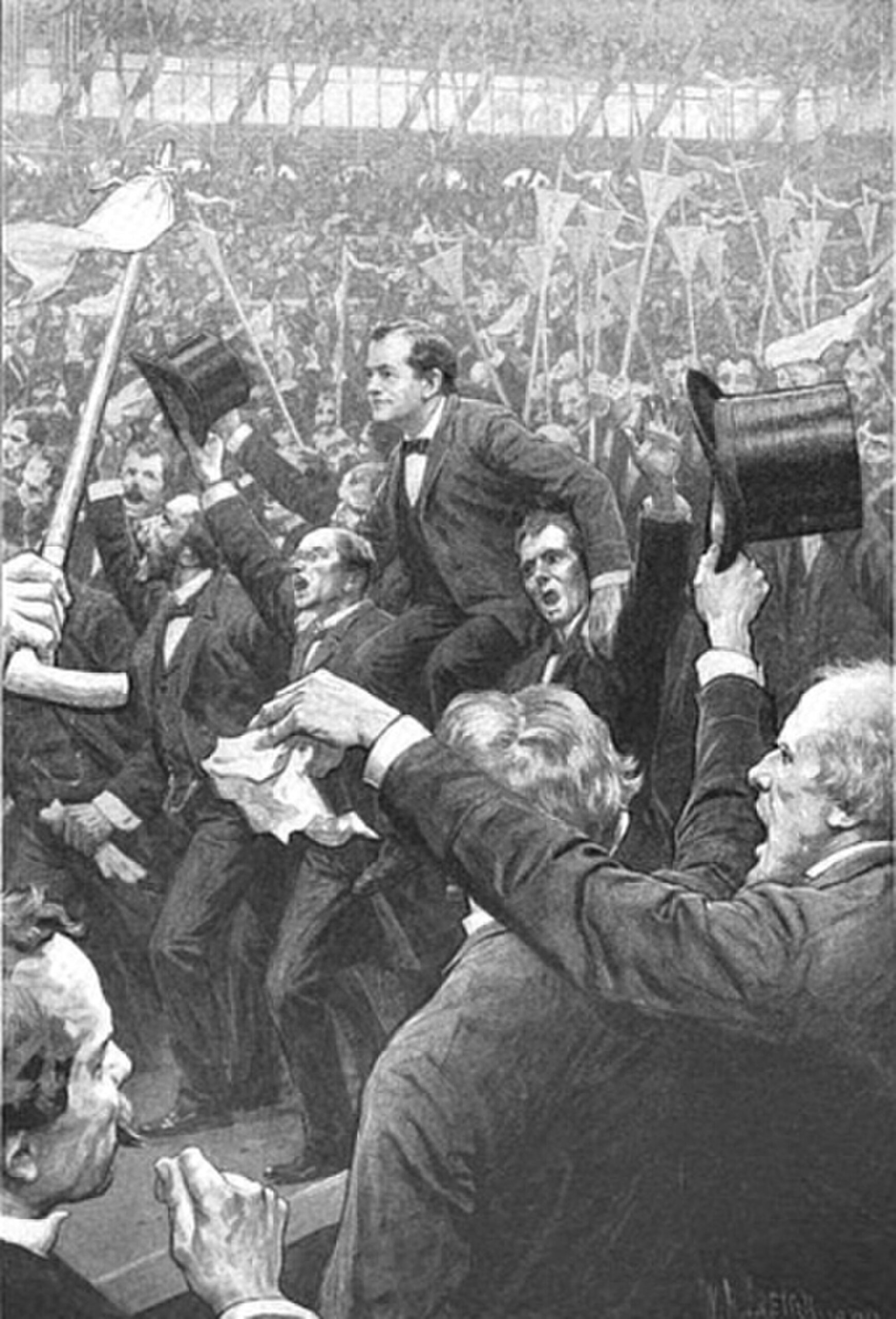
At the Democratic National Convention on July 9, 1896, dark horse candidate William Jennings Bryan said “you shall not crucify mankind upon a cross of gold” denouncing the gold standard.
Bryan received the Democratic nomination, but would lose to William McKinley who supported the gold standard.
Image: Artist’s sketch of Bryan after he delivered his speech via Wikimedia Commons, public domain
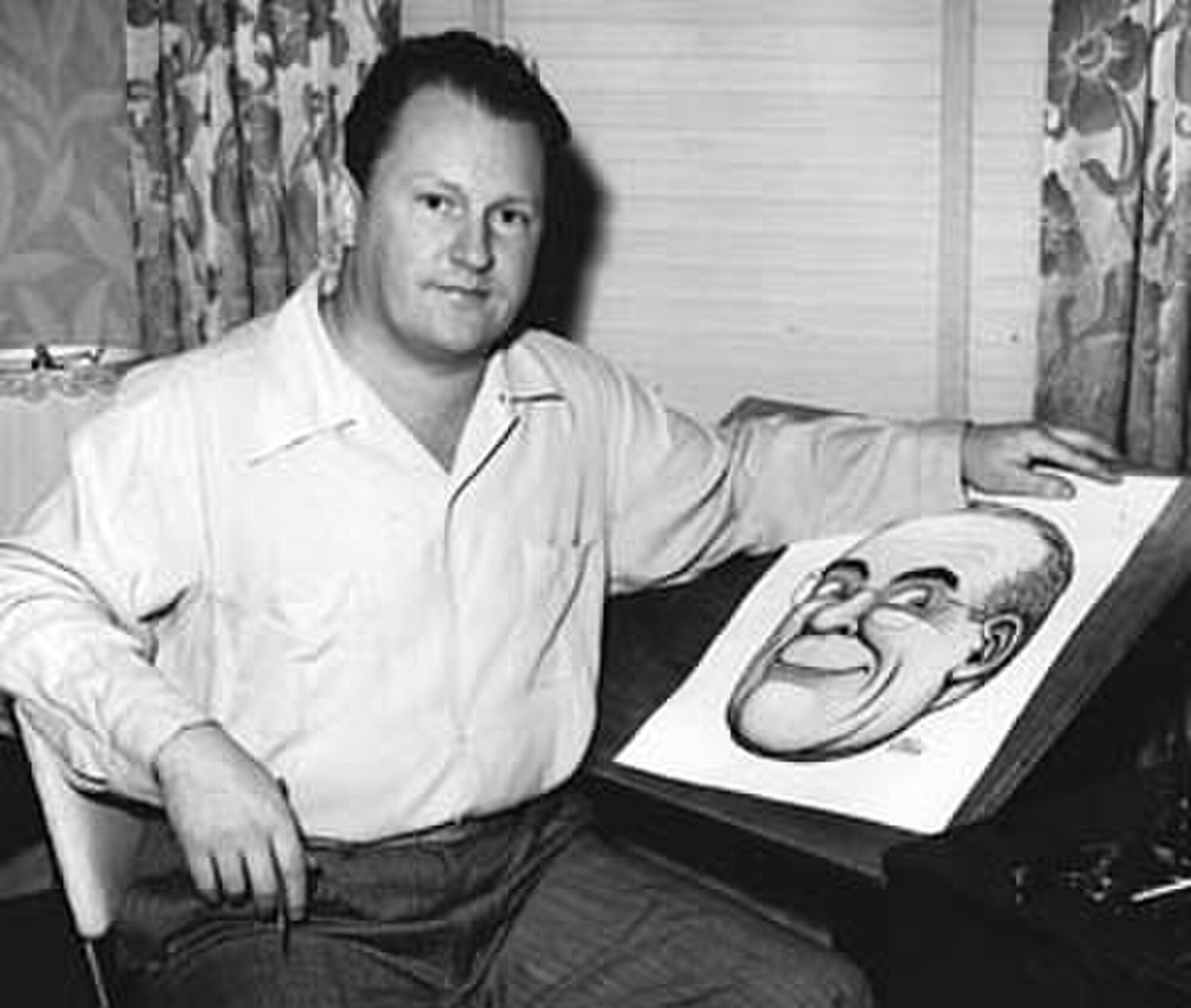
Born July 9, 1909 artist and cartoonist Basil Wolverton worked steadily for over 40 years, drawing for Mad magazine, Marvel, and other comic books. Some fellow artists called his style grotesque, bizarre, or ugly. When illustrating stories like “The Brain Bats of Venus,” however, rainbows and unicorns won’t exactly cut it.
Image via Wikimedia Commons, public domain in the US
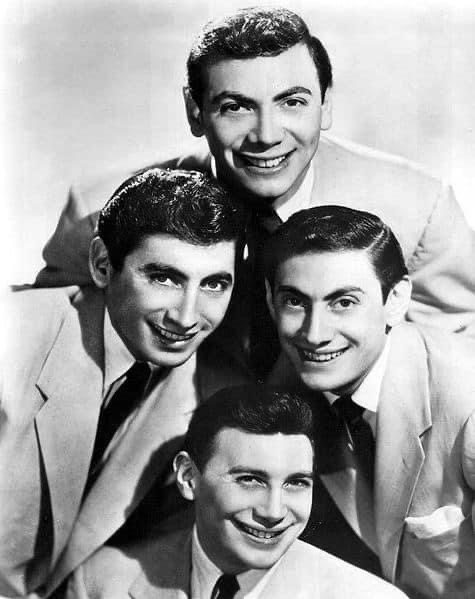
Ed Ames was born in July 9, 1927. The youngest of the Ames Brothers singing quartet
(top), Ed had a successful solo career as a singer and actor, best known for the role of Mingo on the Daniel Boone TV series.
Image: Wikimedia Commons, public domain in the US, no copyright
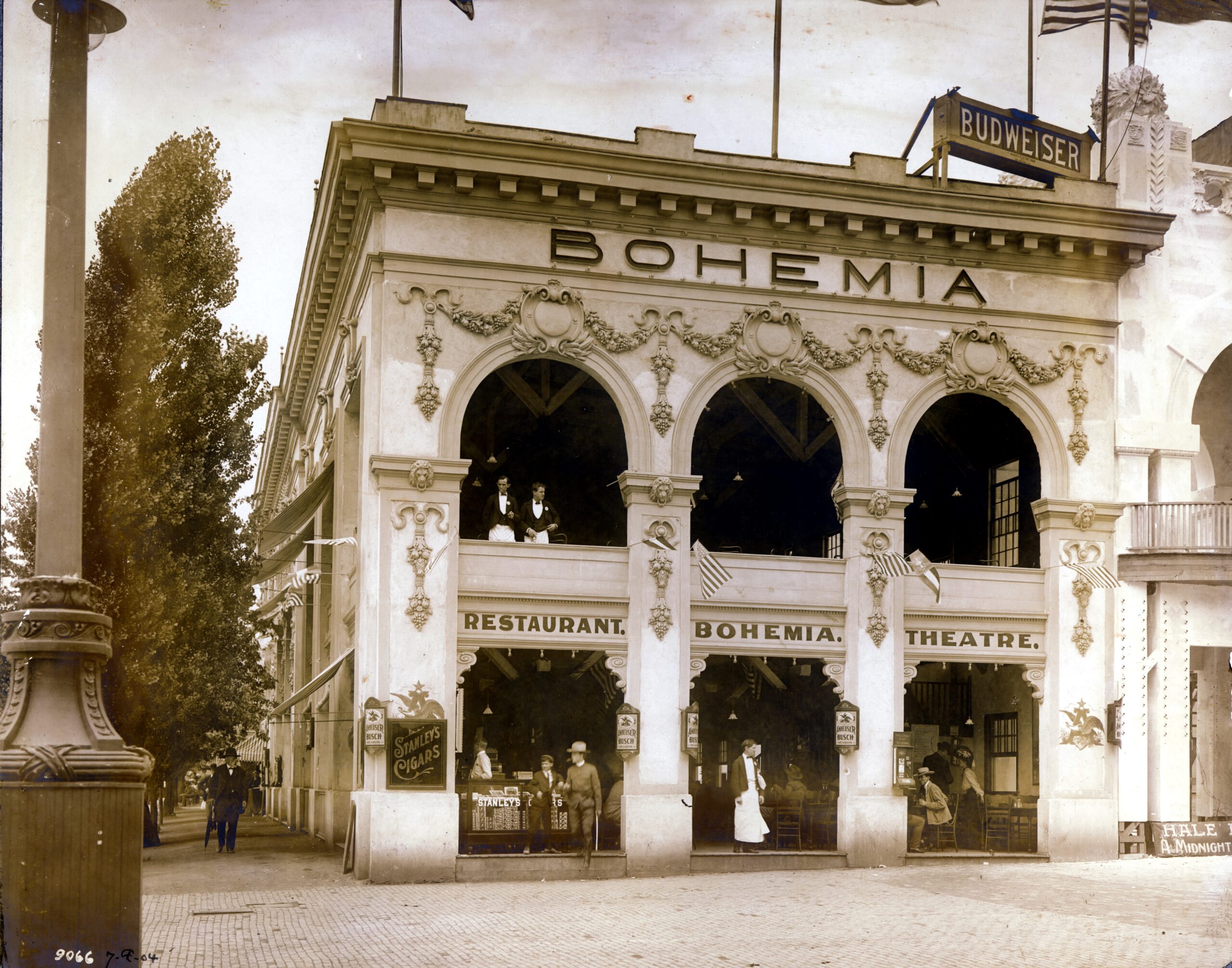
Bohemia Restaurant Theatre on the Pike at the 1904 World’s Fair in St. Louis, Missouri
July 9, 1904
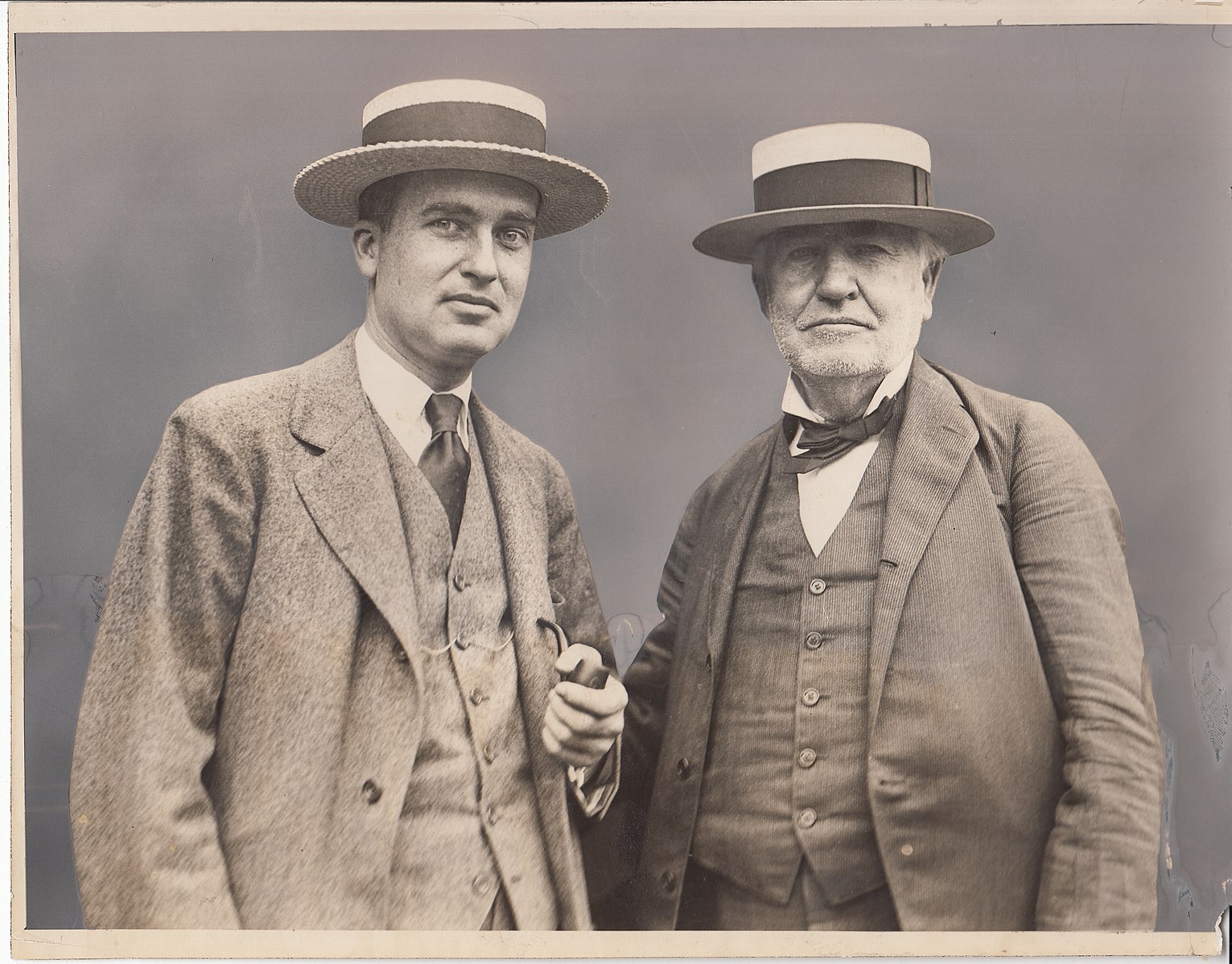
A Transitional Legacy
Pictured together at the close of an era of invention and innovation are Thomas Edison and his son, Charles Edison. In this moment, Charles stands beside an unshaven and contemplative Thomas, his steady gaze conveying both admiration and intent. More than a father and son, they represent the passing of a torch—one forged in laboratories and carried into the public sphere.
Charles would carve his own path through politics, art, and public leadership, eventually serving as Governor of New Jersey and Secretary of the Navy. Together, they embody a shift in American influence—from the inventive spirit of the industrial age to the strategic stewardship of a modern nation.
Photo taken on July 9, 1925
Image from U.S. National Park Service via Wikimedia Commons, public domain
