
 Mystery March Is Here!
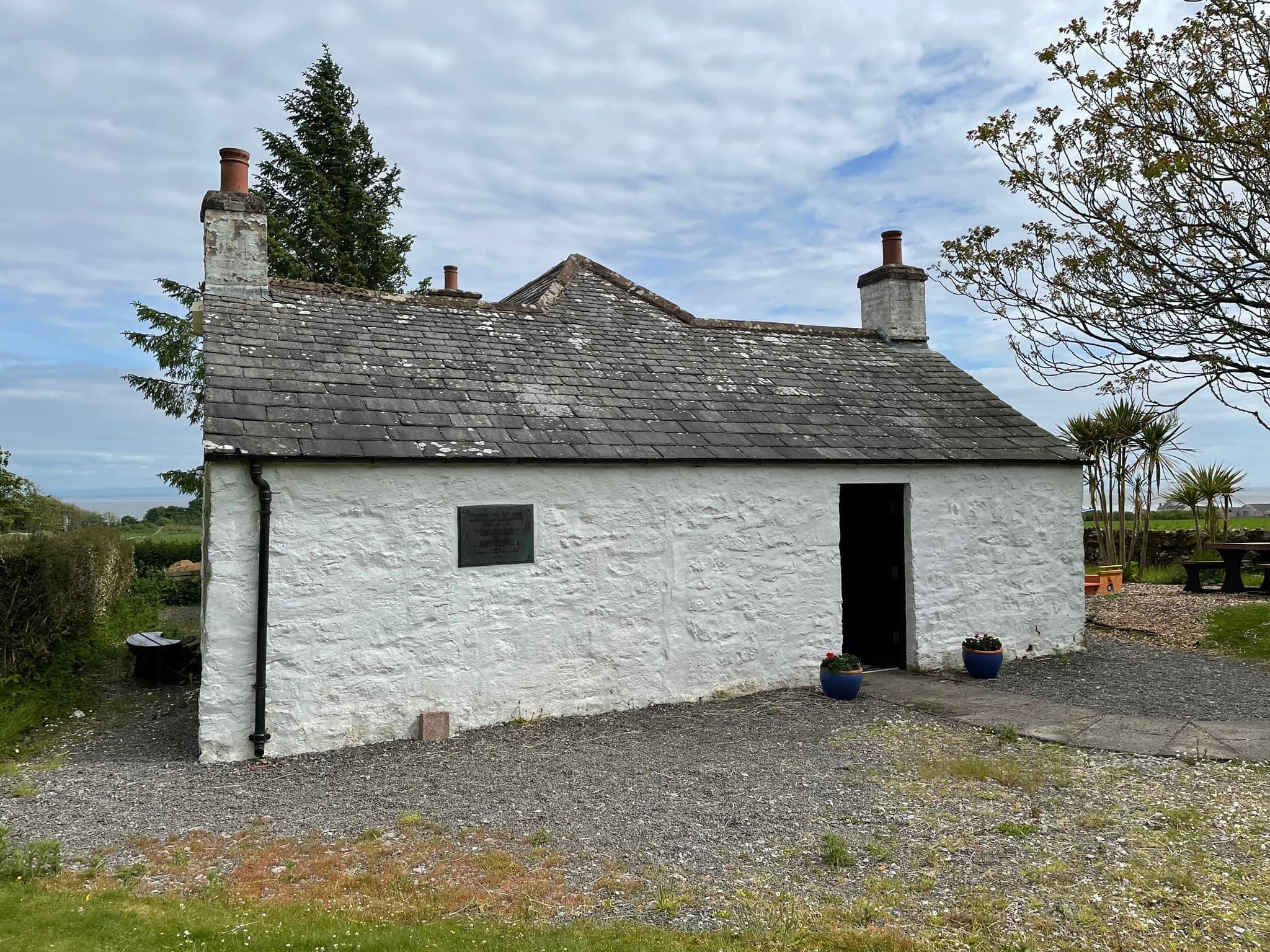
Captain of the Continental Navy, John Paul Jones, was born on July 6, 1747 in Arbigland, Kirkcudbrightshire, Scotland.
He started sailing when he was 13.
Image: John Paul Jones Birthplace and Home in Arbigland by DsMaxwell via Wikimedia Commons CC BY SA 4.0
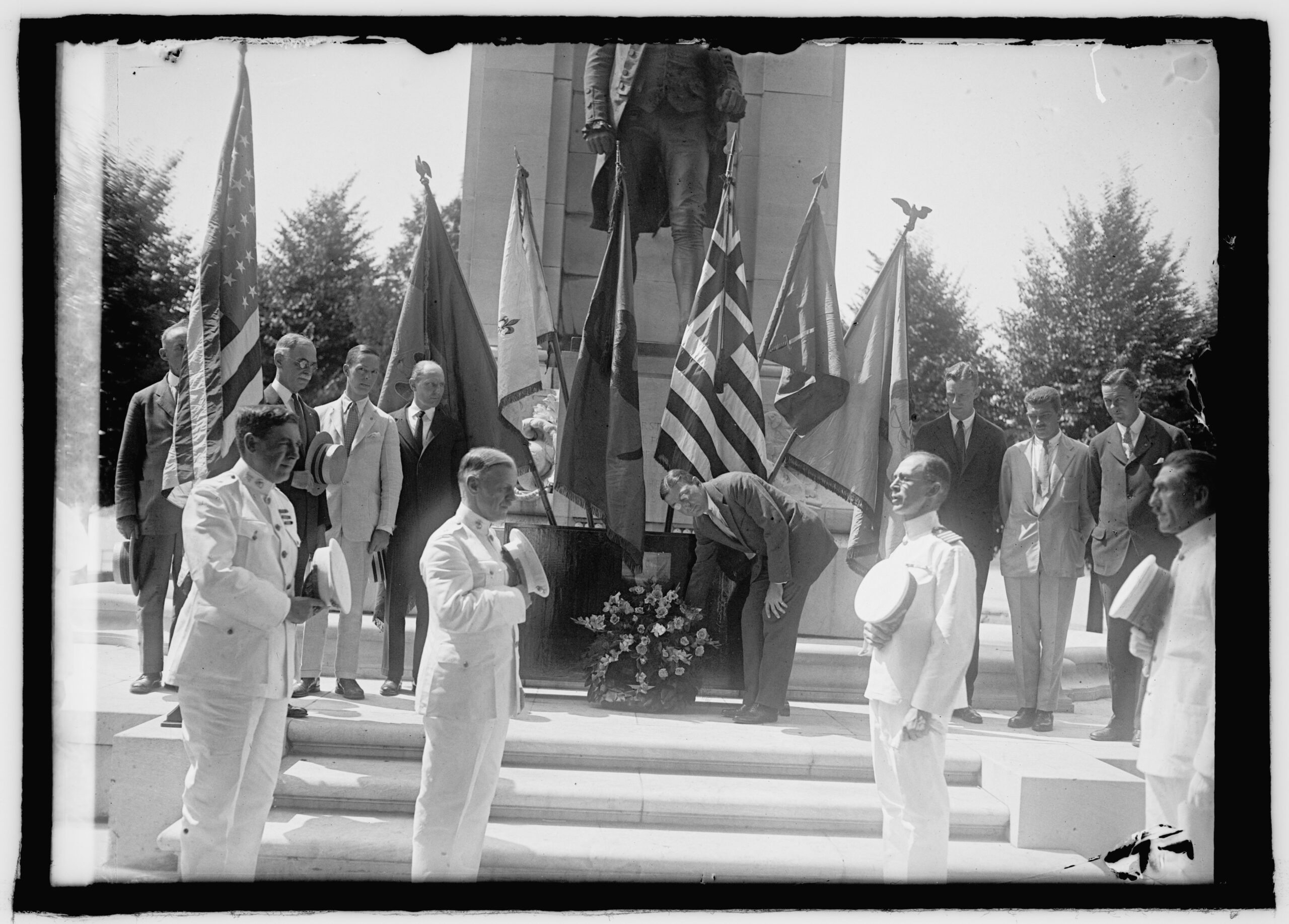
Where Valor Sleeps — July 6, 1925
Assistant Secretary of the Navy Theodore Douglas Robinson stands in quiet tribute at the 178th anniversary of John Paul Jones’s birth. Beneath the vaulted hush of the Naval Academy Chapel, Jones lies entombed in sculpted marble, guarded not by sentries, but by tradition itself. Light from stained glass windows catches the sea-themed bronze beneath the sarcophagus, casting a soft glow across the crypt — a reflection of memory, duty, and sacrifice. Robinson’s presence speaks not only to his public station, but to the deep continuity of naval service, from the thunder of the Bonhomme Richard to the cadence of midshipmen echoing through these halls. In this moment, the past isn’t distant; it’s alive in reverence.
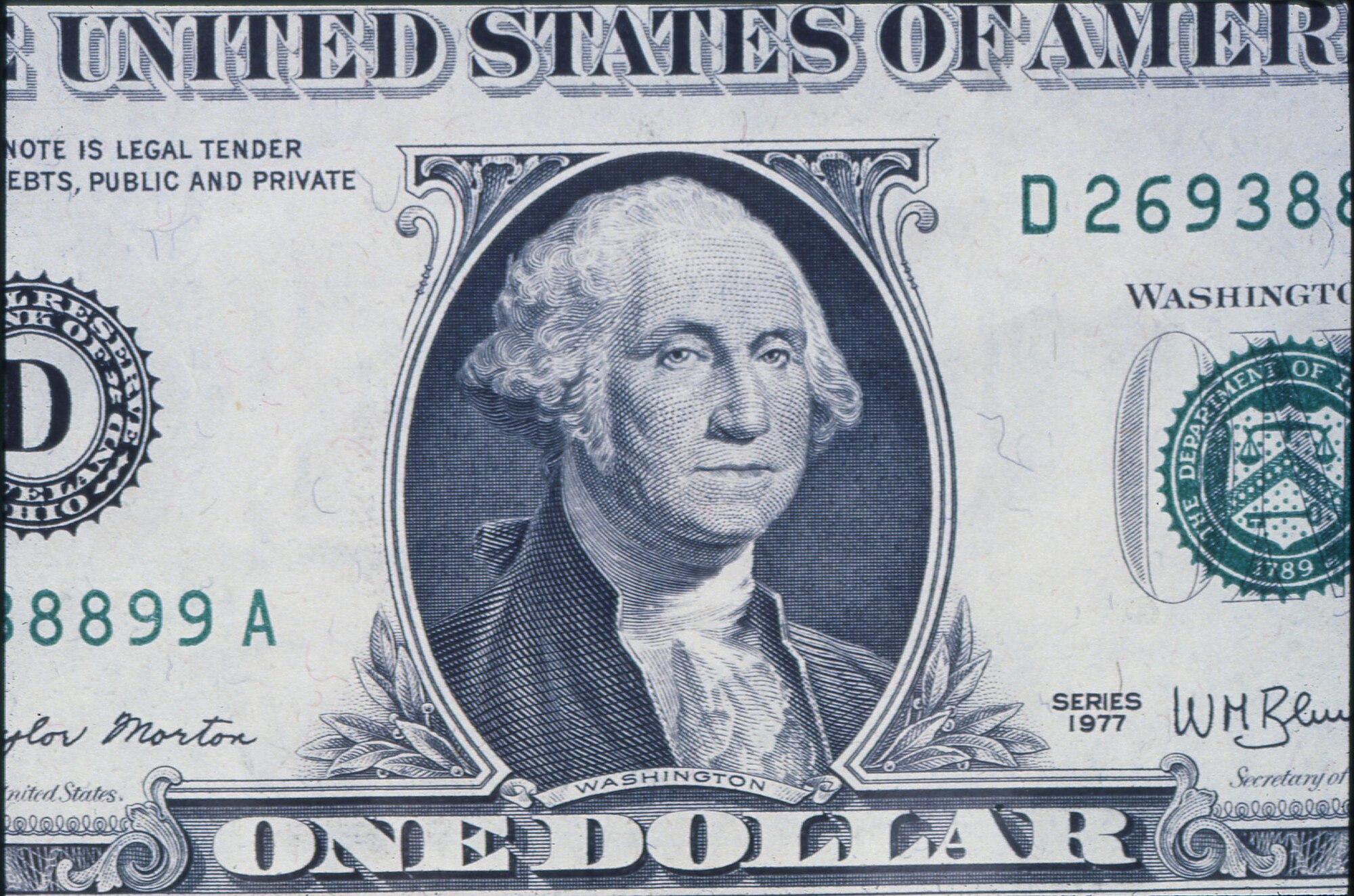
The Continental Congress quietly sparked a revolution on July 6, 1785, when they decided to make the U.S. dollar the new republic’s official currency. Born in the halls of New York City and inspired by the reliable Spanish silver dollar, the ruling represented economic cohesion in the midst of post-war turmoil. Yet at that moment, the dollar existed only as an idea—a unit of value, not yet minted or printed. It would take another seven years before the first coin was struck in 1792, and nearly eight decades before the government printed its first paper dollar during the Civil War, bearing the image of Salmon P. Chase instead of Washington. In addition to the United States and its territories, the dollar is now the official currency of countries like Ecuador, El Salvador, Panama, East Timor, Zimbabwe, Micronesia, Palau, and the Marshall Islands, all of which incorporate American currency into their everyday operations. A symbol that was originally intended to unite thirteen colonies is now pulsing through economies all over the world.
Image via Wikimedia Commons, public domain
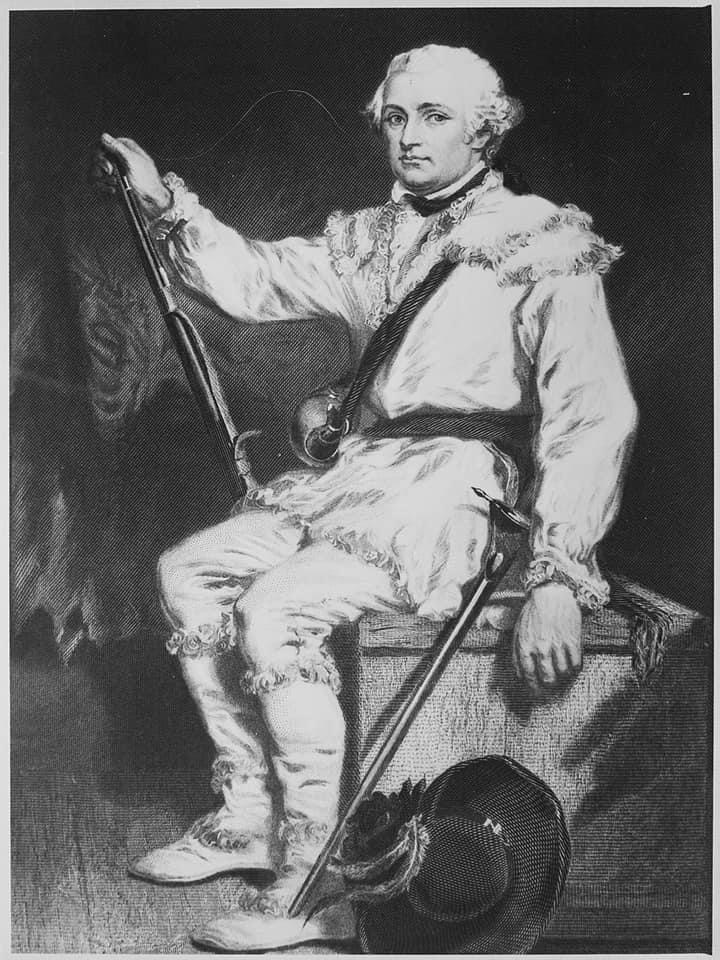
“As Morgan was posted in the immediate neighborhood of the enemy, he was first apprised of their movements, and thereupon he immediately pushed forward to annoy them. He first encountered a strong picket of Hessians, who were soon driven in upon the main body. The latter were at this moment in full retreat across the bridge, a strong division of their forces being drawn up to cover the movement. Against this body, Morgan immediately directed the fire of his regiment; and after a fierce struggle of a few minutes, the enemy were forced to give way, and to seek the shelter afforded by some redoubts which they had previously constructed on that side of the river. The advantage afforded them by the redoubts subjected Morgan to a momentary check; but
Gen. Wayne’s brigade arriving at this juncture, the contest was renewed with greater spirit than ever. After a short struggle, the British abandoned their redoubts, and retreated precipitately along the Amboy road.
Morgan, followed by Wayne, kept close to the heels of the enemy; and before he gave up the pursuit, forced their rear guard, on several occasions, to face about, and exchange several sharp fires with his riflemen. For more than an hour, the contest was maintained with severe loss on both sides ; and it was not until Wayne and Morgan had advanced in the pursuit as far as Piscataway, that they ordered a halt. They had reckoned with confidence on the co-operation of Sullivan and Maxwell, in which event they felt assured, that the day would prove a disastrous one to General Howe. But this not being obtained, they paused awhile at Piscataway, to refresh their men, and then returned to New Brunswick. The opinion prevailed in the army after this battle, that had Maxwell arrived at the post assigned him, in time to take a part in the contest, the enemy’s rear guard of 1500 men would have been cut off and captured.
In this action, Morgan greatly distinguished himself. His corps had fought with extraordinary valor ; and, although it suffered severely in its repeated encounters with the enemy during the preceding few days, the loss of the latter was far greater Morgan and Wayne, as well as their officers and men, were made the subject of very commendatory remarks in the letter which Washington addressed to the President of Congress, after the action. Honorable mention was made of “their conduct and bravery on this occasion,” and the fact was specially noted, that “they constantly advanced upon an enemy far superior to them in numbers, and well secured behind strong redoubts.”
American General of The Revolutionary War, Daniel Morgan, passed away on July 6, 1802 in Winchester, Virginia.
Source: The life of General Daniel Morgan, of the Virginia line of the army of the United States, with portions of his correspondence; by James Graham, published in 1859
https://archive.org/details/lifeofgeneraldan00grah/page/125/mode/2up
Not in copyright
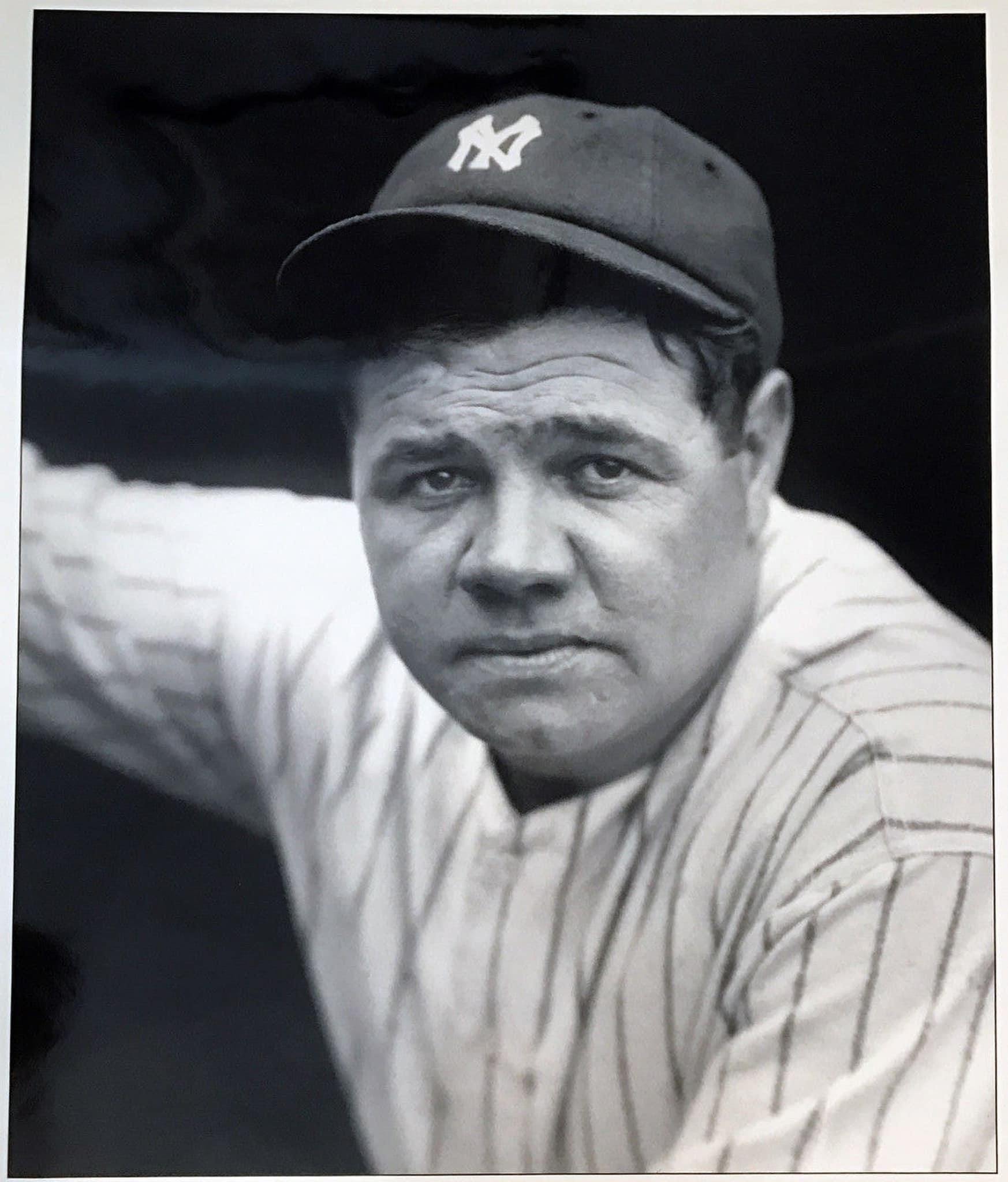
On July 6, 1933 the first MLB All-Star game was played at Comiskey Park in Chicago.
Babe Ruth hit a two-run homer that helped his American League win the game by two runs over the National League.
Image: Babe Ruth in 1933 via Wikimedia Commons, no known restrictions
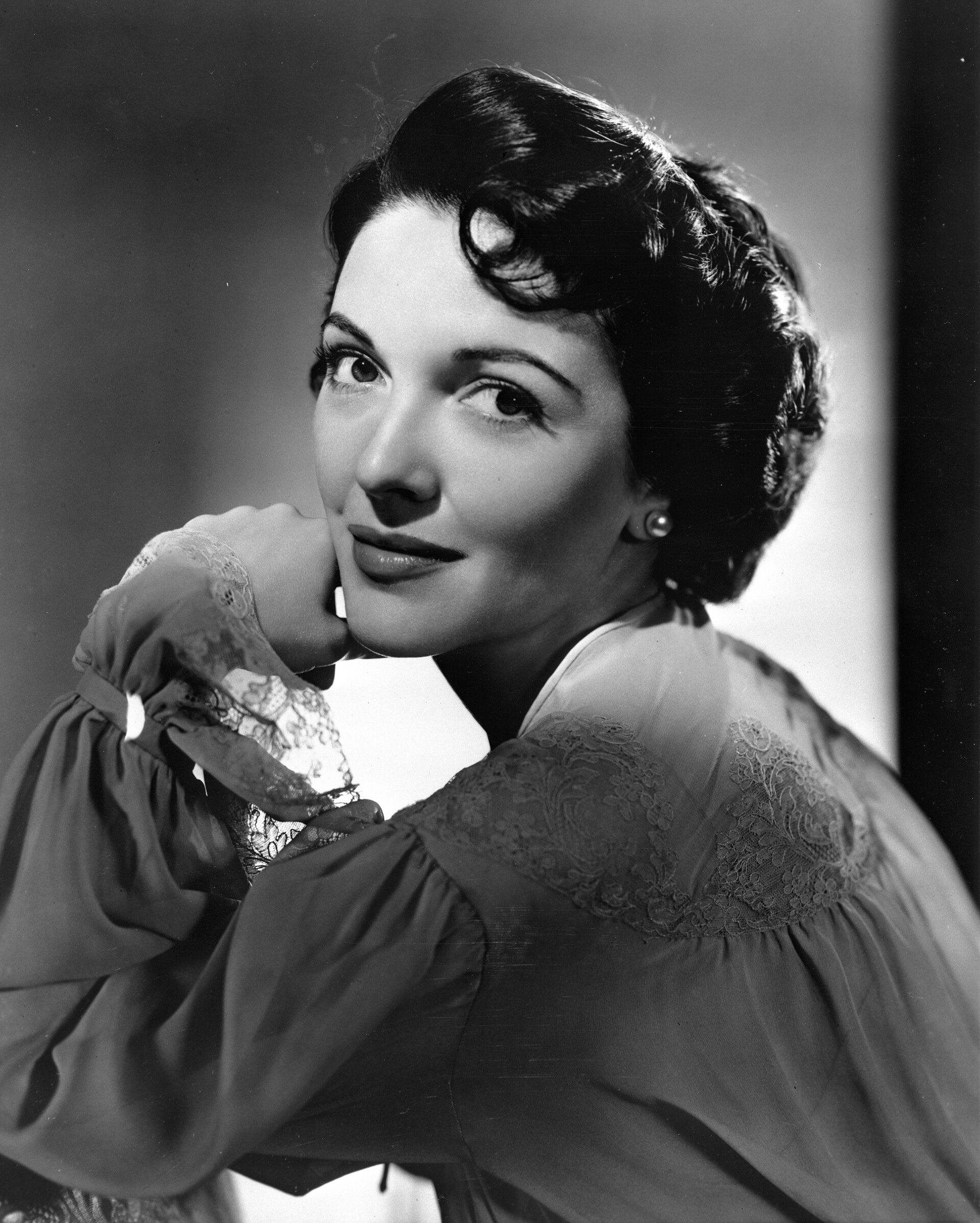
Nancy Davis Reagan was born in Manhattan on July 6, 1921.
She met Ronald Reagan in late 1949 and the two were married in early 1952.
Image of Nancy Davis in 1949 via Wikimedia Commons, public domain
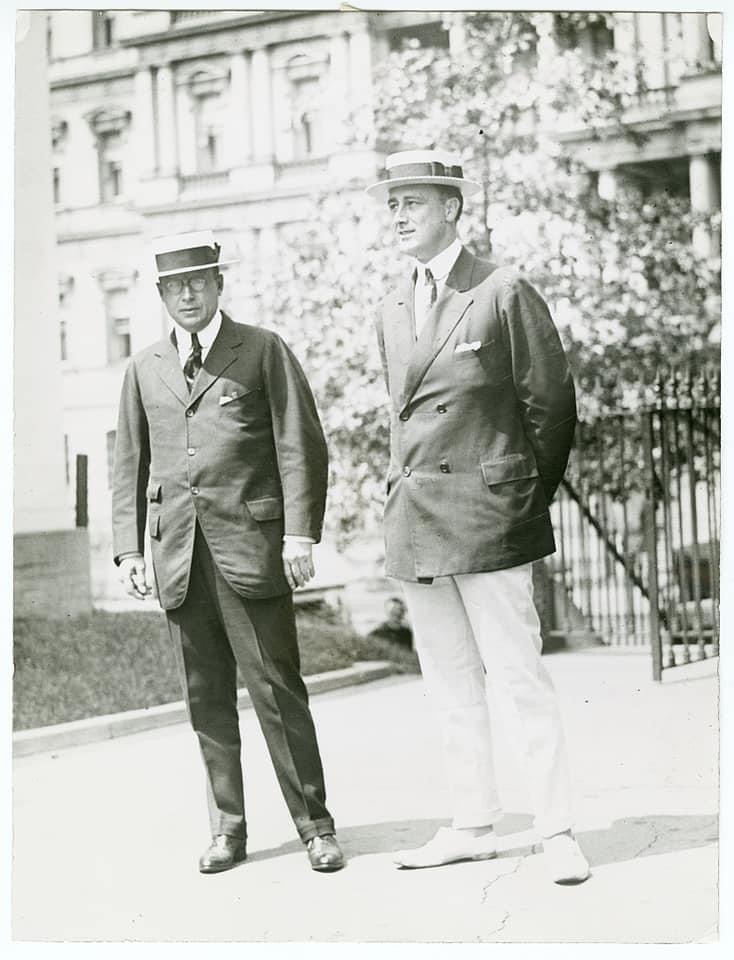
VP Candidate Franklin Delano Roosevelt standing next to Presidential Candidate Governor James Cox of Ohio in July of 1920.
FDR was nominated as the Vice Presidential Candidate at the DNC in San Francisco on July 6th of that year.
Image via Library of Congress, no known restrictions
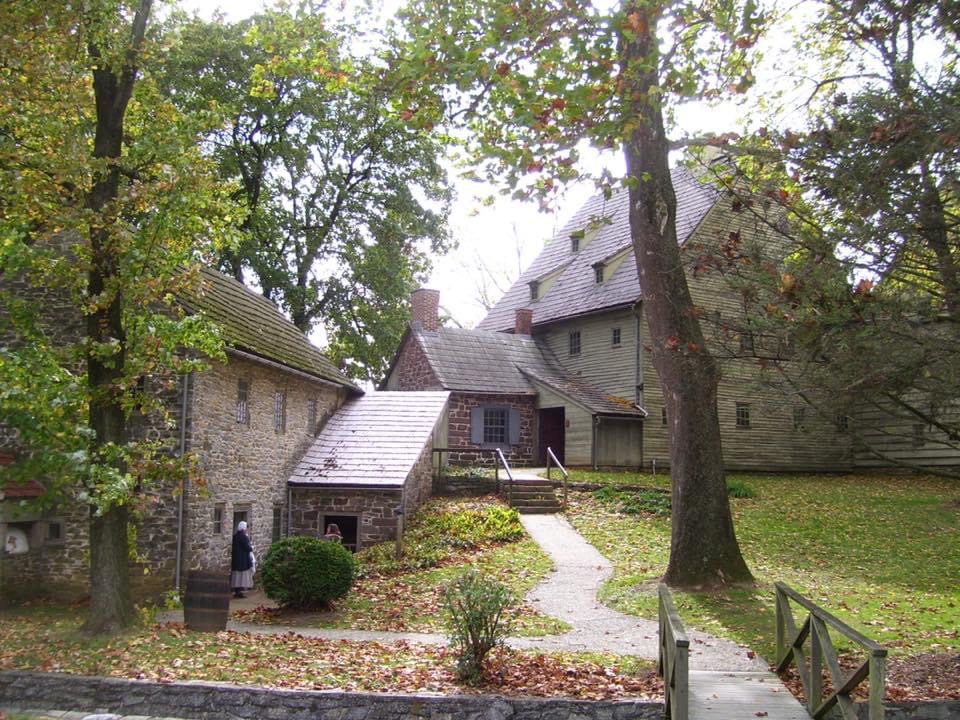
On July 6, 1768, Johann Conrad Beissel, the German founder of the community of Seventh-Day Baptists at the Ephrata Cloister in Lancaster County, Pennsylvania died.
At the time of the American Revolution the community assisted and nursed Continental soldiers who were injured during the war.
Image: Ephrata Cloister, Bakery and Meeting House by Joe Orbin CC-BY-SA 4.0 via Wikimedia Commons
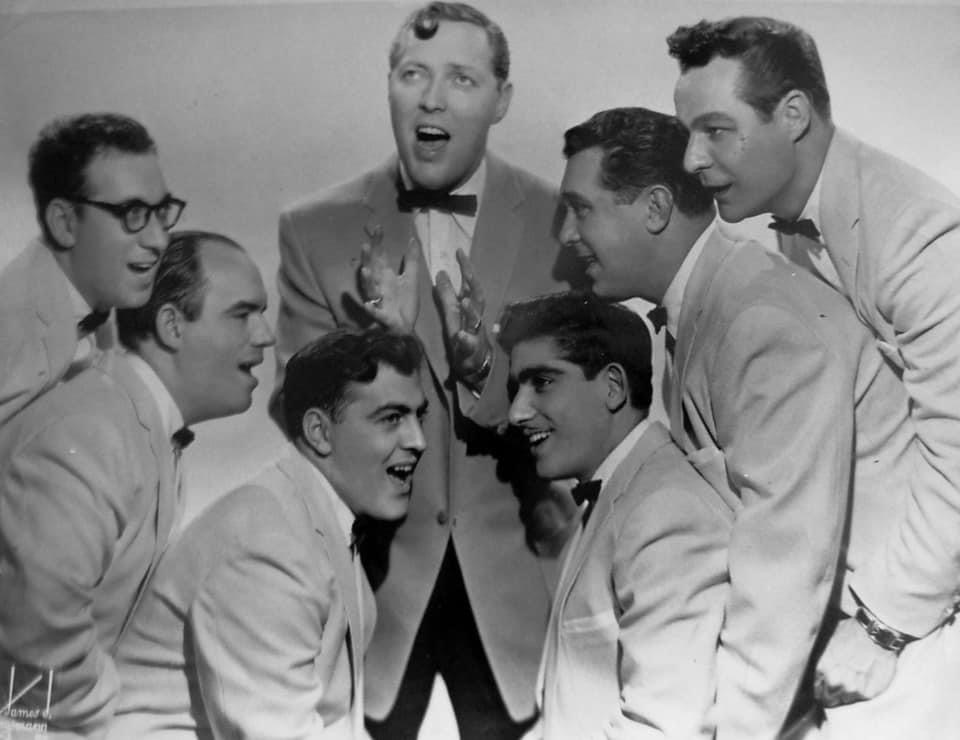
American musician Bill Haley was born on July 6, 1925 in Highland Park, Michigan.
Image: Bill Haley and his Comets in 1956 via Wikimedia Commons, public domain
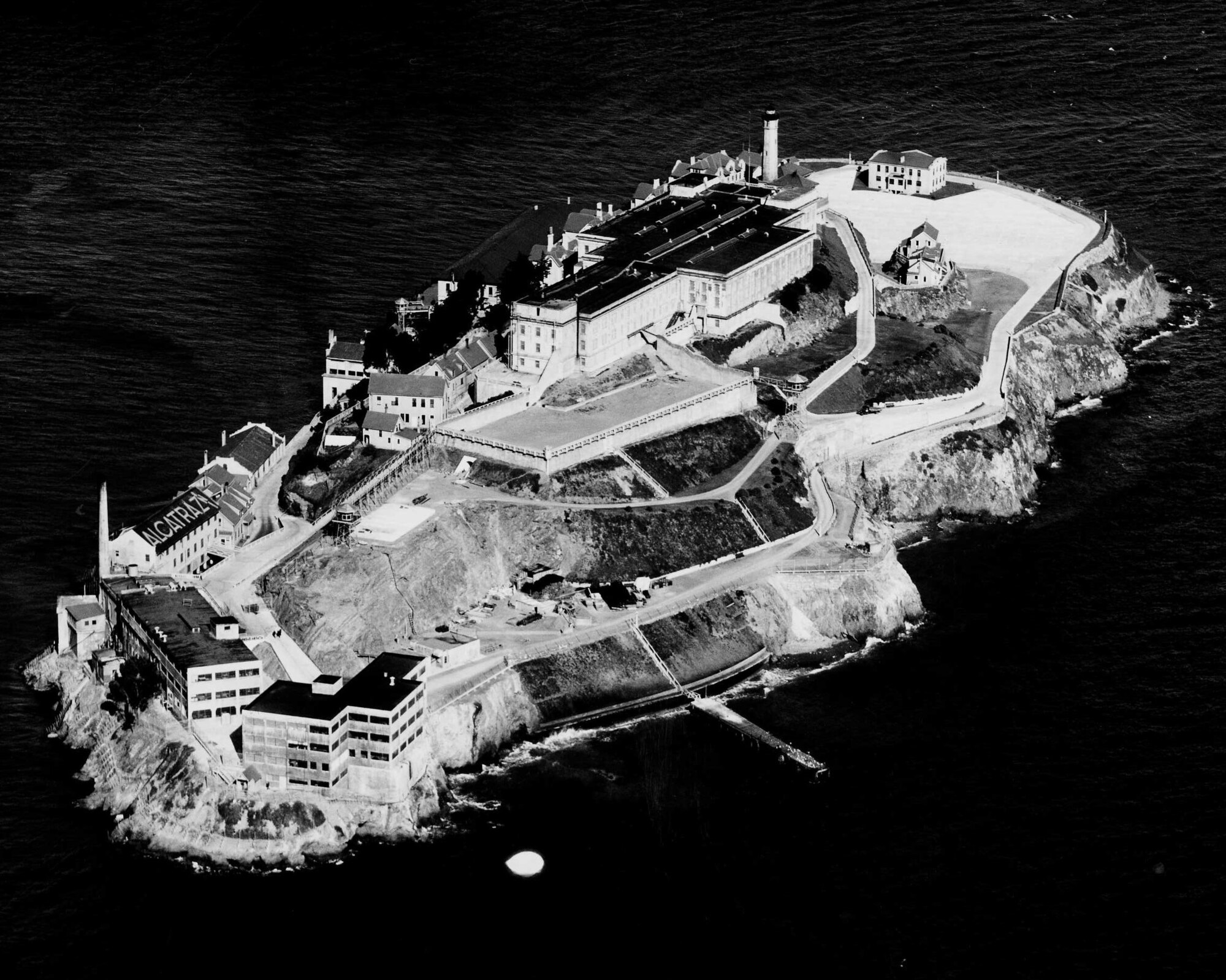
A view of Alcatraz Island on
July 6, 1934
About a month before it was designated as a federal prison.
Image via Wikimedia Commons, public domain
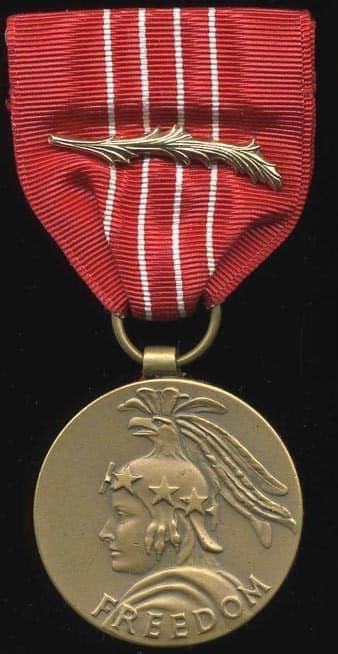
An image of the “Medal of Freedom” which was awarded to American civilians who assisted the United States against enemies of war.
President Truman established the award on July 6, 1945.
It was replaced by the current Presidential Medal of Freedom in 1963.
Image: Hdec CC BY-SA 3.0 via Wikimedia Commons, public domain
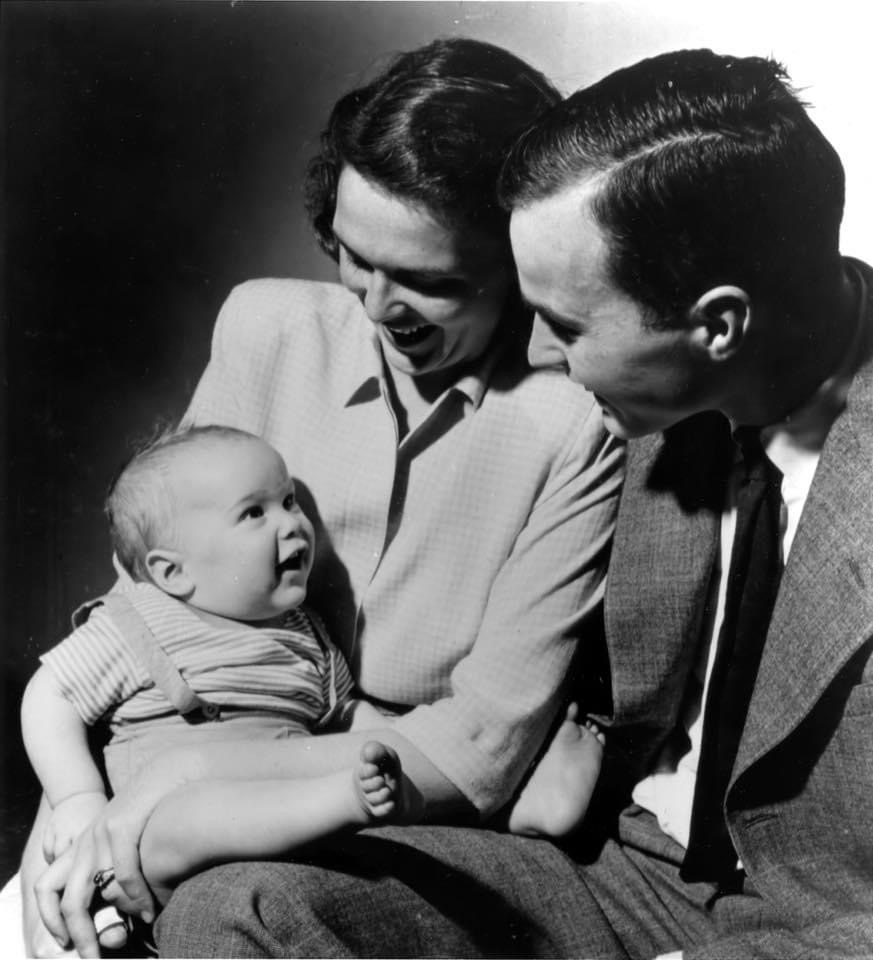
George W. Bush was born on July 6, 1946 in New Haven, Connecticut
Image: Baby George W. Bush held by his mother Barbara with his smiling father George H. W. Bush in 1947
Photo via Wikimedia Commons, public domain
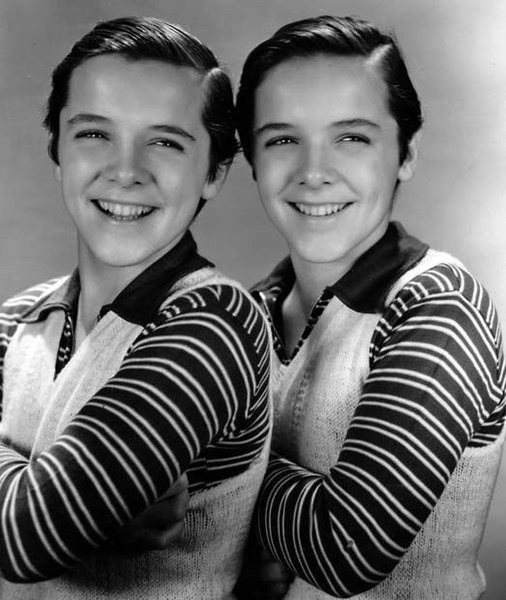
Born July 6, 1921 twins Billy and Bobby Mauch appeared together in several Hollywood films, their best-known being The Prince and The Pauper in 1937. The brothers served together in the Pacific during WW2, then had long careers in the movie industry –Bobby as a film editor and Billy as a sound editor.
Image by William A. Macis via Wikimedia Commons, public domain in the US.
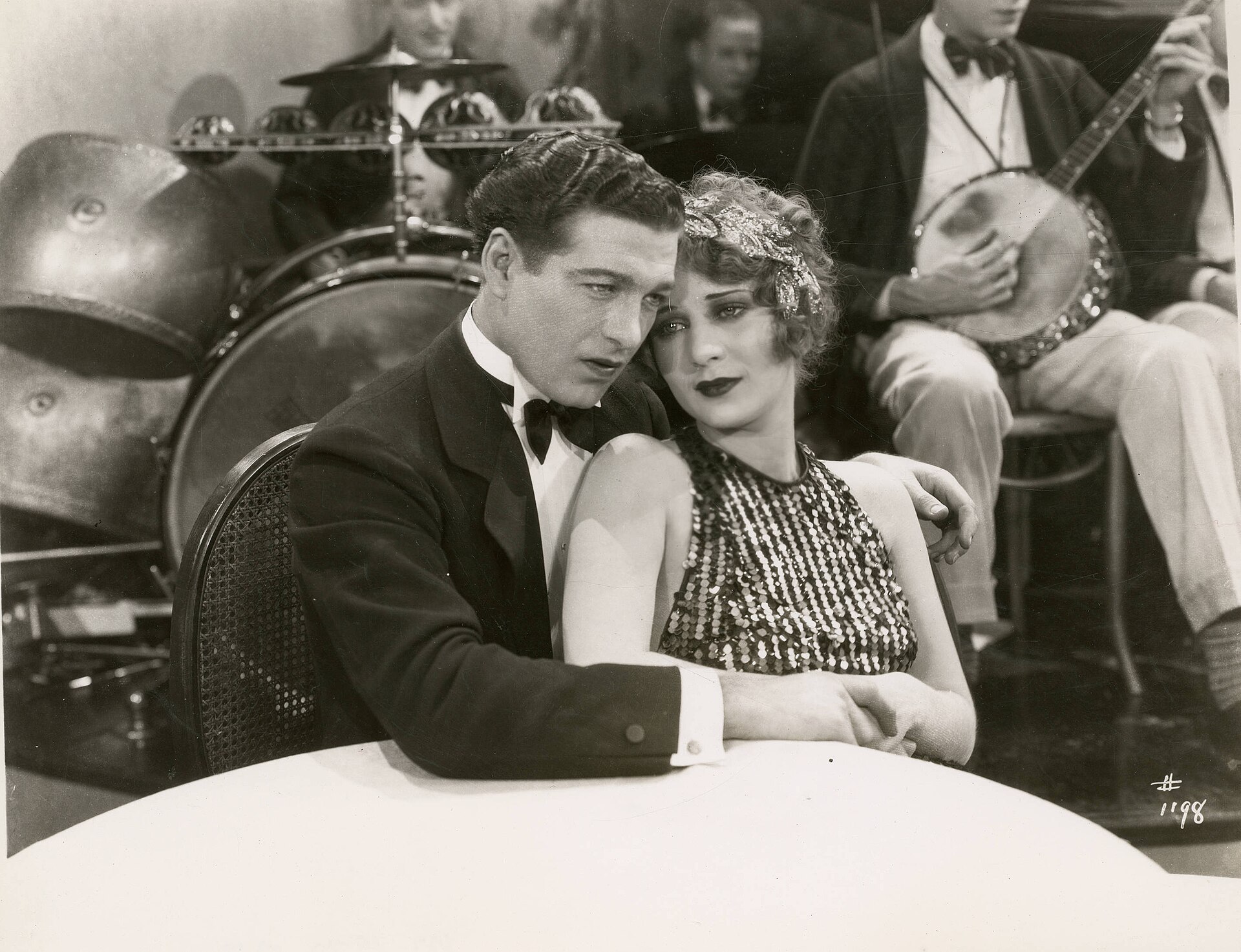
The first all-talking full-length feature film, The Lights of New York, was released on July 6, 1928.
Image via Wikimedia Commons, public domain
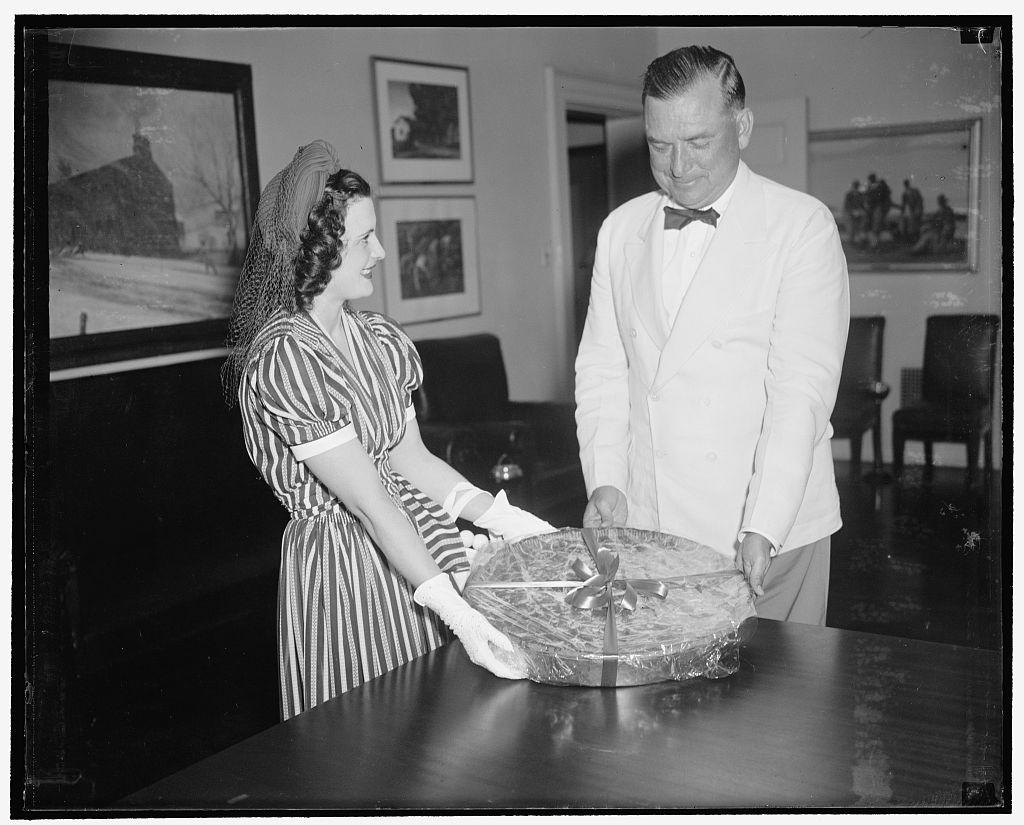
A 30 pound cherry pie was accepted for President Roosevelt today by Presidential Secretary Edwin M. Watson from nineteen year old Jean Halmond, Queen of Michigan’s National Cherry Festival. The queen flew here to make the presentation of the pie which was baked here from Michigan cherries under the direct supervision of Miss Halmond.
July 6, 1939
Image via LOC, no known restrictions
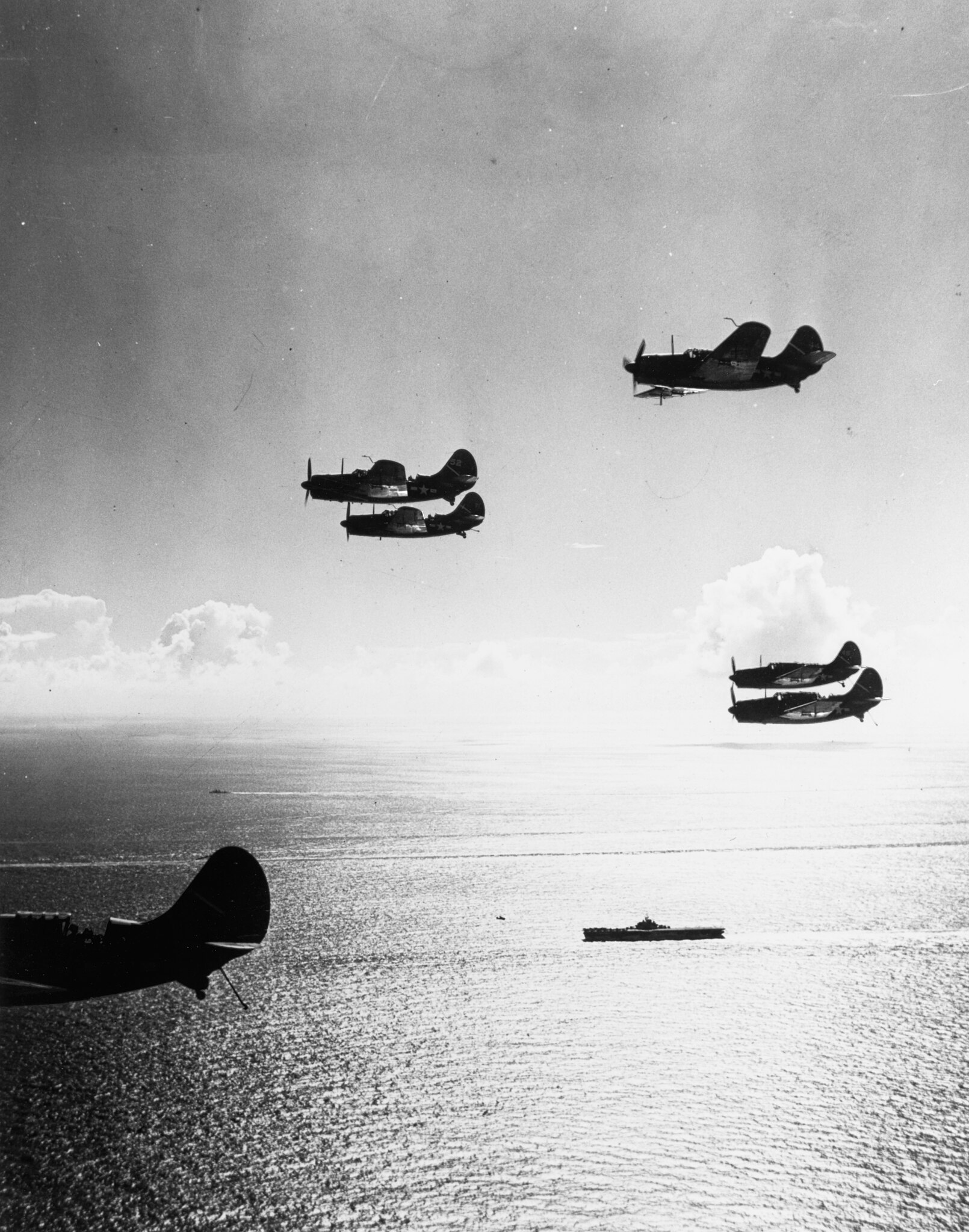
Returning from the Bonins — July 6, 1944
Curtiss SB2C-1 Helldivers from Bombing Squadron VB-1 approach USS Yorktown (CV-10), photographed two days after a strike on Japanese positions at Chichi Jima. While the primary raid took place on July 4, this July 6 image likely captures aircraft returning from follow-up operations or continued sorties as part of Task Force 58’s broader campaign in the Bonin Islands. Carrier aviation was relentless—pilots launched, refueled, and returned across multiple days, with missions overlapping in a rhythm shaped by weather, fuel, and tactical demand. The scene reflects not just a moment in flight, but the enduring pace of mid-Pacific strategy.
Image via Wikimedia Commons, no known restrictions
