
 Mystery March Is Here!
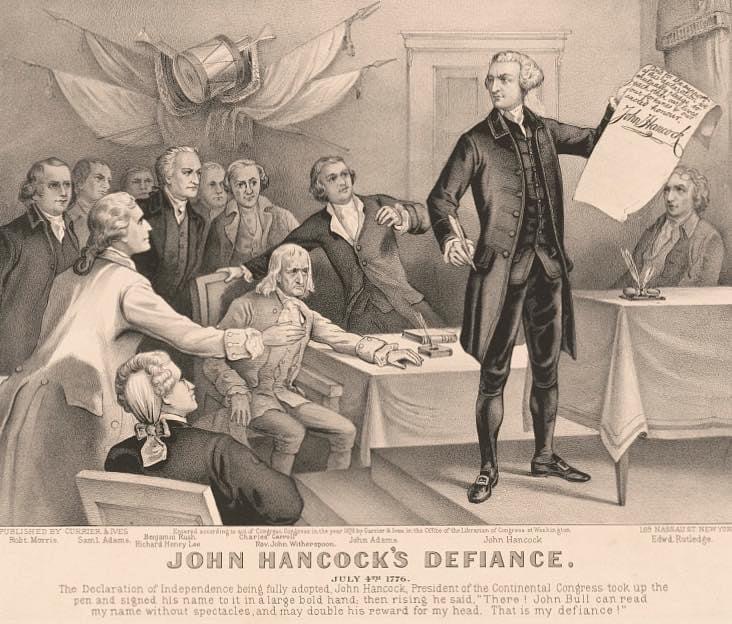
“John Hancock’s defiance: July 4th, 1776”
by Currier and Ives, c. 1876
via Library of Congress, no known restrictions
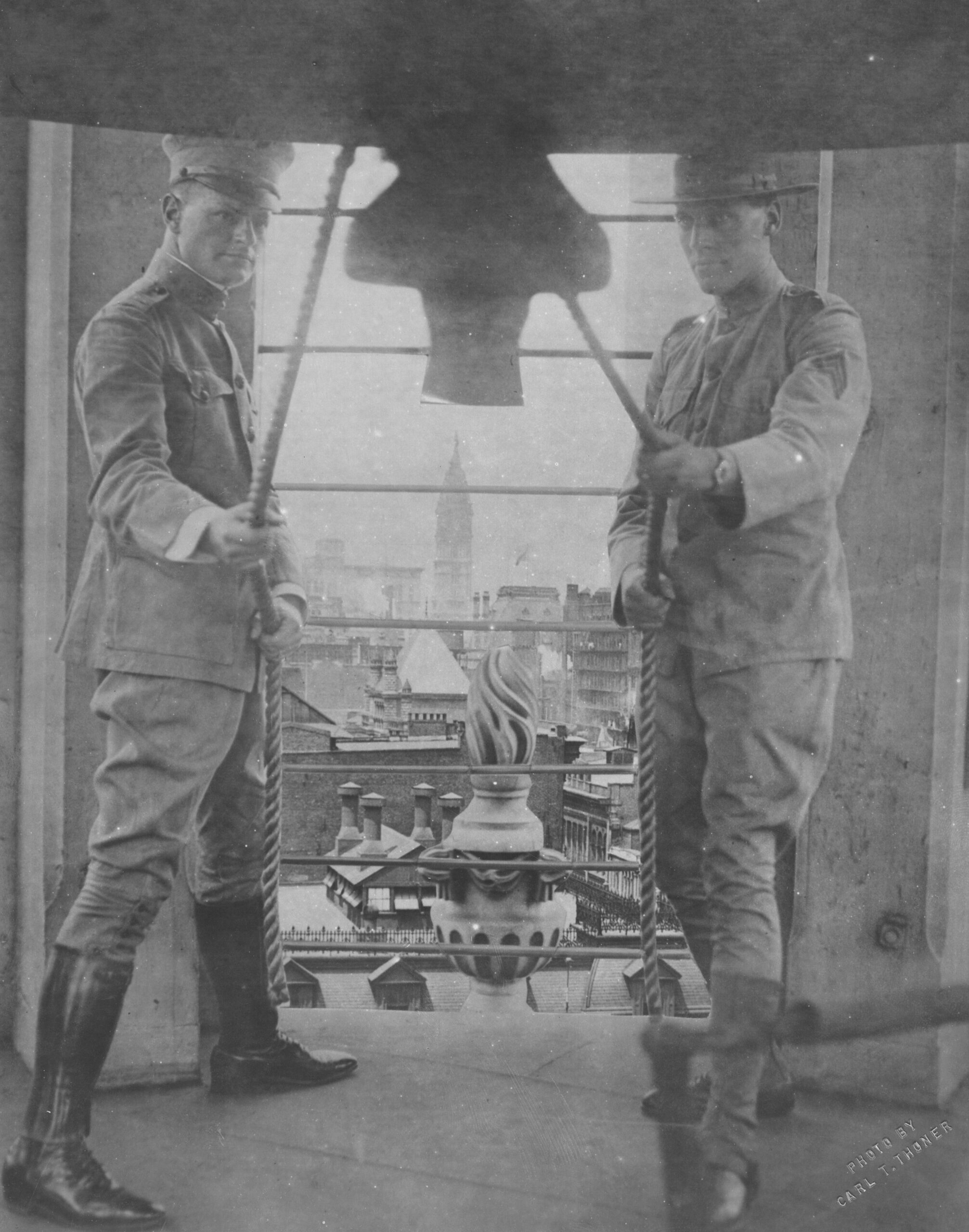
On Independence Day 1918, as war thundered across Europe, Lieutenant Katcher and Sergeant Godfrey rang the Centennial Bell from the steeple of Independence Hall in Philadelphia. Cast for the nation’s centennial after the Liberty Bell fell silent—its voice lost to a historic crack—the new bell was forged from four cannons: two from Saratoga, where revolution found its turning point, and two from Gettysburg, where the fate of the Union hung in the balance. Its peal swept across Independence Square, proclaiming liberty anew to citizens gathered below and soldiers battling abroad—its voice a fusion of past conflicts and future hope.
Today, the Centennial Bell still hangs in the steeple of Independence Hall, where it marks the hours above the same square it once stirred to patriotic life. Unlike the Liberty Bell, retired to a silent role across the street, the Centennial Bell endures as a living voice—its chime a gentle reminder of unity forged through conflict, and of liberty not just declared, but continuously renewed.
Photo via Wikimedia Commons, public domain
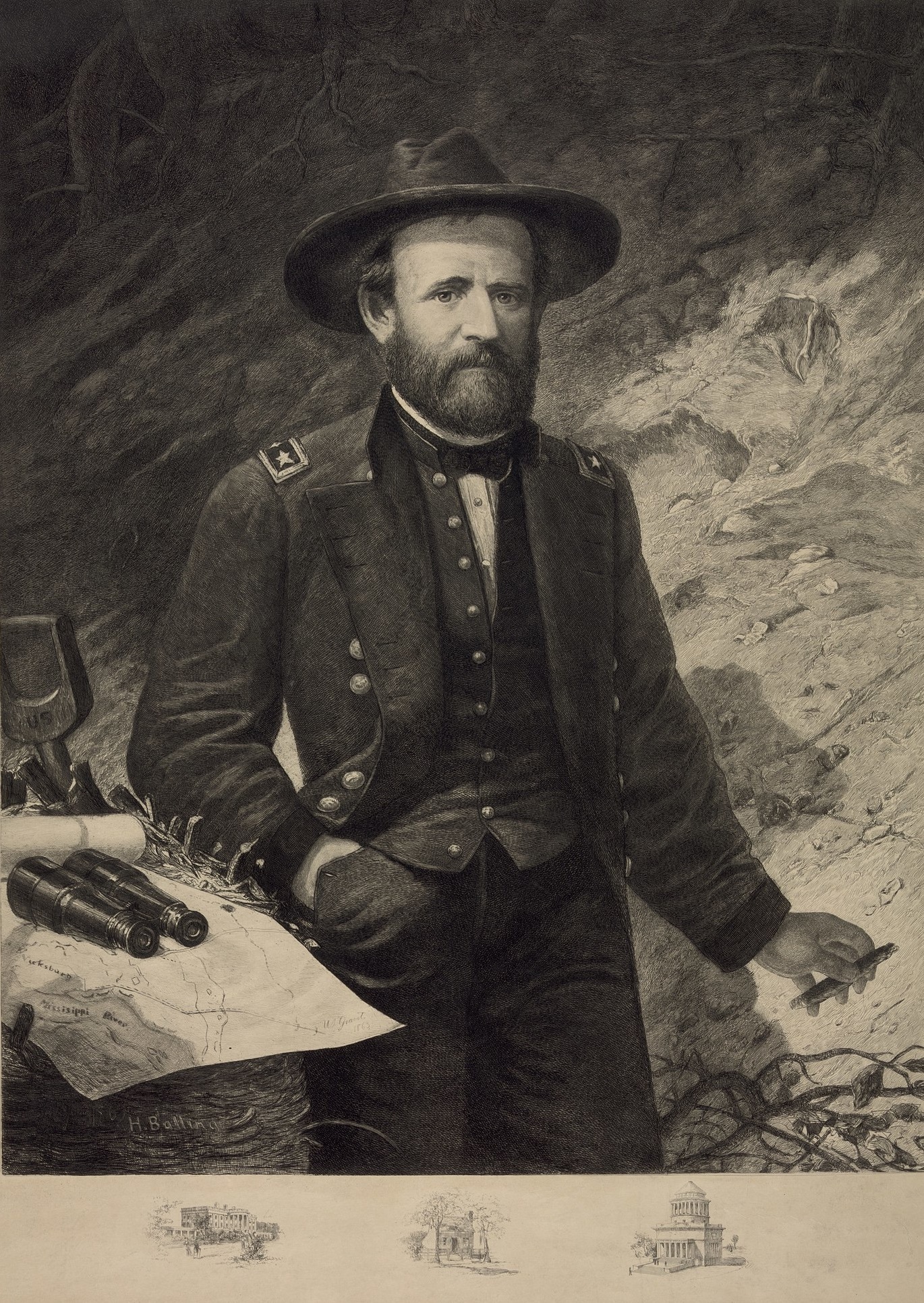
“Upon the surrender of the garrison of Vicksburg there were three things that required immediate attention. The first was to send a force to drive the enemy from our rear, and out of the State. The second was to send reinforcements to Banks near Port Hudson, if necessary, to complete the triumph of opening the Mississippi from its source to its mouth to the free navigation of vessels bearing the Stars and Stripes. The third was to inform the authorities at Washington and the North of the good news, to relieve their long suspense and strengthen their confidence in the ultimate success of the cause they had so much at heart.”
On July 4, 1863, Confederate commanding officer John C. Pemberton surrendered Vicksburg, Mississippi to Union forces led by Ulysses S. Grant.
from the Personal Memoirs of Ulysses S. Grant
Image from LOC, no known restrictions
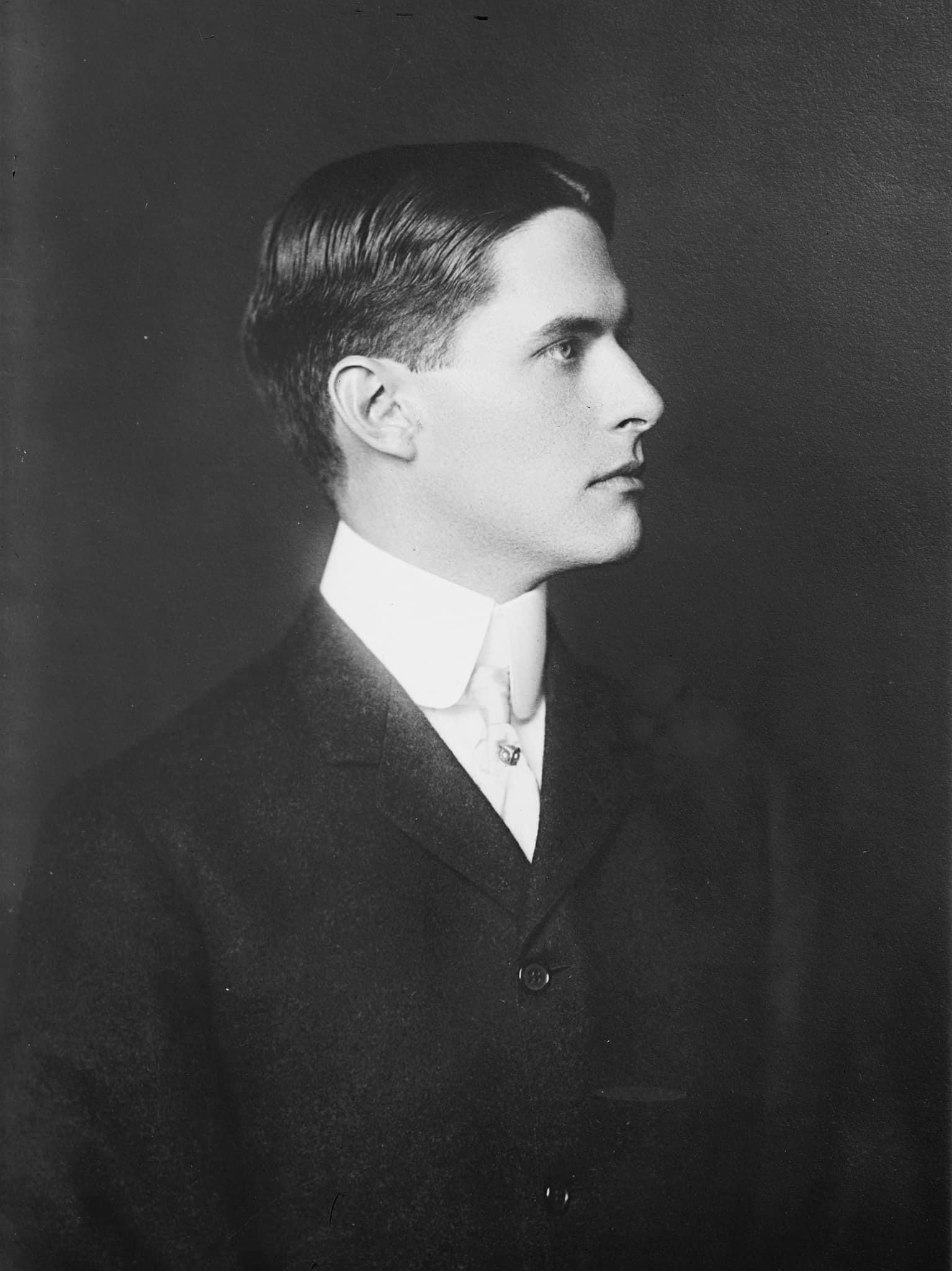
Photograph of World War I and World War II Veteran Ulysses S. Grant III, the grandson of Ulysses S. Grant.
He was born on July 4, 1881 in Chicago, Illinois and was classmates with Douglas MacArthur at West Point. Ulysses S. Grant III graduated from West Point in 1903, 60 years after his grandfather graduated from the U.S. Military Academy in 1843.
Image from LOC via Wikimedia Commons, public domain
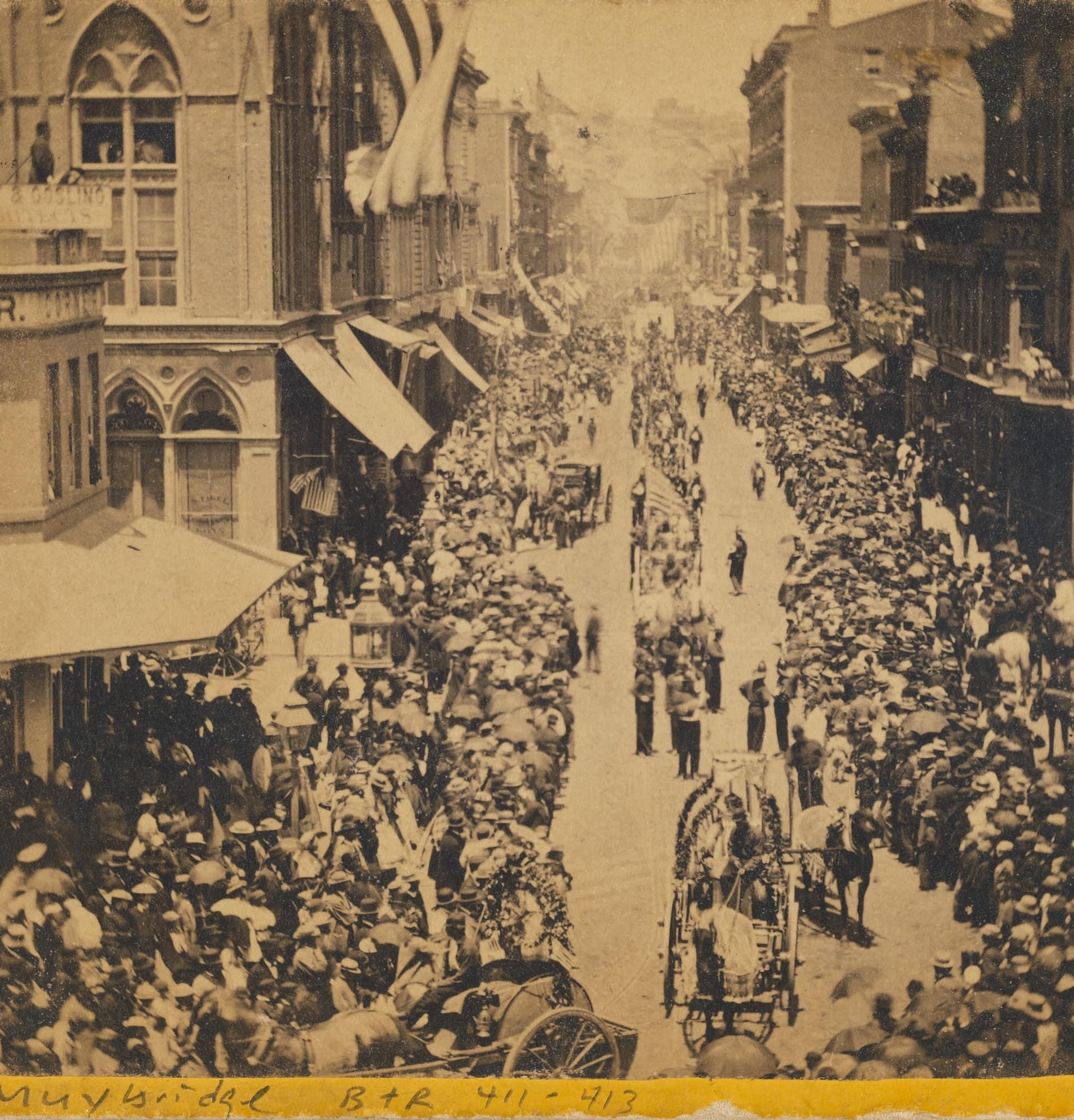
Montgomery Street
San Francisco, California
July 4, 1867
Image via The J. Paul Getty Museum, no known restrictions
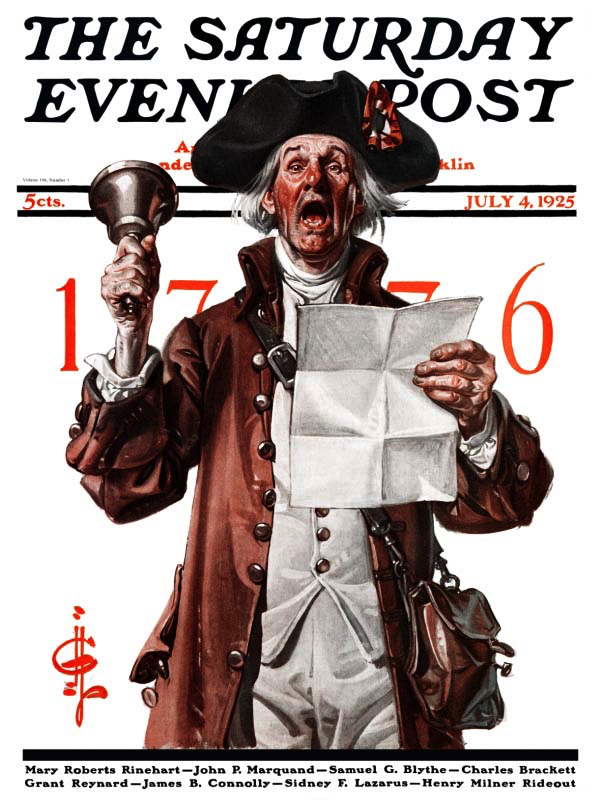
Cover of
The Saturday Evening Post
July 4, 1925
Image via Wikimedia Commons, public domain
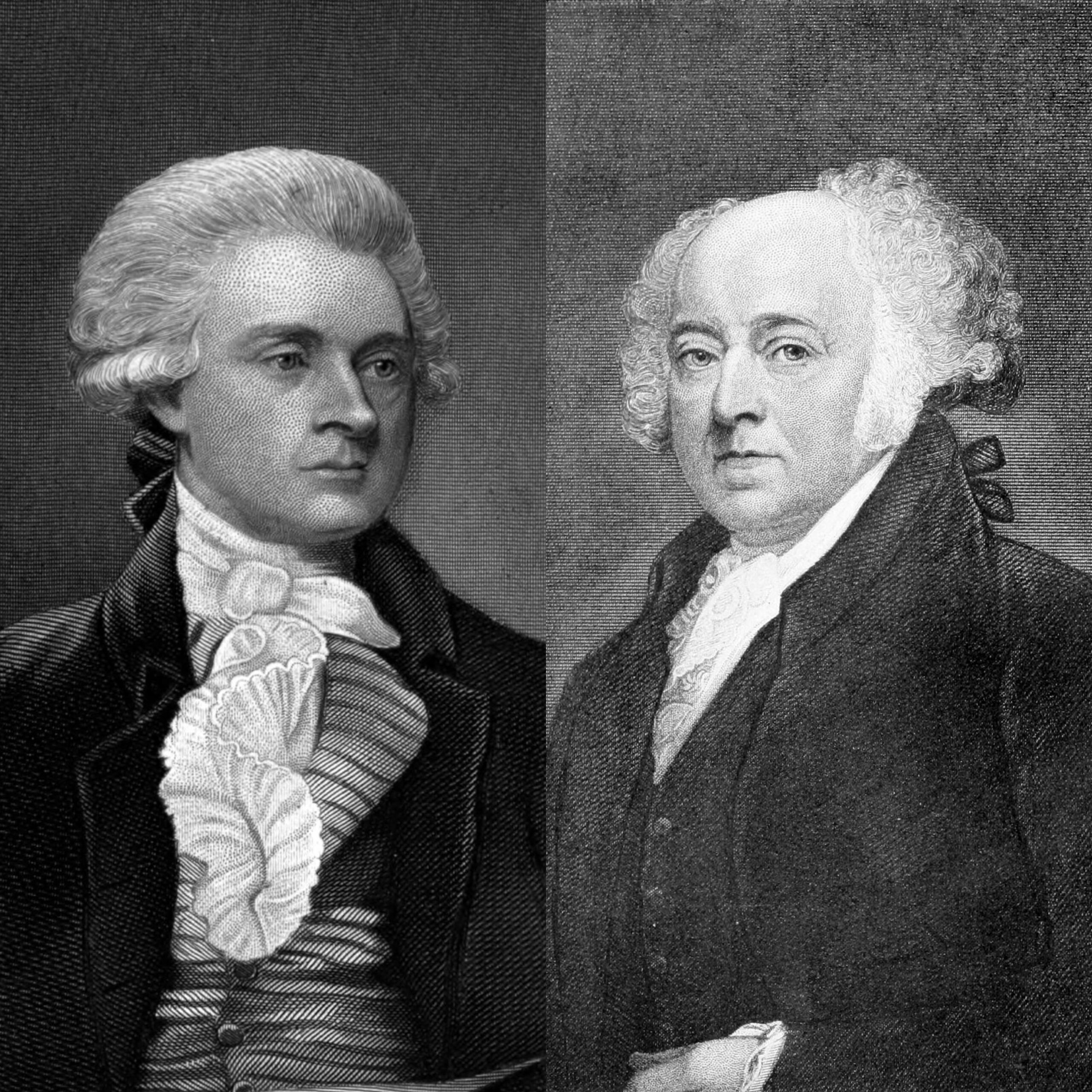
“This is the Fourth?”
considered to be the last words spoken by Thomas Jefferson (left) before he died around 12pm on July 4, 1826.
”Thomas Jefferson still survives”
considered to be the last words of John Adams (right) before he died around 5pm on July 4, 1826.
Adams wasn’t aware of Jefferson’s passing a few hours earlier.
July 4, 1826 was America’s Quinquagenary (50th Anniversary).
Both former U.S. Presidents, who died only hours apart, signed the Declaration of Independence fifty years earlier.
Images via Wikimedia Commons, public domain
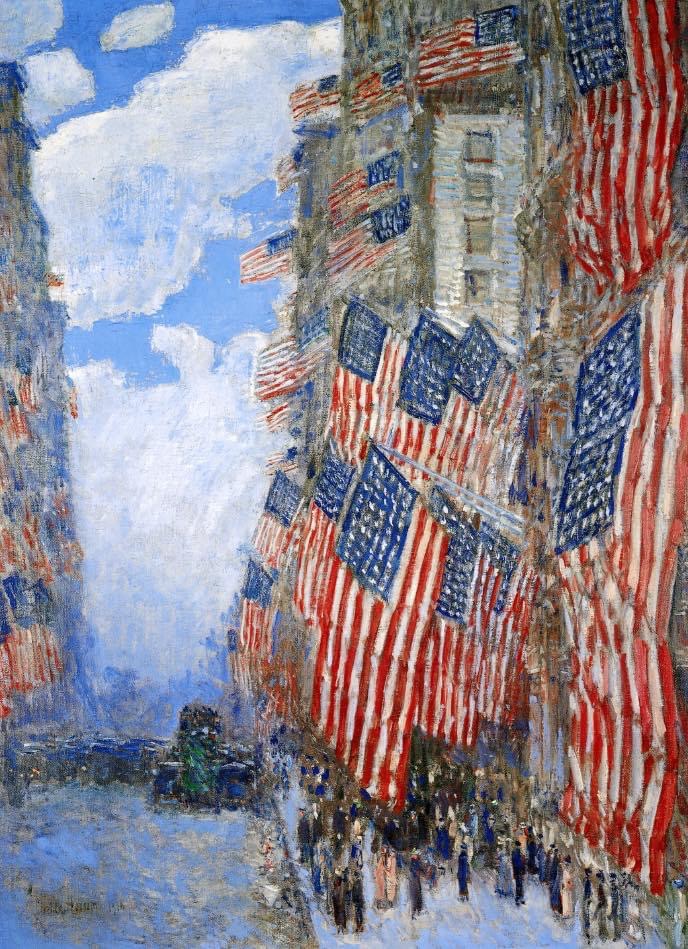
“The Fourth of July, 1916”
Painted by American artist Childe Hassam via Wikimedia Commons, public domain
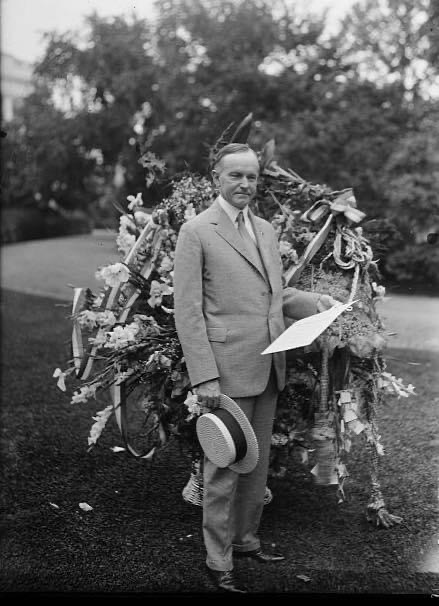
President Calvin Coolidge on July 4, 1924 receiving a wreath from Florist Telegraphers Assoc. on his birthday at the White House, Washington, D.C
via Library of Congress, no known restrictions
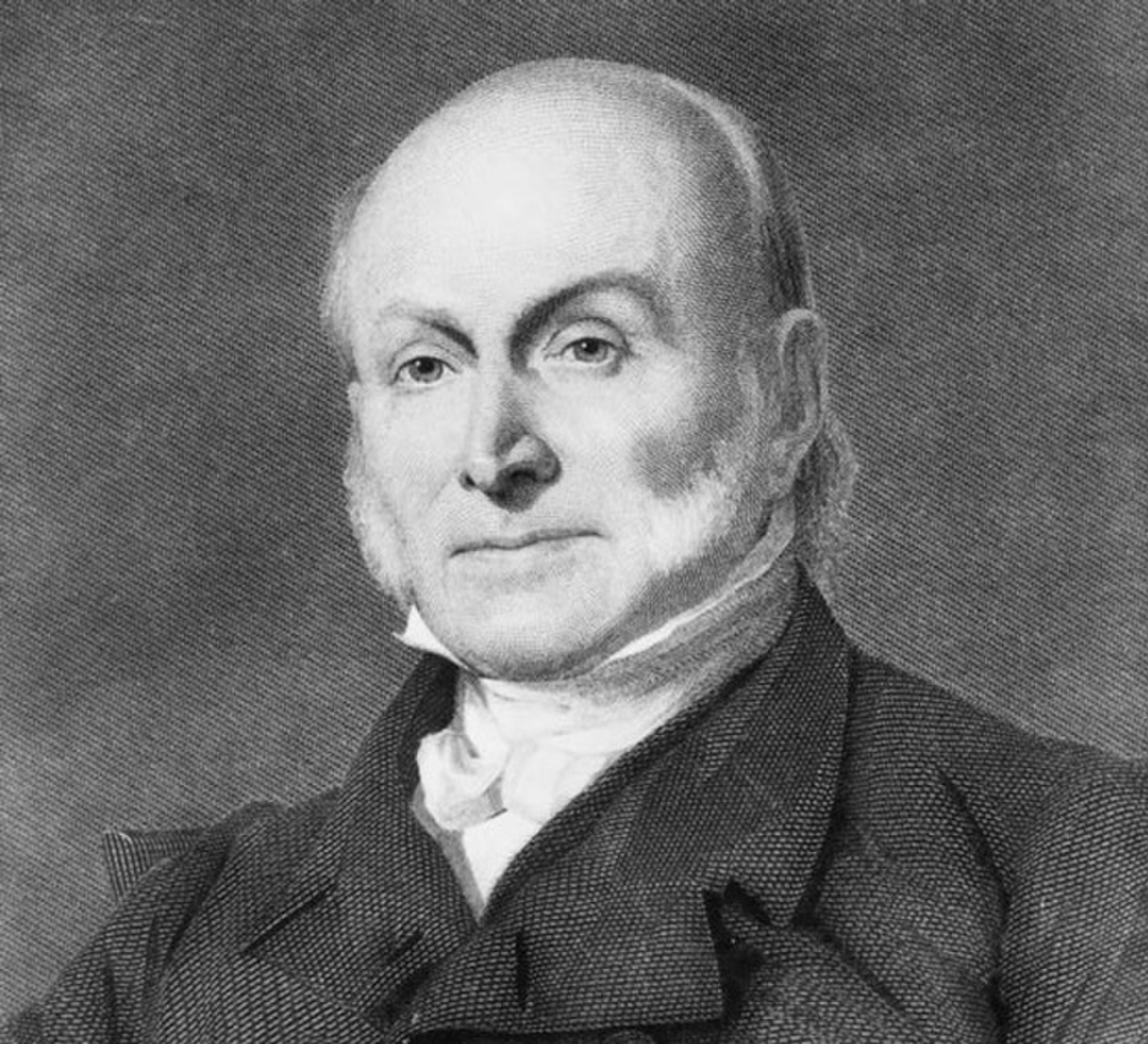
“America, with the same voice which spoke herself into existence as a nation, proclaimed to mankind the inextinguishable rights of human nature, and the only lawful foundations of government.”
– John Quincy Adams in his address to the U.S. House of Representatives on July 4, 1821
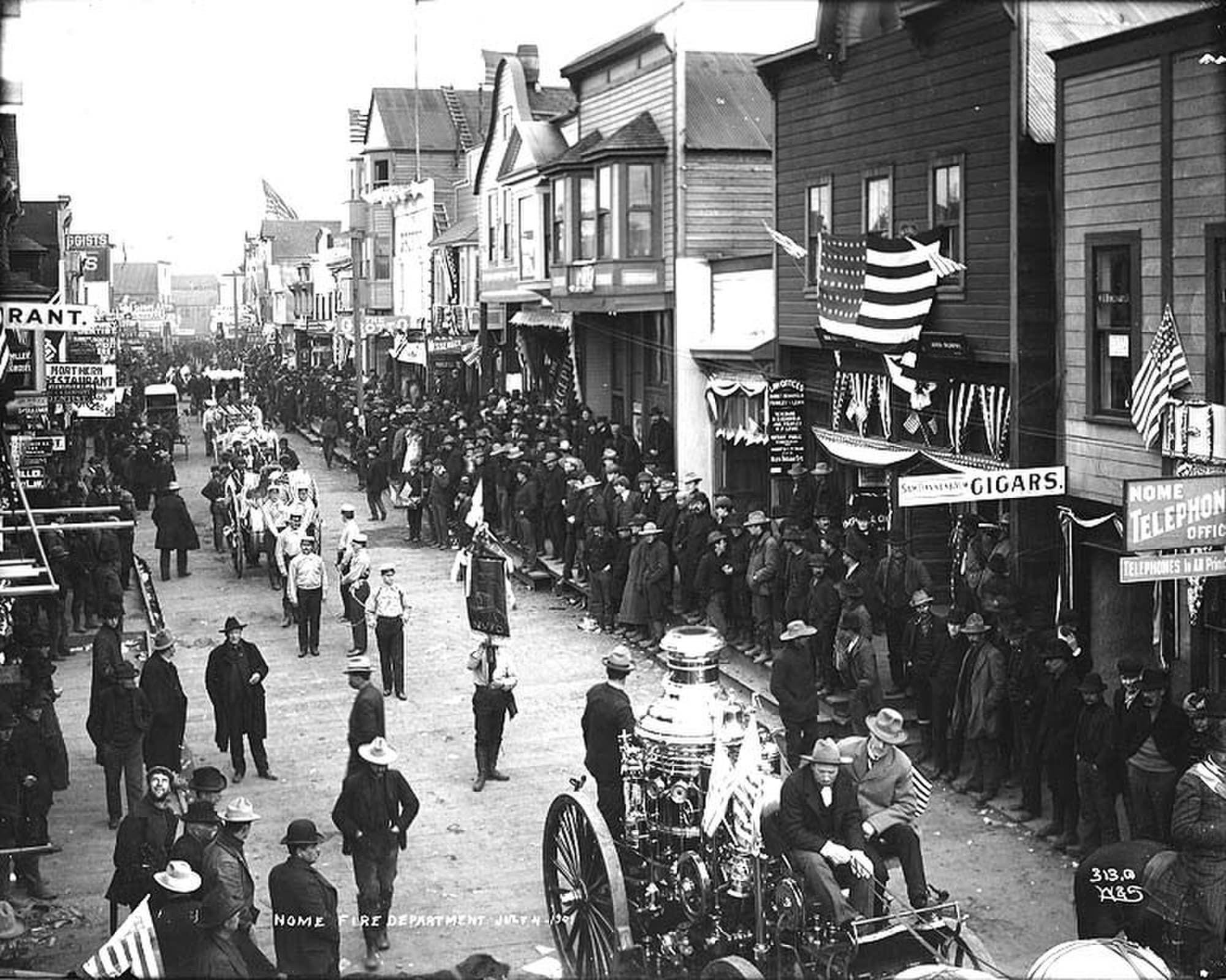
4th of July Parade – Nome Fire Department: Nome, Alaska
– 1901
via Wikimedia Commons, public domain
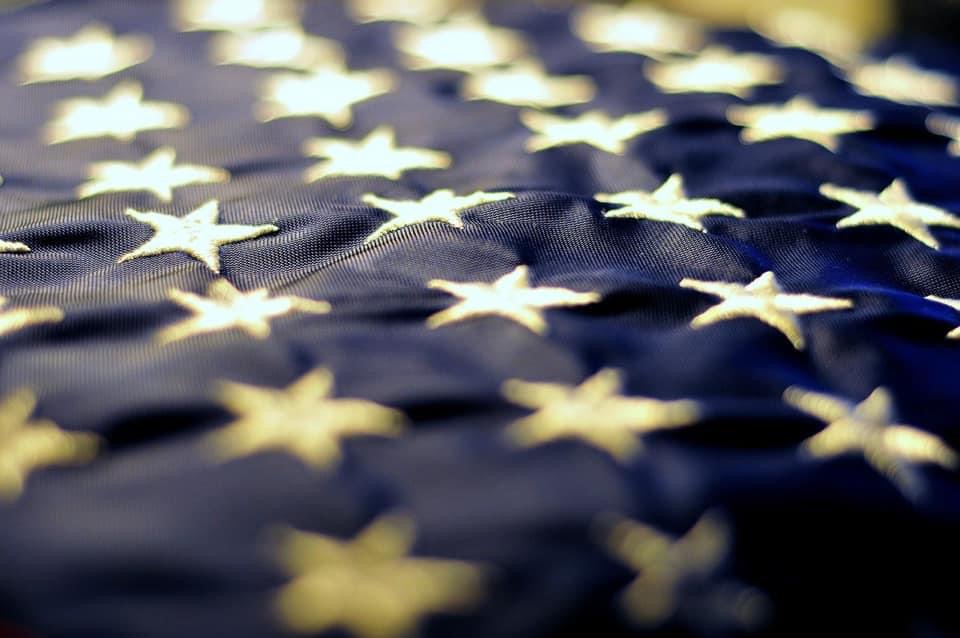
On July 4, 1960, designer Bob Heft stood with President Dwight D. Eisenhower as the new 50-star American flag was adopted and flown as the official flag of the United States.
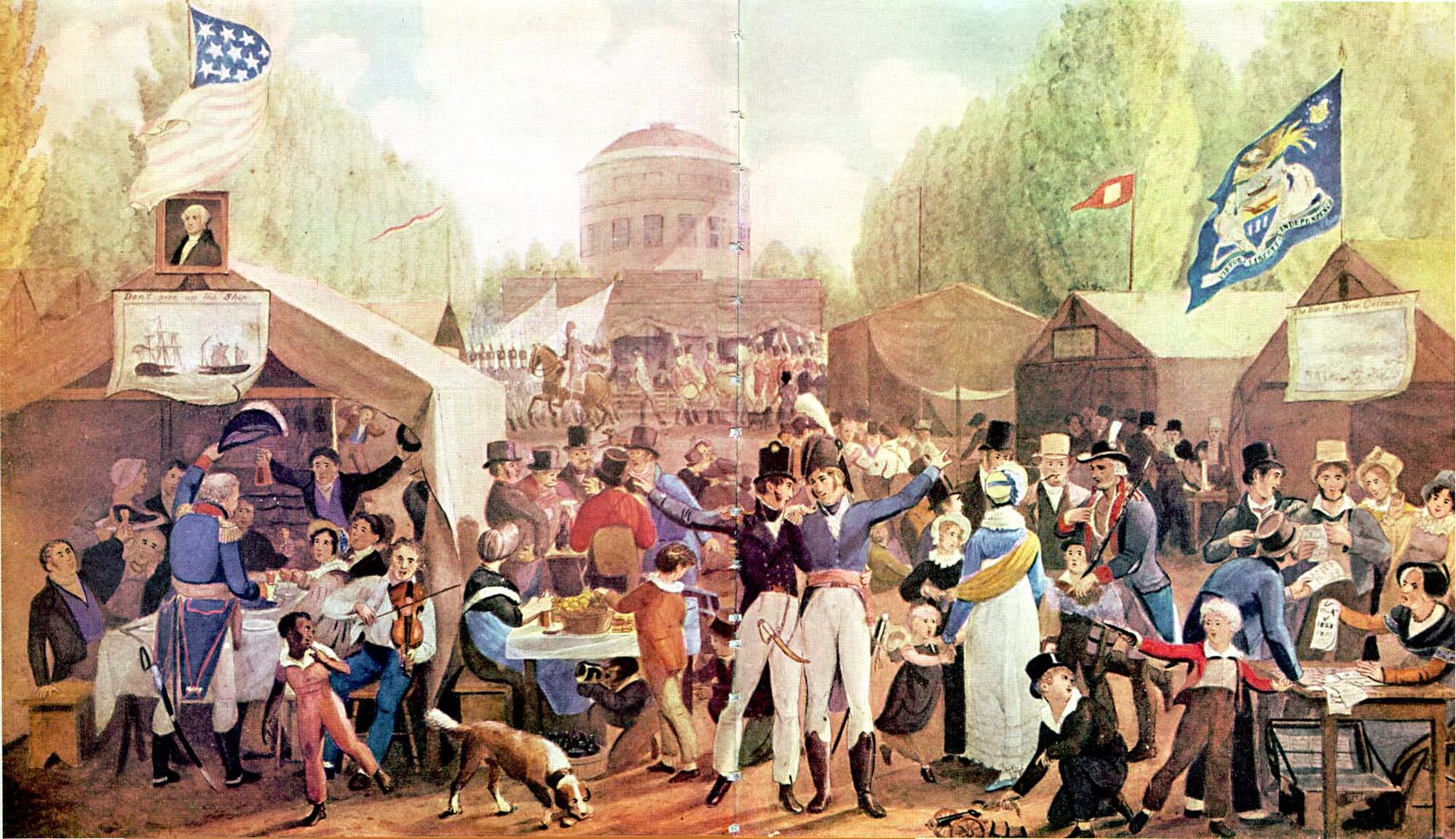
Independence Day Celebration in Centre Square, Philadelphia.
July 4, 1819
by German-American artist John Lewis Krimmel
via Wikimedia Commons, public domain
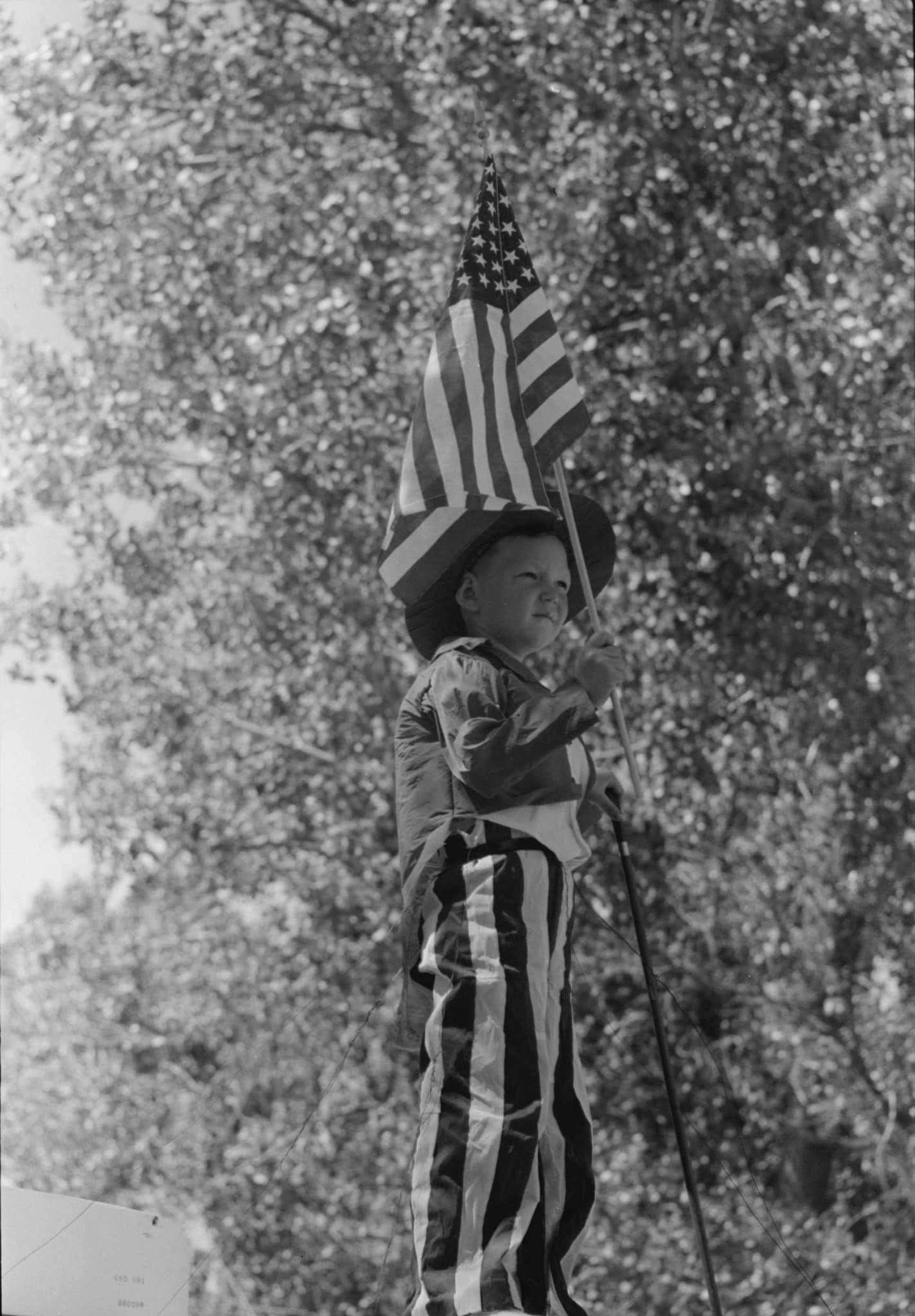
Boy on float in Fourth of July parade. Vale, Oregon
– 1941
via Library of Congress, no known restrictions
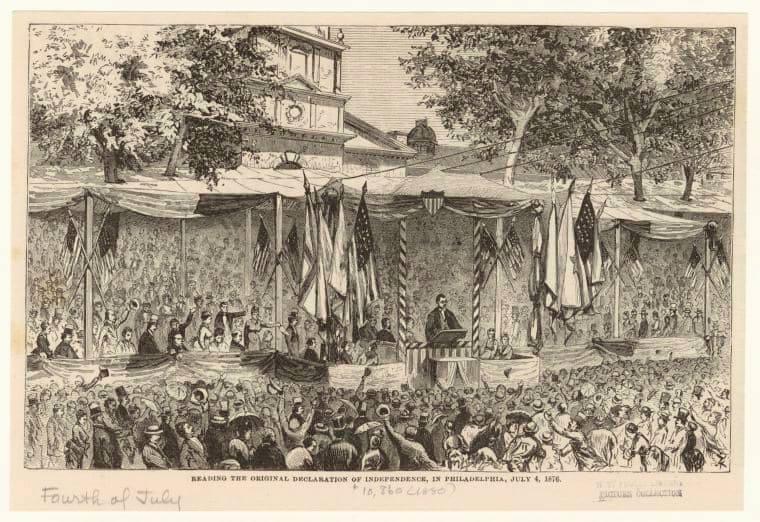
Reading the Original Declaration of Independence, in Philadelphia during a celebration that took place 100 years later
– July 4, 1876
via NYPL Digital Collections, public domain
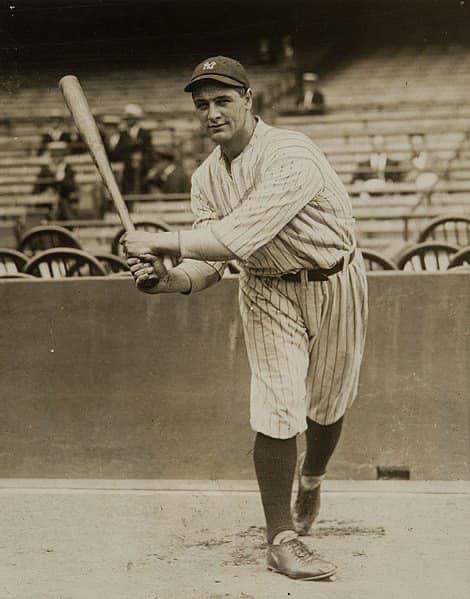
July 4, 1939 – just days after being diagnosed with the disease that would bear his name Lou Gehrig
retired from the New York Yankees. In an emotional farewell at Yankee Stadium Gehrig stated that during 17 seasons in baseball he’d received only “kindness and encouragement from you fans.”
Image of Lou in 1923 via Wikimedia Commons, public domain in the US
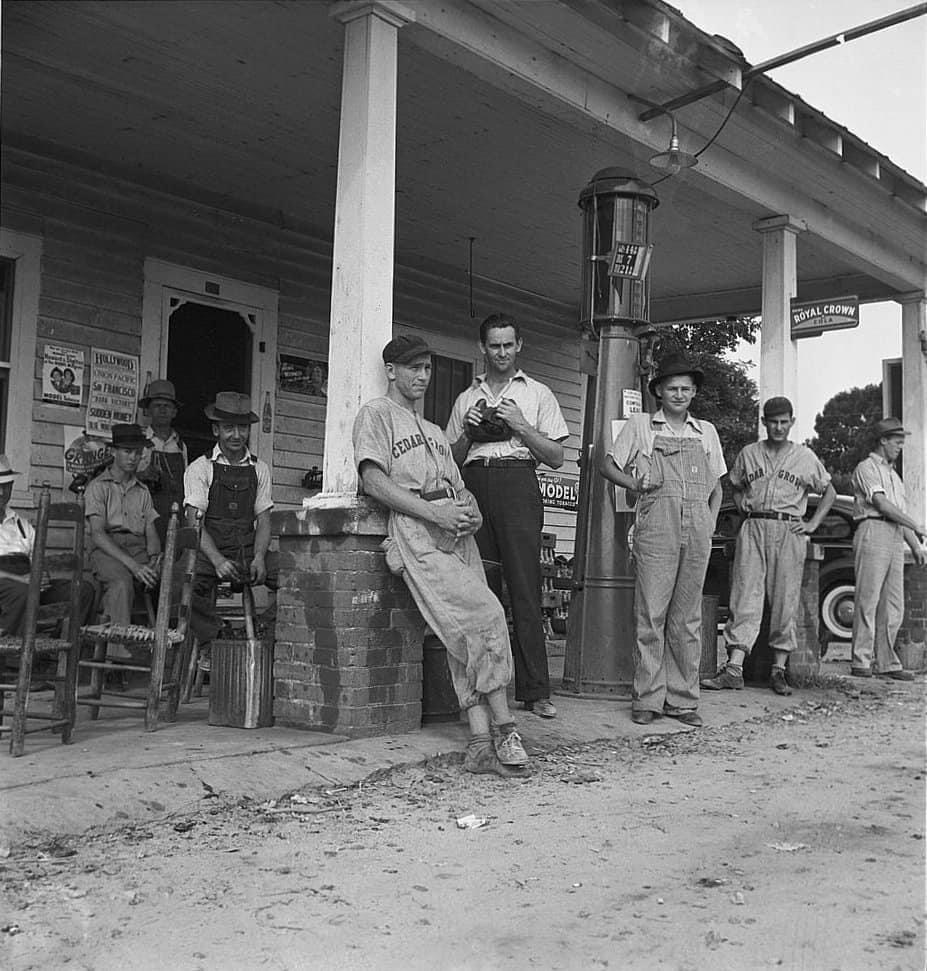
Fourth of July, near Chapel Hill, North Carolina. Rural filling stations become community centers and general loafing grounds. The men in the baseball suits are on a local team which will play a game nearby. They are called the Cedargrove Team
– July 4, 1939
From LOC via Wikimedia Commons, public domain
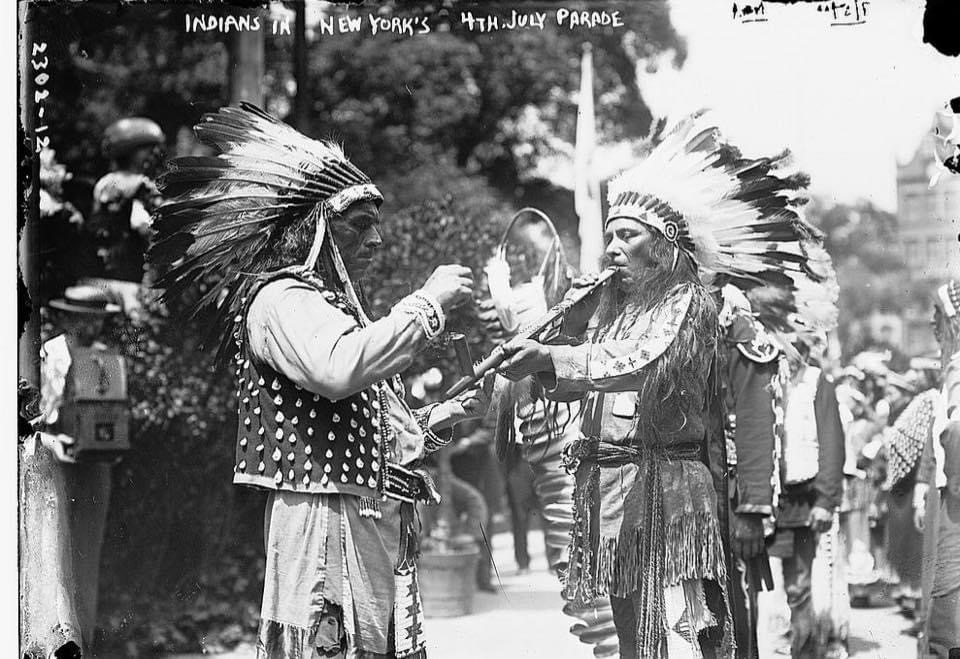
Native Americans in 4th of July Parade – New York
– early 1910s
via Library of Congress, no known restrictions
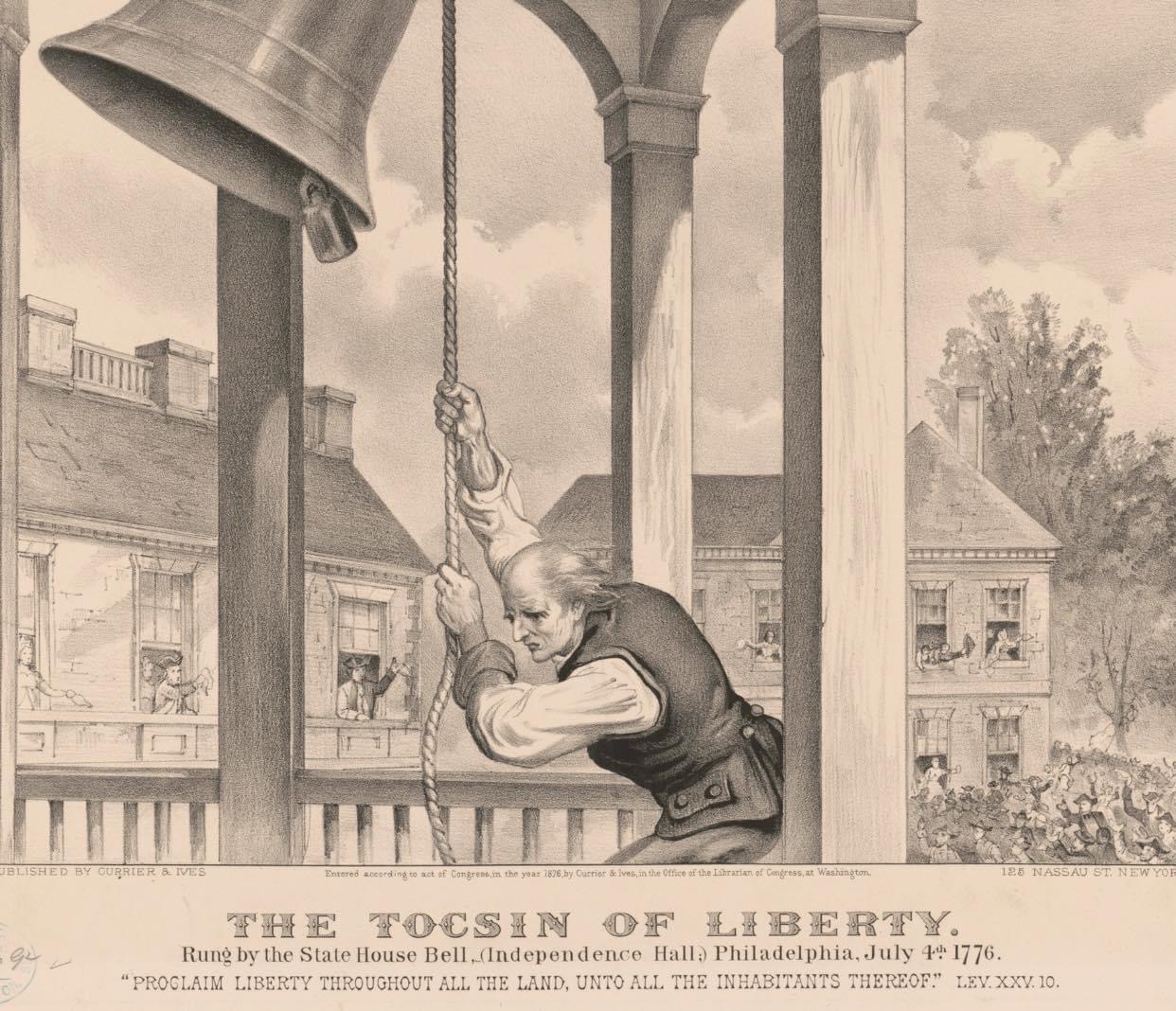
The Tocsin of Liberty – rung by the state house bell, (Independence Hall;) Philadelphia, July 4, 1776
via Wikimedia Commons, public domain
