
 Mystery March Is Here!
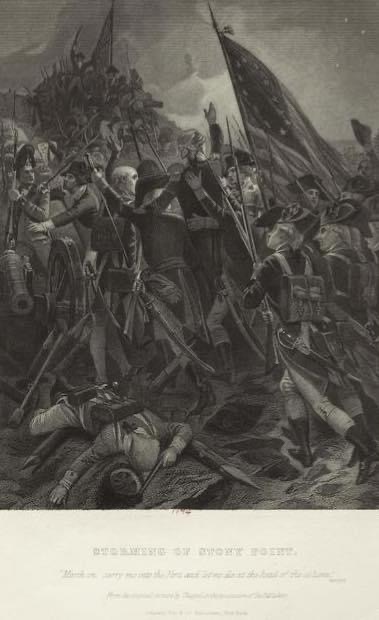
On July 16, 1779 the Continental Army stormed British fortifications at Stony Point in New York.
Image: The Miriam and Ira D. Wallach Division of Art, Prints and Photographs: Picture Collection, The New York Public Library.
No known restrictions
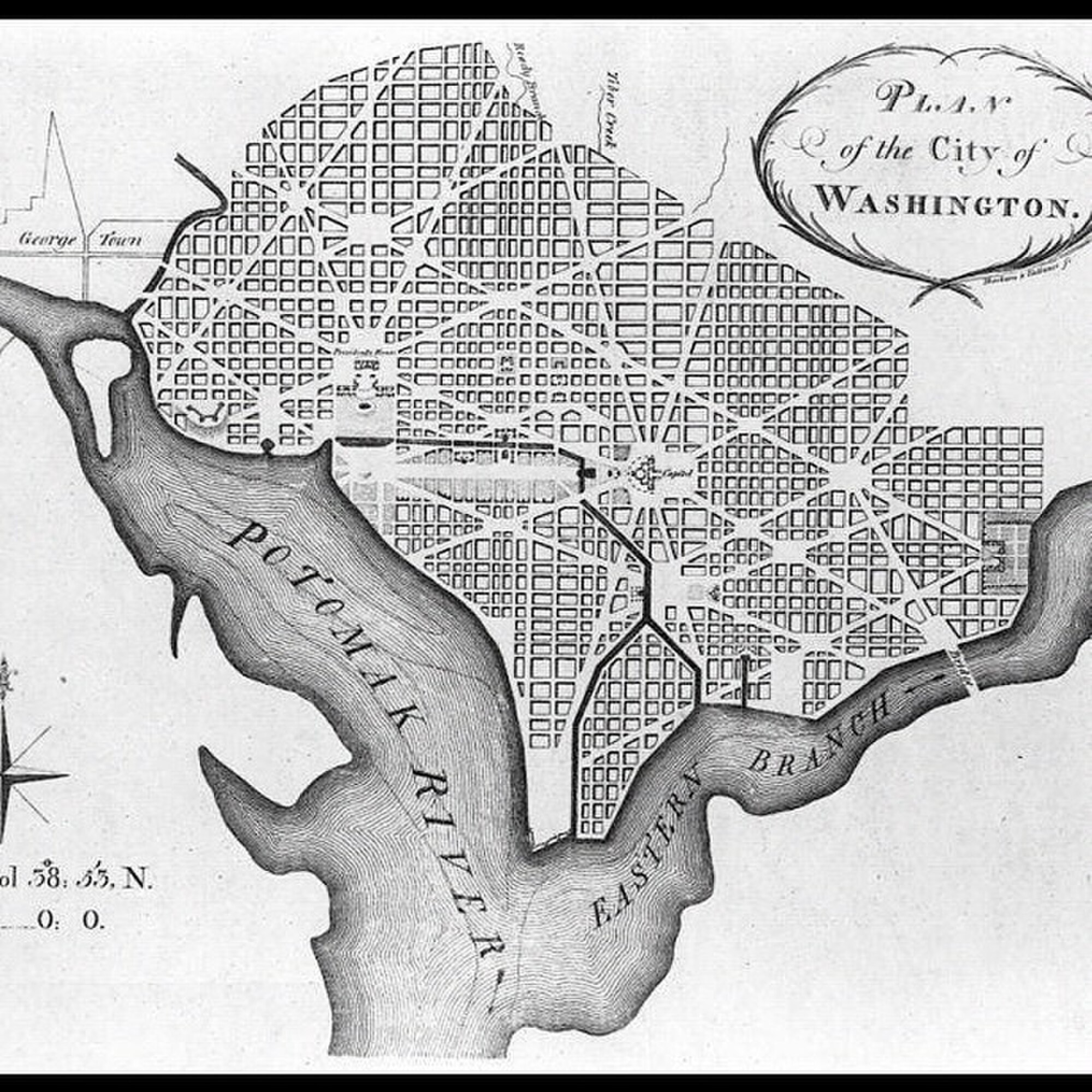
On July 16, 1790, President George Washington signed the Residence Act, a landmark piece of legislation that determined where America’s permanent capital would be built. It followed a backroom bargain orchestrated by Thomas Jefferson, Alexander Hamilton, and James Madison: in exchange for Southern support of Hamilton’s plan for the federal government to assume state debts, the capital would move south to a site on the Potomac River. This dinner-table deal would ultimately shape Washington, D.C., stitching together sectional interests and reflecting the balance of power in the young republic.
The act gave Washington authority to choose the exact location and oversee the creation of a federal district no larger than ten miles square. Philadelphia would serve as a temporary capital for ten years while the new city took shape—designed by Pierre Charles L’Enfant with grand boulevards and symbolic spaces meant to embody the ideals of democracy. More than a geographic decision, the Residence Act symbolized national unity, laying the foundation for the capital that still stands today.
Image via Wikimedia Commons, no known restrictions
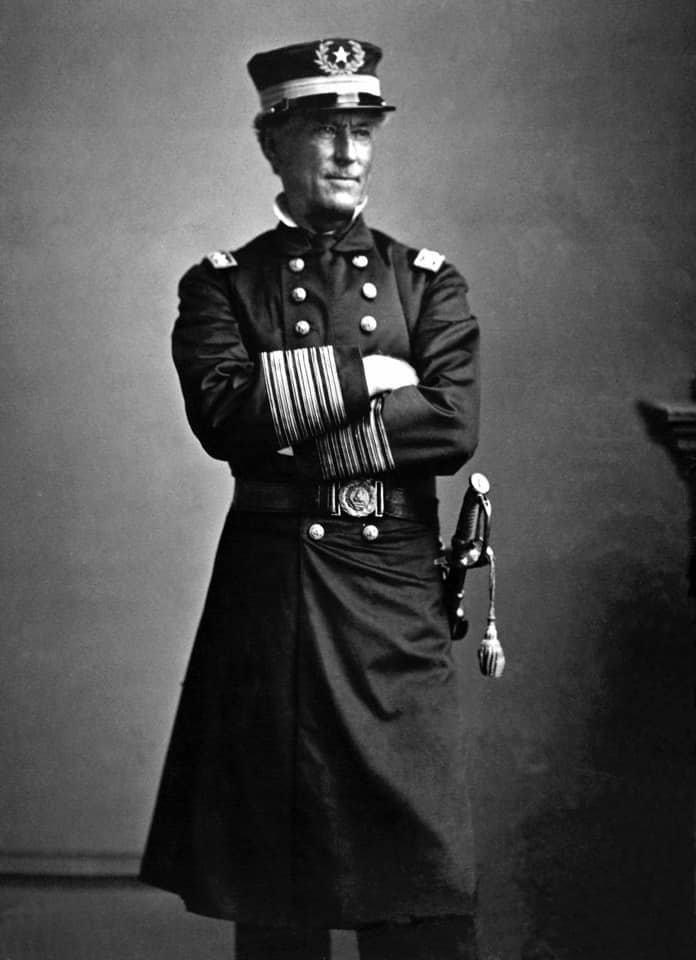
On July 16, 1862, U.S. Congress authorized the new rank of rear admiral for up to 9 officers in the U.S. Navy.
David Glasgow Farragut was promoted as the first rear admiral.
According to the same Act of Congress that was approved on that same day July 16, 1862, upon retirement admirals were to receive a pay of $2,000 per year.
A few years later Farragut was promoted to Vice Admiral and later became Admiral.
Image: Rear Admiral David G. Farragut, c. 1863 via Wikimedia Commons, public domain
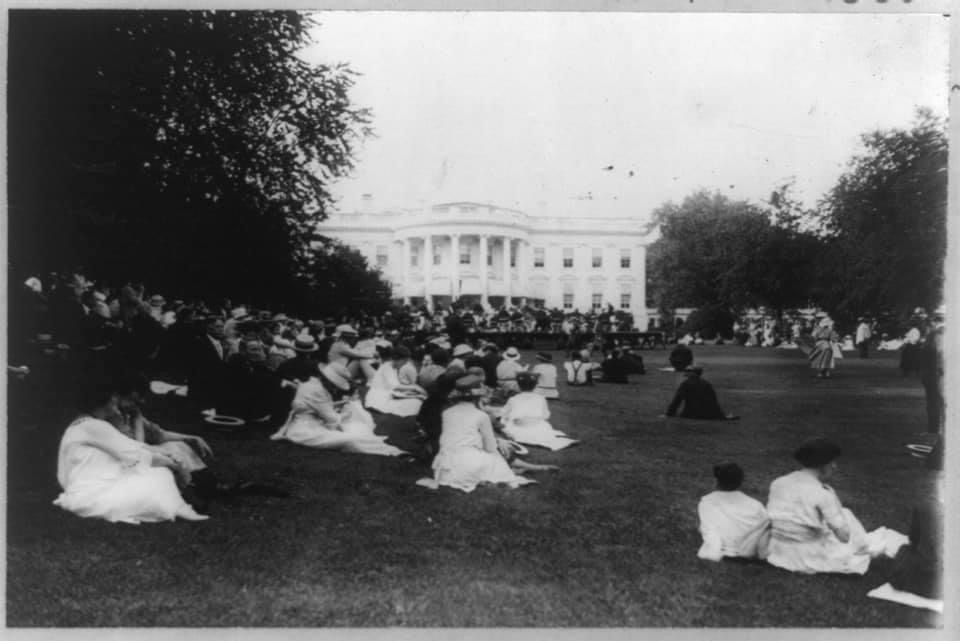
Concert by the U.S. Marine Band on the White House grounds, Washington, D.C.
– July 16, 1921
via Library of Congress, no known restrictions
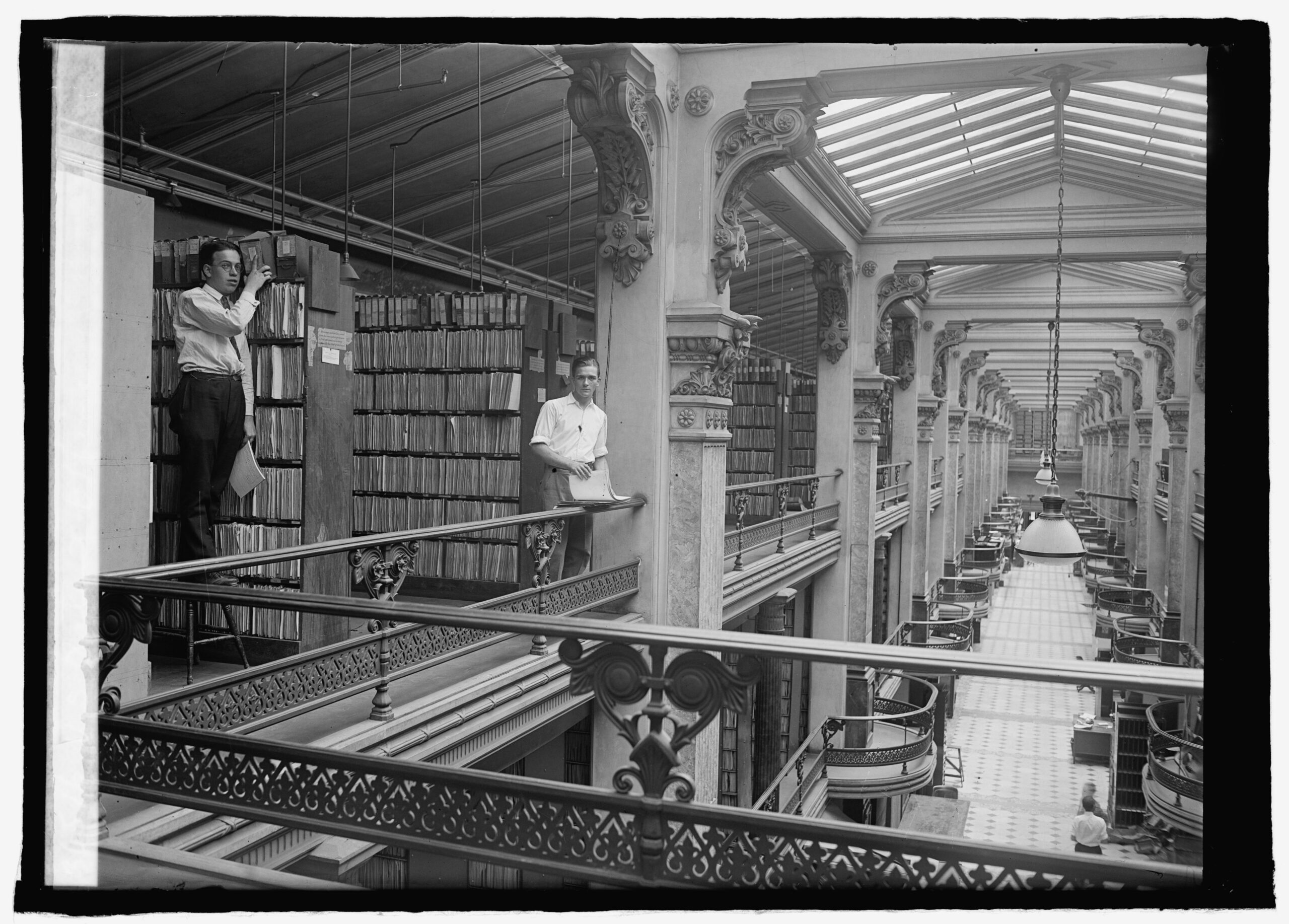
A view inside the U.S. Patent Office—exactly one century ago today.
7/16/1925
Amid towering shelves and skylit hallways, two guardians of innovation sift through the blueprints of America’s future. This space was more than storage—it was a vault of imagination. Every sketch and document reflected the hopes of inventors shaping industries from telephony to aviation, and stood as enduring proof that progress begins with an idea.
Image via LOC, no known restrictions
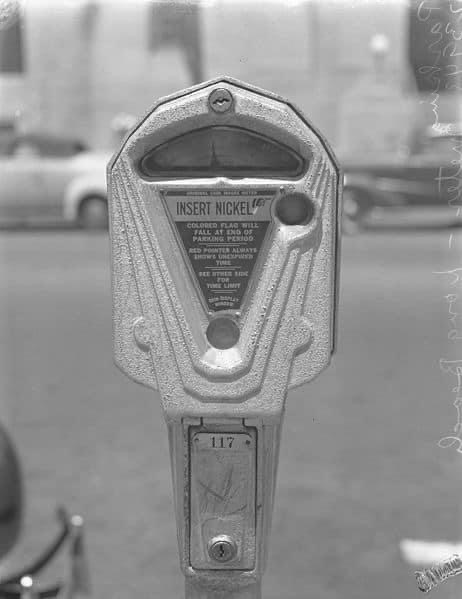
July 16, 1935 – the first coin-operated parking meters are installed in Oklahoma City, Oklahoma. It took a pair of engineering professors at Oklahoma State University two years to perfect the simple, sturdy, fairly vandal-resistant design. The little nickel-grabber pictured here dates from about 1940.
Image via Wikimedia Commons, public domain in the US
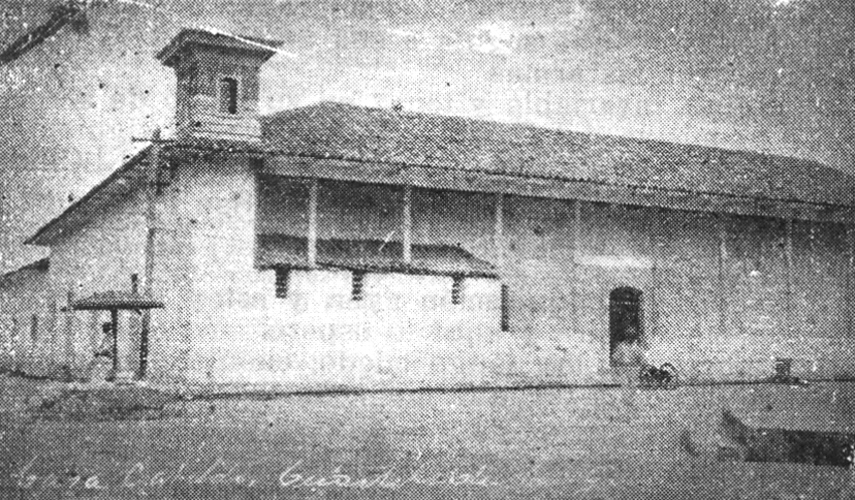
Fort Ocotal in Nicaragua
On July 16, 1927 around 40 U.S. Marines garrisoned at the fort were attacked by several hundred rebels. Despite being greatly outnumbered, the Marines held the fort in what became known as The Battle of Ocotal during The Banana Wars.
Image via Wikimedia Commons, public domain
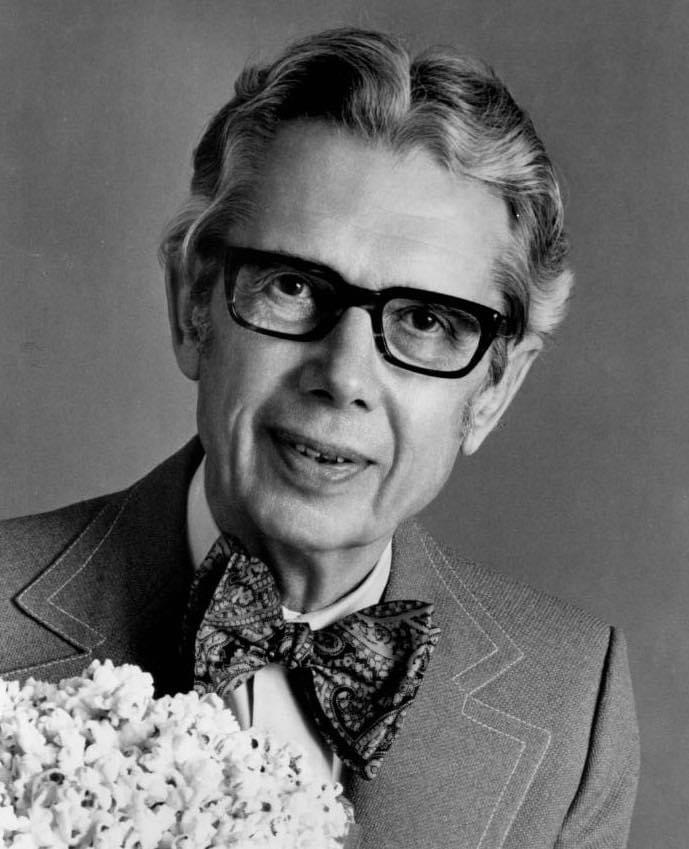
Innovator of popcorn hybrids, Orville Redenbacher, was born on July 16, 1907 in Brazil, Indiana.
Image: Orville Redenbacher in 1979 via Wikimedia Commons, public domain
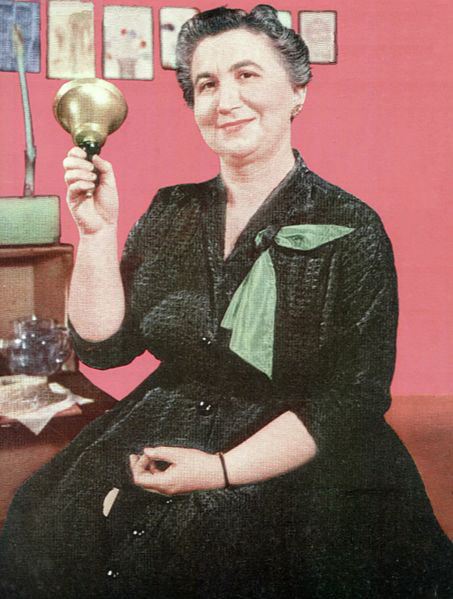
Born July 16, 1907 educator and television pioneer Frances Horwich was known to millions of American children as Miss Frances of Ding Dong School. The popular televised version of a nursery school ran on NBC from 1952 to 1956 and in syndication until 1965.
Image by Whitman Publishing via Wikimedia Commons, copyright not renewed public domain in the US.
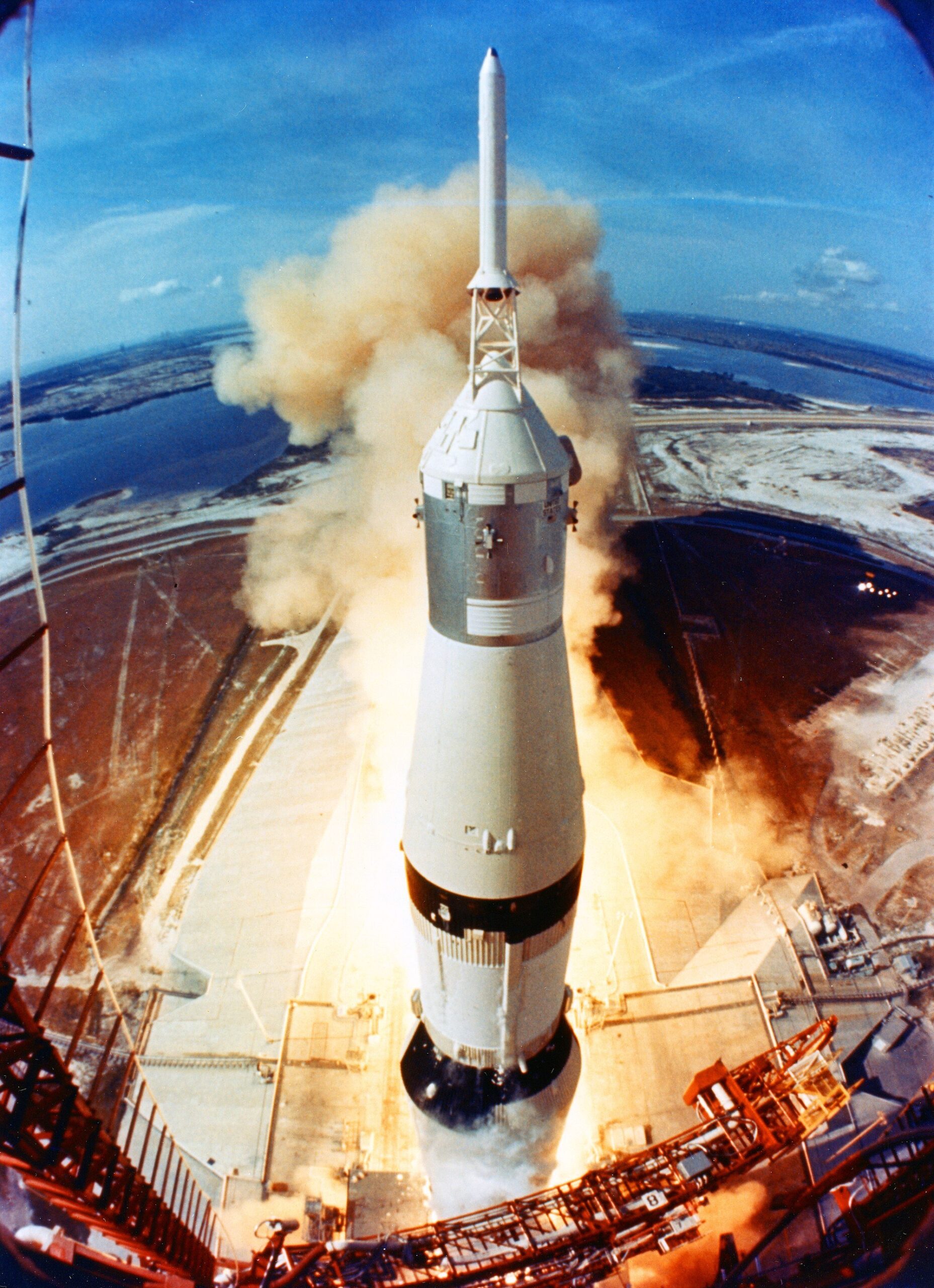
Liftoff of Apollo 11, the first manned lunar landing mission, on July 16, 1969.
Image via Wikimedia Commons, public domain
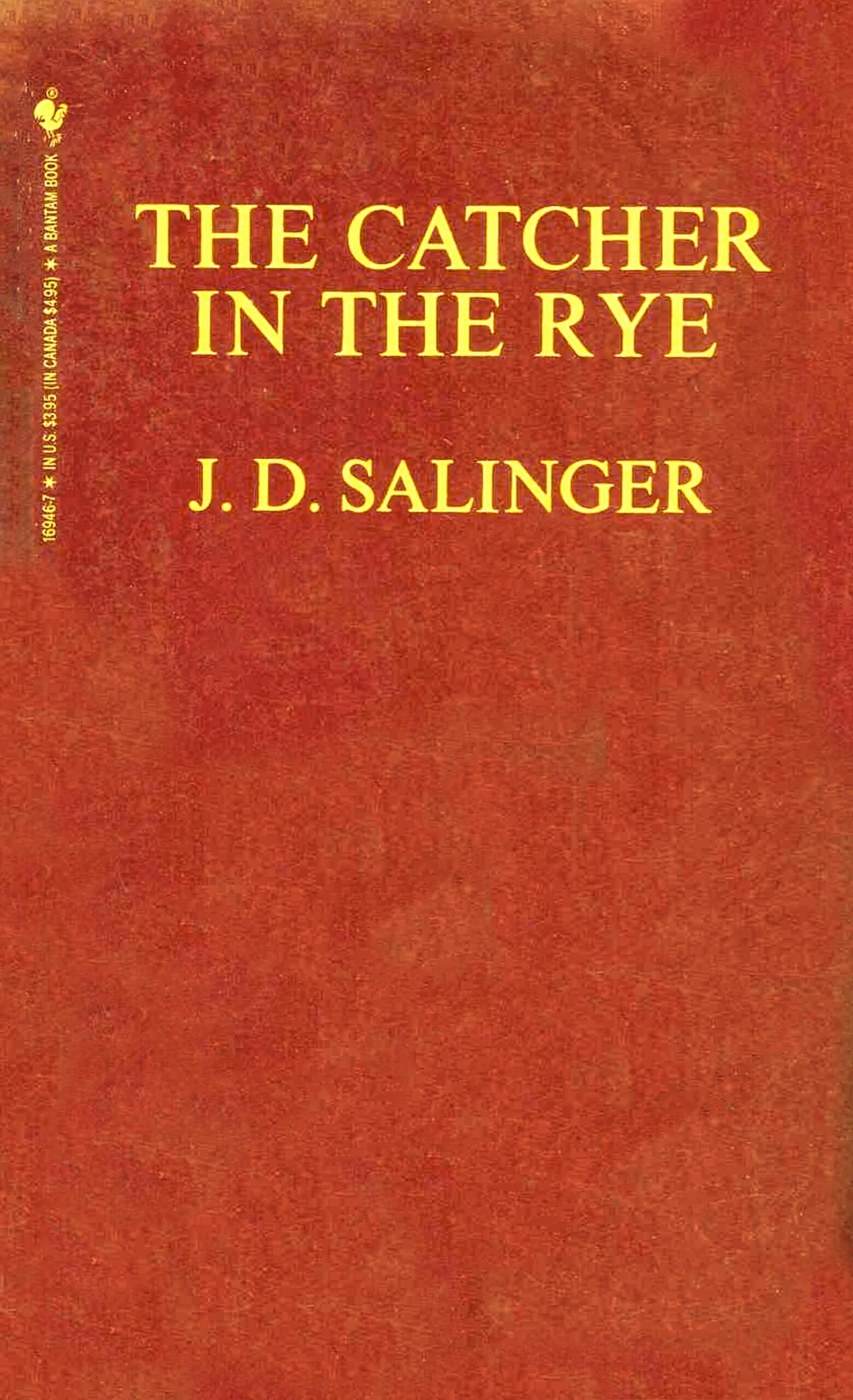
The Catcher in the Rye emerged and changed the literary landscape when it was published on July 16, 1951.
At its core is sixteen-year-old Holden Caulfield, a vagrant with a scarred spirit and a strong desire to preserve innocence in a world that seems increasingly false.
Holden’s emotional breakdown was woven by J.D. Salinger from the strands of his own life, including his failures in prep school, the trauma of war, and his increasing disenchantment with contemporary society. Salinger’s desperate desire to protect purity from the damaging weight of adulthood and loss is reflected in Holden’s “catcher” fantasy, in which he imagines rescuing children from plunging into the abyss of adulthood. The book is more than just a story about growing up.
Image via Wikimedia Commons, public domain
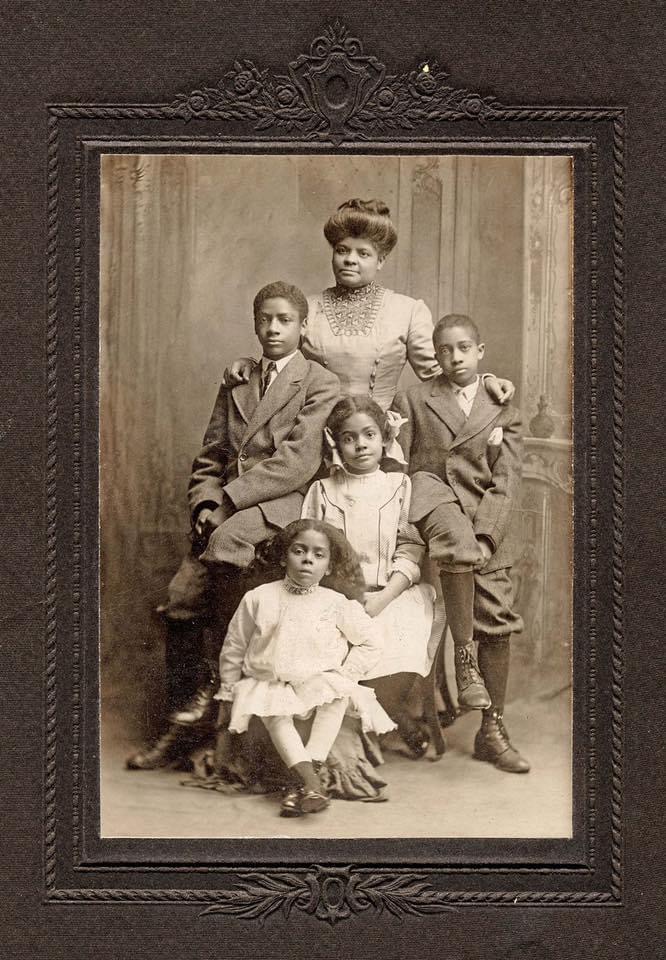
Civil rights leader Ida B. Wells was born on July 16, 1862 in Holly Springs, Mississippi.
Image: Ida B. Wells with her children, 1909 via Wikimedia Commons, public domain
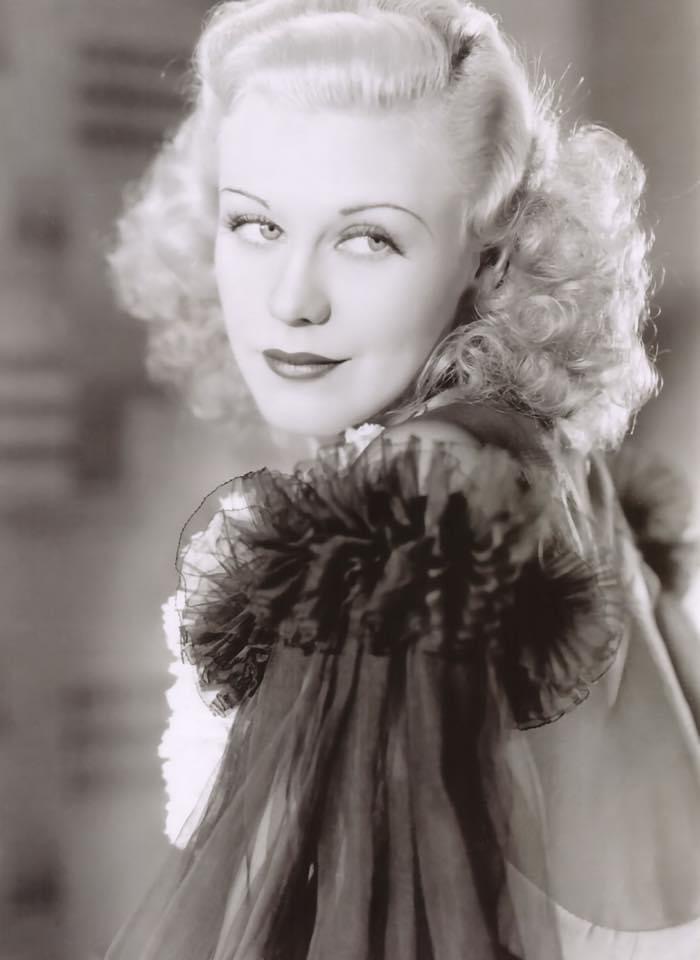
Ginger Rogers was born on Sunday, July 16, 1911 in Independence, Missouri.
Most known for her dancing skills in feature films with Fred Astaire, Rogers also played tennis. In 1950 she participated in the U.S. Open.
Image: Ginger Rogers
c. 1937 via Wikimedia Commons, public domain

Happy Birthday Will Ferrell who was born on July 16, 1967 in Irvine, California.
His father, Roy, a musician, played keyboard and saxophone for the Righteous Brothers.
Image: Jon Gudorf Photography CC BY-SA 2.0 via Wikimedia Commons
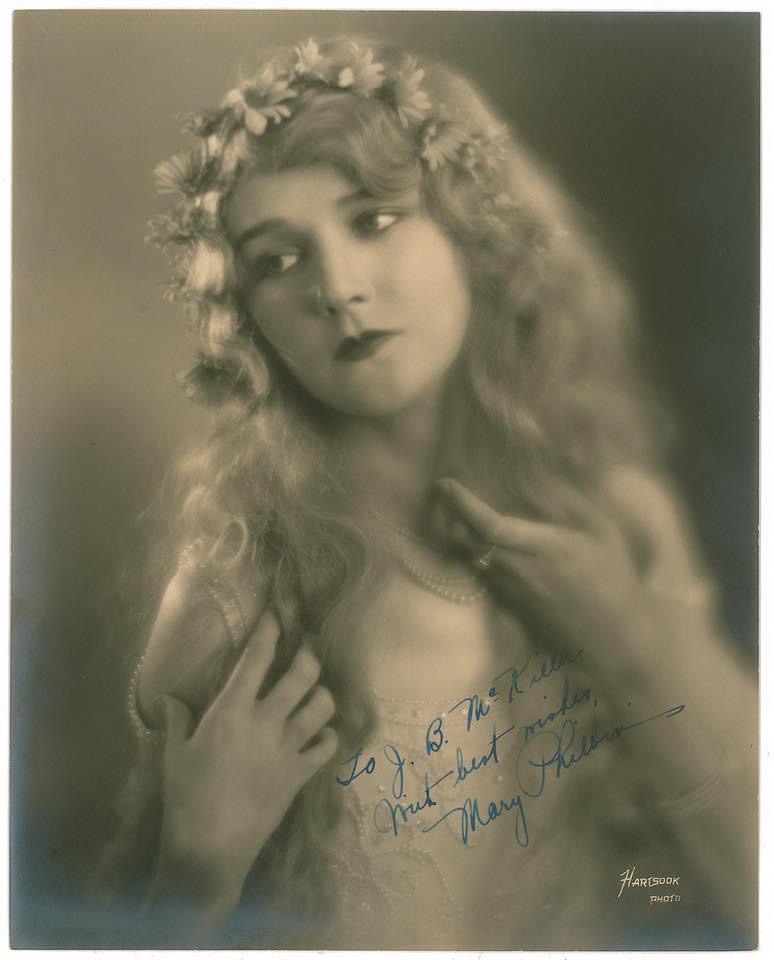
American actress Mary Philbin was born on July 16, 1902 in Chicago, Illinois.
She starred in the 1925 silent film “The Phantom of The Opera” that featured Lon Chaney as the phantom.
Image: Mary Philbin c. 1920 by Hartsook Photo via Wikimedia Commons, public domain
