
 Mystery March Is Here!
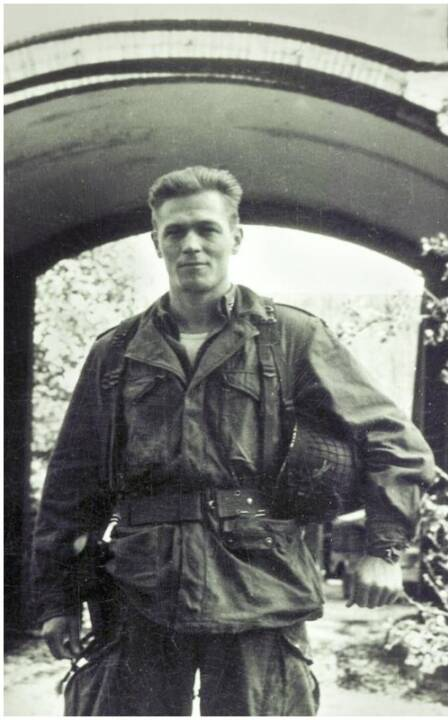
Dick Winters was born on January 21, 1918 in New Holland, Pennsylvania.
In the early morning hours of D-Day he parachuted into France with fellow paratroopers and became commanding officer of Easy Company during the Battle of Normandy.
Winters would continue to lead and fight throughout numerous campaigns in Europe for the remainder of WWII including the capture of Kehlsteinhaus (Hitler’s Eagle’s Nest) in Germany
Image via Wikimedia Commons, public domain
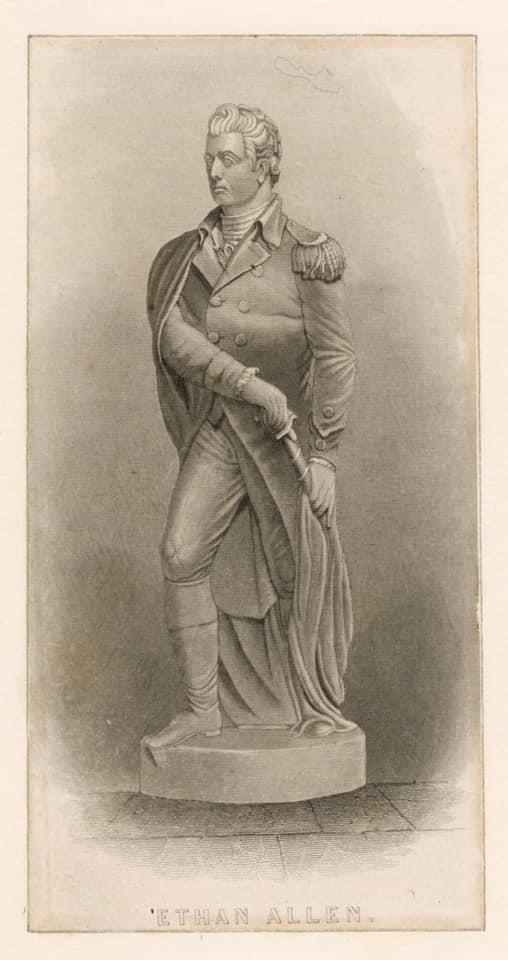
On January 21, 1738, Revolutionary War Hero Ethan Allen was born in Litchfield, Connecticut.
“When he was two years old the family moved into Cornwall. There his brothers and sisters were born, there his father died, there Ethan lived until he was twenty-four years old. When seventeen he was fitting for college with the Rev. Mr. Lee, of Salisbury. His father’s death put an end to his studies. This was in 1755, when the French and Indian war was raging along Lakes George and Champlain, a war which lasted until Allen’s twenty-third year. Some of the early settlers of Vermont, Samuel Robinson, Joseph Bowker, and others, took part in this war. Not so Allen. There is no intimation that he hungered for a soldier’s life in his youth. His usual means of earning a livelihood for himself and his widowed mother’s family is supposed to have been agriculture.
William Cothrens, in his “History of Ancient Woodbury,” tells us that in January, 1762, Allen, with three others, entered into the iron business in Salisbury, Connecticut, and built a furnace. In June of that year he returned to Roxbury, and married Mary Brownson, a maiden five years older than himself. The marriage fee was four shillings, or sixty -seven cents. By this wife he had five children: one son, who died at the age of eleven, while Ethan was a captive, and four daughters. Two died unmarried; one married Eleazer W. Keyes, of Burlington; the other married the Hon. Samuel Hitchcock, of Burlington, and was the mother of General Ethan Allen Hitchcock, U.S.A.”
From: Ethan Allen, the Robin Hood of Vermont, by Henry Hall, published in the late 1800s
https://archive.org/details/robinhoodvermont00hallrich/page/12/mode/2up
Source says not in copyright
Image via NYPL Digital Collections, no known restrictions
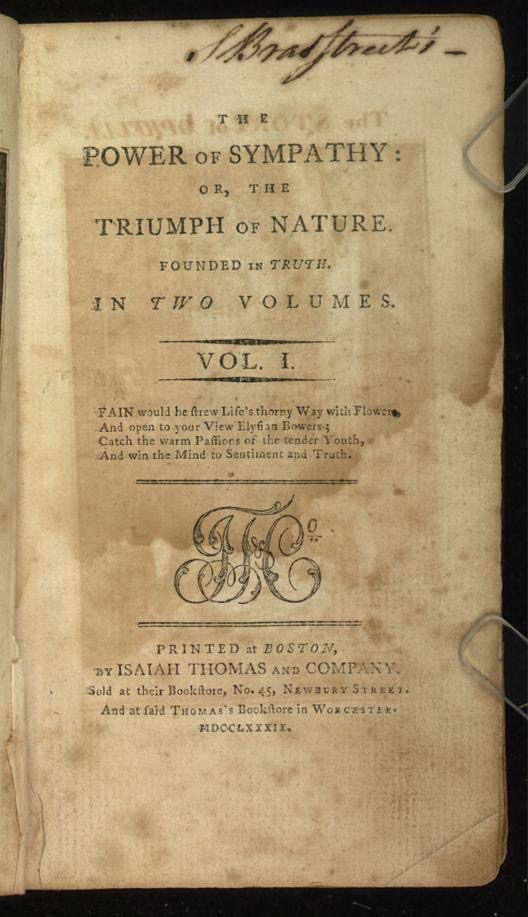
On today’s date January 21, 1789: “The Power of Sympathy” or “The Triumph of Nature Founded in Truth” was printed in Boston. It is widely considered as the first American novel.
Photo: Title page of the first edition by William Hill Brown [Public domain], via Wikimedia Commons
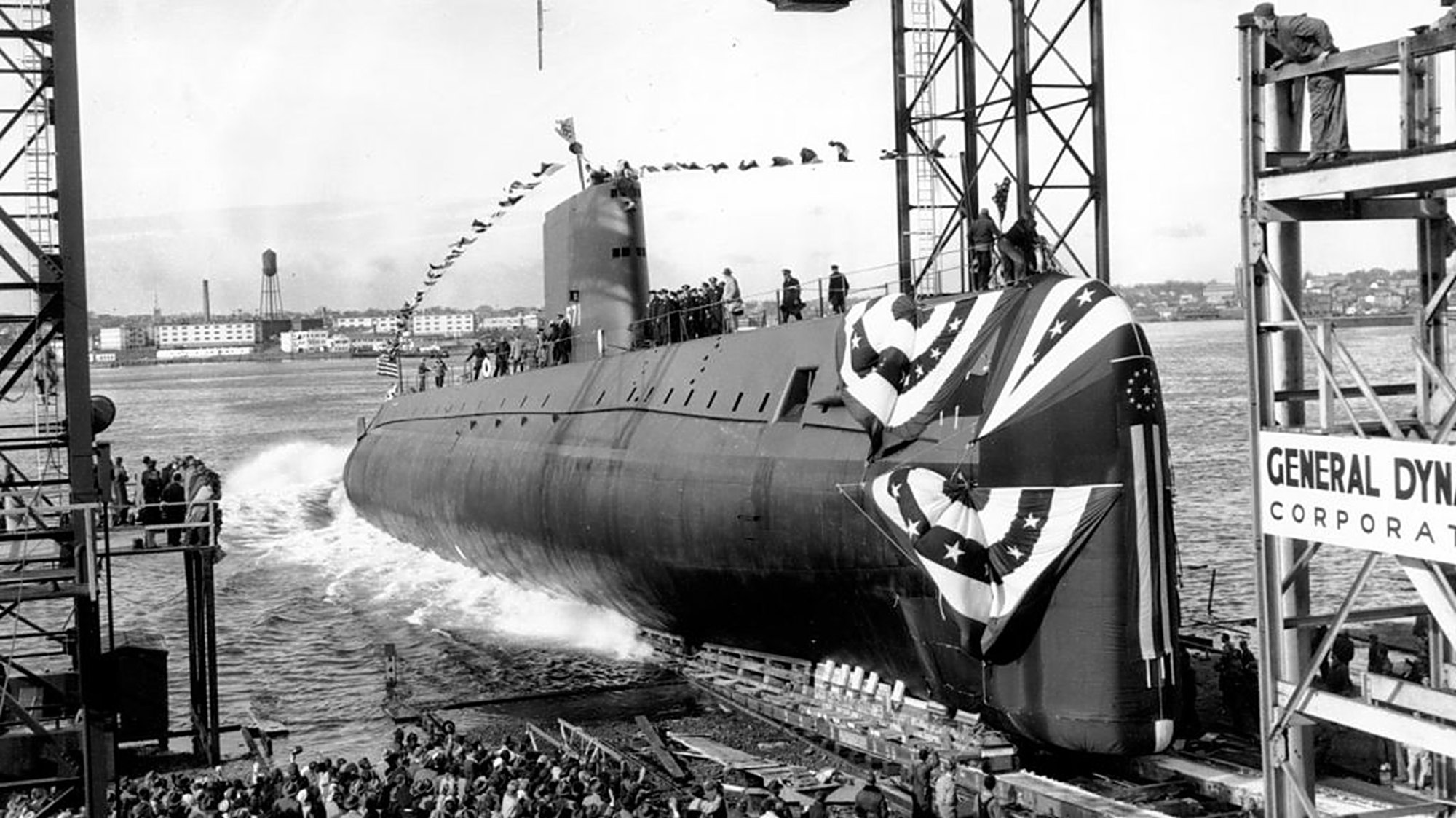
On January 21, 1954 the USS Nautilus, the first functional nuclear-powered submarine, was launched at Groton, Connecticut.
Image from LOC via Wikimedia Commons, public domain in the US.
“While John Charles was still a young boy his
Father died, and Mrs. Frémont was left alone with
her family of little children.
Mr. Frémont’s brother tried to induce Mrs.
Frémont to return to France with the children, as had been planned before their father’s death; but Mrs. Frémont wished to remain in America among her own friends. She therefore soon removed to Charleston, South Carolina, and there made her home. The young John Charles grew to be a large, and the writers say, a good, boy. He was unlike some other boys who became great men, notwith-standing their idleness in school; for he studied with all his might, and learned more quickly than any other boy in his class. He mastered the most important rules of Latin in three weeks, and did equally good work in Greek and mathematics. It was very easy for him to commit to memory chapter after chapter from the Bible. He sometimes learned three hundred verses by heart in a day.
There were two books which he always dearly
loved: one was called “The Lives of Great and
Daring Men,” and the other was a Dutch book on
astronomy. He could not read one word of the
Dutch, but he pored over the maps and mathematical calculations, and in some way managed to
learn a great deal about the stars.”
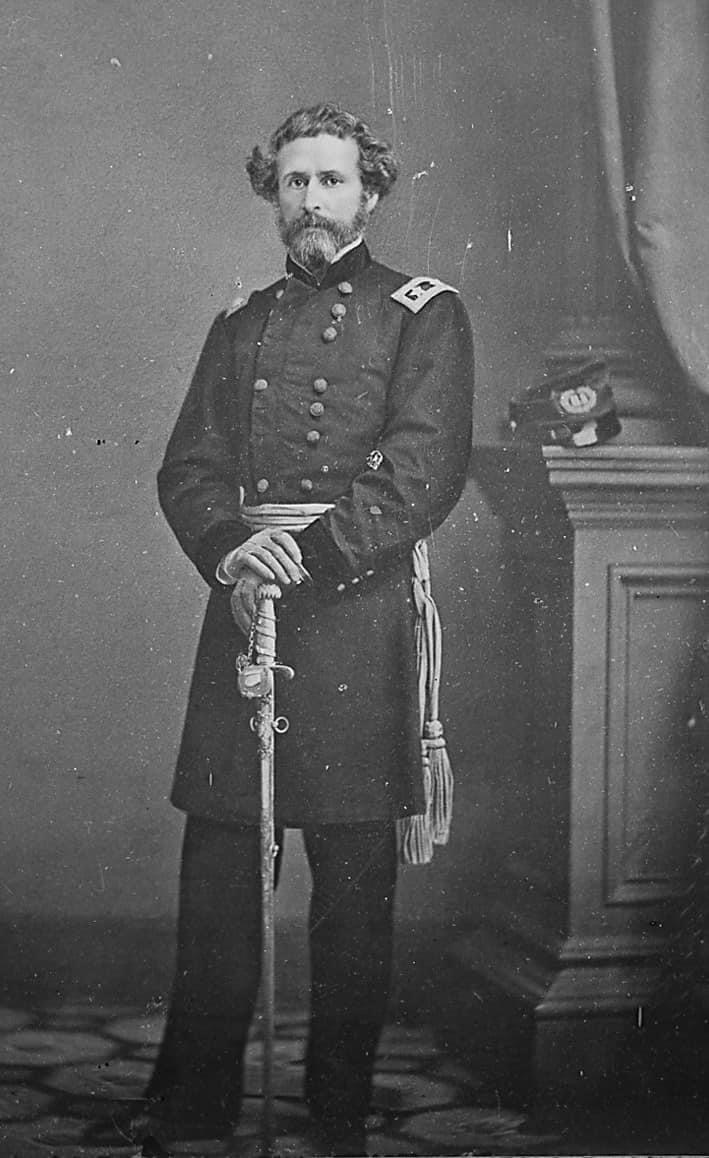
American Explorer, War Veteran, U.S. Senator, Governor of the Arizona Territory and Presidential candidate John Charles Frémont was born on January 21, 1813 in Savannah, Georgia.
From: Four American explorers: Captain Meriwether Lewis, Captain William Clark, General John C. Frémont, Dr. Elisha K. Kane by Nellie Kingsley, published in 1902
https://archive.org/details/fouramericanexpl00king/page/136/mode/2up
Image: Photograph of General John C. Fremont in uniform via Wikimedia Commons, public domain
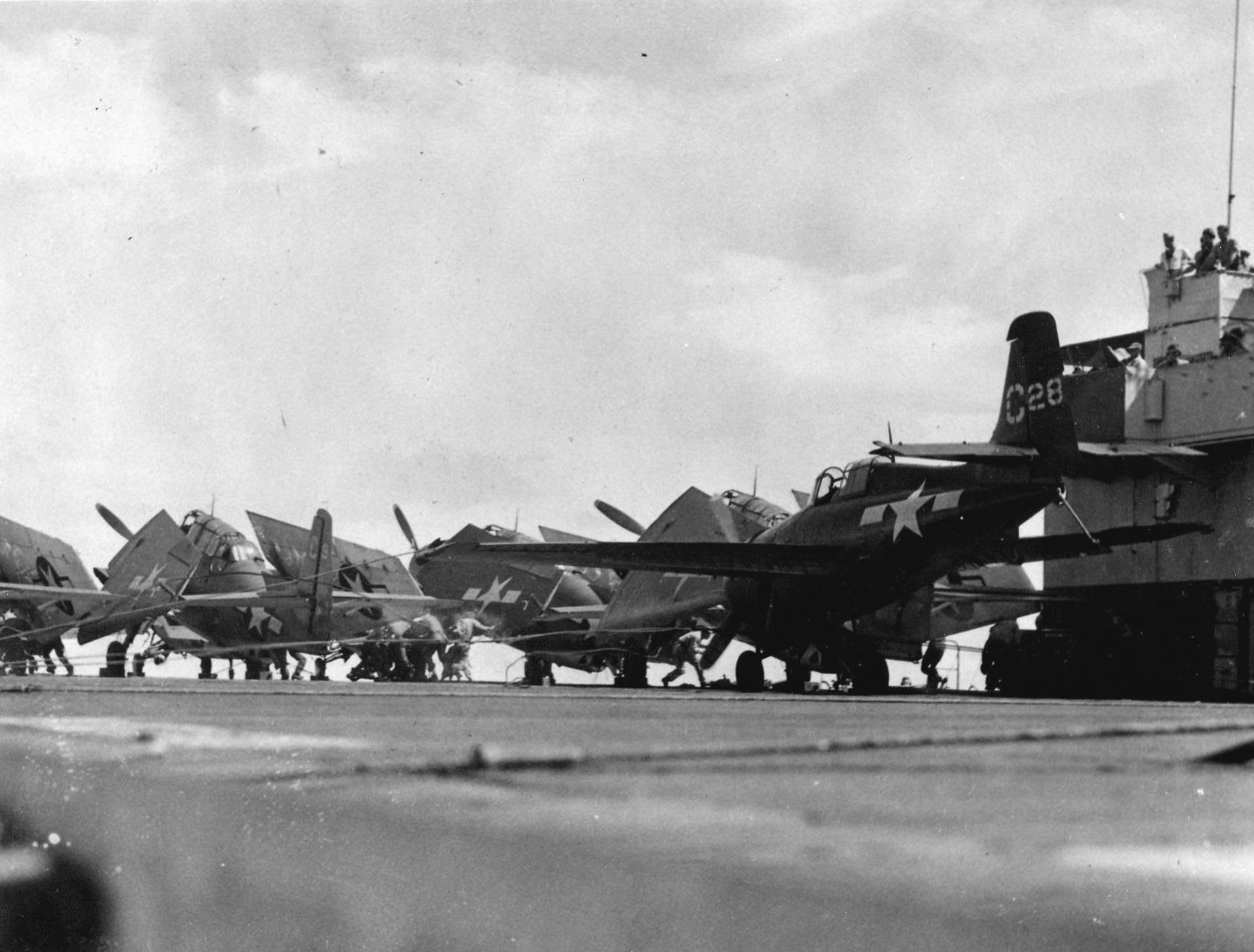
A Grumman Wildcat makes an abrupt barricade landing on the deck of the USS Nehenta Bay
January 21, 1945
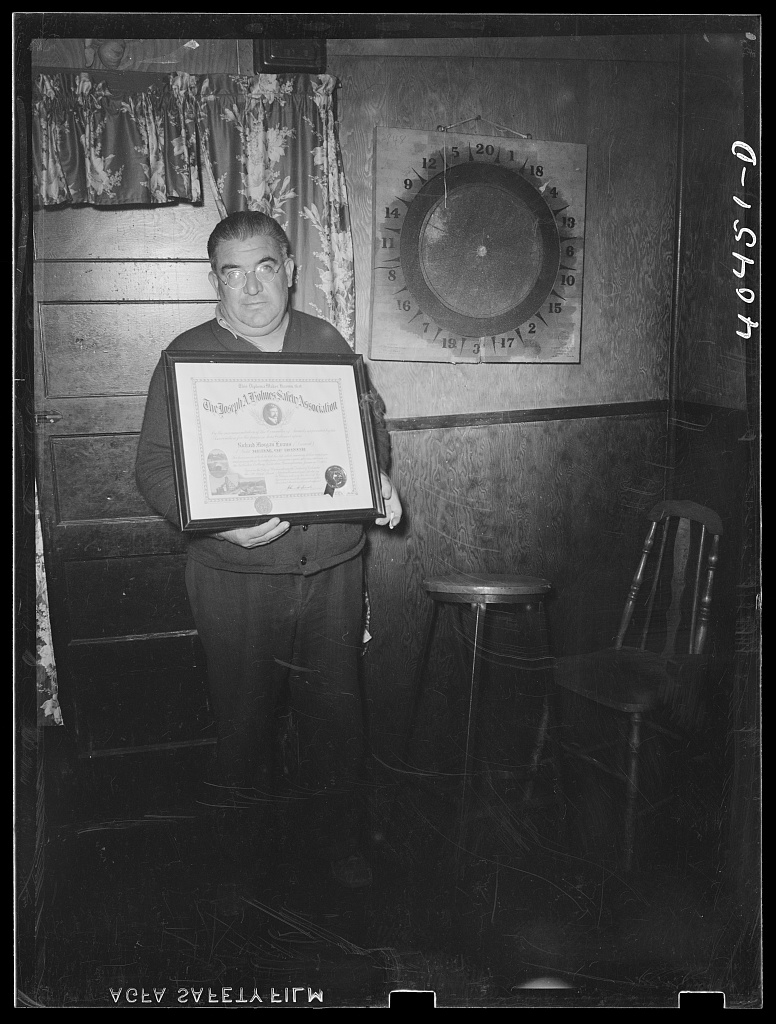
Gilberton, Pennsylvania. Richard Evans, in a barroom, exhibiting a testimonial to his uncle who saved some G-men from a gas explosion and was killed, January 21, 1935, in a Gilberton colliery.
via LOC, no known restrictions
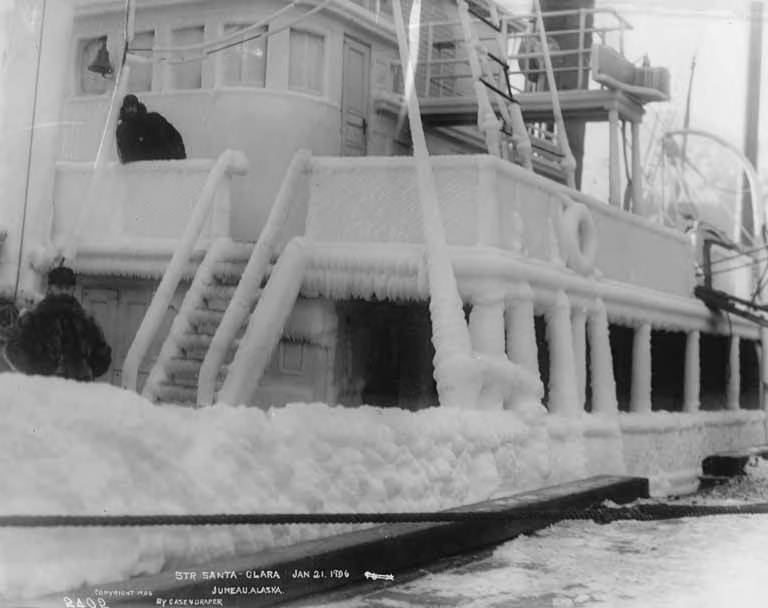
Two men in fur coats on the ice-covered steamer Santa Clara, in Juneau, Alaska, January 21, 1906
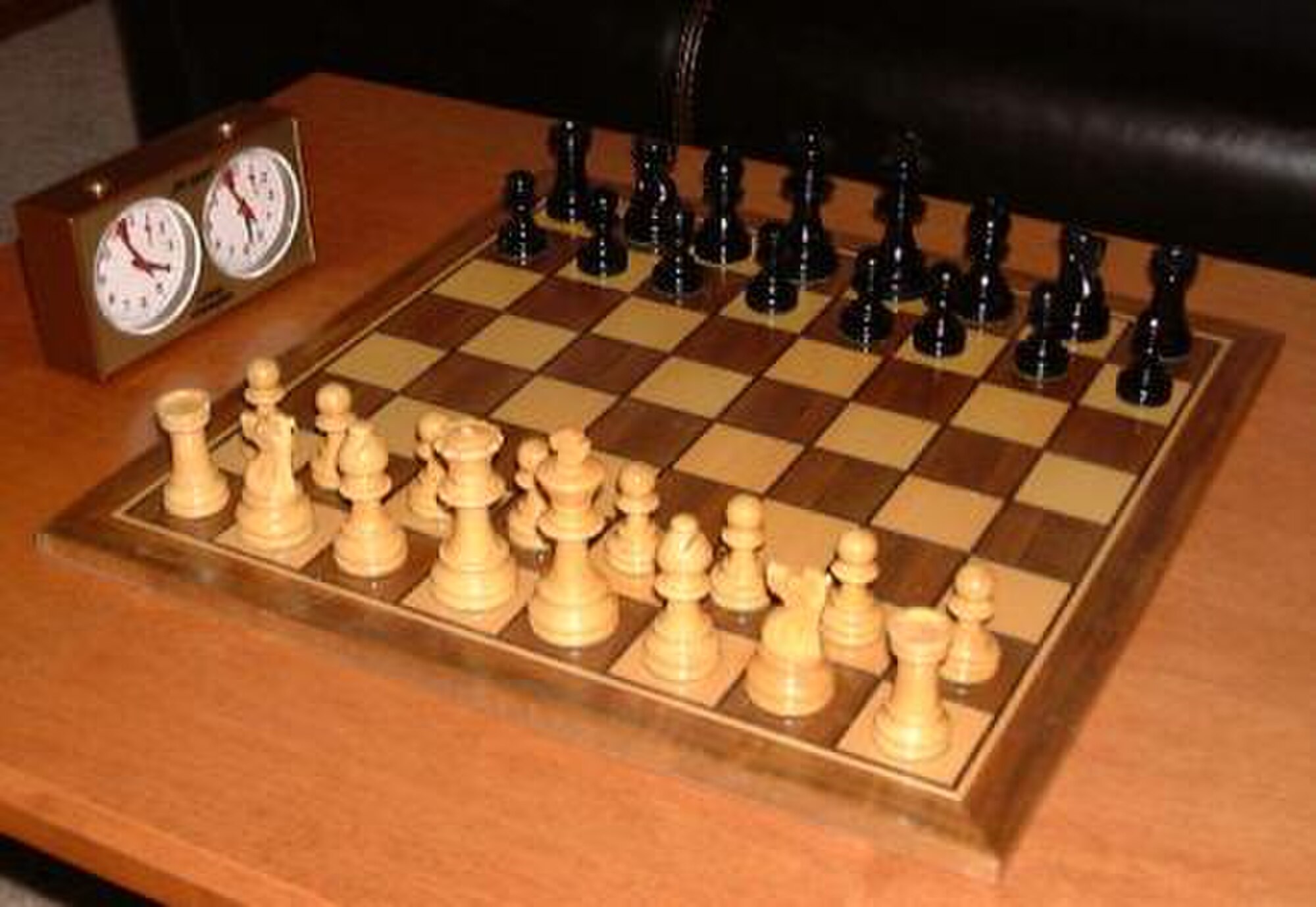
The first time that a computer program went up against a (human) master chess player was on January 21, 1967.
The program called “Mac Hack” developed by a computer programmer from MIT, came close, but couldn’t beat Carl Wagner who became the individual Intercollegiate Chess Champion that year.
Image via Wikimedia Commons, no known restrictions
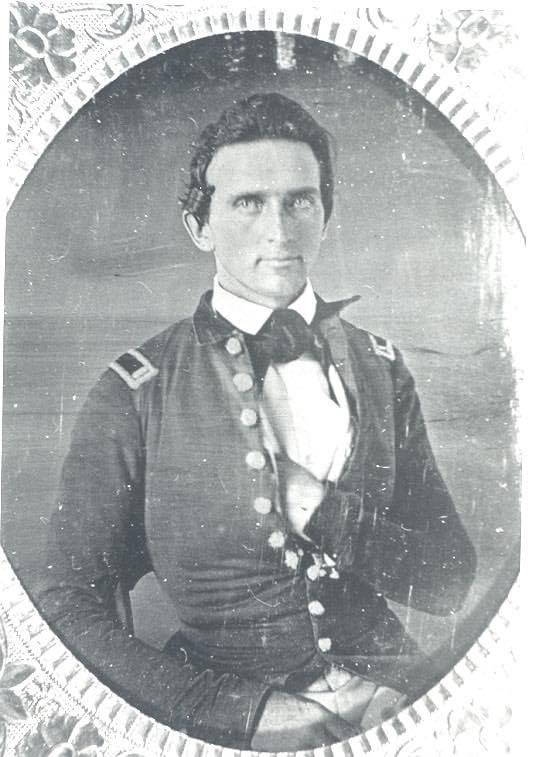
On January 21, 1824 Thomas “Stonewall” Jackson was born in present day Clarksburg, West Virginia.
Years before the American Civil War Stonewall Jackson courageously fought for the U.S. Army in the Mexican War…
“Jackson graduated and received the appointment of brevet second lieutenant of artillery on July 1, 1846. He left West Point at a fortunate moment. The United States were at war with Mexico. All the roving and adventurous classes of society swarmed toward the Rio Grande, fired by the fancy of picturesque warfare in a romantic country; and it is probable that Jackson, then but twenty-two, shared this general excitement. He was assigned to the First Regiment of United States Artillery, then serving under General Taylor in Mexico, and proceeded immediately to join his command. It is known that he had a strong desire for active service, but this craving was not for some time gratified. The regiment remained inactive until the spring of 1847; but active operations then commenced, and the battery to which Jackson was attached was sent to take part in the assault on Vera Cruz. About the same time he received his appointment as second lieutenant, and commanded a battery of siege guns during the bombardment. His conduct under fire for the first time must have been creditable. In August, for “gallant and meritorious conduct at the siege
of Vera Cruz,” he was promoted to the rank of first lieutenant.
After the fall of this fortress, the American army advanced upon the city of Mexico. All Jackson’s aspirations now pointed to a position in the light artillery. The command of heavy guns did not suit his temperament, and his preference for service in the field was soon gratified. Captain John B. Magruder led the storming party at Cerro Gordo and captured a Mexican battery, which General Scott thereupon presented to him as a reward for his gallantry; and Jackson immediately applied for a position under Magruder. “I wanted to see active service,” he said in after years, “to be near the enemy and in the fight; and when I heard that John Magruder had got his battery, I bent all my energies to be with him, for I knew if any fighting was to be done, Magruder would be ‘on hand.’ “
He succeeded in securing his transfer, and took a prominent part in the assault on the enemy’s intrenched camp at Contreras, and in the stubborn struggle which followed at Churubusco. “My fire was opened,” wrote Captain Magruder, “and continued with great rapidity for about an hour. In a few moments Lieutenant Jackson, commanding the second section of the battery, who had opened a fire upon the enemy’s works from a position on the right, hearing our own fire still further in front, advanced in handsome style, and kept up the fire with great briskness and effect Lieutenant Jackson’s conduct was equally conspicuous throughout the whole day, and I cannot too highly commend him to the major-general’s favorable consideration.”
From: Stonewall Jackson by John Esten Cooke, published in 1893
https://archive.org/details/stonewalljackson00cookiala/page/15
Photo of Lieutenant Thomas Jonathan “Stonewall” Jackson that was taken in Mexico City in August, 1847 via Wikimedia Commons, public domain
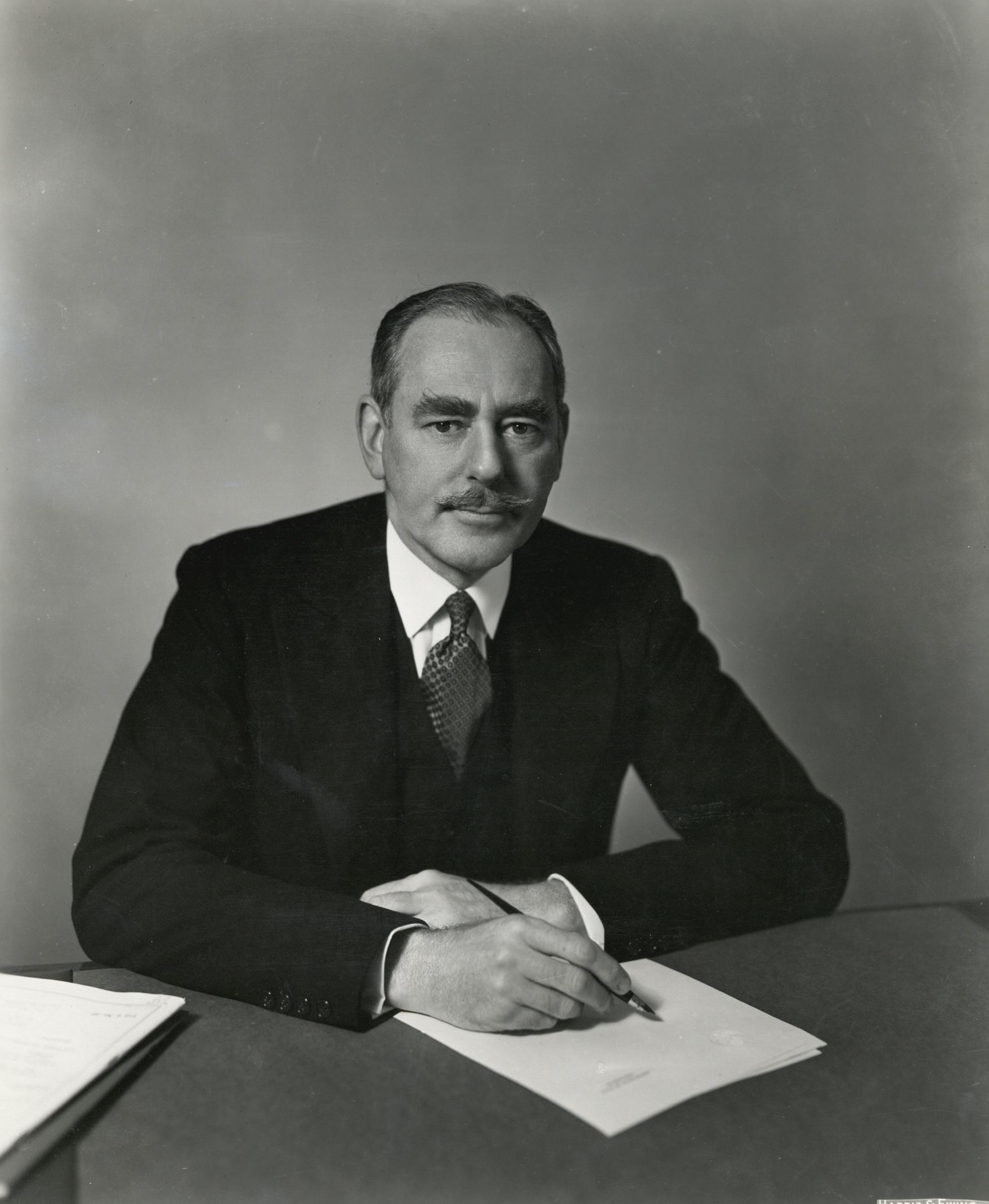
On January 21, 1949 Dean Acheson became the 51st U.S. Secretary of State.
In 1970 he received a Pulitzer Prize in History for his memoir “Present at the Creation: My Years in the State Department”
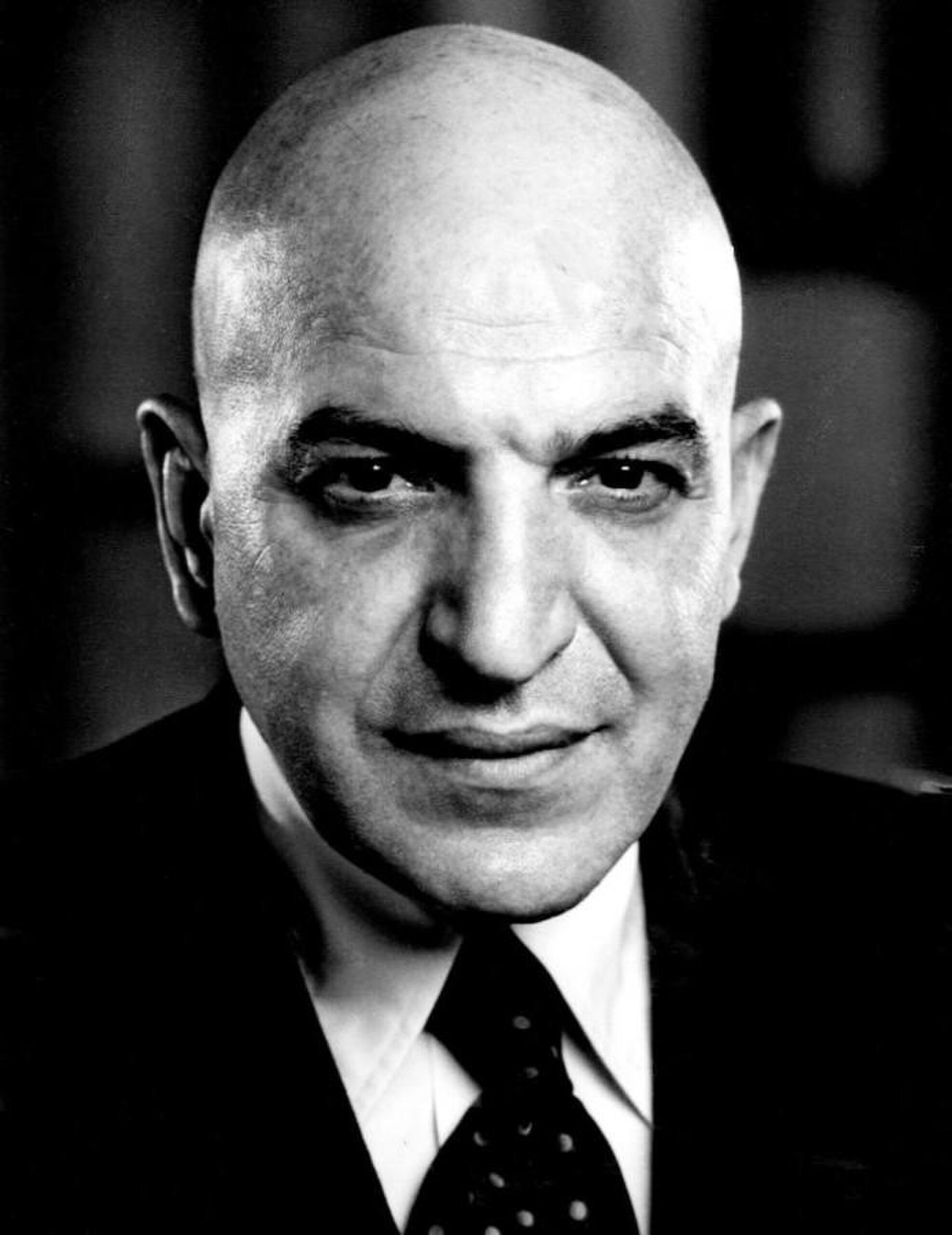
WWII veteran Telly Savalas was born on January 21, 1922 in Garden City, New York.
In addition to being a successful actor, Telly also recorded songs and albums.
One of his albums from the 70s was titled “Who Loves Ya, Baby”
He was Jennifer Aniston’s godfather.
Imag via Wikimedia Commons, public domain
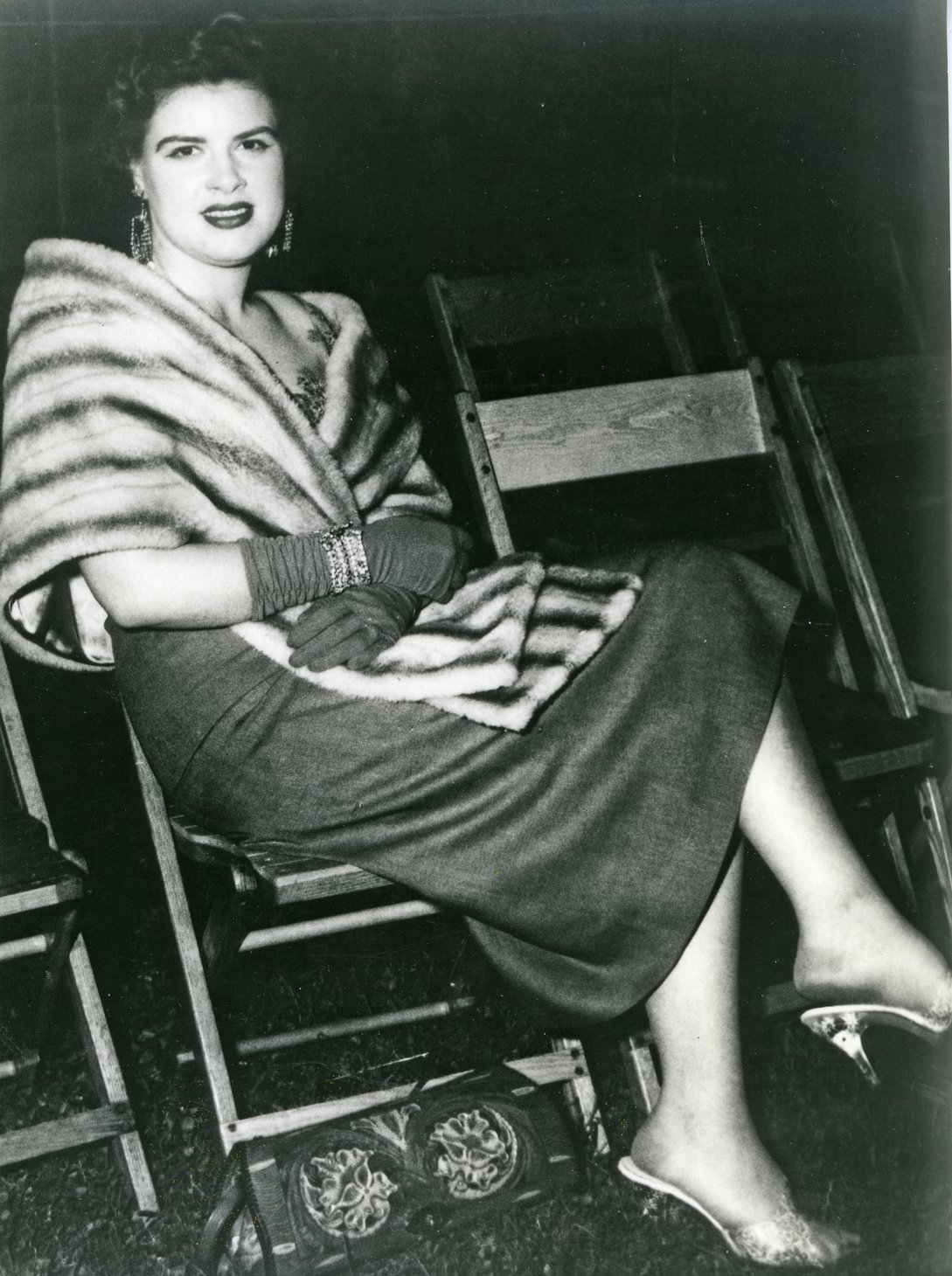
A few weeks before her hit song “Walkin’ After Midnight” is released Patsy Cline performed it during an episode of the TV program Arthur Godfrey’s Talent Scouts on January 21, 1957.
Image via Alamy
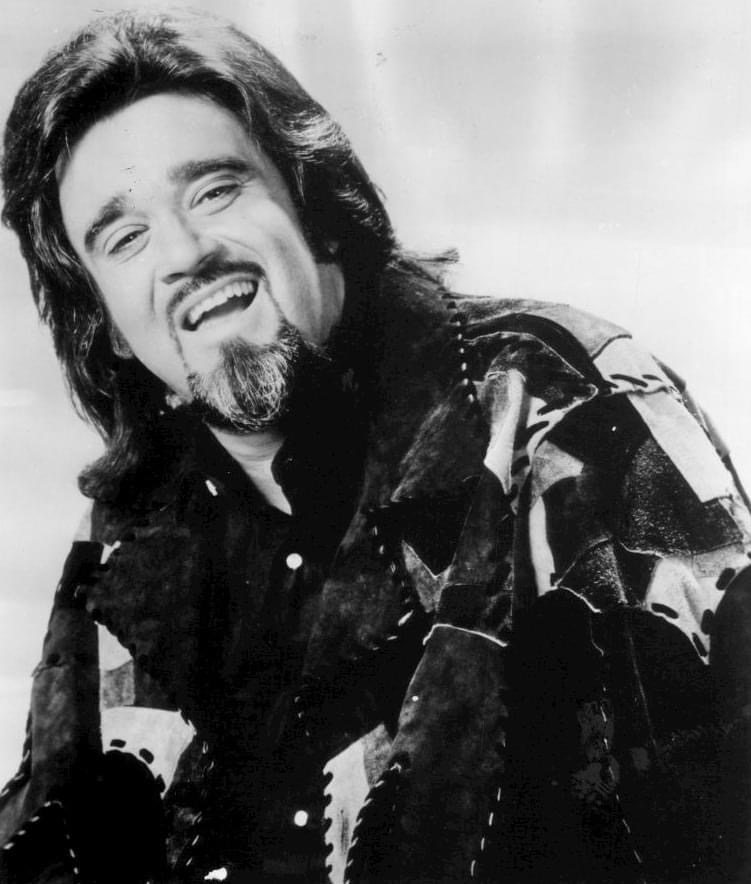
Robert Weston Smith “Wolfman Jack” was born on January 21, 1938 in Brooklyn, New York.
Image: Smith in 1977 via Wikimedia Commons, public domain
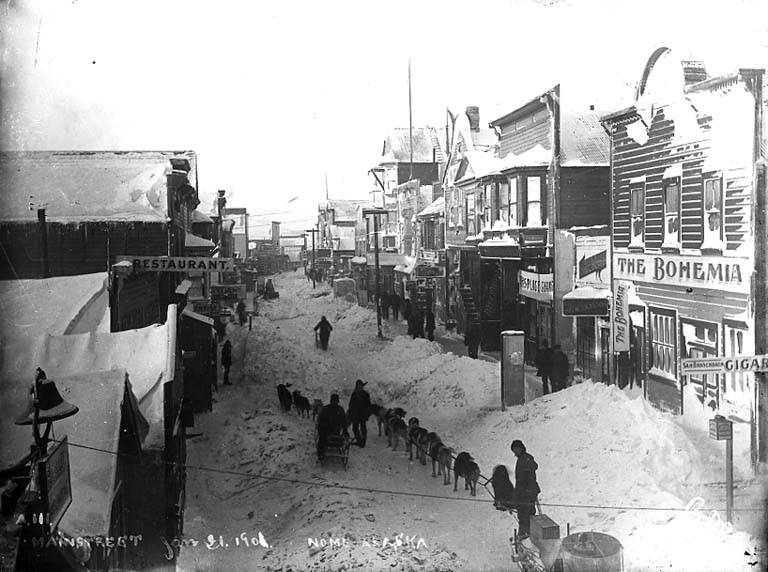
Dogsleds on Front Street, Nome, Alaska
January 21, 1901
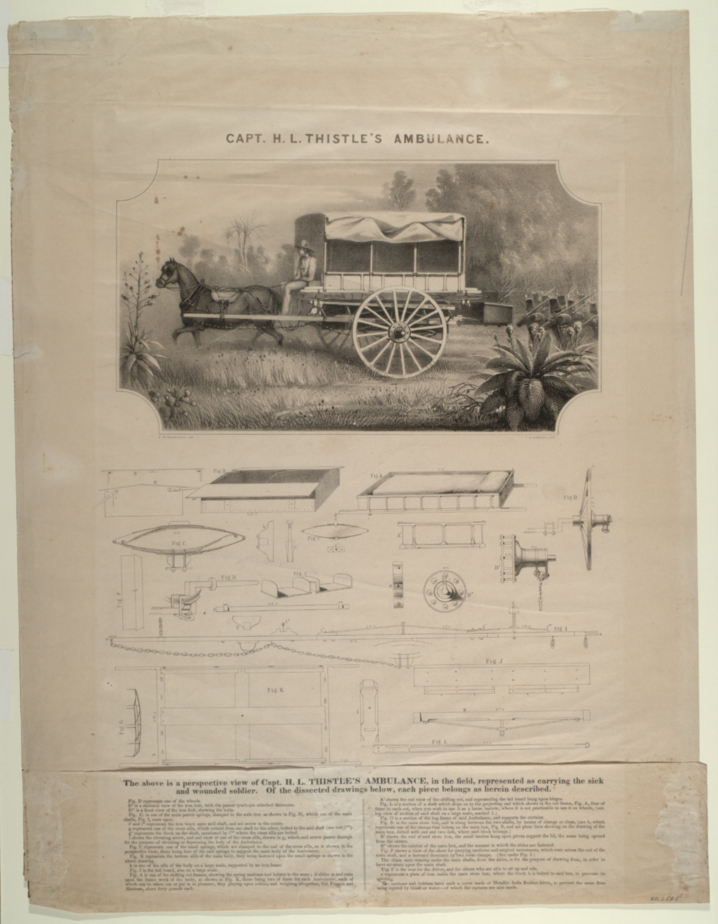
January 21, 1837 — Captain Hezekiah L. Thistle of New Orleans received U.S. Patent No. 112 for his ‘Saddle for Removing the Sick,’ the earliest known American patent for emergency medical transport. Designed during the Second Seminole War, the saddle used curled metal springs to support a horizontal litter, allowing soldiers to move the wounded through terrain where wagons couldn’t go. The War Department ordered several, proving the concept in the field.
Though the original patent drawing survives only in the National Archives, Thistle’s later two‑wheeled ambulance wagon — preserved today in a Smithsonian lithograph (shown) — shows that he was exploring multiple approaches to battlefield evacuation, from horse‑mounted litters to wheeled transport.
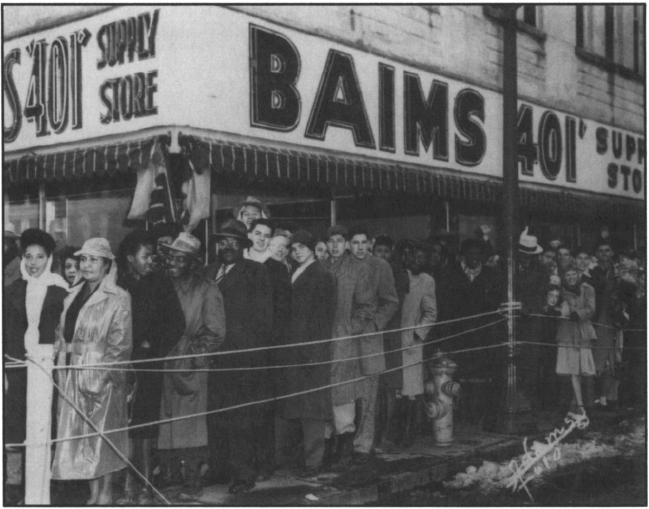
Pine Bluff, Arkansas, January 21, 1948 — Black and White Americans stand together in a single line to see the Freedom Train, a national exhibition carrying the Declaration of Independence, the Bill of Rights, and the Emancipation Proclamation.
Created in the wake of World War II to renew the nation’s commitment to liberty and equality, the Freedom Train carried the documents that defined America’s democratic promise. In a Jim Crow state, this desegregated line offered its own testimony that those ideals belonged to everyone.
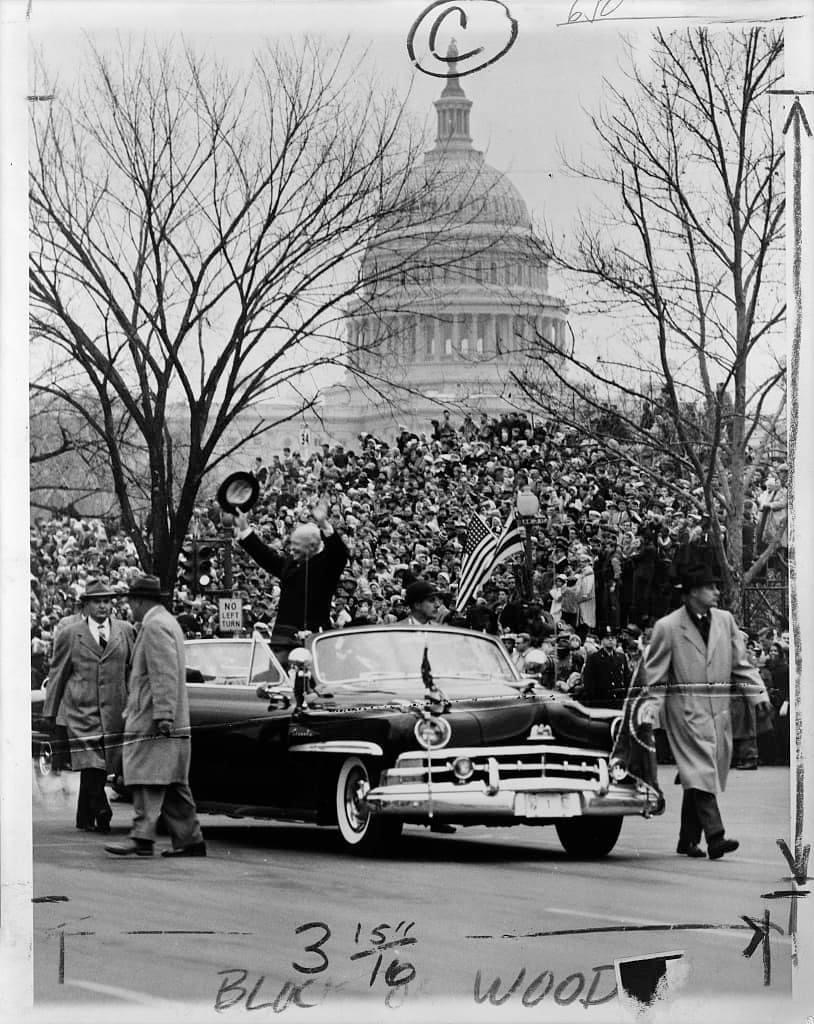
President Dwight D. Eisenhower waves to the crowds lining the parade route near the U.S. Capitol during his second inaugural parade on January 21, 1957.
via Library of Congress, no known restrictions
