
 Mystery March Is Here!
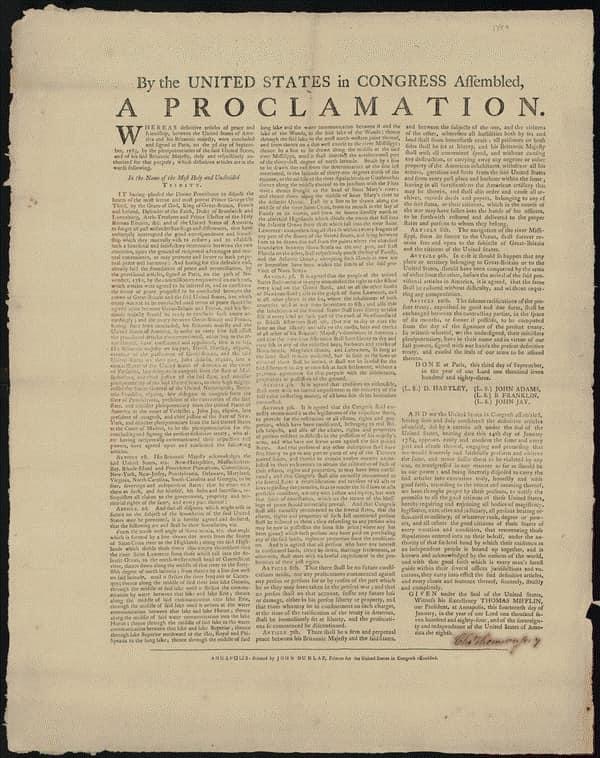
On today’s date January 14, 1784, Continental Congress while meeting in Annapolis, Maryland ratified the Treaty of Paris.Article 1…“His Britannic majesty acknowledges the said United States, viz. New-Hampshire, Massachusetts-Bay, Rhode-Island and Providence Plantations, Connecticut, New- York, New-Jersey, Pennsylvania, Delaware, Maryland, Virginia, North-Carolina, South- Carolina and Georgia, to be free, sovereign and independent states: that he treats with them as such, and for himself, his heirs and successors, relinquishes all claims to the government, propriety and territorial rights of the same, and every part thereof.”https://archive.org/details/journalsofcontin26unit/page/22
Photo: Ratification of The Treaty of Paris 1784, via Wikimedia Commons, public domain.
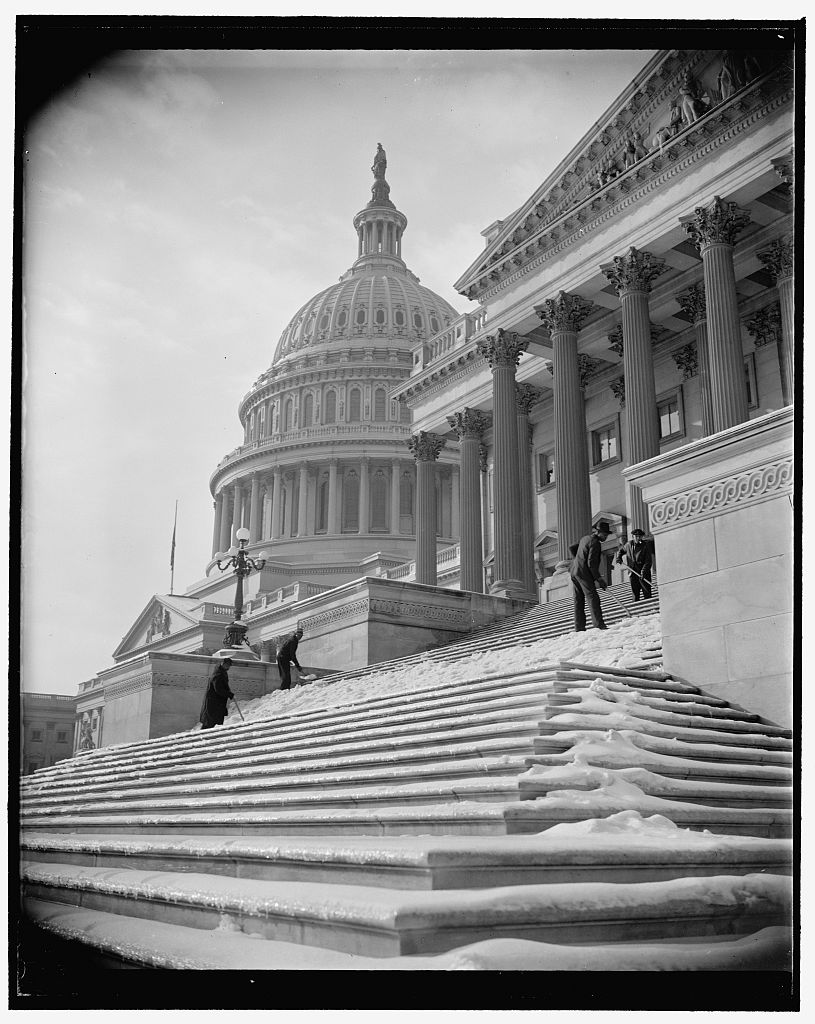
Workmen removing snow from the Capitol steps
January 14, 1939
Image via LOC, no known restrictions
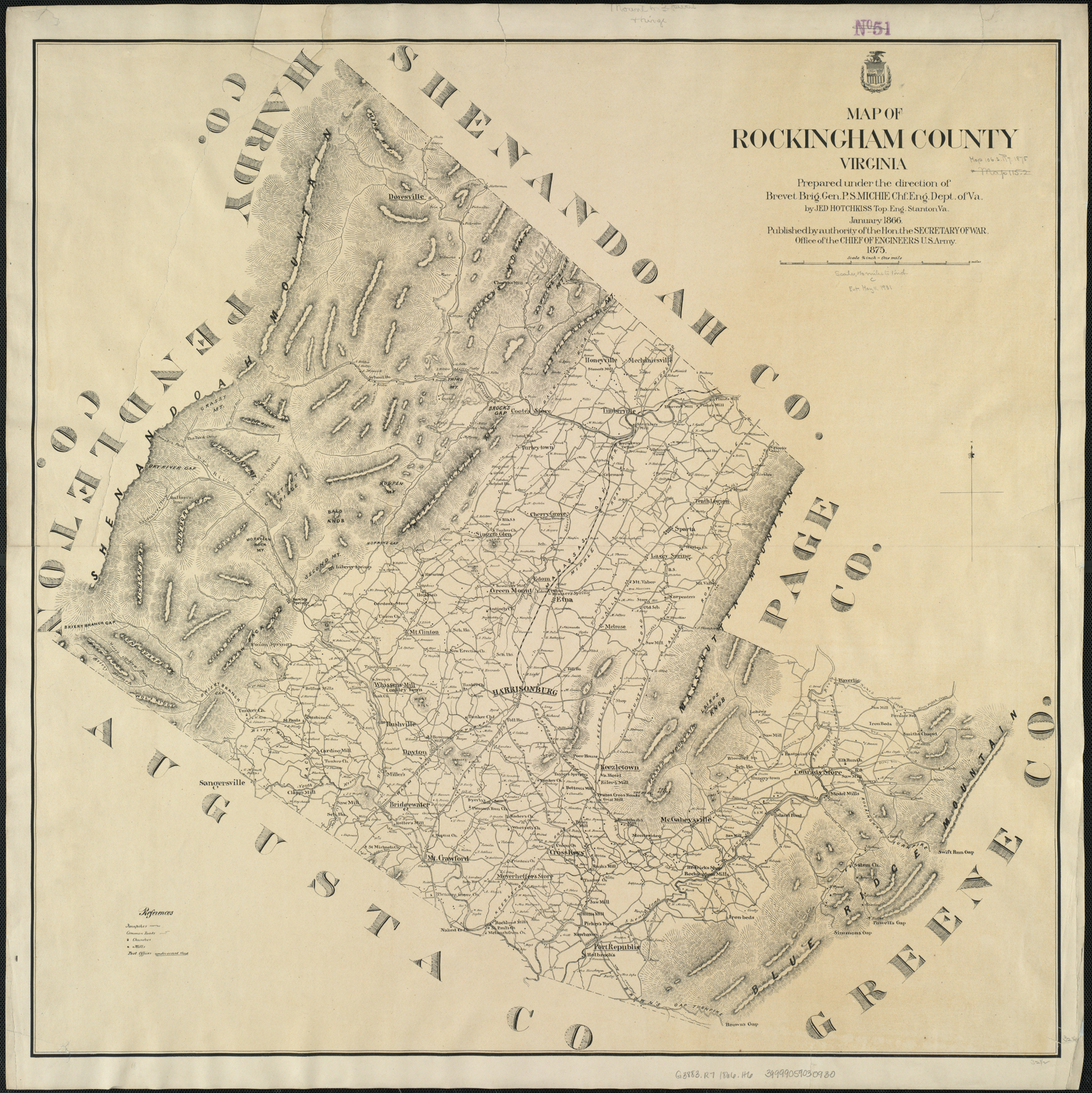
On January 14, 1794, a physician named Jesse Bennett from Philadelphia, Pennsylvania performed the first successful cesarean section in America in a cabin near Edom in Rockingham County, Virginia. He performed the procedure on his wife named Elizabeth who gave birth to their daughter Maria. Today a portion of Highway 42, near Edom, in Virginia is named the “Jesse Bennett Highway” in honor of the father and physician. Image map of Rockingham County in Virginia via BPL, CC BY 2.0
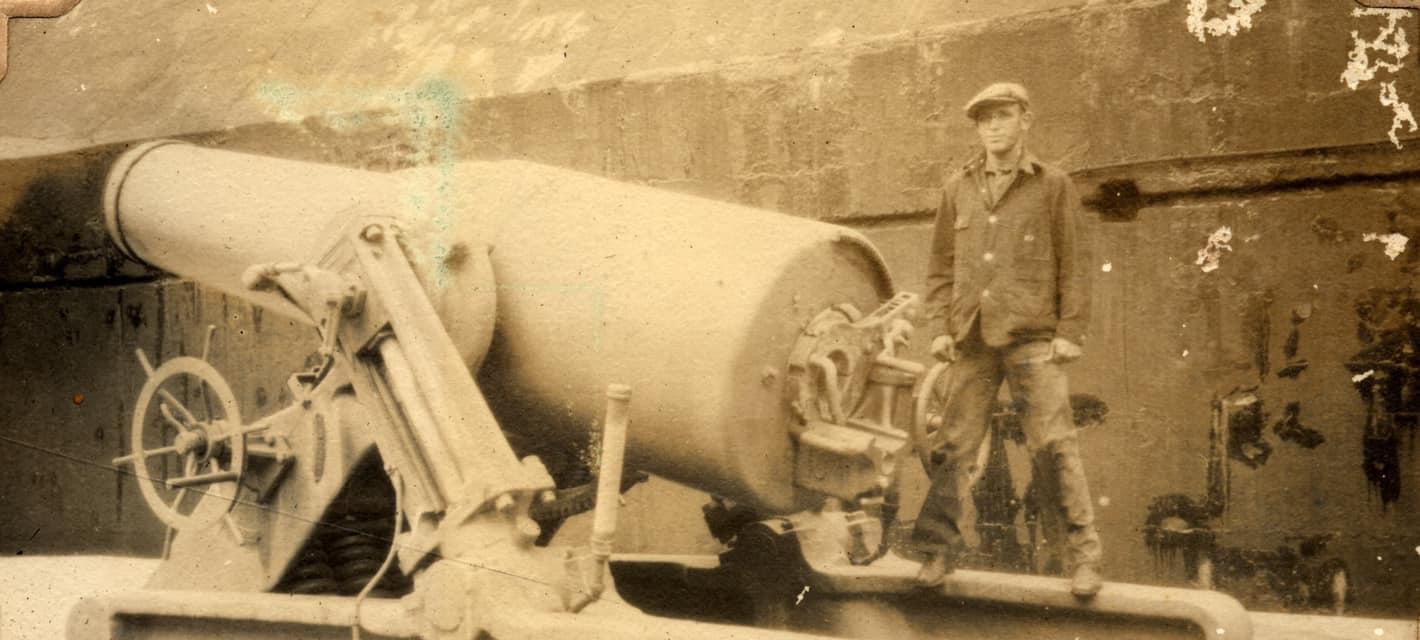
A 12 inch mortar at Fort Taylor in Key West, Florida c. early 1930s
By January 14, 1861, Fort Taylor in Key West had been garrisoned by Union Forces led by Union Captain John Milton Brannan to prevent the Fort from falling under Confederate control. Image via Wikimedia Commons, Florida Keys-Public Libraries – CC BY 2.0
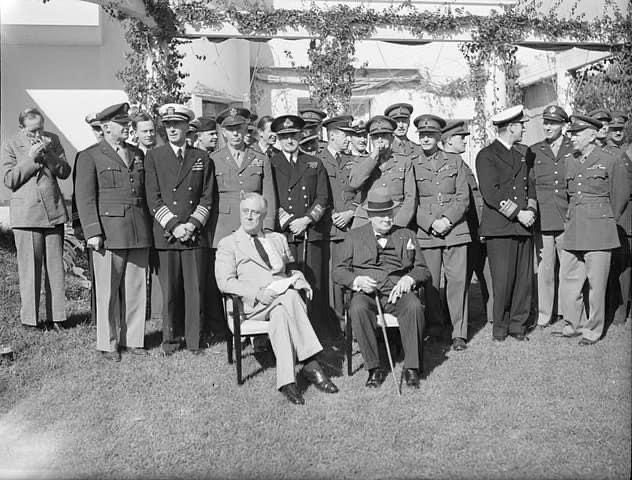
President Roosevelt meeting with Winston Churchill during the Casablanca Conference which began on January 14, 1943 in French Morocco. Roosevelt called the conference the “Unconditional Surrender” meeting, referring to strategies to put an end to the Axis.
Image via Wikimedia Commons, public domain
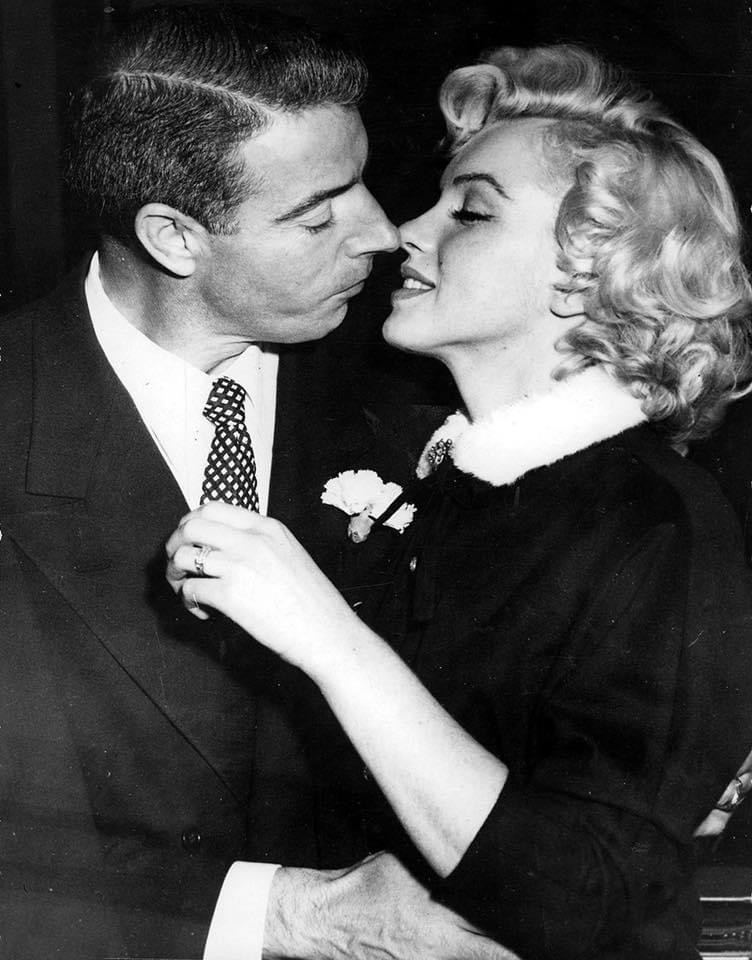
On January 14, 1954 Joe DiMaggio & Marilyn Monroe were married in San Francisco.
Image via Wikimedia Commons, public domain
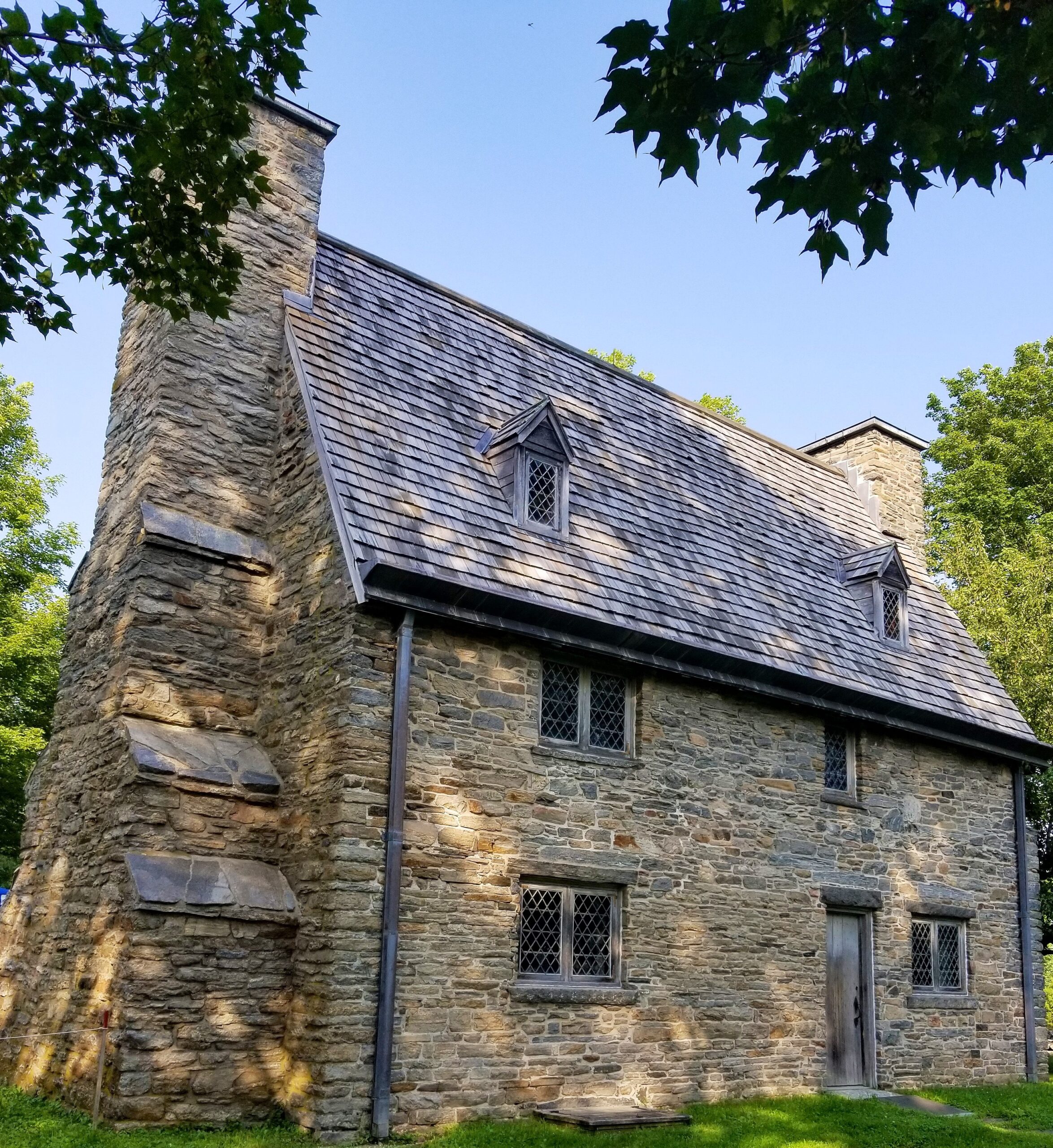
On January 14, 1639 (o.s. date), Roger Ludlow’s Fundamental Orders were approved by Connecticut’s Colonial Council. The document is considered to be the first constitution in America (some historians say the first in Western society) and is the reason why Connecticut is called “The Constitution State.”
The house that you see is the Henry Whitfield House in Guilford, the oldest home in Connecticut, which was built in 1639, the same year that Ludlow’s Fundamental Orders were approved.
Image from Swampyank via Wikimedia Commons, CC BY 4.0
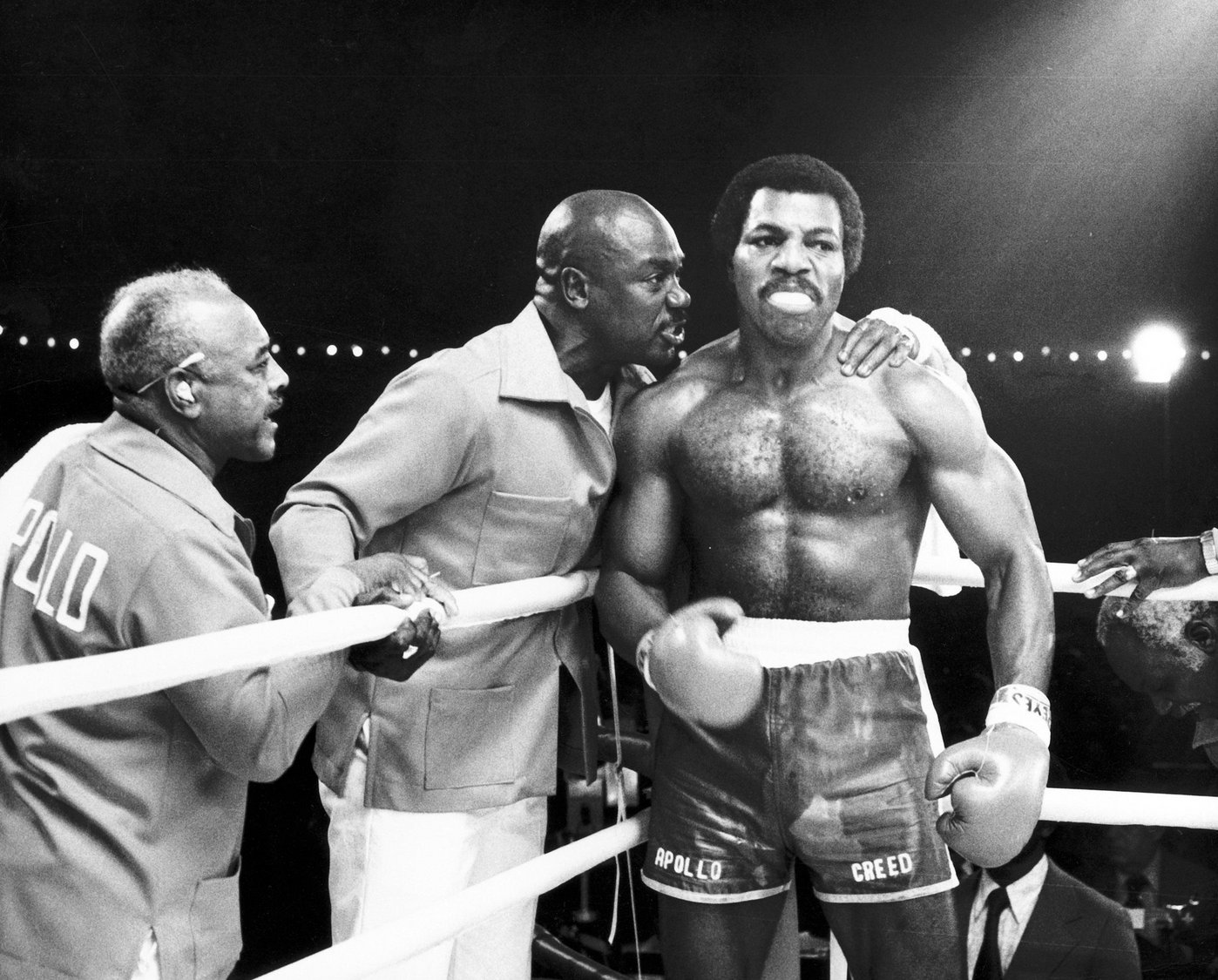
American actor Carl Weathers was born on January 14, 1948 in New Orleans, Louisiana. Before starring as Apollo Creed in the Rocky film series, Carl played 7 games with the Oakland Raiders in the NFL.
Image from Rocky II in 1979 via Alamy
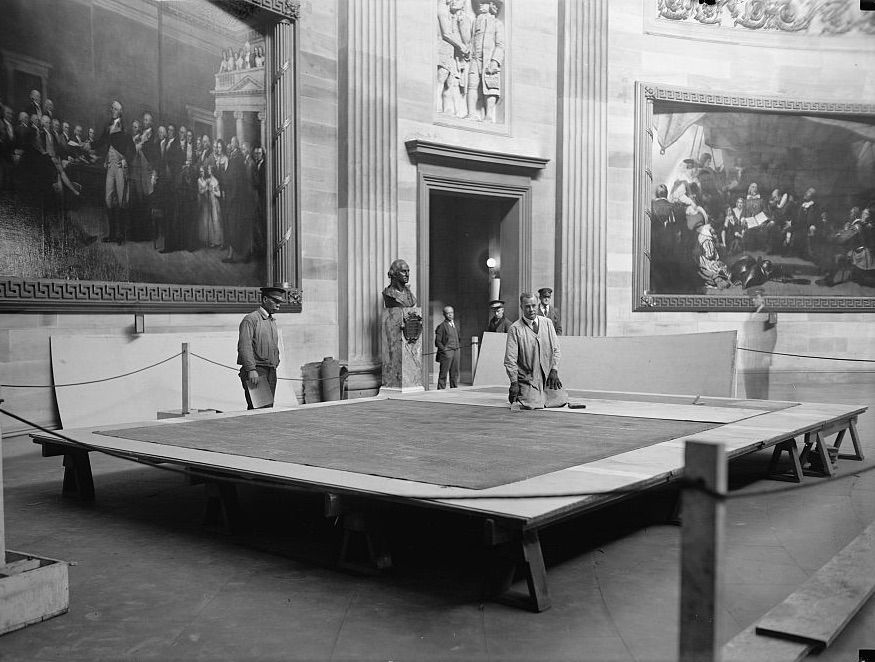
C.E. Moberly, Capitol artist repairing painting of Pocahontas on January 14, 1925
via LOC, no known restrictions
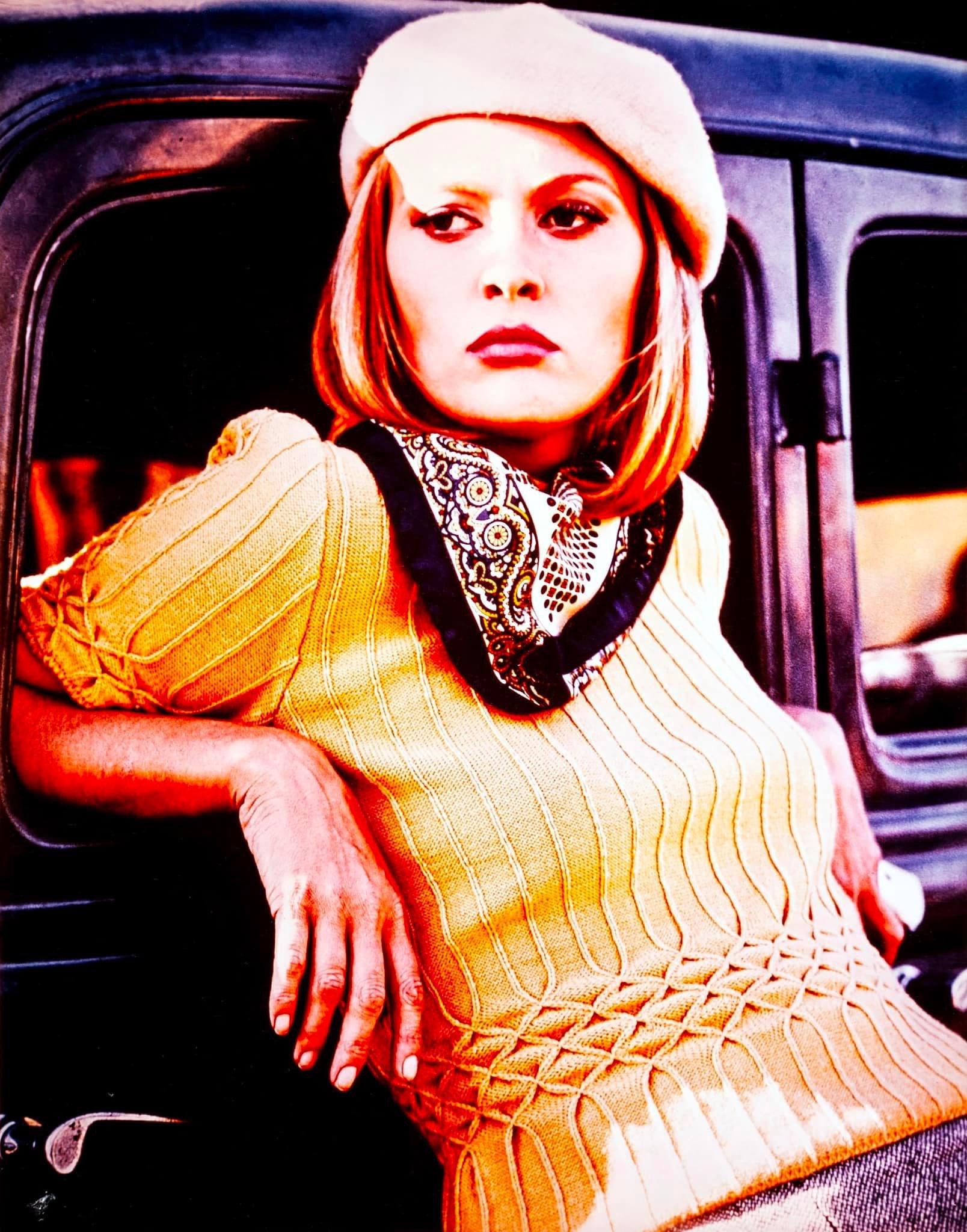
American actress Faye Dunaway was born on January 14, 1941 in Bascom, Florida.
Image: Faye Dunaway as Bonnie Elizabeth Parker in 1967 via Wikimedia Commons, public domain
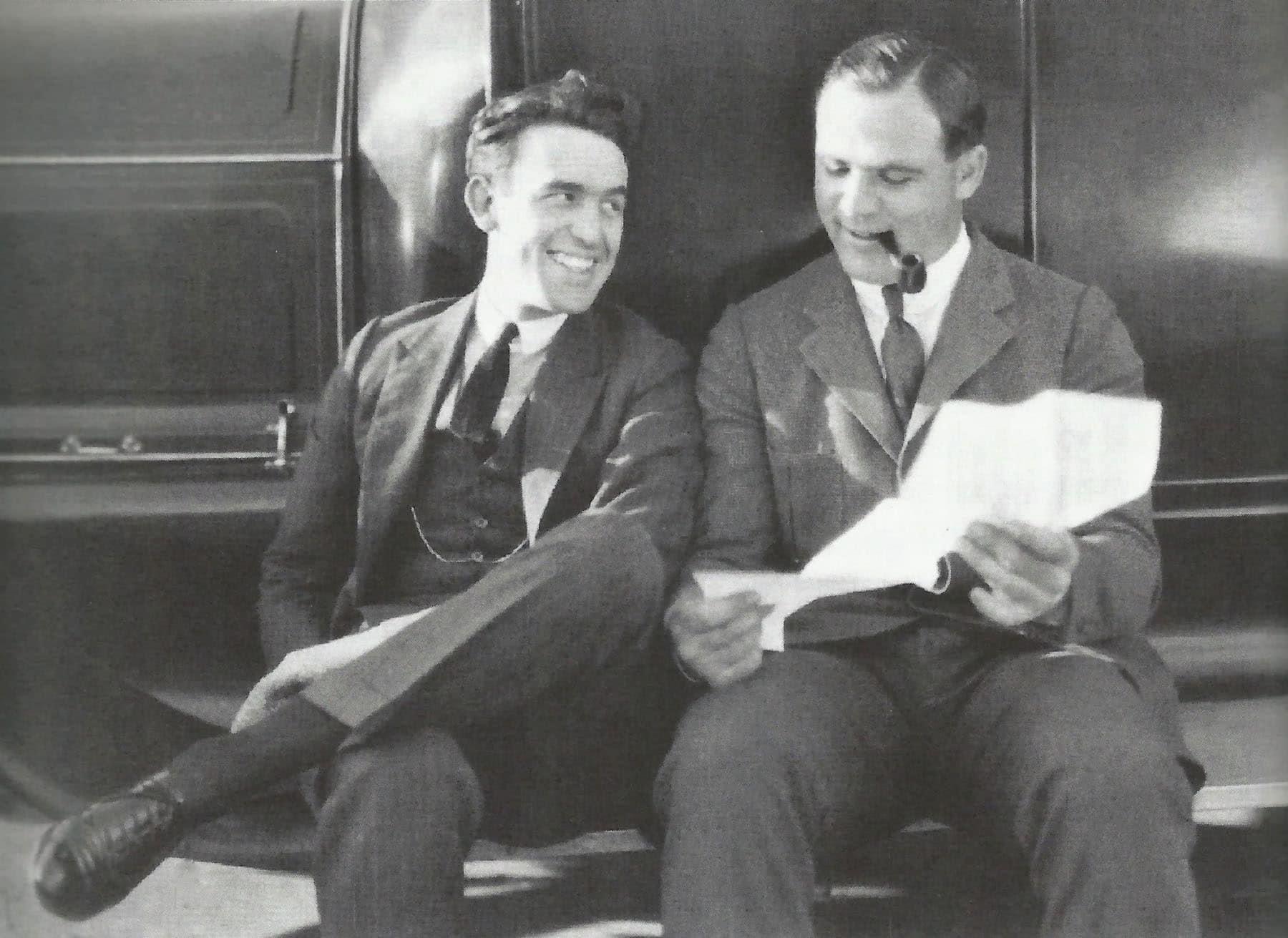
Harold Lloyd (left) seated next to friend and comedy producer Hal Roach (right) c. 1916
On January 14, 1892 Hal Roach was born in Elmira, New York. Image via Wikimedia Commons, public domain
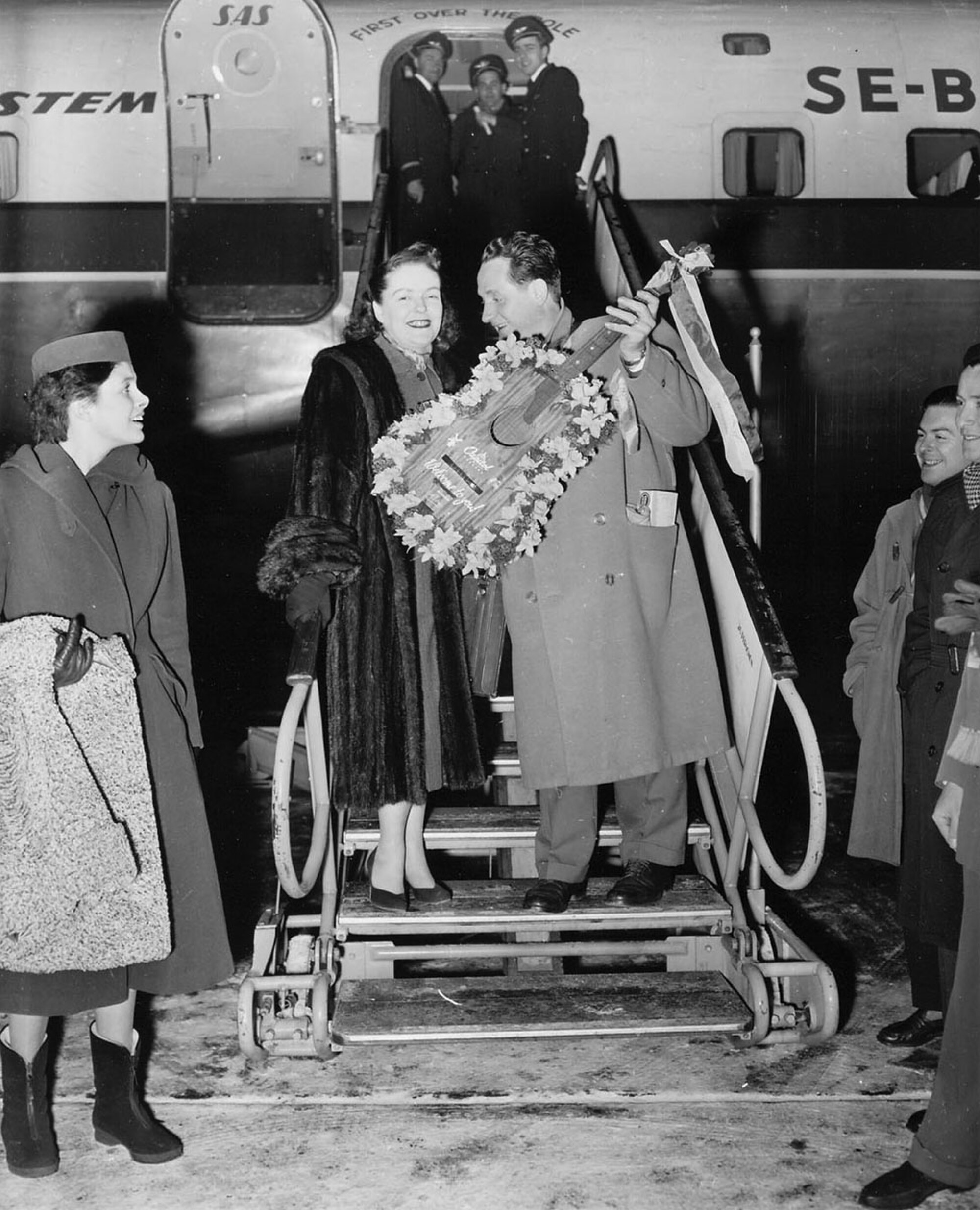
Les Paul and Mary Ford with decorated guitar getting off a plane at Schiphol Airport in Amsterdam
January 14, 1955
Image from IISG via Wikimedia Commons, CC BY 2.0
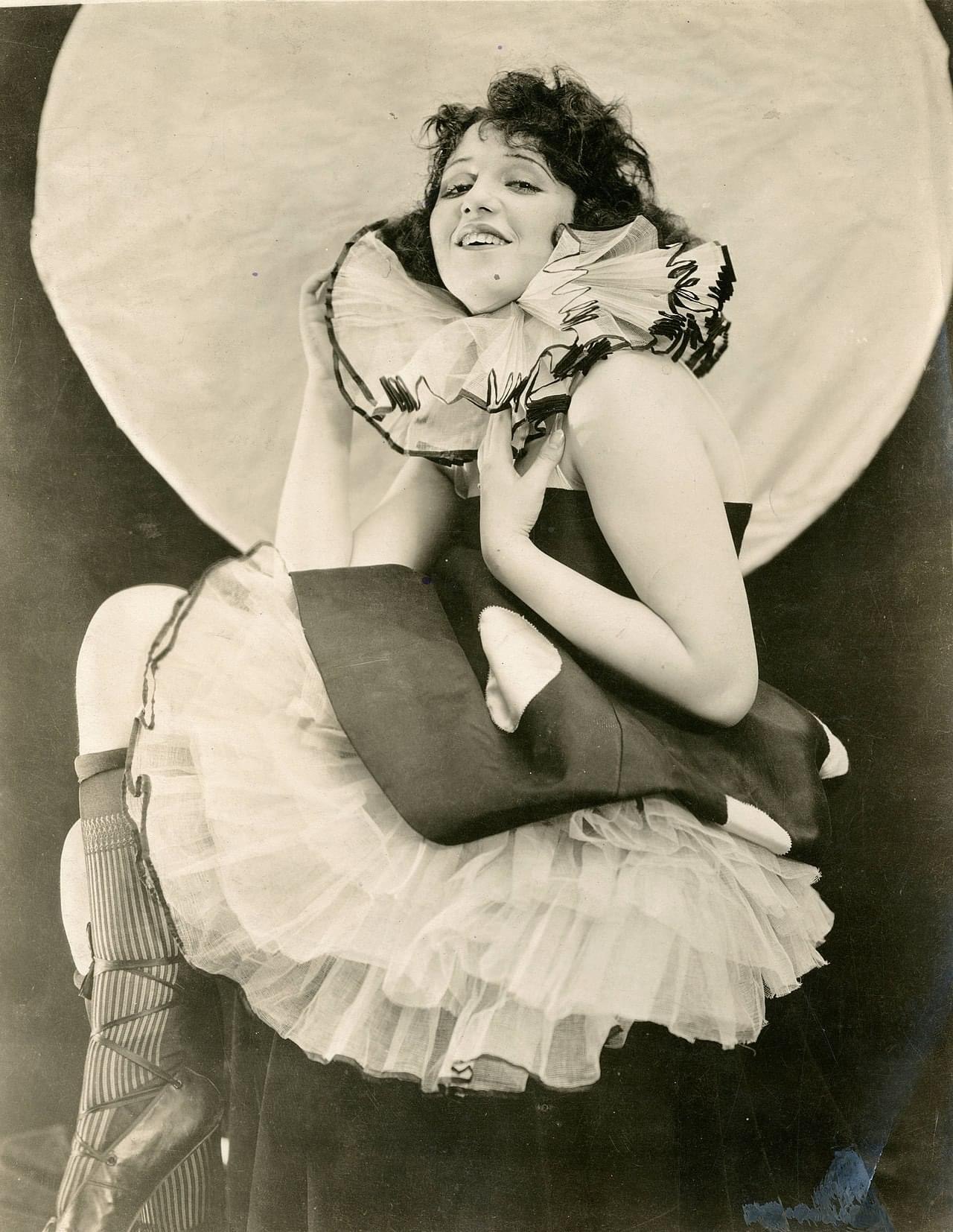
American actress and entertainer Bebe Daniels was born on January 14, 1901 in Dallas, Texas.
She appeared in over two hundred films during her career.
Image of Bebe Daniels in 1920 via Wikimedia Commons, public domain
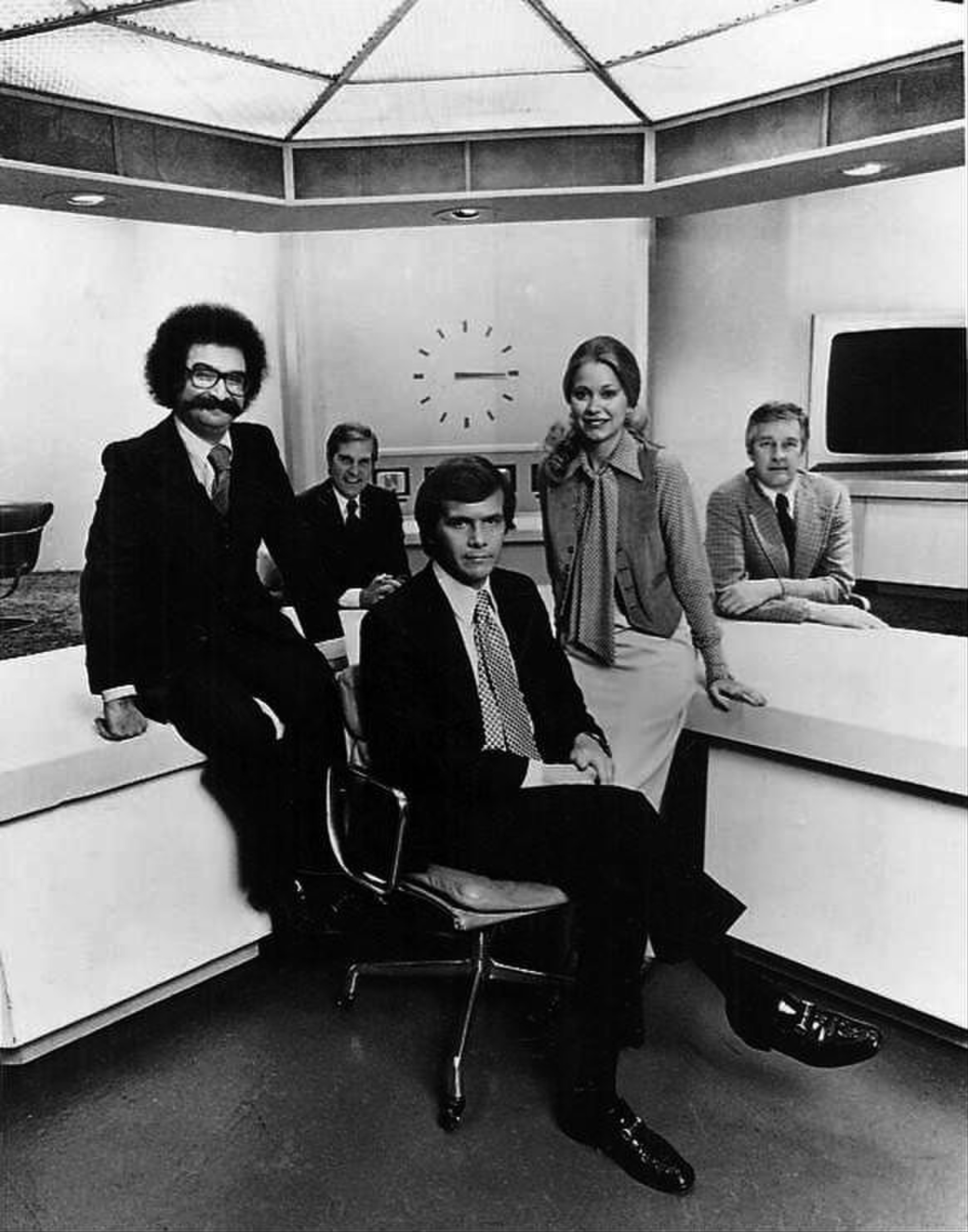
The Today Show premieres
The Today Show cast in 1976
Over 24 years earlier on January 14, 1952 The Today Show premiered on NBC.
Image via Wikimedia Commons, public domain
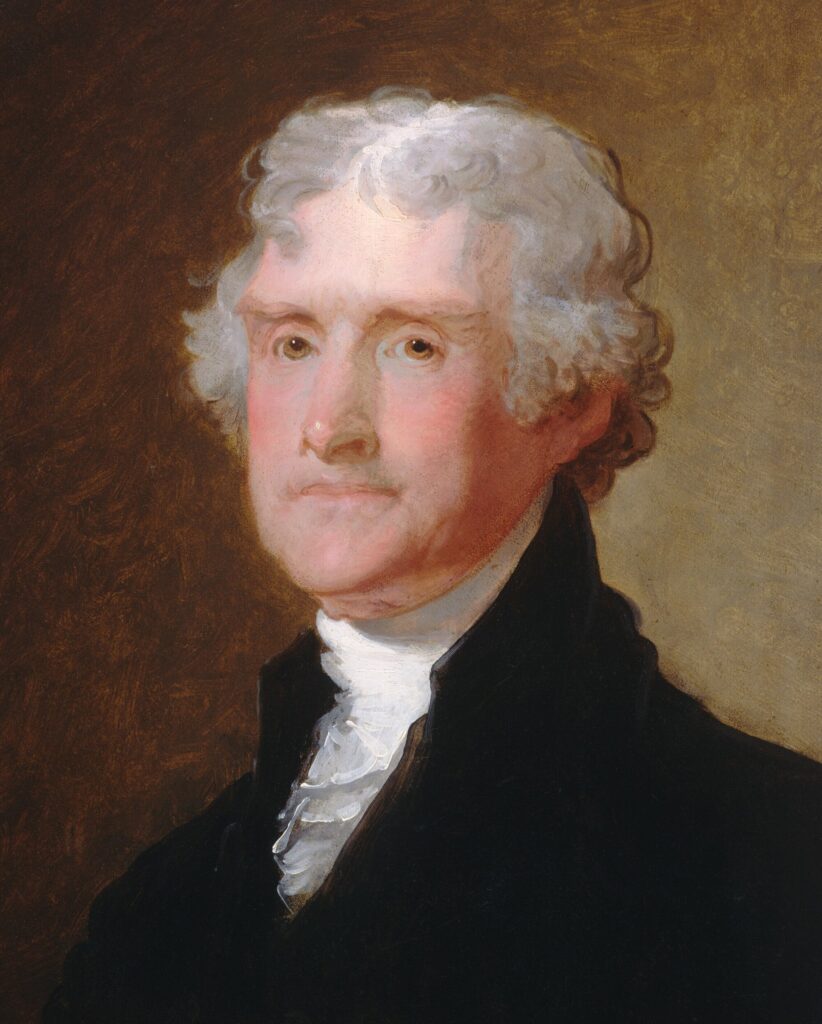
Two Letters, Twenty‑Three Years Apart
On January 14, 1760, a sixteen‑year‑old Thomas Jefferson sat at Shadwell and wrote the earliest surviving known letter of his life — asking to leave the “Mountains,” escape the distractions of home, and pursue Greek, Latin, and mathematics at William & Mary. Twenty‑three years later, on January 14, 1783, he was in Philadelphia, writing again from a place of restlessness, waiting for a ship that wasn’t ready, longing for his “dear little ones,” and preparing for a mission to Europe that would be overtaken by events.
Two January 14ths, twenty‑three years apart — the boy seeking a wider world, and the man paused on the edge of it.
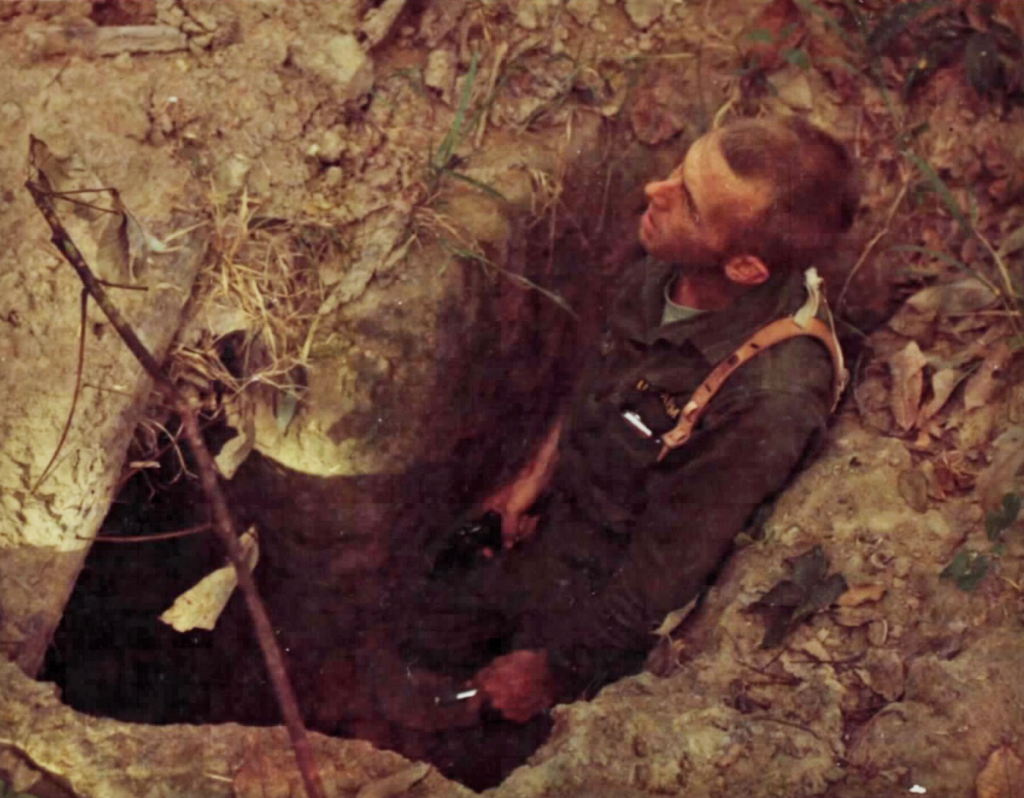
On January 14, 1966, Operation Crimp came to its brutal end in the Ho Bo Woods — a week‑long sweep that uncovered nearly 11 miles of Viet Cong tunnels and forced American and Australian troops to confront a hidden front they hadn’t fully understood.
By the time the guns fell silent, the forest floor looked unchanged, but everyone who walked it knew the truth: the enemy’s world ran beneath their boots.
Image: During Operation Crimp, near Bien Hoa, the 1st Battalion, 28th Infantry, 1st Inf. Div. located a village that had been used by the Viet Cong. Supplies and weapons were found in the network of tunnels via Wikimedia Commons
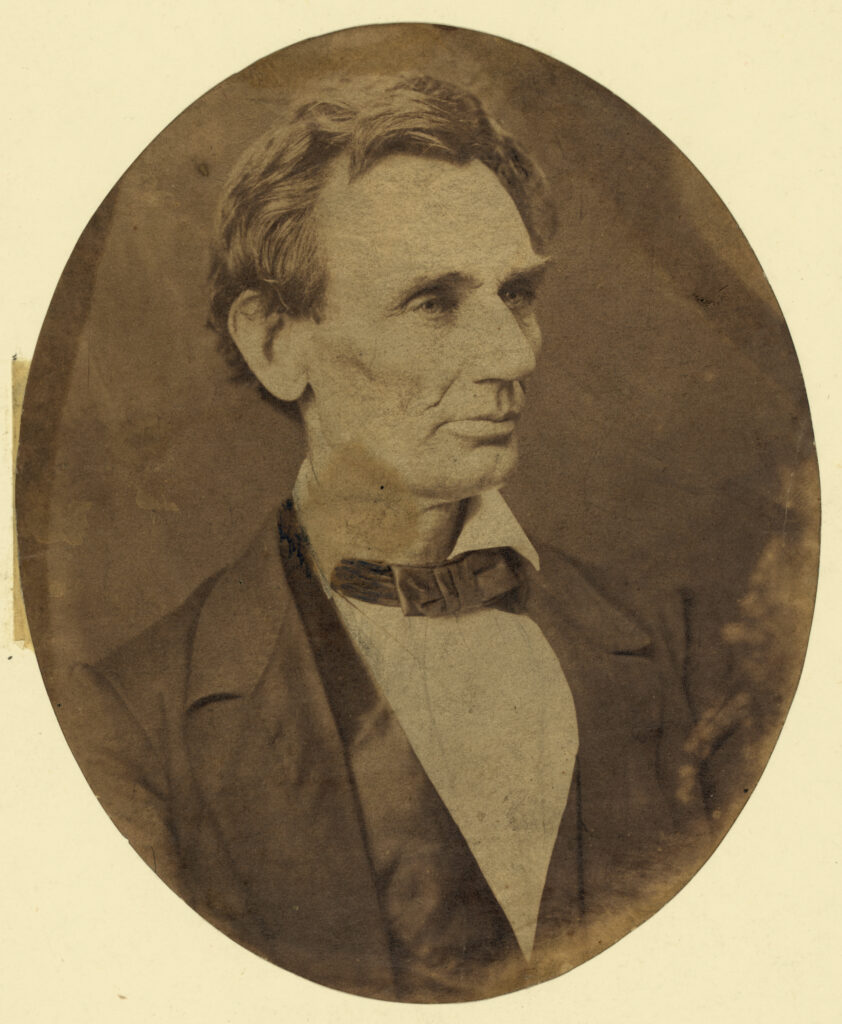
On January 14, 1861, in the deep uncertainty of the secession winter, President‑elect Abraham Lincoln received an anonymous letter—recorded as coming from Philadelphia—warning of a possible ‘servile insurrection’—a feared uprising of enslaved people—in the South. No such revolt was actually being planned, but it was one more rumor he was forced to read and weigh in a season thick with fear and misinformation, a reminder that even before he took office, he was already carrying the weight of a nation coming apart.
