
Born on December 24, 1802, in the mountain town of Chittenden, Vermont, Dr. Horace Green grew up far from the great medical centers he would one day influence. After training at Castleton Medical College and refining his studies in Philadelphia, he settled in New York City in the 1830s—just as the nation’s understanding of the throat and lungs was entering a new era.
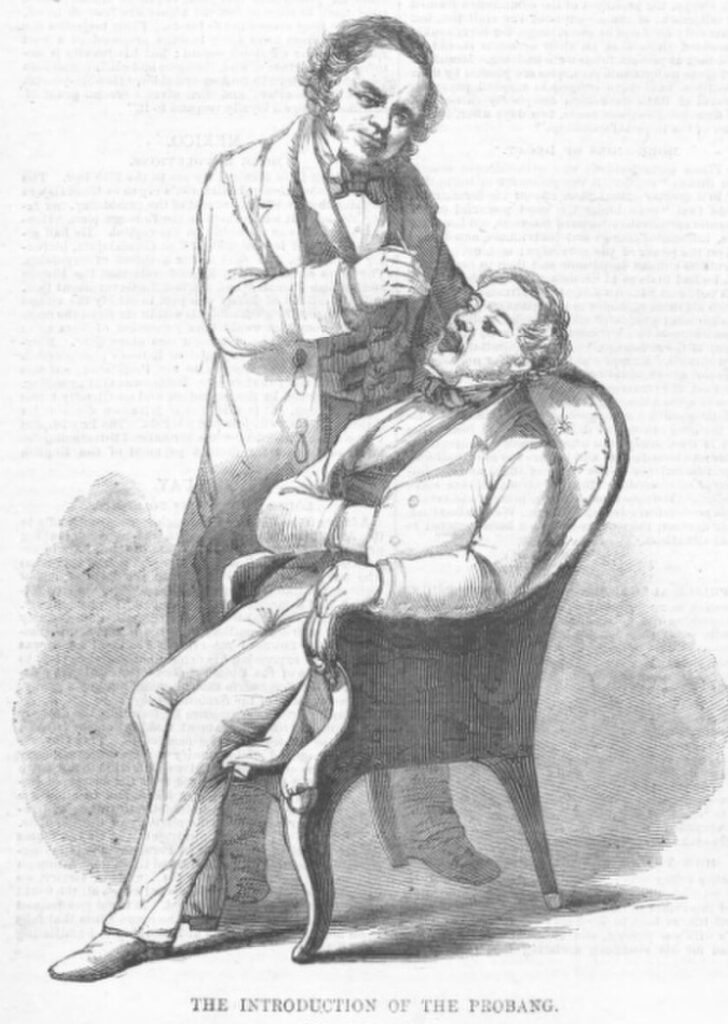
Green became one of the first American physicians to look directly into the larynx and attempt treatment at its source. With a flexible, sponge‑tipped instrument called the probang, he applied medication to inflamed tissues of the throat and upper airway, challenging the belief that these regions were beyond the reach of human hands. Thousands of patients sought him out, and his bold technique earned him both admiration and suspicion.
That tension erupted in 1858, when a patient died days after a probang treatment. Green was arrested, publicly scrutinized, and ultimately cleared—but the controversy cemented his place in medical history. To some he was reckless; to others, a pioneer ahead of his time. Today he is remembered as the father of American laryngology, a physician who pioneered direct treatment of the larynx when such intervention was considered nearly impossible.
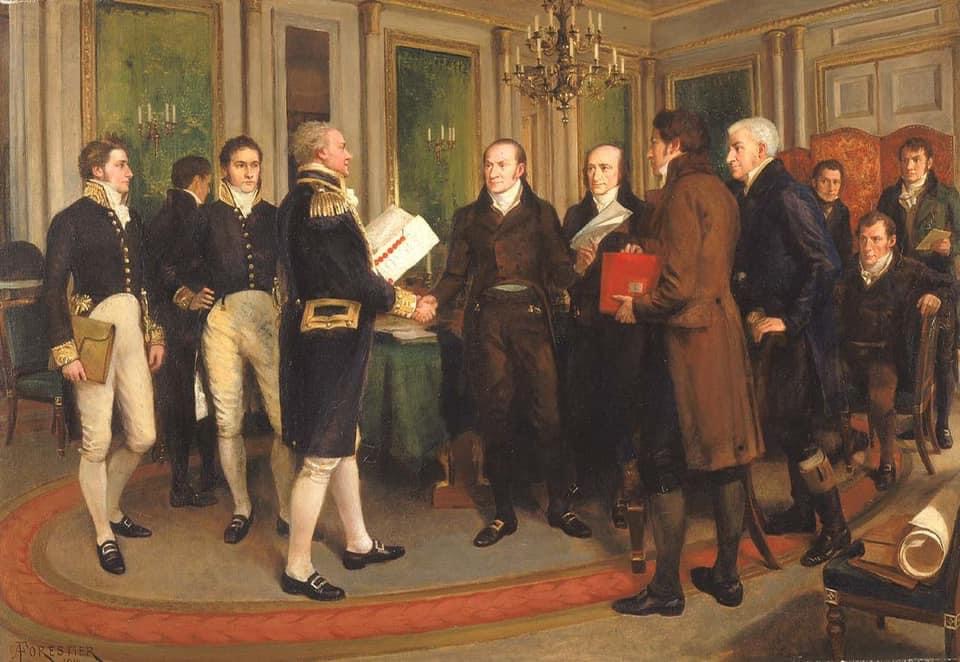
In the late afternoon of December 24, 1814, the commissioners who had agreed upon the Treaty of Ghent signed their handiwork and exchanged conventional expressions of satisfaction at the conclusion of their labors. John Quincy Adams, as he tells us in his diary, assured Lord Gambier of his hope that it would be the last treaty of peace between Great Britain and the United States. Two weeks later, at a banquet given by the citizens in honor of the commissioners, Mr. Adams, proposing the culminating toast of the occasion, worded it thus: “Ghent, the city of Peace; may the gates of the temple of Janus, here closed, not be opened again for a century!” From The British Empire and the United States; a review of their relations during the century of peace following the Treaty of Ghent by William Archibald Dunning Published in 1914 https://archive.org/details/britishempireuni00dunn/page/n47 Photo: The Signing of the Treaty of Ghent, Christmas Eve, 1814 by Amédée Forestier, public domain via Wikimedia Commons
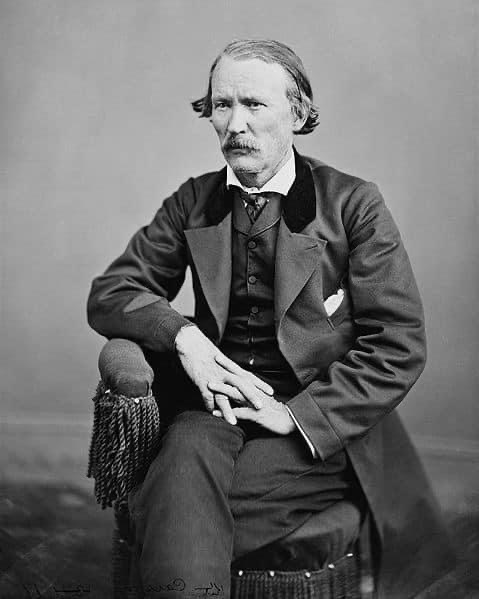
“Frontiersman Kit Carson was born on December 24, 1809. He left home at 17 for a life of adventure in the Rockies, on the Santa Fe Trail, and throughout the west. A fur trapper, explorer, guide, US Army general, and rancher he counted as friends Jim Bridger and John C. Fremont.” Image via Wikimedia Commons, public domain in the US
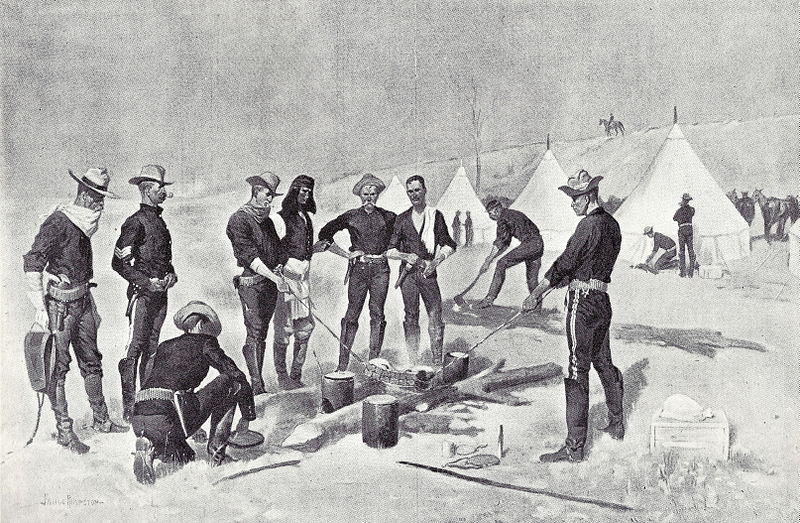
The December 24, 1892 edition of Harper’s Weekly newspaper carried this Frederic Remington drawing titled “Roasting the Christmas Beef in a Cavalry Camp.” Image via Wikimedia Commons, public domain in the US.
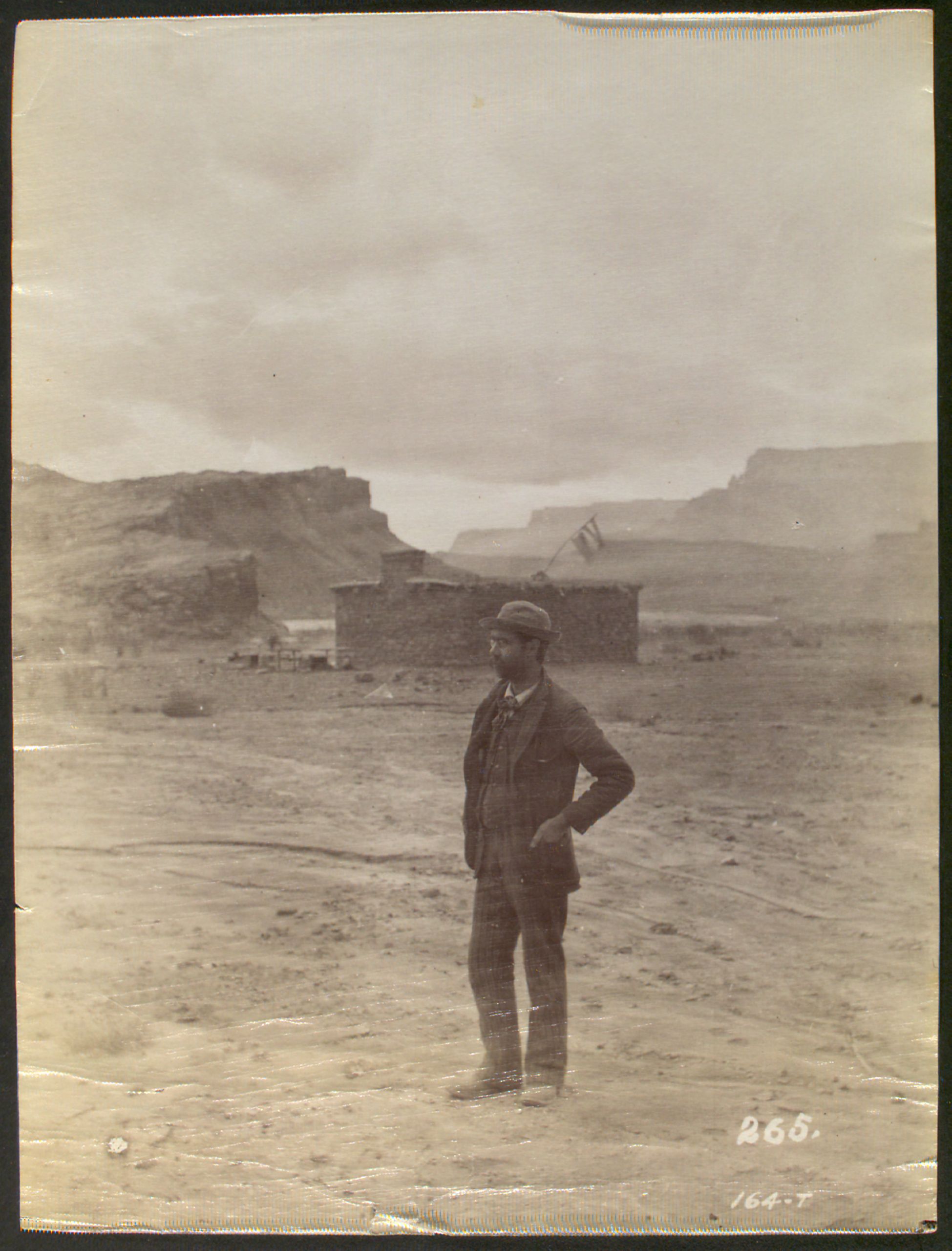
This photograph is titled “F.A. Nims, December 24, 1889” If the image is of Franklin Asa Nims, in what appears to be an area near the Grand Canyon, it would have been about a week before he fell more than 20 feet on New Year’s Day while trying to take photos. The fall was so bad that he broke a leg, fractured his skull and lost consciousness. It took days for others in his party to carry him out of the canyon in a makeshift stretcher and they didn’t reach a major town until late January. Nims lived until 1935. Image via NYPL Digital Collections, public domain
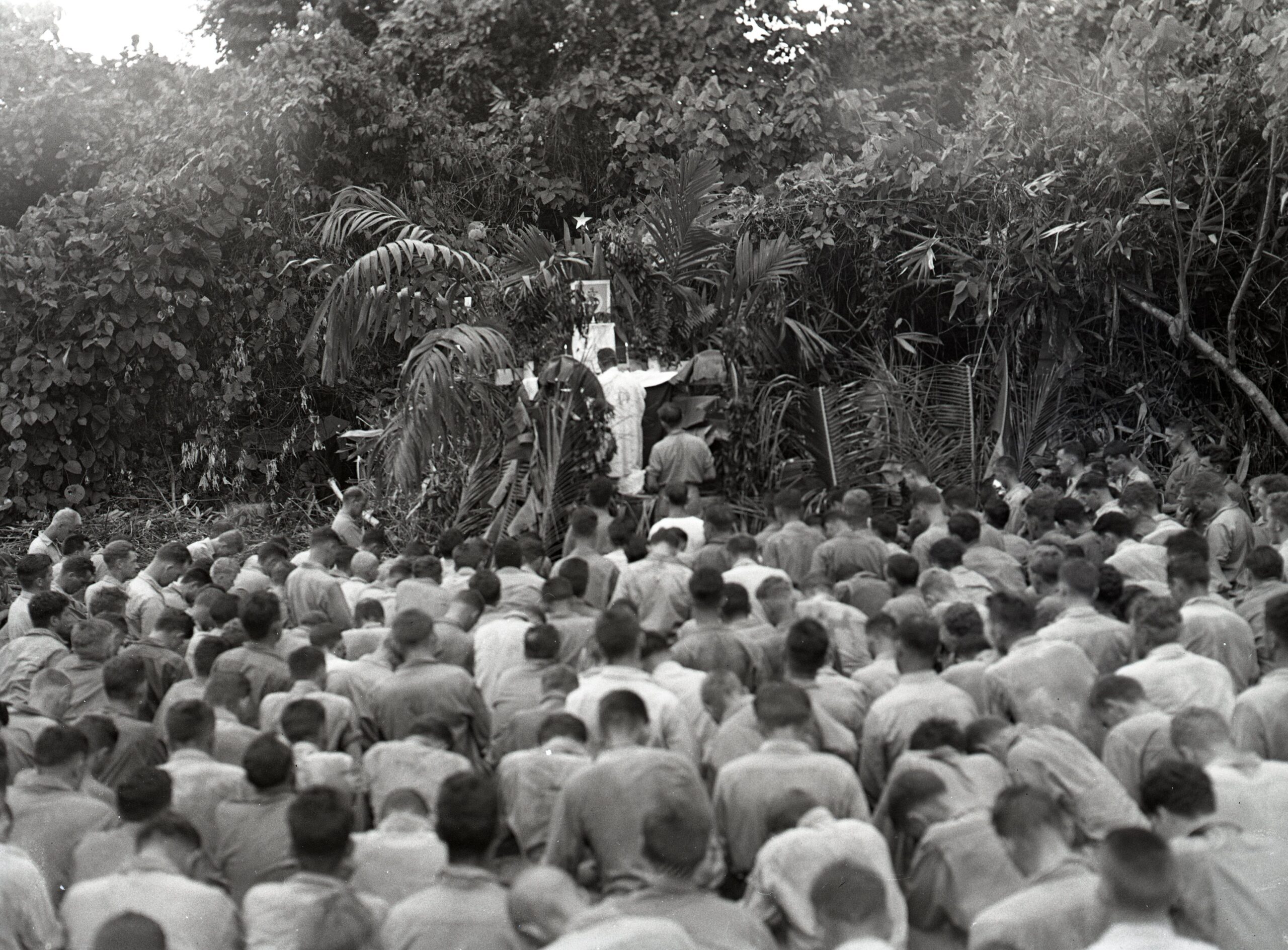
“Christmas Eve…Marines, on the eve of the invasion of Cape Gloucester, attend Christmas church services on a South Pacific island.” December 24, 1943 via Wikimedia Commons, public domain
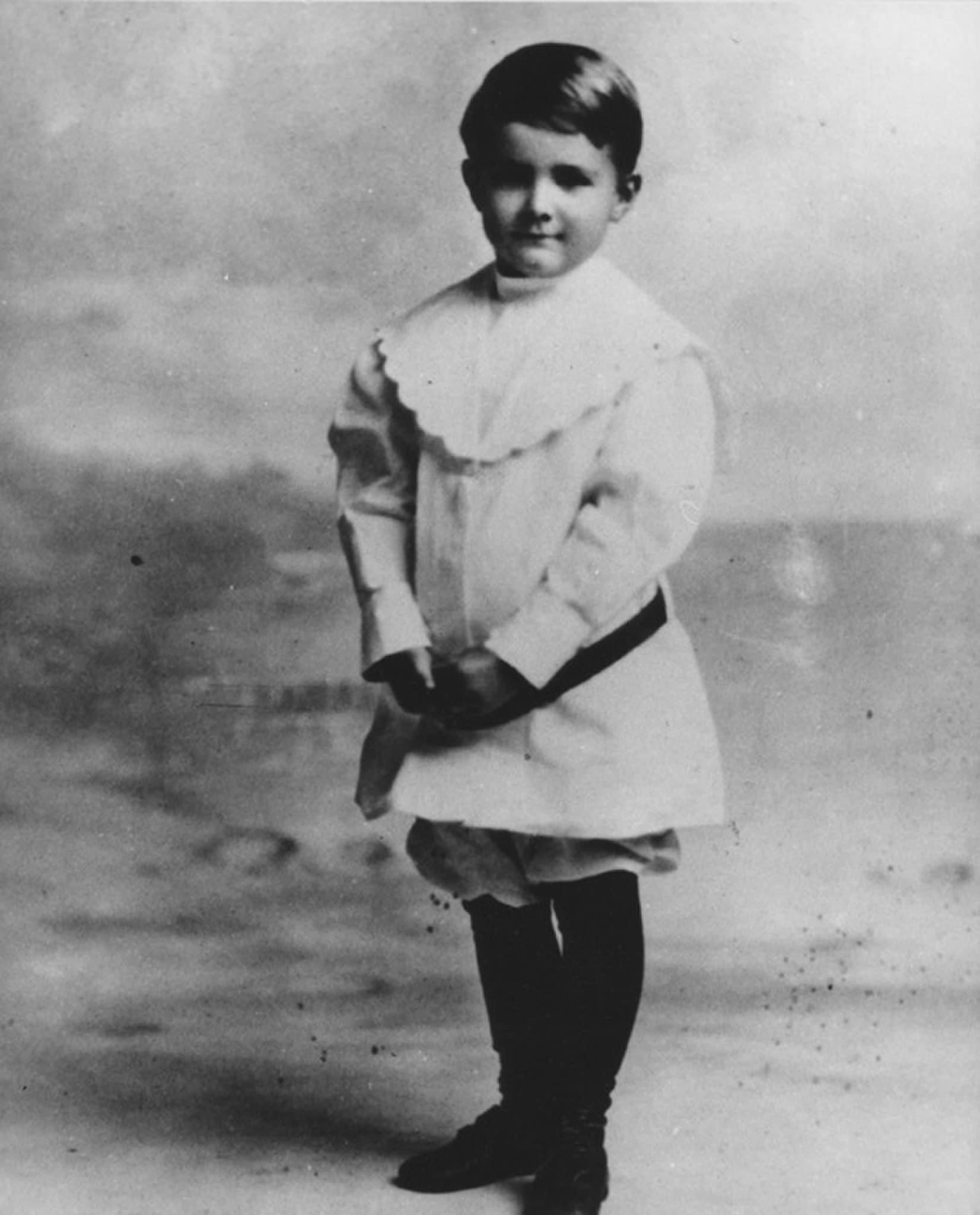
American aviator, movie producer and tycoon Howard Hughes was born on December 24, 1905 in Houston, Texas. In his youth Hughes was an avid golfer and even considered going pro. Image of Howard Hughes as a boy via Wikimedia Commons, public domain
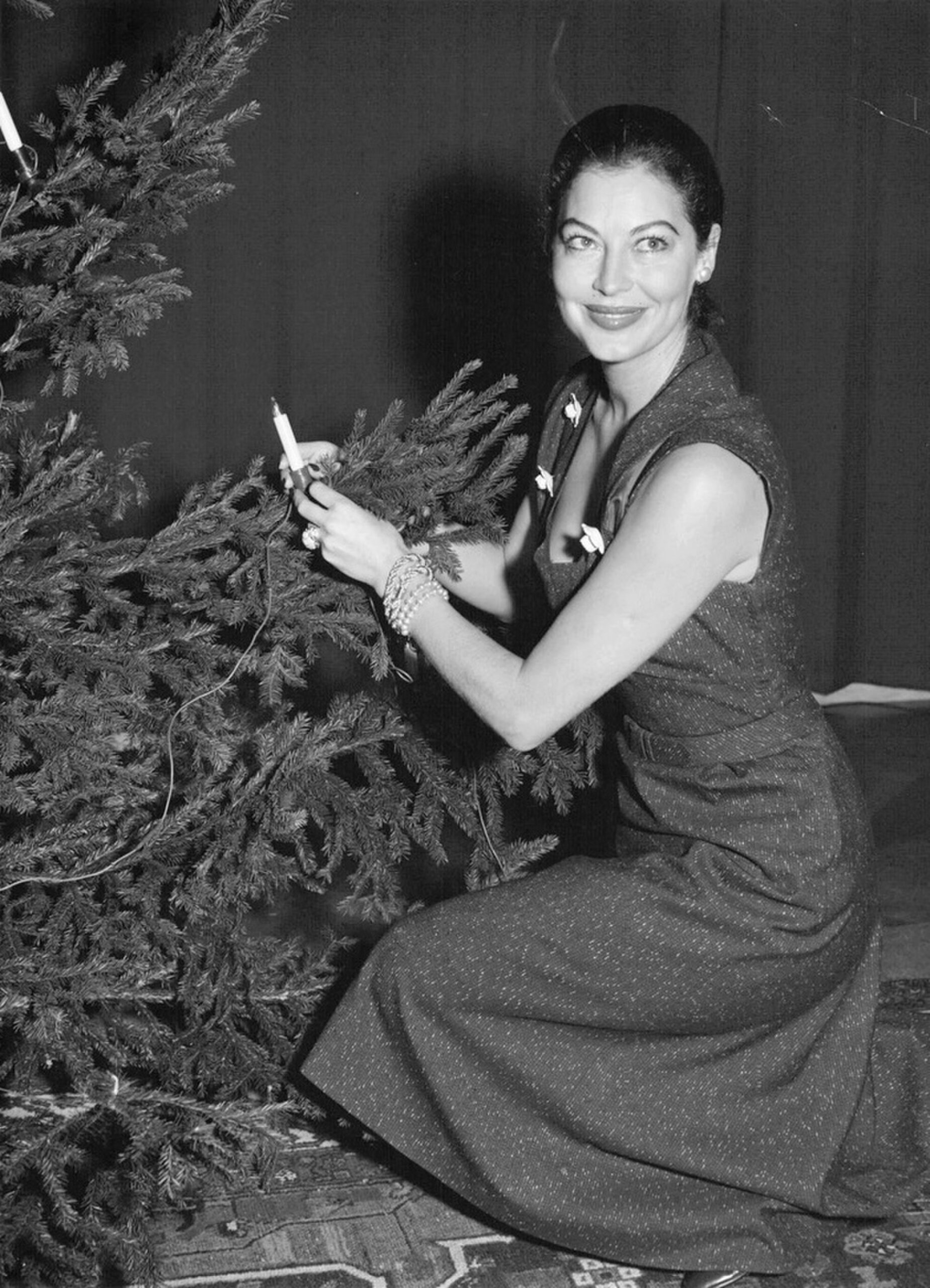
American actress Ava Gardner was born on Christmas Eve, 1922 in Grabtown, North Carolina. Image: Photo of Ava that was taken the day before her 32nd birthday at the Grand Hotel in Stockholm, Sweden in 1954 via Wikimedia Commons, public domain
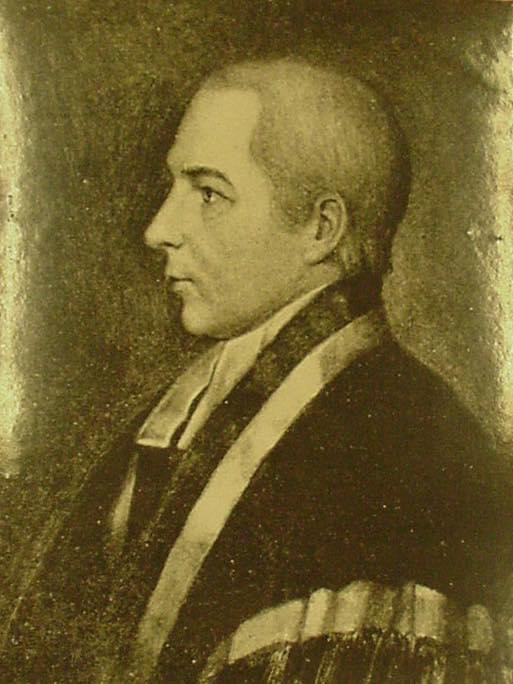
5 quick facts about Founding Father of The United States William Paterson… – Born in Ireland on Christmas Eve in 1745 – Entered Princeton University at the age of 14 – Signed The United States Constitution – The city of Paterson, New Jersey is named after him – Held many key positions: Was the second Governor of New Jersey, an Associate Supreme Court Justice, a U.S. Senator and was Attorney General of New Jersey Image: Portrait of William Paterson – Office of the Attorney General of New Jersey, public domain via Wikimedia Commons
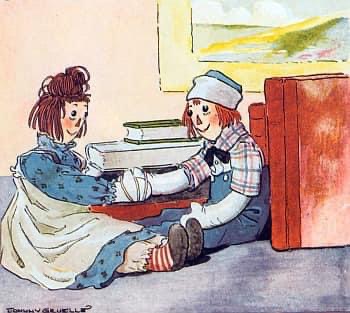
Born on December 24, 1880 Johnny Gruelle was a political cartoonist and artist but is remembered as the author and illustrator of the ‘Raggedy Ann & Andy’ books. He was inspired by watching his daughter Marcella (who died tragically at a young age) play with a rag doll she found in an attic and loved. Image via Wikimedia Commons, public domain in the US
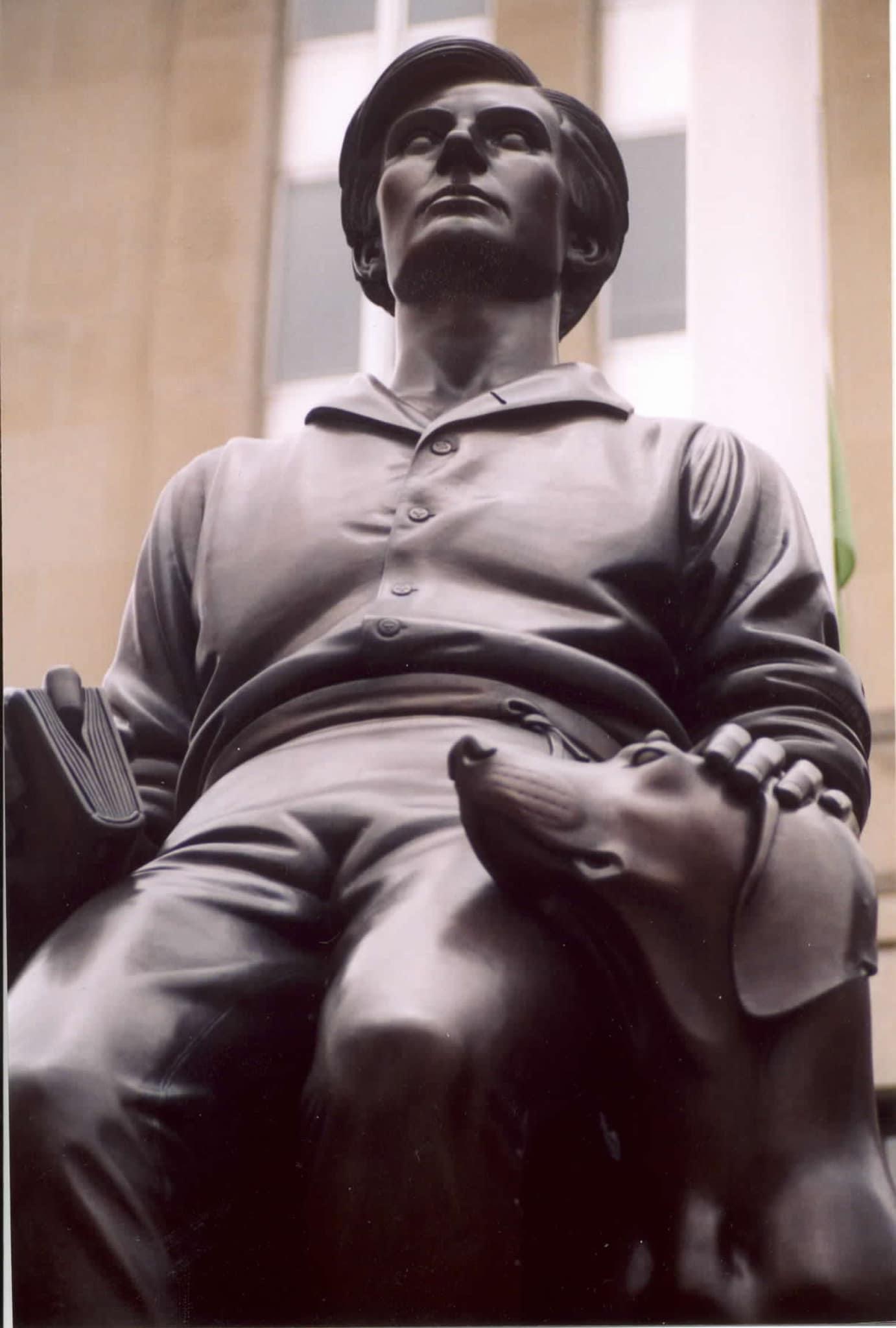
Sculpture in Fort Wayne, Indiana called “Young Lincoln” by American artist Paul Manship Manship was born in St. Paul, Minnesota, on December 24, 1885. Photo by Einar Einarsson Kvaran via Wikimedia Commons, CC BY SA 3.0
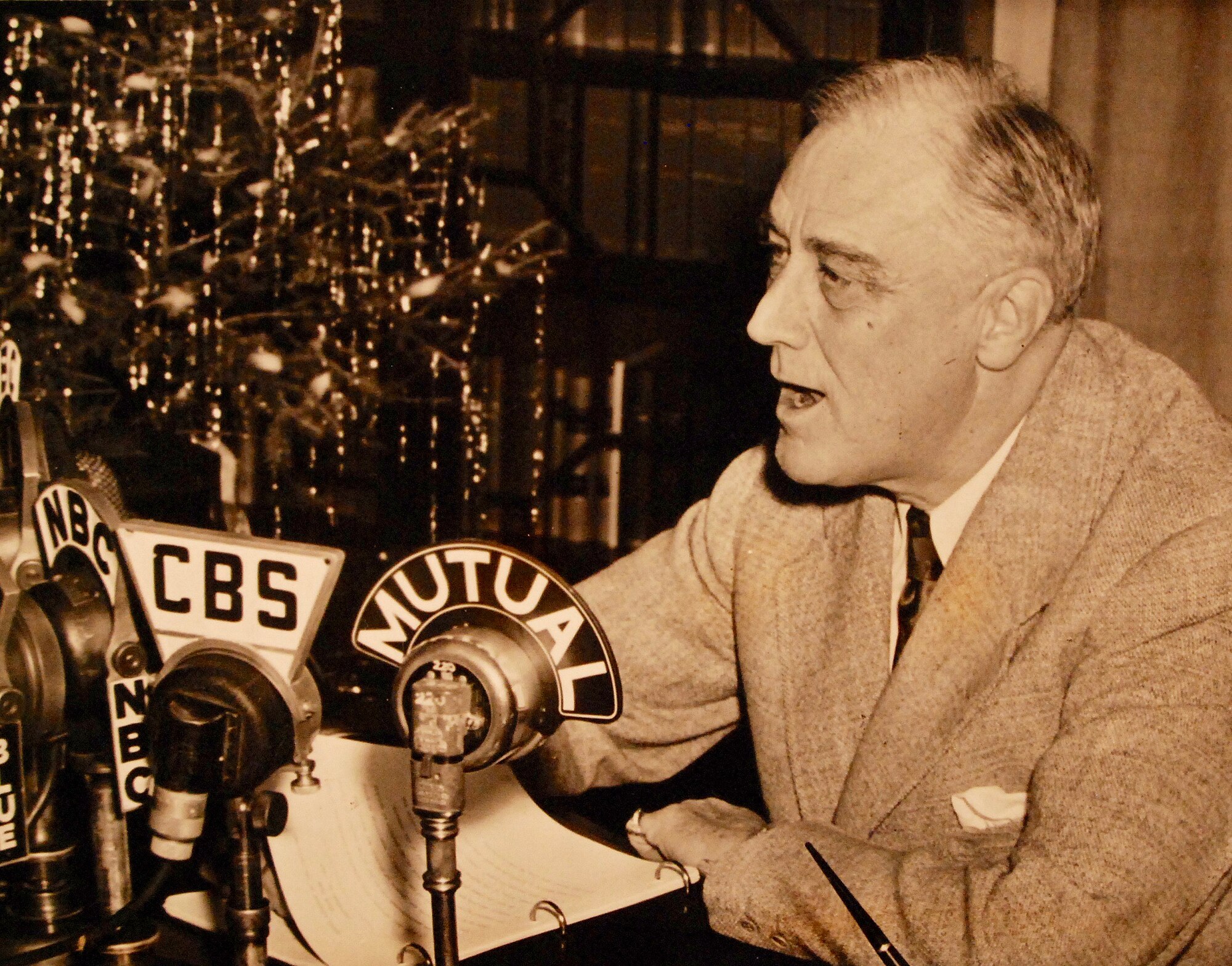
FDR during his Fireside chat when he announced that he met with other Allied leaders who agreed on every point concerned with the launching of a gigantic attack upon Germany. December 24, 1943 Image via Wikimedia Commons, public domain
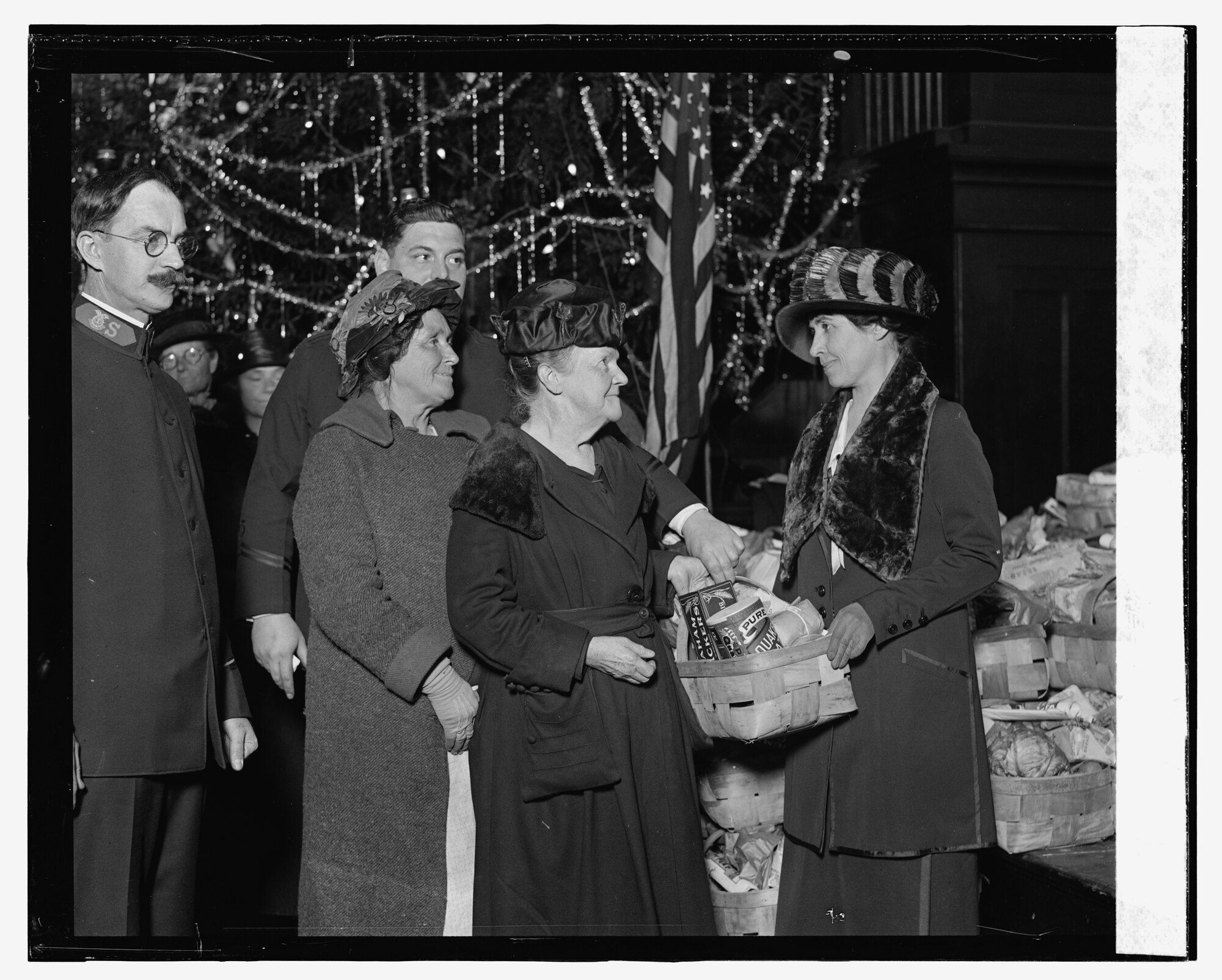
Mrs. Coolidge and The Salvation Army December 24, 1923 Image via Wikimedia Commons, public domain in the US
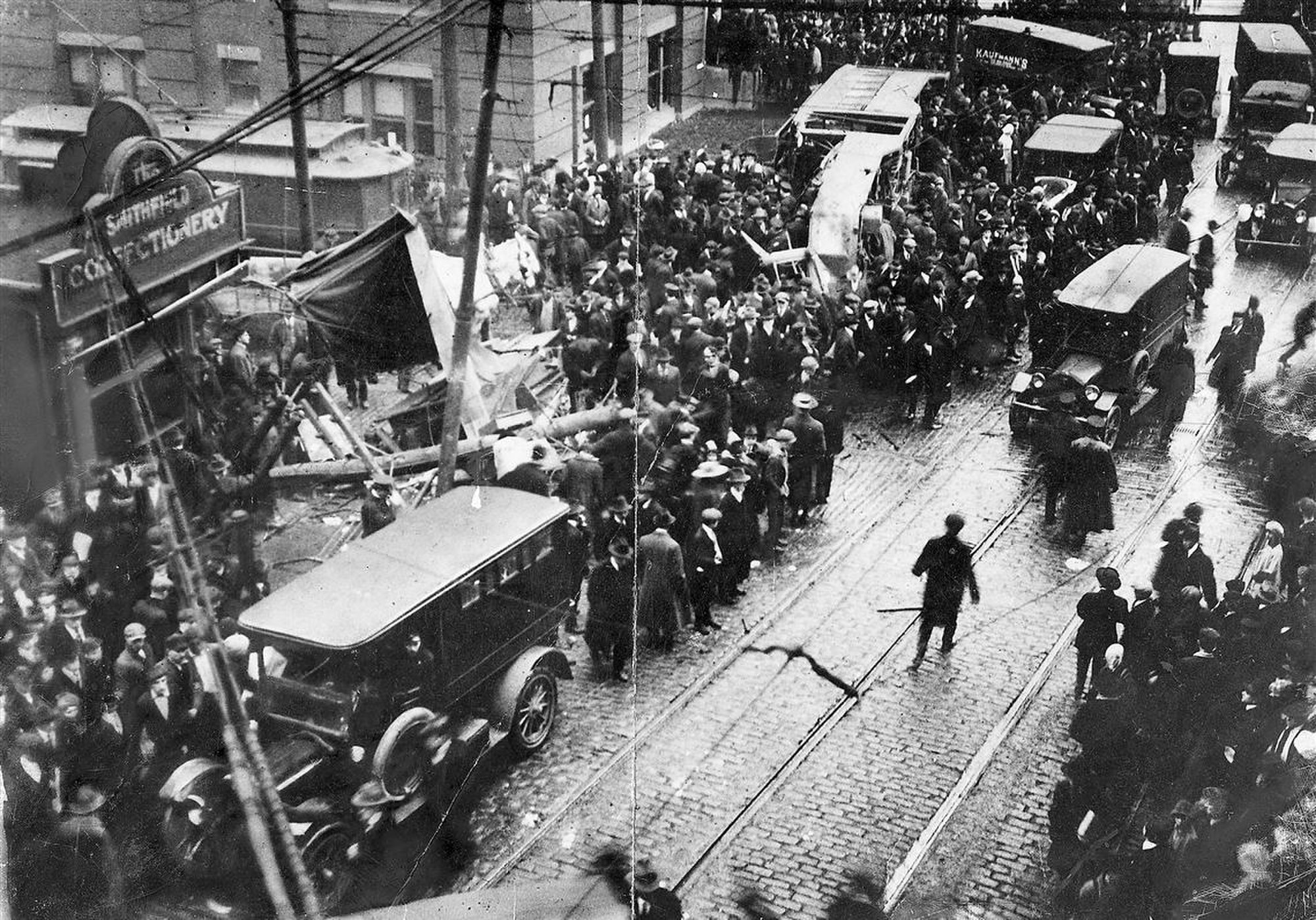
On December 24, 1917, a trolley car in Pittsburgh, carrying more than one hundred passengers, lost its brakes and overturned. 23 people were killed in the tragedy. Image via Wikimedia Commons, public domain in the US
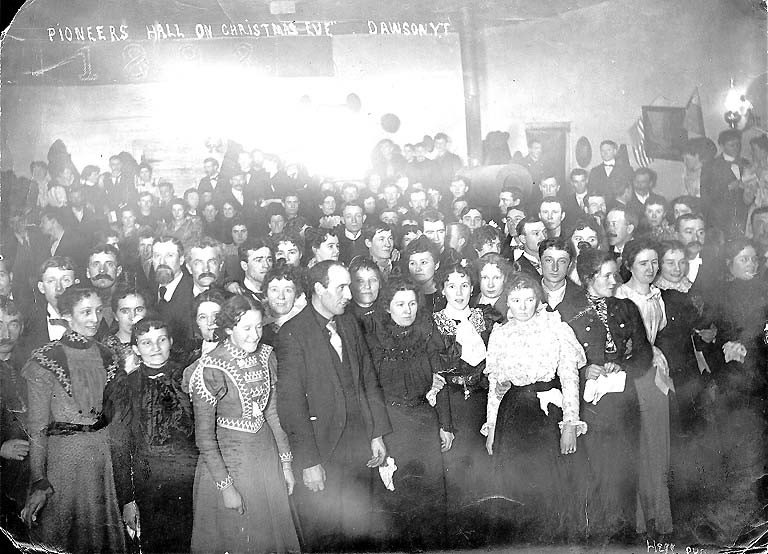
Men and women celebrating Christmas Eve in Pioneer Hall, Dawson, Yukon Territory, ca 1899 While people from all over the globe participated in the Klondike Gold Rush, up to 80% of all prospectors were from America. Photo by Swedish-American photographer Eric A. Hegg via Wikimedia Commons, public domain
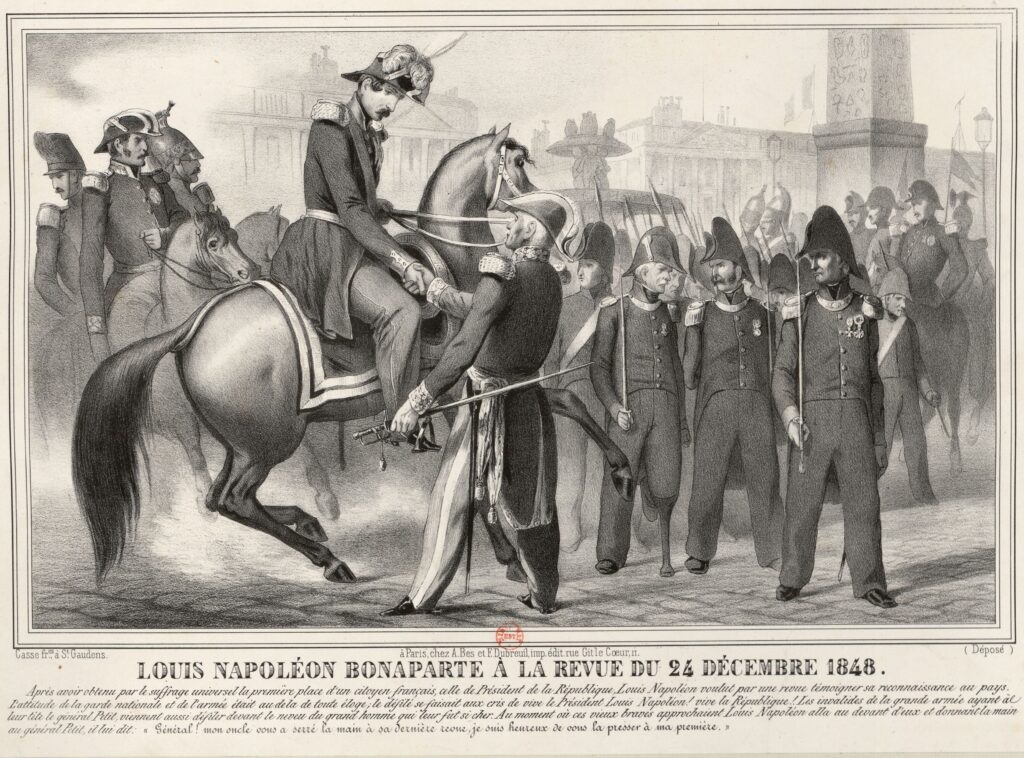
On December 24, 1848, Louis‑Napoléon Bonaparte — nephew of Napoleon Bonaparte — reviewed the National Guard as France’s newly elected president, a nation still unsteady from revolution watching its future take shape in disciplined ranks. Though this moment unfolded in Paris, its influence reached the United States: thousands of ‘Forty‑Eighters’ fleeing Europe’s upheavals carried their politics and ideals into American cities, helping shape labor movements, abolitionist circles, and the young Republican Party. And the Bonaparte name already had a foothold in America through Jérôme Bonaparte’s Baltimore family, whose descendants would one day help found the FBI. A winter scene in France, yet part of a story that touched both nations.
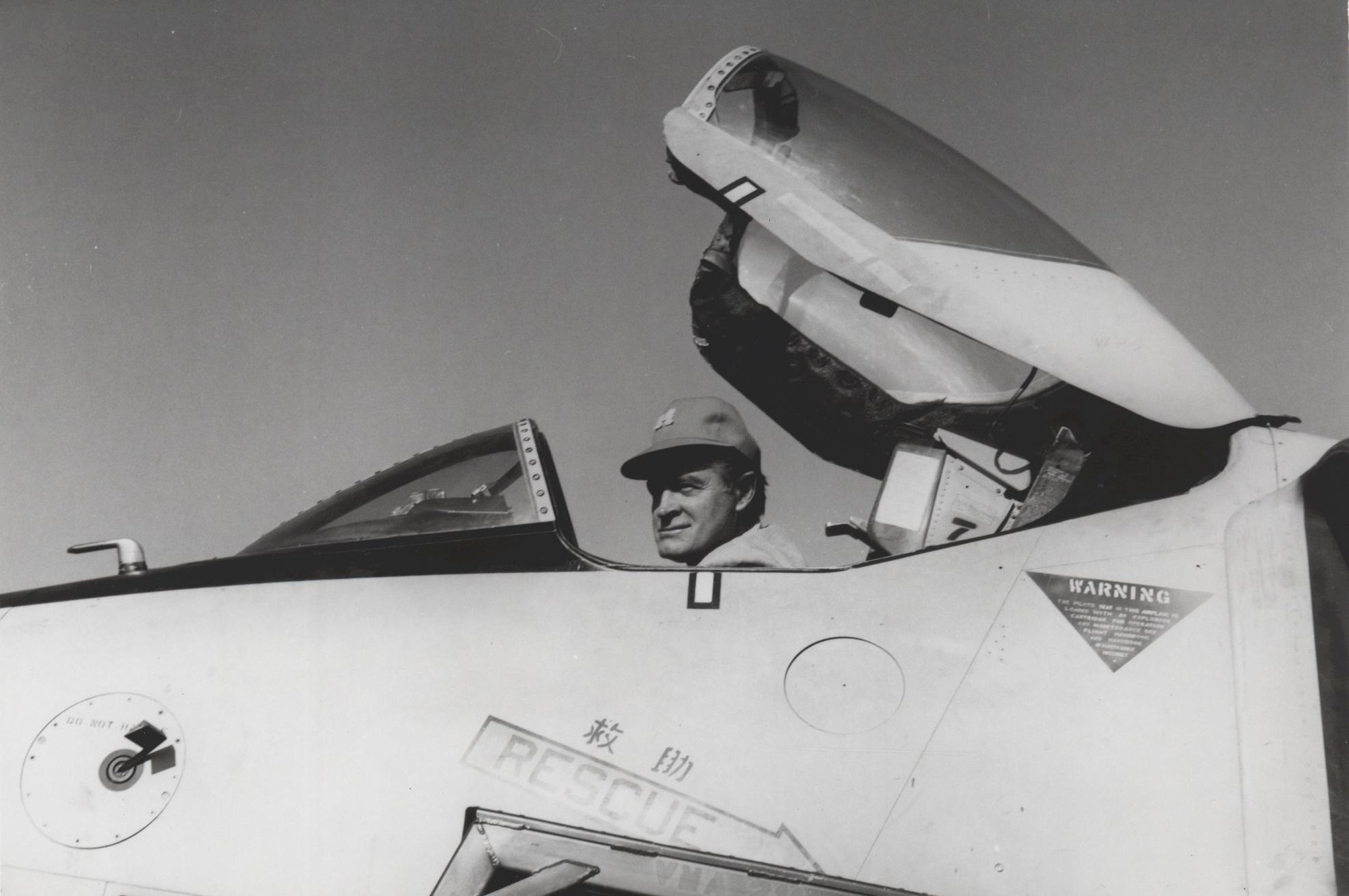
Bob Hope sits in an A-4E Skyhawk of Marine Attack Squadron 211 at Chu Lai following his Christmas show (official USMC photo by Sergeant W. P. Luke) Photo from USMC Archives via Wikimedia Commons, CC BY 2.0
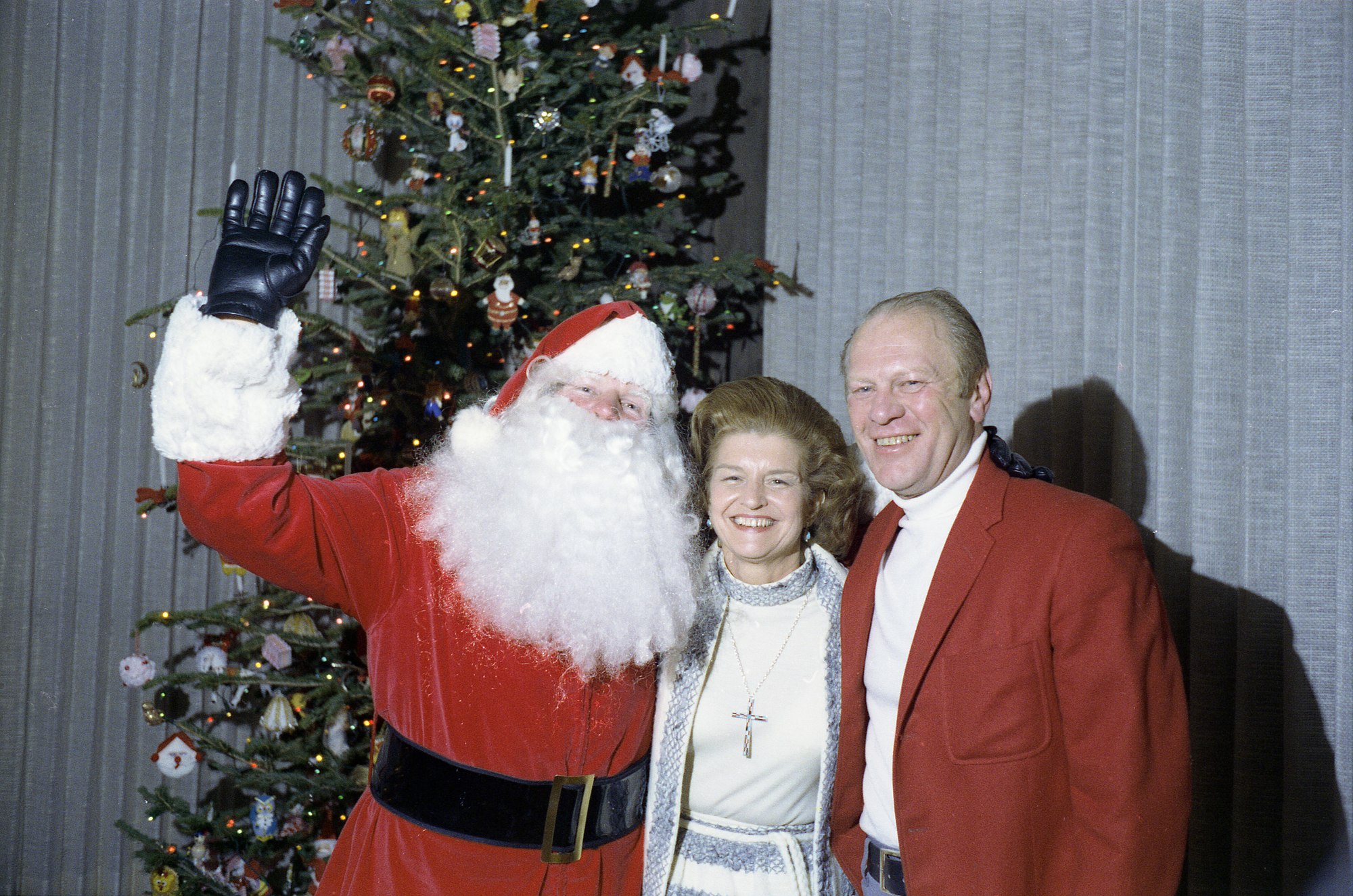
President Gerald R. Ford and First Lady Betty Ford Posing with Santa Claus during a Christmas Eve Party at the Kindel Residence in Vail, Colorado December 24, 1975 Photo via Wikimedia Commons, public domain
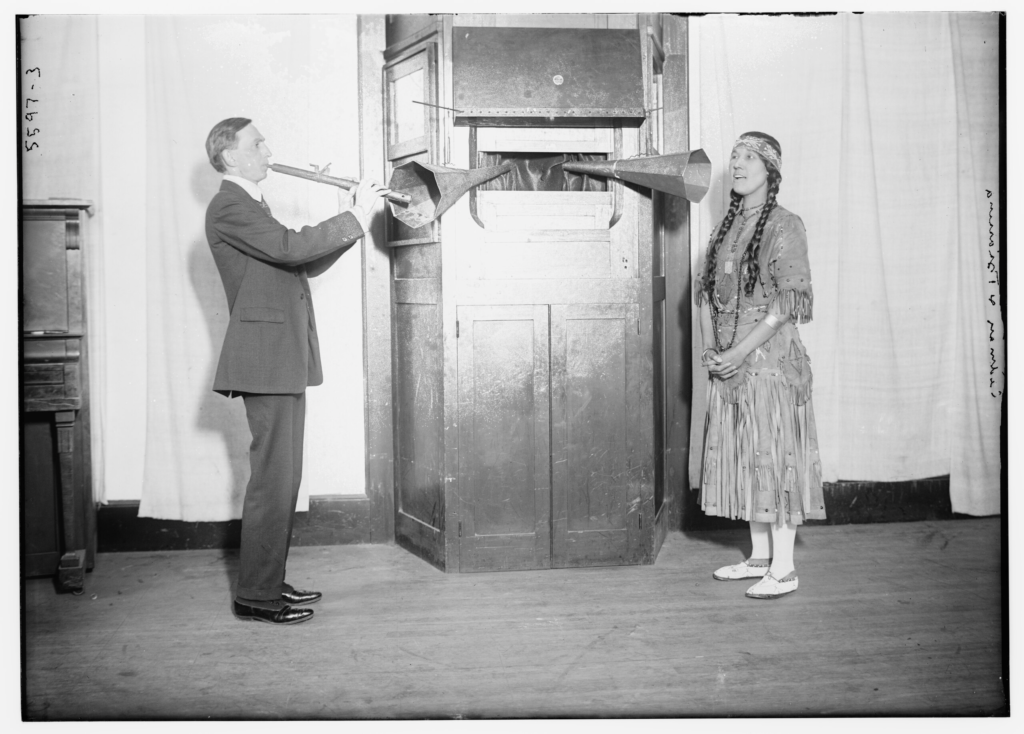
Charles Wakefield Cadman was born on Christmas Eve — December 24, 1881 — in Johnstown, Pennsylvania, into a family where music was already a legacy. His great‑grandfather, Samuel Wakefield, had built the first pipe organ west of the Alleghenies, and Cadman grew up studying piano and organ before emerging as one of the most prominent American composers of his era.
Beginning in 1909, Cadman traveled to the Omaha and Winnebago reservations to record and study their melodies, later drawing on Iroquois and other tribal themes as he developed his own musical voice. His closest collaborator in this work was Tsianina Redfeather Blackstone, the remarkable Muscogee‑Cherokee mezzo‑soprano who toured with him across the United States and Europe for more than a decade. Their lecture‑recitals introduced many audiences to Native‑inspired music for the first time, and their partnership shaped Cadman’s most enduring compositions — including his 1918 opera Shanewis (The Robin Woman), loosely based on Redfeather’s life and the first American opera to be performed for two consecutive seasons at the Metropolitan Opera.
Today, Cadman’s legacy is viewed with both admiration and complexity. Though he sought authenticity — even recording wax cylinders for the Smithsonian — he also reshaped Native melodies within Western classical forms to meet the expectations of early 20th‑century audiences. Yet this photograph of Cadman and Tsianina captures a moment when two artists, from profoundly different worlds, stood together and carried a new kind of American music to listeners far beyond its origins.
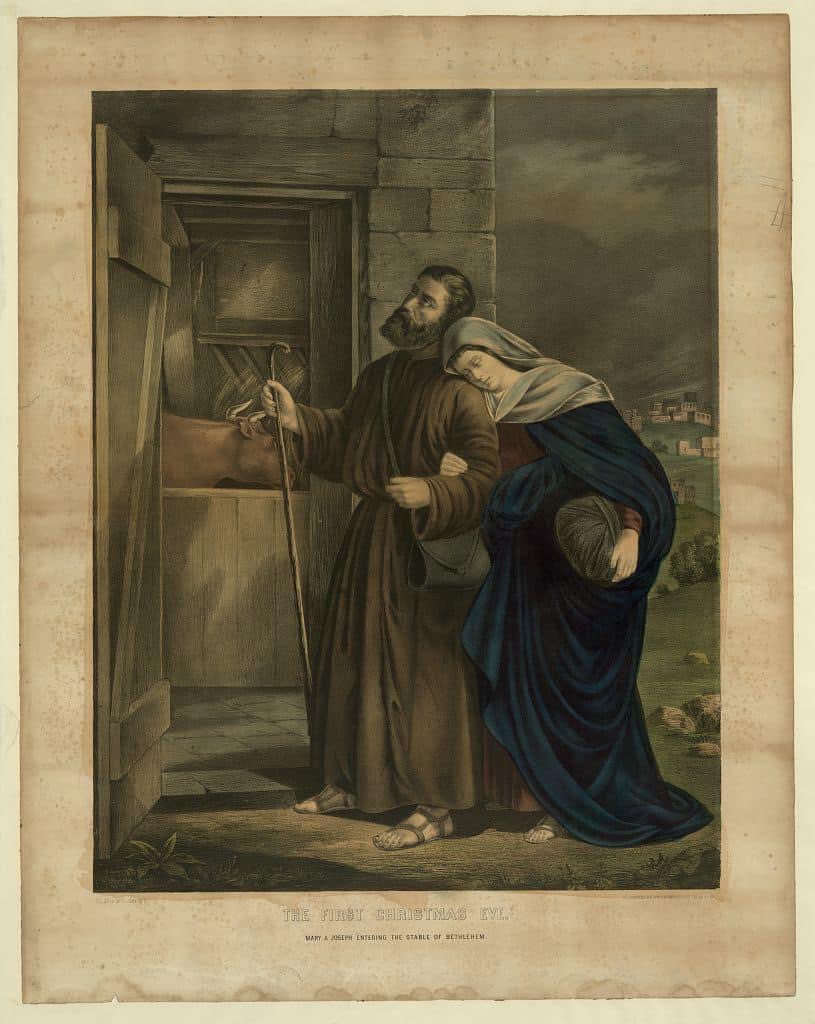
The first Christmas Eve, Mary & Joseph entering the stable of Bethlehem via Library of Congress, no known restrictions
