
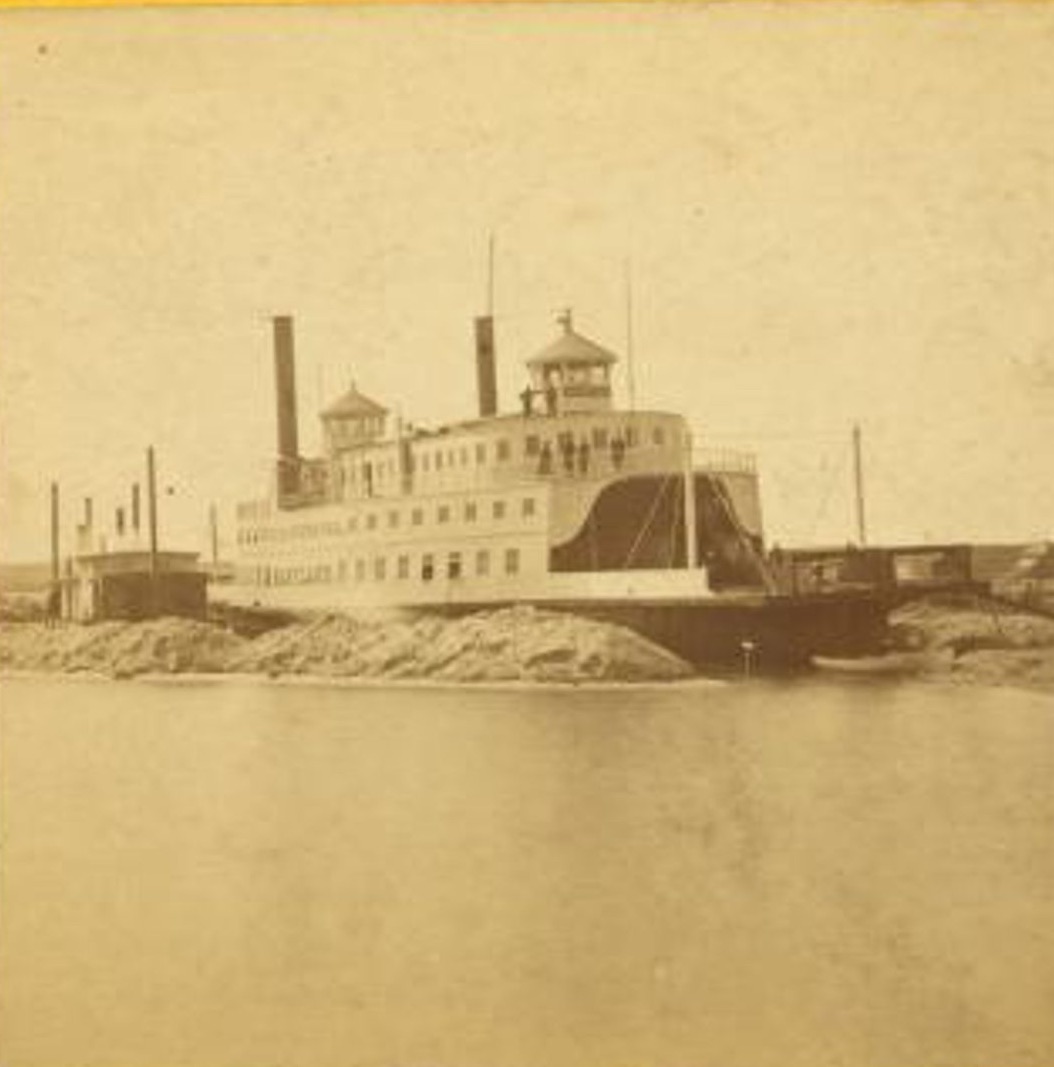
Transfer steamer “Maryland” on the beach at Vineyard Haven (Martha’s Vineyard), Massachusetts.
Driven ashore by the storm on Tuesday, April 4, 1876.
via NYPL Digital Collections, public domain
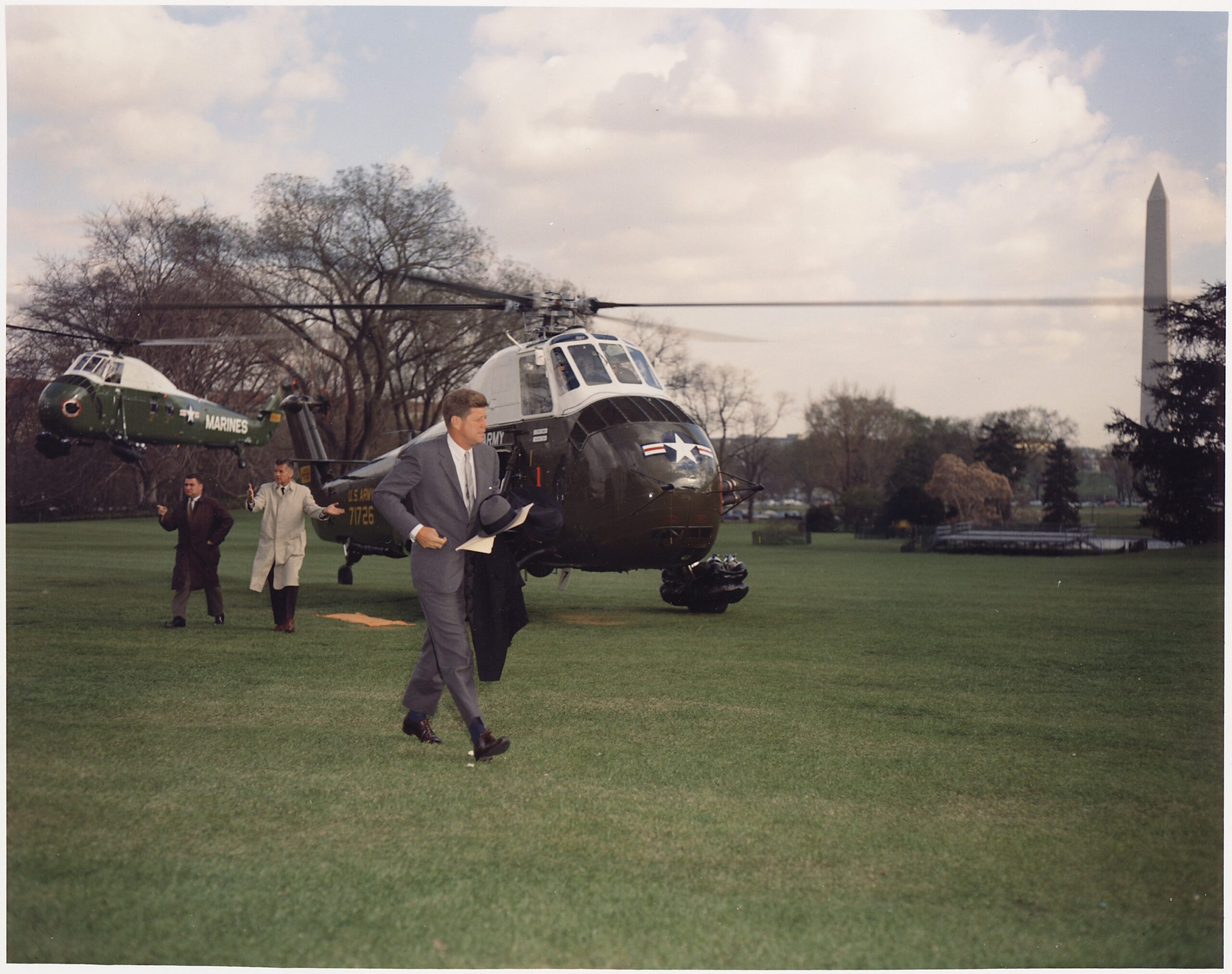
Return of the President from Florida. President Kennedy, Chief of White House Secret Service Detail Jerry Behn, Press Secretary Pierre Salinger. White House, South Lawn.
April 4, 1961
via Wikimedia Commons, public domain in the US
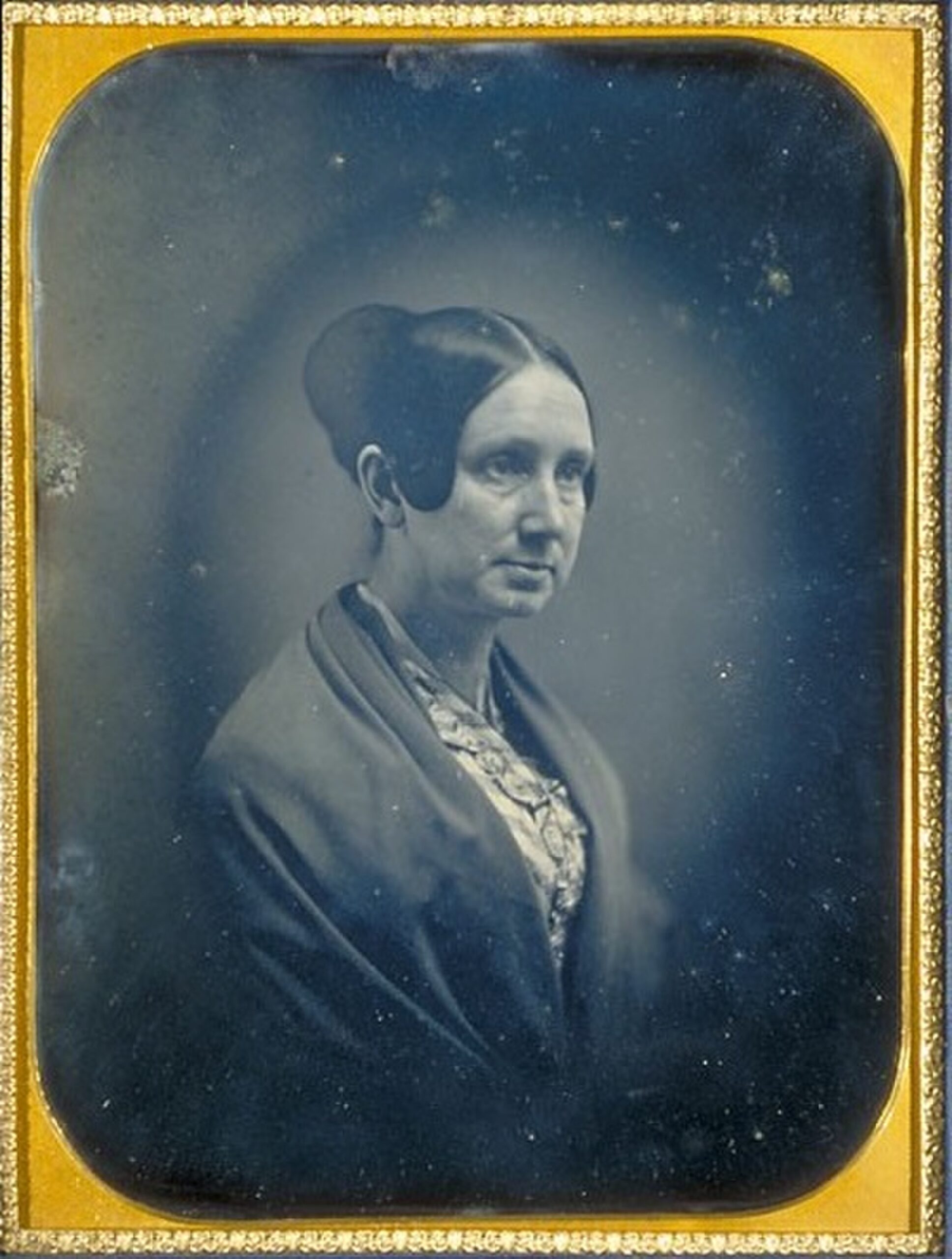
Born April 4, 1802 Dorothea Dix devoted most of her life to improving facilities to treat the mentally ill and indigent. She worked with the legislatures of several states to set up public institutions. In June, 1861 she was appointed Superintendant of Nurses for the Union Army, serving through the Civil War.
Image from Houghton Library, Harvard University via Wikimedia Commons, public domain in the US {PD-US}.
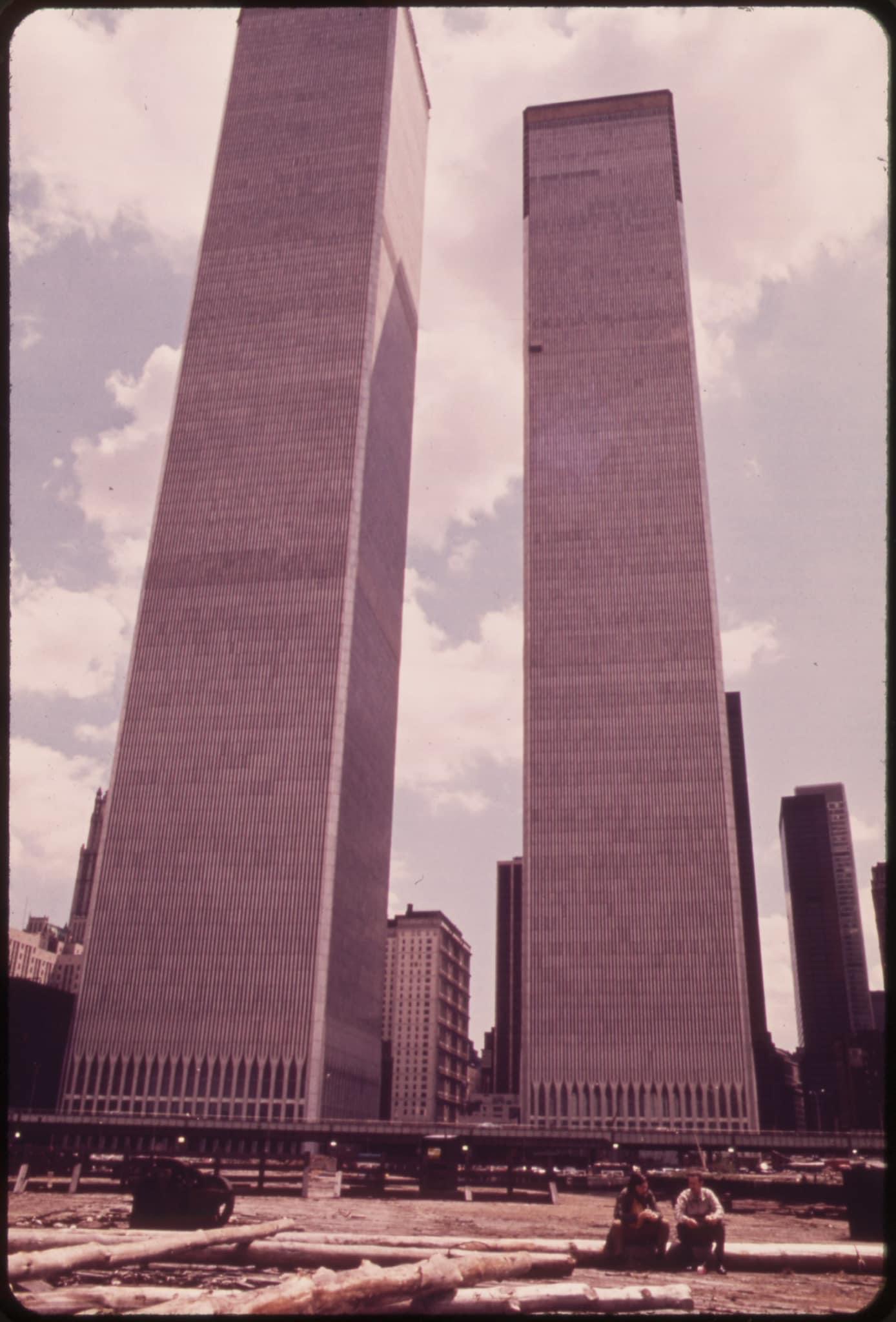
On April 4, 1973, a ribbon cutting ceremony inaugurating the World Trade Center in New York City occurred.
Image: The Twin Towers of The World Trade Center in 1973 via Wikimedia Commons, public domain
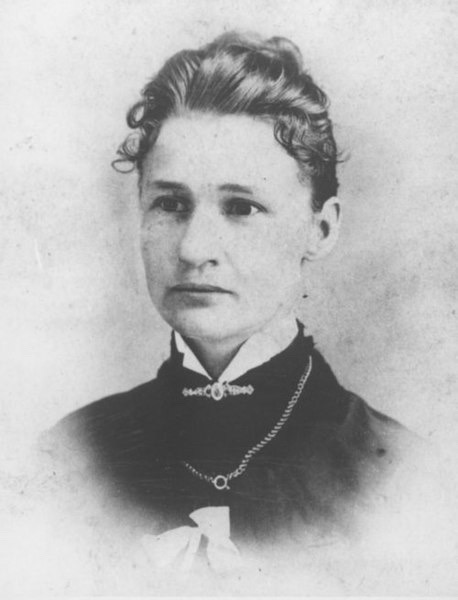
On April 4, 1887 Susanna Madora Salter was elected mayor of Argonia, Kansas. Mrs. Salter was the first woman elected to a political office in the US. She was a mother of nine and one of her children was born during her one-year term in office.
Image from the Kansas Historical Society via Wikimedia Commons, public domain in the US.
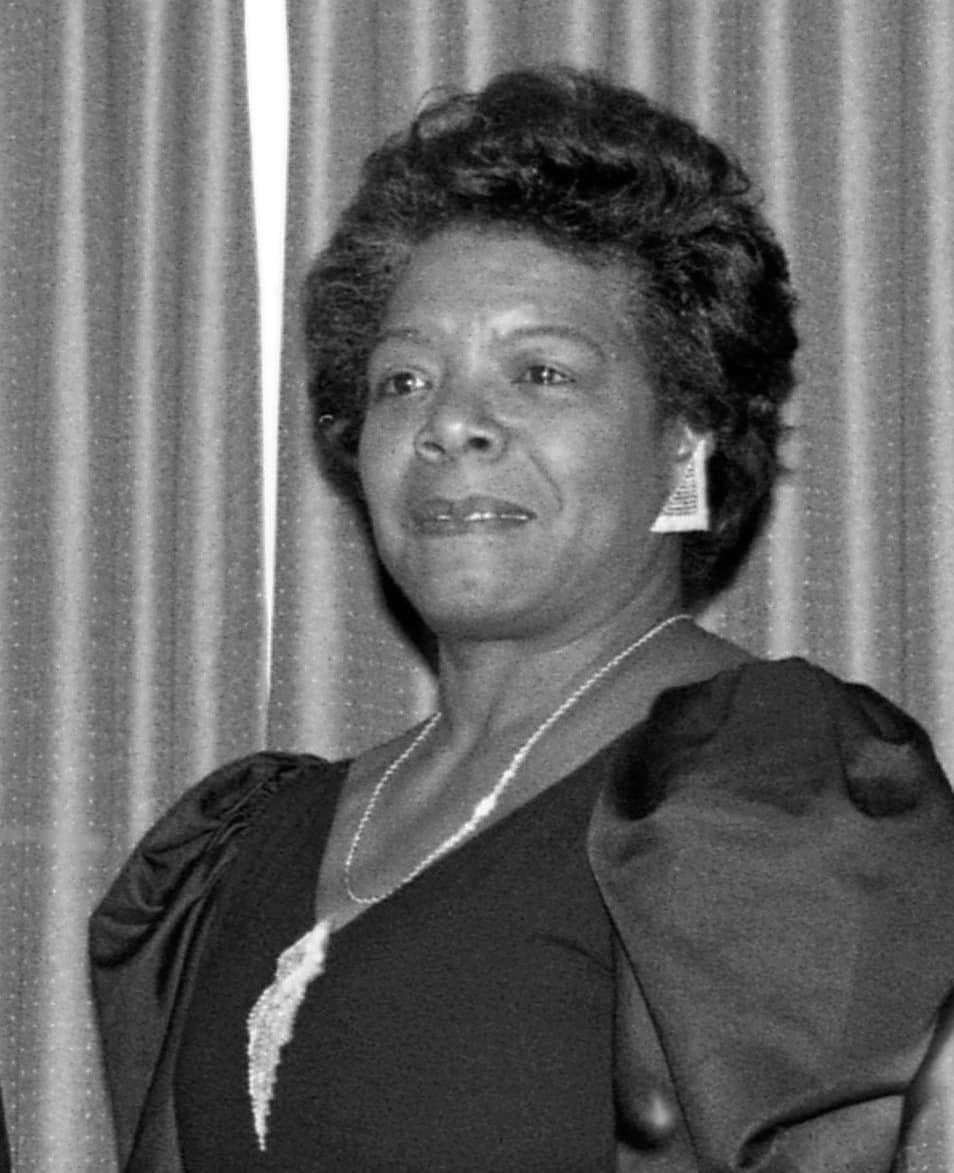
American poet Maya Angelou was born on April 4, 1928 in St. Louis, Missouri.
As a young girl Maya became mute which lasted for a period of about five years.
She was assisted by a teacher who introduced her to many of the greatest poets in history where she was encouraged to recite their poems in order to regain her ability to speak.
Image of Maya Angelou in 1987 via Wikimedia Commons, no known restrictions
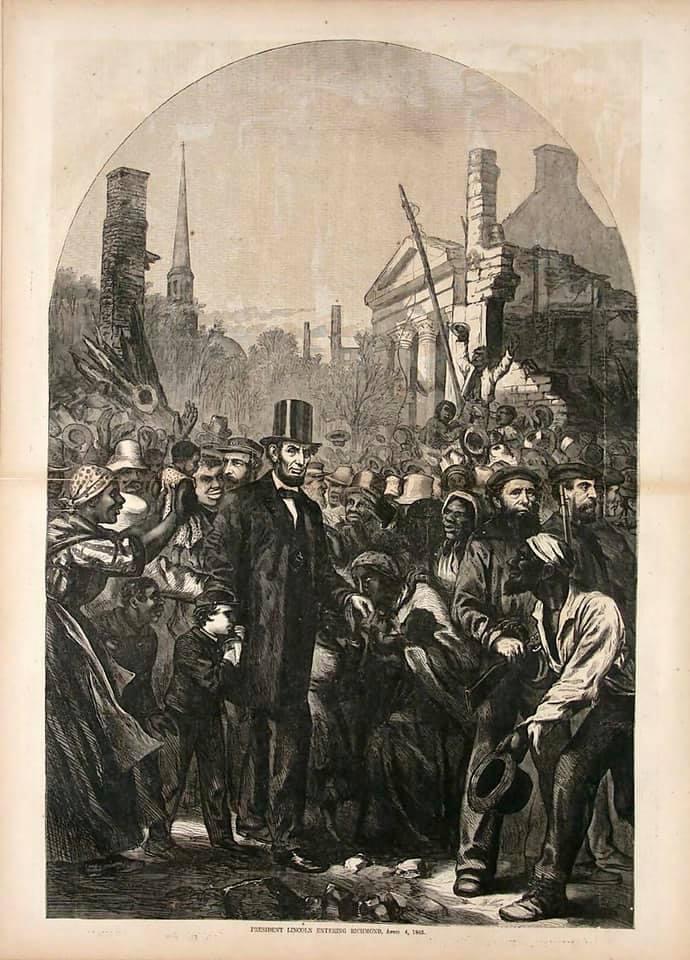
President Lincoln entering Richmond, Virginia on April 4, 1865
via Wikimedia Commons, public domain
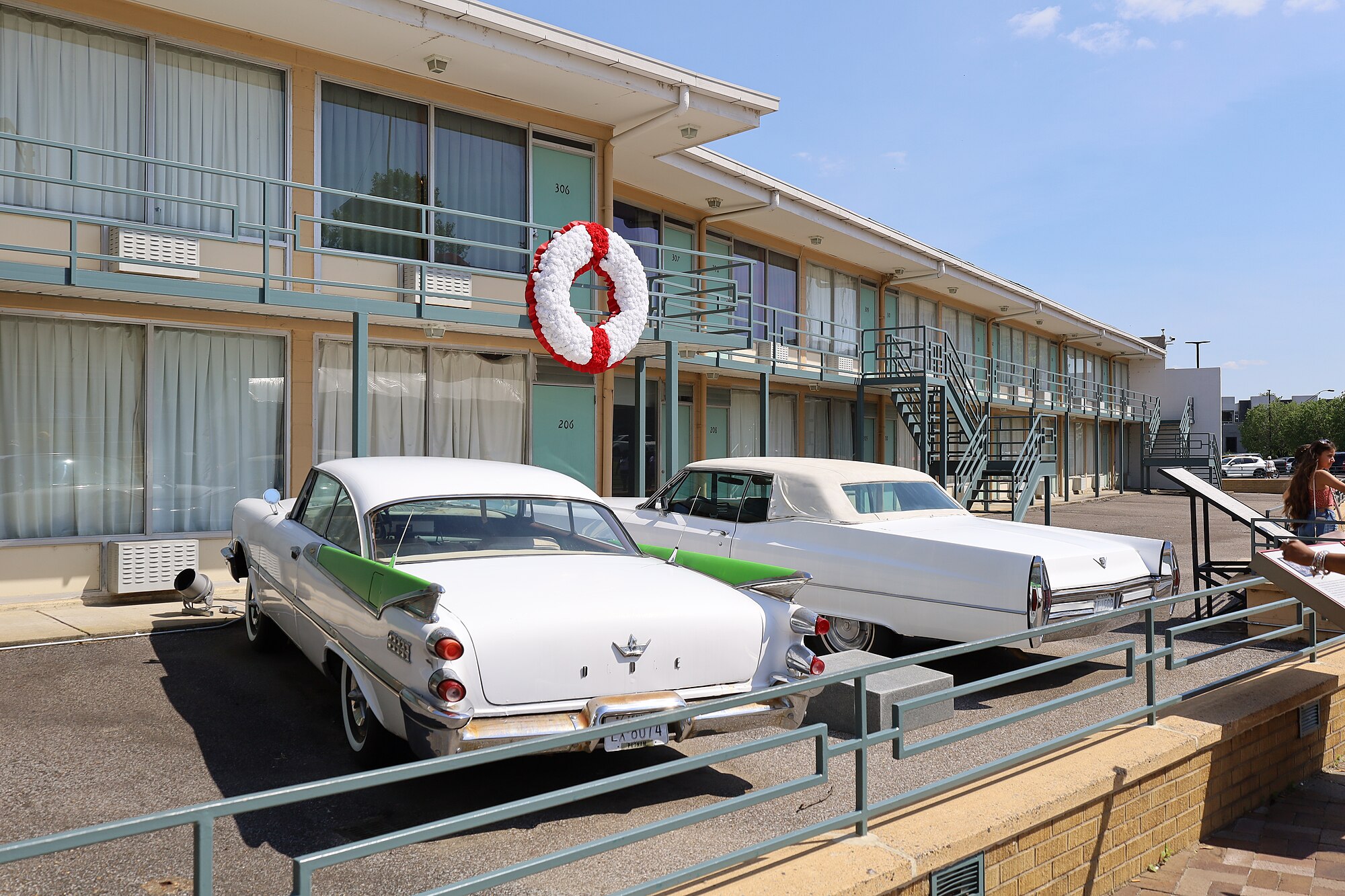
Photo taken outside the Lorraine Motel (now the National Civil Rights Museum) in Memphis, Tennessee where Martin Luther King, Jr. was fatally shot on April 4, 1968.
Image from Antony-22 via Wikimedia Commons, CC BY 4.0
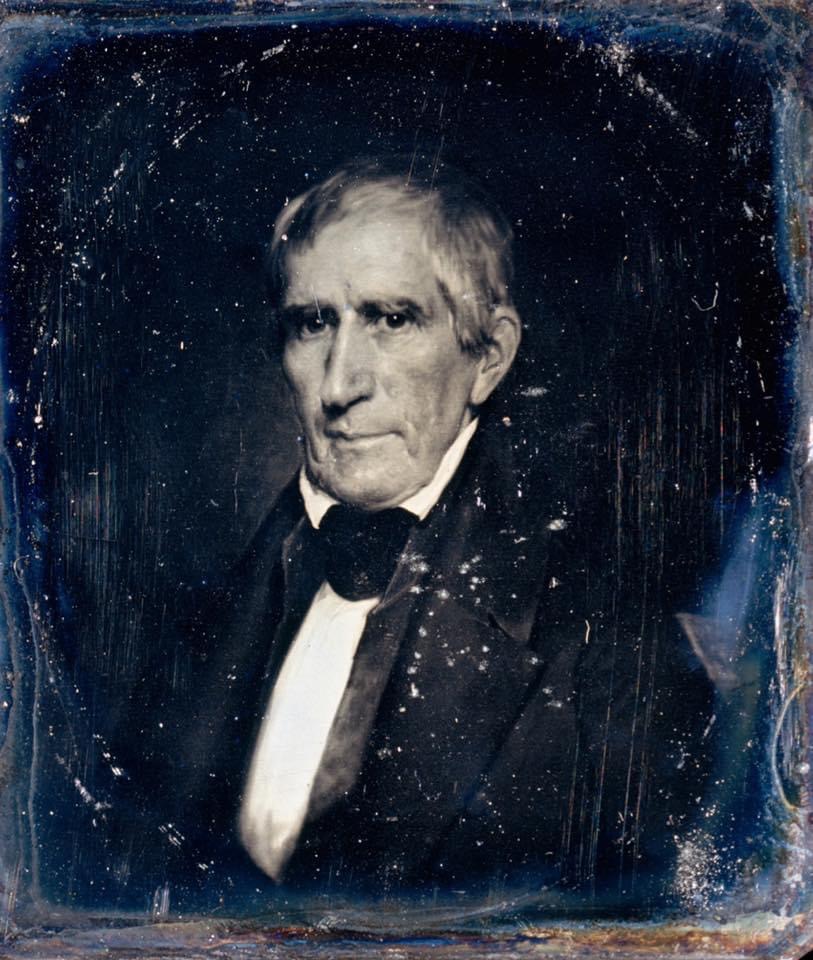
On April 4, 1841 William Henry Harrison became the first U.S. president to die in office.
His term as 9th President of The United States was only a month long.
Image via Wikimedia Commons, public domain
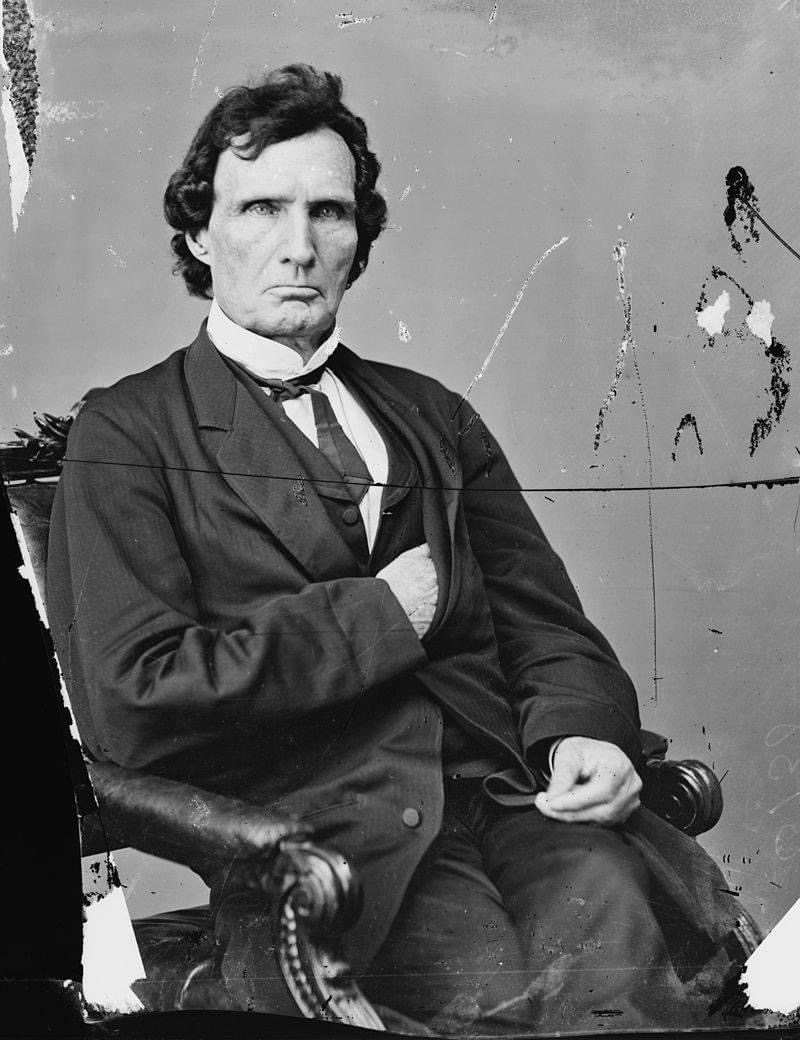
I will be satisfied if my epitaph shall be written thus: “Here lies one who never rose to any eminence, who only courted the low ambition to have it said that he striven to ameliorate the condition of the poor, the lowly, the downtrodden of every race and language and color.”
A quote by Thaddeus Stevens who was born on April 4, 1792 in Danville, Vermont
Image of Stevens by Mathew Brady via Wikimedia Commons, public domain
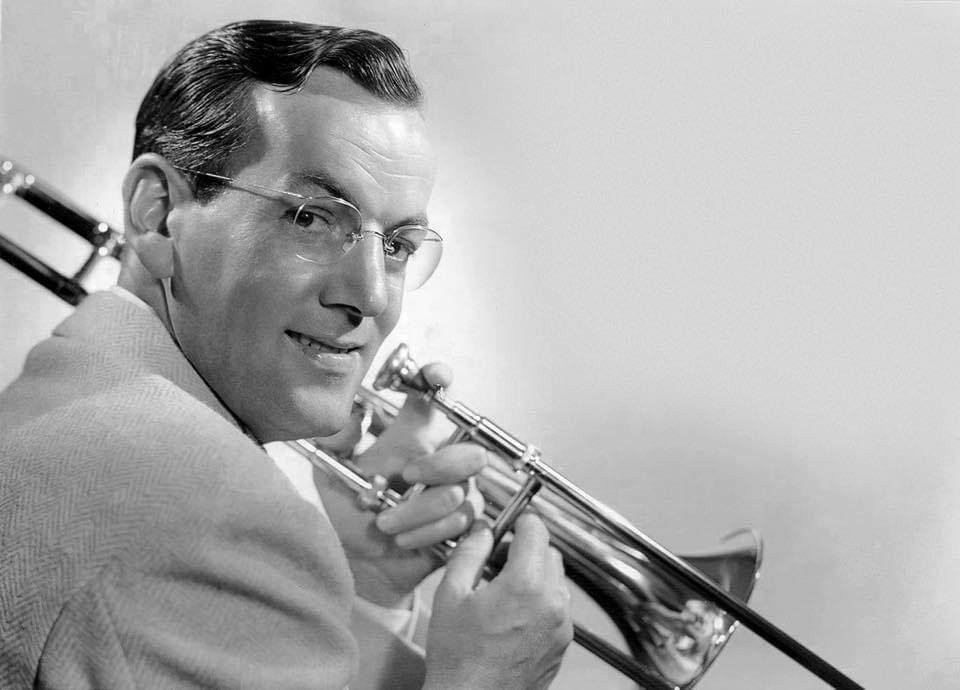
On today’s date April 4, 1939 Glenn Miller and his Orchestra recorded “Moonlight Serenade”
Image of Glenn Miller via Wikimedia Commons, public domain

Construction of Los Angeles City Hall c. 1927
More than seven decades earlier, on April 4, 1850, the City of Los Angeles, California was incorporated.
In the 1850s city meetings were held in a hotel and other buildings.
Image by Los Angeles Times from UCLA Library via Wikimedia Commons, CC-BY 4.0
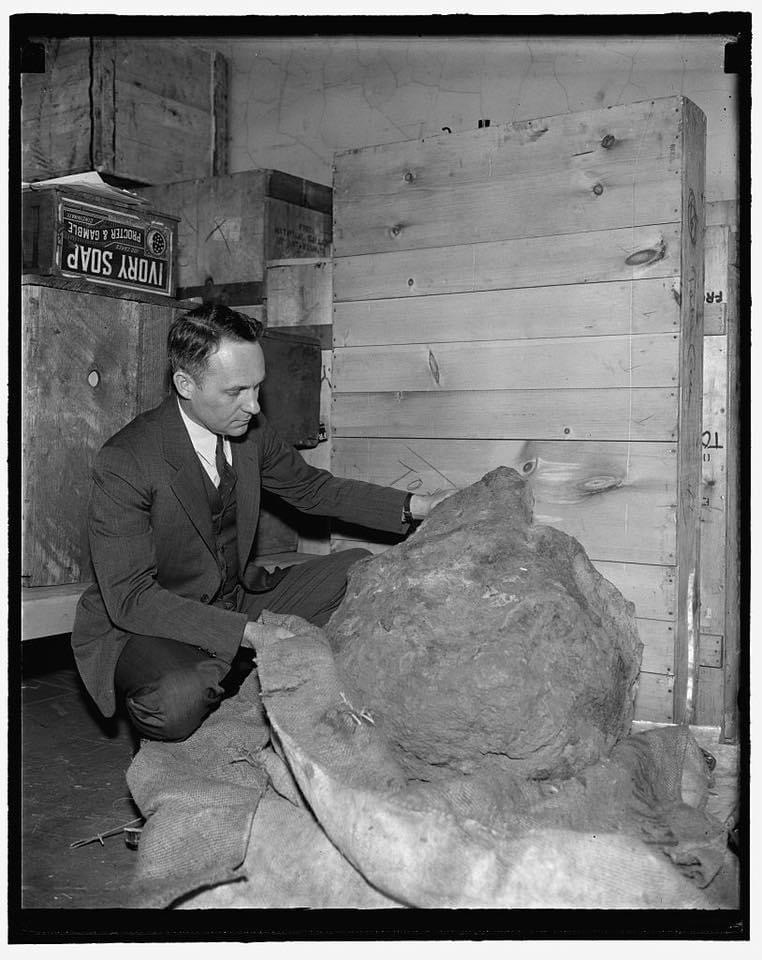
“A fragment of largest shooting star placed in Smithsonian Institution. Washington, D.C., April 4. This 2,000 pound meteorite, probably a fragment of one of the largest shooting stars which have struck the earth, has been added to the meteorite collection of the Smithsonian Institution. It was found in 1903 near the town of Pearcedale, not far from Melbourne, Australia, the general area of the Cranbourne Meteorite which was discovered in 1854. E.P. Henderson, of the Smithsonian Institution, is pictured inspecting the huge mass, 4-4-39”
via Library of Congress, no known restrictions
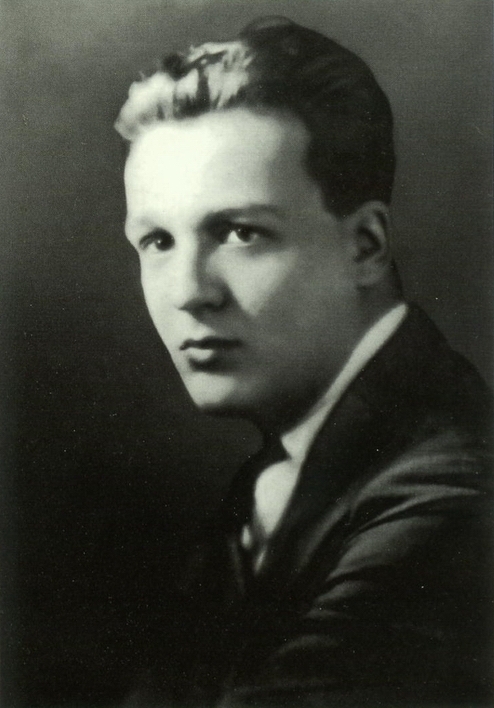
American writer Stanley G. Weinbaum was born April 4, 1902 in Louisville, Kentucky.
In 1934 he published a short science fiction story called “A Martian Odyssey” that became so popular that even Isaac Asimov described Weinbaum’s work as “better than anything yet seen.”
In 1973 a crater on Mars was named in Weinbaum’s honor.
Image via Wikimedia Commons, public domain
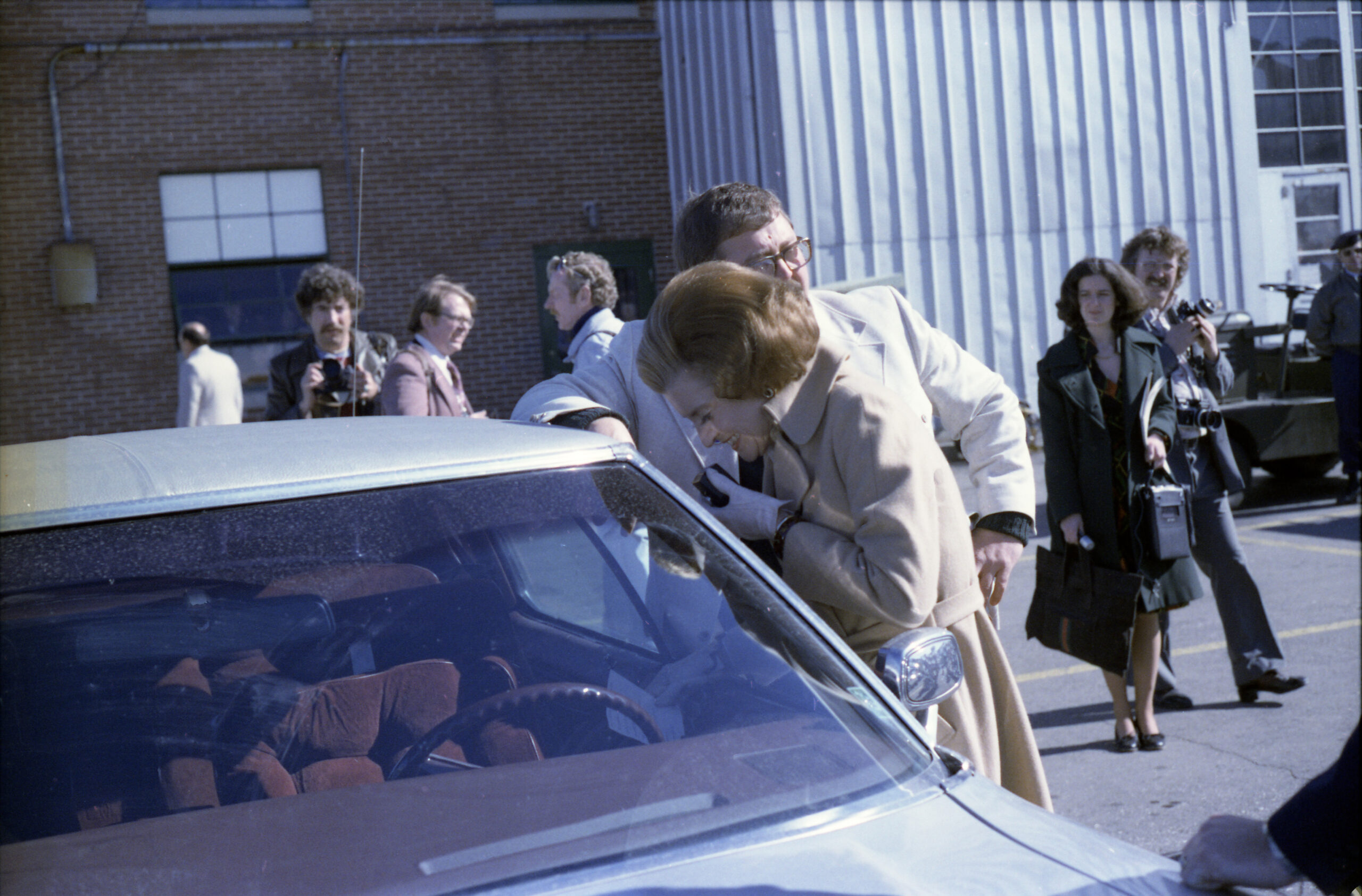
First Lady Betty Ford Using a Citizens Band (CB) Radio to Greet a “Friends of the First Family” Group Campaigning for President Gerald Ford in Madison, Wisconsin.
April 4, 1976
Image via Wikimedia Commons, public domain
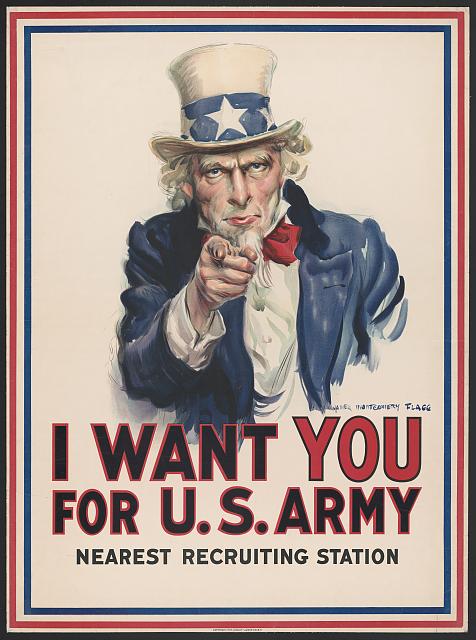
The U.S. Senate voted in support of the measure to declare war on Germany on April 4, 1917. Two days later the House also approved.
Image via LOC, no known restrictions
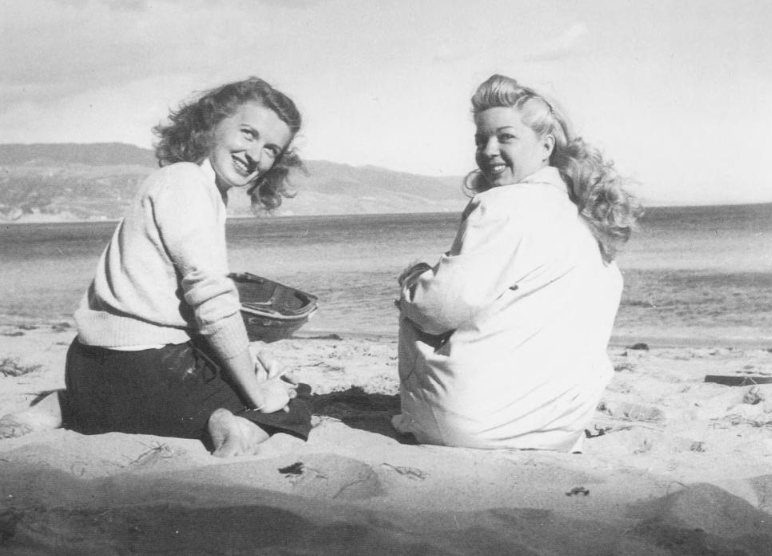
Patty Thomas and Frances Langford sitting on a South Pacific beach during Bob Hope’s USO Tour in 1944.
Frances Langford (right), known as “GI Nightingale” was born on April 4, 1913 in Hernando, Florida.
Image via Wikimedia Commons, no known restrictions
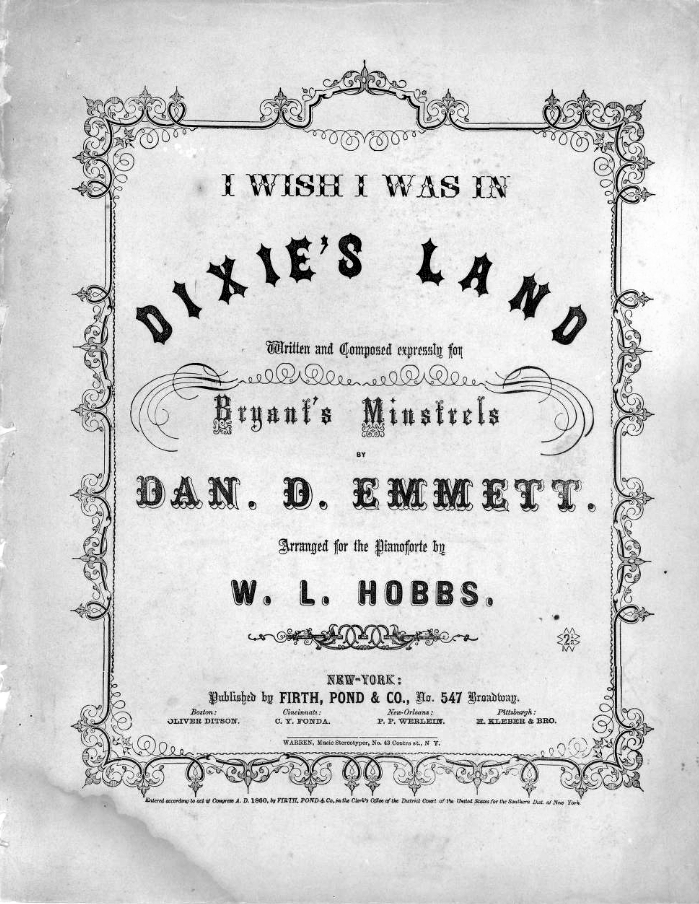
The well-known Civil War-era tune “Dixie” actually made its debut in New York City at Mechanics’ Hall on April 4, 1859, during a minstrel show. Over time, the song became widely recognized as the unofficial anthem of the Confederacy during the Civil War. Born in Kentucky, President Abraham Lincoln requested “Dixie” be played at the White House following General Robert E. Lee’s surrender in 1865. Referring to the song, Lincoln remarked that the Union had “fairly captured it,” and called it “one of the best tunes I have ever heard.”
Image via Wikimedia Commons, public domain
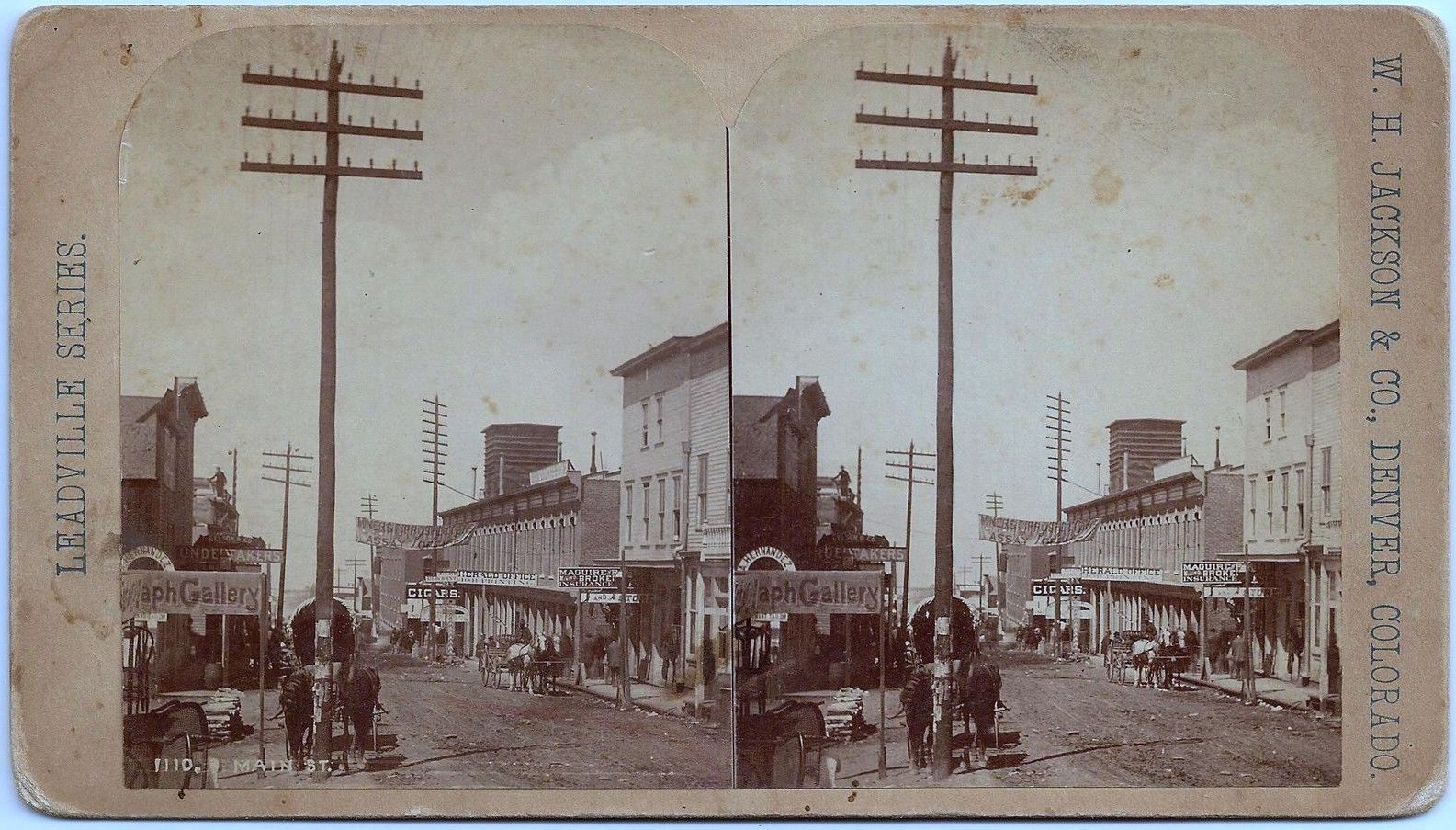
A stereoview of Main Street in Leadville, Colorado c. 1880s.
Photo by
William Henry Jackson
William Henry Jackson was a Civil War veteran, artist, explorer, and photographer. Born on April 4, 1843, in Keeseville, New York, he served in the Union Army’s 12th Vermont Infantry Regiment for a nine-month term. During his military service, Jackson honed his artistic skills by sketching scenes of camp life, which later influenced his creative endeavors. He gained lasting recognition for his breathtaking photographs of the American West, particularly Yellowstone, which played a role in its designation as the first national park in 1872. As the official photographer for the U.S. Geological Survey, Jackson documented the natural beauty of the expanding United States, leaving a lasting legacy of its history and landscapes.
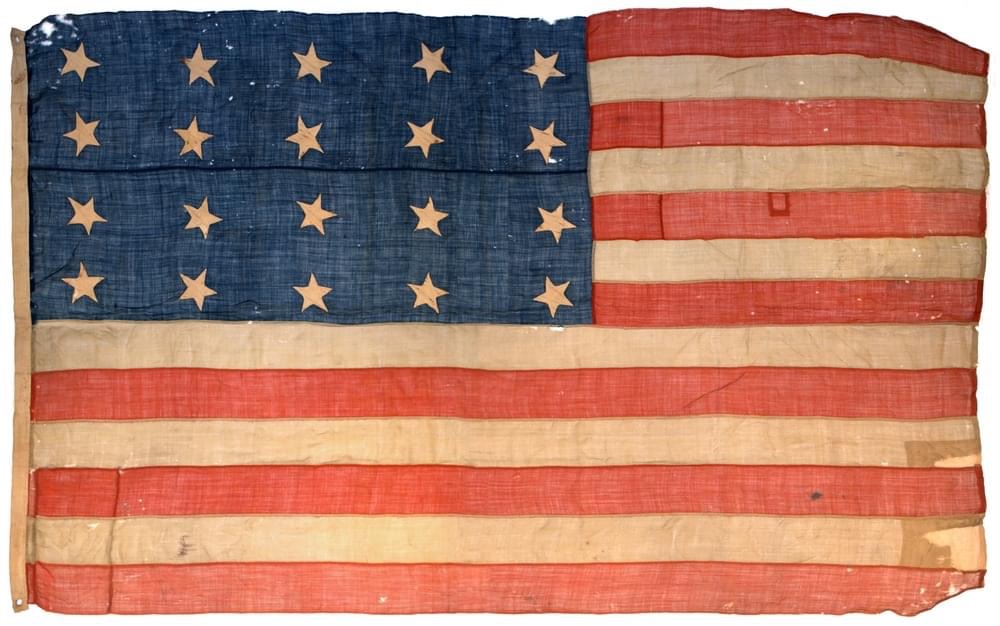
On April 4, the Flag Act of 1818 establishing a 20-star flag with 13 stripes, was enacted by Congress.
The act officially went into effect on the 4th of July of that year and was in use for 1 year before a new 21-star design replaced it.
Image: 20-star American Flag from 1818
via Shutterstock
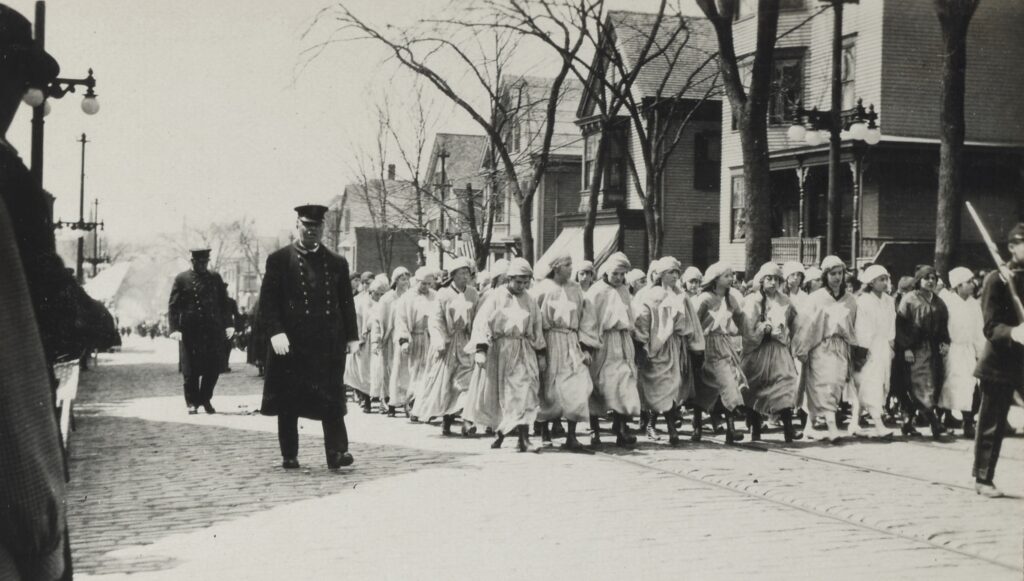
Flag raising at the Easter Promenade, Portland, Maine, April 4, 1917. Girls dressed to represent the American flag during the parade
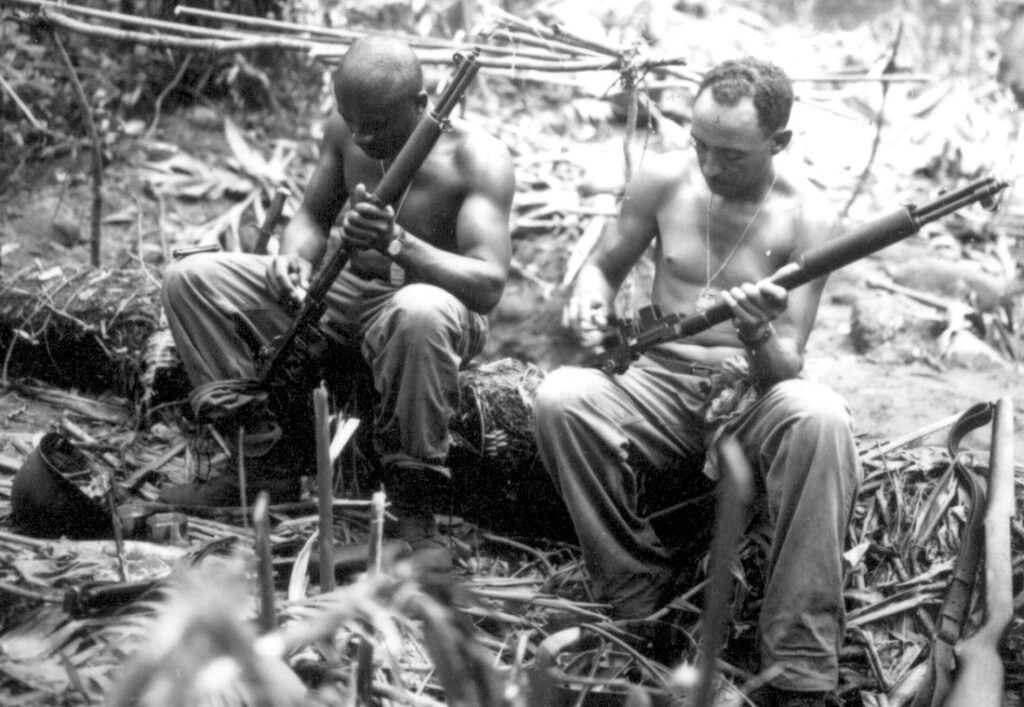
“Sgt. John C. Clark…and S/Sgt. Ford M. Shaw…(left to right) clean their rifles in bivouac area alongside the East West Trail, Bougainville. They are members of Co. E, 25th Combat Team, 93rd Division…” April 4, 1944.
Photo by Lt. Schuman from NARA via Wikimedia Commons, public domain
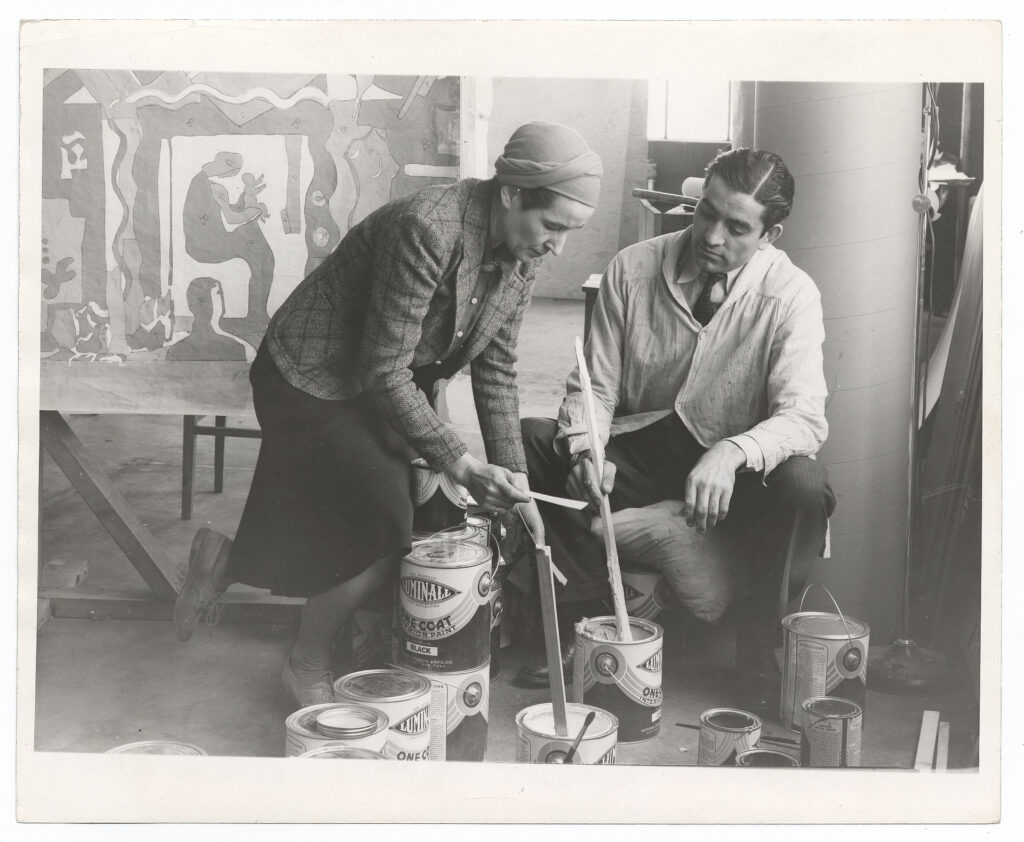
On April 4, 1939, modernist pioneer Ruth Reeves (left) was photographed preparing paint for a Federal Art Project mural — a quiet working moment that reflects her deep investment in the New Deal’s effort to bring art into public life. A visionary who moved fluidly between fine art and industrial design, Reeves helped shape the visual language of American modernism.
Her most influential contribution came earlier inside Radio City Music Hall. In 1932, she collaborated with designer Donald Deskey to create the “Musical Instruments” motif — a bold, Cubist‑inspired pattern of abstract banjos, saxophones, and accordions engineered as architectural textiles for the grand foyer’s walls and carpets. Because her American Moderne aesthetic is considered a high point of Art Deco design, her patterns have been meticulously preserved and replicated, allowing her 1930s vision to remain a vivid part of the Radio City experience today.
Image via Wikimedia Commons, public domain
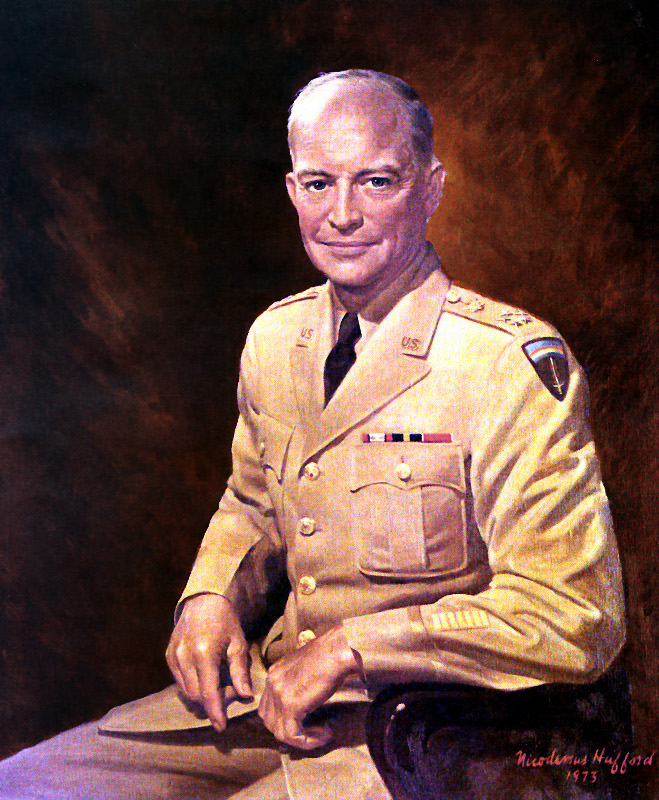
On April 4, 1953 — Easter weekend — President Dwight D. Eisenhower marked the fourth anniversary of the North Atlantic Treaty with a brief statement that blended Scripture with Cold War realism. Only ten weeks into his presidency, with the Korean armistice still uncertain and Europe struggling to rebuild, Eisenhower framed the moment through a single line from the Gospel of Luke. It remains the only fully preserved, explicitly Easter‑tied quotation in his presidential papers.
“Each and all of us must summon to mind the words of Him whom we honor this Easter time: ‘When a strong man, armed, keepeth his palace, his goods are in peace.’”
— Dwight D. Eisenhower, April 4, 1953
Eisenhower’s meaning was direct: peace is not maintained by sentiment but by steadiness, preparation, and moral resolve. In quoting Christ’s image of the “strong man, armed,” he cast the free world as a household that must be guarded with discipline if its goods — liberty, stability, and human dignity — are to remain secure. On an Easter weekend shaped by global tension, Eisenhower used Scripture not to offer comfort alone but to remind a recovering world that peace endures when free nations stand ready to defend it.
