
The Aviator and the Humorist: A Final Flight
April 24, 1925
Will Rogers and General Billy Mitchell met at Bolling Field in Washington, D.C. for a well-documented flight during a time of intense military debate. Mitchell was an “untiring advocate” for air power who famously predicted the attack on Pearl Harbor decades in advance. Later that year, Mitchell’s outspoken criticism of military leadership—whom he accused of “criminal negligence” following aviation disasters—led to a sensational court-martial that ultimately forced his resignation.
Image via LOC, no known restrictions

The Piazza of Preservation: A Glimpse into Mount Vernon’s Rebirth
April 24, 1872
This stereograph, captured on a spring day in 1872, is more than just a vintage photograph—it is a rare look at George Washington’s estate during its “survival era.” By the 1870s, Mount Vernon had narrowly escaped the ravages of the Civil War, which had left it a neutral sanctuary where soldiers from both sides stacked their arms outside the gates to pay respects in silence.
However, the war had also left the Mount Vernon Ladies’ Association with a crumbling mansion and no federal funding. To save the house, they turned to early commercial photography. This specific view was likely sold to visitors as a souvenir, with every penny going toward the massive wooden pillars needed to keep the iconic piazza from collapsing. It stands as a testament to the first successful grassroots historic preservation effort in American history, documenting the moment the “Cathedral of the Revolution” began its slow journey back from the brink of ruin.
Image via NYPL, public domain

The Siege of the Crescent City: The Iroquois Under Fire
April 24, 1862
During the Battle of Forts Jackson and St. Philip, the Union gunboat Iroquois was raked by Confederate grape shot while attempting to pass the fortifications guarding New Orleans. The lethal volley caused a devastating explosion within a 25-man Dahlgren gun crew, killing eight sailors. Despite the damage, the fleet successfully passed the forts, leading to the capture of New Orleans the next day—a fatal blow to the Confederacy’s control of the Mississippi.
Image via Shutterstock

“Little Sure Shot” Joins the Show
April 24, 1885
Annie Oakley was hired by Buffalo Bill’s Wild West, filling a vacancy left after the show’s previous marksman quit following a traumatic steamboat accident on the Mississippi. Already a prodigy who had paid off her mother’s mortgage with earnings from hunting, Oakley became a global superstar who famously shot the ash off a cigarette held by Kaiser Wilhelm II. Her nickname, “Little Sure Shot,” was bestowed upon her by Chief Sitting Bull, who symbolically adopted her as his daughter.
Image c. 1887 via Wikimedia Commons, public domain

The Lone Circumnavigator: Slocum’s Silent Voyage
April 24, 1895
Joshua Slocum departed Boston Harbor at noon aboard the Spray, a derelict oyster sloop he had meticulously rebuilt for just $553.62. To protect himself from pirates while he slept, Slocum famously spread carpet tacks on the deck. His 46,000-mile journey was an incredible feat of seamanship; he once sailed 2,000 miles across the Indian Ocean without ever touching the helm, as the Spray was perfectly balanced to steer itself.
Image via Wikimedia Commons, public domain
in the US
Regiment on the Brink: The 110th Pennsylvania
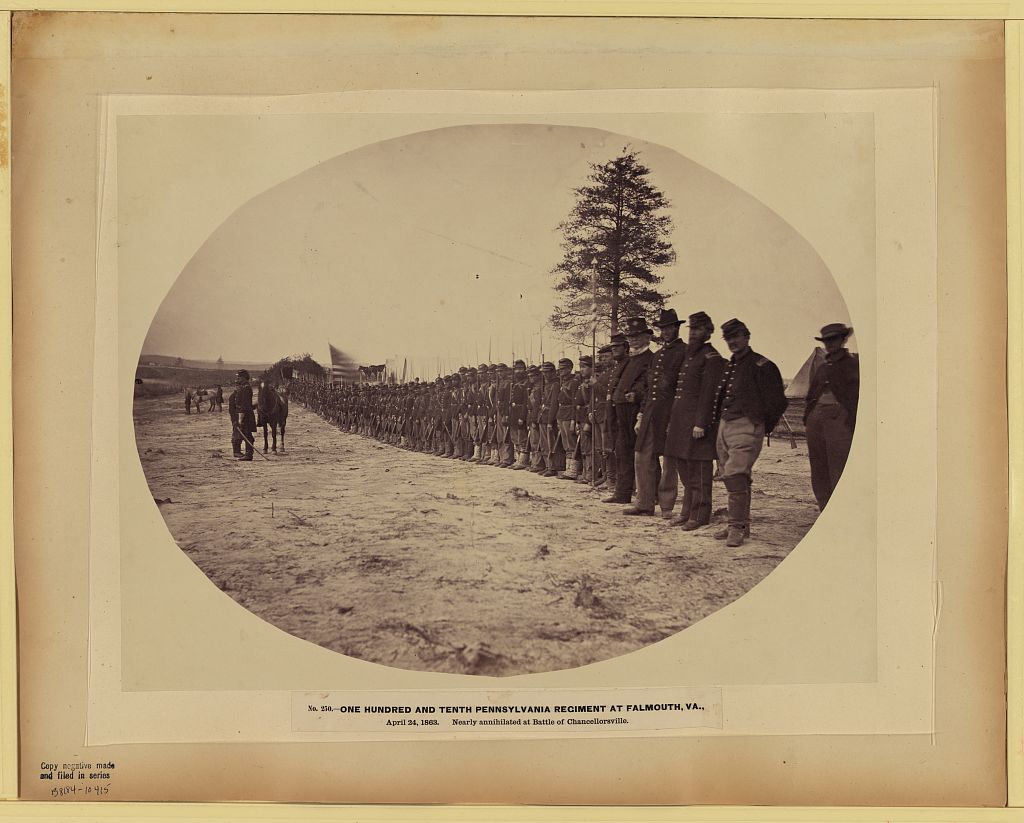
April 24, 1863
A photograph captured the 110th Pennsylvania regiment at Falmouth, VA, just days before they marched into the meat grinder of the Battle of Chancellorsville. In that brutal May conflict, the regiment was “nearly annihilated,” suffering staggering losses while defending the Union line. The April 24th date serves as a poignant “calm before the storm,” preserving the faces of men who would shortly face some of the Civil War’s deadliest combat.
Image via LOC, no known restrictions
Zipping Into History: The Birth of Gideon Sundbäck
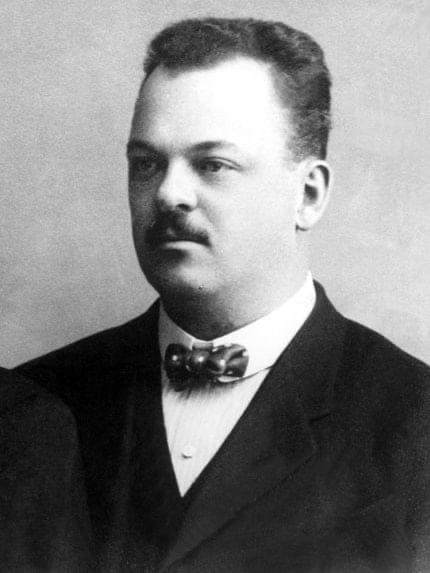
April 24, 1880
Otto Fredrik Gideon Sundbäck was born in Sweden, later emigrating to North America where he revolutionized the garment industry. While others had attempted “fasteners,” Sundbäck’s 1917 patent for the “separable fastener” featured the interlocking teeth and slider mechanism we use today. The term “zipper” wasn’t actually coined until 1923, when B.F. Goodrich used the name for their new rubber boots featuring Sundbäck’s design.
Photos: Public Domain via Wikimedia Commons
The Republic of Beverly Hills: Rejecting the City
April 24, 1923
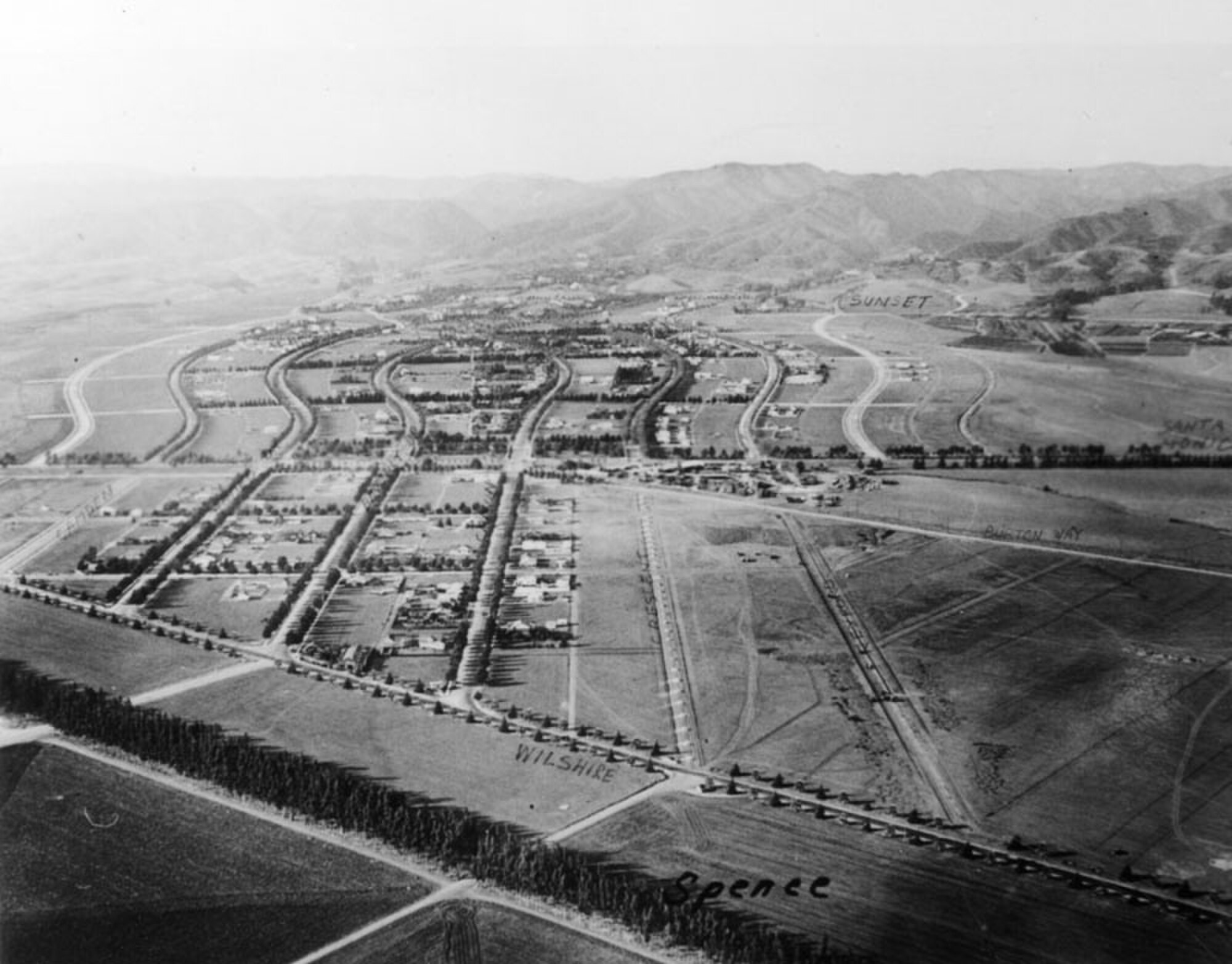
In a historic stand for independence, the residents of Beverly Hills voted against annexation to the City of Los Angeles by a 2,327 to 1,007 margin. The campaign was championed by Hollywood elites like Mary Pickford and Will Rogers, who feared losing their local identity. Their victory ensured that Beverly Hills remained a distinct municipality, eventually becoming one of the most famous and luxurious enclaves in the world.
Image: An aerial view of Beverly Hills, California c. 1919
Wilshire Boulevard is indicated on the photo.
via Wikimedia Commons, public domain
The Caped Crusader Debuts: Batman No. 1
April 24, 1940
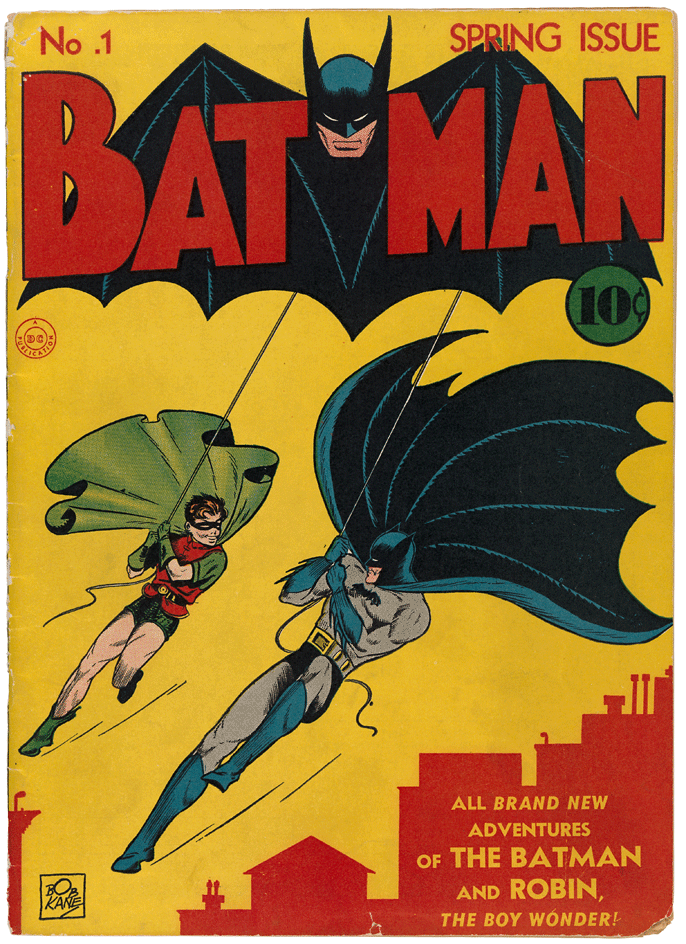
DC Comics published the first issue of the Batman solo series, officially expanding the character’s universe after his debut in Detective Comics. This landmark issue is historically significant for introducing two of the most iconic villains in comic book history: The Joker and Catwoman (then known as “The Cat”). It cemented Batman’s status as a standalone cultural icon during the “Golden Age” of comics.
Image via Wikimedia Commons, public domain

Survival on the Flight Deck: The Wildcat Crash
April 24, 1942
A Grumman F4F-3 Wildcat suffered a violent hard landing aboard the USS Enterprise (CV-6) when its left landing gear collapsed upon impact. Photographers captured the dramatic moment as the aircraft skidded across the deck. Despite the mechanical failure and the threat of fire on the crowded flight deck, the pilot walked away uninjured—a testament to the rugged durability that earned the Wildcat its “Iron Works” reputation
Image via Wikimedia Commons, public domain
The Cathedral of Commerce: Lighting the Woolworth
April 24, 1913
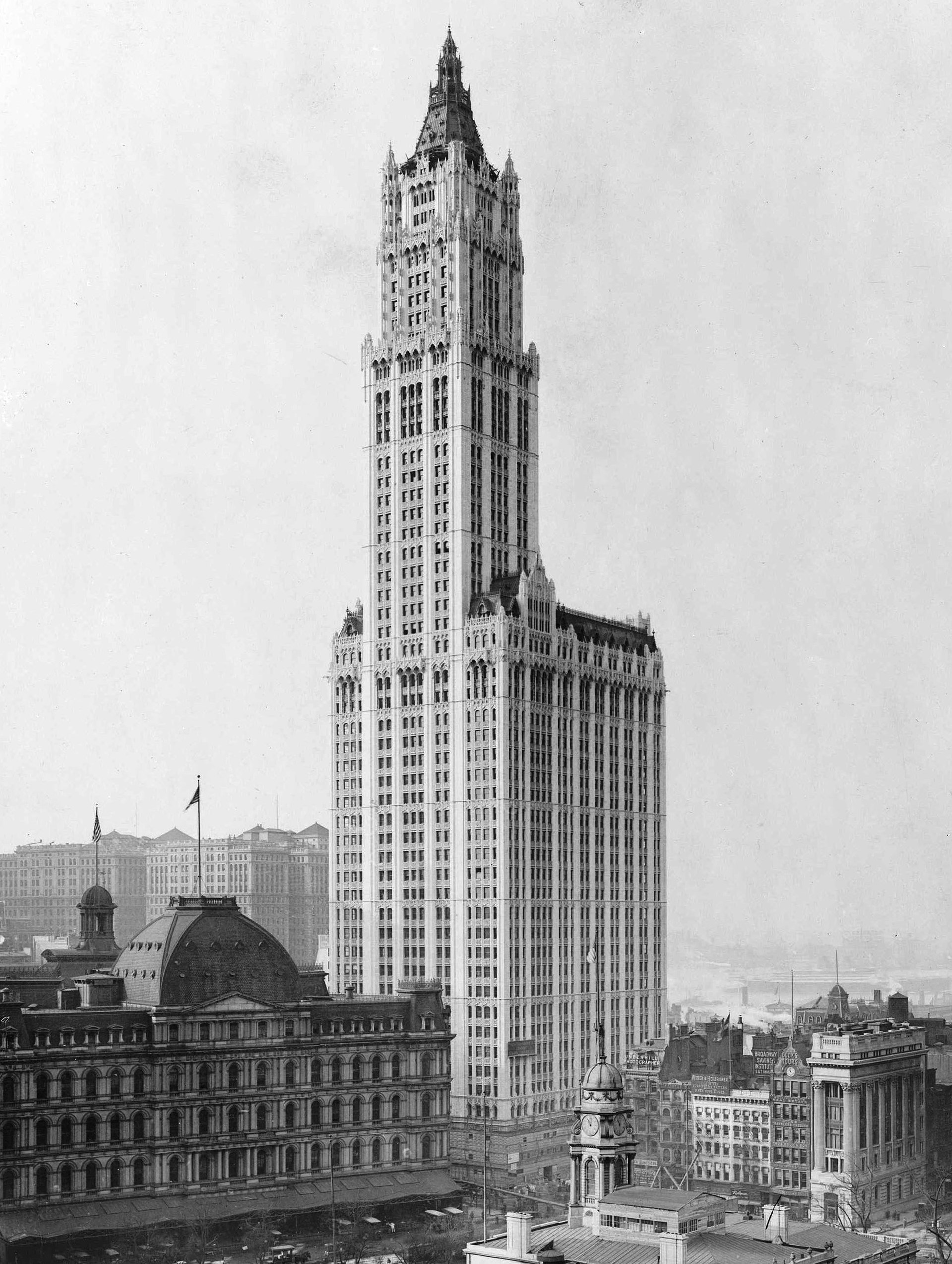
The Woolworth Building in New York City opened with a spectacular high-tech ceremony: President Woodrow Wilson pressed a button in Washington, D.C., that instantly triggered the illumination of 80,000 bulbs in New York. Standing 792 feet tall, it was the world’s tallest building for 17 years and was dubbed the “Cathedral of Commerce” due to its stunning Gothic Revival architecture and ornate terra cotta facade
Image of the Woolworth Building c. 1913 via Wikimedia Commons, public domain

An American First: The Prince of Parthia
April 24, 1767
The Southwark Theatre in Philadelphia hosted the premiere of Thomas Godfrey’s The Prince of Parthia, the first play written by an American-born citizen to be performed by a professional troupe. At the time, theater was often banned or viewed with suspicion by religious authorities, making this professional debut a critical turning point for American literature and the performing arts.
Photo of the Southwark area of Philadelphia that was taken from the shot tower around 1870 via Wikimedia Commons, public domain
Recovering the Plunder: The Ellingen Cache
April 24, 1945
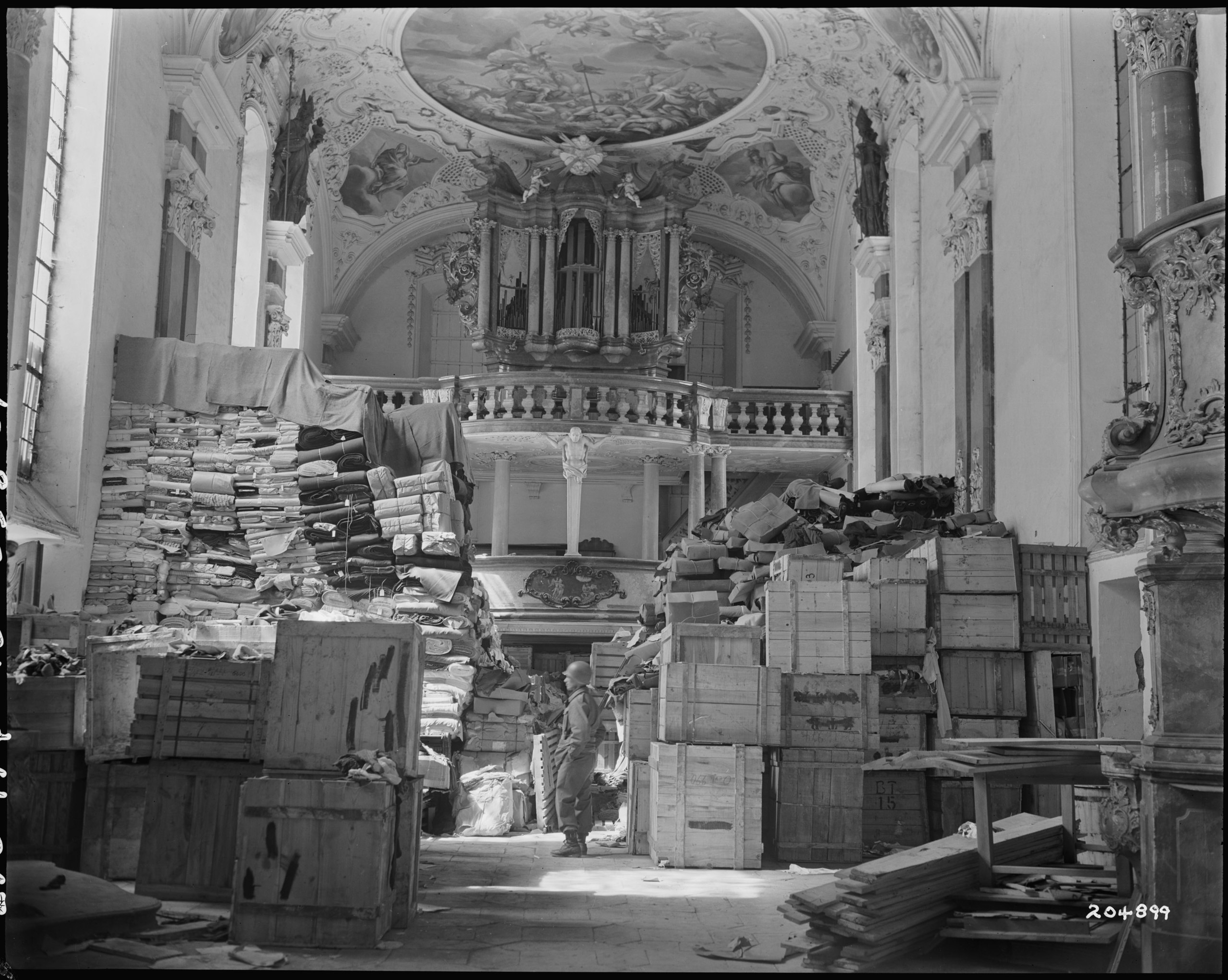
The U.S. Third Army discovered a massive cache of plundered Nazi goods hidden within a church at Ellingen, Germany. Soldiers found crates containing everything from valuable fabrics and silver to stolen household items intended for Nazi elites. This discovery was part of a larger Allied effort to locate and repatriate the billions of dollars in art and property systematically looted across occupied Europe.
Image via Wikimedia Commons, public domain

Opening Day: The American League Goes Major
April 24, 1901
The first-ever game of the American League as a recognized major league took place between the Chicago White Stockings and the Cleveland Blues. In a high-scoring debut at South Side Park, Chicago claimed an 8-2 victory. This marked the beginning of the “Modern Era” of baseball, as the American League directly challenged the long-standing dominance of the National League, leading to the creation of the World Series just two years later.
Postcard image of South Side Park c. 1915 from V.O. Hammon Publishing Co via Wikimedia Commons, CC BY 4.0
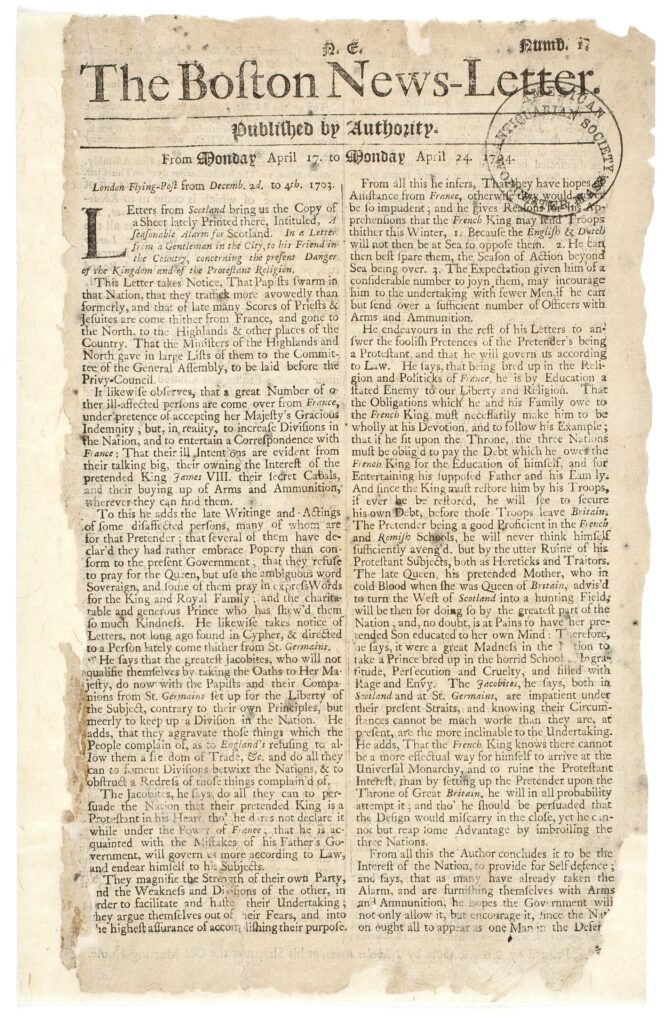
The Ultimate Long-Game: The Boston News-Letter’s 72-Year Run
April 24, 1704 – March 1776
If you think your favorite TV show has overstayed its welcome, consider the Boston News-Letter. First printed on April 24, 1704, it became the colonies’ earliest newspaper to actually survive beyond a debut issue—thanks largely to being “published by authority,” which is 18th‑century shorthand for “the government says we’re allowed to exist.”
For seventy‑two years it delivered months‑old dispatches from London, stern notices about runaway apprentices, and the occasional lost cow. It outlasted fires, paper shortages, and the Puritan talent for disapproval. But it couldn’t outlast 1776.
Its final steward, Margaret Draper, was a Loyalist who kept the presses running inside occupied Boston even as Washington’s artillery was being hauled onto Dorchester Heights. While other printers edged toward the Patriot cause, the News-Letter stayed loyal to the Crown until the very end. When the British evacuated the city on March 17, 1776, Draper didn’t just shutter the shop—she sailed with the departing fleet, taking the paper’s long run with her. “Continuously published” works only as long as your entire readership doesn’t relocate across the Atlantic.
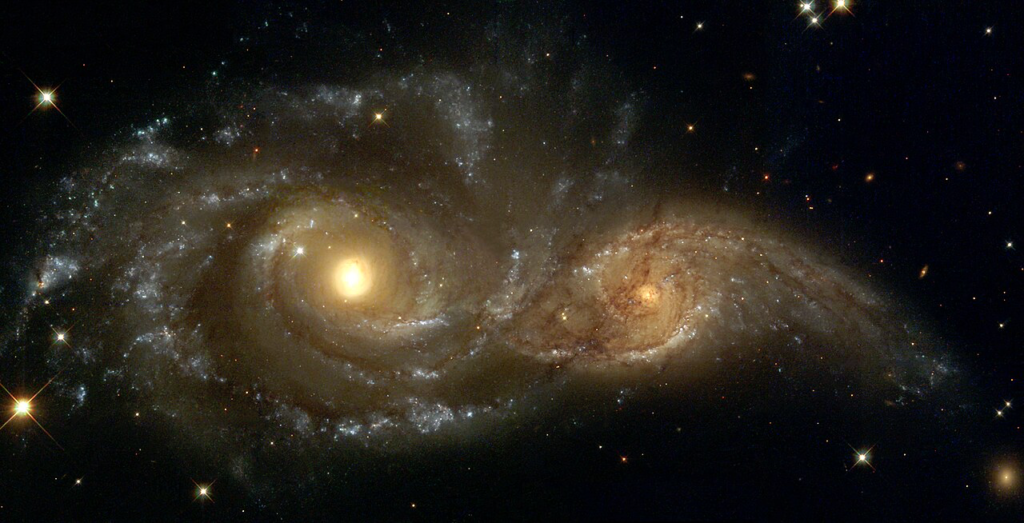
Thirty-six years ago today—on April 24, 1990—NASA launched the Hubble Space Telescope into orbit aboard Space Shuttle Discovery. Since then, it has become one of the most productive scientific instruments in human history.
The lifetime cost of designing, launching, and maintaining Hubble is estimated at $16 billion. This investment includes five high-stakes astronaut servicing missions that replaced aging parts and upgraded its “eyes.” Today, NASA continues to invest roughly $98 million annually to keep the observatory at the forefront of discovery through the Space Telescope Science Institute.
Across its 36 years aloft, Hubble has fundamentally rewritten our textbooks. It refined the expansion rate of the universe, provided the first strong evidence for supermassive black holes, and delivered the iconic “Deep Field” images that revealed the sheer scale of the cosmos. Even as it enters its 37th year, Hubble remains a vital partner to newer observatories, continuing to push the boundaries of what we know about our universe.
This notable 1999 image taken from the Hubble showcases the violent “grazing” collision of galaxies NGC 2207 and IC 2163, illustrating gravity’s effect on stars and gas.