America’s First Scholars: The Boston Latin School (1635)
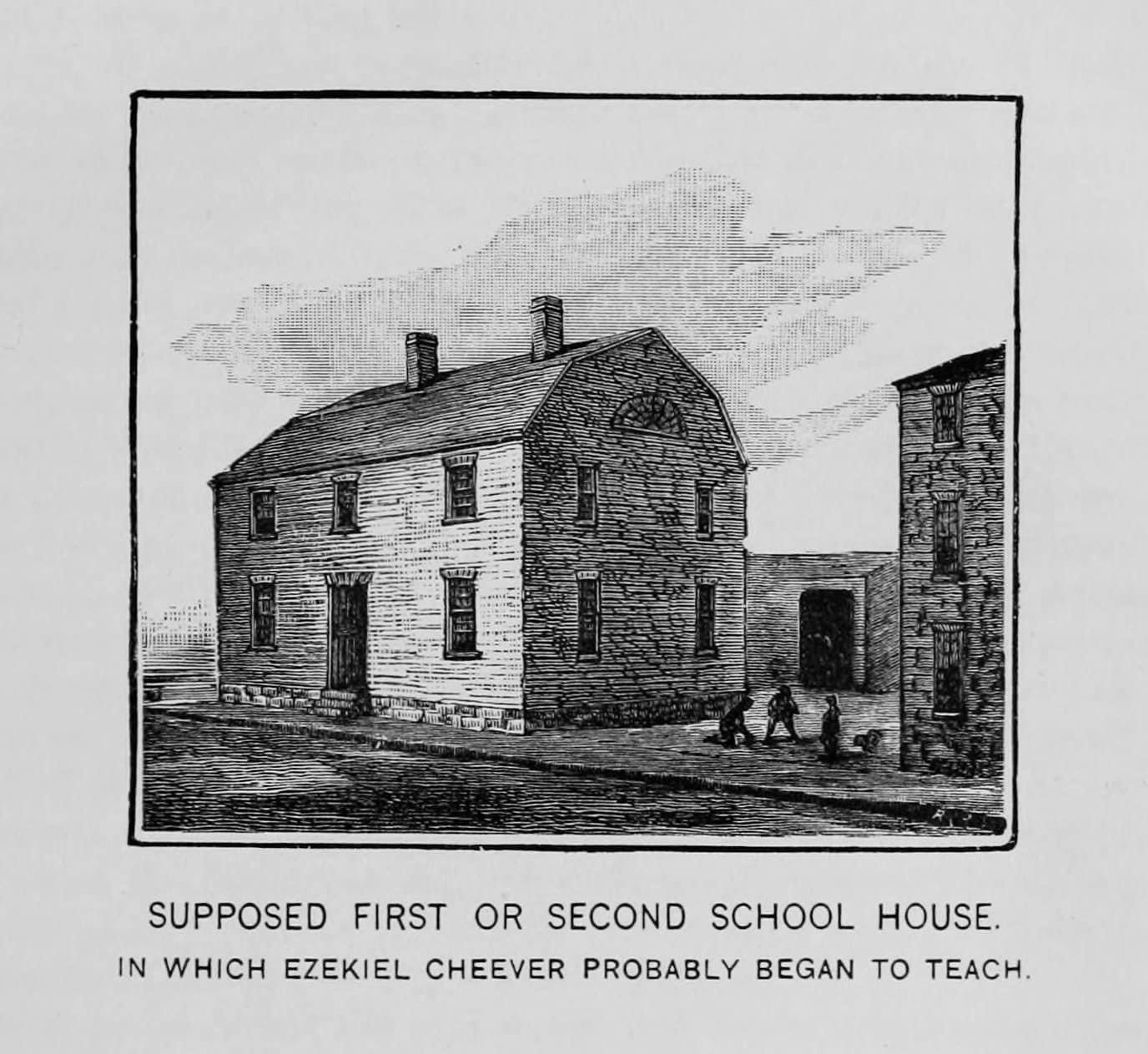
Founded a full year before Harvard, the Boston Latin School was formally established by a town meeting on April 23, 1635, but its earliest lessons took place in the home of its first schoolmaster, Philemon Pormort, on School Street in the heart of colonial Boston. Conceived as a public good rather than a private academy, it welcomed boys from every social class and grounded them in Latin, Greek, and the classical authors who shaped civic life. In doing so, it set one of the earliest precedents for tax‑supported education in the English colonies.
The school went on to educate four future signers of the Declaration of Independence—Samuel Adams, John Hancock, Robert Treat Paine, and William Hooper—a remarkable concentration of revolutionary leadership under one roof. And its most famous “student” remains the one who didn’t stay: Benjamin Franklin, the school’s most celebrated dropout, whose unfinished education there became part of his larger story of self‑made learning.
Image via Wikimedia Commons, public domain
The Primary That Changed Everything
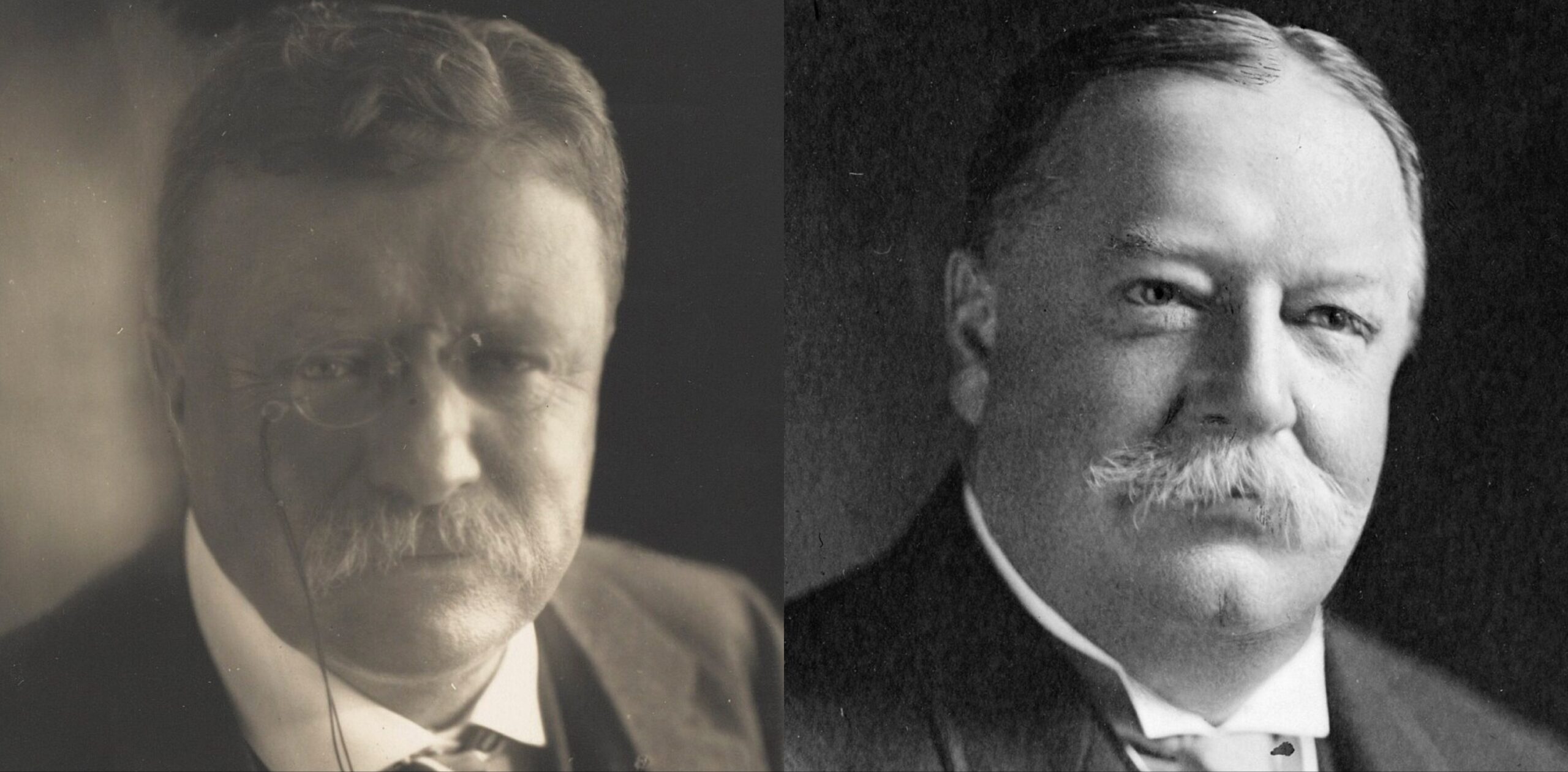
New Hampshire held its first presidential primary in 1916, but the forces that shaped it were already in motion four years earlier. During the tumultuous 1912 election cycle, the bitter rivalry between President William Howard Taft and former President Theodore Roosevelt fractured the Republican establishment. When party leaders backed Taft despite Roosevelt’s broad popularity, Roosevelt broke away to form the Progressive ‘Bull Moose’ Party. The resulting split proved decisive: with Taft and Roosevelt dividing the GOP vote, Woodrow Wilson won the White House that November. The upheaval of 1912 helped push states—including New Hampshire—toward adopting primaries, a reform that eventually made the Granite State the nation’s first stop in 1920.
Image via Wikimedia Commons, public domain
A President Born in the Gap: James Buchanan (1791)
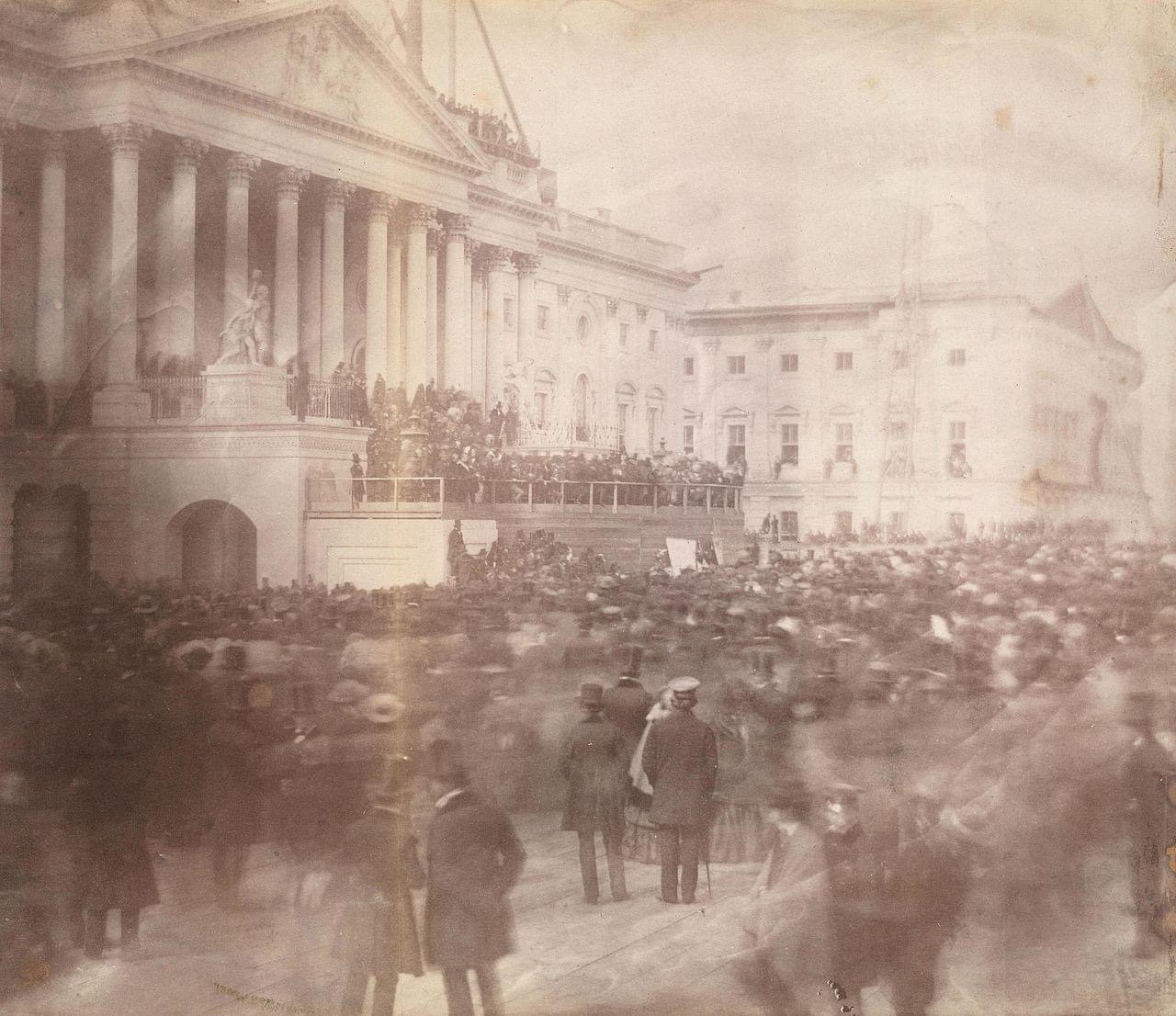
James Buchanan was the last American president born in the 18th century, arriving in a log cabin at Stony Batter, a frontier settlement in Franklin County, Pennsylvania, near present‑day Mercersburg. Perched on the western slope of the Allegheny Mountains, the site sat at what early Pennsylvanians called the “edge of civilization.” Though his presidency remains heavily criticized, Buchanan’s early career tells a different story: by his early thirties, he had become one of Pennsylvania’s most successful attorneys, earning the modern equivalent of more than a quarter‑million dollars a year in Lancaster’s legal circles.
He also remains the nation’s only Bachelor President. The early death of his fiancée, Anne Coleman, left a lasting imprint on his private life, shaping a personal story marked by ambition, restraint, and unresolved loss.
Photo of the Inauguration of James Buchanan in 1857
Image via Wikimedia Commons, public domain

Beyond the Curls: Shirley Temple’s Second Act (1928)
Shirley Temple was the child who kept America smiling through the Great Depression, but her birth in Santa Monica, California on April 23, 1928, marked the beginning of a life with two distinct chapters. After retiring from film at just twenty‑two, she stepped away from Hollywood’s spotlight and reemerged as Shirley Temple Black, a seasoned diplomat who represented the United States in Ghana and later Czechoslovakia during the final years of the Cold War.
Her 1950s television series, Shirley Temple’s Storybook, was more than a return to the screen — it was her way of reclaiming the childhood she had spent working like an adult, telling the kinds of stories she never had time to enjoy herself.
The series had 41 episodes and featured popular storylines such as “The Sleeping Beauty,” “Rapunzel” and “Beauty and The Beast.”
Image: Shirley Temple in 1938 via Wikimedia Commons, public domain
The First NBA Dynasty: Minneapolis Lakers (1950)
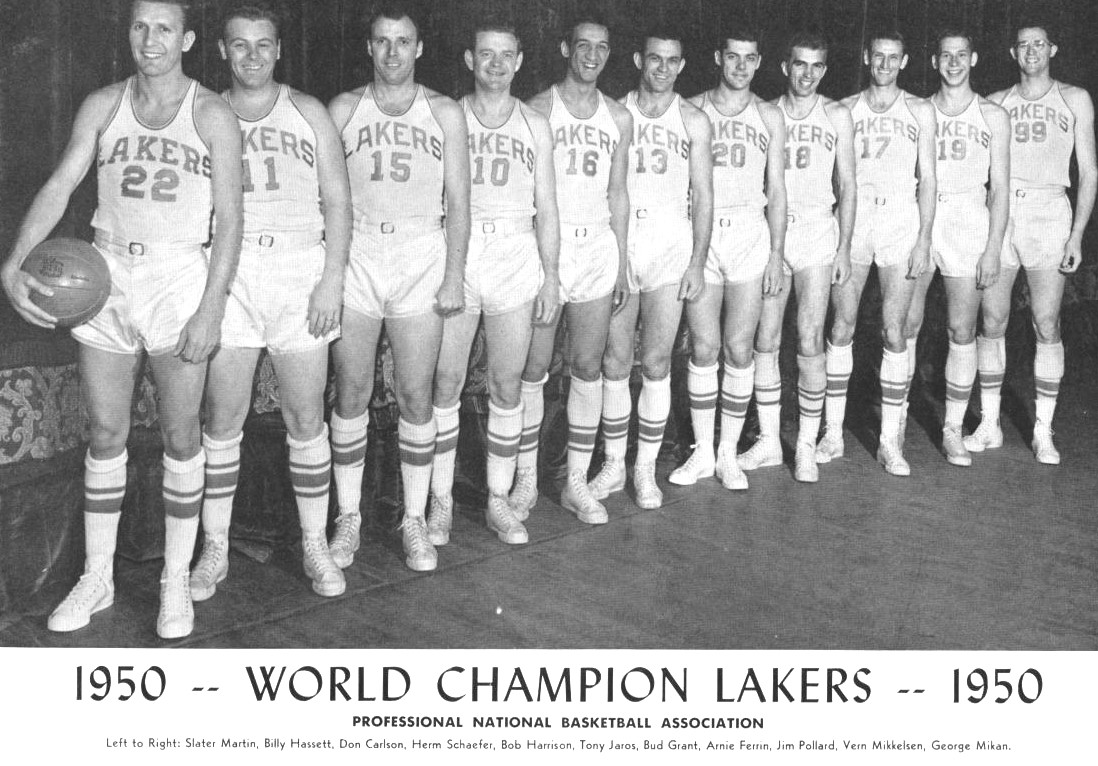
On April 23, 1950, the Minneapolis Lakers didn’t just win another title — they claimed the first official NBA championship following the merger of the BAA and NBL. Led by George Mikan, the league’s first dominant superstar, who played in thick, taped‑on glasses and reshaped the geometry of the game, the Lakers became the NBA’s first true dynasty.
Their 1950 victory was part of a staggering early run: championships in 1949, 1950, 1952, 1953, and 1954 — five titles in six seasons. No team had ever controlled professional basketball with such authority, and no player had ever bent the sport around himself the way Mikan did.
That Finals series also delivered a milestone of its own: Game 1 featured the earliest known buzzer‑beater in NBA Finals history, a last‑second shot by reserve guard Bob “Tiger” Harrison. It was a fitting moment for a team that defined the league’s opening decade — powerful, pioneering, and always just ahead of the clock.
Image via Wikimedia Commons, public domain
The Disciplined Architect: Bud Wilkinson (1916)
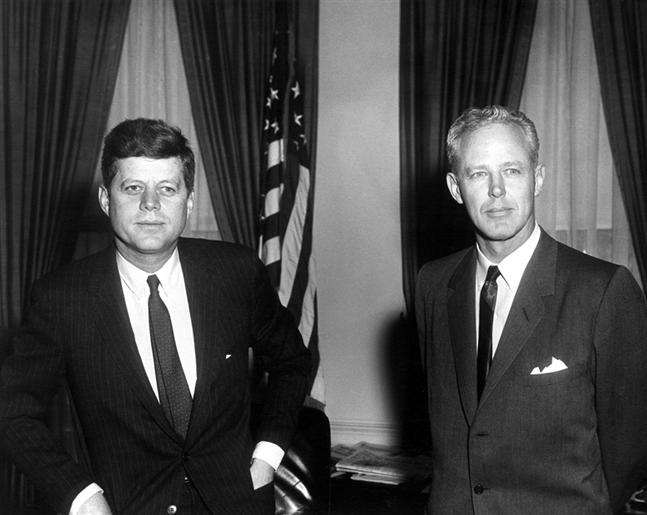
Born on April 23, 1916, in Minneapolis, Minnesota, Bud Wilkinson (right) became one of the most transformative figures in American football. A standout athlete at the University of Minnesota, he helped secure three national championships in the mid‑1930s before serving in the U.S. Navy during World War II, an experience that shaped the precision, conditioning, and calm discipline that later defined his coaching style.
From 1947 to 1963, Wilkinson built a dynasty at the University of Oklahoma, guiding the Sooners to three national championships, 14 conference titles, and an unmatched NCAA record of 47 consecutive victories between 1953 and 1957. His teams were so well‑conditioned they earned a nickname that captured his philosophy perfectly: the “Sooners of the Fourth Quarter,” a unit that routinely overwhelmed opponents when the game was supposed to tighten. A pioneer of the no‑huddle offense and one of the sport’s earliest system‑builders, Wilkinson coached with a clarity that felt almost architectural — every movement rehearsed, every detail intentional.
His influence extended far beyond the sidelines. Admired for his integrity, Wilkinson became a national figure: he advised President John F. Kennedy on America’s first major youth fitness initiatives, ran for the U.S. Senate, worked as a broadcaster, and even returned briefly to the NFL as a head coach. Inducted into the College Football Hall of Fame in 1969, he left a legacy that blended innovation, public service, and a lifelong belief in disciplined excellence.
Wilkinson died on February 9, 1994, closing a life that shaped both the modern game and the nation’s understanding of fitness, leadership, and preparation.
Image via Wikimedia Commons, public domain
A Park Built for Peace: The Debut of Weeghman Park (1914)
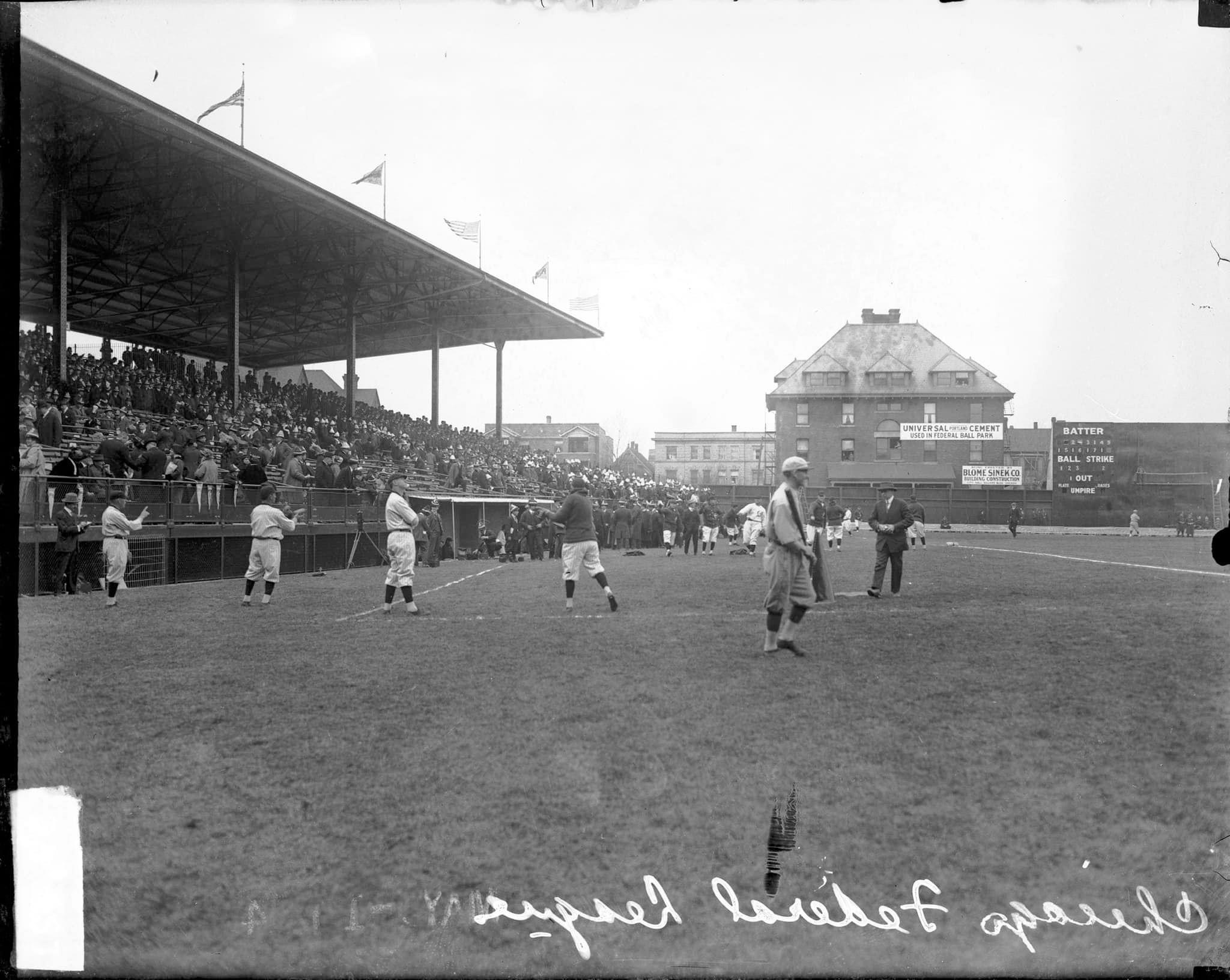
Long before it became Wrigley Field, Weeghman Park opened on April 23, 1914, as the purpose‑built home of the Chicago Federals of the upstart Federal League. In an era when most ballparks were wooden firetraps, Weeghman stood out as a modern, “fireproof” structure of steel and concrete, a quiet architectural rebellion against the old order.
The park itself was a tool of the Federal League’s larger challenge — an attempt to break the monopoly held by the National and American Leagues and create a more open, player‑friendly system. The league collapsed after just two seasons, but the ballpark endured. Renamed, expanded, and embraced by generations of fans, it evolved into the “Friendly Confines” that helped define North Side Chicago culture.
Image: Chicago Federals at Weeghman Park in Chicago, April 1914 by Chicago Daily News via Wikimedia Commons, public domain
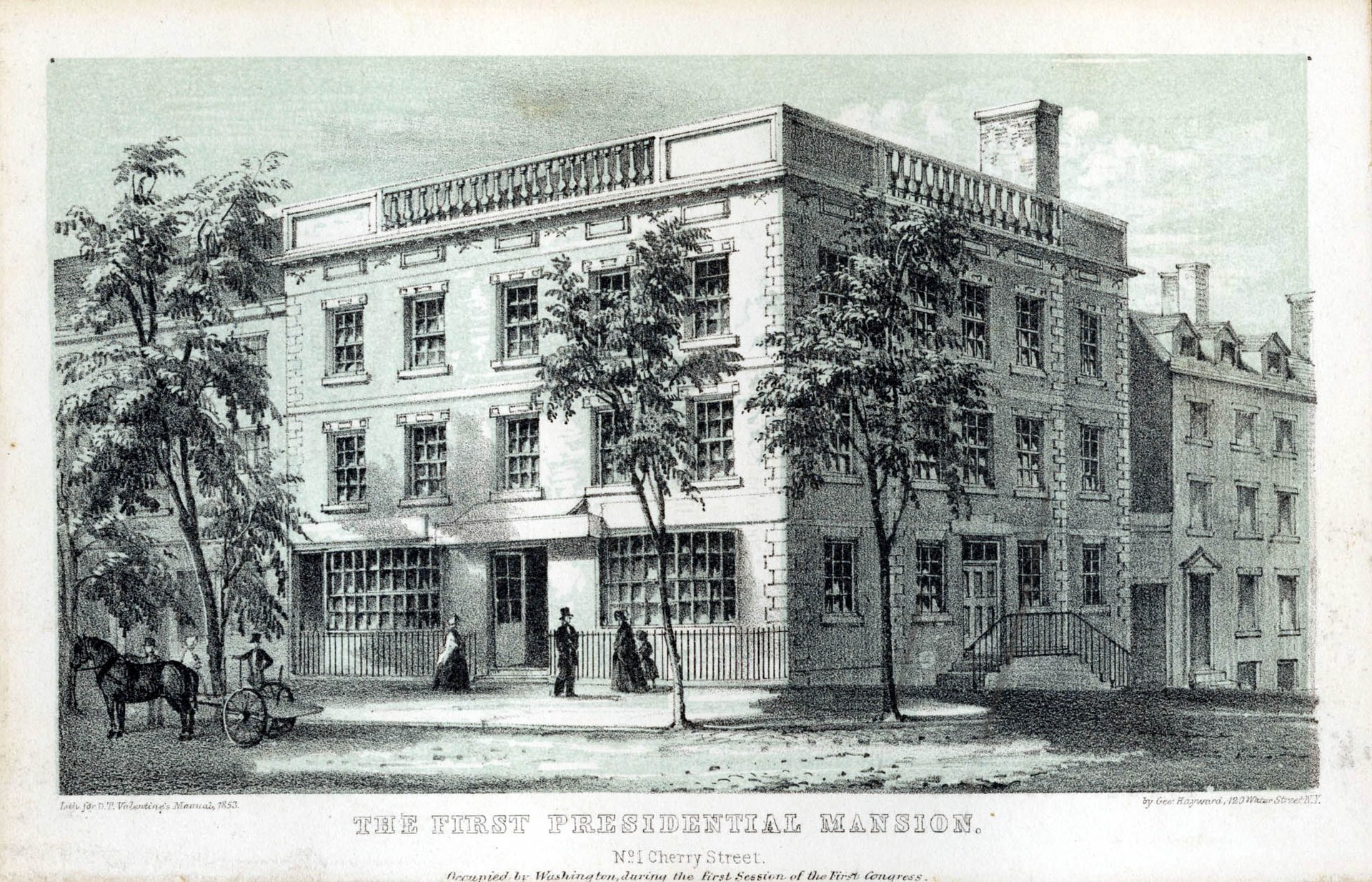
The First Presidential Mansion: Osgood House (1789)
When George Washington moved into the Samuel Osgood House on April 23, 1789, the United States had no “White House,” no finished capital, and no established blueprint for executive life. Standing at 3 Cherry Street in Manhattan, this brick mansion became the first true seat of presidential power, a temporary but foundational home for the new republic’s chief executive.
Washington found the quarters cramped for his household, staff, and constant stream of visitors, yet his ten‑month stay there helped define the early rhythms of American political life. It was in this house that he established the formal levees — structured receptions that balanced accessibility with dignity and set the social tone for the presidency. From these modest rooms on Cherry Street, the rituals and expectations of executive leadership began to take shape.
Image via Wikimedia Commons, public domain
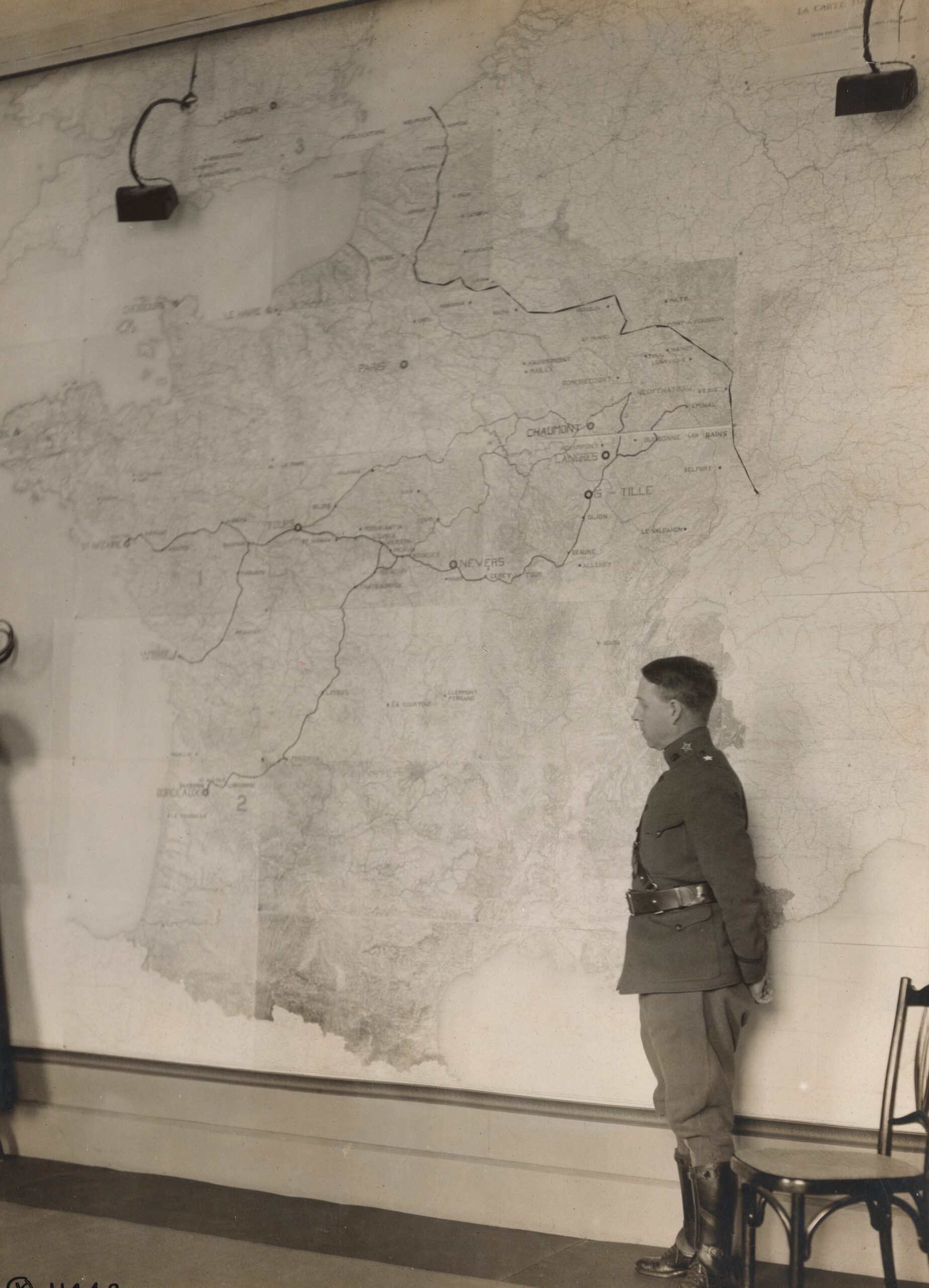
The Logistics of War: Brig. Gen. Johnson Hagood (1918)
In 1918, Brigadier General Johnson Hagood assumed one of the American Expeditionary Force’s most demanding posts: Chief of Staff of the Services of Supply (S.O.S.), headquartered in Tours, France. Responsible for transportation, construction, and the flow of food, fuel, clothing, and ammunition to millions of troops, he oversaw the vast logistical engine that kept the AEF functioning across the Western Front.
Hagood approached this challenge with the mindset of a modern corporate executive, reorganizing the S.O.S. into a system of clear responsibilities, standardized procedures, and relentless efficiency. His managerial precision proved essential during the Meuse‑Argonne Offensive, when the AEF’s success depended as much on supply lines as on rifle fire.
For this work, he received the Distinguished Service Medal, cited for his “sound judgment” and “energy” in bringing order to one of the most complex logistical undertakings of the war. And he left behind a telling insight into his philosophy. In his postwar memoir, The Services of Supply: A Memoir of the Great War, Hagood argued that a general’s most important weapon wasn’t a sword or a sidearm — it was a fountain pen, the tool that signed the orders keeping an army alive.
He formally entered the role on April 23, 1918, the day the AEF’s supply system gained the disciplined architect who would make it work.
Photo of Brig. Gen. Johnson Hagood, N.A. Tours, France, April 23, 1918
Image via Wikimedia Commons, public domain
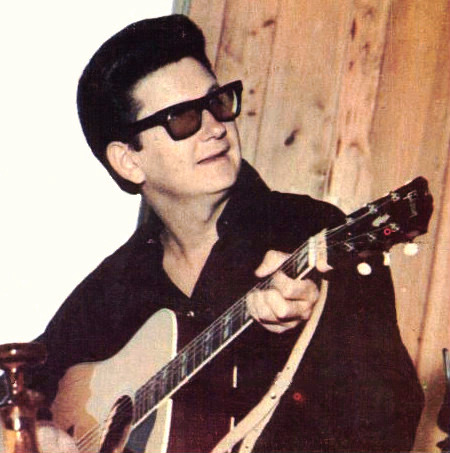
The Voice of Vulnerability: Roy Orbison (1936)
Roy Orbison was born on April 23, 1936, but he didn’t start as the “Big O” in black shades. He began as a radio performer at age eight and initially tried to make it as a Sun Records rockabilly artist. However, his true unique gift was his three-octave range—a voice so powerful and operatic that Elvis Presley once called him “the greatest singer in the world.” He brought a rare emotional vulnerability to a genre that was usually about swagger.
Image via Wikimedia Commons, no known copyright, public domain in the US
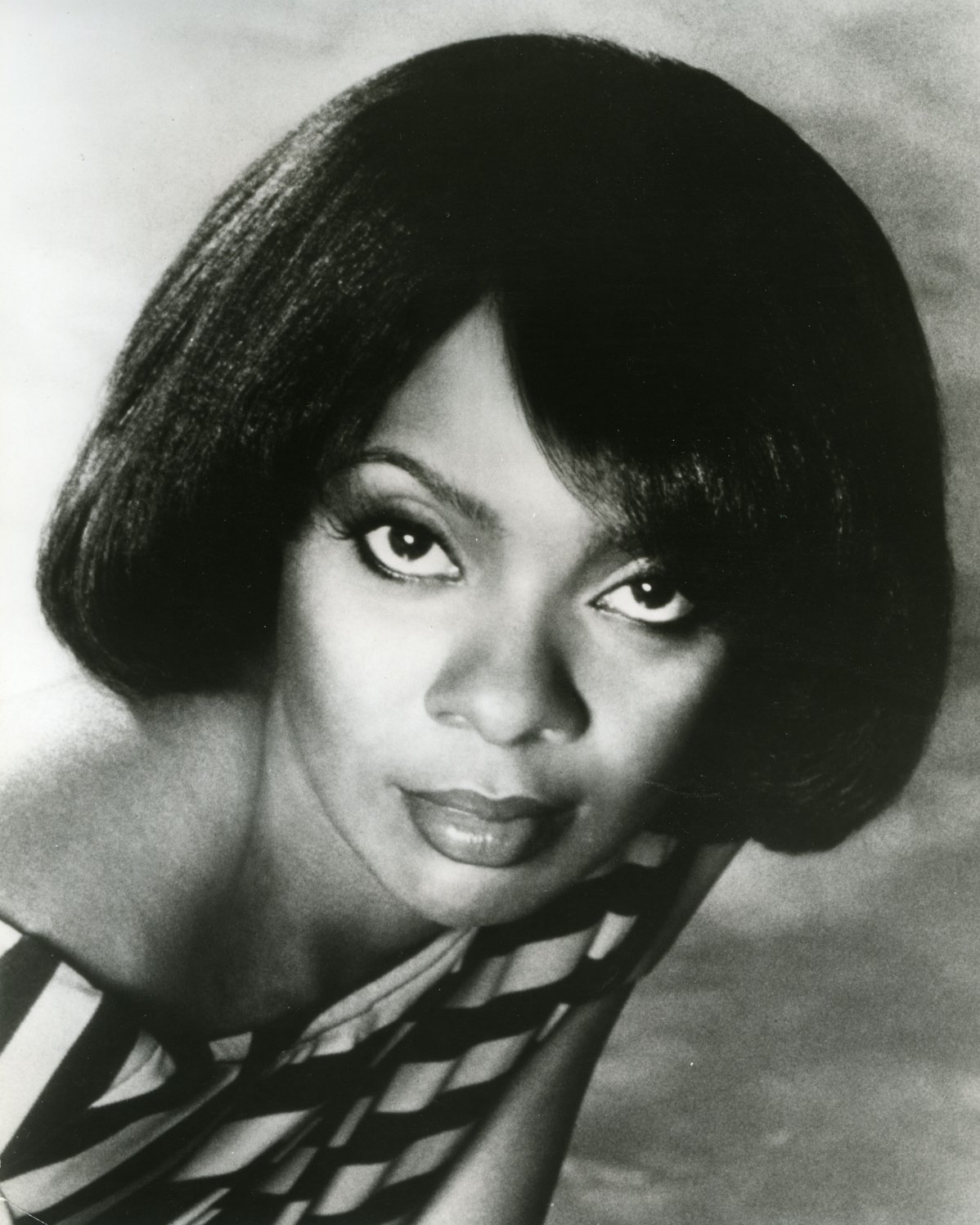
A Soulful Milestone: Thelma Houston (1977)
When Thelma Houston’s “Don’t Leave Me This Way” reached #1 on April 23, 1977, it wasn’t just a disco triumph — it was a career‑saving breakthrough that reshaped her place in American music. Originally recorded by Harold Melvin & the Blue Notes, the song became something entirely new in Houston’s hands: a soaring, gospel‑infused anthem that defined the emotional core of late‑1970s soul.
The success was historic. Her performance earned her the Grammy for Best Female R&B Vocal Performance, making her the first solo female artist on the Motown label to win in that category. What began as a cover became the definitive version — a reminder that sometimes the most powerful reinventions come from artists who refuse to be overlooked.
Image via Alamy

The Marketing Miracle of Failure: New Coke (1985)
The launch of “New Coke” on April 23, 1985, is often called the biggest marketing blunder in history. But from a unique perspective, it was a profound proof of American brand loyalty. The backlash was so fierce that Coca-Cola received over 40,000 letters of complaint. When the original formula returned 79 days later, sales skyrocketed, proving that sometimes, you don’t know what you love until a corporation tries to change it.
Image via Alamy
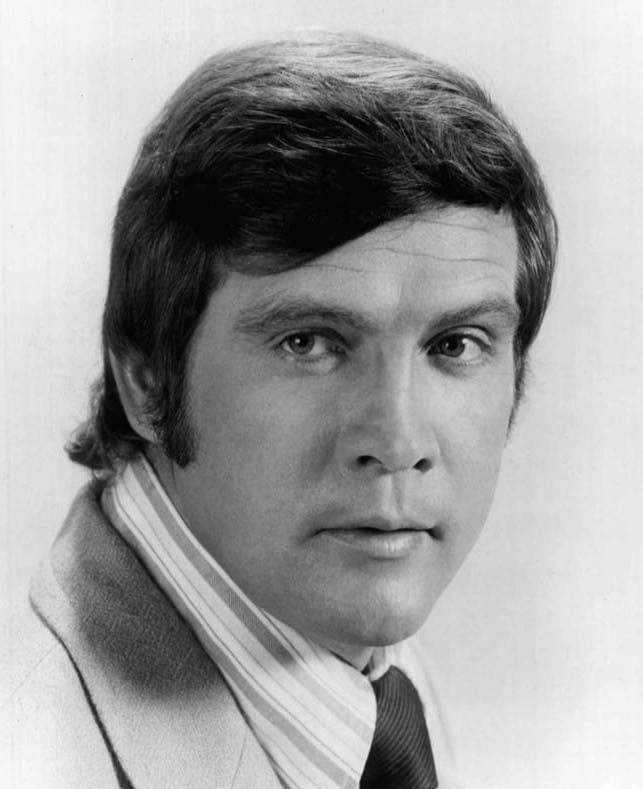
The Scholarly Hero: Lee Majors (1939)
Born on this day in 1939, Lee Majors is remembered for being “bionic,” but his real strength was his determination. After a devastating college football injury ended his athletic ambitions, he turned fully toward the classroom at Eastern Kentucky University, earning a degree in History and Physical Education. That grounded, scholarly training — the discipline of study, the structure of coaching theory, the calm presence learned in lecture halls rather than locker rooms — became the foundation of his screen persona.
When he later stepped into iconic roles like Steve Austin in The Six Million Dollar Man and Colt Seavers in The Fall Guy, Majors carried with him the steadiness of someone who had rebuilt his life once already. The bionics were fiction; the resilience was real.
Image: Lee Majors in 1972 by ABC Television via Wikimedia Commons, Public domain
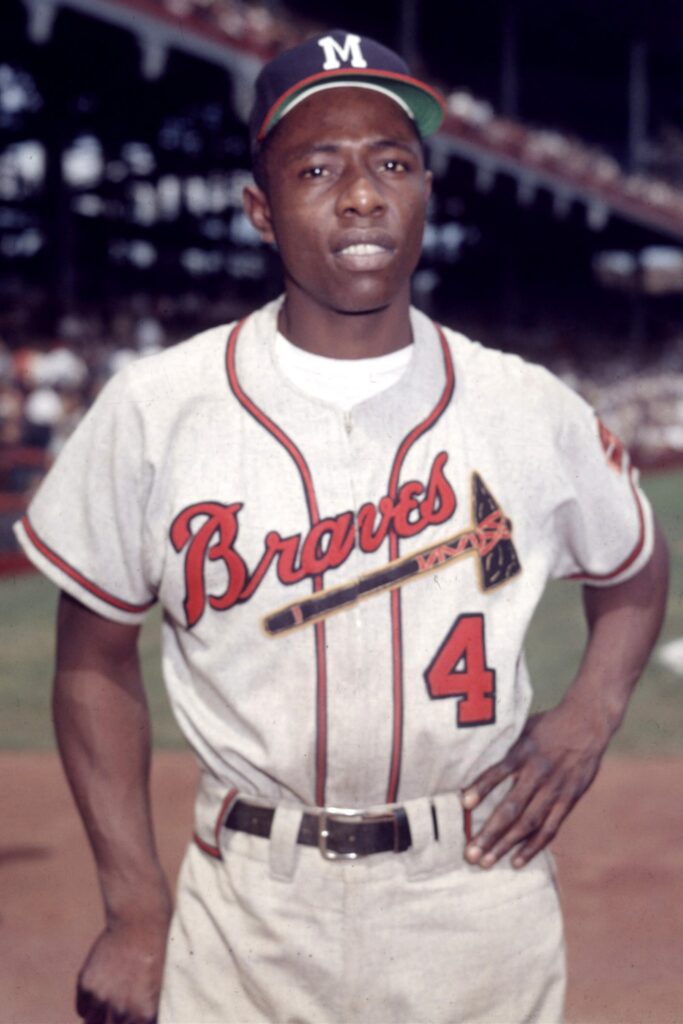
Hammerin’ Hank’s First Major League Blast: Hank Aaron (1954)
On April 23, 1954, a young Hank Aaron hit the first home run of his Major League career for the Milwaukee Braves, a line drive off St. Louis Cardinals pitcher Vic Raschi. It was the first of 755, a total that would eventually surpass Babe Ruth and stand as baseball’s most revered record for more than three decades.
Image: Hank Aaron in his rookie season (1954) via Wikimedia Commons, public domain
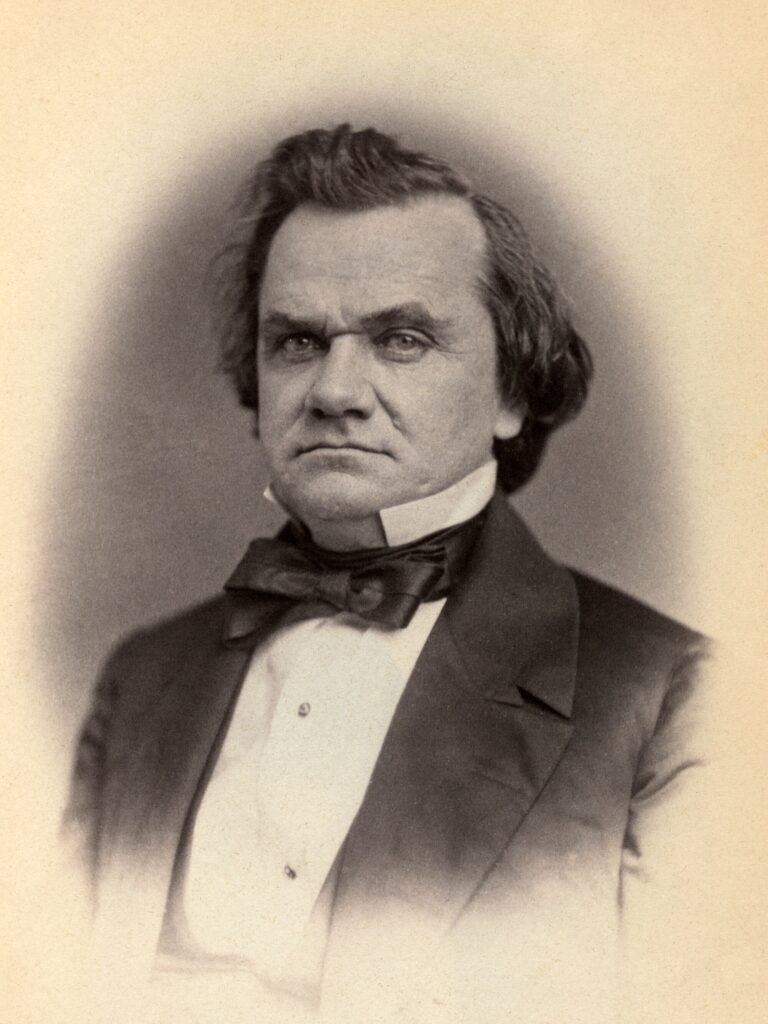
The Little Giant: Birth of Stephen A. Douglas (1813)
Born on April 23, 1813, Stephen A. Douglas was the man who would one day face Abraham Lincoln in the most famous debates in American history. Though often remembered as Lincoln’s rival, Douglas was a towering figure in mid‑19th‑century politics — a master parliamentarian, a dominant voice in the Democratic Party, and the principal architect of the Kansas–Nebraska Act, the legislation that reopened the question of slavery’s expansion and pushed the nation toward the Civil War.
And the rivalry was never purely political. In their early Springfield years, Douglas briefly courted Mary Todd, the woman Lincoln would later marry. That personal overlap added an undercurrent of tension to a rivalry already defined by ambition, ideology, and the future of the Union — two Illinois lawyers competing for influence, for voters, and at one point, for the same woman.
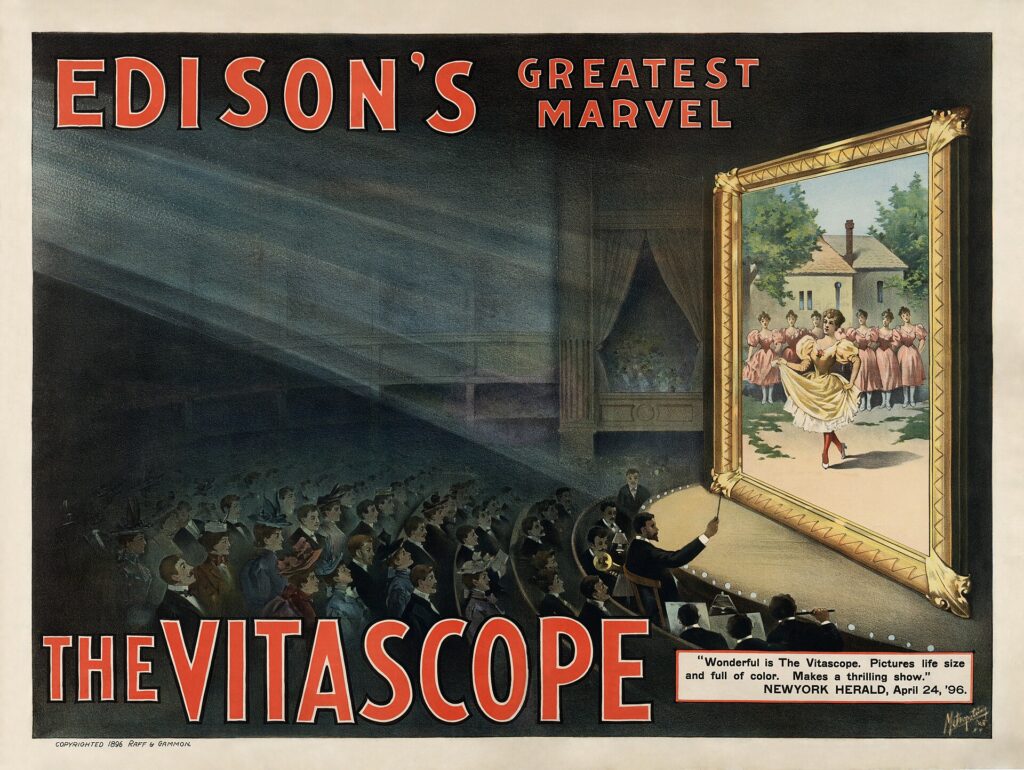
The Birth of Cinema: Edison’s Vitascope (1896)
On the night of April 23, 1896, at Koster & Bial’s Music Hall in New York City, a theater audience witnessed a miracle of the industrial age: the first public exhibition of the Vitascope. Marketed as “Edison’s Greatest Marvel,” the machine actually belonged to inventors Thomas Armat and C. Francis Jenkins, but it was Edison’s brand that turned this flickering light into a national sensation.
The program featured short, hand-tinted loops of a boxing match, a “Serpentine Dance,” and waves crashing against the Dover cliffs. The realism was so jarring that patrons in the front rows reportedly recoiled, fearing they would be swept away by the projected surf.
Though the famous promotional poster features a rave review from the New York Herald dated April 24, that was simply the morning-after reaction to a revolution that had begun the night before. By bringing life-sized motion to a shared audience, the Vitascope transformed a novelty into a cultural cornerstone—effectively marking the birth of American cinema.