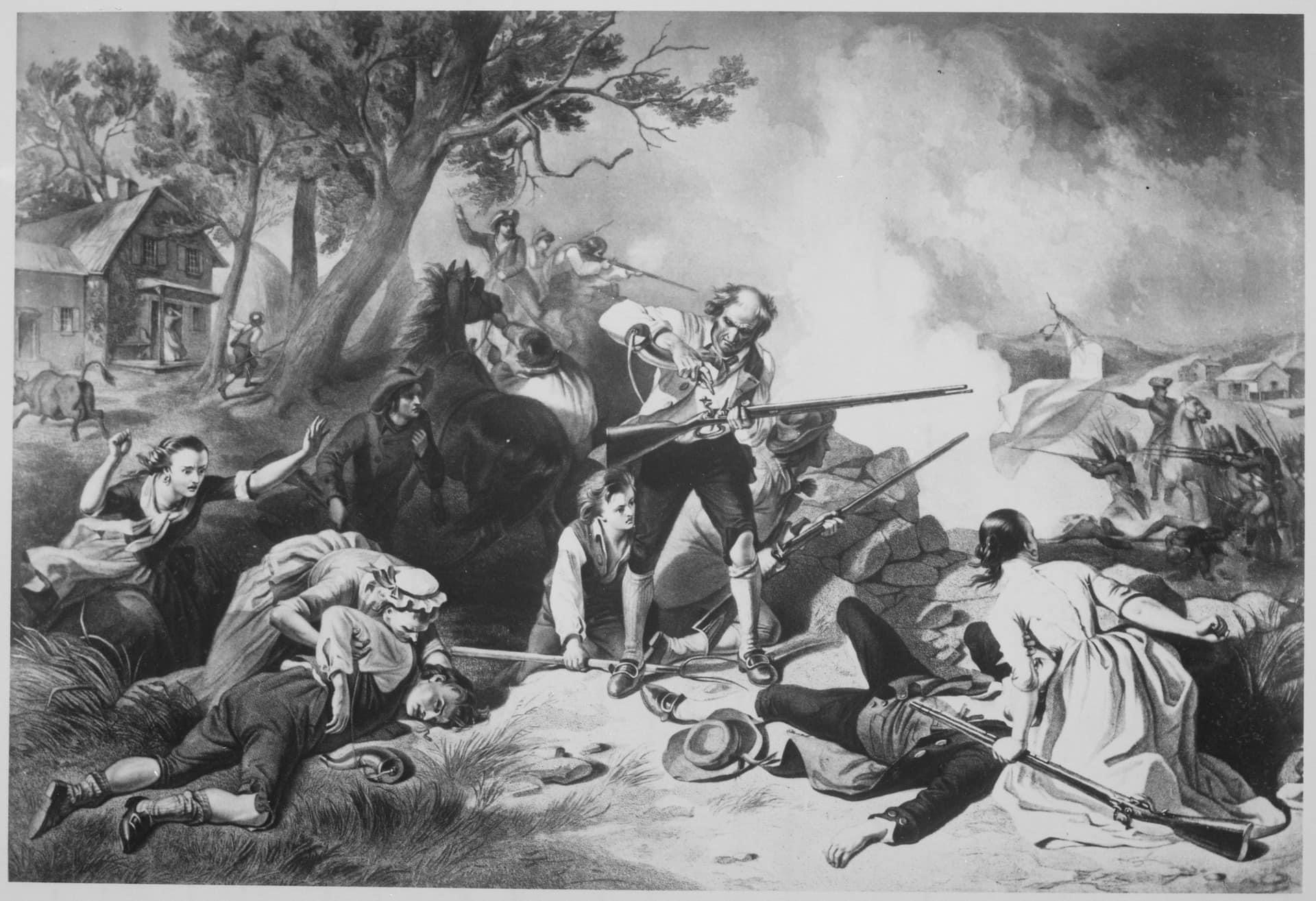
The Battle of Lexington (1775):
“As to the question, ‘Who fired first?’ — if it can be a question with any ; we may observe, that though General Gage hath been pleased to tell the world, in his account of this savage transaction, “that the troops were fired upon by the rebels out of the meeting-house, and the neighbouring houses, as well as by those that were in the field ; and that the troops only returned the fire, and passed on their way to Concord”— yet nothing can be more certain than the contrary, and nothing more false, weak or wicked, than such a representation.
To say nothing of the absurdity of the supposition, that 50, 60, or even 70 men, should, in the open field, commence hostilities with 12, or 1500, of the best troops of Britain, nor of the known determination of this small party of Americans, upon no consideration whatever, to begin the scene of blood— A cloud of witnesses, whose veracity cannot be justly disputed, upon oath have declared, in the most express and positive terms, that the British troops fired first — And I think, we may safely add, without the least reason or provocation. — Nor was there opportunity given, for our men to have saved themselves, either by laying down their arms, or dispersing, as directed, had they been disposed to ; as the command to fire upon them was given almost at the same instant, that they were ordered, by the British officers, to disperse, to lay down their arms, etc.
In short, so far from firing first upon the king’s troops ; upon the most careful enquiry, it appears, that but very few of our people fired at all ; and even they did not fire till after being fired upon by the troops, they were wounded themselves, or saw others killed, or wounded by them, and looked upon it next to impossible for them to escape.”
More than a tactical debate over who fired first, this was the moment neighbors became citizens. Jonas Clark’s account reminds us that these weren’t professional soldiers; they were farmers and fathers standing in their own backyard, refusing to blink because they believed their children deserved a different kind of world.
Excerpt Above From: Opening of the war of the Revolution, 19th of April, 1775. A brief narrative of the principal transactions of that day by Jonas Clark
https://archive.org/details/openingofwarofre00clar/page/6/mode/1up?view=theater
Source says not in copyright
Image: The First Blow for Liberty. Battle of Lexington, April 1775 via Wikimedia Commons, public domain
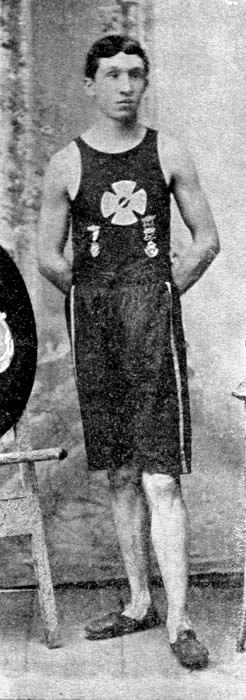
John J. McDermott (1897):
His win wasn’t just a fast run; it was the birth of a secular pilgrimage. By finishing that first race, McDermott proved that the human body could endure the impossible, turning a day once defined by the “fatigue of war” into a celebration of human potential and physical grace.
Photo of John J. McDermott who was the winner of the first Boston Marathon (Boston Athletic Association race) on April 19, 1897.
His time was about 5 minutes shy of 3 hours.
Image via Wikimedia Commons, public domain.
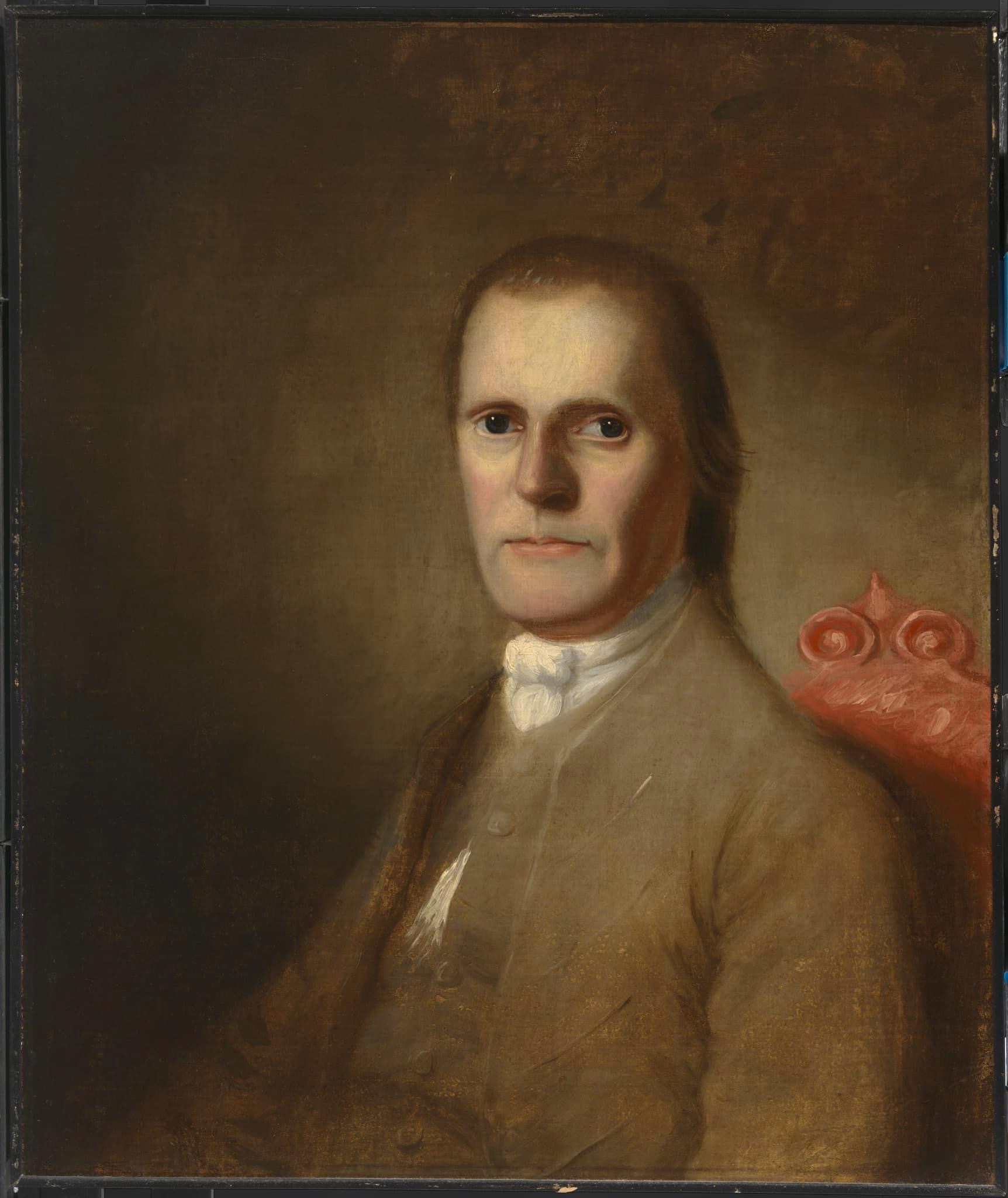
Roger Sherman (1721):
While we see him as a “signer,” his heart was that of a bridge-builder. As the only man to sign all four founding documents, he represents the quiet, steady hand that held a fractured country together. He didn’t just fight for liberty; he spent his entire life painstakingly writing the rules to protect it.
Roger Sherman, the only person to sign all four of America’s founding documents: The Continental Association, The Articles of Confederation, The Declaration of Independence, and The Constitution, was born on April 19, 1721 in Newton, Massachusetts.
Image via National Portrait Gallery, Smithsonian Institution; gift of Mr. Bradley B. Gilman, no known restrictions
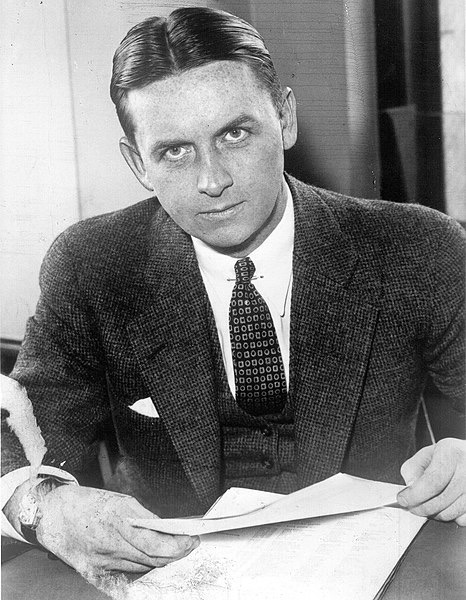
Eliot Ness (1903):
Beyond the “Untouchable” badge, Ness represents integrity as a shield. In an era where everything was for sale, his refusal to take a bribe wasn’t just about the law—it was a moral stand that said a person’s character is the only thing that can’t be bought.
Born April 19, 1903 Eliot Ness served in the Justice Department’s Bureau of Prohibition in 1930s Chicago. Ness led a carefully-chosen squad of agents against bootlegging operations. Chicago newspapers dubbed them “untouchables” for their refusal to accept bribes, like the $2,000 a week offered by Al Capone.
Image: US Department of the Treasury via Wikimedia Commons, public domain in the US.
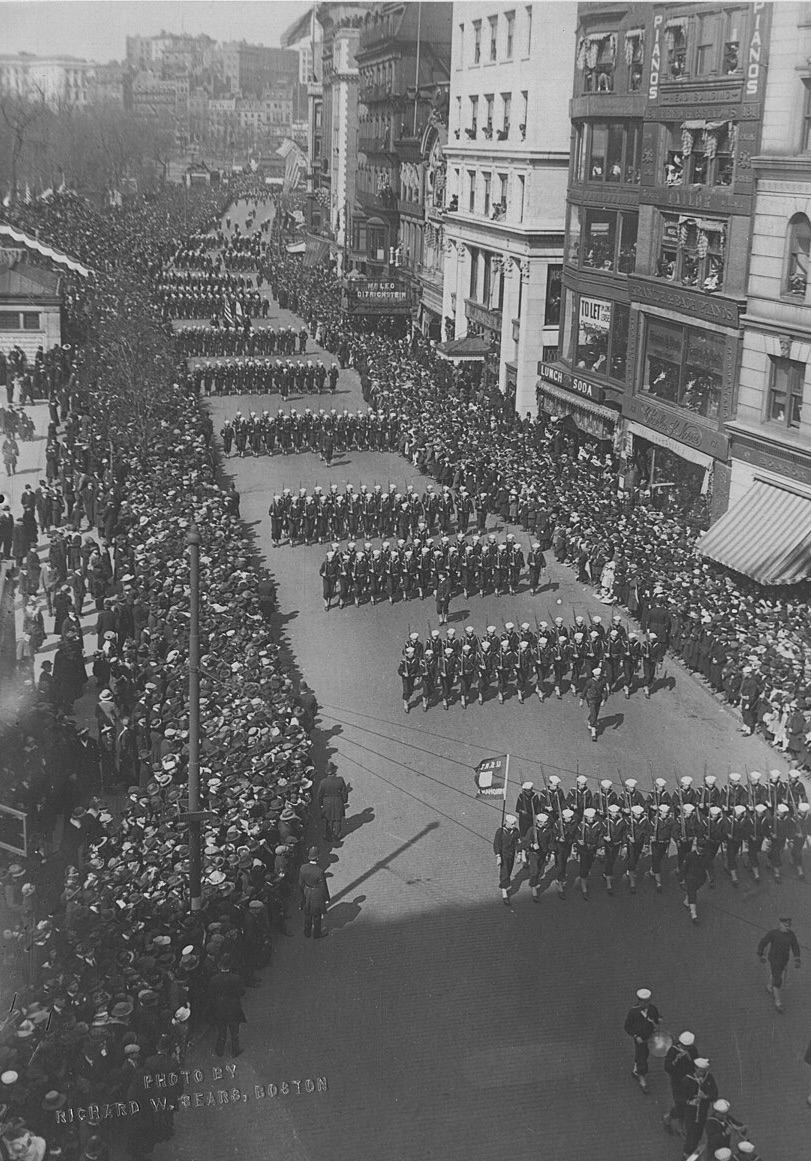
Sailors on Tremont St. (1918):
These young men marching on Patriots’ Day were a living bridge between two eras. As they walked the same streets where the Revolution began, they carried the weight of a new world war, proving that every generation eventually has its own “April 19th” moment where they must answer the call to serve.
Image via Wikimedia Commons, public domain
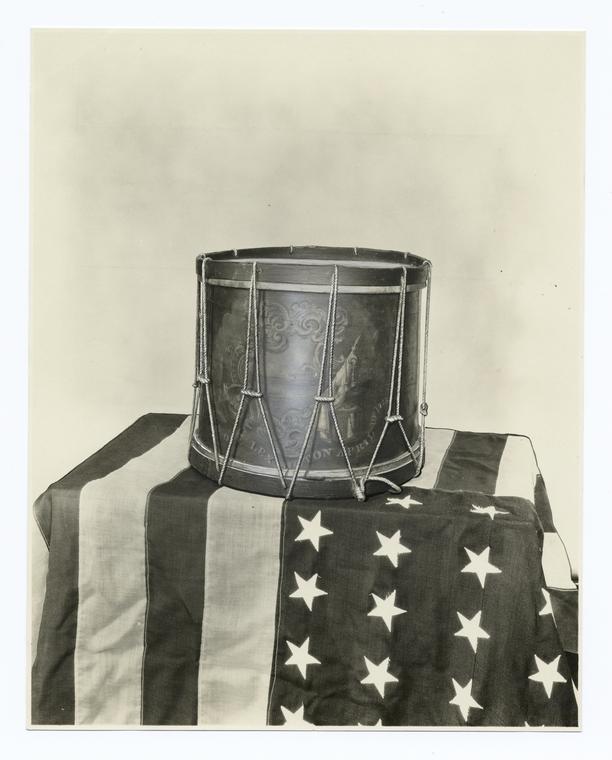
William Diamond’s Drum (1775):
Drum beaten by Wm. Diamond at Lexington, April 19, 1775.
This isn’t just an instrument; it’s the heartbeat of a movement. When Diamond beat that drum, he was transforming a cold morning into a collective roar. It reminds us that sometimes, the loudest thing you can do is simply show up and set the rhythm for others to follow.
via NYPL Digital Collections, no known restrictions
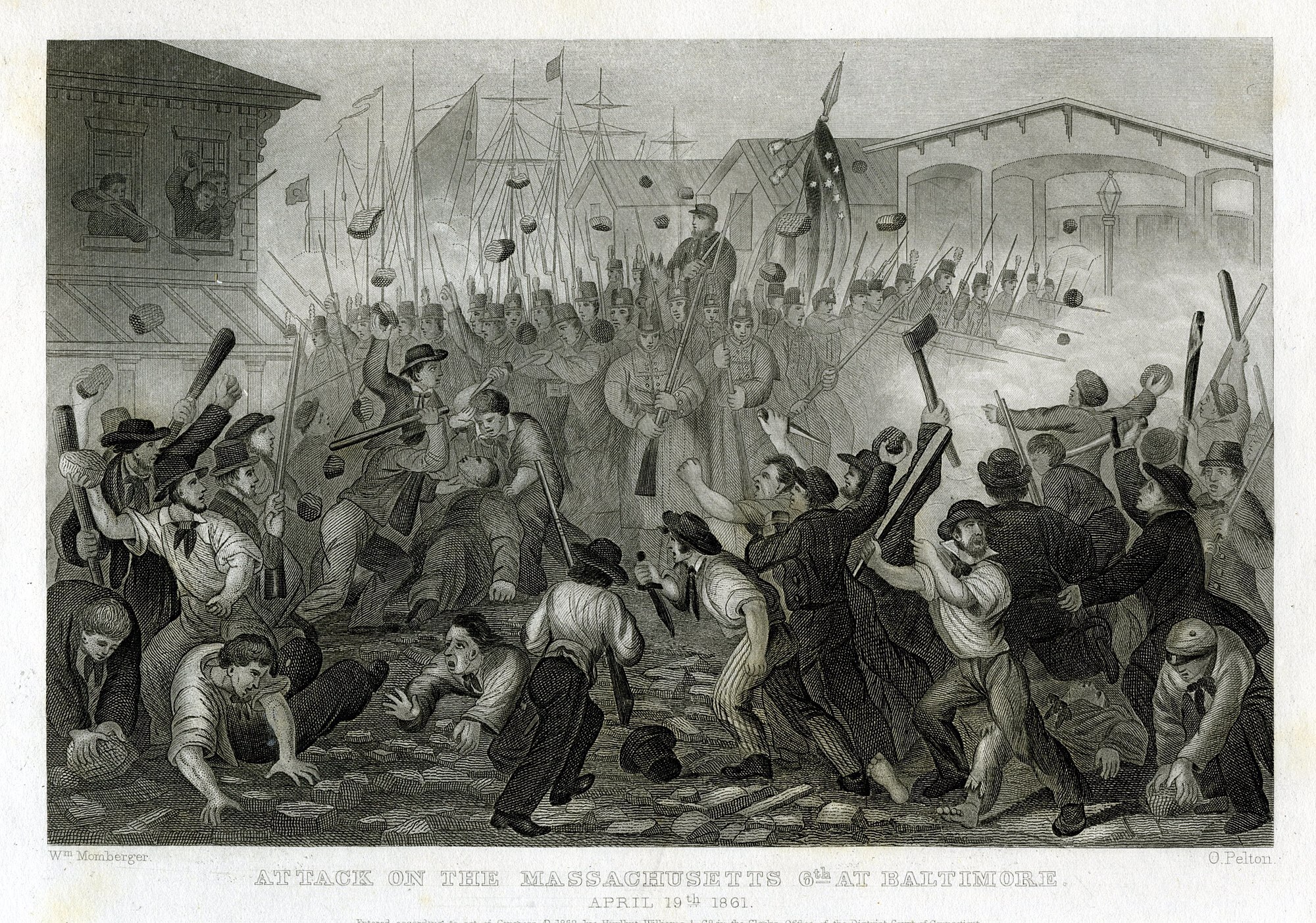
A Painful Family Reckoning: The 6th Massachusetts at Baltimore (1861)
On April 19, 1861—exactly 86 years to the day after the stand at Lexington—blood was shed once again on American soil. As the 6th Massachusetts Regiment marched through the streets of Baltimore toward Washington, they were met not with cheers, but with a violent riot. The political tension was stark: just a year earlier, only a thousand of Baltimore’s thirty thousand voters had cast a ballot for Abraham Lincoln.
This was more than a military skirmish; it was a heartbreaking family reckoning. The date that once united the colonies against an empire now saw fellow countrymen turned against one another. It serves as a somber reminder that the “liberty” won in 1775 was a work in progress—an unfinished promise that would require deep, agonizing sacrifice to truly encompass everyone.
Image via Wikimedia Commons, public domain
The Compass of Compassion: A New Path Across the Atlantic (1912):
On April 19, 1912—just four days after Titanic sank—the U.S. Hydrographic Office and the major transatlantic lines agreed to shift the winter steamship route nearly 300 miles south, away from the ice fields that had claimed so many lives. It was grief turned into a compass: a deliberate choice to add hours to the crossing so that human life would outweigh speed. That same day, as the U.S. Senate Inquiry opened, the world quietly admitted that even our greatest ships must yield to the ocean—and that safety, not pride, must guide the way forward.
Image via Wikimedia Commons, public domain
National Barn Dance (1924):
This was the sound of home reaching the lonely. Before the internet or TV, these airwaves brought the front-porch fiddle to the city-dweller, proving that no matter how much the world modernized, we still craved the music that reminded us of our roots.
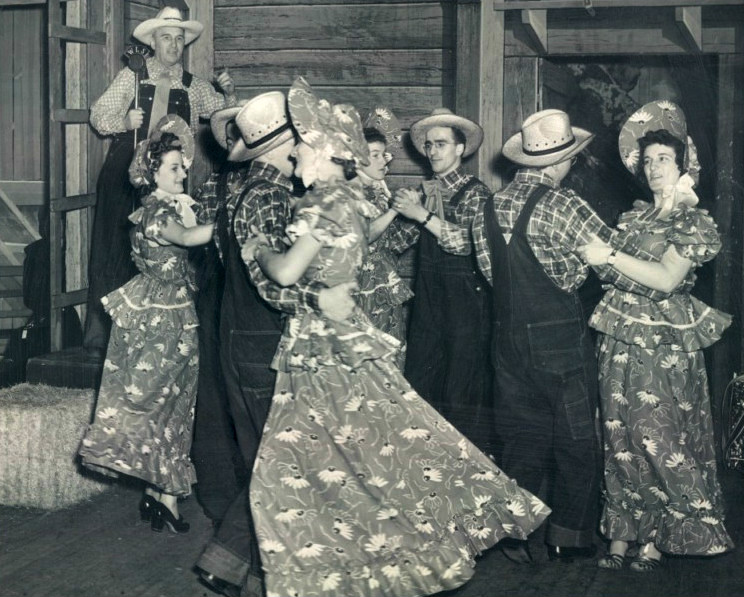
One of the first country music radio programs, National Barn Dance, was broadcast by WLS-AM in Chicago, Illinois on April 19, 1924.
Image from WLS Radio of the Barn Dance c. 1940 via Wikimedia Commons, public domain
Shirley Temple’s Stardom (1934):
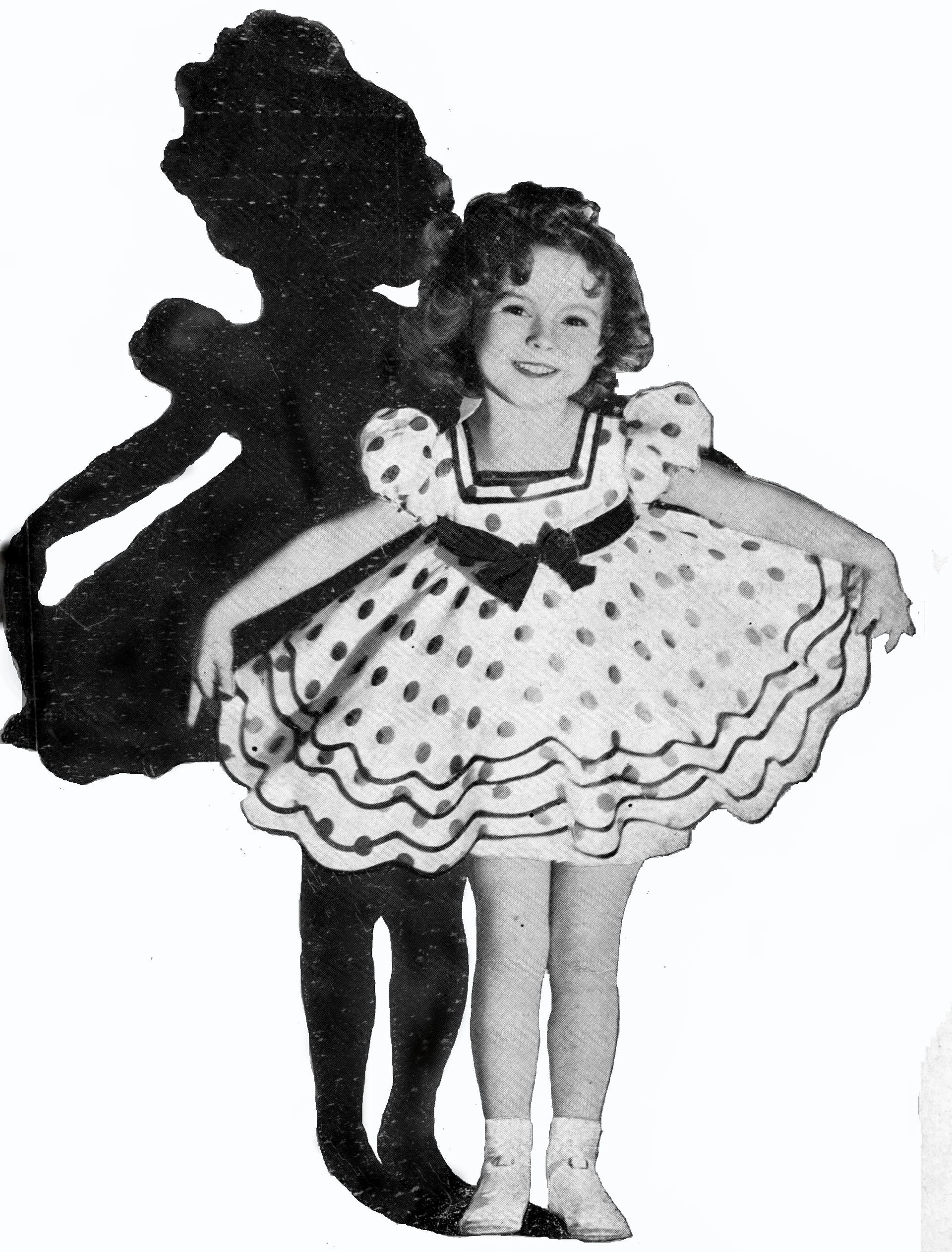
In the heart of the Great Depression, a child’s smile became a national tonic. Shirley Temple didn’t just act; she gave a weary, bankrupt nation permission to be happy for an hour, proving that sometimes “light” entertainment is actually a heavy-duty necessity for survival.
The breakthrough film that made Shirley Temple a star, “Stand Up and Cheer!”, premiered at Radio City Music Hall on April 19, 1934. Before this, Shirley had only appeared in small roles, but the film propelled her into stardom.
Image via Wikimedia Commons, public domain
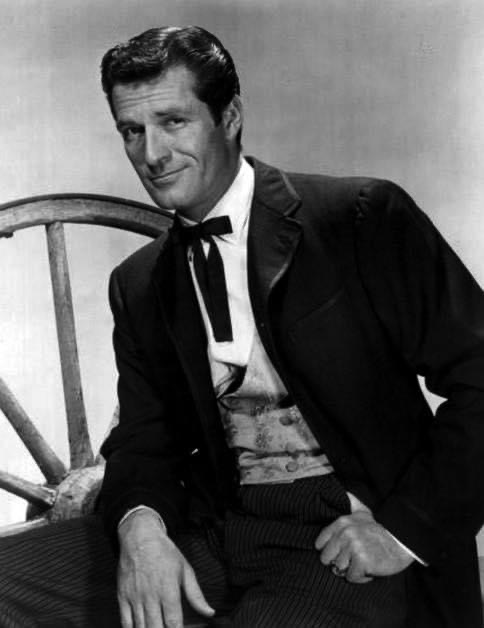
Hugh O’Brian (1925):
As Wyatt Earp, O’Brian gave a post-war generation a myth to lean on. He represented the “noble lawman,” a figure of justice and order that helped a changing America process its own identity through the lens of the rugged, principled West. American actor Hugh O’Brian was born on April 19, 1925 in Rochester, New York.
Image: Hugh O’Brian as Wyatt Earp in 1959 by ABC Television via Wikimedia Commons, public domain.
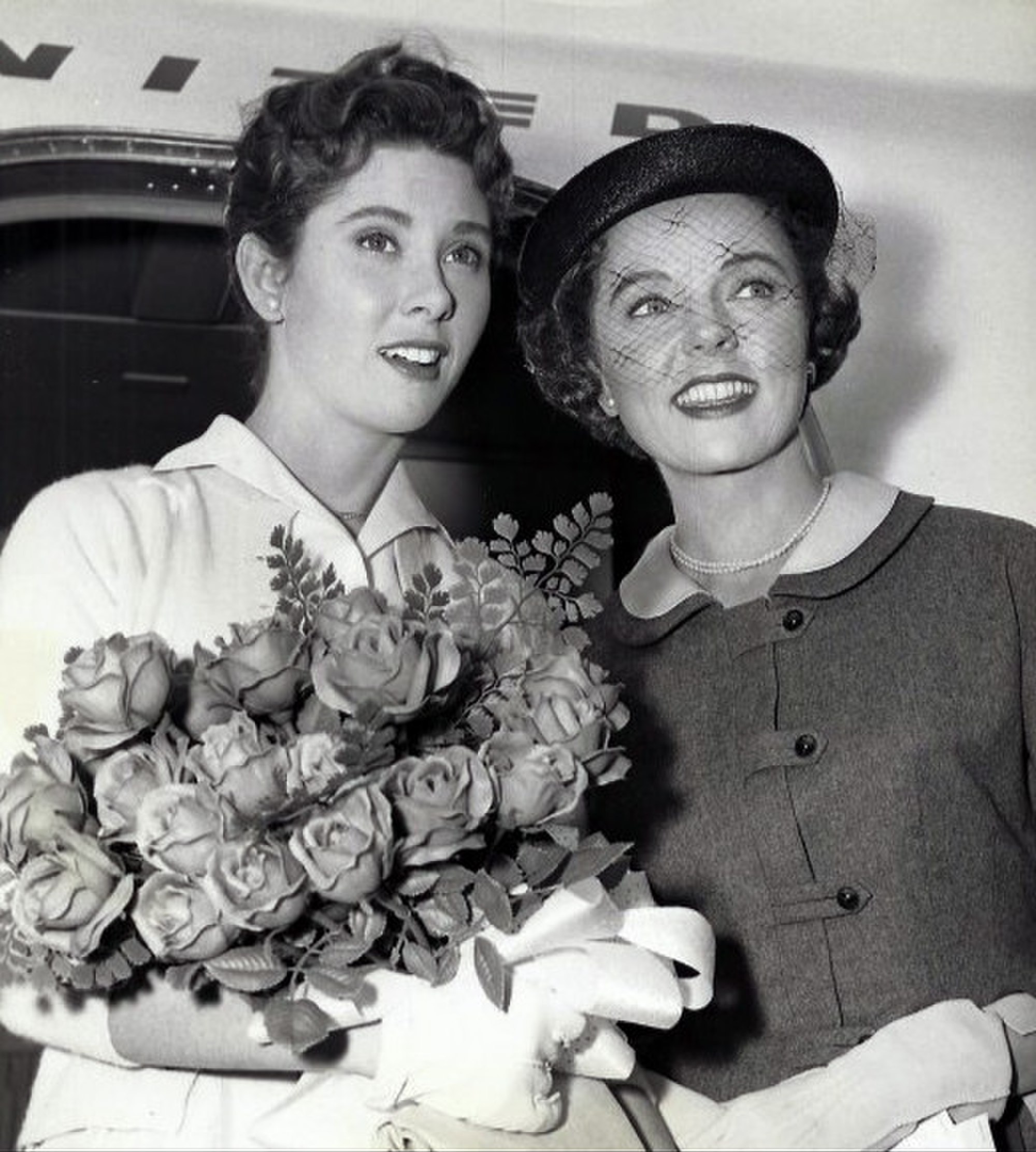
Elinor Donahue (1937):
Through her role as Betty Anderson on Father Knows Best, Elinor Donahue helped craft the blueprint of the mid-century American family. Born in Tacoma, Washington, on April 19, 1937, she became a fixture in living rooms across the country. While the show was scripted, it reflected a deep post-war yearning for stability and a belief that the small, everyday dramas of a household were just as important as the big events of history.
Image: Elinor Donahue as Betty Anderson with Jane Wyatt in 1959 via Wikimedia Commons, public domain.
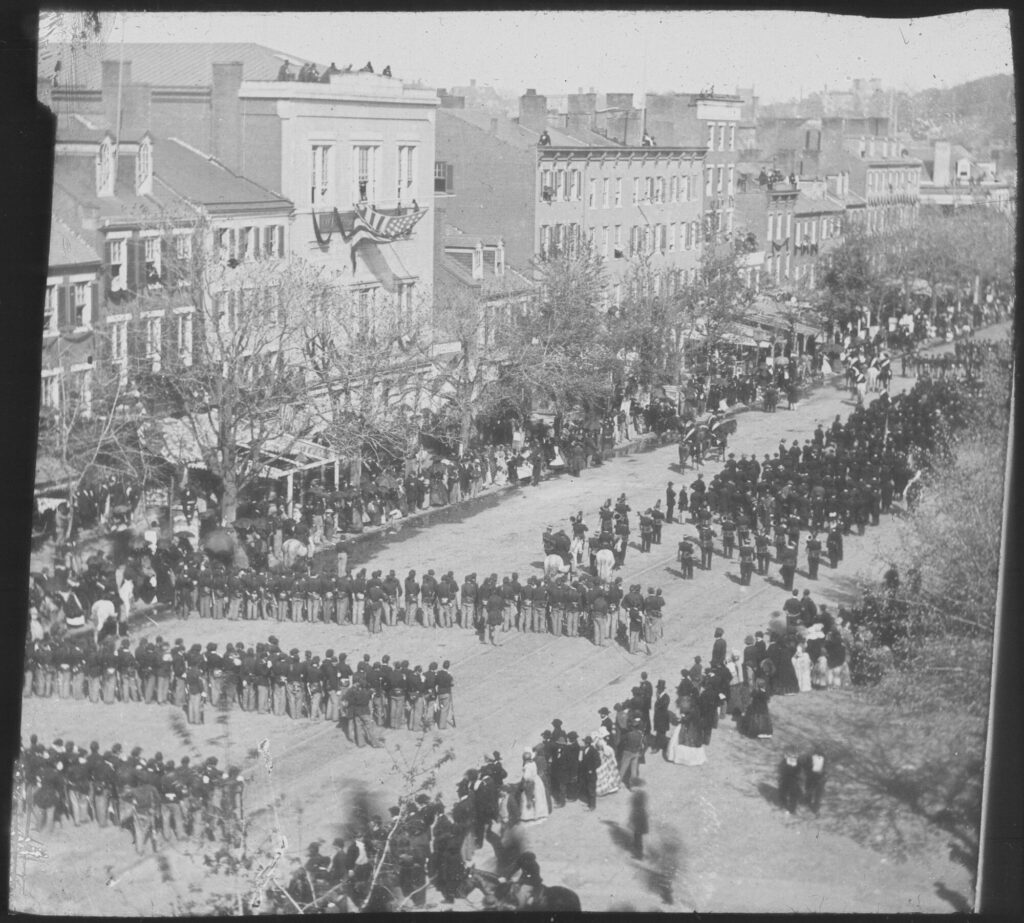
President Lincoln’s White House Funeral (1865):
Five days after his assassination, the nation gathered at the White House to say goodbye. This was a moment of collective heartbreak. It wasn’t just a state ceremony; it was a country reeling from the loss of a “father figure” just as they were trying to heal from the wounds of the Civil War. It reminds us that even in our darkest hours of grief, there is a shared humanity in mourning.
Image: Lincoln’s funeral procession on Pennsylvania Avenue on April 19, 1865.
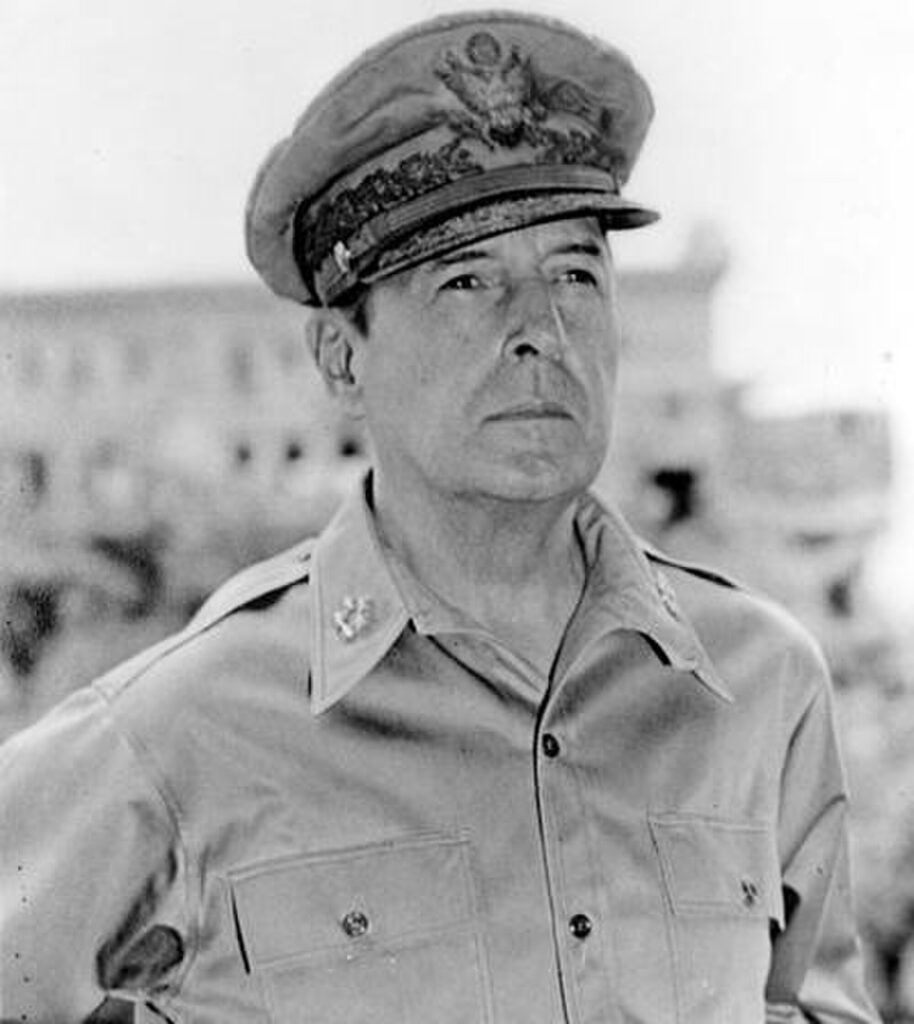
General Douglas MacArthur’s Farewell (1951):
After being relieved of his command by President Truman, MacArthur addressed Congress on this day. It was the heart of grace in transition. He famously quoted the ballad, “Old soldiers never die; they just fade away,” a moment that captured the nation’s struggle between the respect for military legend and the necessity of civilian control. It reminds us that every long journey, no matter how storied, eventually finds its conclusion.
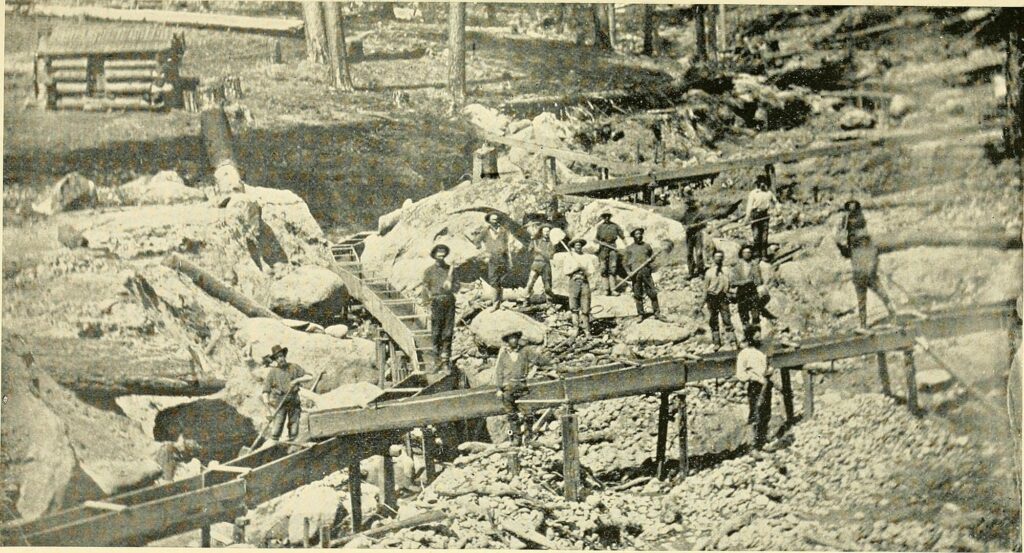
The Treasure in the Dust: The First Spark of California’s Memory (1852)
In the peak years of the Gold Rush, when California was still raw with newness and possibility, a small group of San Franciscans took an extraordinary step. On April 19, 1852, they formally incorporated what would become the first attempt at a California Historical Society—a brief, early spark in the effort to preserve a past that was being created faster than anyone could record it.
While the Society of California Pioneers had formed in 1850 to honor the people who arrived early, these 1852 founders were the first to focus on the artifacts and records of the state itself. It was the heart of legacy-building: the moment a pioneering people stopped looking only at the gold beneath their feet and began looking back at the stories they were living. Though that first society did not endure, it marked the beginning of a determined effort to ensure California’s history would not be lost to the rush that created it.
Image: Early placer mining scene in 1852, in what is now Nevada City via Wikimedia Commons