
 Mystery March Is Here!
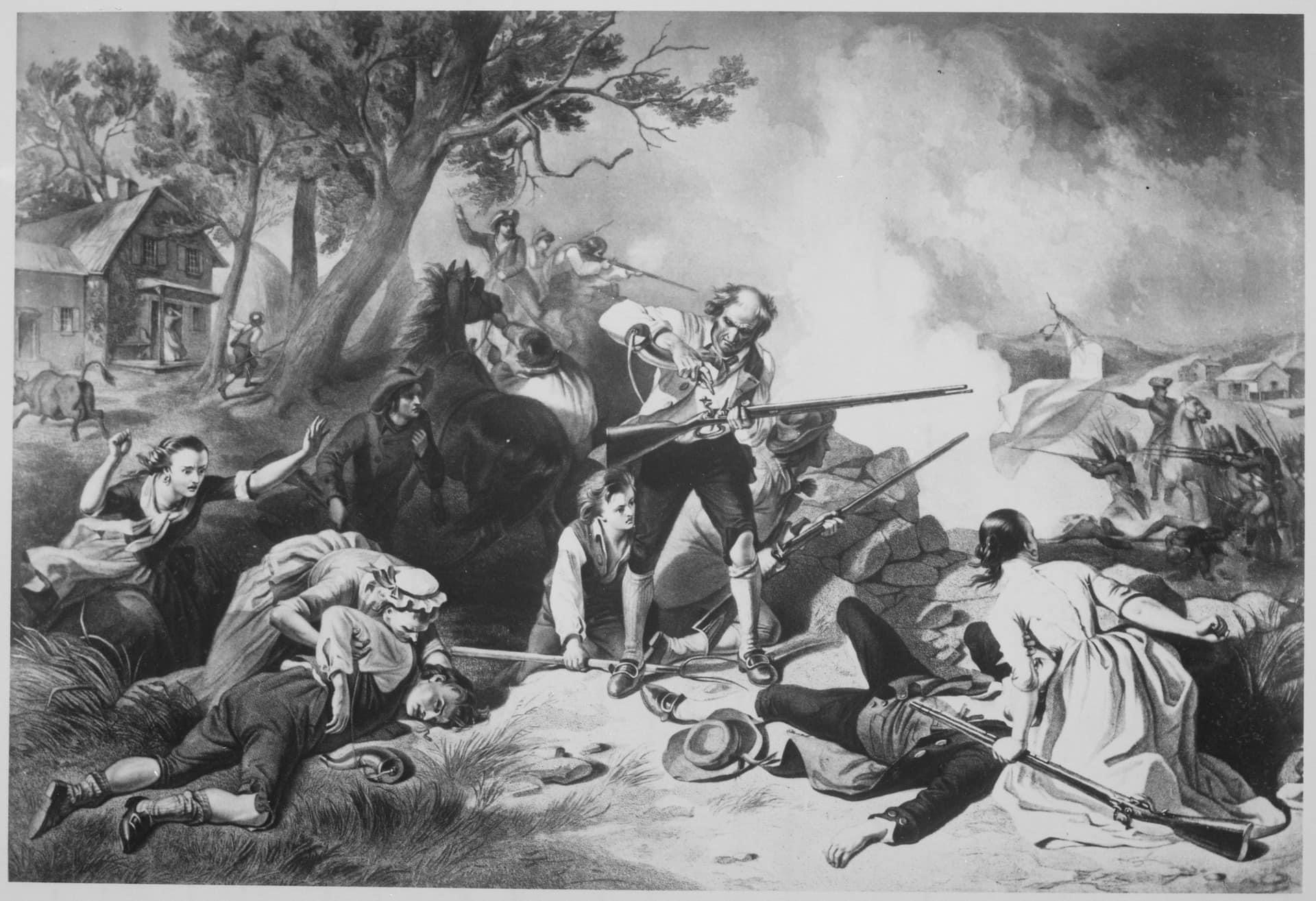
“As to the question, ‘Who fired first?’ — if it can be a question with any ; we may observe, that though General Gage hath been pleased to tell the world, in his account of this savage transaction, “that the troops were fired upon by the rebels out of the meeting-house, and the neighbouring houses, as well as by those that were in the field ; and that the troops only returned the fire, and passed on their way to Concord”— yet nothing can be more certain than the contrary, and nothing more false, weak or wicked, than such a representation.
To say nothing of the absurdity of the supposition, that 50, 60, or even 70 men, should, in the open field, commence hostilities with 12, or 1500, of the best troops of Britain, nor of the known determination of this small party of Americans, upon no consideration whatever, to begin the scene of blood— A cloud of witnesses, whose veracity cannot be justly disputed, upon oath have declared, in the most express and positive terms, that the British troops fired first — And I think, we may safely add, without the least reason or provocation. — Nor was there opportunity given, for our men to have saved themselves, either by laying down their arms, or dispersing, as directed, had they been disposed to ; as the command to fire upon them was given almost at the same instant, that they were ordered, by the British officers, to disperse, to lay down their arms, etc.
In short, so far from firing first upon the king’s troops ; upon the most careful enquiry, it appears, that but very few of our people fired at all ; and even they did not fire till after being fired upon by the troops, they were wounded themselves, or saw others killed, or wounded by them, and looked upon it next to impossible for them to escape.”
From: Opening of the war of the Revolution, 19th of April, 1775. A brief narrative of the principal transactions of that day by Jonas Clark
https://archive.org/details/openingofwarofre00clar/page/6/mode/1up?view=theater
Source says not in copyright
Image: The First Blow for Liberty. Battle of Lexington, April 1775 via Wikimedia Commons, public domain
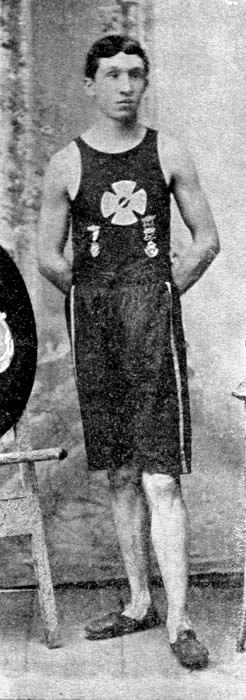
John J. McDermott who was the winner of the first Boston Marathon (Boston Athletic Association race) on April 19, 1897.
His time was about 5 minutes shy of 3 hours.
Image via Wikimedia Commons, public domain.
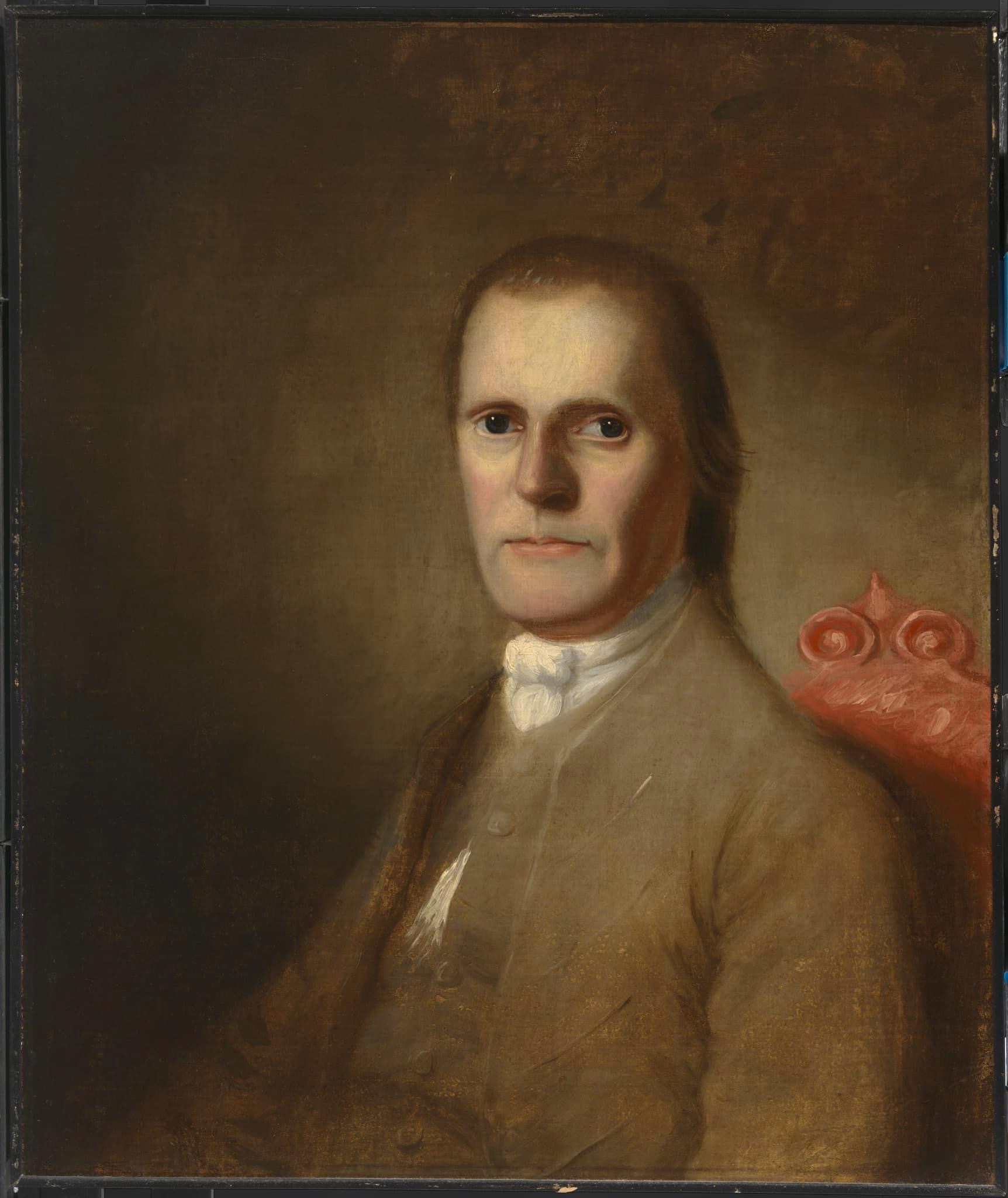
Roger Sherman, the only person to sign all four of America’s founding documents: The Continental Association, The Articles of Confederation, The Declaration of Independence, and The Constitution, was born on April 19, 1721 in Newton, Massachusetts.
Image via National Portrait Gallery, Smithsonian Institution; gift of Mr. Bradley B. Gilman, no known restrictions
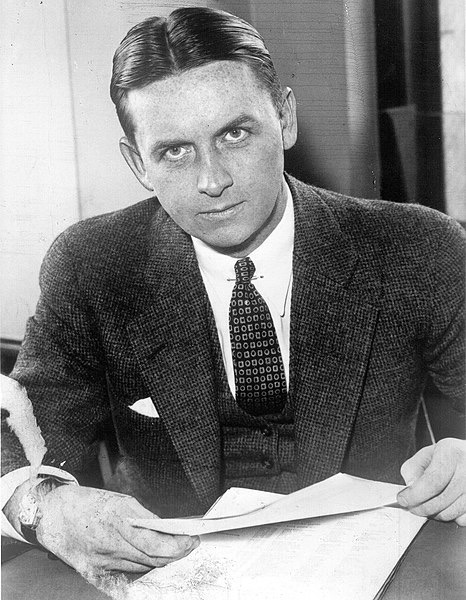
Born April 19, 1903 Eliot Ness served in the Justice Department’s Bureau of Prohibition in 1930s Chicago. Ness led a carefully-chosen squad of agents against bootlegging operations. Chicago newspapers dubbed them “untouchables” for their refusal to accept bribes, like the $2,000 a week offered by Al Capone.
Image: US Department of the Treasury via Wikimedia Commons, public domain in the US.
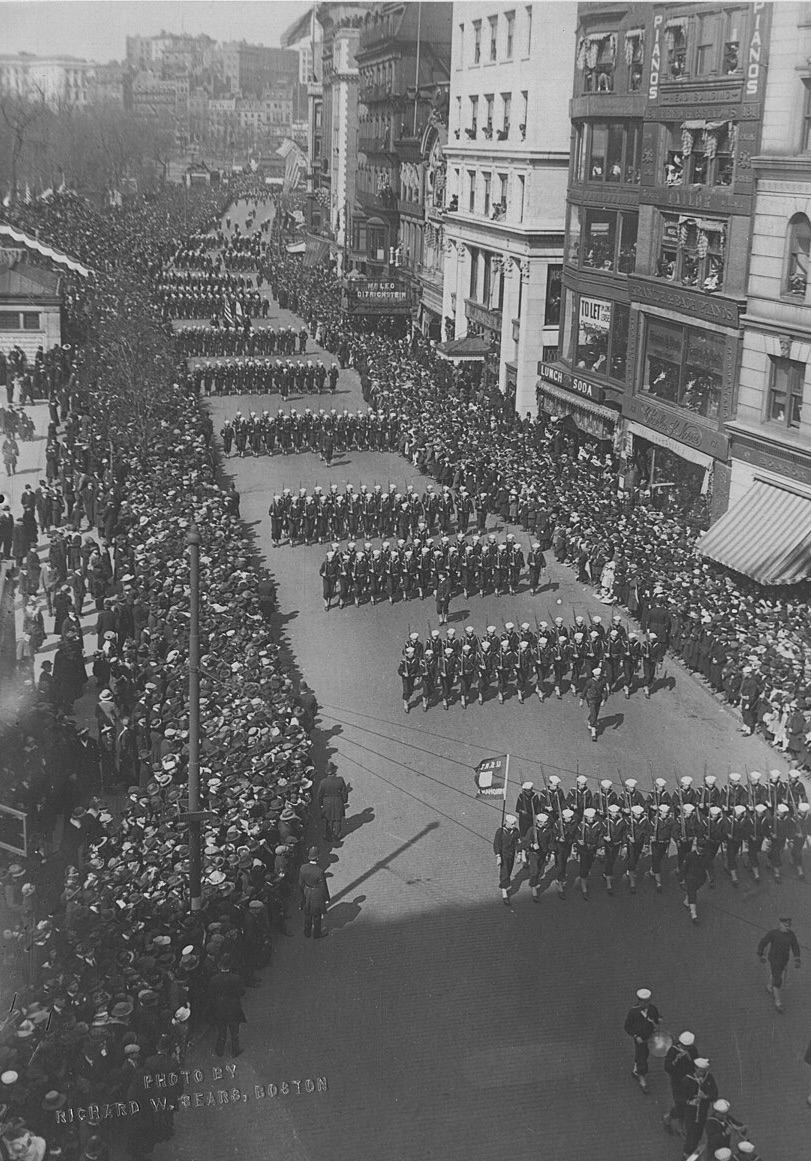
Naval Training Station sailors marching down Tremont St., Boston, April 19, 1918 on Patriots Day
Image via Wikimedia Commons, public domain
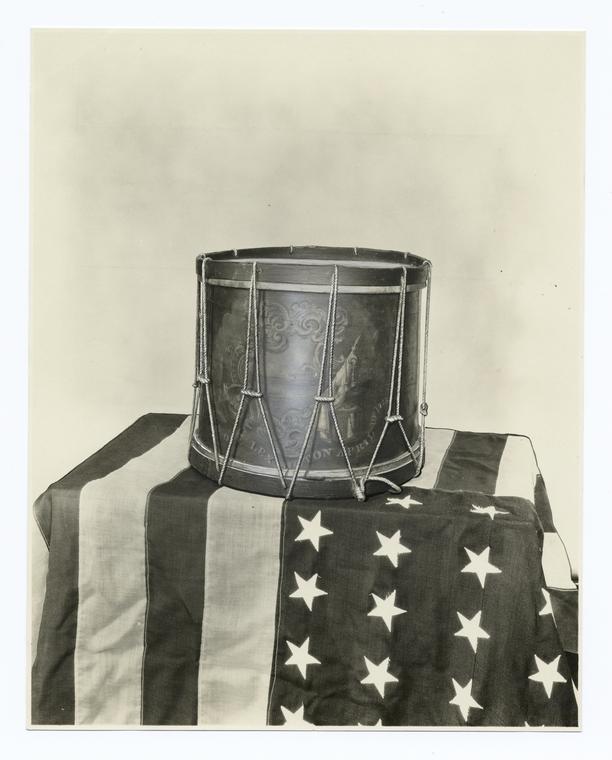
Drum beaten by Wm. Diamond at Lexington, April 19, 1775
via NYPL Digital Collections, no known restrictions
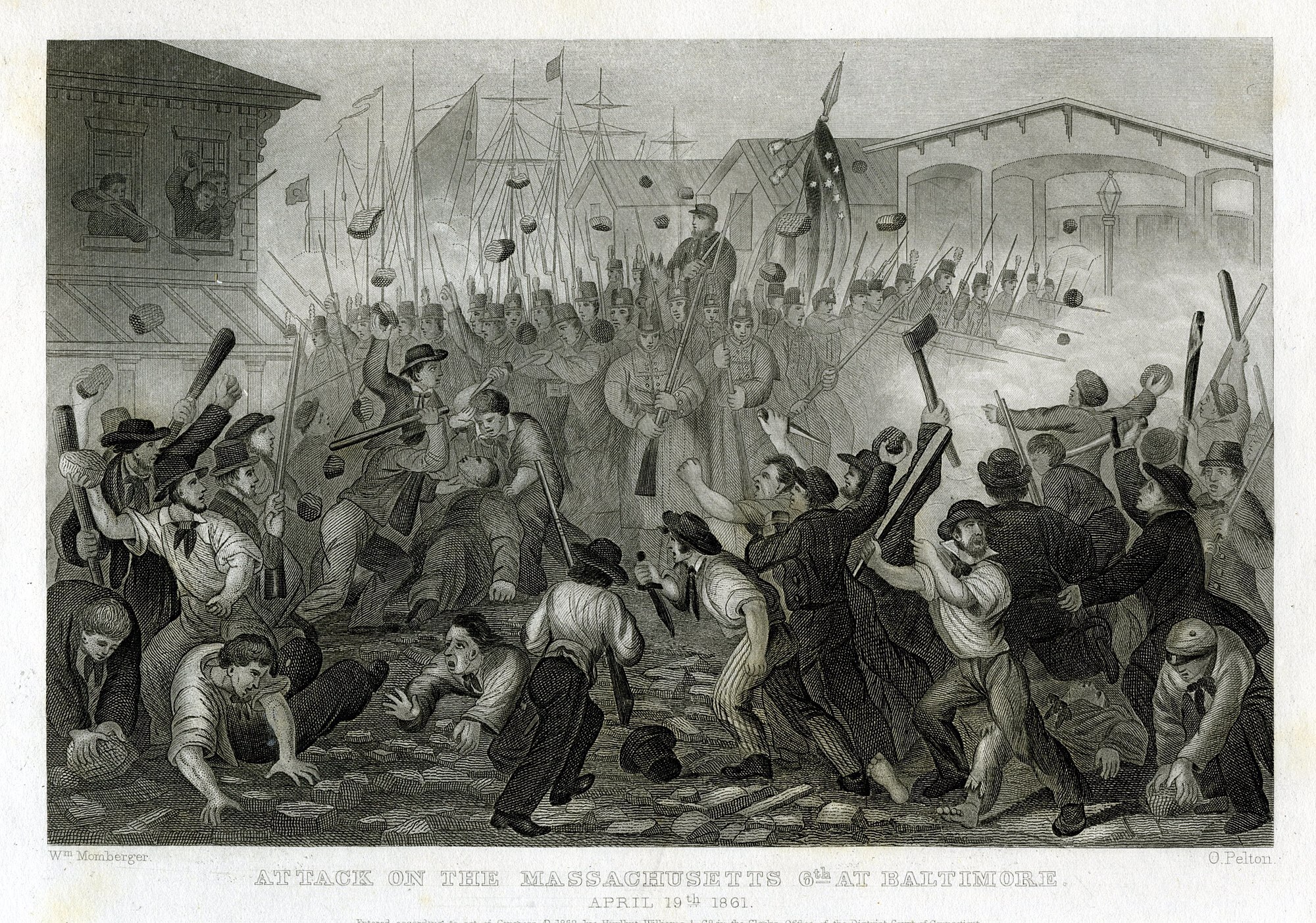
Attack on the Massachusetts 6th at Baltimore on April 19, 1861.
A year prior during the Presidential Election of 1860, only a little more than a thousand voters from Baltimore (out of more than thirty thousand voters) voted for Abraham Lincoln.
Image via Wikimedia Commons, public domain
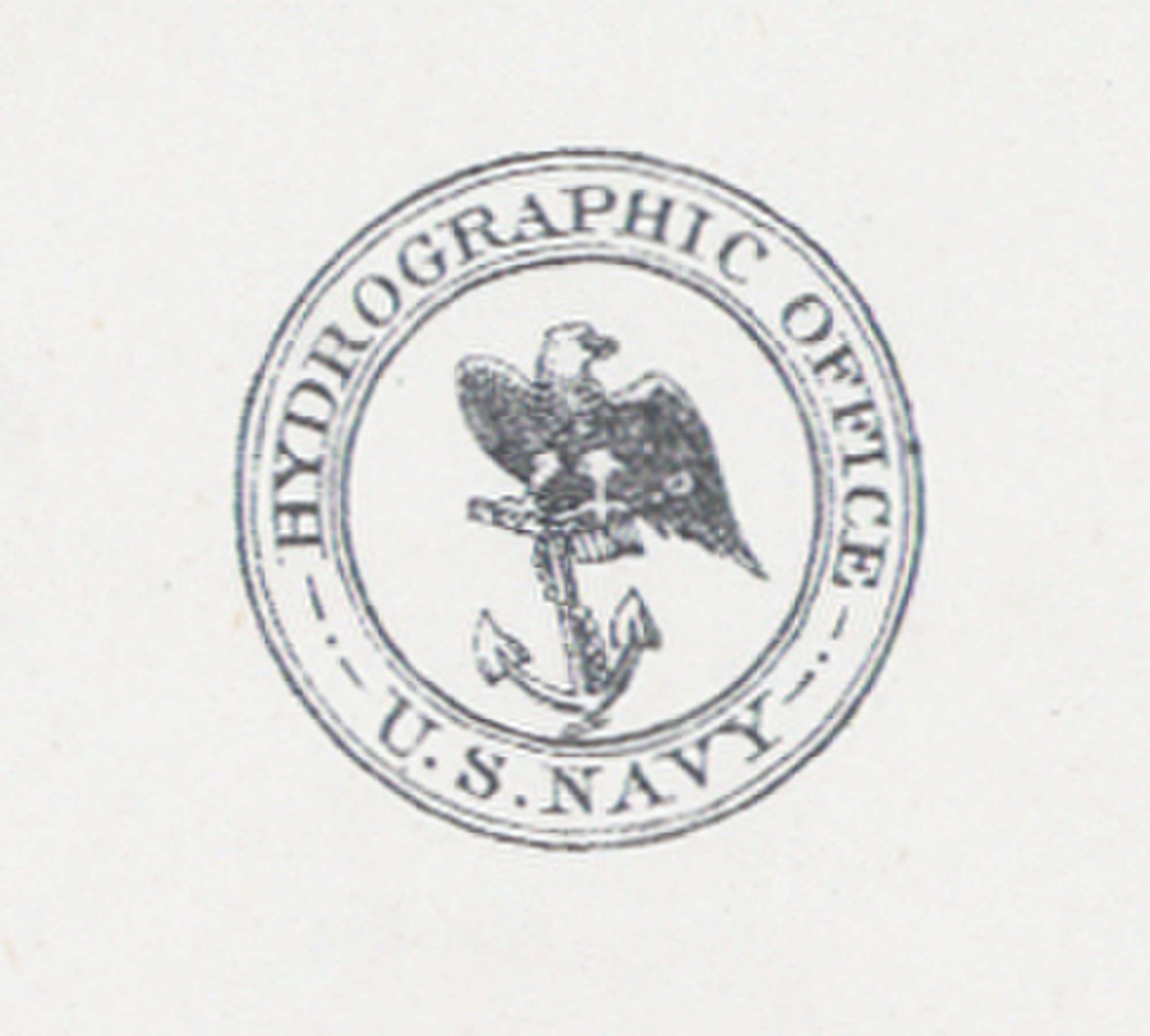
On April 19, 1912, shipping lines, whose ships sailed with passengers across the North Atlantic, and the U.S. Hydrographic Office came to an agreement on a new transatlantic winter route.
Ships were directed to travel nearly 300 miles south of the Titanic route. The change added about a 1/2 day to the crossing.
Image via Wikimedia Commons, public domain
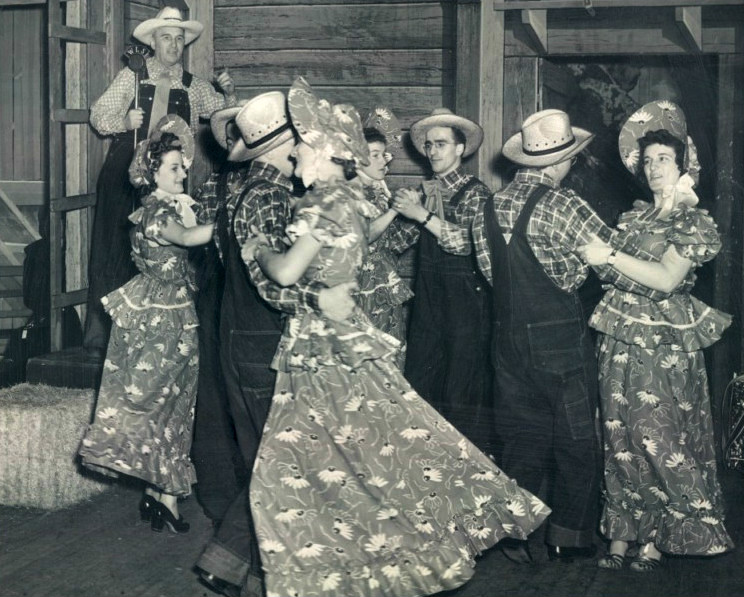
One of the first country music radio programs, National Barn Dance, was broadcast by WLS-AM in Chicago, Illinois on April 19, 1924.
Image from WLS Radio of the Barn Dance c. 1940 via Wikimedia Commons, public domain
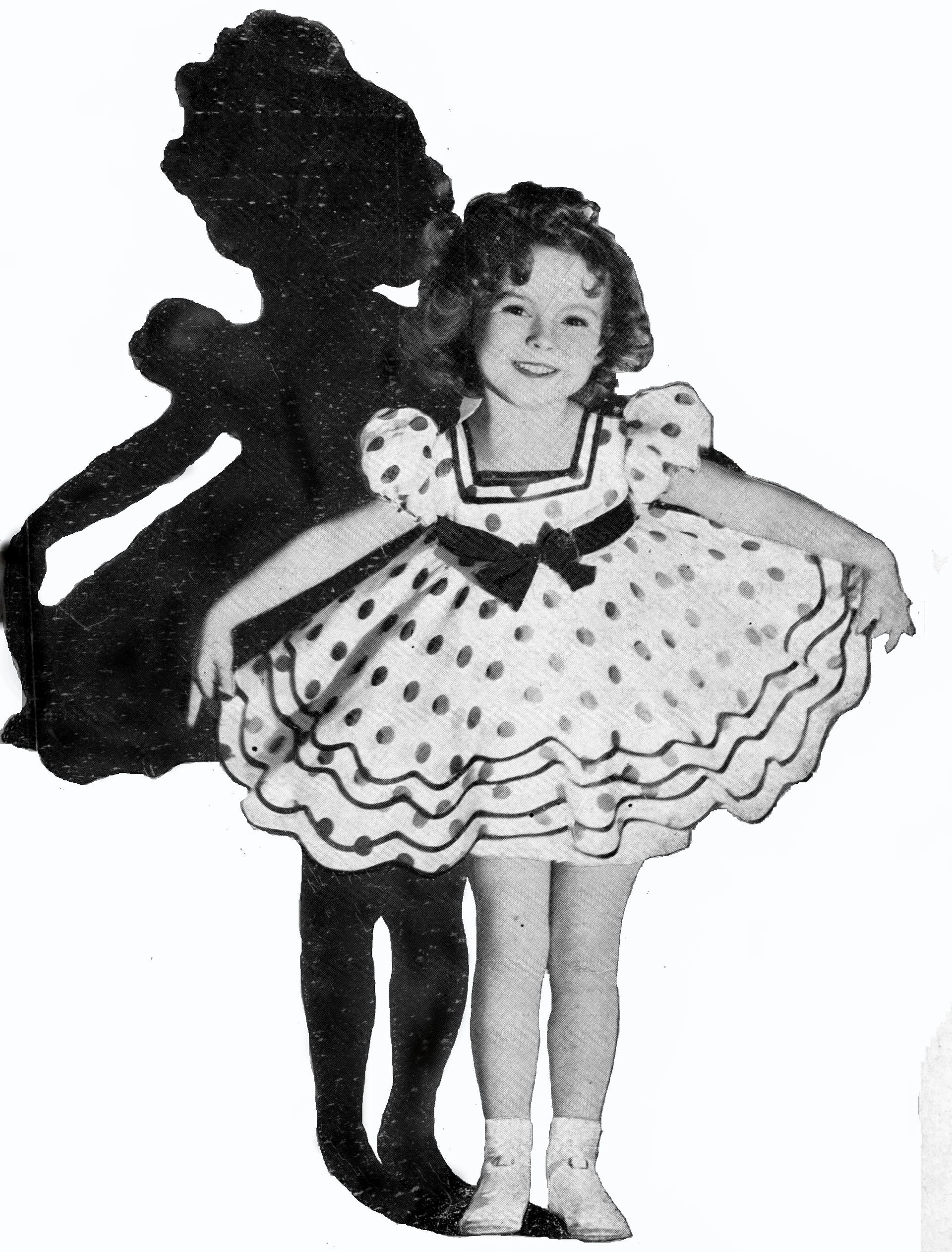
The breakthrough film that made Shirley Temple a star, “Stand Up and Cheer!”, premiered at Radio City Music Hall on April 19, 1934. Before this, Shirley had only appeared in small roles, but the film propelled her into stardom.
Image via Wikimedia Commons, public domain
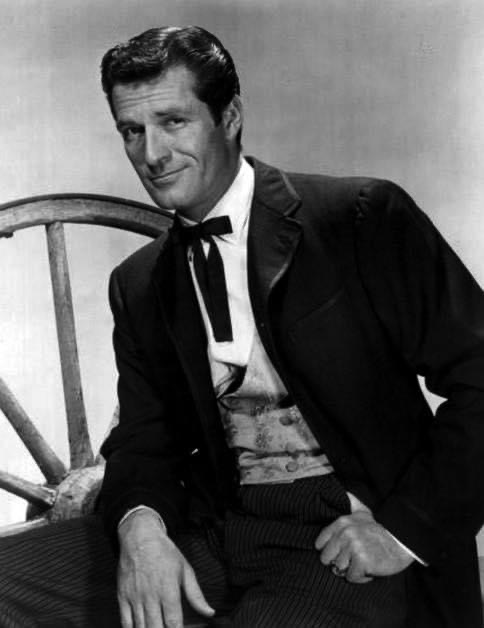
American actor Hugh O’Brian was born on April 19, 1925 in Rochester, New York
Image: Hugh O’Brian as Wyatt Earp in 1959 by ABC Television via Wikimedia Commons, public domain.
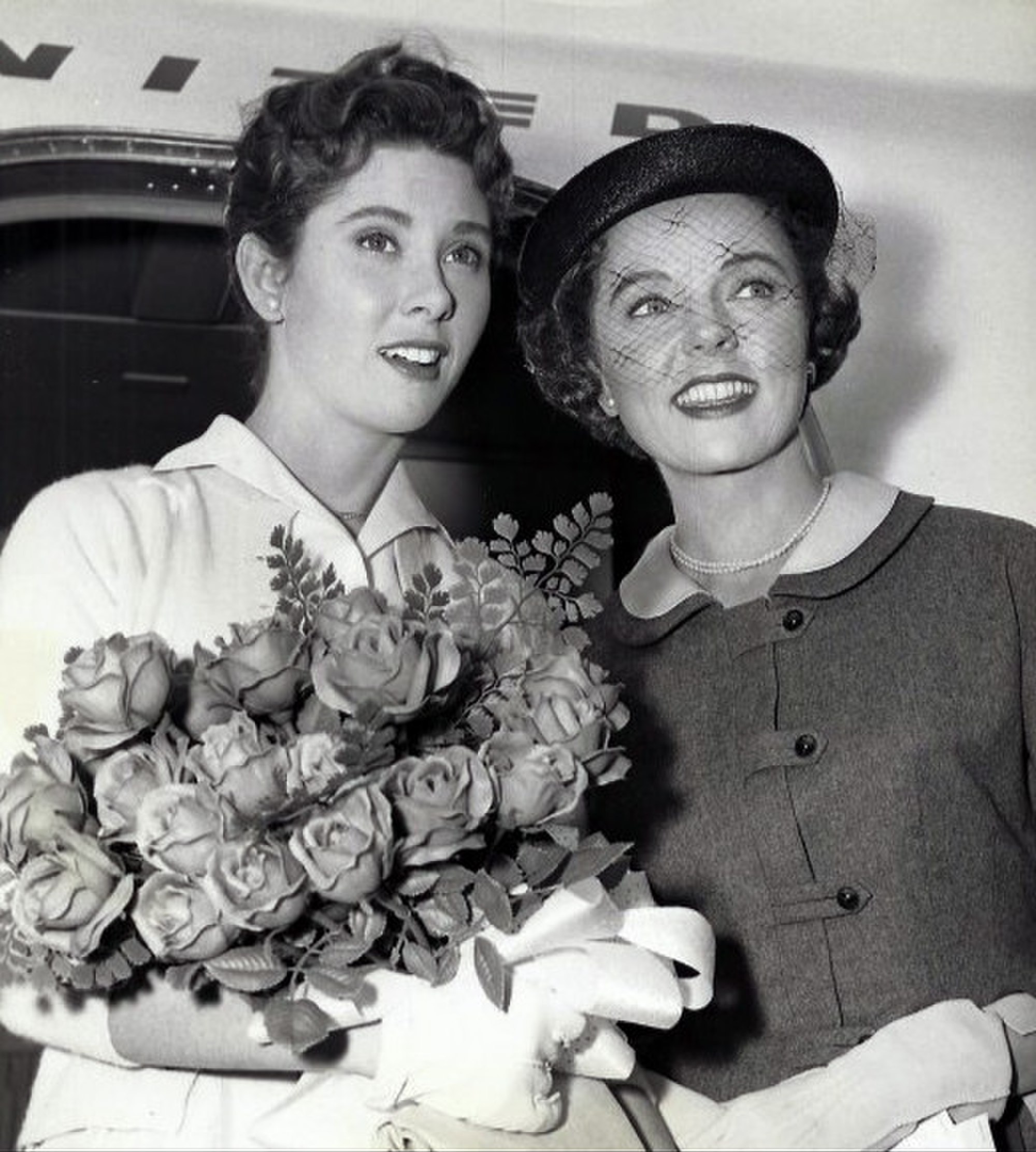
Elinor Donahue, who played the role of Betty Anderson, on the TV program Father Knows Best, was born on April 19, 1937 in Tacoma, Washington.
Here she is with Jane Wyatt who played her mother, Margaret Anderson in 1959. Image via Wikimedia Commons, public domain
