The Captain’s Final Port
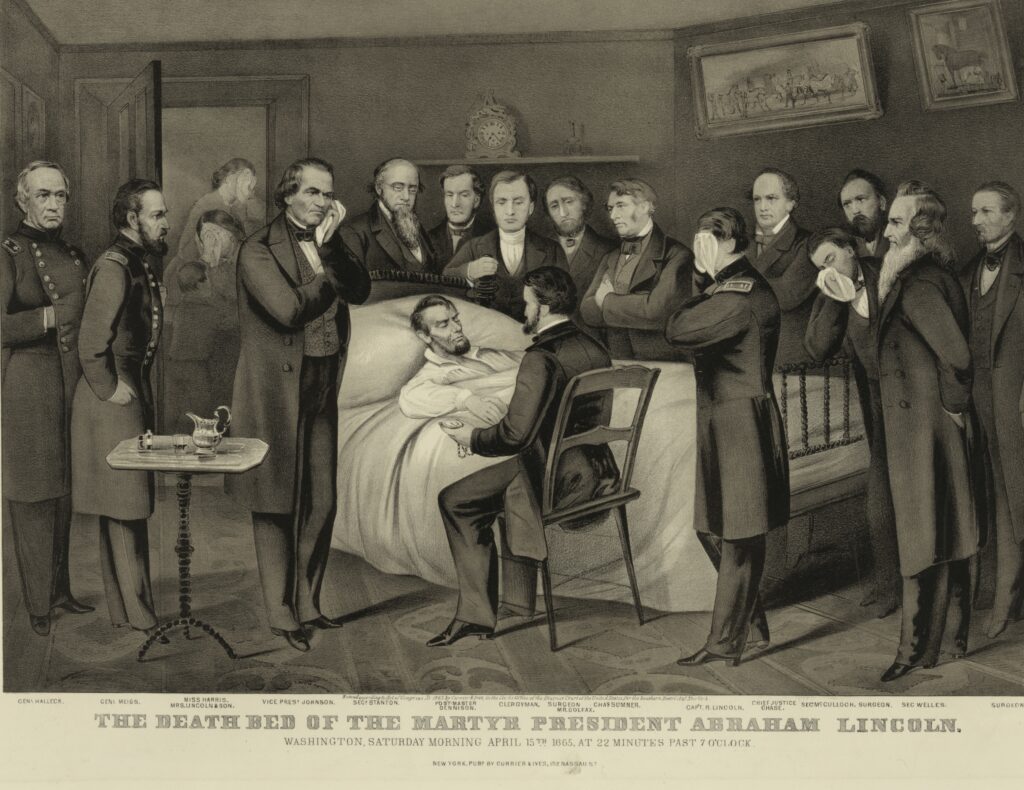
“O Captain! My Captain!” — Walt Whitman’s haunting 1865 elegy wasn’t just a poem; it became the heartbeat of a grieving nation. While Whitman didn’t know Lincoln personally, he saw him often in D.C. and viewed him as the “Captain” who steered the American ship through the storm of the Civil War.
Abraham Lincoln took his final breath at 7:22 AM on April 15, 1865, in a boarding house bedroom that was so small the 6’4″ President had to be laid diagonally across the bed.
A Quiet Succession at the Kirkwood
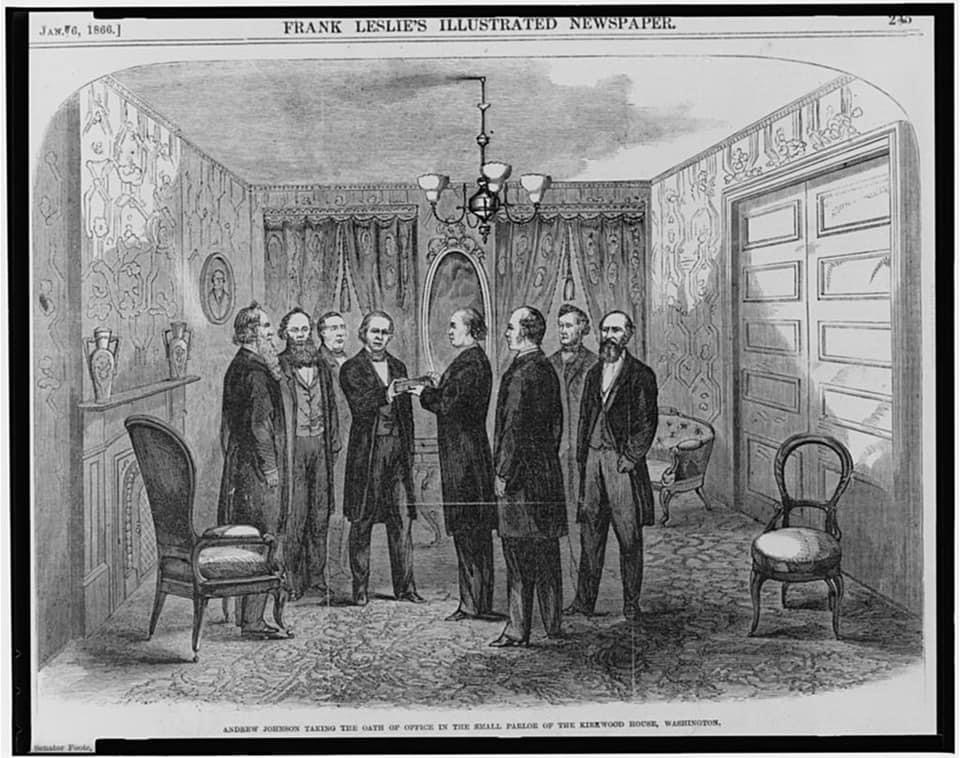
While the city was in a panic, Vice President Andrew Johnson was huddled in his suite at the Kirkwood House hotel. On the morning of April 15, 1865, he took the oath of office in a small, somber ceremony, officially becoming the 17th President in the shadow of tragedy.
Image via Wikimedia Commons, public domain
The Renaissance Man of the Revolution
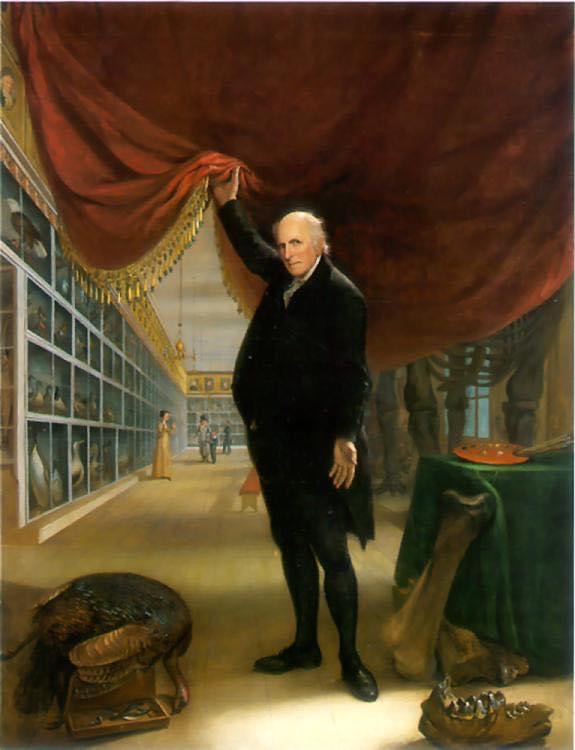
Born April 15, 1741, Charles Willson Peale was far more than a painter. He was a soldier who carried his paints into battle, a naturalist who founded one of the first museums in the U.S., and the man who famously exhumed a Mastodon skeleton. His 1822 self-portrait, The Artist in His Museum, captures a lifetime of American curiosity.
Image via Wikimedia Commons, public domain
Radio’s Youngest Star: Jane Case
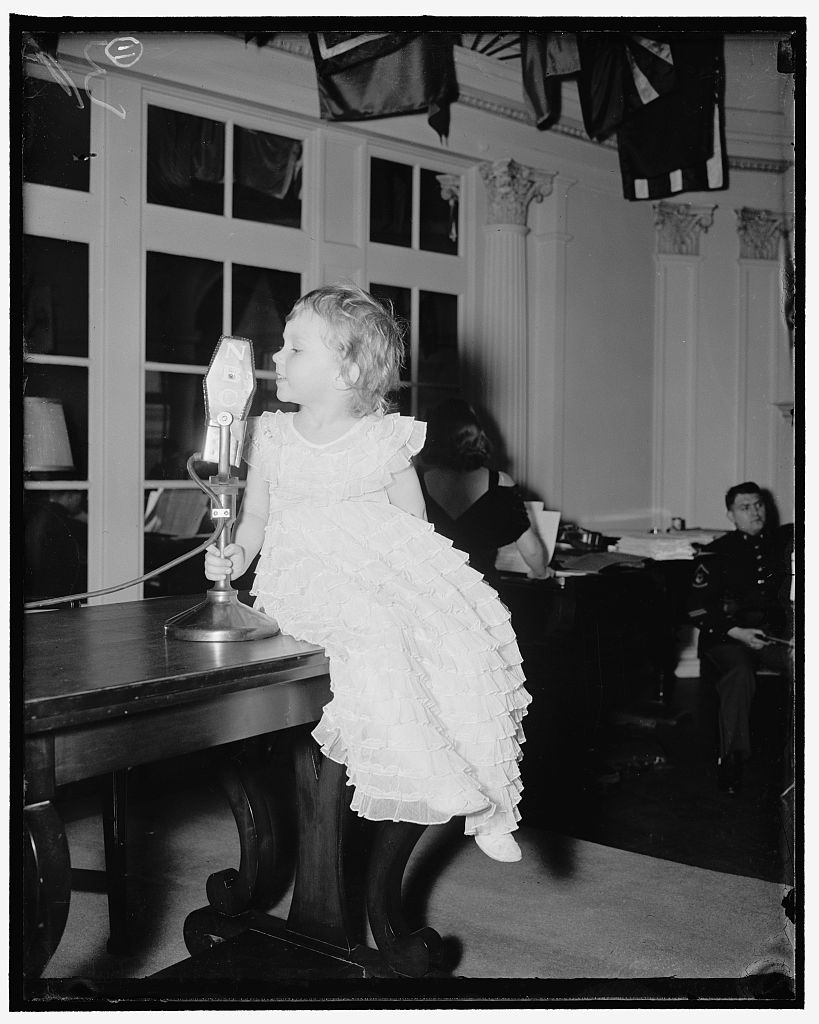
In an era before “influencers,” 1930s Washington was captivated by the Congressional Children’s Broadcast. On April 15, 1938, little Jane Case (daughter of Rep. Francis Case) prepared to take the mic on the NBC Red Network, proving that even in the Great Depression, the voices of the next generation provided a much-needed spotlight of hope.
via LOC no known restrictions
The Rhythms of the Rural Heartland
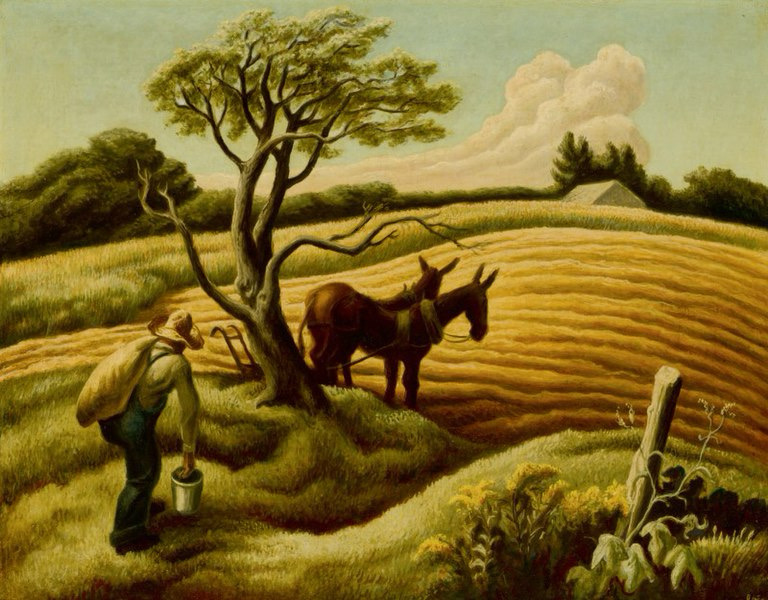
Artist Thomas Hart Benton (born April 15, 1889) didn’t just paint landscapes; he painted the “fluid” energy of American life. His 1939 work Noon captures the raw, muscular beauty of the Midwest. Benton was so influential that he actually taught a young Jackson Pollock how to paint.
Image via Wikimedia Commons, public domain
The Birth of the Golden Gate City
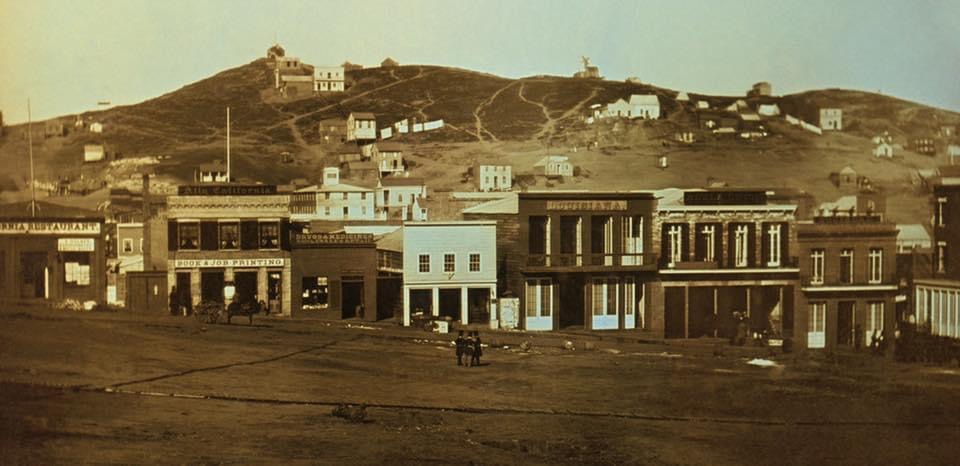
On April 15, 1850, the rugged, gold-rush town of San Francisco was officially incorporated. In just a few years, it had transformed from a sleepy hamlet of 200 people into a booming, lawless, and legendary metropolis that would define the American West.
Image: Portsmouth Square, San Francisco in 1851 via Wikimedia Commons, public domain
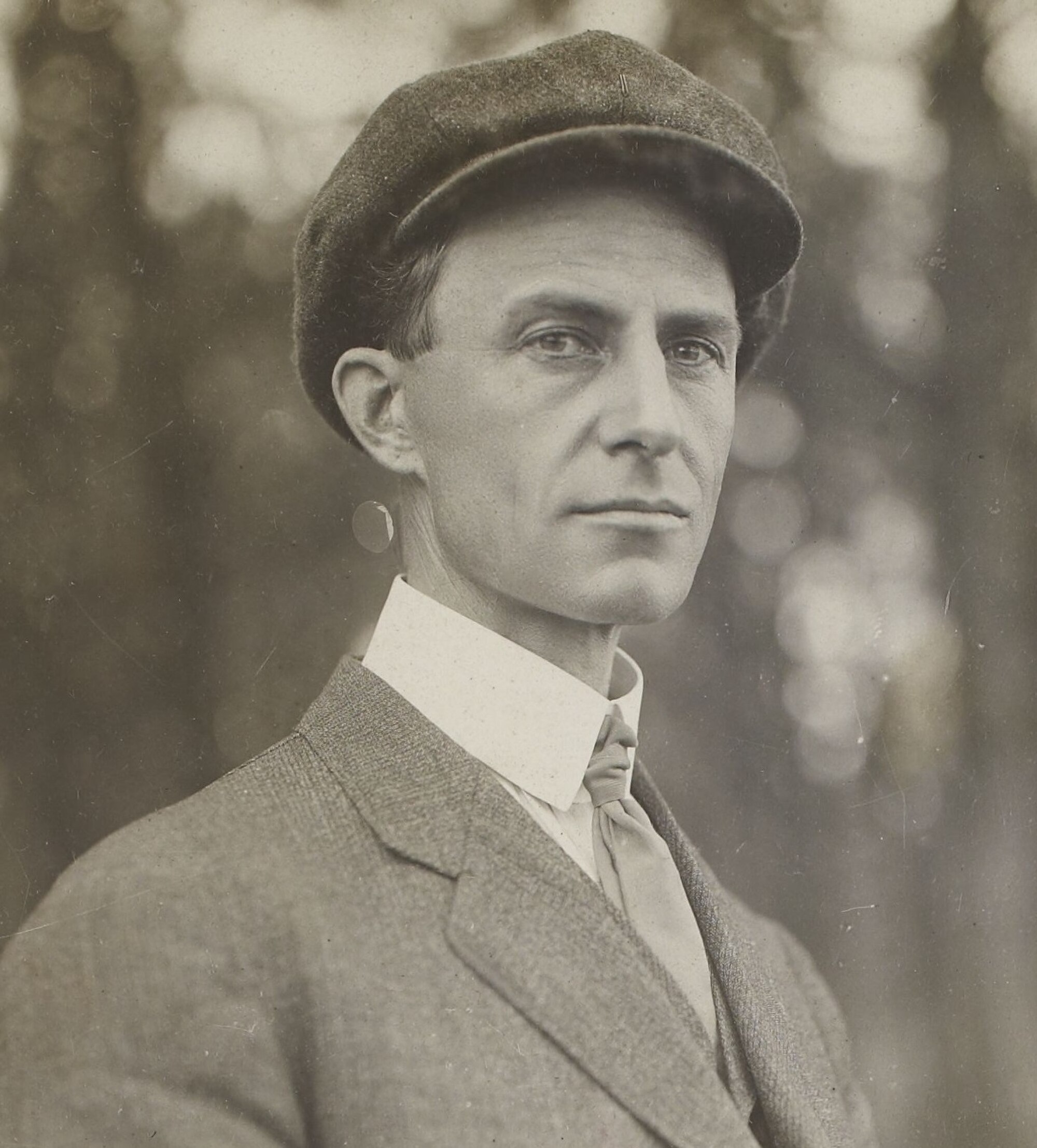
Wilbur Wright Takes the “Eternal City”
Aviation met ancient history on April 15, 1909, when Wilbur Wright took to the skies over Centocelle Field near Rome. He didn’t just fly; he took the first-ever motion picture from a plane and so impressed the Italian military that they immediately began building their own “Air Fleet.”
Image via Wikimedia Commons, public domain
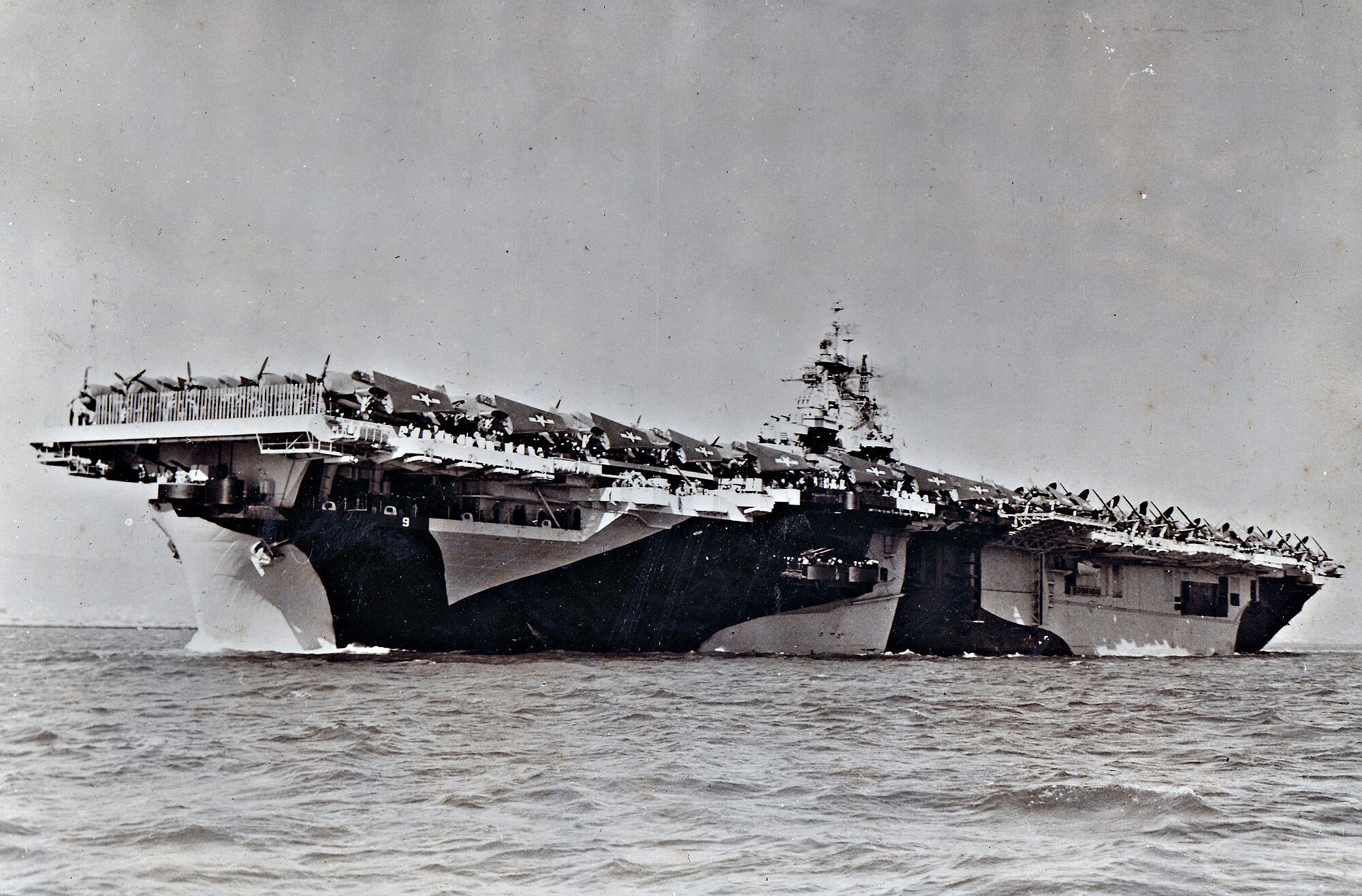
The “Old Lady” Goes to War
The USS Essex (CV-9) began its journey to the Pacific on April 15, 1944. Known for her incredible resilience, she survived kamikaze strikes and the terrifying “Typhoon Cobra.” By the end of WWII, the Essex had become one of the most decorated ships in U.S. Navy history.
Image via Wikimedia Commons, public domain
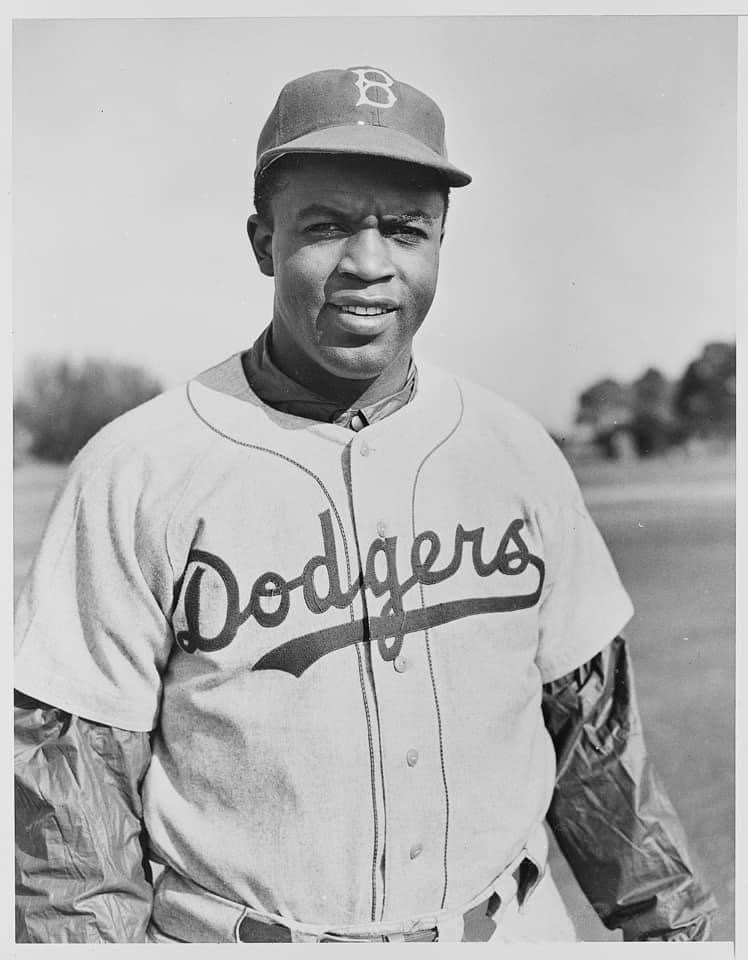
42: The Man Who Changed the Game
On April 15, 1947, Jackie Robinson stepped onto Ebbets Field and did what many thought impossible: he broke the color barrier in Major League Baseball. He didn’t just play for the Dodgers that day; he shouldered the weight of a burgeoning civil rights movement, maintaining his composure in the face of immense pressure. His presence on the diamond forced the nation to confront its own contradictions, transforming the baseball field into a powerful stage for social change. By breaking the long-standing color barrier, Robinson proved that excellence knows no racial boundary, ultimately paving the way for a more integrated and equitable American society.
Image of Jackie Robinson in 1950 via Wikimedia Commons, public domain
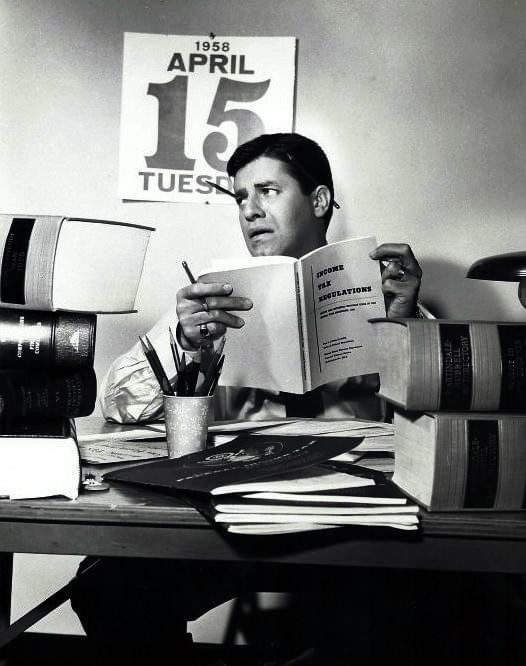
The King of Comedy’s Peak
By April 15, 1958, Jerry Lewis was a global phenomenon. Having recently split from Dean Martin, Lewis was proving he was a comedic force of nature on his own. This era saw him transition from “The Kid” into a master filmmaker and philanthropist.
via Wikimedia Commons, public domain
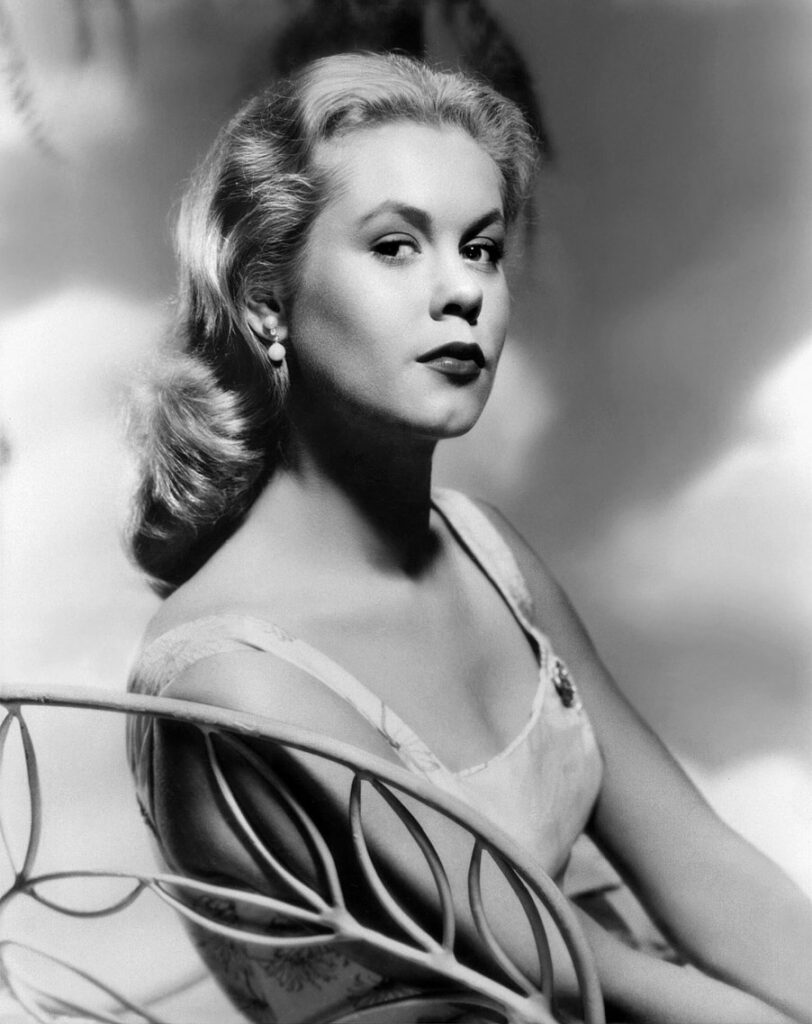
From “Bewitched” to Big Screen
Born April 15, 1933, Elizabeth Montgomery became a household name as Samantha Stephens, but her career began with grit. Long before she could twitch her nose and solve problems, she was holding her own in intense dramas like The Court-Martial of Billy Mitchell.
Image of Elizabeth in the early 1960s via Alamy
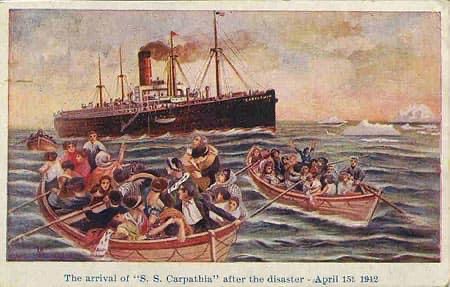
The Mercy Ship: RMS Carpathia
On the icy morning of April 15, 1912, the RMS Carpathia became a beacon of hope. Arriving at the Titanic’s final coordinates, she pulled 705 shivering survivors from lifeboats. Tragically, the “Hero Ship” would meet her own watery end six years later during WWI.
Image via Wikimedia Commons, public domain
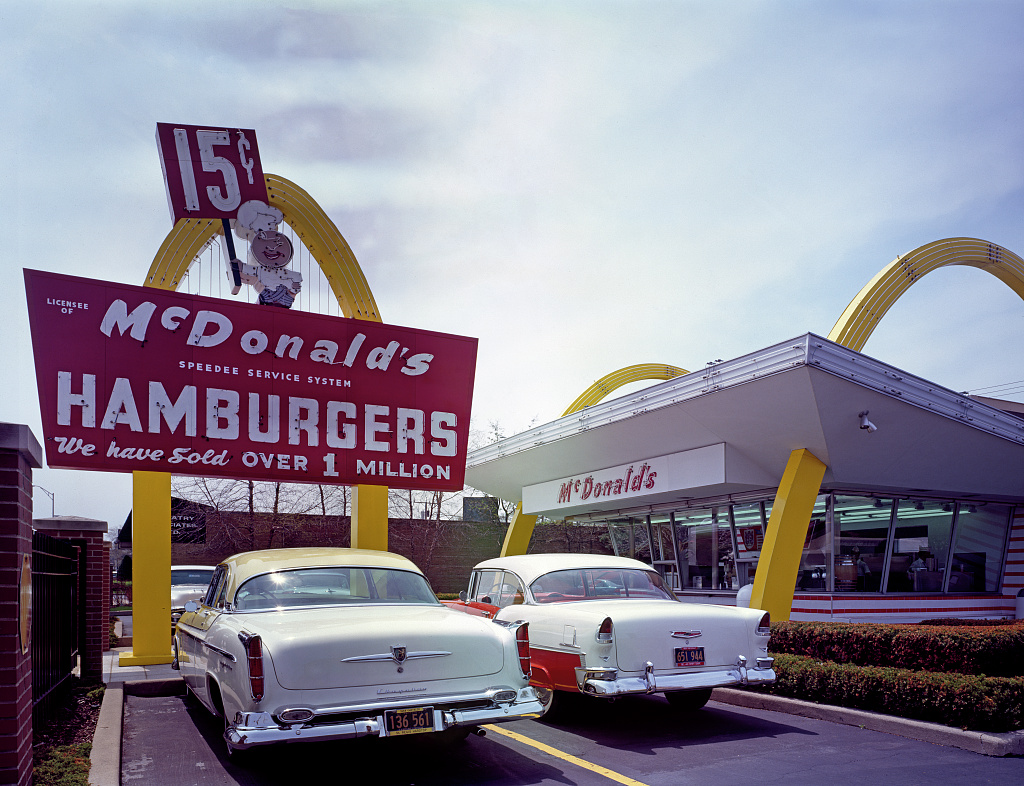
The 15-Cent Revolution
On April 15, 1955, Ray Kroc opened his first McDonald’s franchise in Des Plaines, Illinois. With its neon “Speedee” sign and burgers that cost just 15 cents, Kroc didn’t just open a restaurant—he invented the modern fast-food industry and changed the way the world eats.
Image by Carol Highsmith via LOC, no known restrictions
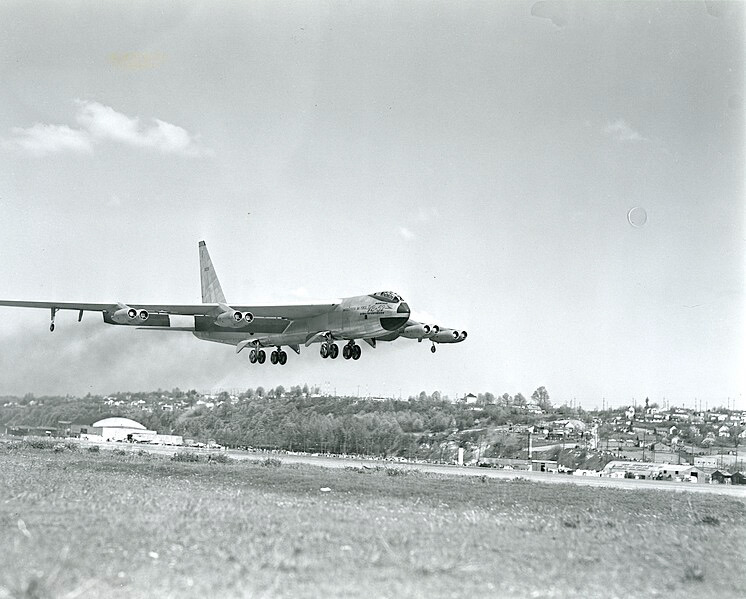
The Stratofortress Takes Wing
The “Big Ugly Fat Fellow” (BUFF) was born on April 15, 1952. The B-52 Stratofortress made its first flight that day, beginning a career so long and successful that the Air Force expects it to fly for nearly 100 years—meaning the grandchildren of the original pilots could one day fly the same planes.
Image from AF GlobalStrike CCA 2.0 Generic via Wikimedia Commons.
The Mechanical Engine of American Stories
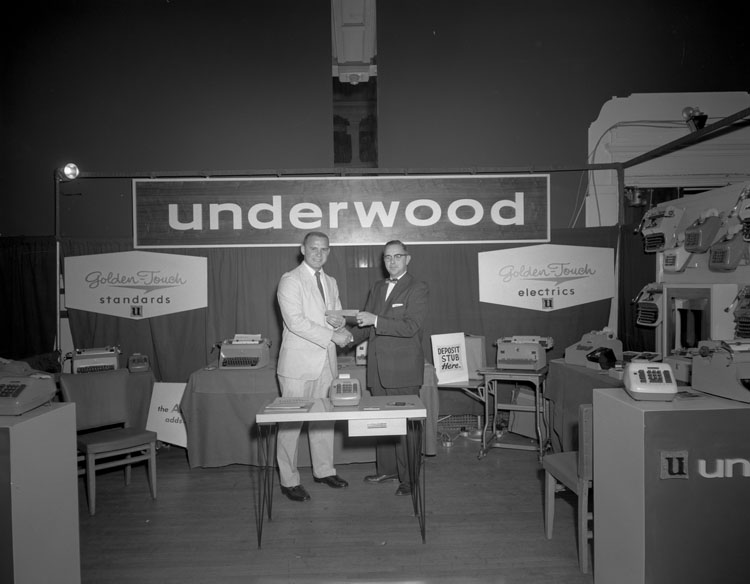
Captured in this mid-century photograph from April 15, 1959, the Underwood Typewriter Company stands at its industrial peak, showcasing the rugged, iron-clad “computers” of the pre-digital age. These machines were the heavy, mechanical heartbeats of the 20th century, serving as the essential tools for everyone from investigative journalists to novelists like Ernest Hemingway. More than just office equipment, the Underwood was a marvel of tactile engineering that transformed the “clack-clack” of its keys into the permanent record of American history, capturing the news, novels, and private letters of a generation before the silent era of the pixel took over.
Image from The Library of Virginia via Wikimedia Commons, no known restrictions
The Ageless Wonder: Dara Torres
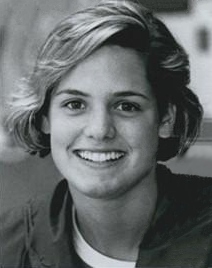
Born April 15, 1967, Dara Torres defied the laws of physics and aging. She competed in five Olympic Games across three decades, eventually becoming the oldest swimmer to ever win an Olympic medal (at age 41), proving that “greatness” has no expiration date.
Image via Wikimedia Commons, no known restrictions
When Movies Found Their Voice
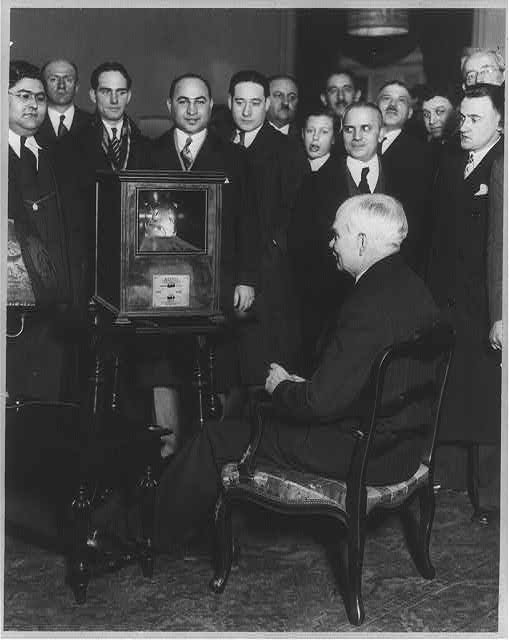
On April 15, 1923, the silent era began to fade. Lee de Forest premiered his “Phonofilm” at the Rivoli Theatre, showing short films with sound recorded directly onto the film strip. Though Hollywood was slow to adapt, this was the exact moment the “Talkies” were born.
Image: Lee de Forest seated in front of small crowd, watching and listening to talking movie of himself; Newark, N.J. c. 1920s via Wikimedia Commons, no known restrictions
An Early Architect of the American Spirit
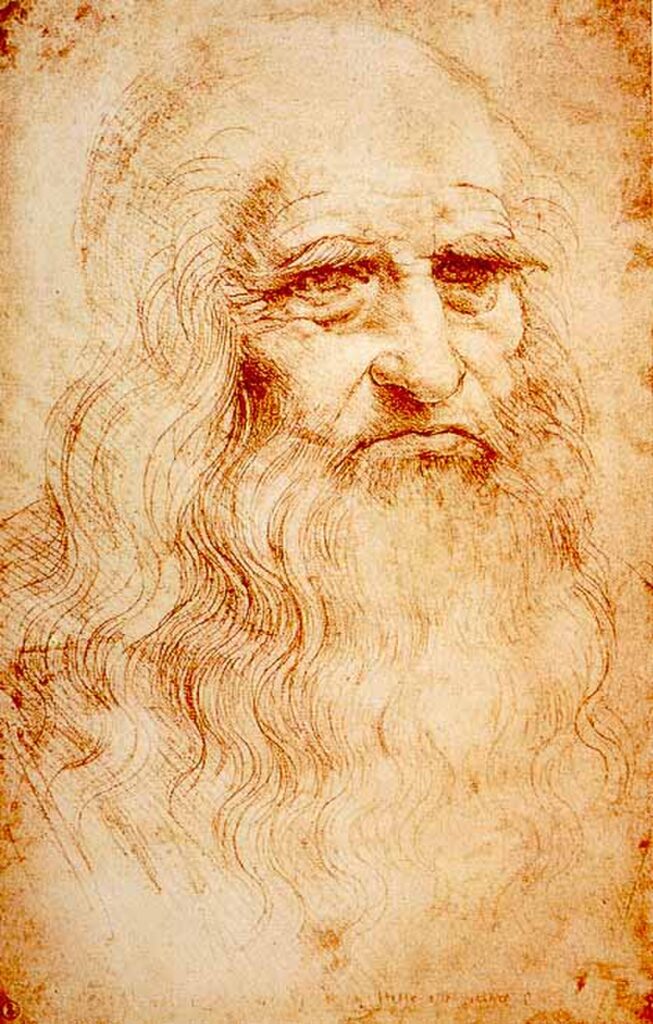
Although Leonardo da Vinci was born in the Tuscan hills on April 15, 1452, centuries before the United States was a flicker of an idea, his DNA is woven into the very fabric of American innovation. He was the original “Renaissance Man,” a title later inherited by Thomas Jefferson, who kept Da Vinci’s scientific treatises in his private library and applied Leonardo’s principles of mathematical beauty to the architecture of Monticello. Beyond art, Leonardo’s intellectual reach may have touched the physical discovery of the New World itself through a controversial document known as “Leonardo’s World Map.” Discovered loosely inserted among his papers in the Royal Collection at Windsor, this unique map was first published in 1865 by Richard Henry Major, who argued it was the oldest known map to use the name “America”. While its direct authorship is still debated, the map’s innovative “octant projection” and use of the name America—based on the travels of Amerigo Vespucci—cemented the idea of a distinct New Continent in the European mind. This legacy came full circle on April 15, 1909, when Wilbur Wright took to the Italian skies to demonstrate the first powered flight in Leonardo’s own backyard. In that moment, the sketches of wings found in Da Vinci’s 15th-century notebooks finally transformed into American reality, proving that the dream of the New World was always part of his grand design.