April 14, 1865: Tragedy at Ford’s Theatre
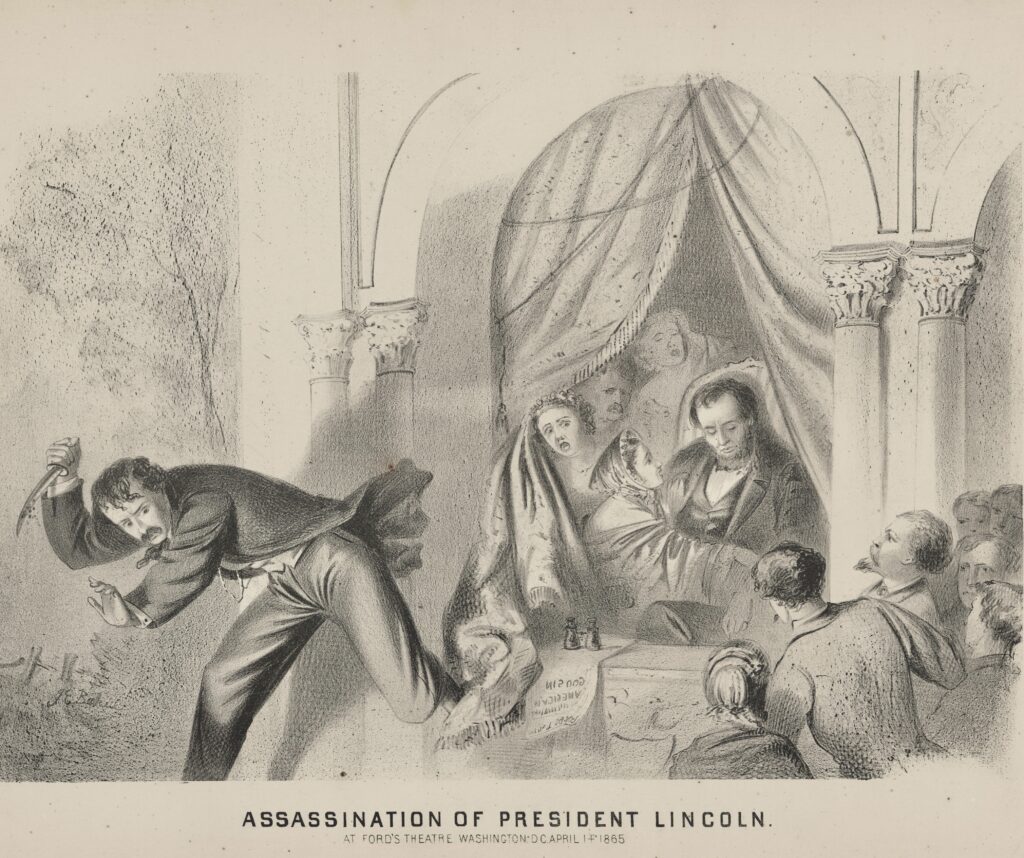
The comedy Our American Cousin was interrupted by a single shot timed perfectly to a roar of laughter. John Wilkes Booth, a famous actor who knew the building’s secrets, crept into the Presidential Box and shot Abraham Lincoln at point-blank range. When Major Henry Rathbone lunged to stop him, Booth slashed him to the bone with a dagger.
The assassin made a theatrical 12-foot leap to the stage, but his spur snagged on the American flag—an accidental “act of justice” that broke his leg upon landing. Limping across the stage, he brandished his bloody blade and shouted “Sic semper tyrannis!” before vanishing into the midnight shadows.
Did You Know?
The “Curse” of the Box: The night was also tragic for Lincoln’s guests; Major Rathbone never recovered from the trauma, eventually descending into insanity, while the rocking chair Lincoln sat in was a personal piece of furniture brought in specifically for him that afternoon.
The Missing Guard: Lincoln’s bodyguard, John Frederick Parker, had left his post to grab a drink at the Star Saloon next door—the exact same bar where Booth had just taken a shot of whiskey to steel his nerves.
The Spy Hole: Earlier that day, Booth had bored a small hole in the door of the presidential box so he could spy on the President’s position before entering.
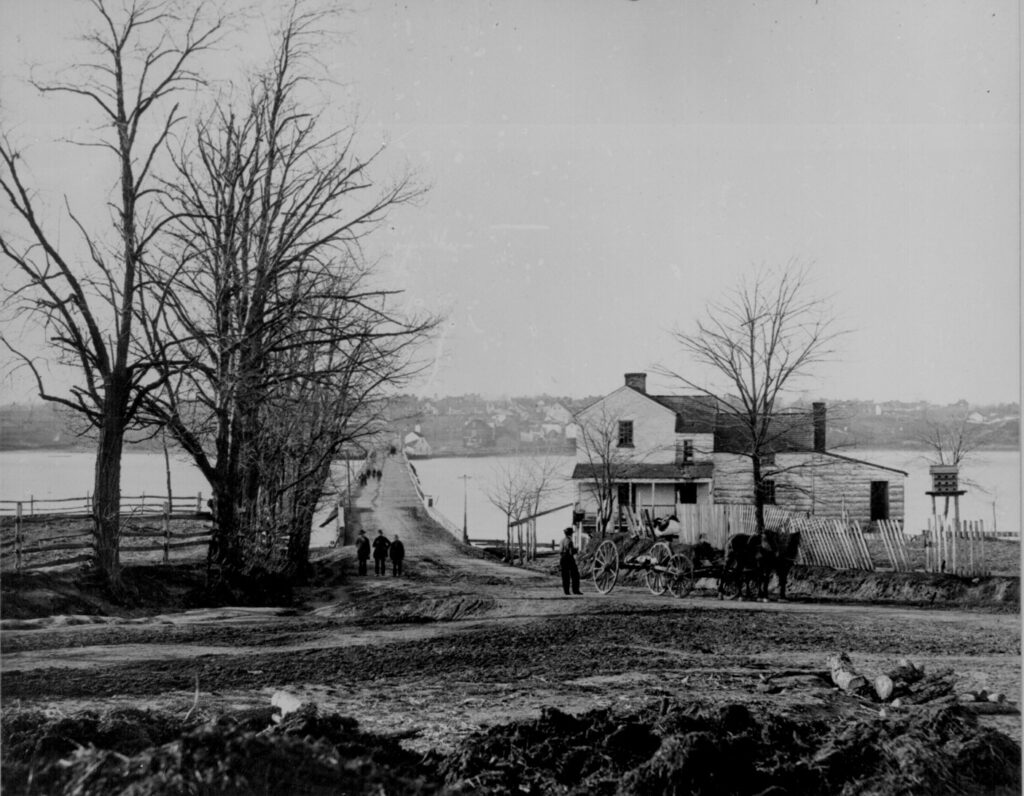
One Crossing, Many Eras: The Navy Yard Bridge from Lincoln’s Assassination to the 11th Street Bridge Park
Long before it became a footnote in the Lincoln assassination story, the Navy Yard Bridge served as Washington’s primary southern gateway—a simple wooden span carrying travelers over the Anacostia River and out toward the Maryland countryside. On the night of April 14, 1865, that familiar crossing suddenly became the most consequential choke point in America.
As the city reeled from the attack on President Lincoln, Sergeant Silas Cobb stood guard at the bridge, enforcing the 9:00 P.M. curfew that sealed Washington after dark. Just before 11:00 P.M., John Wilkes Booth arrived on horseback and talked his way across, with David Herold close behind. The last chance to stop them fell to John Fletcher, a stable foreman chasing Herold to reclaim a “stolen” rental horse. When Fletcher reached the bridge and learned the fugitives were only minutes ahead, Cobb gave him a stark choice: cross now and be locked out of the city until sunrise, or turn back. Unwilling to face the rural Maryland roads alone, Fletcher retreated—unknowingly clearing the escape route that launched a twelve‑day national manhunt.
But the Navy Yard Bridge’s story didn’t end with that midnight crossing. Over the next 150 years, the site evolved through four major transformations as Washington grew. The wooden span Booth crossed, in service since 1819, was replaced in 1874 by an “iron and masonry” bridge. As streetcars reshaped the city, that structure gave way in 1907 to a heavier steel‑truss design known as the Anacostia Bridge. The automobile age later prompted the construction of tandem four‑lane bridges in 1965 and 1969.
Its most dramatic reinvention came with the modern 11th Street Bridges in 2013. While the 1960s spans were dismantled, their concrete piers were left rising from the river. Those remnants have now been transformed into the 11th Street Bridge Park—an elevated green space that lets visitors walk the same route Booth took, standing on the very foundations that supported his escape.
Image: The Navy Yard Bridge, 1862.
Photographed by Albert J. Russell for the Mathew Brady studio, this wartime view captures the original wooden span—the exact bridge Booth crossed during his escape on April 14, 1865.
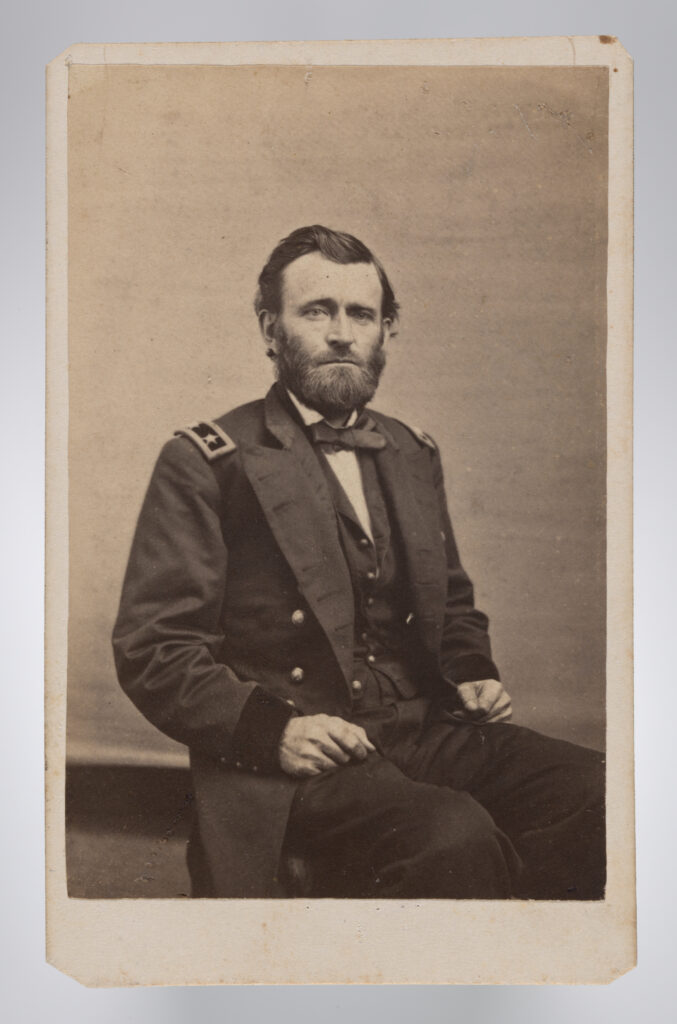
A Father’s Journey Interrupted: General Grant and the Night of April 14 (1865)
“While in Washington I was very busy for a time in preparing the necessary orders for the new state of affairs; communicating with my different commanders of separate departments, bodies of troops, etc. But by the 14th I was pretty well through with this work, so as to be able to visit my children, who were then in Burlington, New Jersey, attending school.
Mrs. Grant was with me in Washington at the time, and we were invited by President and Mrs. Lincoln to accompany them to the theatre on the evening of that day. I replied to the President′s verbal invitation to the effect, that if we were in the city we would take great pleasure in accompanying them; but that I was very anxious to get away and visit my children, and if I could get through my work during the day I should do so. I did get through and started by the evening train on the 14th, sending Mr. Lincoln word, of course, that I would not be at the theatre.
At that time the railroad to New York entered Philadelphia on Broad Street; passengers were conveyed in ambulances to the Delaware River, and then ferried to Camden, at which point they took the cars again. When I reached the ferry, on the east side of the City of Philadelphia, I found people awaiting my arrival there; and also dispatches informing me of the assassination of the President and Mr. Seward, and of the probable assassination of the Vice President, Mr. Johnson, and requesting my immediate return.”
Early reports from the night of April 14, 1865 were chaotic and often wrong. When Grant reached Philadelphia, the first telegrams he received claimed that both President Lincoln and Secretary of State William H. Seward had been assassinated. Seward, though brutally attacked, survived.
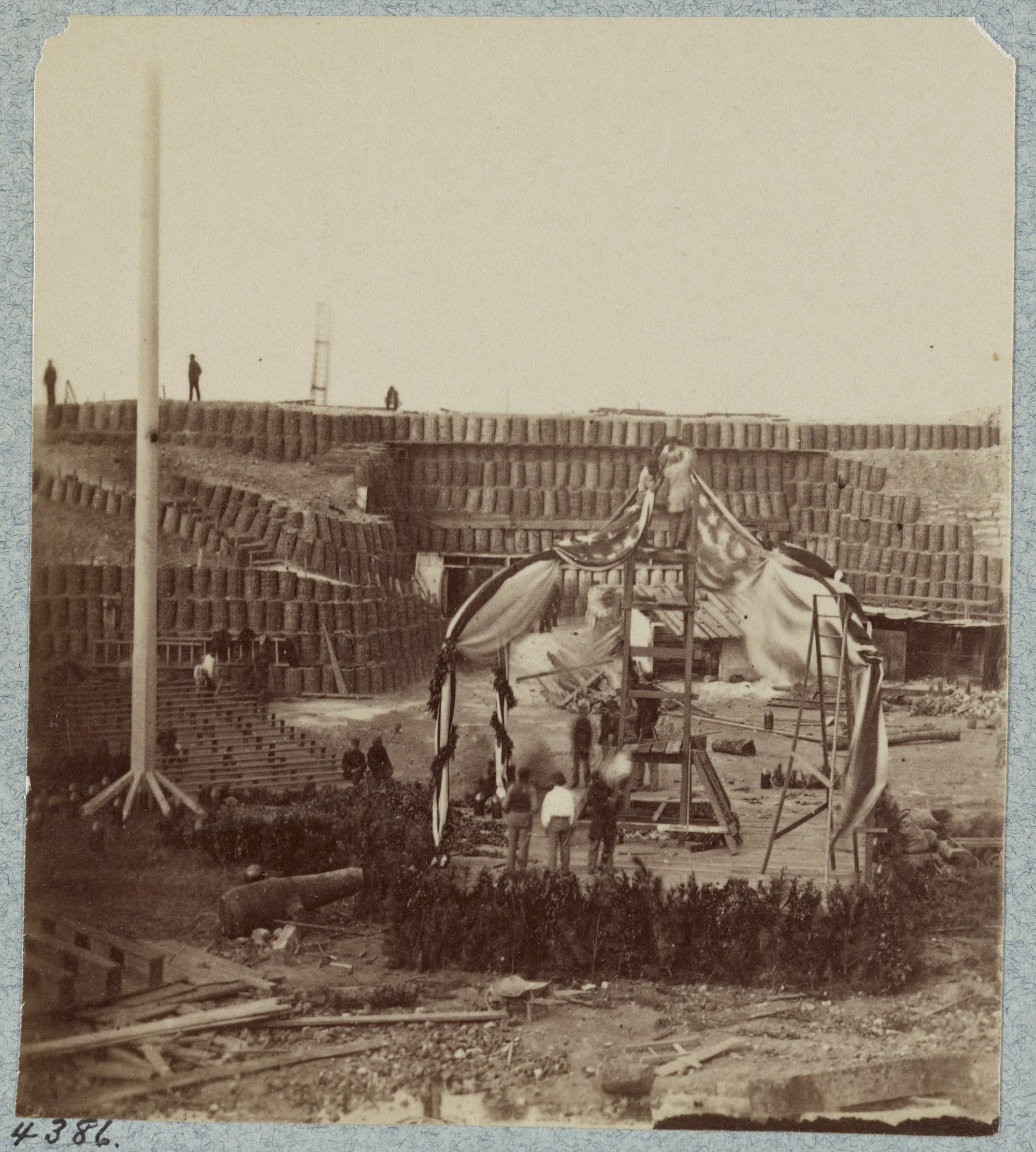
The Return of the Flag at Fort Sumter (1865)
On April 14, 1865, a triumphant ceremony took place at Fort Sumter to raise the “storm flag” that had been lowered exactly four years earlier. Major General Robert Anderson, who had surrendered the fort at the start of the war, returned to hoist the same flag he had personally kept in a safe-deposit box throughout the conflict. The celebration was a peak of national relief, though it turned bittersweet just hours later when President Abraham Lincoln was assassinated that same night at Ford’s Theatre.
Image from LOC via Wikimedia Commons, public domain
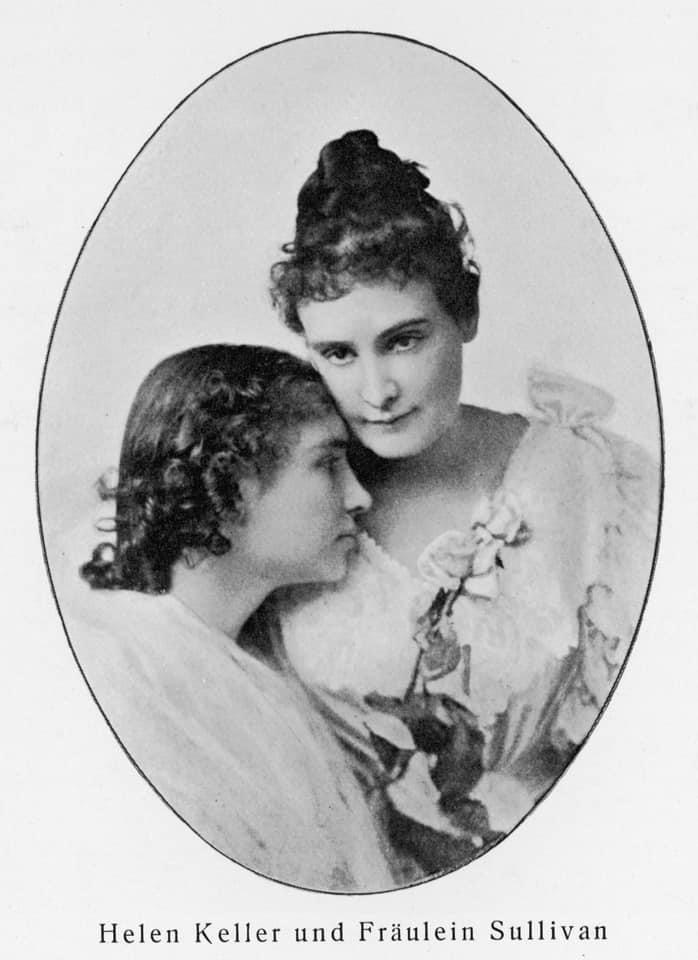
Anne Sullivan: The “Miracle Worker” (1866)
Born on April 14, 1866, in Feeding Hills, Massachusetts, Anne Sullivan’s path to Helen Keller was paved by her own hardship. Partially blind herself due to a childhood infection, Sullivan graduated as valedictorian from the Perkins School for the Blind. When she met a seven-year-old Helen Keller at age 21, she began a legendary partnership that lasted nearly 50 years. Interestingly, while she is famous for teaching Helen “water,” the very first word she attempted to sign into Helen’s hand was “doll.”
Image via Alamy
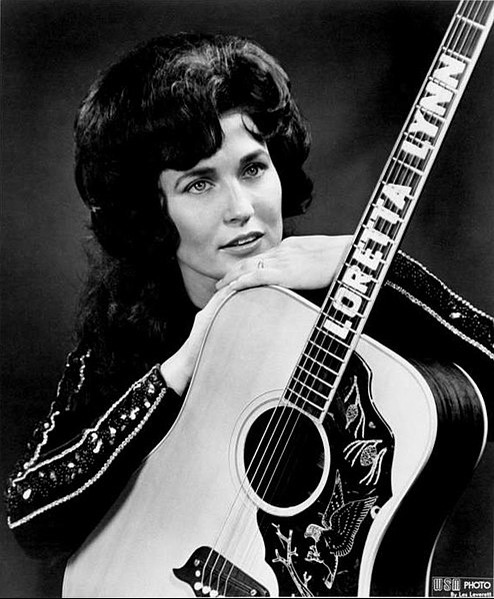
Loretta Lynn: The Coal Miner’s Daughter (1932)
Born April 14, 1932, in the mountains of Butcher Hollow, Kentucky, Loretta Lynn became the voice of rural America. Over a prolific career, she released 60 studio albums, including iconic collaborations with Conway Twitty. Her journey was guided by her mentor and close friend Patsy Cline, who famously gave the struggling young singer her own stage clothes. Lynn is pictured here in 1965, just five years before she immortalized her upbringing in the hit “Coal Miner’s Daughter.”
Image via Wikimedia Commons, no known copyright, public domain in the US.
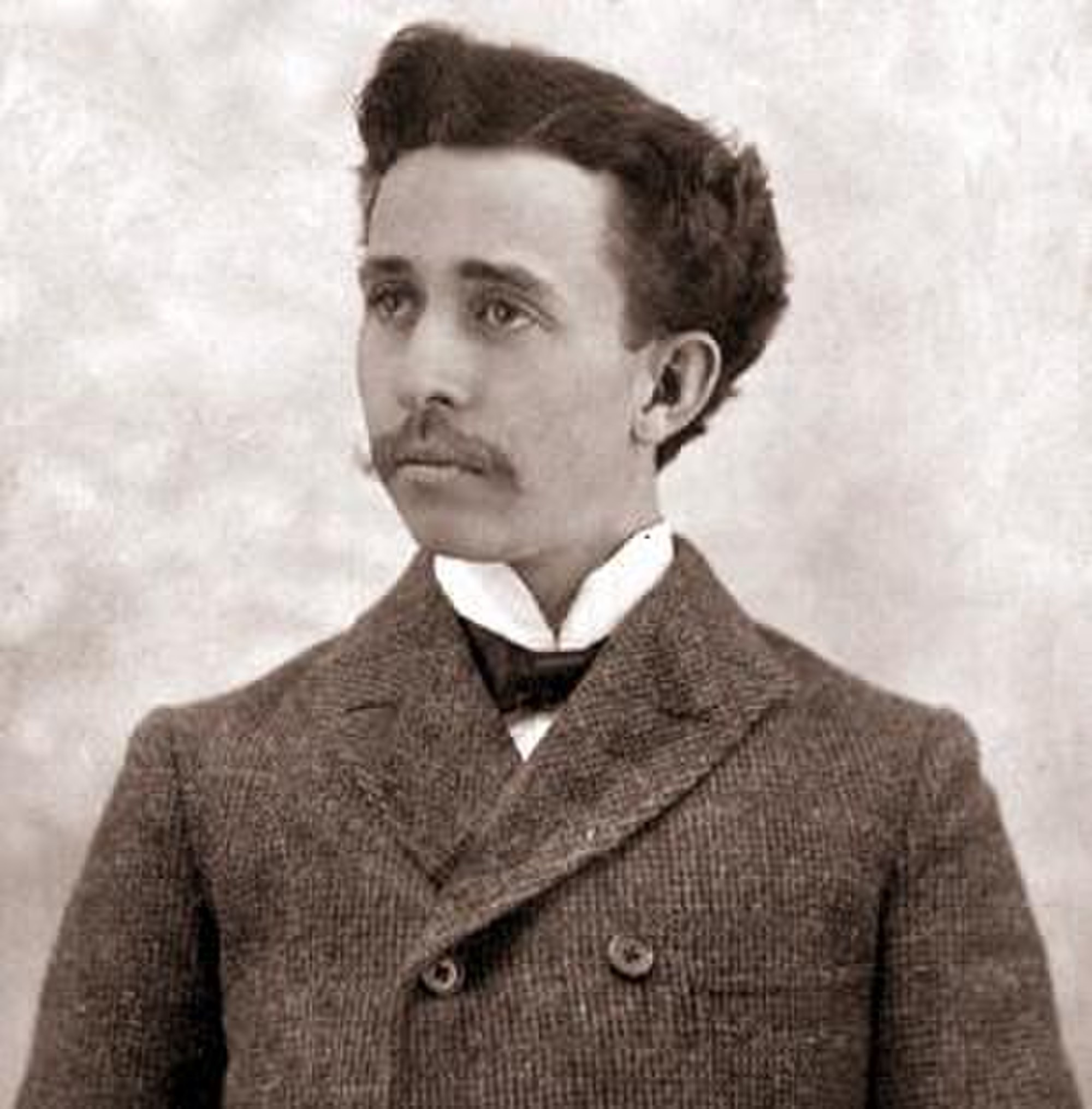
The Golden Rule: James Cash Penney (1902)
On April 14, 1902, James Cash Penney—whose middle name “Cash” was a perfect fit for his business—opened the “Golden Rule” store in the mining town of Kemmerer, Wyoming. Penney revolutionized retail by refusing to haggle; he charged the same set price for every customer regardless of their status. This fair-play philosophy allowed his small shop to expand rapidly, eventually rebranding in 1913 as the very first J.C. Penney store.
Photo: James Cash Penney circa 1902 [Public domain], via Wikimedia Commons
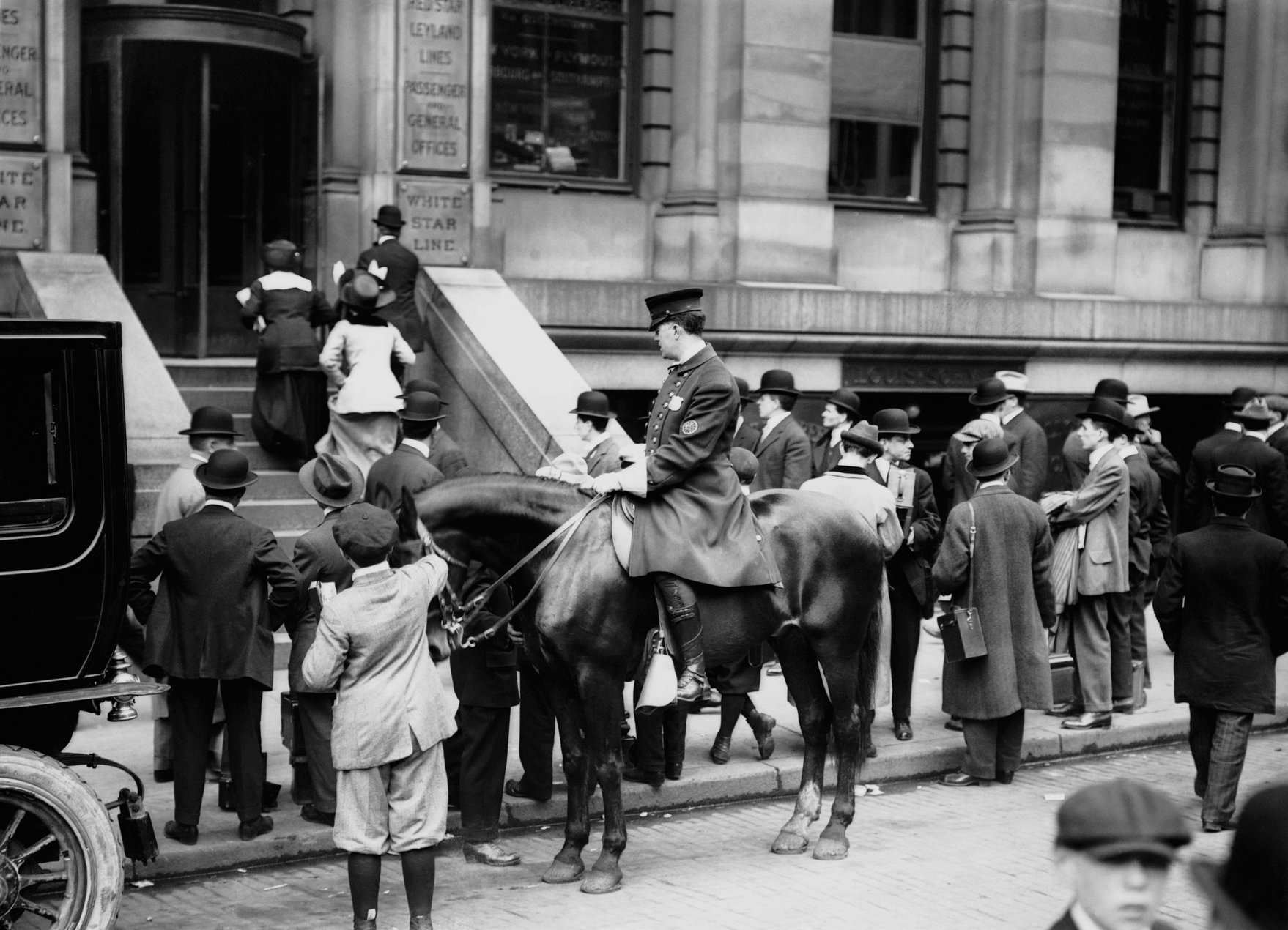
The Titanic’s Fateful Night (1912)
On the night of April 14, 1912, at 11:40 PM, the RMS Titanic struck an iceberg in the North Atlantic. While the ship would not fully submerge until the early hours of the 15th, the collision marked the beginning of a tragedy that claimed over 1,500 lives. This image shows a mounted police officer patrolling outside the White Star Line offices in New York, where frantic crowds gathered to await news as conflicting wireless reports trickled in.
Image via Alamy
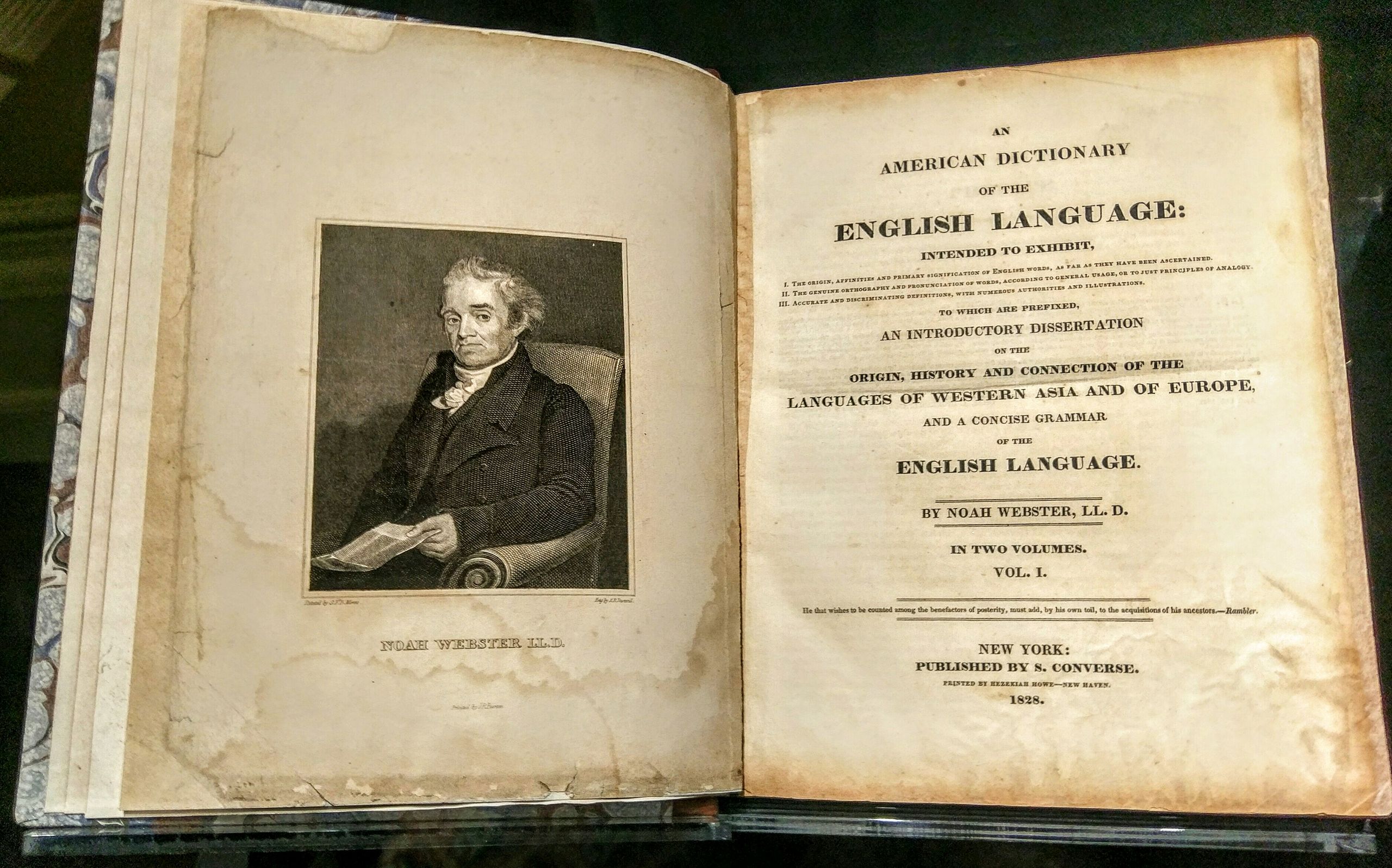
Noah Webster’s Linguistic Independence (1828)
On April 14, 1828, Noah Webster published his American Dictionary of the English Language, a project 26 years in the making. It was more than a book; it was a declaration of cultural independence. Of the 70,000 entries, Webster included 12,000 “American” words like skunk and hickory and famously simplified British spellings—changing “colour” to “color”—to help create a distinct American identity.
Image: Title page of Noah Webster’s 1828 edition of the American Dictionary of the English Language from Cullen328 via Wikimedia Commons, CC BY-SA 3.0
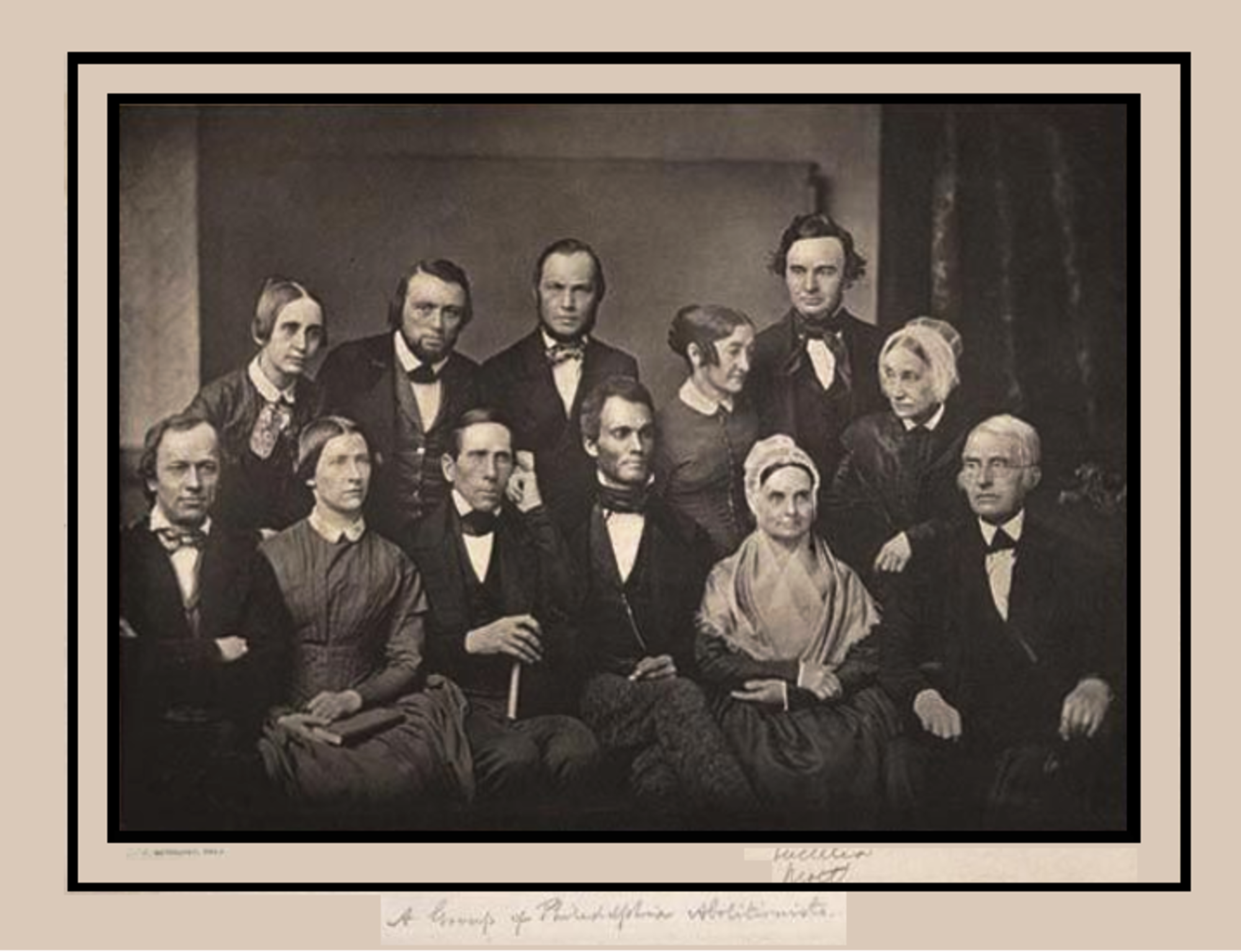
The Birth of American Abolitionism (1775)
While the 1851 photograph features Lucretia Mott, the movement she championed was born on April 14, 1775, in Philadelphia. Originally founded as the “Society for the Relief of Free Negroes Unlawfully Held in Bondage,” it was the first organized abolition society in America. Ten years after its founding, Benjamin Franklin joined and eventually served as its president, helping the group evolve into the influential Pennsylvania Abolition Society.
Image via Wikimedia Commons, CC BY SA 4.0
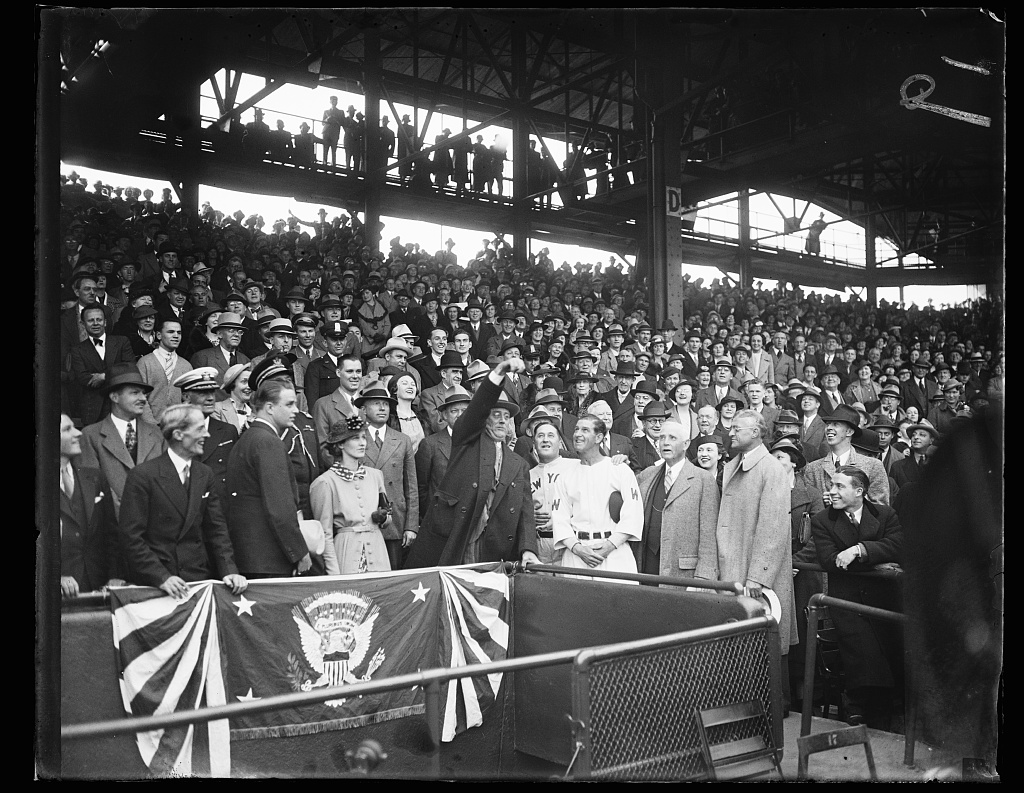
Presidential Tradition: FDR and the First Pitch (1936)
On April 14, 1936, Franklin D. Roosevelt continued a beloved baseball tradition by tossing out the first pitch of the season. Unlike the modern ceremony where guests stand on the mound, Roosevelt—and every president before him—threw the ball directly from the presidential box in the stands. This tradition was started exactly 26 years earlier on April 14, 1910, by William Howard Taft, who on a whim threw the ball from his seat to the pitcher’s mound. Taft’s spontaneous gesture forever linked the American Presidency with the National Pastime. It wasn’t until Ronald Reagan in 1988 that a sitting president stepped onto the field to “toe the rubber”, a move later perfected by Bill Clinton, who in 1993 became the first president to successfully pitch from the mound to the catcher.
Image via LOC, no known restrictions
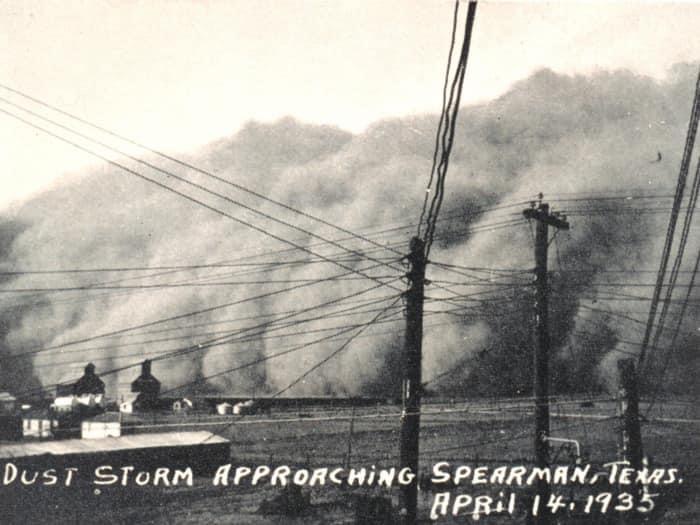
Black Sunday: The Spearman Dust Storm (1935)
This 1935 view of a dust storm approaching Spearman, Texas, captures the terror of “Black Sunday.” This specific storm on April 14 was a massive “wall of dirt” that turned afternoon into midnight and displaced 300 million tons of topsoil. The event was so severe that a reporter witnessing the aftermath coined the term “Dust Bowl” the very next day, giving a permanent name to a decade of ecological disaster.
via Wikimedia Commons, public domain
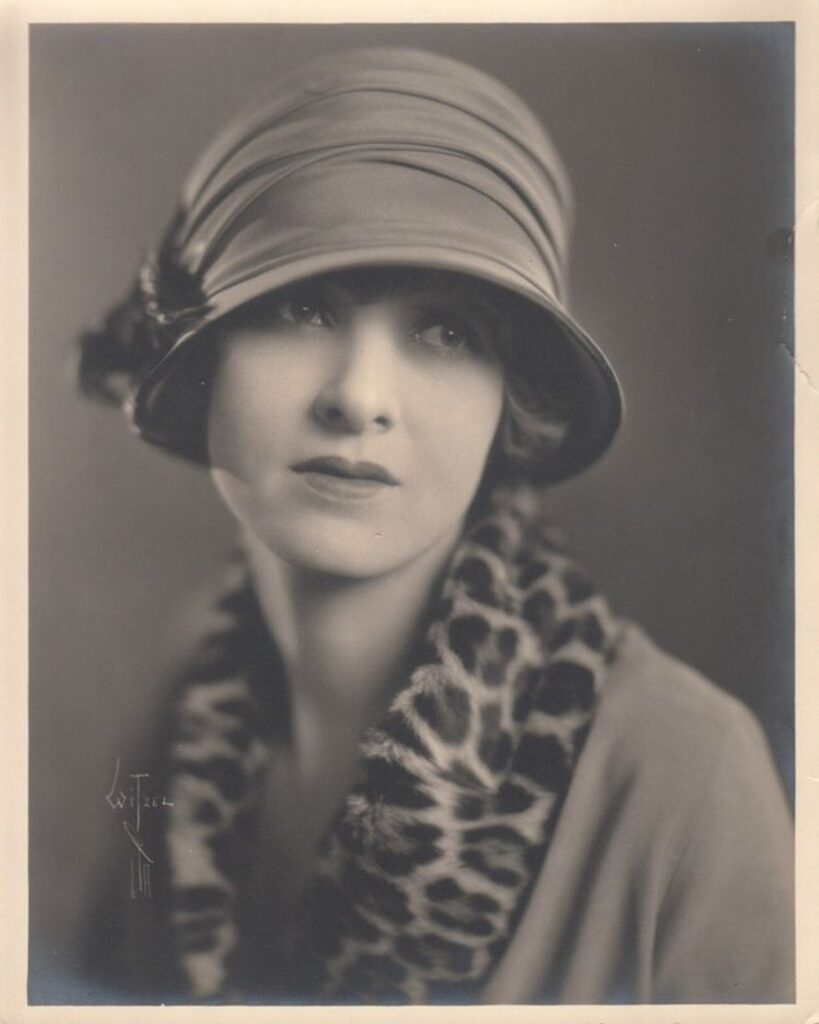
Beyond the Silent Screen: The Lasting Artistry of Claire Windsor
Born Clara Viola Cronk on April 14, 1892, in the rural settlement of Marvin, Kansas, she grew up known simply as ‘Ola,’ a nickname drawn from her middle name long before Hollywood renamed her. Years before the studios discovered her, she was a rising Seattle performer—studying voice, refining her craft on stage, and developing the discipline that would define her silent-era presence. Frances Marion later reshaped her destiny with a single, pointed observation: ‘Clara Cronk’ would never do for a movie star. Under her new name, Claire Windsor moved through the early studios with precision, even intersecting the William Desmond Taylor case the night before his death. Her son briefly joined the screen too, acting alongside a duck and a monkey in 1921. And when the silent era dimmed, she built a second creative life in ceramics and painting, proving that the girl born in Marvin—known first as Ola—carried more than one kind of artistry.
Image via Wikimedia Commons, public domain
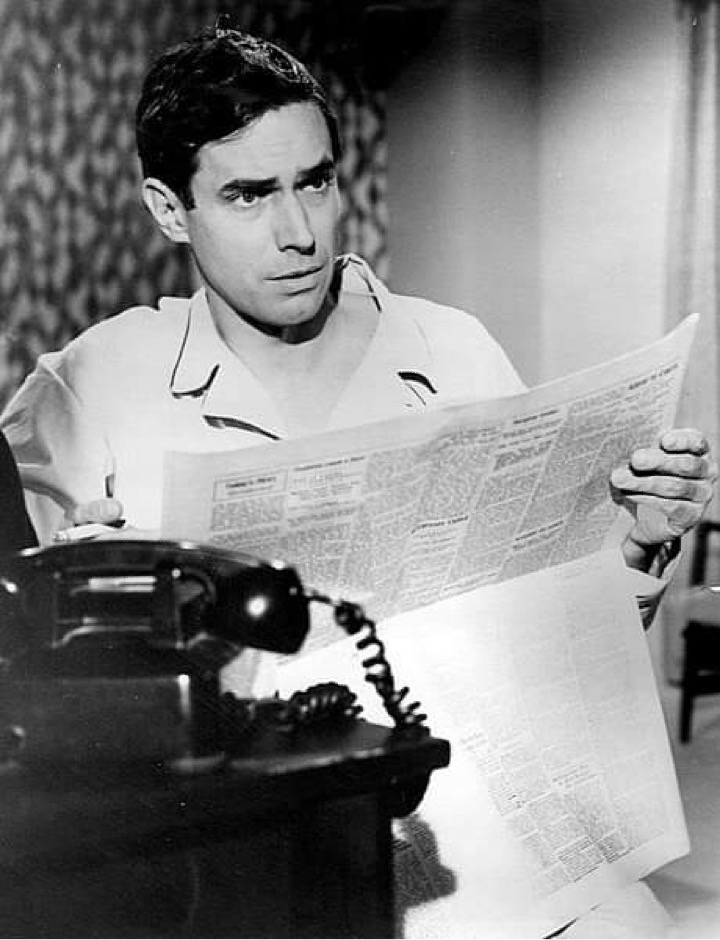
Bradford Dillman: The Yale Marine (1930)
Actor Bradford Dillman, born April 14, 1930, was a Yale graduate and a former Marine Corps officer who brought a sophisticated intensity to his roles. His 30-year career spanned from Broadway to cult classic films and television. Despite his prestigious background, he possessed a self-deprecating wit, famously remarking, “Bradford Dillman sounded like a distinguished, phony, theatrical name – so I kept it.”
Image via Wikimedia Commons, no known copyright, public domain in the US.
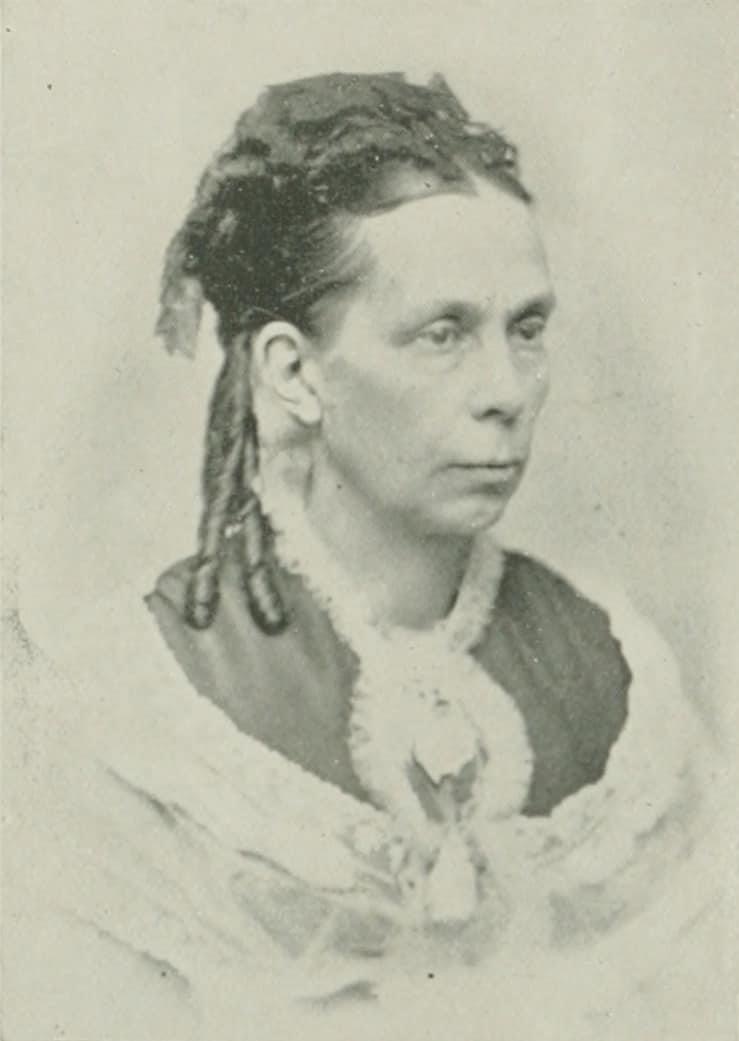
Harriett Ellen Grannis Arey: “Sprays from the Heart’s Fountains” (1819)
Born April 14, 1819, in Vermont, Harriett Ellen Grannis Arey was a prolific author and teacher who believed in the inherent beauty of the world. Her 1855 poem, Sprays from the Heart’s Fountains, challenges the notion of the world as a “vale of woes,” instead celebrating it as a “world of glorious things.” Her work often focused on the joy of childhood and the small, divine details found in nature.
Image via Wikimedia Commons, public domain
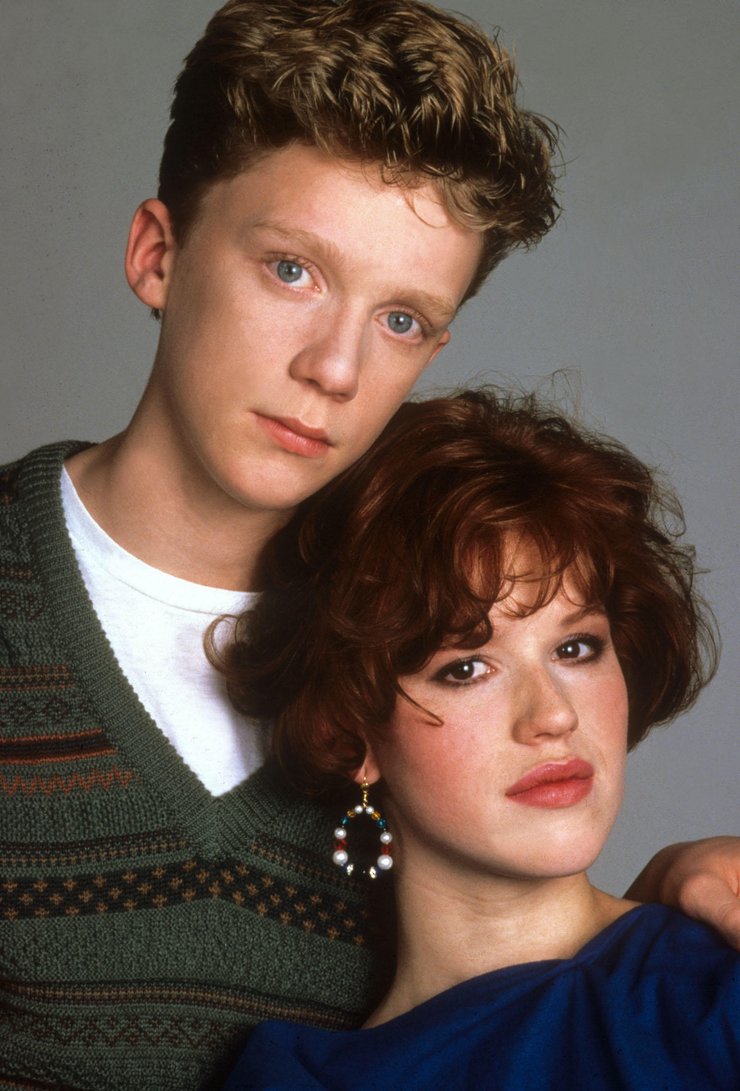
Anthony Michael Hall: The “Brat Pack” Prodigy (1968)
Born in Boston on April 14, 1968, Anthony Michael Hall became the quintessential “geek” of 1980s cinema. After a childhood in commercials and theater, he skyrocketed to fame in films like Sixteen Candles and The Breakfast Club. A true prodigy of the era, he also holds the record for being the youngest-ever cast member of Saturday Night Live, joining the show at the age of 17.
Image of Anthony Michael Hall & Molly Ringwald for the 1984 film Sixteen Candles
via Alamy