
The Architect of Eloquence (1794)
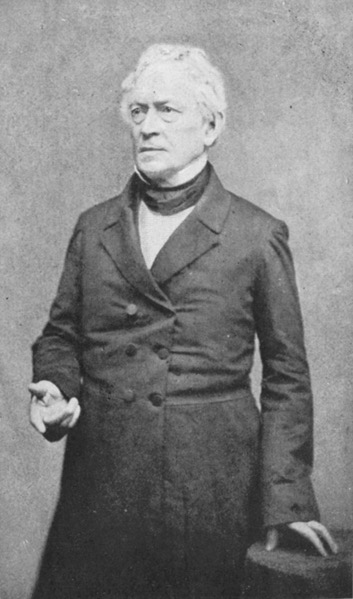
Born on April 11, 1794, Edward Everett was the gold standard of American speechmaking long before he met Lincoln. While his two-hour Gettysburg address is now a footnote compared to the President’s two-minute remarks, Everett’s entire career—as a Governor, Secretary of State, and Harvard President—was dedicated to the idea that a young nation needed a refined, scholarly voice to be taken seriously on the world stage. His birth on this day marked the arrival of the man who would eventually bridge the gap between the formal oratory of the Founding Fathers and the concise, powerful modern era of Lincoln.
Image via Wikimedia Commons, copyright not renewed public domain in the US.
The Blueprint of Modern Warfare (1918):
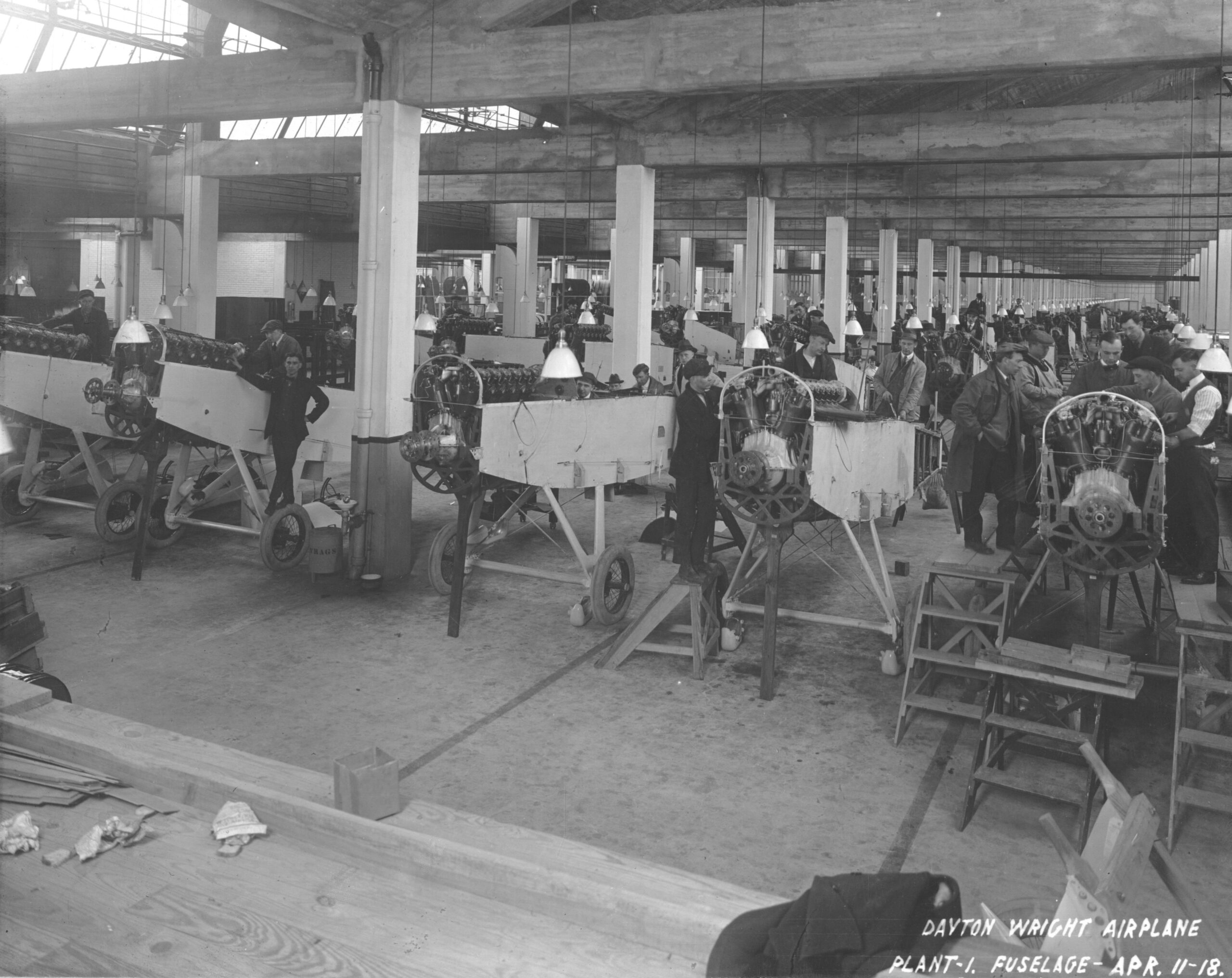
On April 11, 1918, the Dayton Wright Airplane Co. wasn’t just building planes; they were building a new American identity. These fuselages were the physical evidence of the U.S. shifting from a neutral observer to a global air power, forever changing the “Dayton” name from the home of the Wright Brothers to the headquarters of industrial victory.
via Wikimedia Commons, public domain
The Guardian of Democracy (1862)
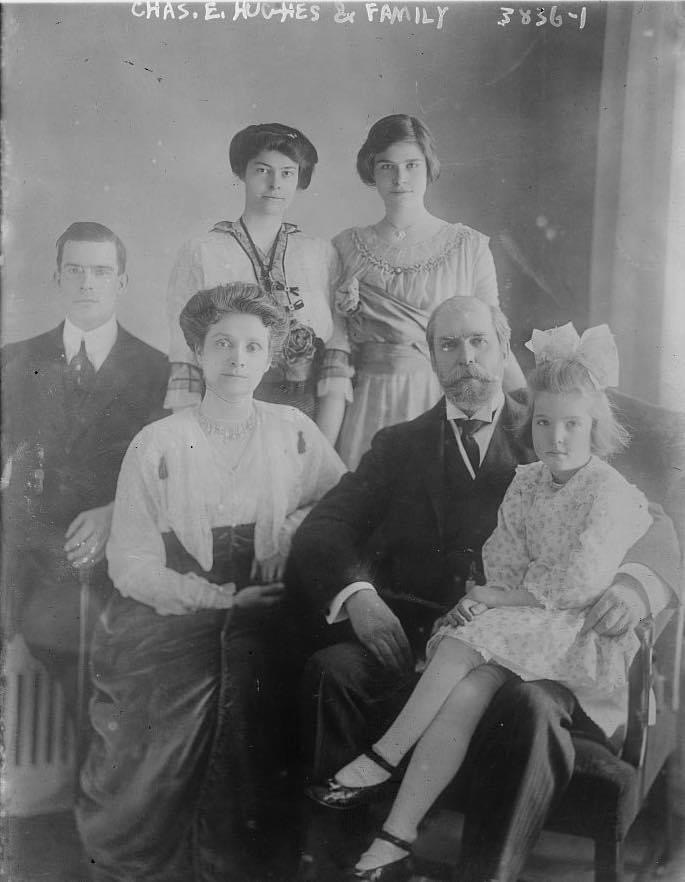
Born on April 11, 1862, Charles Evans Hughes rose to become one of the few Americans to lead in all three branches of government—serving as Governor, Secretary of State, and Chief Justice. His famous quote, “We, the people, are its power, its peril, and its hope!” was not a warning against the people, but a call to action. He believed that a nation’s survival depends on the active engagement of its citizens rather than the fear of a foreign foe. On this day, we remember a man who viewed the “peril” of the nation not as a threat from its people, but as the potential for their own indifference, urging that the hope of the country always rests in their hands.
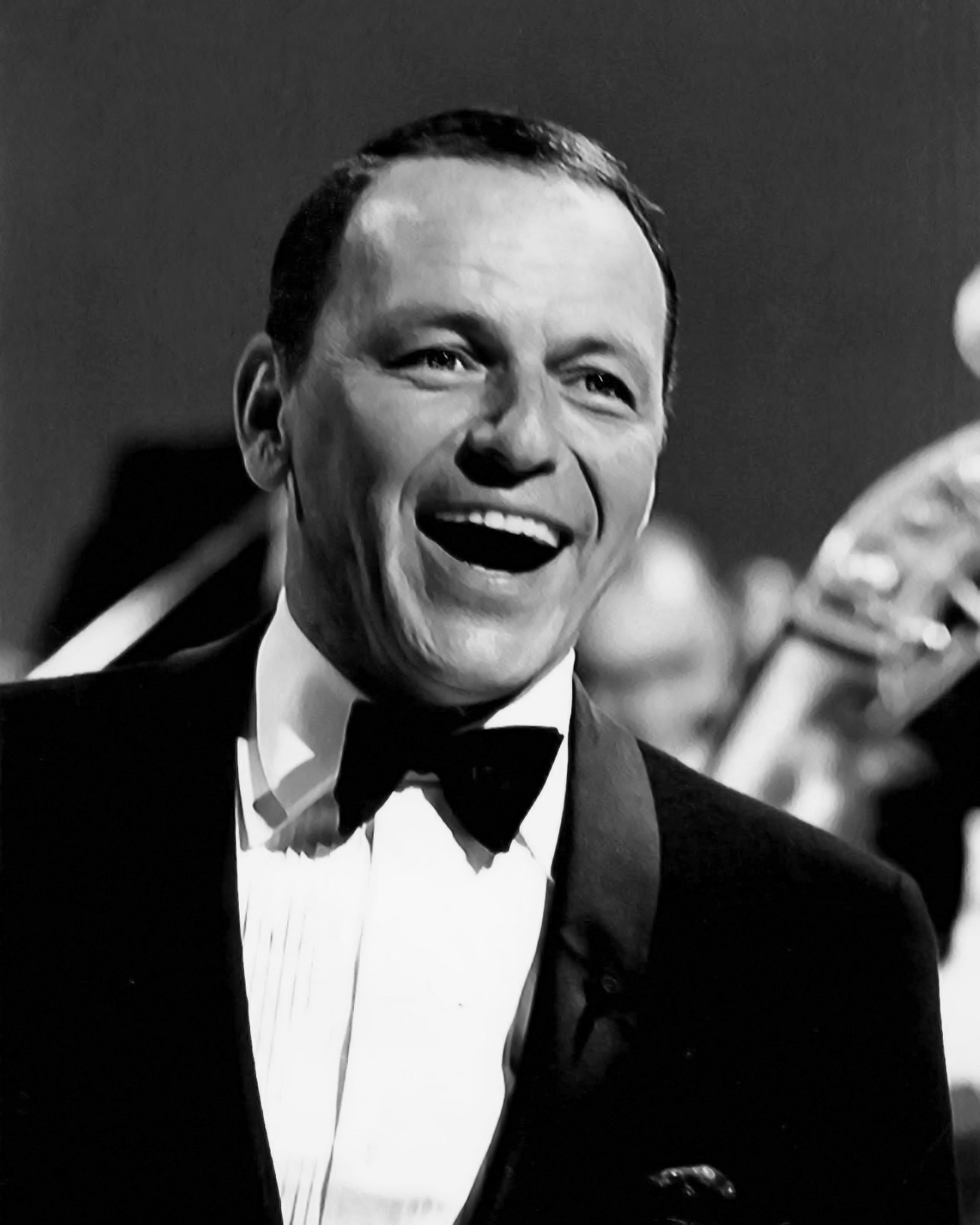
The Chart-Topping Session (1966)
On April 11, 1966, Frank Sinatra entered the studio to record “Strangers in the Night,” a track he was initially hesitant to perform. Despite his personal reservations about the song’s style, his recording that day became a masterclass in professional vocal craft. By the time he reached the famous improvised “doobee-doobee-doo” finale, he had created a #1 hit that bridged the gap between the big band era and 1960s pop. This single session on April 11th proved that the “Chairman of the Board” could still dominate the global charts even during the height of the British Invasion.
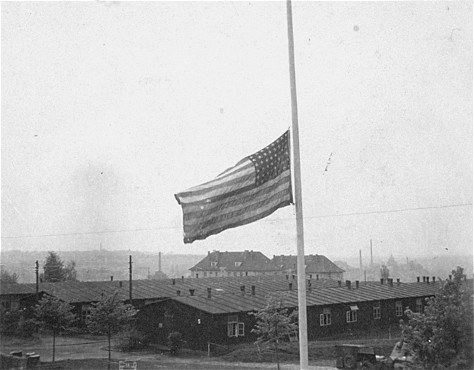
The Half-Staff Reckoning at Buchenwald (1945)
On April 11, 1945, the U.S. Third Army entered Buchenwald, one of Nazi Germany’s largest concentration camps. The image of the American flag being raised over the camp by U.S. troops, only to be immediately lowered to half-staff, serves as a grim marker of the day’s dual nature: a moment of freedom shadowed by the loss of 56,000 inmates. While 21,000 survivors were found alive, the camp was a landscape of “industrialized slaughter,” where elite U.S. units discovered evidence of horrific medical experiments and mass murder. This April 11th liberation was not just a military victory, but the moment the world’s “Moral Inventory” began, as Allied commanders ensured the atrocities were documented for a global reckoning that would follow.
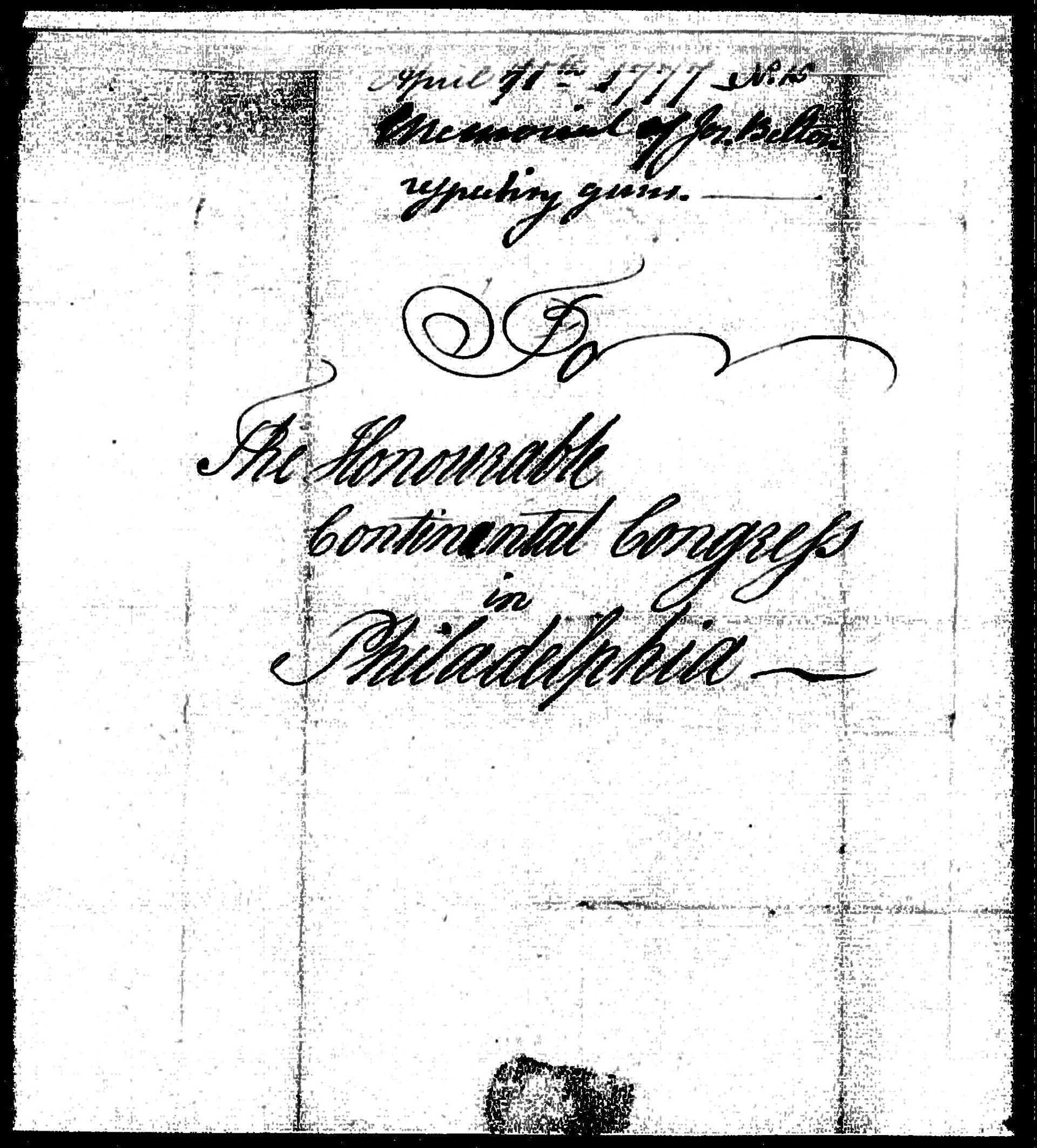
The Rapid-Fire Revolution (1777)
On April 11, 1777, inventor Joseph Belton pitched a technological leap that was decades ahead of its time: a flintlock musket capable of firing eight rounds in just a few seconds. By essentially creating a primitive semi-automatic weapon during the height of the Revolutionary War, Belton offered the Continental Congress a massive tactical advantage. While Congress was initially so impressed they ordered 100 units, the deal famously collapsed just weeks later when Belton presented an invoice so high it would have cost as much as a small fleet of ships. This date remains a striking example of a “what if” moment where the future of warfare was invented, then promptly cancelled due to the bottom line.
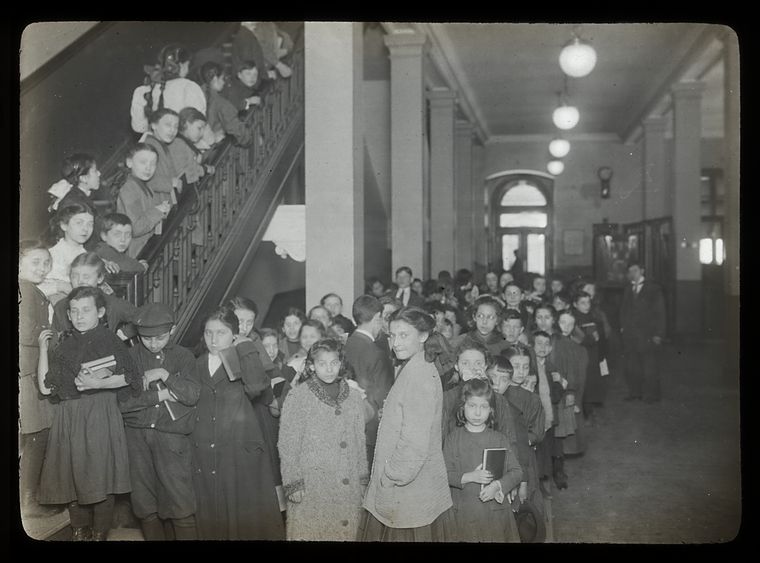
The Education of a Neighborhood (1910):
The children waiting at Seward Park Library as shown in this photograph taken on April 11, 1910, represented a “Great Migration” of the mind. In a city of tenements, the library was the only “living room” these children truly owned, making this date a celebration of public literacy.
Image via NYPL, no known restrictions
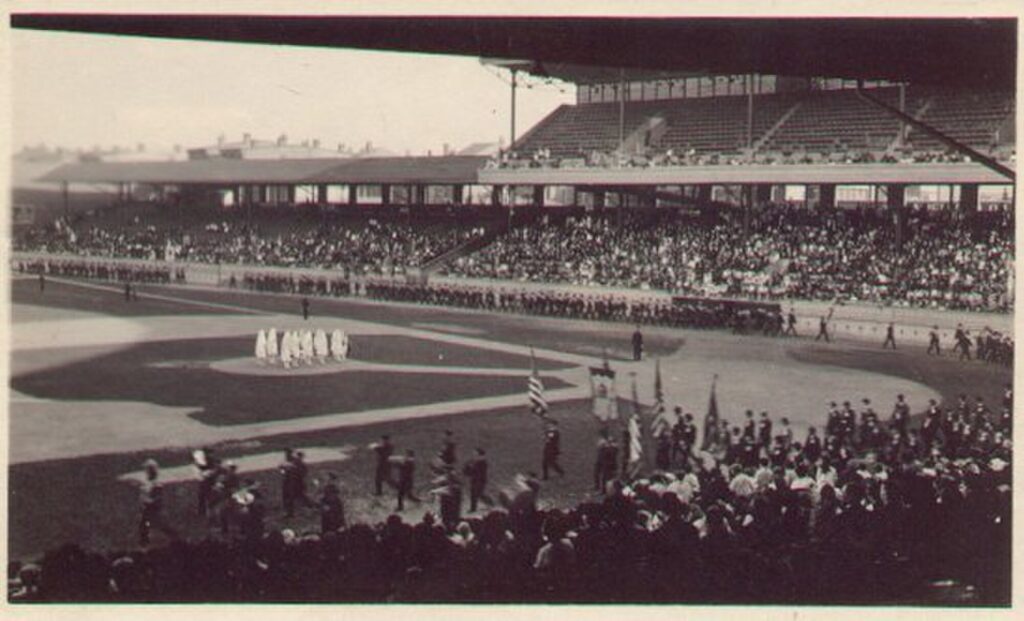
The Grand Opening of Redland Field (1912)
On April 11, 1912, the Cincinnati Reds debuted their new home, then known as Redland Field, with a 10–6 victory over the Cubs. The massive crowd of over 26,000 spilled directly onto the playing field, but the stadium’s true legacy lay in its role as a “laboratory” for baseball. It introduced the first waist-high outfield wall to improve fan sightlines and, after being renamed Crosley Field in 1934, it hosted the first-ever night game in Major League history. The park remained a Cincinnati landmark for nearly six decades until its demolition in 1972.
Here is an image of Redland field taken around 1920 via Wikimedia Commons
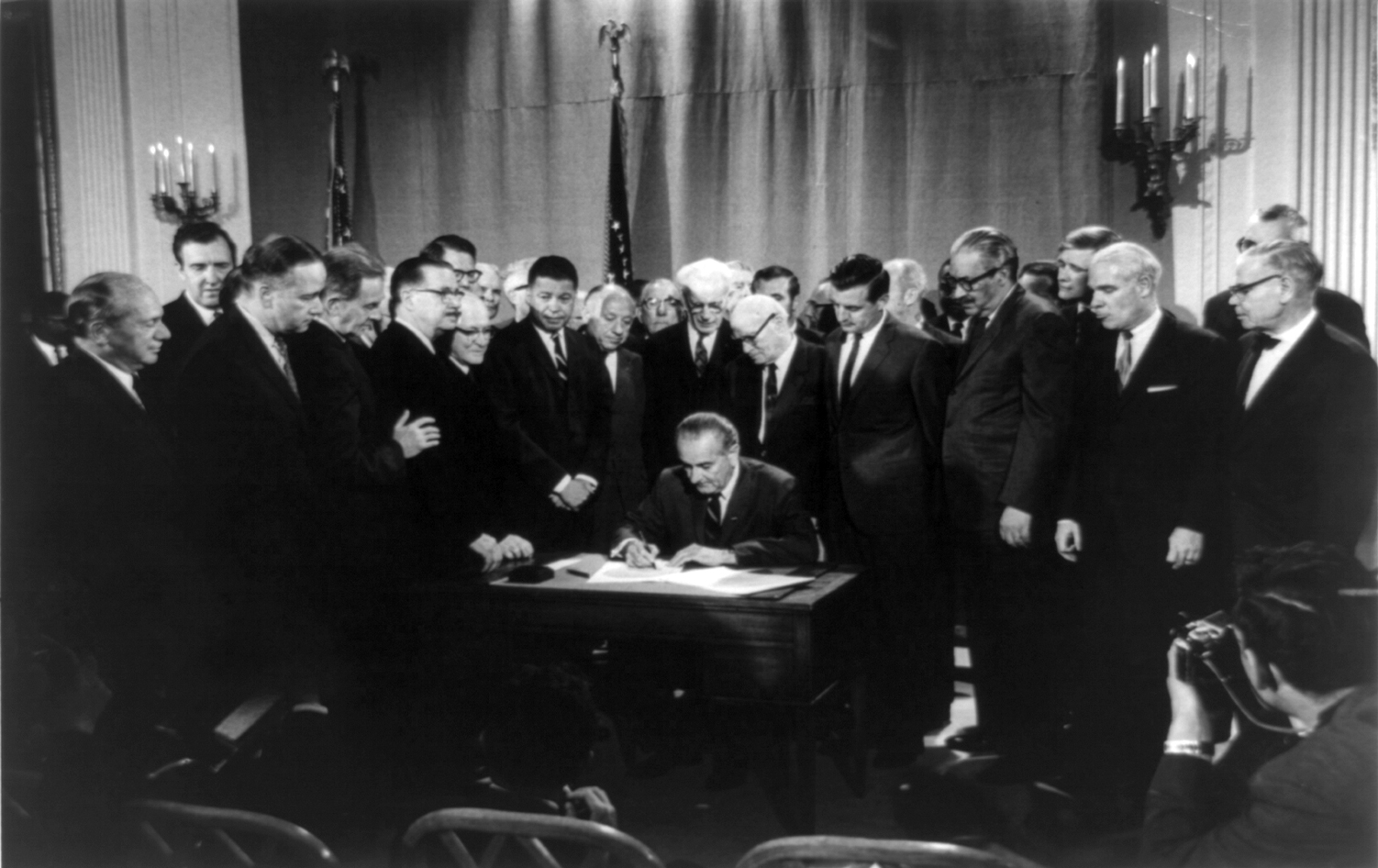
The Fair Housing Promise (1968):
Signed on April 11, 1968, the Civil Rights Act was LBJ’s final major legislative victory. It transformed the “American Home” from a private castle into a battleground for equal opportunity, a struggle that continues to define modern urban geography.
Image: President Lyndon B. Johnson signing the Civil Rights Act of 1968 on April 11th.
via Wikimedia Commons, public domain
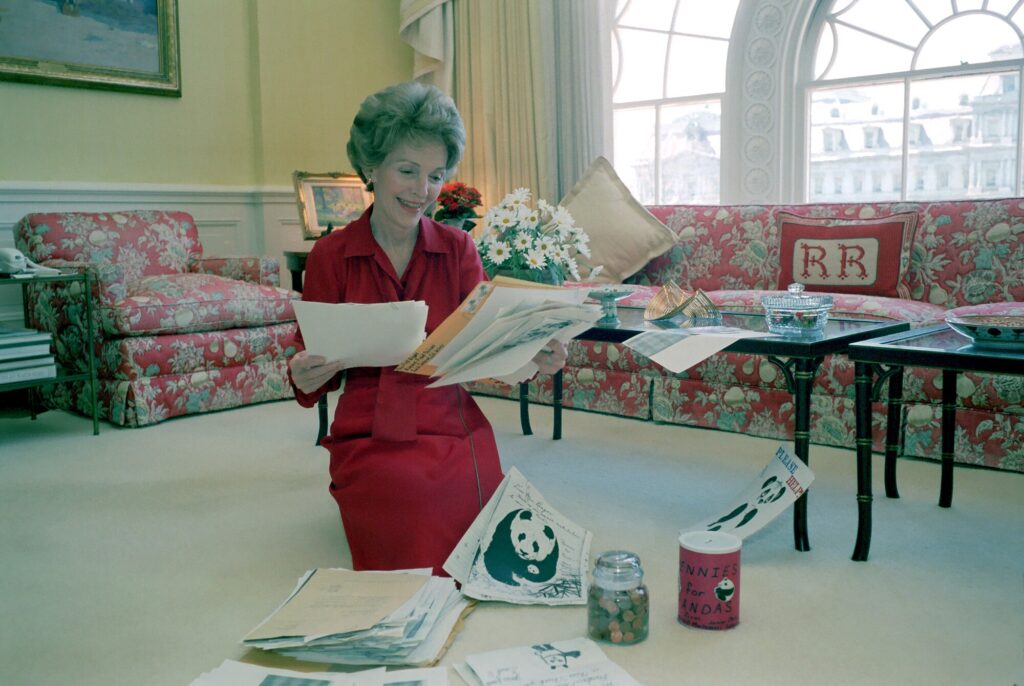
The Panda Protocol (1984):
On April 11, 1984, First Lady Nancy Reagan sat in the West Sitting Hall of the White House to read through thousands of letters sent by American schoolchildren for the “Pennies for Pandas” campaign. The program was an emergency conservation effort sparked by a mass die-off of bamboo in China that threatened nearly a third of the wild panda population with starvation. By the time she traveled to Beijing later that month, the small coins from American classrooms had totaled $13,000, which she personally delivered to aid rescue teams scouring the remote forests to save the species
Image via Wikimedia Commons, public domain
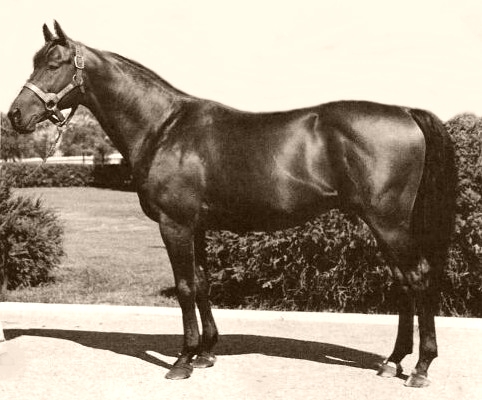
The Birth of a Dynasty (1945):
Foaled on April 11, 1945, at Calumet Farm in Lexington, Kentucky, Citation was bred for excellence — and delivered it. He captured the 1948 Triple Crown as a three‑year‑old and went on to become the first Thoroughbred to surpass one million dollars in career earnings.
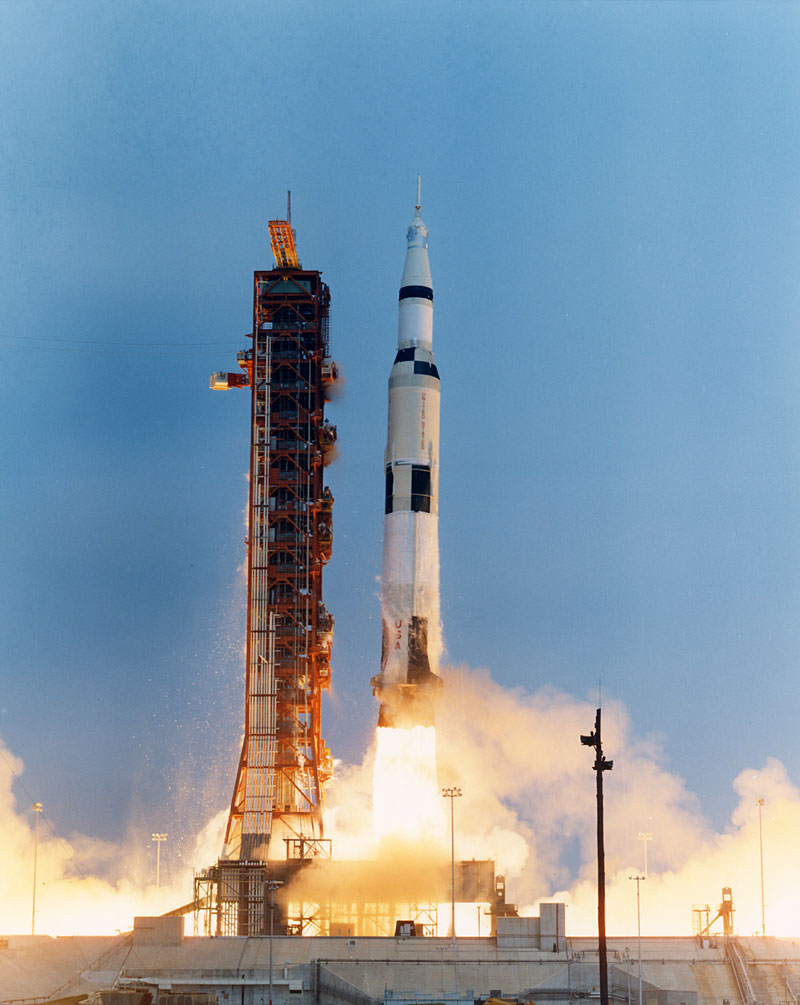
The Launch of Apollo 13 (1970)
At exactly 1:13 PM on April 11, 1970, Apollo 13 left Earth. We remember the explosion, but the launch itself was a feat of precision that proved NASA could reach for the moon—even if the universe had other plans for the return trip.
While the mission was intended to be the third lunar landing it became a mission to save the lives of the crew after the failure of one of the oxygen tanks.
Image via Wikimedia Commons, public domain
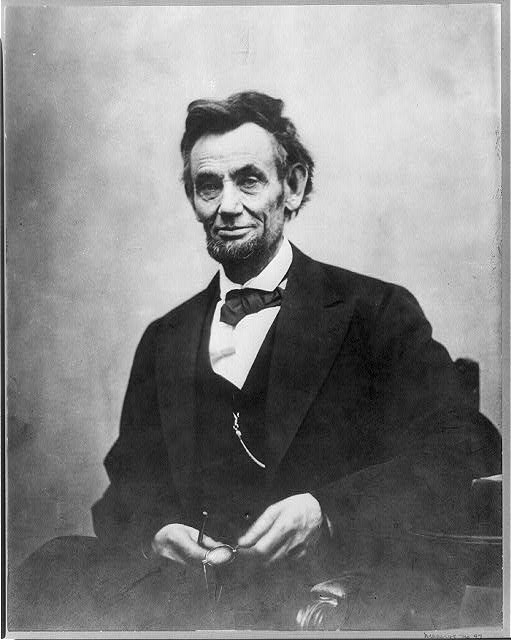
The Final Warning (1865)
“The evacuation of Petersburg and Richmond, and the surrender of the principal insurgent army, give hope of a righteous and speedy peace whose joyous expression can not be restrained. In the midst of this, however, He from whom all blessings flow, must not be forgotten.”
Abraham Lincoln from his final public address which was delivered on April 11, 1865.
Lincoln’s speech that day was also the first time an American president publicly supported Black suffrage. It was a radical “view” that shifted the goal of the war from “saving the Union” to “perfecting the Union,” a shift that arguably cost him his life just three days later
Image via Wikimedia Commons, public domain
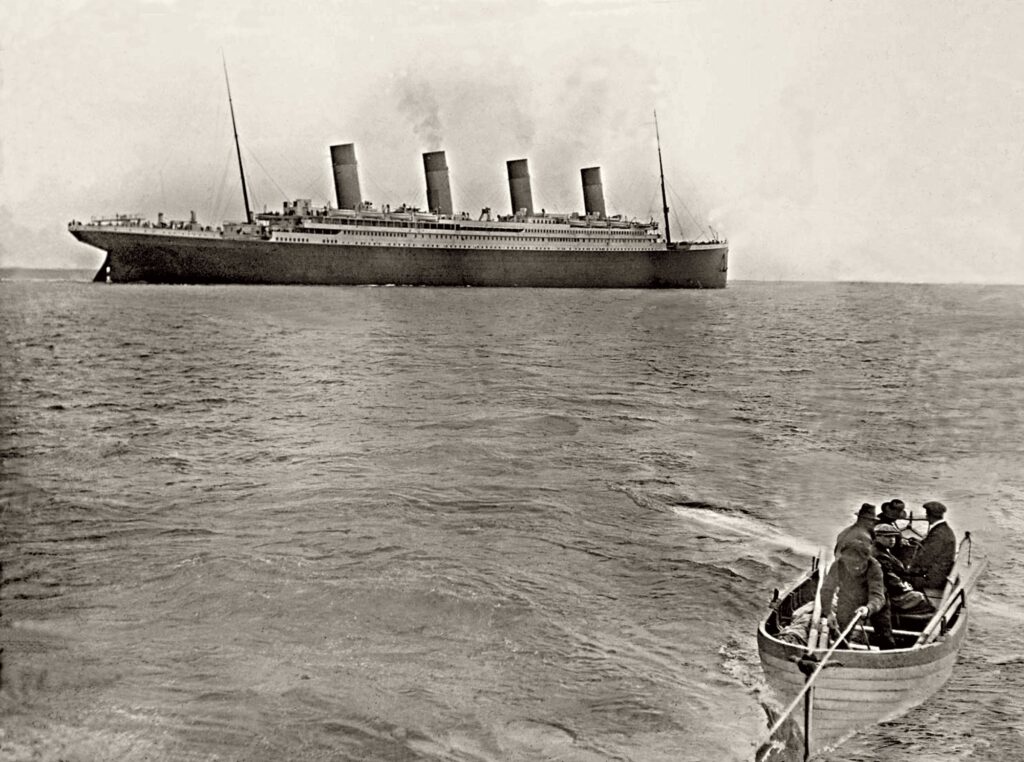
The Two-Hour Window (1912)
On April 11, 1912, the Titanic dropped anchor off Queenstown, Ireland, for what would be her final contact with the shore. The stop was brief—just two hours—long enough for small tenders to shuttle a final group of passengers, 1,385 bags of mail, and crates of provisions to the great liner waiting two miles out at sea. These photographs, taken that day, are among the last authenticated images of the ship above water.
Amid the frantic bustle of that two-hour window, a young stoker named John Coffey made a quiet decision that would save his life. A native of Queenstown, he managed to slip into a mailbag on one of the returning tenders and deserted the ship before it could weigh anchor.
Whether it was a premonition or simply a desire for a free ride home, Coffey’s timing was perfect. At 1:30 PM, the Titanic turned west into the open Atlantic, leaving the coast of Ireland behind forever. Coffey remains the only crew member to have survived by stepping off the ship that day.
Image: Titanic leaving Queenstown (now Cobh), Ireland, on 11 April, 1912. The man who took this photograph, Father Francis Browne, was just as lucky. A wealthy American couple had offered to pay his way to New York, but when he telegraphed his superior for permission to stay on board, he received a blunt, five-word reply: “GET OFF THAT SHIP — PROVINCIAL.” Browne obeyed, disembarking in Ireland with his camera and one of the only photographic records of the ship’s final hours.
