
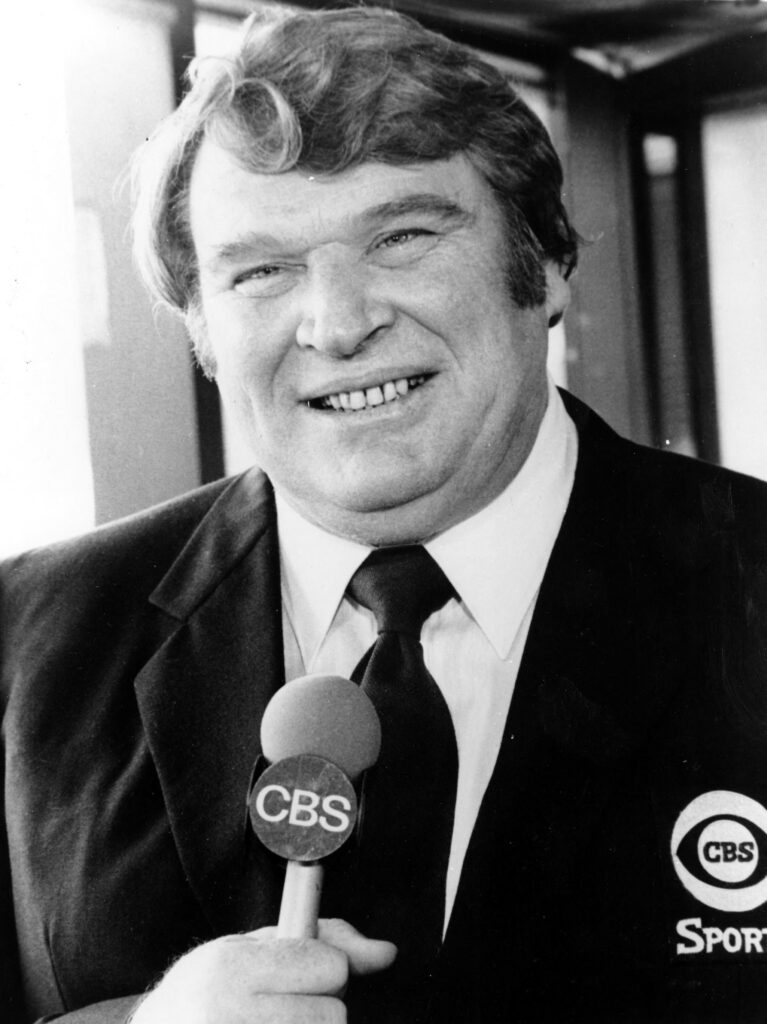
The “Legendary” Voice (1936)
Born today in Austin, Minnesota, John Madden spent more than fifty years shaping how America understood football. A Super Bowl–winning coach who never had a losing NFL season, he later became a household icon in the broadcast booth, bringing energy, clarity, and “the boom” to every game he called. Whether he was handing out a Thanksgiving turducken or sketching circles on a telestrator, Madden made the sport accessible to millions and transformed gaming forever with the franchise that bears his name. As he liked to say: “If you think about it, I’ve never held a job in my life… I haven’t worked a day in my life.”
Image via Alamy
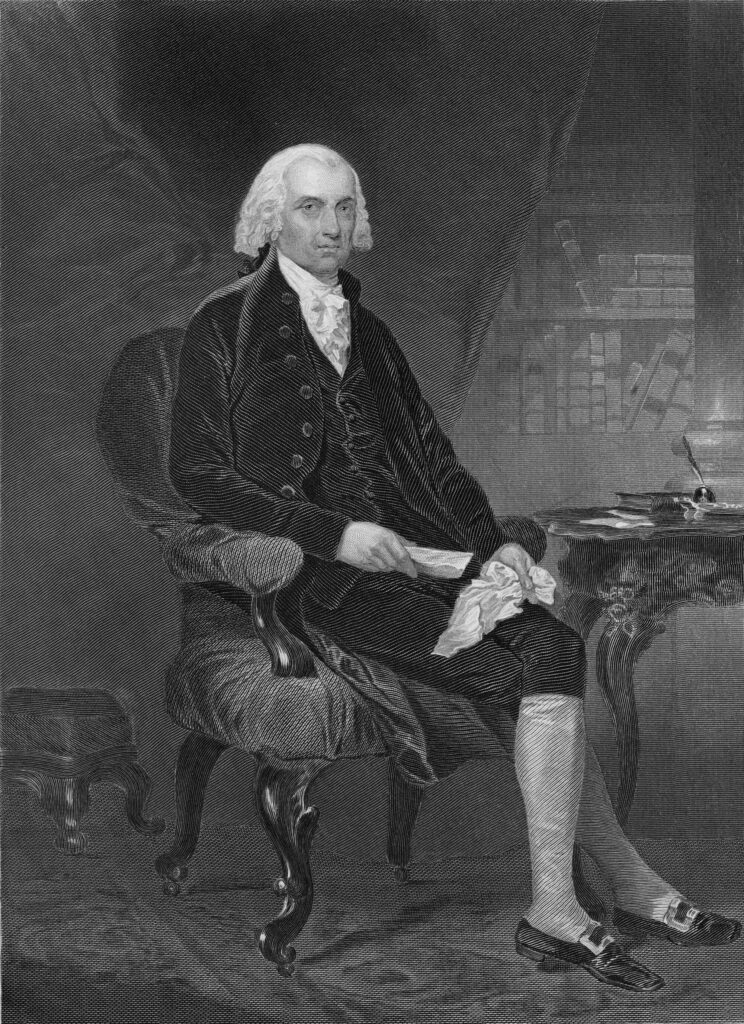
The Second Bank of the United States (1816)
On April 10, 1816, President James Madison signed the charter establishing the Second Bank of the United States. With the First Bank gone and the War of 1812 exposing the nation’s financial disorder, Congress created this new national bank to stabilize the currency and manage the government’s credit.

The Price of Forgery (1775)
A Pennsylvania Colonial five-pound note, this currency was printed in Philadelphia by Hall & Sellers (who bought the business from Benjamin Franklin). While it uses the British denomination system, it was a local colonial issue. The reverse famously warns: “To Counterfeit is DEATH”—a stark deterrent used because colonial paper money was incredibly easy to forge and critical to the local economy.
Image via Wikimedia Commons, public domain
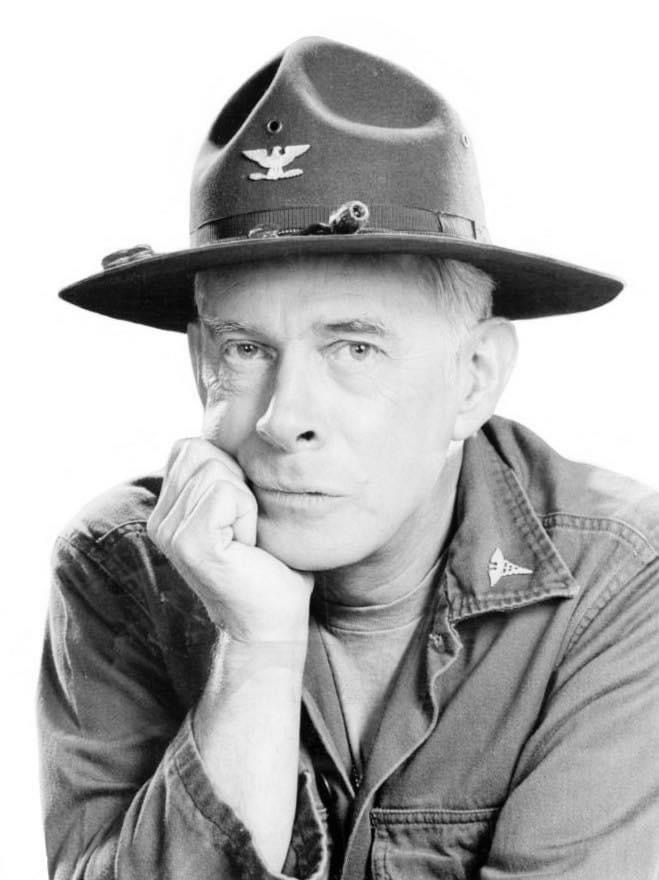
The Soul of the 4077th (1915)
Born today in Detroit, Harry Morgan is best remembered as Colonel Sherman T. Potter on M*A*S*H. He brought a unique authenticity to the role; for eight seasons, the photo of “Mildred” on his desk was actually his real-life wife, Eileen Detchon. He once remarked that the show didn’t just make him a better actor, it made him a “better human being”
Image: Harry Morgan as Colonel Potter from the TV show M*A*S*H in 1975 by CBS Television, public domain in The United States via Wikimedia Commons
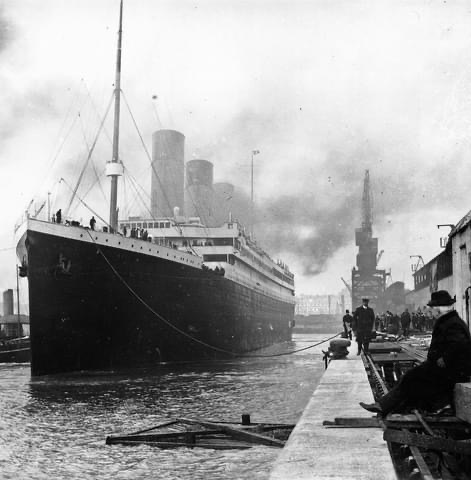
The Titanic’s Grand Departure (1912)
The RMS Titanic steamed out of Southampton, England, on its maiden voyage. Of the 2,240 people aboard, only 306 were Americans. Many were wealthy socialites in first class, oblivious to the fact that the ship was just four days away from disaster.
Image of the Titanic in Southampton in April 1912 via Wikimedia Commons, public domain
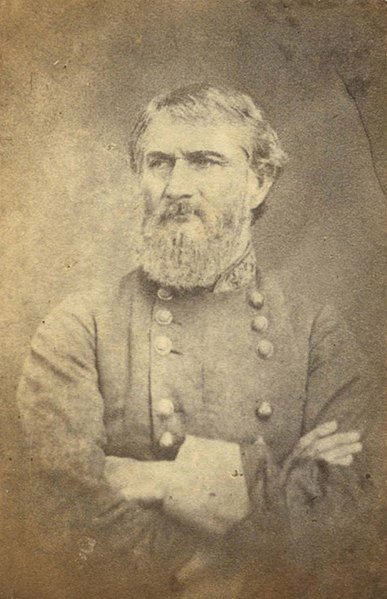
The “Fighting Bishop’s” Final Blunder (1806)
Born today, Leonidas Polk was one of the most unusual figures in American history — an Episcopal bishop who also served as a Confederate major general. Despite his rank, his battlefield record was so consistently poor that when a Union shell killed him in 1864, one historian later remarked that the shot actually harmed the Union cause: Polk’s incompetence made him far more valuable alive than dead.
Image by T. Lilienthal, New Orleans via Wikimedia Commons, public domain in the US. (Portrait)
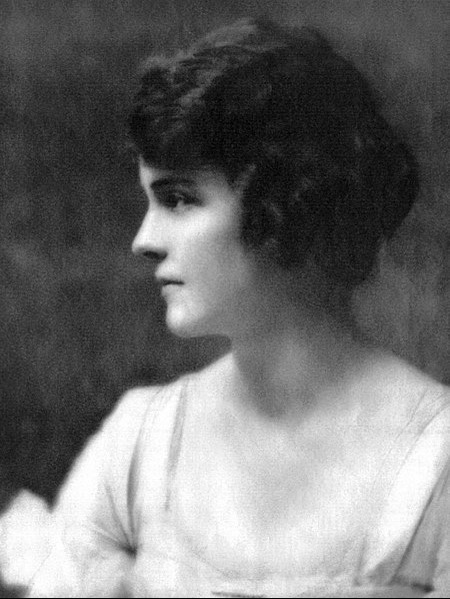
The Debut of a Masterpiece (1925)
April 10, 1925, saw the publication of F. Scott Fitzgerald’s “The Great Gatsby.” The novel’s Daisy Buchanan was based upon wealthy Chicago socialite Ginevra King, with whom Fitzgerald had a two-year relationship. It ended when her father famously stated, “Poor boys shouldn’t think of marrying rich girls.”
(Image by Arnold Genthe, public domain)
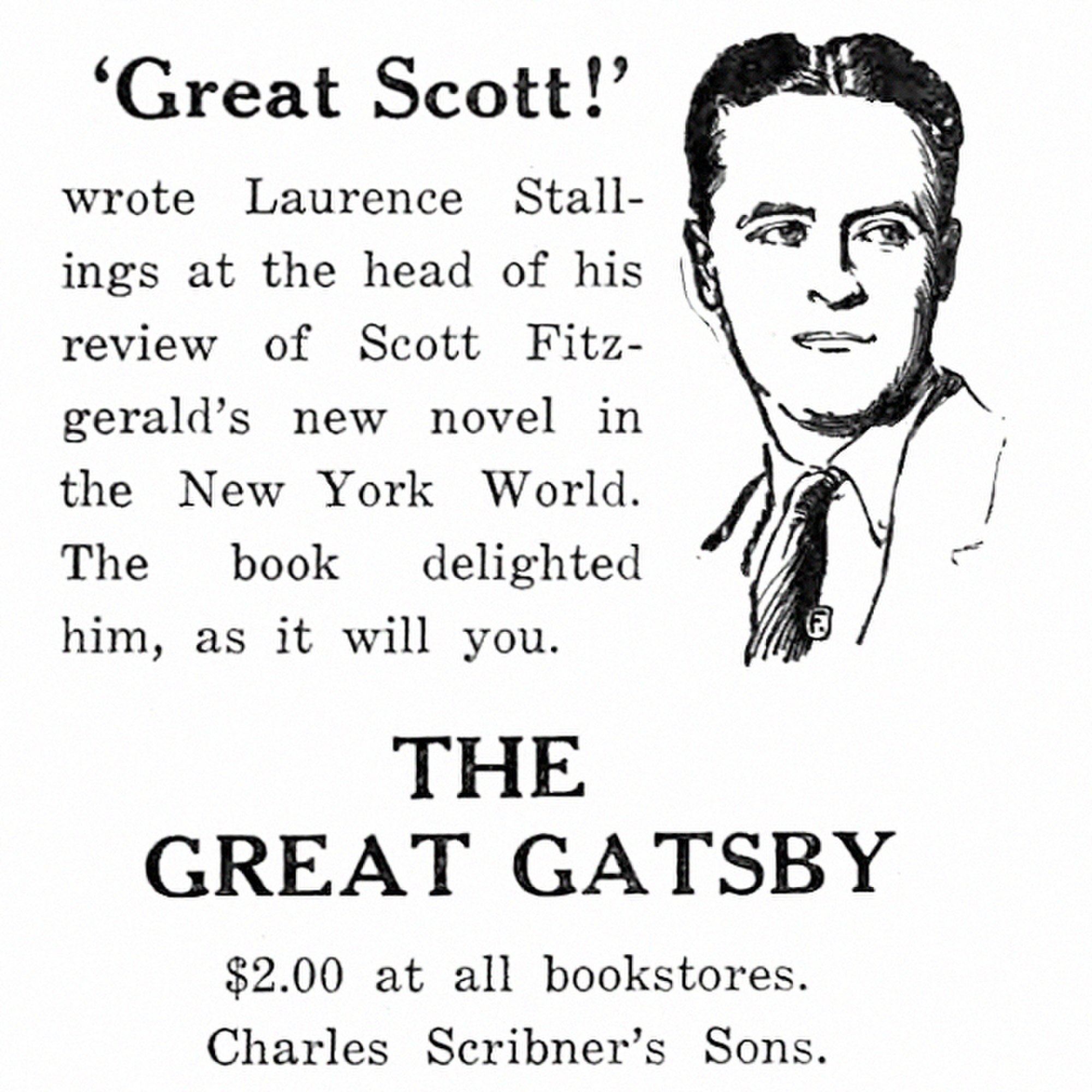
A Slow Burn to Success (1925)
Though published on April 10, 1825, The Great Gatsby was initially a commercial disappointment. By October of that year, the novel had only sold 20,000 copies. After a revival in the 1940s and a renewed interest during WWII, more than 100,000 copies were selling each year by 1960.
(Image: 1925 advertisement via Wikimedia Commons, public domain)

Wagons to the Rockies (1830)
A wagon train organized by the Rocky Mountain Fur Co., comprised of 10 mule-drawn wagons, departed St. Louis, Missouri. Arriving in Wyoming in mid-July, this journey proved that wagons could successfully cross the plains to the Rockies, paving the way for the massive migrations on the Oregon Trail.
(Image via Wikimedia Commons, public domain)
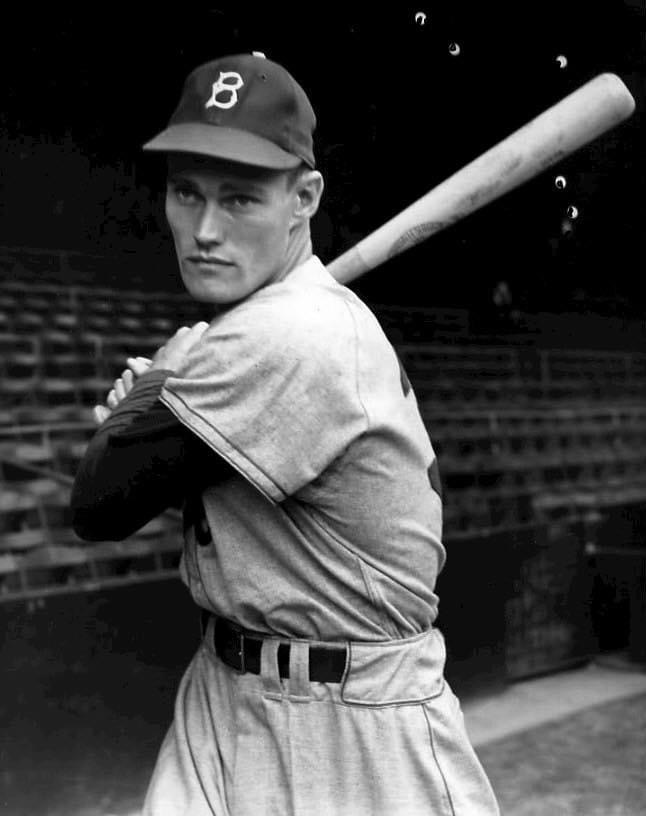
The Triple-Threat Star (1921)
Born today in Brooklyn, Chuck Connors was a rare American phenomenon: a professional basketball player (Boston Celtics), a Major League Baseball player (Dodgers and Cubs), and a legendary actor best known for his role in The Rifleman.
(Photo by Photo Associates, public domain)
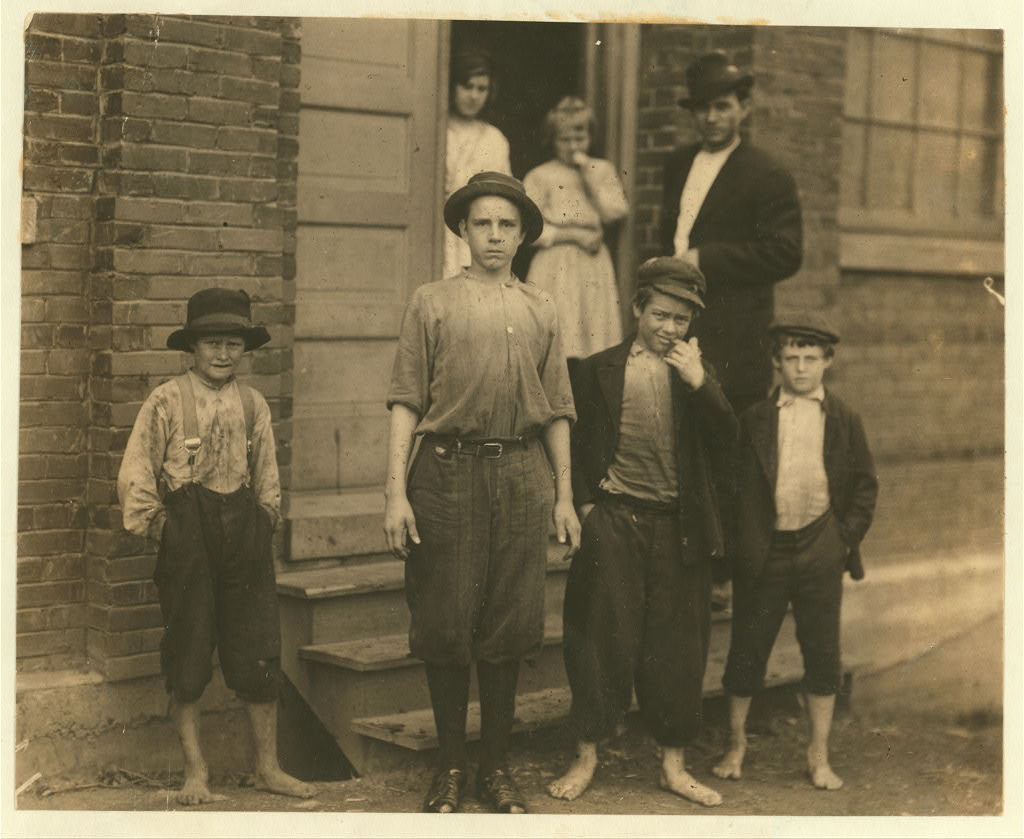
The Faces of Industry (1913)
At the Cherokee Hosiery Mill in Rome, Georgia, at noon on April 10, 1913, photographer Lewis Hine documented the youngest workers, known as “turners and loopers.” Hine used his camera to expose the reality that some children in these mills appeared as young as eight or nine years old.
(Image by Lewis Hine via Library of Congress)

The First Lady of Labor (1880)
“As a student and professional social worker, I was taking an active part in proposals to use…legislative authority…to correct social abuses – long hours, low wages, bad housing, child labor and unsanitary conditions.”
These are the words of Frances Perkins, born today in Boston. She would go on to become the first woman to serve in a U.S. presidential cabinet under FDR.
(Image via Wikimedia Commons, public domain)

The First Patent Act (1790)
Less than a year into his presidency, George Washington signed “An Act to promote the progress of useful Arts,” the nation’s first Patent Act. This established the legal framework that would protect American inventors and drive two centuries of innovation.
(Image via Wikimedia Commons, public domain)
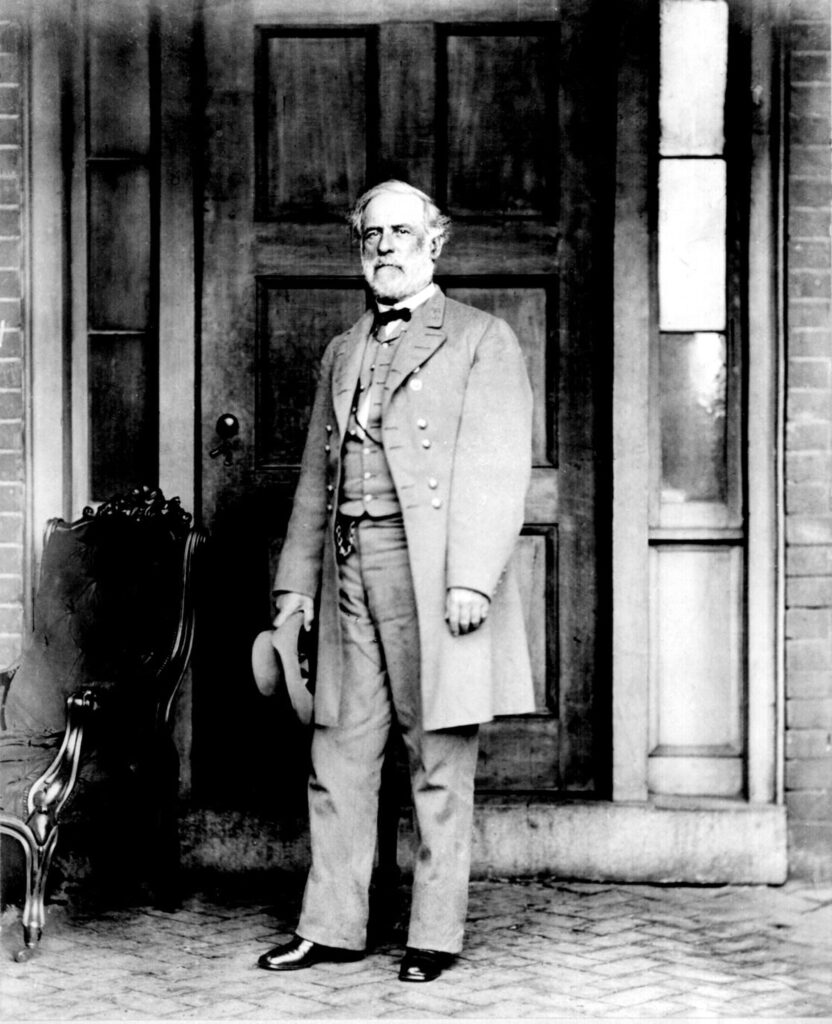
Lee’s Affectionate Farewell (1865)
One day after the surrender at Appomattox, Robert E. Lee issued his final address to his troops, known as General Orders No. 9: “With an increasing admiration of your constancy and devotion to your country… I bid you all an affectionate farewell.”
(Image via Wikimedia Commons, public domain)
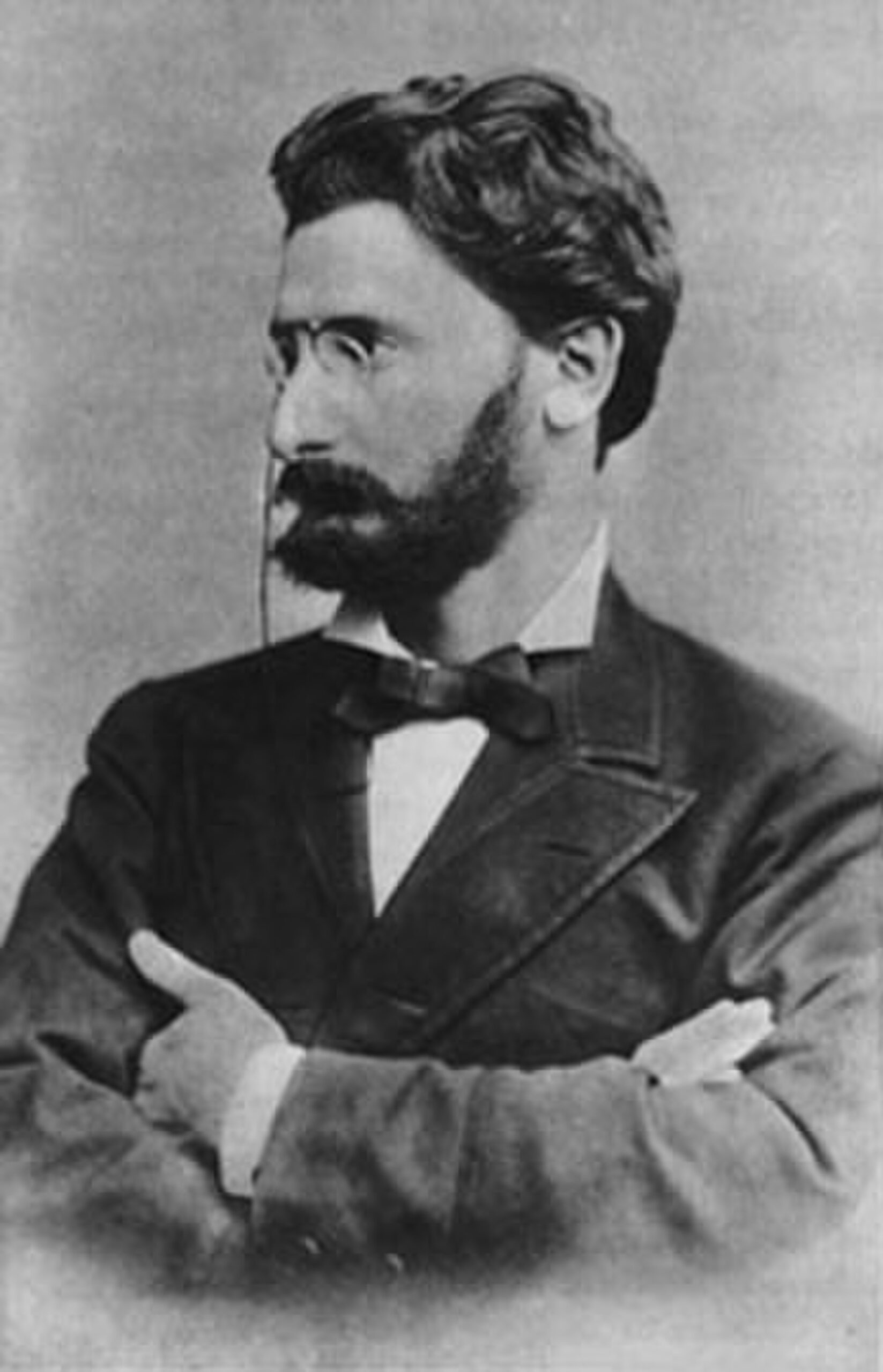
Pulitzer and the People’s Statue (1847)
Union Civil War Veteran and owner of the New York World newspaper, Joseph Pulitzer, who the prestigious Pulitzer Prize is named after, was born on April 10, 1847.
After taking over ownership of the New York World in 1883, Pulitzer championed to have the Statue of Liberty placed in the New York metro area. His efforts raised $100,000 for Lady Liberty and he published the names of each of the donors in his newspaper. Most contributions were no more than a dollar.
Image via Wikimedia Commons, public domain
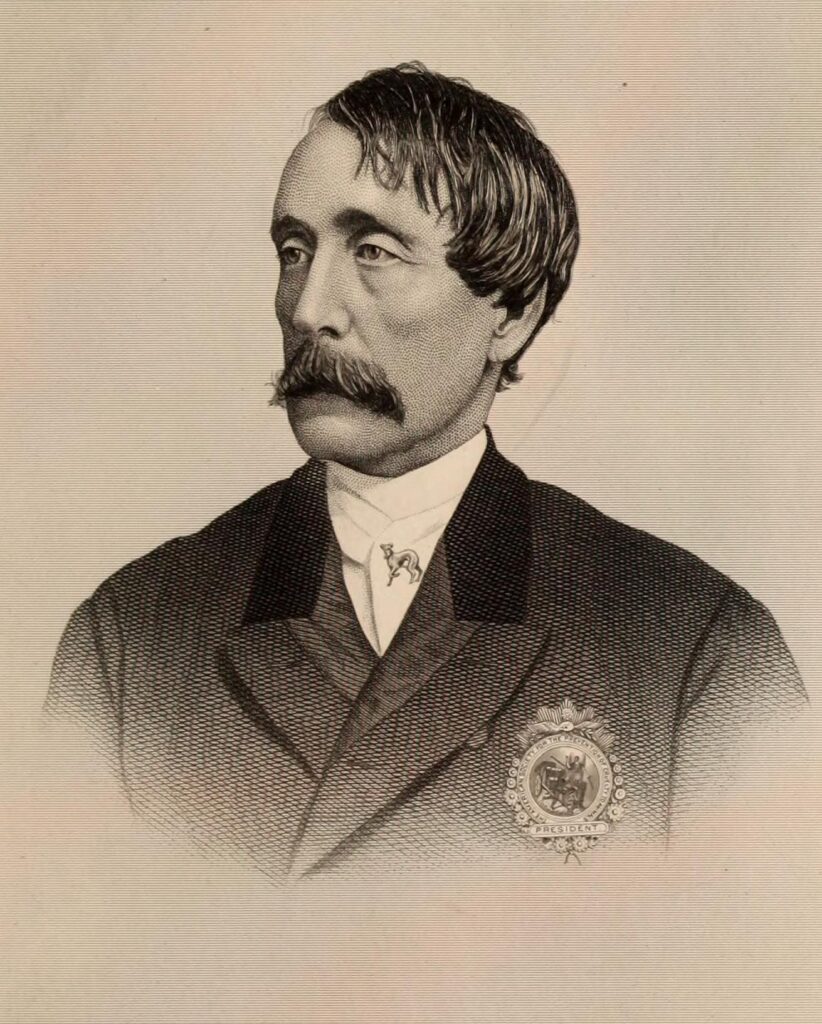
Voice for the Voiceless: The Founding of the ASPCA (1866)
On April 10, 1866, Henry Bergh officially founded the American Society for the Prevention of Cruelty to Animals (ASPCA) in New York City. A wealthy former diplomat, Bergh had been deeply moved by the sight of workhorses being beaten in the streets of Russia and returned home determined to bring the “humane movement” to America.
Known by his critics as “The Great Meddler,” Bergh was a fixture on New York street corners, personally intervening to stop the abuse of carriage horses and livestock. His tireless advocacy led to the passage of the first effective anti-cruelty laws in the United States and the introduction of America’s first animal ambulance in 1867. Interestingly, his concern for the vulnerable extended beyond animals; in 1874, he helped found the New York Society for the Prevention of Cruelty to Children, proving that his mission was rooted in a universal fight against suffering.
