
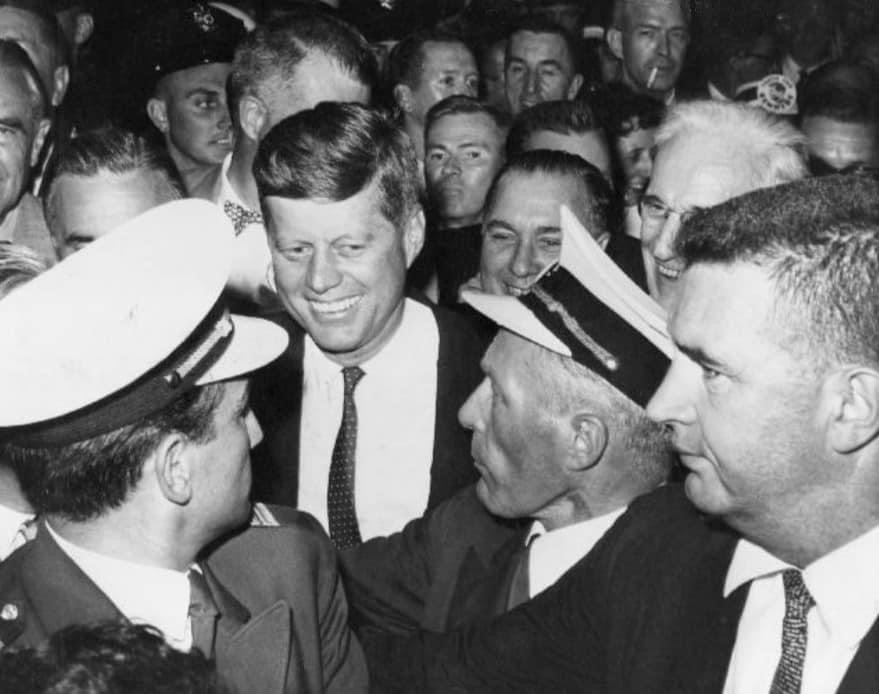
Democratic candidate John F. Kennedy officially secured the presidential nomination on July 13, 1960, after an intense primary season that culminated in a tense first‑ballot showdown. Rather than joining the chaotic convention floor, the charismatic young senator from Massachusetts stayed in his Biltmore Hotel suite, watching the dramatic roll call on a television screen with his family and close advisors before stepping out to greet a throng of reporters. Two days later, he stepped up to the podium to deliver his formal acceptance speech to an energized American public.
What gives this July 13 triumph its deeper historical significance is that it marked the first time a presidential nomination was won under the full glare of modern television. Kennedy’s floor managers, delegate counts, and the nail‑biting state announcements were broadcast live to millions of Americans, transforming the convention from a closed‑door political ritual into a national media event. His first‑ballot victory became the moment the United States entered the era of the televised presidency — a stage Kennedy would soon dominate with unprecedented mastery.
Image via Wikimedia Commons, public domain
