
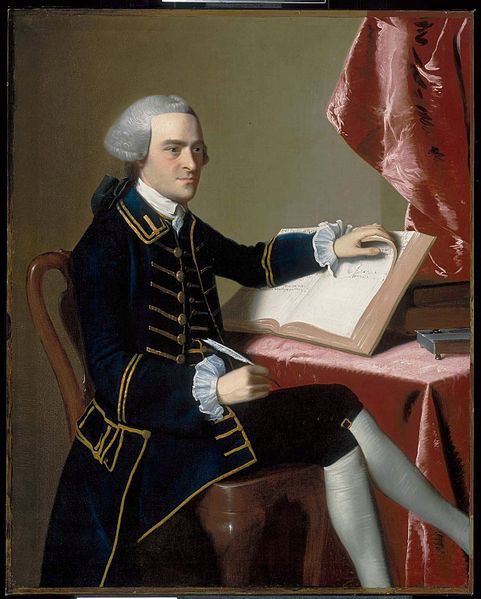
On October 25, 1780, John Hancock took office as the first governor of the Commonwealth of Massachusetts under its new constitution. The wealthy Boston merchant and revolutionary leader had won more than 90 percent of the votes cast, decisively defeating James Bowdoin. He entered office while the Revolutionary War was still underway, carrying his considerable popularity into the work of constitutional government.
Hancock’s election marked another turn in a career that linked commercial prominence with revolutionary leadership. As president of the Second Continental Congress from 1775 to 1777, he occupied one of the Revolution’s most visible political offices. His bold signature on the Declaration of Independence became his enduring emblem. The familiar claim that he wrote it large enough for King George III to read without spectacles, however, belongs to later legend rather than documented history.
His governorship unfolded in two periods, from 1780 to 1785 and again from 1787 until his death in 1793. The distinction matters: Shays’ Rebellion erupted during Bowdoin’s administration, not Hancock’s. Returning to office in its aftermath, Hancock pursued reconciliation through clemency. His general pardon of June 1787 initially excluded several leaders, but even Daniel Shays received a pardon the following year. That conciliatory approach helped sustain Hancock’s reputation as a leader attentive to ordinary citizens.
John Singleton Copley’s 1765 portrait offers an earlier view of the future governor: a young merchant seated with a pen in hand, years before independence made his handwriting famous. The image provides a fitting visual counterpart to his later career—not evidence of a signature being rehearsed, but a reminder that the pen could serve commerce, revolution, and government alike. Hancock’s significance lies not only in the name he placed beneath the Declaration, but also in his subsequent work of governing Massachusetts.
