
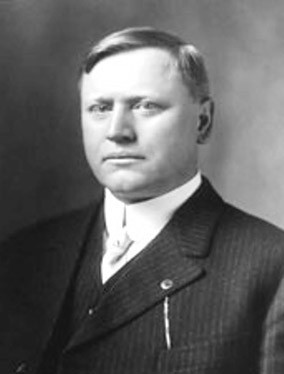
Born on October 25, 1864, in Niles, Michigan, John Francis Dodge became an important figure in the rise of American automobile manufacturing. Alongside his younger brother, Horace Elgin Dodge, he learned machining in their father’s shop, gaining practical experience that would underpin their careers as manufacturers. After working in Detroit and Windsor and entering the bicycle business, the brothers established their own Detroit machine shop around the turn of the century.
Their first major automotive customers included Ransom E. Olds, but their most consequential early relationship began with Henry Ford in 1903. The brothers supplied the running gear for Ford’s Model A, extended financial backing to the fledgling company, and acquired a combined 10 percent ownership stake. John also became a Ford vice president. Over the following decade, their factories produced engines, transmissions, and other essential components that helped Ford expand automobile production.
In 1914, the brothers moved from supplying another manufacturer to selling automobiles under their own name. They ended their manufacturing relationship with Ford but retained their Ford shares until 1919. Their first production car appeared in November 1914, combining a 35-horsepower four-cylinder engine, an all-steel body, and a 12-volt electrical system. More expensive than the Model T, it offered buyers a well-equipped alternative and established Dodge Brothers as a manufacturer of complete automobiles.
The company grew rapidly. Its vehicles served with American forces during the Mexican expedition and World War I, helping establish the marque’s reputation for durability. By 1919, Dodge Brothers was producing more than 120,000 vehicles annually—a striking achievement for a business that had introduced its first car only five years earlier.
John Dodge died in New York on January 14, 1920, after contracting influenza complicated by pneumonia. He was 55. His career, inseparable from Horace’s, linked the precision machine shop to the expanding automobile factory. On the anniversary of his birth, his legacy is worth remembering not simply through the cars bearing his name, but through the manufacturing expertise and business ambition that helped build Detroit’s automotive industry.
