
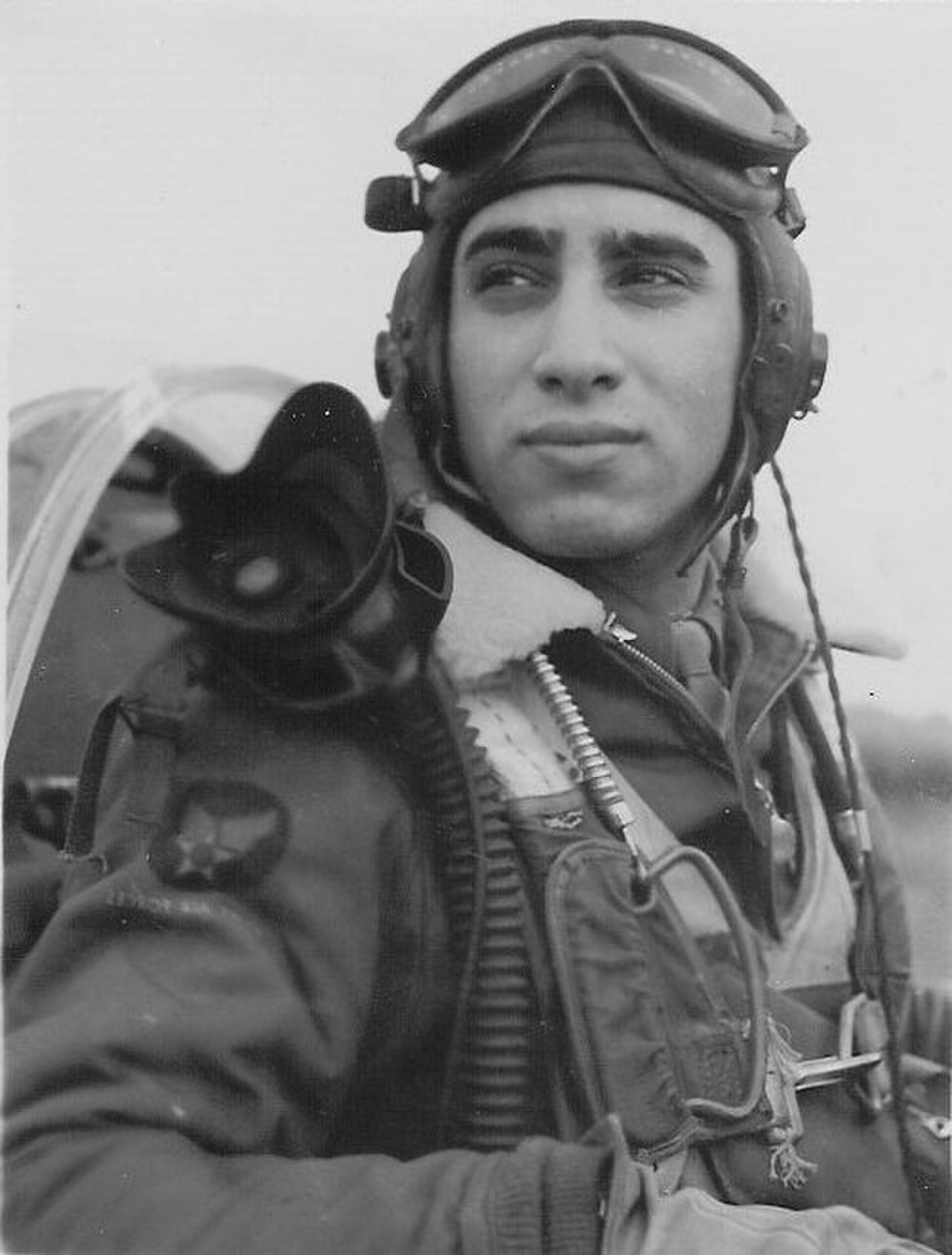
Born on October 10, 1923, in Muskogee, Oklahoma, James Jabara became a pioneering figure in military aviation as the first American—and the world’s first—jet-versus-jet ace. A first-generation American of Lebanese descent, Jabara entered the U.S. Army Air Forces during World War II and flew two combat tours in Europe in the P-51 Mustang. He was credited with 1.5 aerial victories against German aircraft, gaining the combat experience that would serve him in the emerging jet age.
Jabara secured his place in history during the Korean War as a pilot with the 334th Fighter-Interceptor Squadron, 4th Fighter-Interceptor Wing, flying the North American F-86 Sabre. Over “MiG Alley” near the Yalu River, he achieved his defining milestone on May 20, 1951, when he shot down his fifth and sixth MiG-15s. Those victories made him the first jet-versus-jet ace. After returning for a second Korean tour, he raised his official total to 15 air-to-air victories, making him a triple ace.
Jabara continued his Air Force career through the Cold War, ultimately reaching the rank of colonel—reportedly the youngest Air Force officer of that rank at the time. In 1966, while traveling to a new assignment connected with the Vietnam War, he was killed in a civilian automobile accident. On the anniversary of his birth, Jabara is remembered as a daring and influential combat aviator whose accomplishments marked a defining moment in the history of jet aerial warfare.
