
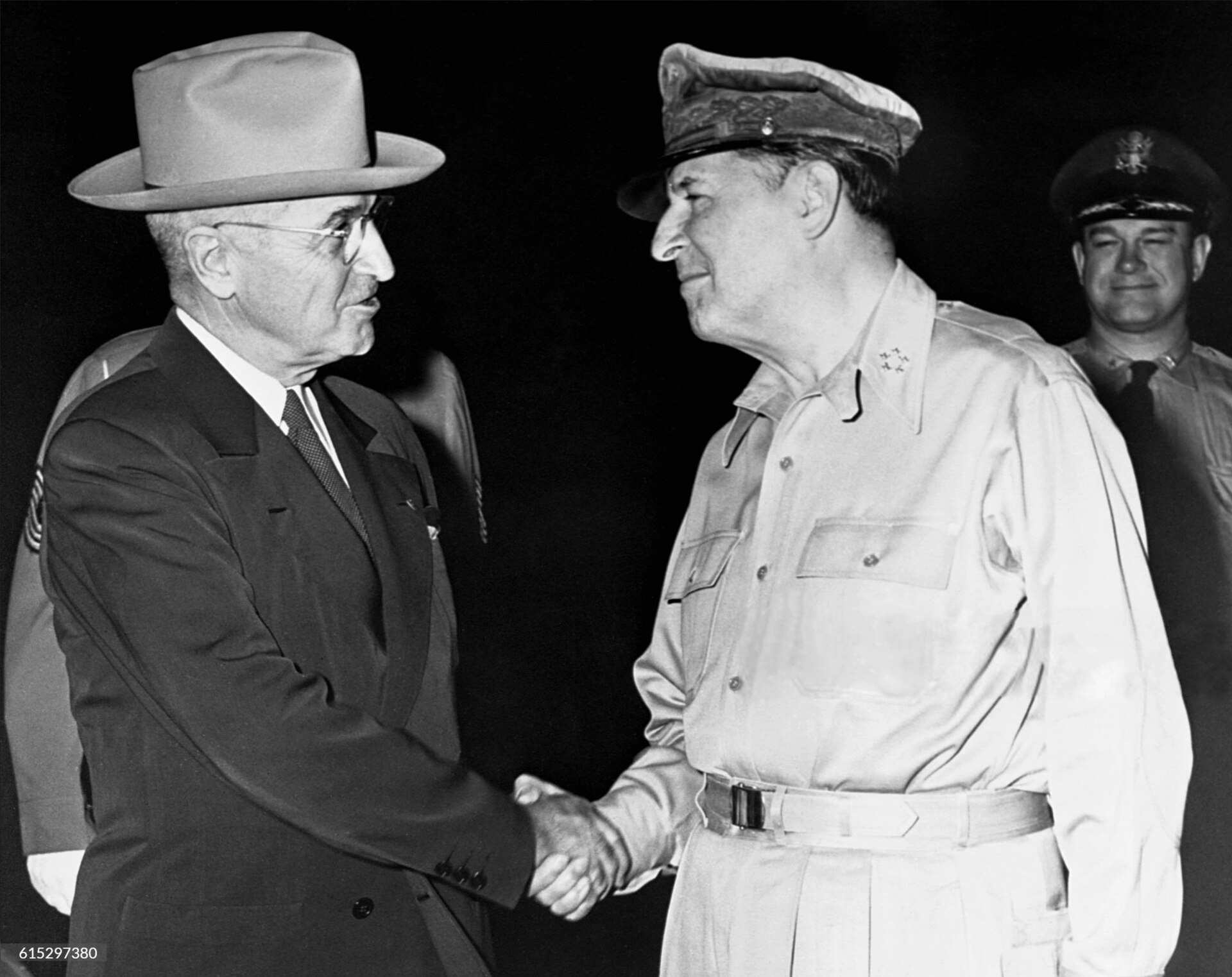
On June 30, 1950, American foreign policy lurched into a new and perilous era when President Harry S. Truman authorized the deployment of U.S. ground combat forces to Korea. Five days earlier, North Korean troops had smashed across the 38th Parallel in a lightning invasion. Rather than seek a formal declaration of war, Truman framed the response as a United Nations–sanctioned “police action,” using executive authority to move swiftly under the UN flag.
The order empowered General Douglas MacArthur to pull American divisions directly from occupation duty in Japan and rush them into South Korea’s collapsing defensive lines. The first to go was Task Force Smith, a hastily assembled battalion from the 24th Infantry Division. These young soldiers—understrength, poorly equipped, and unprepared for modern armored warfare—were thrown into a desperate delaying action against veteran North Korean forces. In suffocating heat and with little anti‑tank capability, they suffered devastating losses as they tried to buy time for a broader American buildup.
Truman’s decision on that June afternoon committed the United States to a brutal three‑year war that claimed more than thirty‑six thousand American lives and millions of Korean civilian deaths. It marked the moment the Cold War turned hot, signaling that the United States would risk its own blood to draw a hard, immovable line against communist expansion.
