
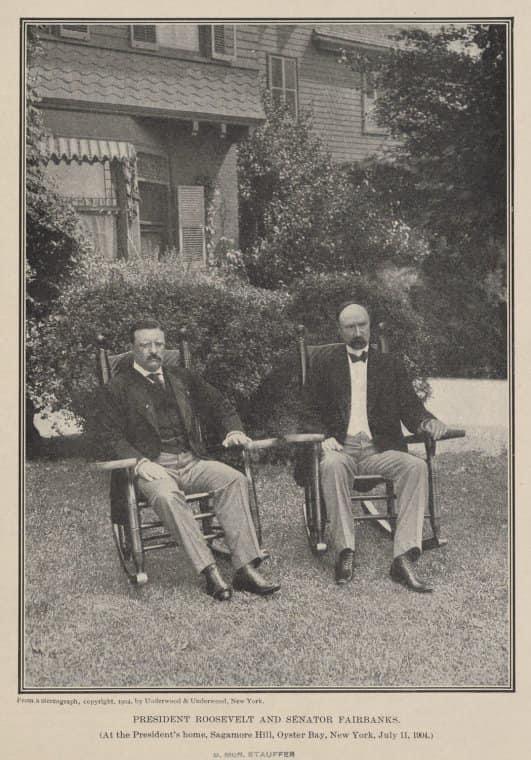
On July 11, 1904, the coastal estate of Sagamore Hill in Oyster Bay, New York, transformed into the epicenter of American political theater. Senator Charles W. Fairbanks of Indiana arrived at President Theodore Roosevelt’s private sanctuary for the formal “notification ceremony” confirming their joint Republican presidential ticket. Roosevelt, who had ascended to the presidency following the tragic assassination of William McKinley, used this high-profile summit to kick off his campaign for a decisive, independent mandate from the American electorate.
The pairing was a calculated exercise in political balance. While the energetic Roosevelt represented the progressive, trust-busting wing of the party, Fairbanks was a staunch, stone-faced conservative favored by the traditional party establishment. The summit at Sagamore Hill projected an image of robust party unity to the press, setting the stage for a landslide electoral victory in November that firmly secured Roosevelt’s place in history.
