
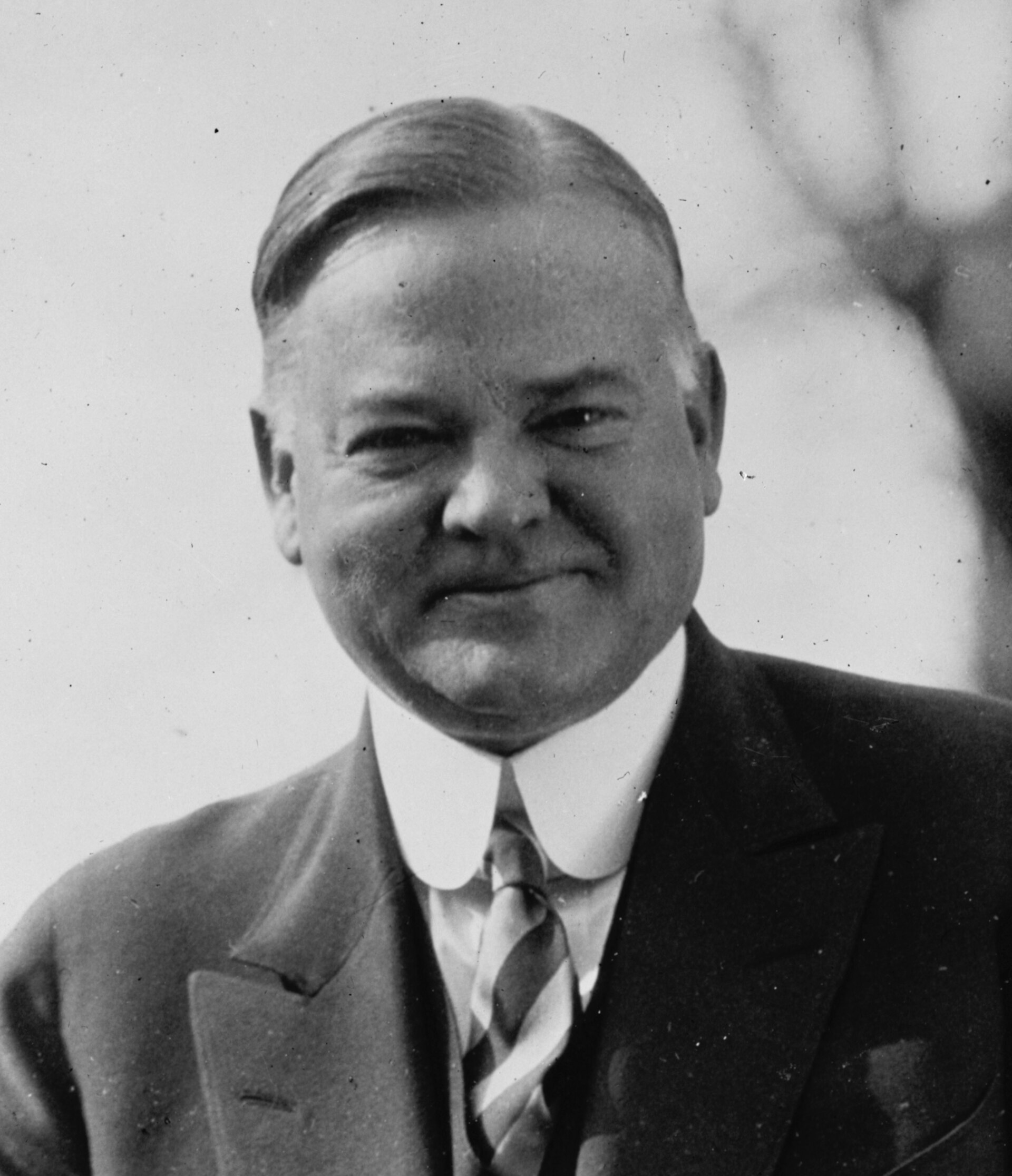
On October 20, 1964, former United States president Herbert Hoover died in New York City at the age of ninety. For the final twenty years of his life, he had made his home at the Waldorf-Astoria. His death closed a public career that encompassed international humanitarian relief, the presidency, and decades of service after leaving office.
Born into a Quaker family in West Branch, Iowa, Hoover established a successful mining career before World War I brought him into humanitarian work. Through the Commission for Relief in Belgium, he helped organize food supplies for millions of civilians trapped in wartime Europe. He later directed the United States Food Administration and postwar relief efforts, earning international recognition before his election as the nation’s thirty-first president in 1928. The Great Depression would dominate his presidency and leave a lasting controversy over his leadership during the crisis.
After leaving the White House in 1933, Hoover remained active in public affairs. President Harry Truman enlisted his help in addressing postwar hunger, and Hoover chaired commissions on reorganizing the executive branch under Truman in 1947 and Dwight Eisenhower in 1953. These assignments returned him to national service and drew on the administrative abilities that had established his reputation before the presidency.
His name also became attached to a lasting public-works project in Florida. Federal levee construction around Lake Okeechobee was authorized in 1930, during his administration, and carried out by the U.S. Army Corps of Engineers beginning in 1932. The expanded system was renamed the Herbert Hoover Dike in 1960, and Hoover attended a dedication ceremony the following year. The structure links his memory to the long effort to protect lakeside communities from catastrophic flooding, though its construction and later improvement involved generations of public investment and engineering work.
Hoover’s life resists a simple verdict. His humanitarian achievements and later public service did not erase the controversy surrounding his presidency, but neither should that presidency stand for the whole of his career. Remembering him requires holding both records in view: the administrator who helped feed millions and the president whose leadership was tested by economic catastrophe.
