

Amid the turmoil of the 1860s, these women stepped before the camera with a grace that feels almost otherworldly today. Their hoop skirts, fitted waists, and carefully arranged curls speak to a world determined to hold onto refinement even as the country split in two. Each portrait is a small enchantment—an intimate reminder that beauty and fashion persisted, even in a land at war.
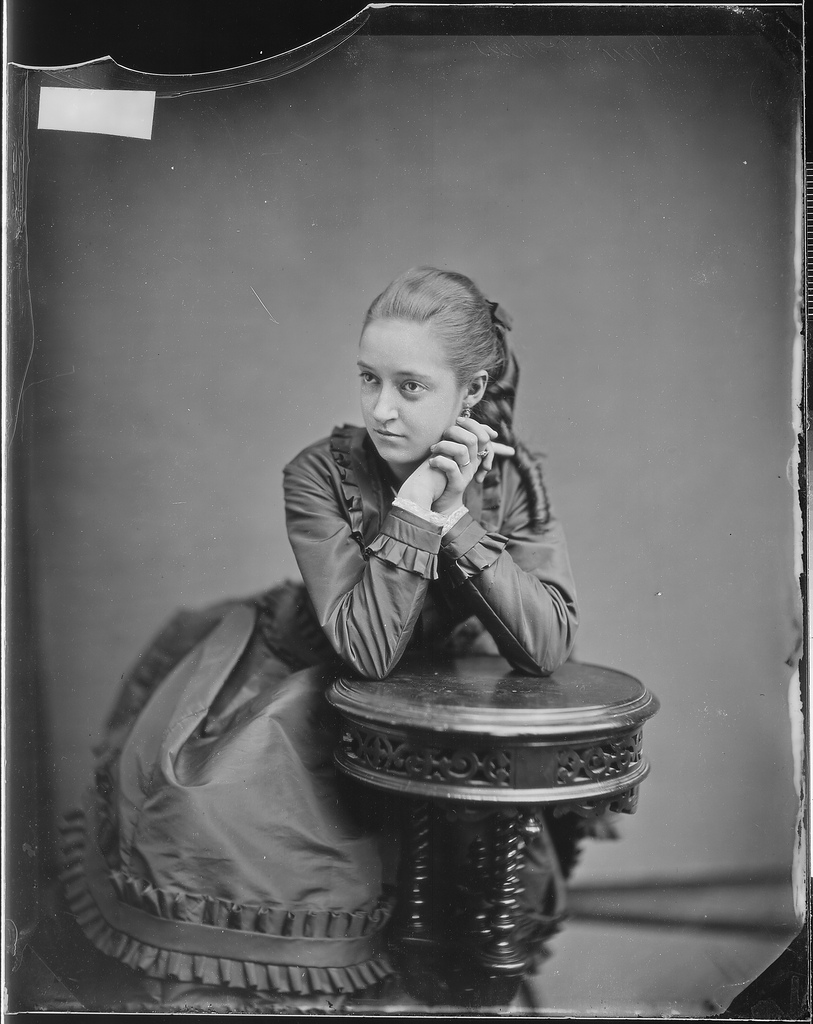
Miss Ogden sits leaning against an ornate studio table, her elbows resting on top, her hands lightly clasped and her gaze turned slightly aside. Her dress is modestly trimmed, with clean lines and subtle edging typical of the early 1860s, and her neatly arranged, light‑toned hair reflects the era’s preference for controlled elegance. The quiet composure and careful staging are characteristic of Brady’s civilian portraits, preserving the presence of women whose stories survive only through the studio’s glass negatives.
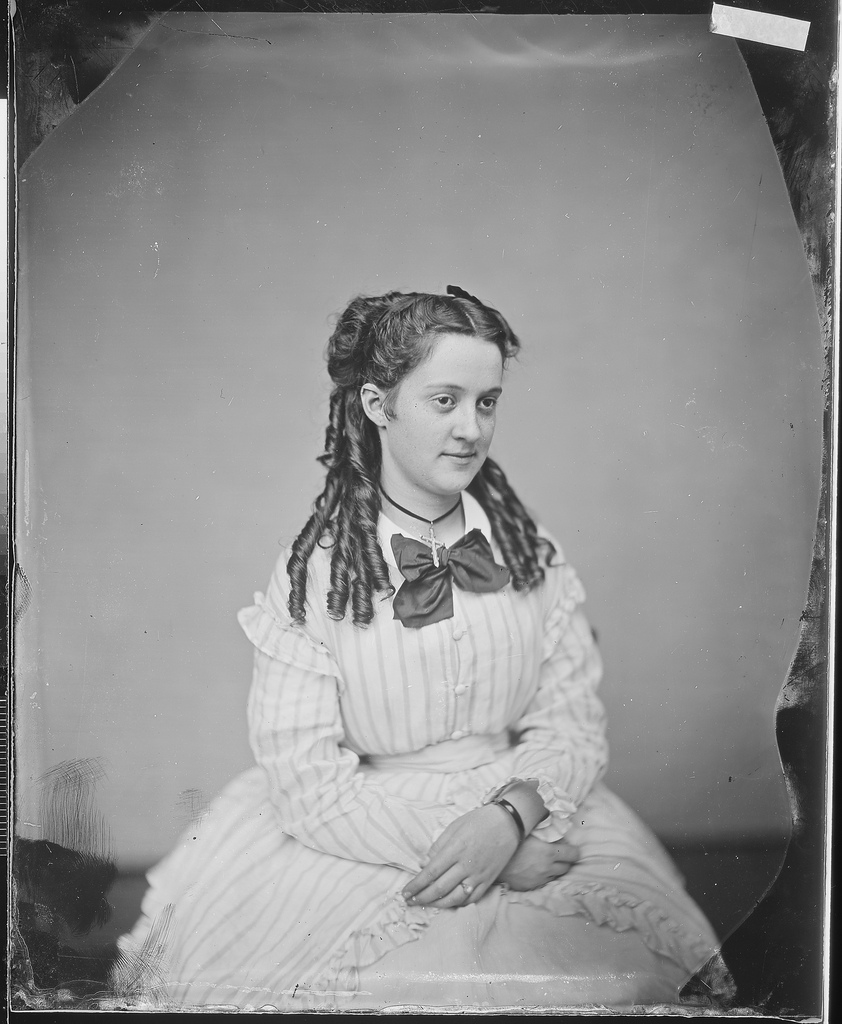
Miss L. C. Miris sits in a striped, ruffled dress anchored by a dark bow at her collar, her long curls arranged with deliberate symmetry. The portrait’s force comes from its simplicity — clean lines, steady posture, and the calm confidence she carries into the studio light.
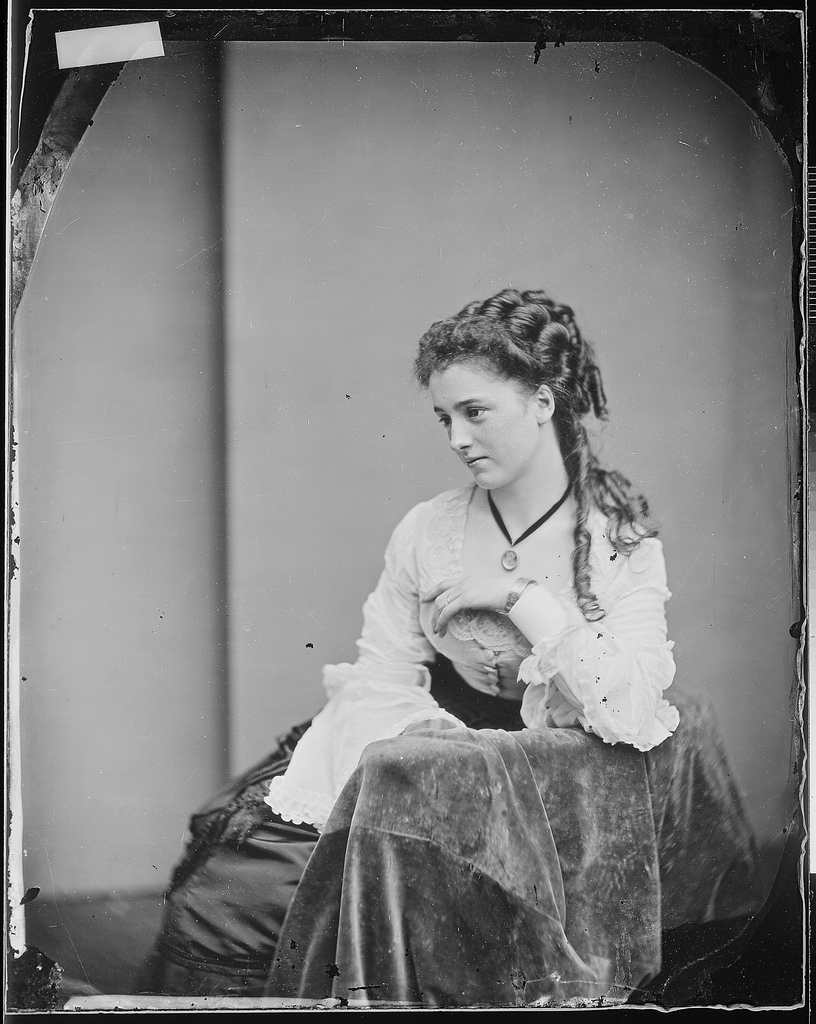
Taken in the Brady studio between 1860 and 1865, this portrait shows a young woman in a white lace‑trimmed blouse and dark skirt — a stylish mid‑1860s pairing. Her curled hair and pendant necklace reflect the era’s controlled elegance, while her poised, hand‑to‑chest gesture is typical of Brady’s civilian portrait work during the Civil War.
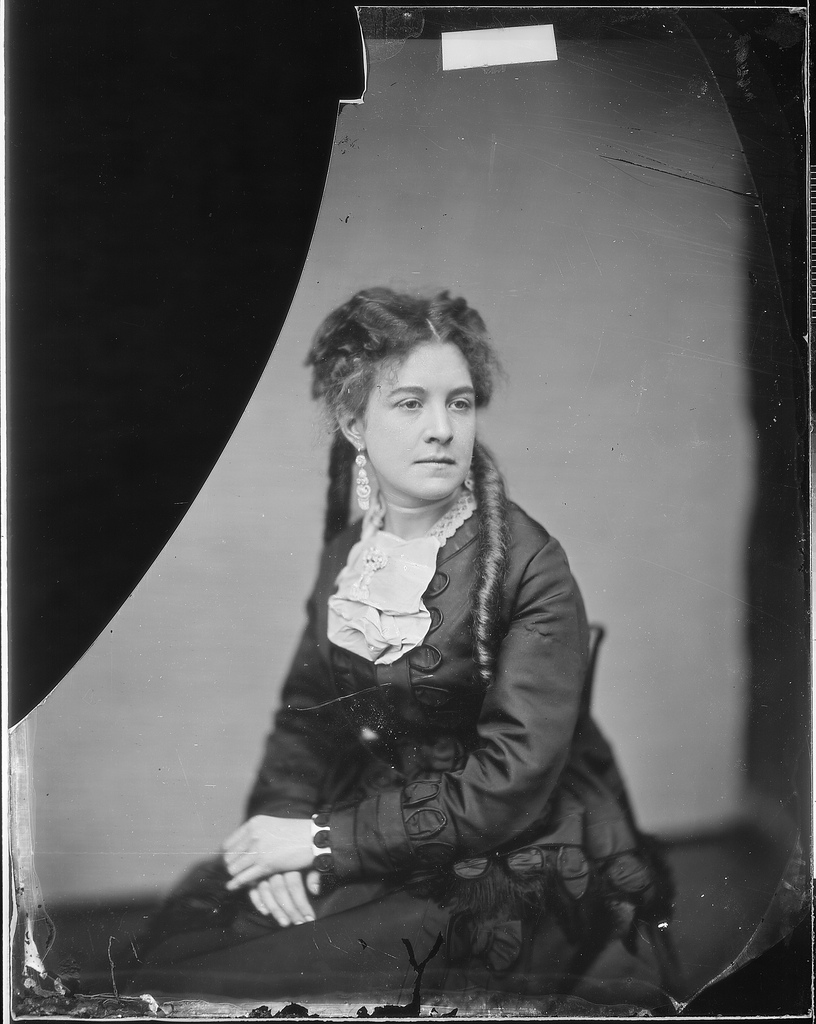
A mid‑19th‑century studio portrait showing a sitter in a dark dress accented with bow‑shaped front ornaments and a light lace collar fastened by a brooch. The hair is arranged in tight curls, with earrings and a bracelet adding modest ornament. The pose is composed and slightly angled, typical of early 1860s portrait conventions.
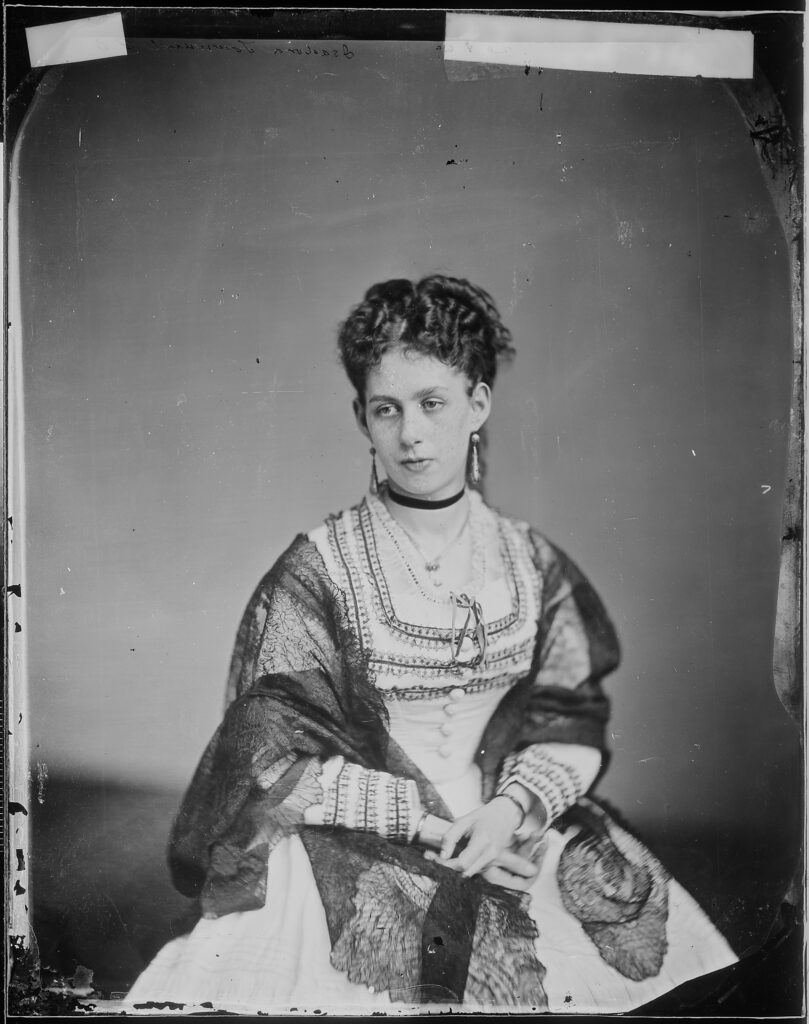
In this portrait, Isadora Townsend wears a light, embroidered bodice fastened with a neat row of buttons, its delicacy offset by the dark lace shawl arranged across her shoulders. Her tight curls, choker, earrings, and necklace introduce small points of brightness calibrated for the long exposure. Rather than relying on bold contrasts, the composition builds its refinement from texture and stillness.
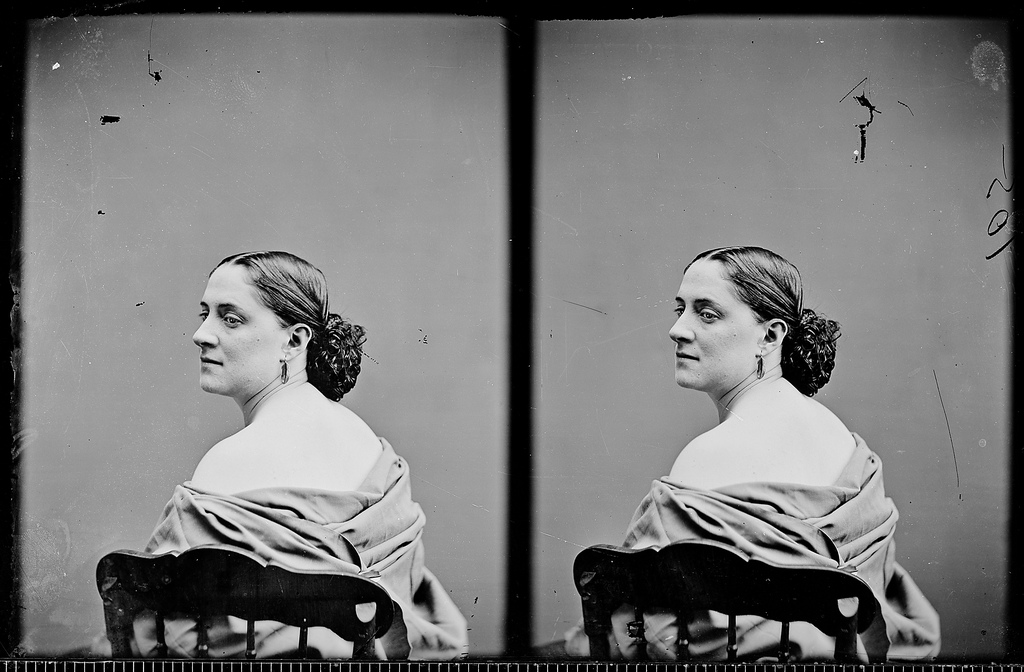
Attributed to Mathew Brady, this Civil War–era stereograph shows a young woman seated with her back partly turned, her shoulders draped in a soft wrap. The polished hairstyle and controlled pose reflect mid‑1860s studio fashion, while the dual images mark it as a stereoscopic view—one of the artistic portrait types Brady’s studio occasionally produced alongside its more famous military work.
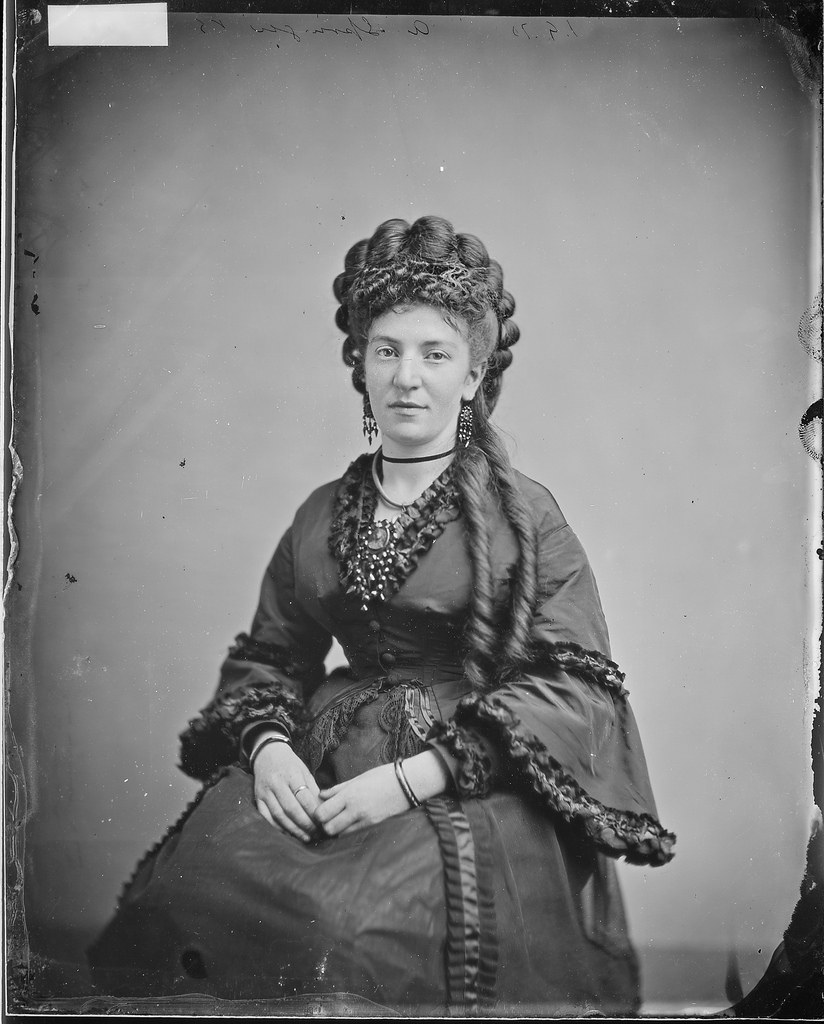
Mrs. A. Springer wears one of the most sculptural hairstyles of the early 1860s: wide, heavy curls arranged high at the sides, built with braids, pads, and careful heat‑setting to hold their shape under long studio exposures. This was a moment when American women used hair as their most expressive element — a place to show skill, status, and modernity even when wartime shortages limited fabrics and ornament. Her arrangement is a masterclass in that craft, a deliberate, architectural style meant to signal presence before a single word was spoken.
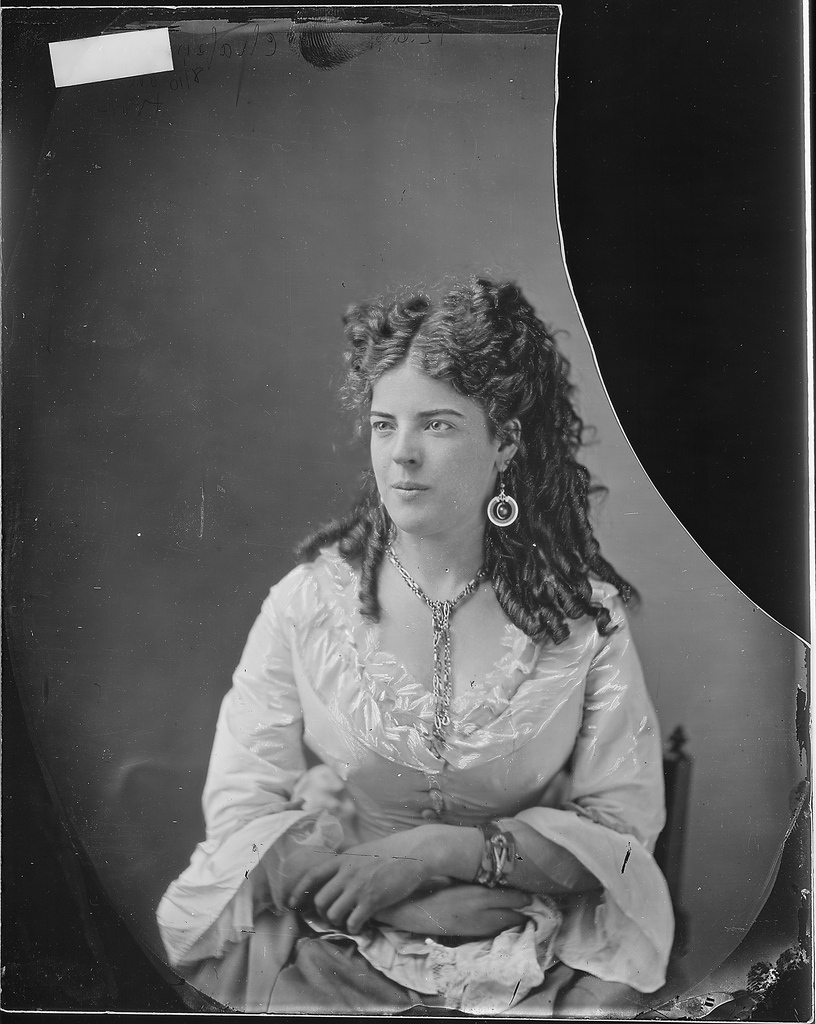
Likely photographed in the Brady gallery during the Civil War years, Mrs. Chapin appears in a light, satin‑textured dress trimmed with decorative detailing, paired with bold circular earrings and a long pendant necklace — accessories fashionable in the early to mid‑1860s. Her hair, arranged in elaborate curls and lifted away from the face, reflects the controlled elegance favored in wartime portraiture. Though little is recorded about her life, this glass negative preserves the poised, carefully composed image Brady’s studio crafted for civilian sitters alongside its more famous military subjects.
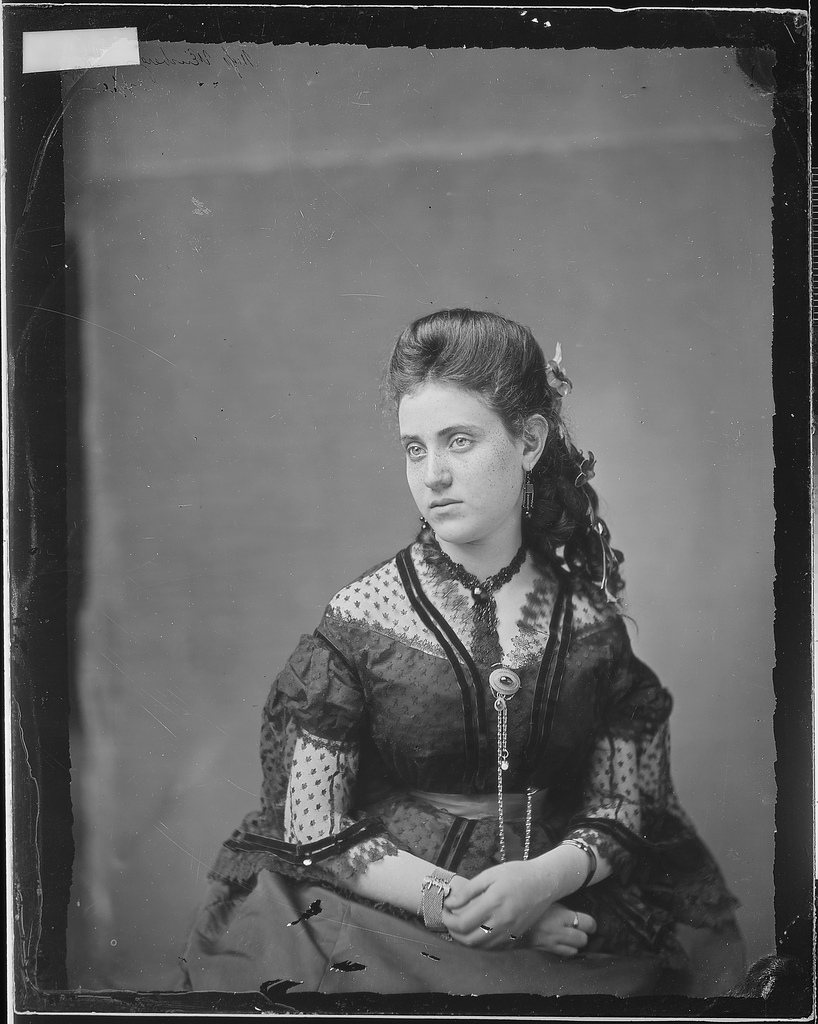
Mrs. Weinburg wears a dark patterned dress with a sheer lace panel set above the shoulders and upper arms, framed by the structured seams at the shoulder line. Her jewelry is arranged in two parts: a close‑fitting necklace at the throat, and below it an ornate dress fastener from which a single chain is suspended. The portrait takes shape through this careful arrangement of fabric, lace, and metal, each element placed with intention.
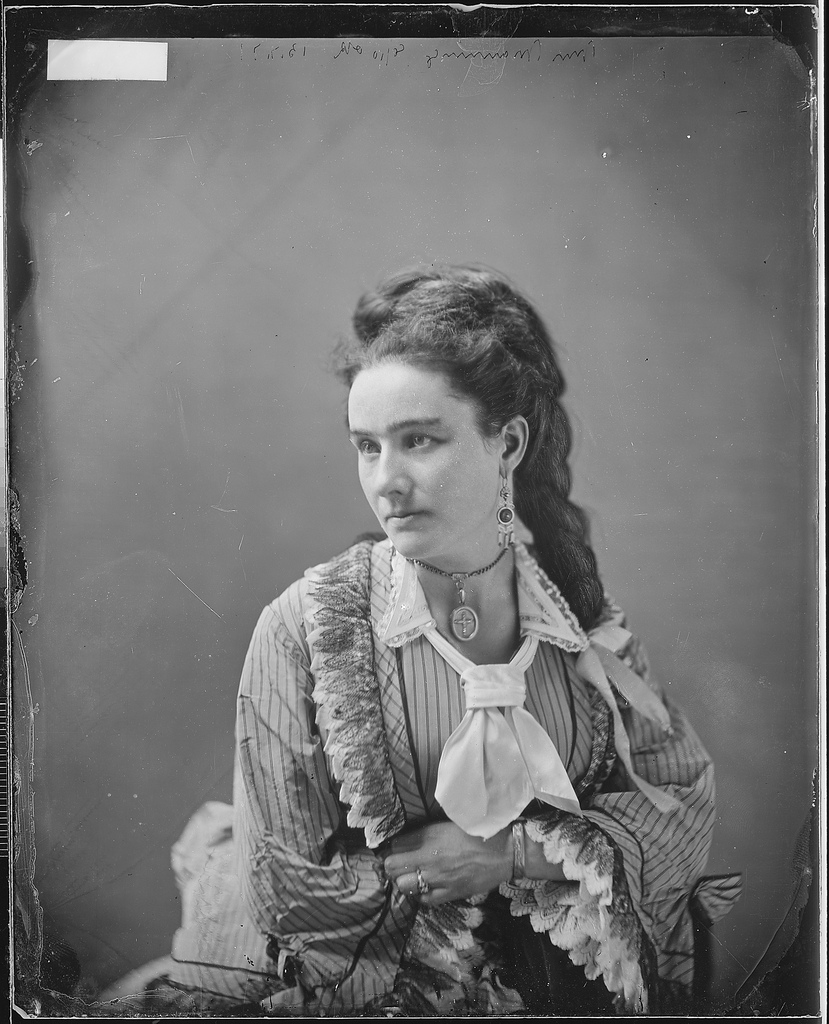
Mrs. Manning’s boldly striped dress, crisp white bow, and lace‑trimmed bodice create a striking, high‑contrast look meant to read clearly in early photographic light. Her long earrings frame the face, but it’s the pendant at her collar — revealing a small cross — that adds the most personal note, an outward sign of the faith she chose to carry into the studio.
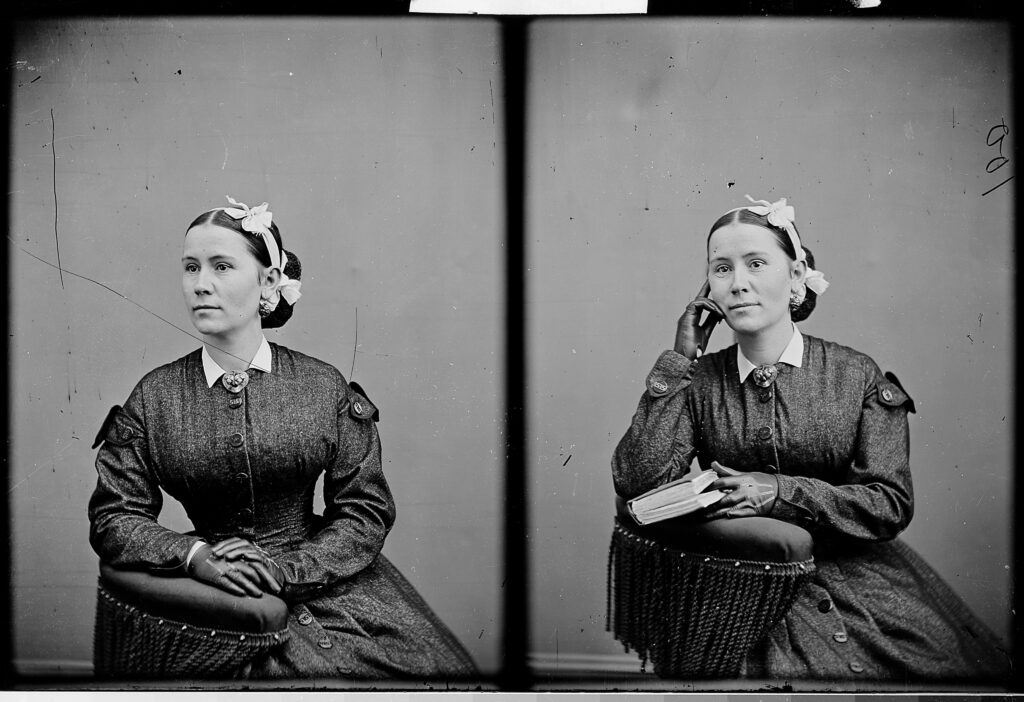
Probably depicting the actress Lucille Western, this dual‑pose portrait reflects the theatrical style of the 1860s. Her buttoned dress, white collar, ribboned hair, and fully gloved hands match the period’s stage fashion, while the paired poses echo Brady‑era studio practices for creating multiple publicity images for admirers and theater managers.
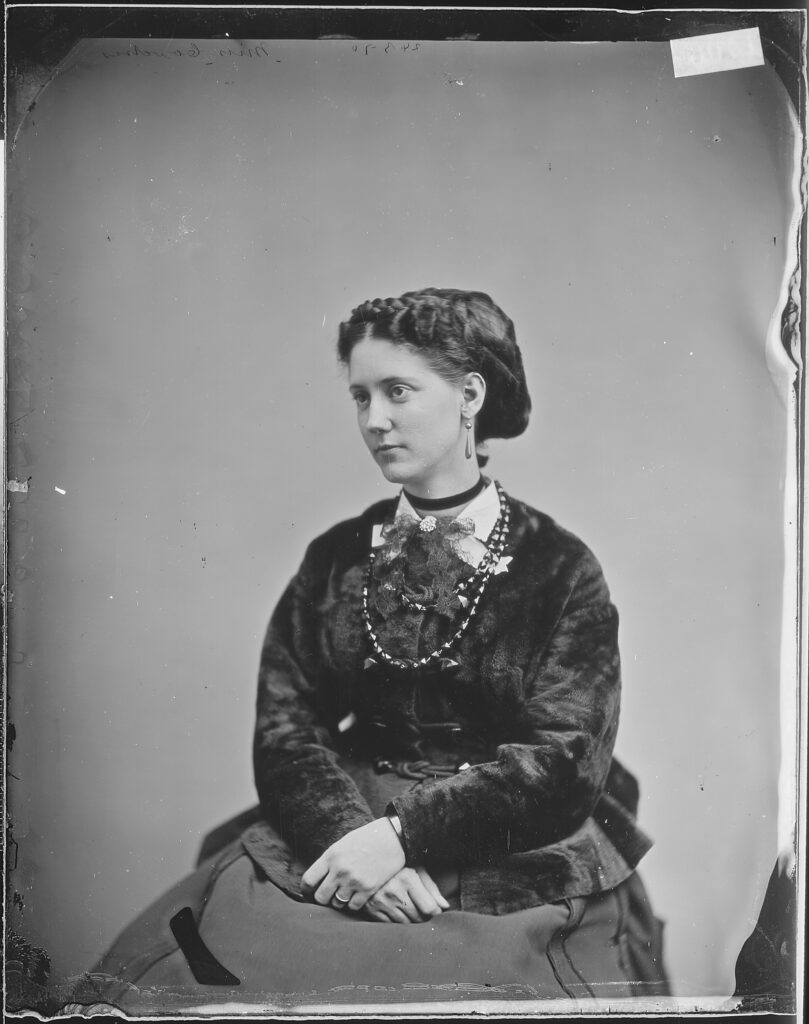
Miss or Mrs. Cowdres wears a dark velvet waist over a light, ornamented blouse front — a silhouette shaped by mid‑19th‑century European fashion but softened into the more practical, pared‑back style many American women favored during wartime. Her braided updo, earrings, and necklace reflect this same blend: continental influence filtered through the domestic elegance of Union‑era portrait studios, a distinctly American interpretation of high fashion.
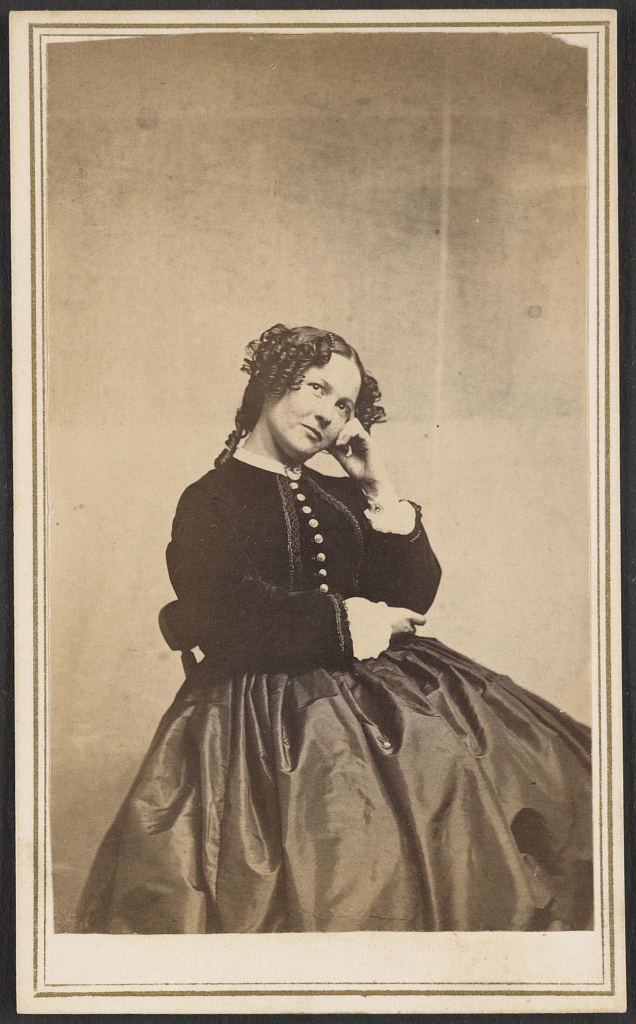
Partially identified as Miss Bidlack, this young woman was likely kin to Dr. William Wallace Bidlack, a Union surgeon at Point Lookout during the Civil War. Her dark, button‑front dress and full, lustrous skirt reflect early‑1860s fashion, while her neatly arranged curls and thoughtful pose capture the quiet refinement common in wartime portraiture. Created as a small keepsake print, this likeness may have been exchanged with family as Dr. Bidlack served on the Maryland peninsula.




Leave a Reply