
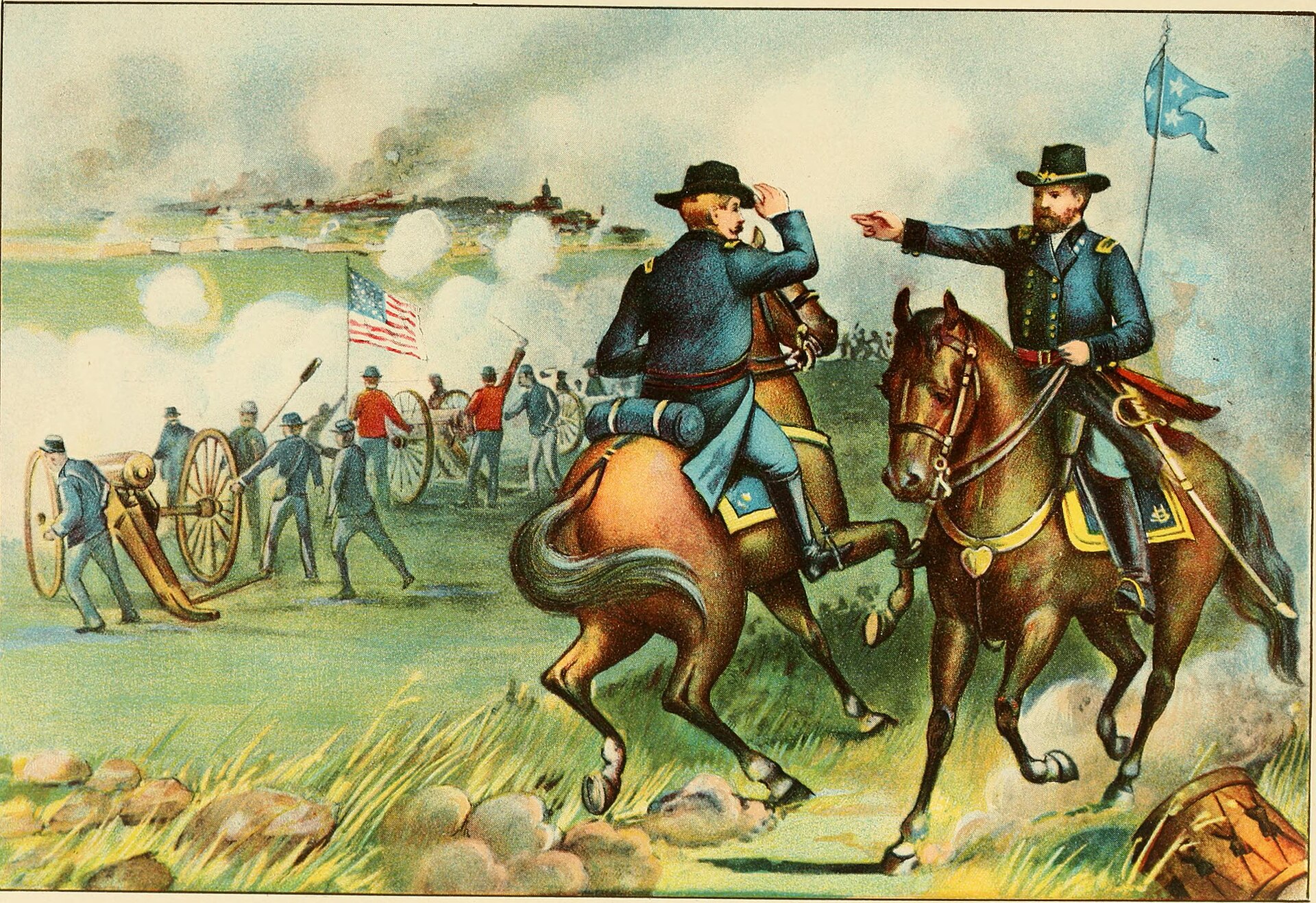
“Upon the surrender of the garrison of Vicksburg there were three things that required immediate attention…” — Personal Memoirs of Ulysses S. Grant
On July 4, 1863, Confederate commander John C. Pemberton surrendered Vicksburg, Mississippi to Union forces under Ulysses S. Grant, ending a 47‑day siege and giving the Union full control of the Mississippi River.
Because the capitulation occurred on the nation’s birthday, the people of Vicksburg viewed July Fourth not as a holiday but as a symbol of humiliation and defeat. For generations, the city refused to mark the date with official celebrations or fireworks. Vicksburg did not formally observe the Fourth of July again for 81 consecutive years, finally resuming municipal festivities during World War II.
Image: General Ulysses S. Grant at Battle of Vicksburg
