
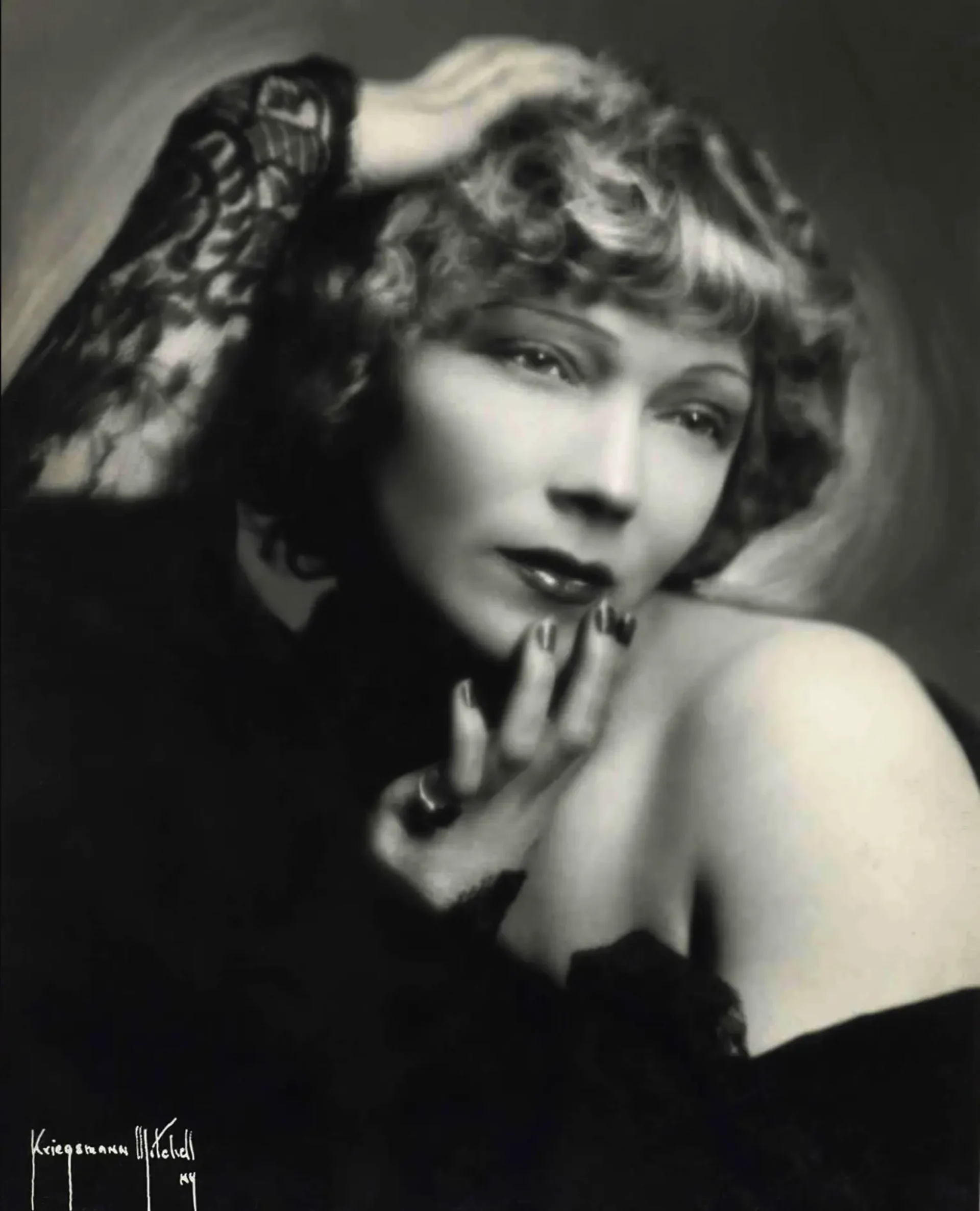
Born Marianna Michalska on October 24, 1901, in Kraków, in present-day Poland, Gilda Gray became one of the distinctive dance personalities of America’s Roaring Twenties. She immigrated to the United States as a child and settled with her family in Milwaukee. Her early career eventually took her to Chicago and New York, where her singing and dancing brought her to the attention of larger audiences.
Gray’s signature was the shimmy—a dance associated with shaking shoulders and rippling body movements. She did not invent it: the dance had earlier roots, including African American performance traditions. But she helped bring it to national attention, making it a centerpiece of her stage persona and becoming closely identified with the exuberance of the Jazz Age.
Her appearance in the Ziegfeld Follies of 1922 helped establish her as a major attraction. Success in revues and vaudeville led to silent films, including Aloma of the South Seas (1926), The Devil Dancer (1927), and Piccadilly (1929). Across stage and screen, Gray turned her distinctive dancing into a recognizable celebrity identity.
On the anniversary of her birth, Gray is remembered for helping make the shimmy an emblem of the Roaring Twenties—a reminder of how a performer could carry an existing dance to new audiences and make it inseparable from her own name.
