
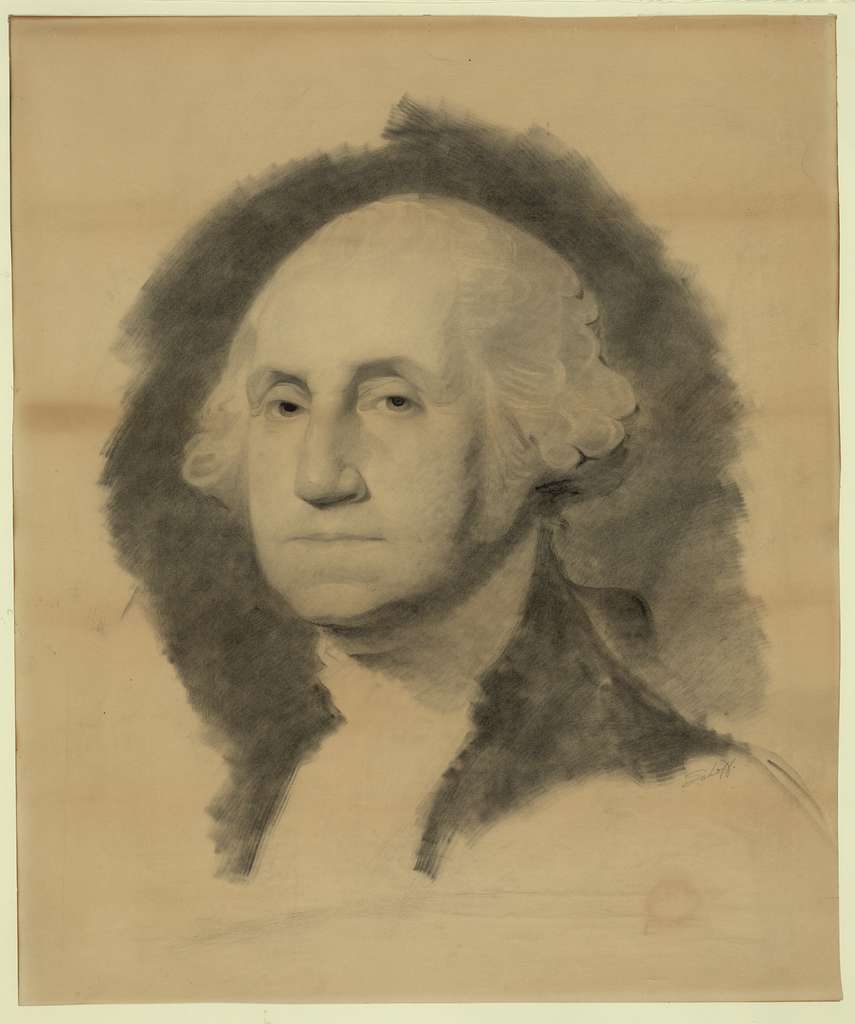
On October 24, 1789, President George Washington arrived in Cambridge, Massachusetts, during his New England tour. There he reviewed militia under General John Brooks, recording that they made “an excellent appearance.” Lieutenant Governor Samuel Adams and the Massachusetts Executive Council met him in Cambridge and accompanied him toward Boston, where the town’s selectmen formally welcomed him at the entrance.
Boston received the president with an elaborate civic celebration. Citizens assembled under banners representing their professions and trades, with more than sixty divisions arranged alphabetically to avoid disputes over precedence. Near the State House stood a temporary triumphal arch designed by Charles Bulfinch, bearing the inscription “To the Man who unites all Hearts.” Another inscription commemorated the British evacuation of Boston on March 17, 1776, explicitly linking Washington’s presidential reception to his Revolutionary service.
Washington described streets, doorways, windows, and rooftops crowded with spectators. From the State House balcony, he received three cheers before a select group of singers performed an ode in his honor. These details convey the scale and emotion of the occasion without embellishment: Boston was welcoming not merely a visiting officeholder, but the Revolutionary commander who now embodied the presidency.
Yet the celebration did not erase questions of rank and authority. Washington declined a planned dinner with Governor John Hancock after Hancock failed to call on him first; the governor cited illness, while the president insisted on receiving the visit. Read alongside the public festivities, the episode reveals both the strength of Washington’s personal prestige and the still-unsettled conventions of the new federal government. Boston’s welcome offered a powerful image of national unity, even as its leaders worked out what presidential authority would mean in practice.
