
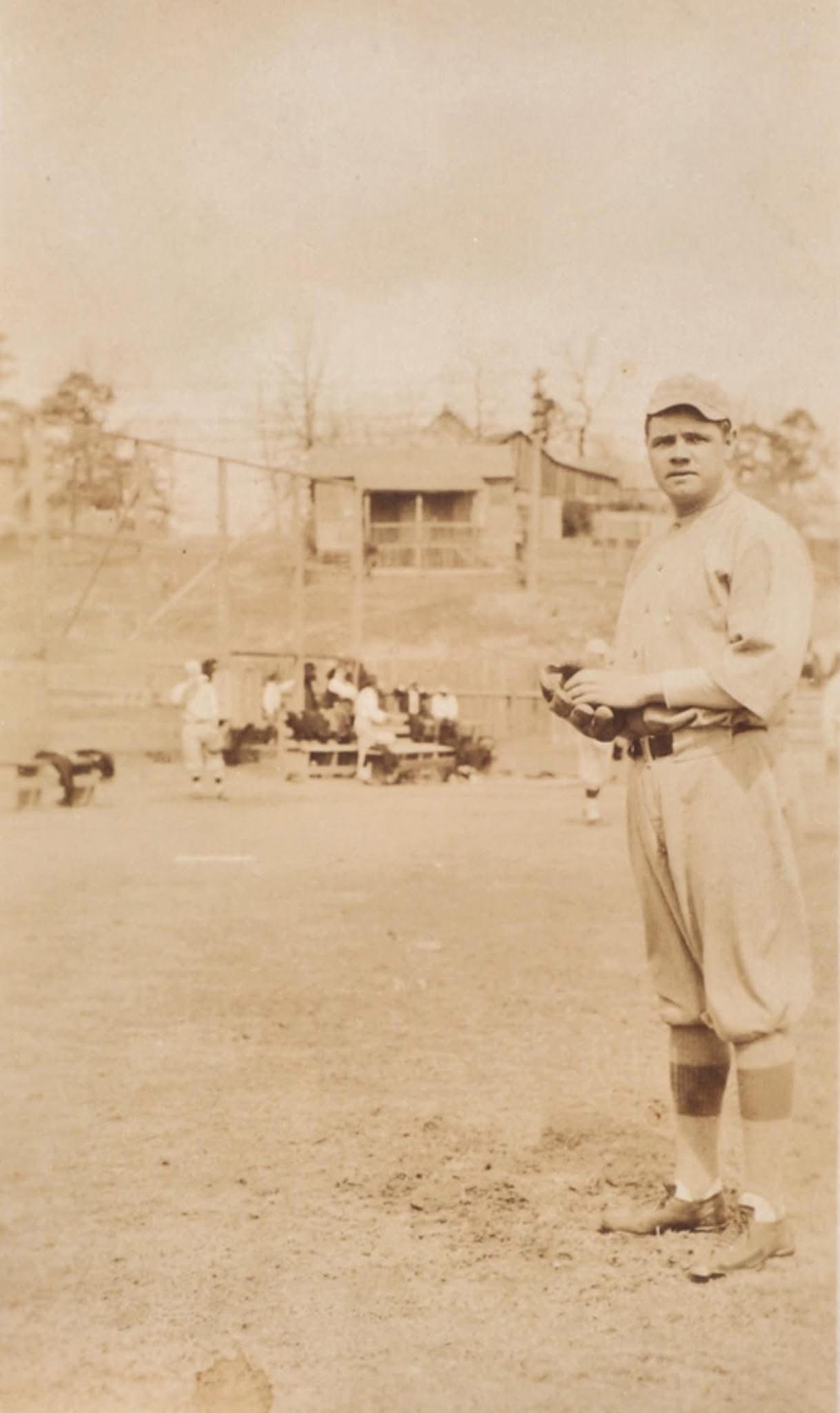
A young Babe Ruth, photographed in 1915 during his second season with the Boston Red Sox—still known more for his pitching than his bat. That year, he posted an 18–8 record and a .315 batting average, hitting 4 home runs in a season when the entire team hit just 14. The Red Sox won the World Series, and Ruth’s dual talent began to hint at the legend to come.
On this day—August 16, 1948—George Herman Ruth passed away in Manhattan at age 53 after battling throat cancer. The next morning, his body was brought to Yankee Stadium, where tens of thousands—some estimates reaching 100,000—filed past his casket in the rotunda. His funeral, held on August 19 at St. Patrick’s Cathedral and presided over by Cardinal Francis Spellman, drew tributes befitting a president or a king. Ruth was laid to rest at Gate of Heaven Cemetery in Hawthorne, New York.
The mourning that followed Ruth’s passing was unprecedented. He had transcended sports to become a living symbol of 20th‑century Americana. As his casket sat inside the stadium he helped build through sheer drawing power, a line of weeping citizens stretched for blocks down the Bronx streets. Parents lifted their children for one last glimpse of a true folk hero.
Ruth rescued baseball from the shadow of the 1919 Black Sox scandal. He transformed the game from a low-scoring, dead-ball exercise into a spectacle of raw power and joy. His devotion to orphaned children and hospitalized fans matched his on-field greatness, turning him into an emotional anchor for a nation navigating the Great Depression and World War II.
Image: A vintage portrait of a young, bare-faced Babe Ruth during his early pitching years via Wikimedia Commons, public domain
