
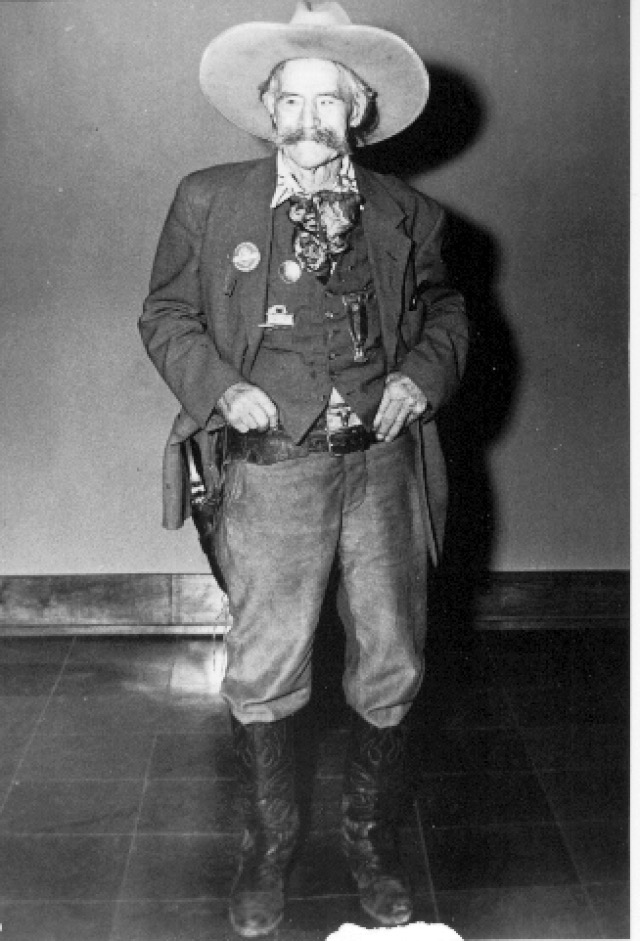
Born on October 26, 1860, in Hartford, Connecticut, Frank Boardman Eaton became the real-life inspiration for Oklahoma State University’s “Pistol Pete” mascot. His enduring reputation rests on both his frontier experiences and the dramatic stories he told about them—stories in which documented history and personal legend are not always easy to separate.
After his family moved to Kansas, Eaton’s father was murdered when the boy was eight. According to Eaton’s later account, the killing set him on a years-long pursuit of vengeance against men from the Campsey and Ferber families. He also told of honing his shooting skills at Fort Gibson, where his marksmanship earned him the nickname “Pistol Pete.” These episodes became central to his public identity, although important elements of his exploits remain uncorroborated.
Eaton’s life encompassed cowboy work, blacksmithing, and storytelling. He claimed to have served as a deputy U.S. marshal under Judge Isaac Parker, but historians have questioned the evidence for that appointment and other adventures described in his 1952 autobiography, Pistol Pete: Veteran of the Old West. A second book, Campfire Stories: Remembrances of a Cowboy Legend, appeared posthumously in 1988.
His most durable legacy took shape in 1923, when students at Oklahoma A&M College saw him riding in Stillwater’s Armistice Day parade. They embraced the weathered cowboy as an alternative to the school’s tiger mascot, beginning the connection that made Eaton’s likeness an enduring symbol of Oklahoma State. Whatever the uncertainties surrounding his frontier exploits, the transformation was real: a man whose stories celebrated the Old West became the face of a modern university.
