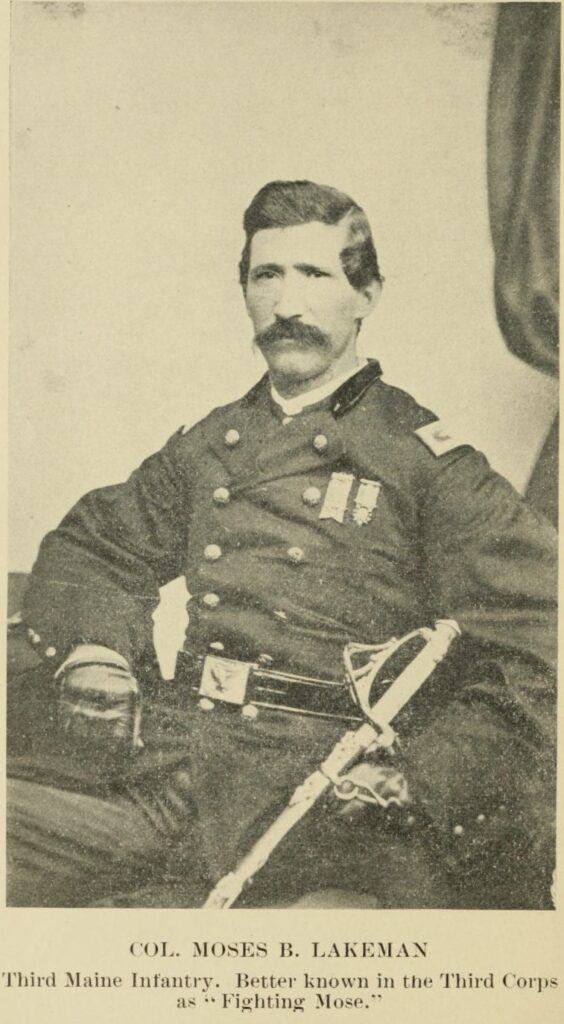
Born September 11, 1828, in Boston, Massachusetts, Moses B. Lakeman didn’t speak in abstractions. Before the war, he made his home further north, working as a hard-bitten Augusta, Maine butcher, and when the conflict arrived, he viewed it through that same pragmatic lens. To him, the Civil War was a test of whether the American experiment would survive at all. From the camps of 1861 to the blood‑heavy fields of 1863, he told his men the same thing: their cause was the Union itself.
“Our cause is just, and the Union must and shall be preserved.”
Lakeman believed the Union was more than a government—it was the world’s last, fragile proof that free men could govern themselves. He fought with the conviction that if it fell, something far greater than a nation would fall with it.
And the men of the 3rd Maine Infantry never forgot the way he fought. Lakeman led from the very front, his sword always raised where the fire was thickest. At Fair Oaks, as the regiment’s Major, he rallied his men through swamp and gunfire, waving that blade above his head to pull the line forward. He kept that same personal sword even after rising to command the regiment—a rarity among officers. Veterans later said you could always find him in the chaos of battle: “Look for the sword.” In camp, that same blade symbolized discipline; when Lakeman approached with it at his side, order followed him like a shadow. It wasn’t just a weapon—it was the silhouette of his leadership.
His commanding officer, Major General David Birney, took notice, officially praising Lakeman as an incredibly energetic combat leader possessing “great decision of character”. That energy manifested in raw, unvarnished aggression under fire. While he used his sword to guide his men, he used a fiery, classic soldier’s vocabulary to move them. In the pitch of battle, when lines wavered, Lakeman was known to unleash a spectacular, blistering string of choice words that could cut through the roar of artillery and snap terrified recruits back into formation.
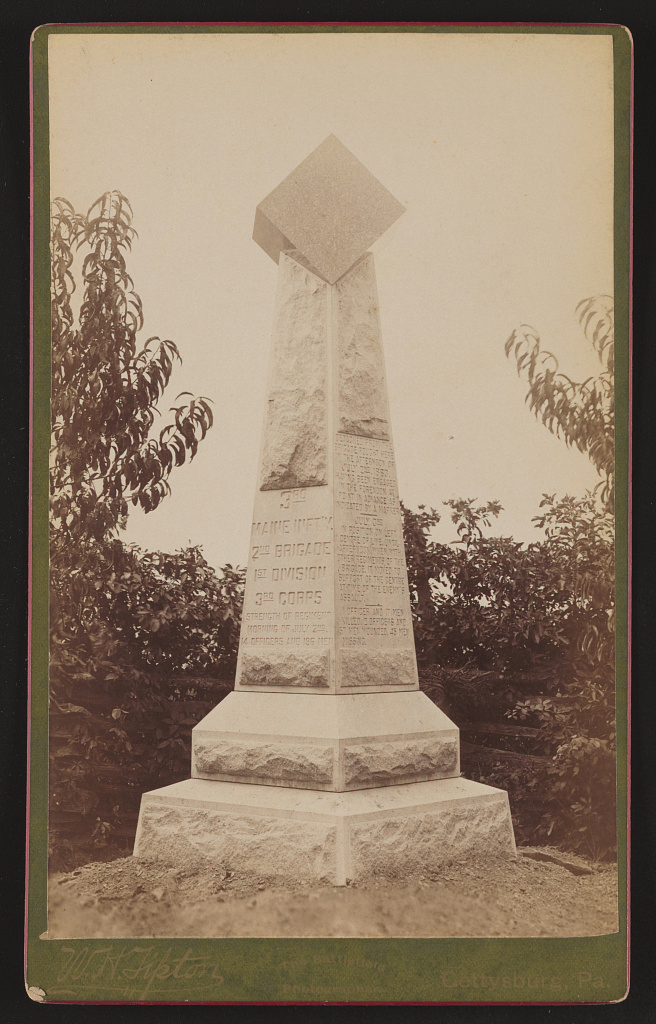
Lakeman carried that intense leadership into every major fight of the Army of the Potomac—the Peninsula, Second Bull Run, Fredericksburg, Chancellorsville—and then Gettysburg, where his resolve was tested like never before. On July 2, 1863, he led the 3rd Maine forward as skirmishers into Pitzer’s Woods and the Peach Orchard, making first contact with advancing Confederates. Under crushing pressure, Lakeman kept the regiment intact, directing a fighting withdrawal with his sword cutting the air as a signal to reform. The 3rd Maine lost over a third of its men in the Sherfy orchard and along the Emmitsburg Road, but they did not break. Their stubborn stand helped stabilize one of the most endangered points on the Union line. Lakeman left Gettysburg unhurt but never unchanged, fighting through the Bristoe and Mine Run campaigns before the regiment finally mustered out in 1864.