
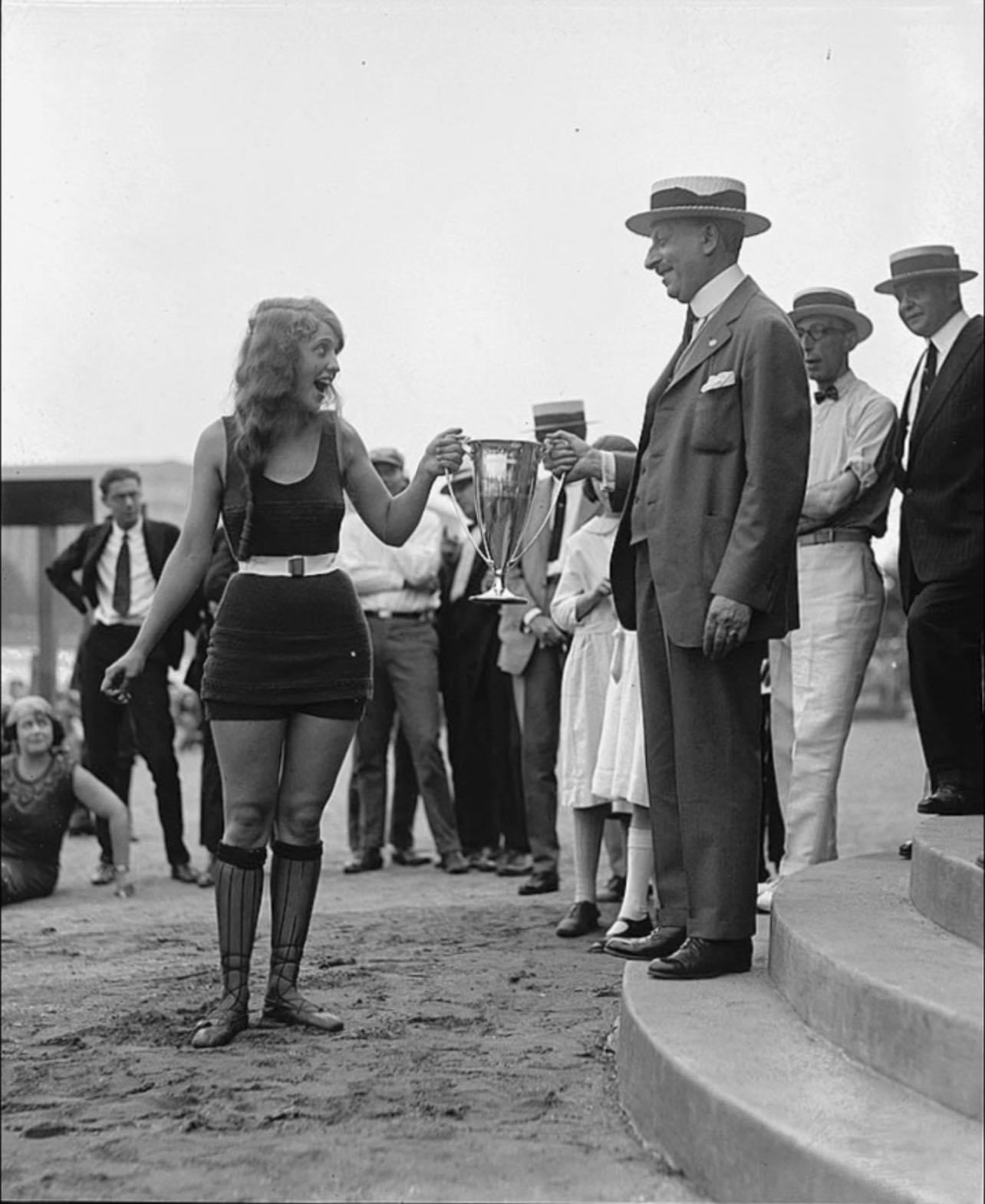
On August 5, 1922, a seventeen-year-old named Eva Fridell won a Washington D.C. bathing beach beauty contest and receives her prize, a silver loving cup trophy.
Fridell’s victory at the Tidal Basin bathing beach captured a fascinating, transitional cultural moment when the conservative Victorian era was colliding directly with the modern, liberated flapper culture of the 1920s. At the time, these early public bathing contests were highly controversial, prompting city authorities to employ specialized “beach censors” who walked the sand with tape measures to ensure that women’s swimsuits did not sit more than six inches above the knee. Winning a silver loving cup trophy required a delicate balance of youthful charm and strict moral decorum, serving as the direct, localized precursor to the massive, corporate-sponsored national beauty pageants that would soon dominate twentieth-century American media.
Image via Library of Congress, no known restrictions
