
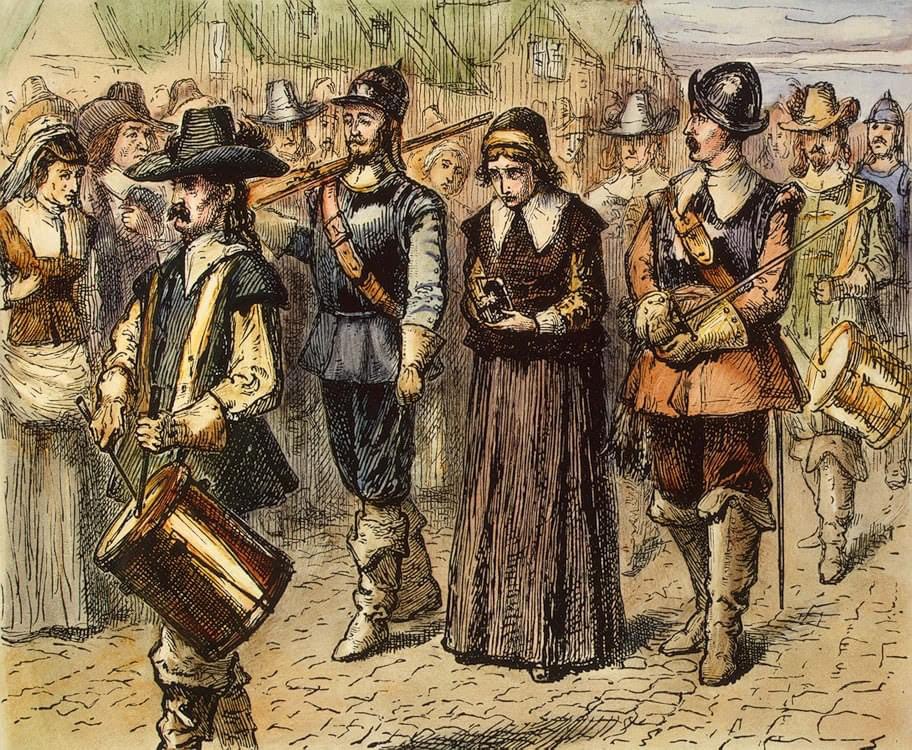
Mary Dyer walked to the Boston gallows on June 1, 1660, choosing death rather than accepting another conditional pardon that required her to abandon her Quaker faith. Her husband, William Dyer, who was not a Quaker, had repeatedly petitioned for her life, but Mary believed that submitting to banishment would betray the cause of religious liberty. Her calm resolve deeply unsettled many onlookers, and her execution became one of the most powerful early challenges to the colony’s harsh anti-Quaker laws.
In the months that followed, her death helped intensify pressure from England on Massachusetts to end the persecution of dissenters. Though not the sole catalyst, her sacrifice became a defining moment in the long struggle for freedom of conscience in America. Her quiet courage left a legacy that outlived the Puritan theocracy that condemned her, pointing toward a future in which individual belief would no longer be a capital crime.
