
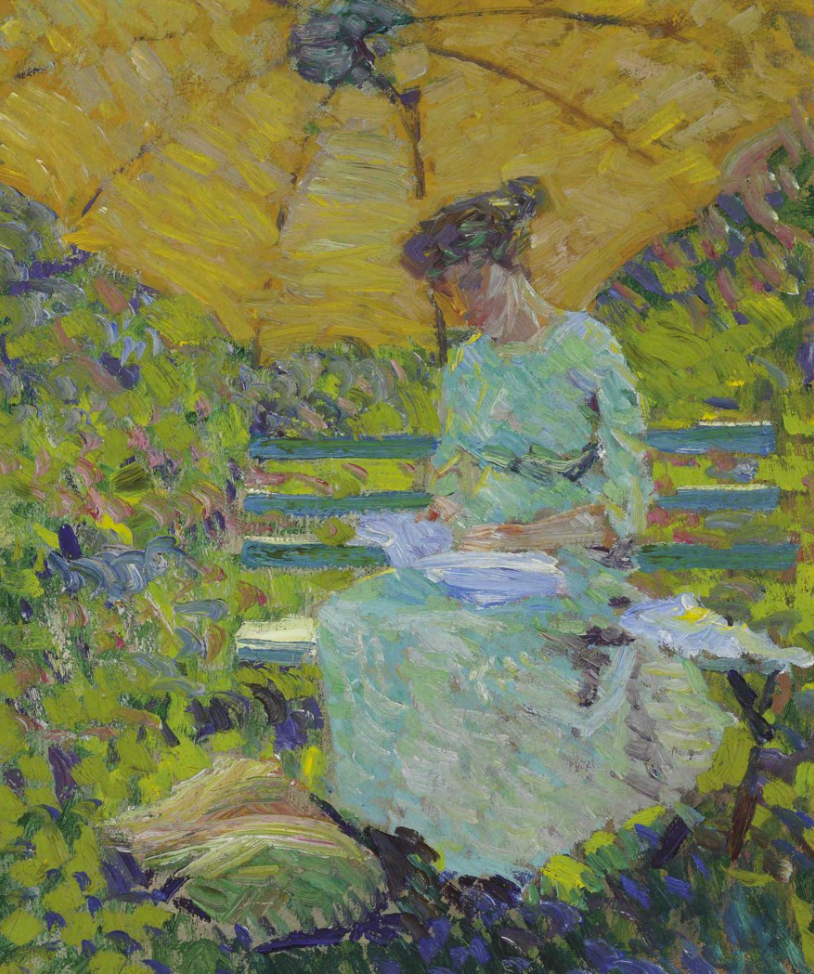
Born on October 27, 1877, in Brooklyn, New York, Walt Kuhn became known for his striking portraits of clowns, circus performers, and entertainers. Behind their theatrical costumes, he often suggested something more introspective—a human presence that outlasted the performance.
His earlier painting Under the Parasol, created around 1910, offers a glimpse into his career before the celebrated circus portraits. The oil painting reminds us that Kuhn’s artistic world extended beyond the stage and circus ring. Later included in the Cincinnati Art Museum’s 1960 memorial exhibition, it forms part of the broader body of work through which his development as an American modernist can be explored.
Kuhn’s influence also reached beyond his own canvases. As a leading organizer of the 1913 Armory Show, he worked with Arthur B. Davies and Walter Pach to assemble an exhibition that brought European and American modern art before a broad public. Their collaboration challenged established tastes and helped transform the American art world. Kuhn’s legacy belongs both to the paintings he created and to the new possibilities he helped audiences encounter.
