
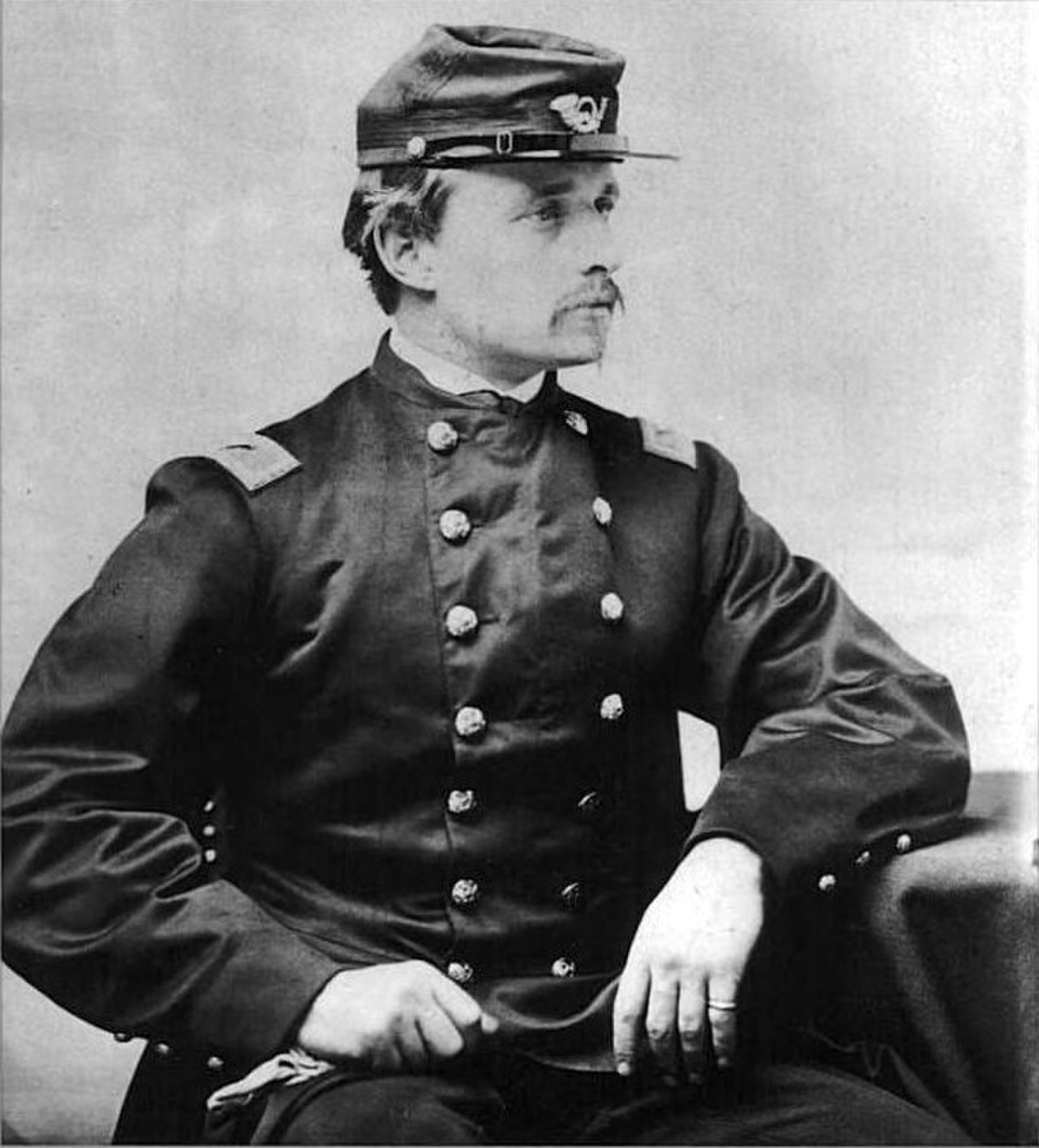
Born in Boston on October 10, 1837, to a prominent and wealthy abolitionist family, Robert Gould Shaw became an enduring figure in Civil War history as commander of the 54th Massachusetts Infantry, one of the first Black regiments raised in the North. After serving as an officer in the 2nd Massachusetts Infantry and fighting at Cedar Mountain and Antietam, Shaw—then a captain—was chosen by Massachusetts Governor John A. Andrew to command the newly organized regiment. Although he initially hesitated and declined the offer, Shaw soon accepted it, recognizing the assignment’s profound moral and military importance.
As colonel, Shaw worked to turn the 54th’s volunteers into a disciplined and effective fighting force. He also defended his men against discriminatory federal treatment, most notably the policy of paying Black soldiers less than white soldiers. By supporting the regiment’s refusal to accept unequal pay, Shaw and the 54th asserted that their service and sacrifice deserved equal recognition. Their leadership aimed to challenge a skeptical Northern public and a hostile Confederacy by demonstrating that Black soldiers possessed the courage, discipline, and skill required for combat.
That opportunity came on July 18, 1863, during the assault on Fort Wagner, a heavily fortified Confederate earthwork guarding Charleston, South Carolina. Shaw volunteered the 54th to take part in the attack, and the regiment helped lead the dangerous frontal charge. Advancing across the beach under intense fire, Shaw was killed while leading his men near the fort’s parapet. The 54th suffered severe casualties and did not capture the position, but its conduct in battle became one of the war’s most important demonstrations of Black soldiers’ resolve and combat effectiveness.
After the battle, Confederate forces buried Shaw in a common grave with his fallen Black soldiers, intending the act as an insult. Shaw’s family, however, rejected efforts to recover his body, regarding burial among his men as an honor rather than a disgrace. The sacrifice of Shaw and the 54th Massachusetts helped erode opposition to Black enlistment and inspired the service of more than 180,000 Black soldiers in the United States forces. In that sense, their actions helped reshape both the Union war effort and the meaning of the war itself.