
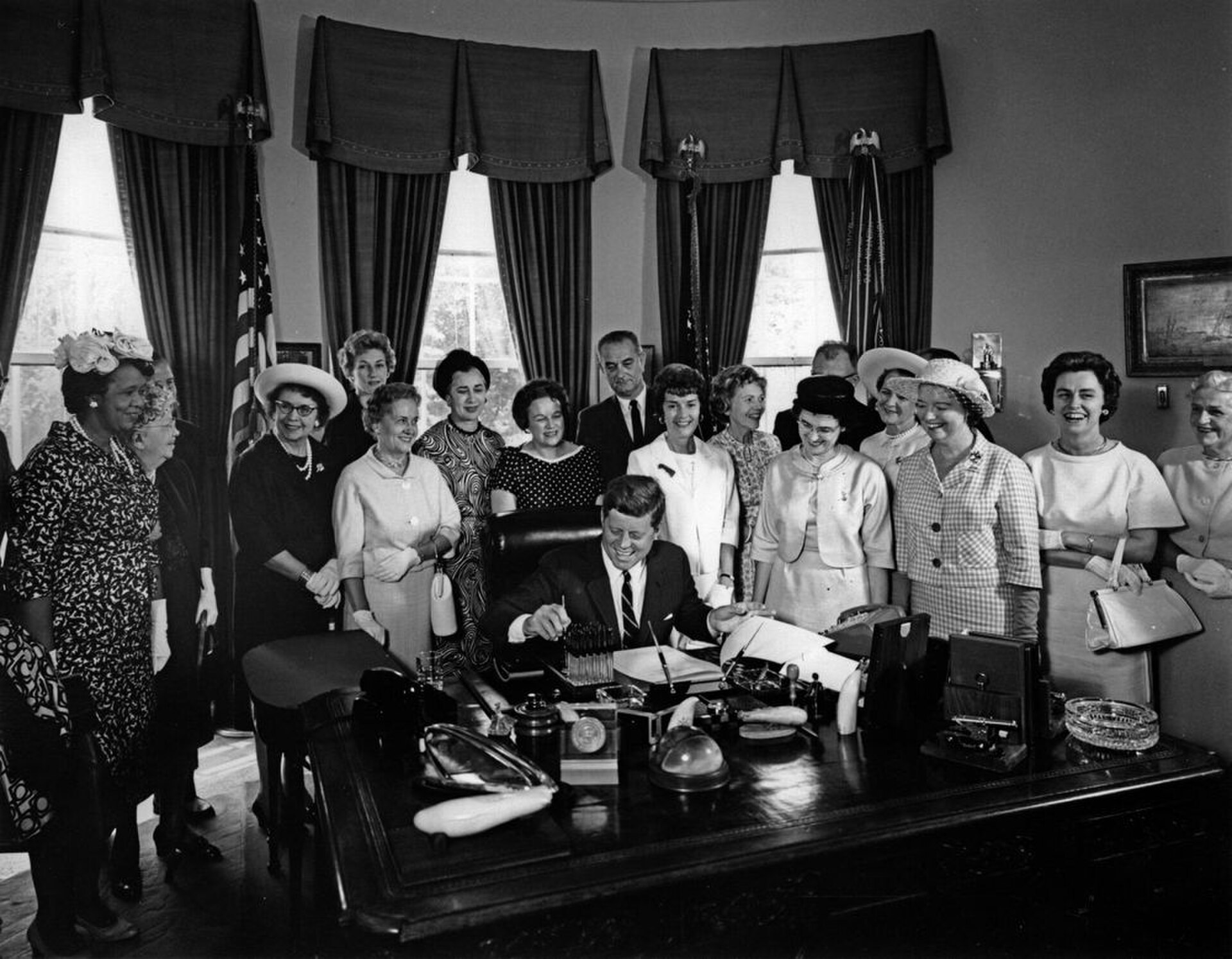
On June 10, 1963, President John F. Kennedy permanently altered the legal landscape of the American workforce by officially signing the Equal Pay Act of 1963 into law. Enacted as a crucial element of his administration’s New Frontier program, this landmark legislation targeted rampant institutional labor discrimination, making it strictly illegal for employers to pay women lower wages than men for performing equal work under identical conditions.
The political path to passing this law was a grueling, multi-decade battle carried forward by an unexpected alliance. First introduced during World War II when millions of women flooded factories to build military hardware, the concept was continuously blocked by corporate lobbies for twenty years. By framing the bill as an essential protection for traditional family incomes—arguing that wage disparity directly harmed the purchasing power of households when a husband or daughter was underpaid—activists successfully pushed the bill through a conservative Congress, establishing the nation’s very first federal workplace protection for women.
