
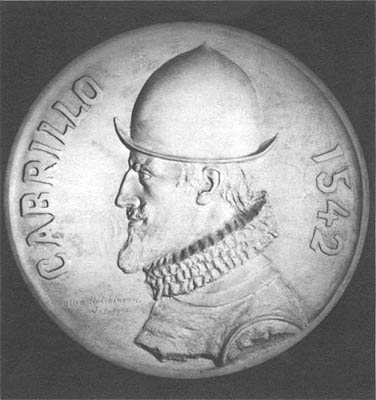
On September 28, 1542, an expedition commanded by Juan Rodríguez Cabrillo sailed into the large natural harbor now known as San Diego Bay—the first recorded European exploration of what is now California. Sailing for the Spanish Crown with three vessels, including his flagship, San Salvador, Cabrillo had departed from the port of Navidad in New Spain three months earlier. His expedition sought the fabled Seven Cities of Cíbola and the rumored Strait of Anián, a supposed water passage connecting the Pacific and Atlantic oceans.
Cabrillo described the harbor as a “very good enclosed port” and named it San Miguel, arriving on the eve of the feast of St. Michael the Archangel. Historians believe that San Salvador probably anchored along Point Loma’s eastern shore, near present-day Ballast Point. During a six-day stay, the expedition made the first recorded contact between Europeans and the region’s Indigenous people, including the Kumeyaay.
Cabrillo then continued north along the California coast before adverse weather and the onset of winter forced the expedition south. He died in January 1543, likely from complications of an injury suffered on San Miguel Island. Although the voyage found neither the Strait of Anián nor the riches its sponsors hoped to locate, it produced Spain’s earliest recorded European claim to and reconnaissance of this stretch of the Pacific coast—an encounter that would have enduring consequences for Indigenous communities and California’s colonial history.
Image via Wikimedia Commons, public domain.
