
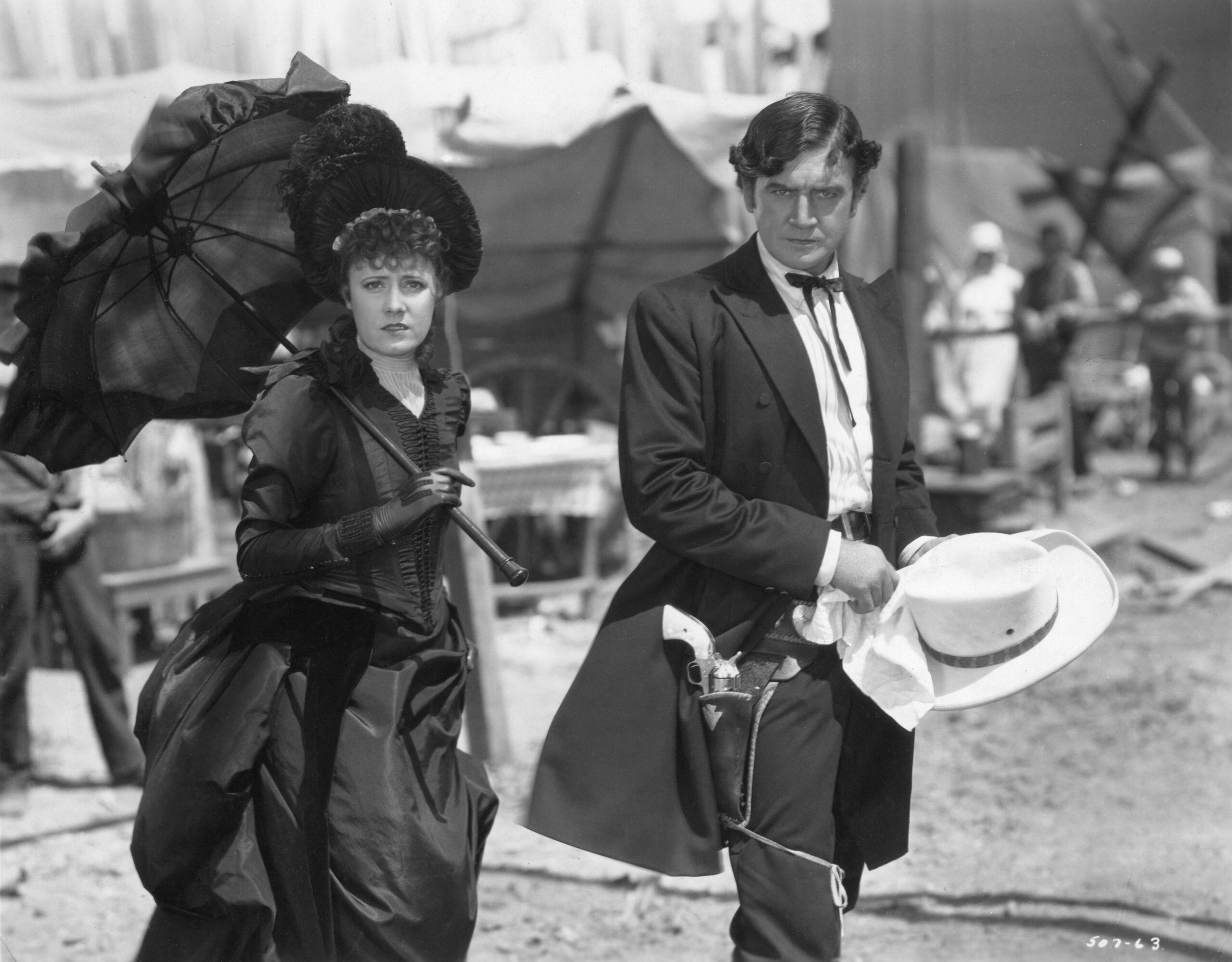
On November 10, 1931, Cimarron became the first Western to win the Academy’s top prize. At the fourth Academy Awards, held at Los Angeles’s Biltmore Hotel, the RKO production received the award then known as Outstanding Production—today’s Best Picture—along with honors for Art Direction and Writing (Adaptation). Directed by Wesley Ruggles and starring Richard Dix and Irene Dunne, it earned seven nominations in all.
The film’s ambition was evident in its recreation of the Oklahoma Land Rush of 1889. RKO committed $1.433 million, the largest budget in the studio’s history at that point, while the land-rush sequence involved more than 5,000 extras. Its vast outdoor spectacle demonstrated the scale that filmmakers could achieve in the early sound era. Yet that ambition came at a cost: despite its Oscar success, Cimarron did not recoup its production costs during its initial release.
Its Oscar distinction endured for nearly sixty years: no other Western won Best Picture until Dances with Wolves in 1991. Today, the film’s place in cinema history sits alongside criticism of its racial representations and treatment of westward expansion. Its anniversary offers an opportunity to consider both its filmmaking ambition and the assumptions embedded in its frontier mythology.
