
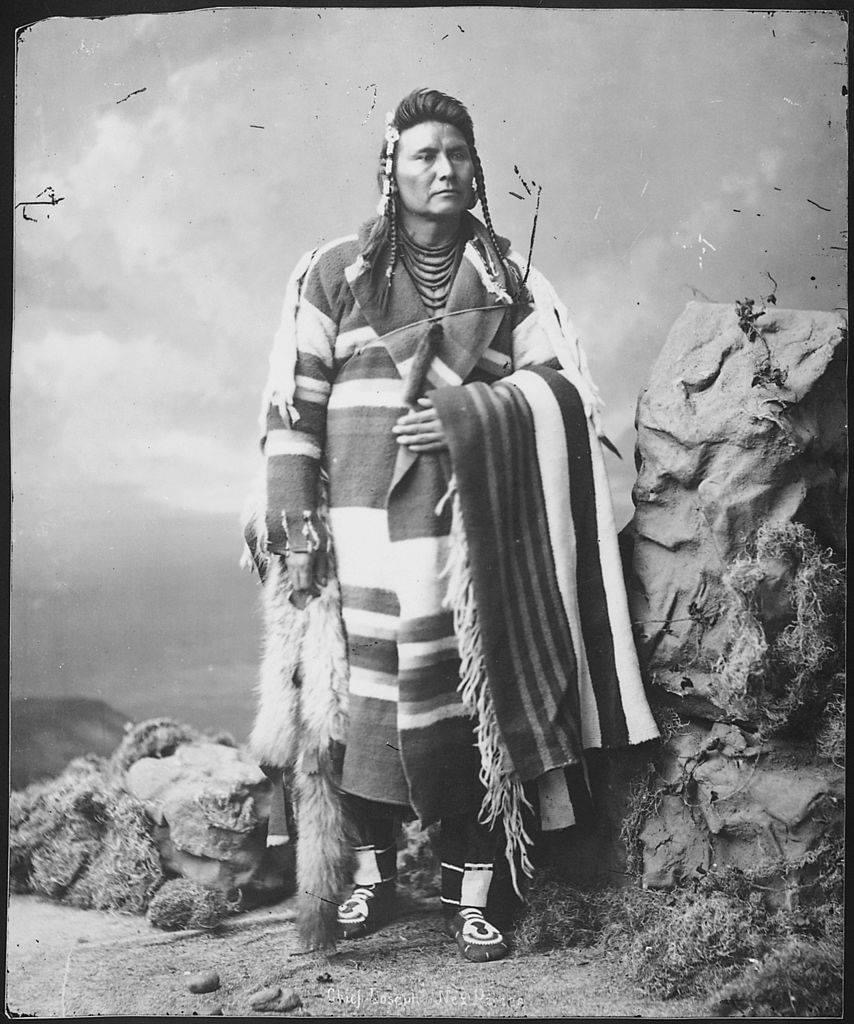
On October 5, 1877, the tragic flight of the Nimíipuu, or Nez Perce, ended at Montana’s Bear Paw Mountains, about 40 miles from the Canadian border. For 126 days, non-treaty Nez Perce families had traveled more than 1,170 miles through Idaho, Wyoming, and Montana, resisting the U.S. government’s effort to force them from their homelands onto a reservation in Idaho.
After a five-day battle and siege, Chief Joseph surrendered with the remaining members of his band. Their leaders had been killed, their people were exhausted, and cold and hunger threatened the children and families still sheltering in the hills. Some Nez Perce nevertheless escaped and reached Canada.
Joseph is remembered for the words traditionally attributed to him at Bear Paw: “I am tired of fighting. … The little children are freezing to death. … My heart is sick and sad. From where the sun now stands, I will fight no more forever.” The exact setting and transmission of the speech have been debated, but its meaning has endured as an expression of grief, endurance, and the devastating human cost of U.S. westward expansion and forced removal.
Today, the surrender at Bear Paw remains one of the most painful and enduring moments in the history of the Nez Perce War—a testament not to a simple ending, but to the survival of a people uprooted from their homeland.
