
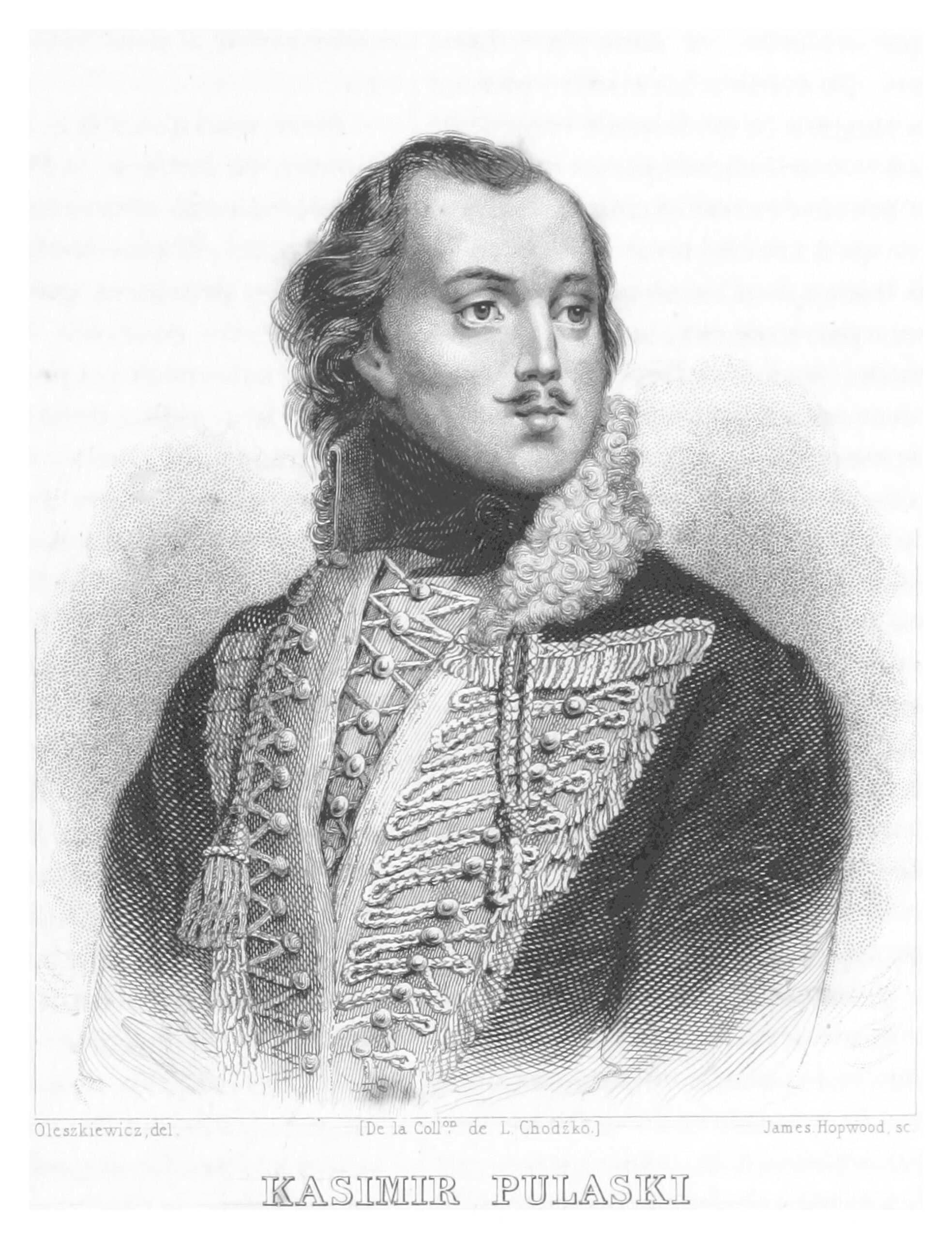
On October 9, 1779, Casimir Pulaski, a Polish nobleman and Continental Army cavalry commander, was mortally wounded during the Siege of Savannah, Georgia. In the failed Franco-American assault on British-held Savannah, Pulaski rode forward amid intense fire, reportedly attempting to rally disordered Allied forces. He was struck by grapeshot and carried from the battlefield with a severe wound. According to the traditional account, he died two days later aboard the American vessel Wasp, becoming an enduring symbol of Polish support for the American Revolution and a figure often remembered as the “Father of the American Cavalry.” The exact details of Pulaski’s death and burial remain disputed, though the account of his death aboard the Wasp is the best-known version.
The attack on Savannah demonstrated both the strategic stakes of the Revolutionary War and the importance of the French alliance. French troops and officers, together with foreign volunteers such as Pulaski, brought manpower, experience, and military expertise to the struggle against Britain. Pulaski’s service in the South also underscored the significant role foreign-born officers played in building and leading Continental forces.
Pulaski’s mortal wounding marked the human cost of the unsuccessful effort to retake Savannah. The Franco-American assault failed to dislodge the British, who retained the city until 1782. Yet Pulaski’s final campaign remains a lasting reminder that the American Revolution drew support—and sacrifice—from people far beyond the future United States.
