
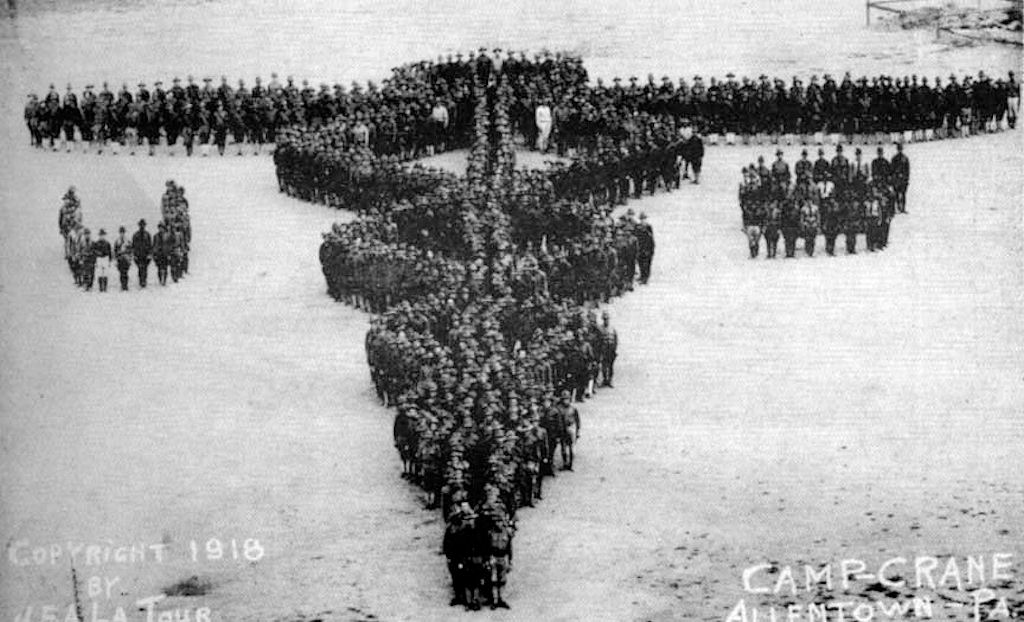
On July 24, 1918, more than 1,000 recruits of the U.S. Army Ambulance Service stood in perfect formation at Camp Crane in Allentown, Pennsylvania, creating a massive human caduceus. The photograph, taken from above, was intended as a symbol of discipline, unity, and the vital medical mission these young men would soon carry to the battlefields of Europe. It was a powerful piece of wartime imagery — a living emblem of American humanitarian commitment during World War I.
Yet within weeks, the same men who formed that symbol found themselves fighting a different kind of war. The 1918 influenza pandemic swept through Camp Crane’s crowded barracks, turning the training ground into a quarantined hospital. Many recruits who had volunteered to save lives overseas became patients themselves, confronting a microscopic enemy far deadlier than any they had yet encountered. The human caduceus endures as both a patriotic image and a haunting reminder of how quickly symbols can become realities.
