
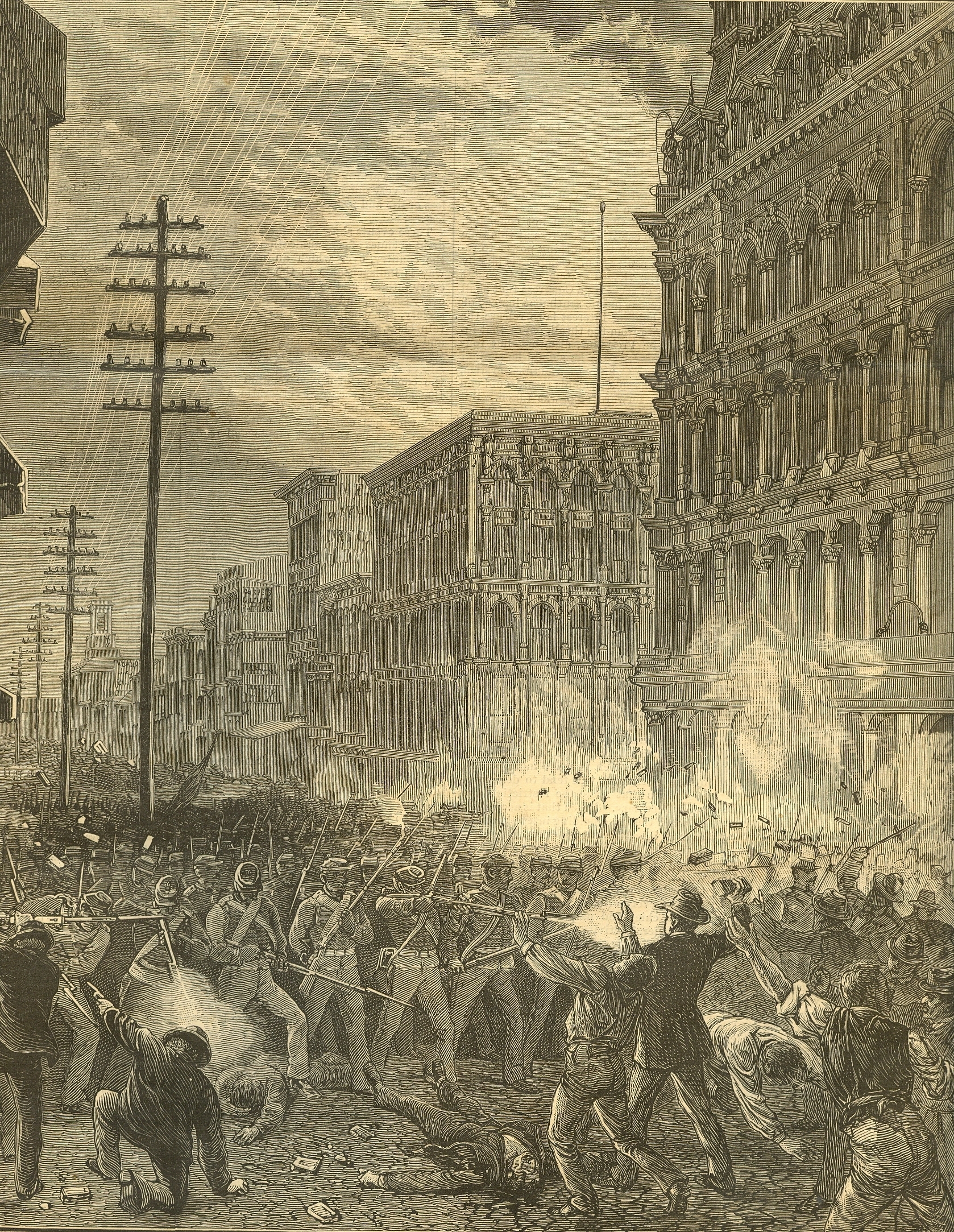
The Great Railroad Strike of 1877 began in Martinsburg, West Virginia, but its fury radiated outward within days. By July 20, Baltimore was ablaze — literally and figuratively. As the Maryland militia marched toward Camden Station, thousands of outraged citizens blocked their path. Stones flew. Militiamen opened fire, killing ten civilians, while rail cars and nearby buildings burned in the chaos. What began as a local protest over corporate wage cuts rapidly escalated into a national reckoning, with Baltimore becoming the country’s boiling point.
The violence fundamentally reshaped how American governments and urban planners understood civil unrest. The deployment of federal troops to suppress a domestic strike marked a turning point, prompting major cities to construct massive, fortress‑like National Guard armories in the heart of their commercial districts. Built with thick stone walls and narrow rifle‑slit windows, these urban strongholds were designed to intimidate working‑class populations and prevent future uprisings from threatening critical corporate infrastructure.
Image: Harper’s Weekly engraving depicting the unrest of July 20, 1877, as the Maryland National Guard’s Sixth Regiment advanced westward through downtown Baltimore, clashing with civilians along Baltimore Street in a tense push toward Camden Station via Wikimedia Commons, public domain
