
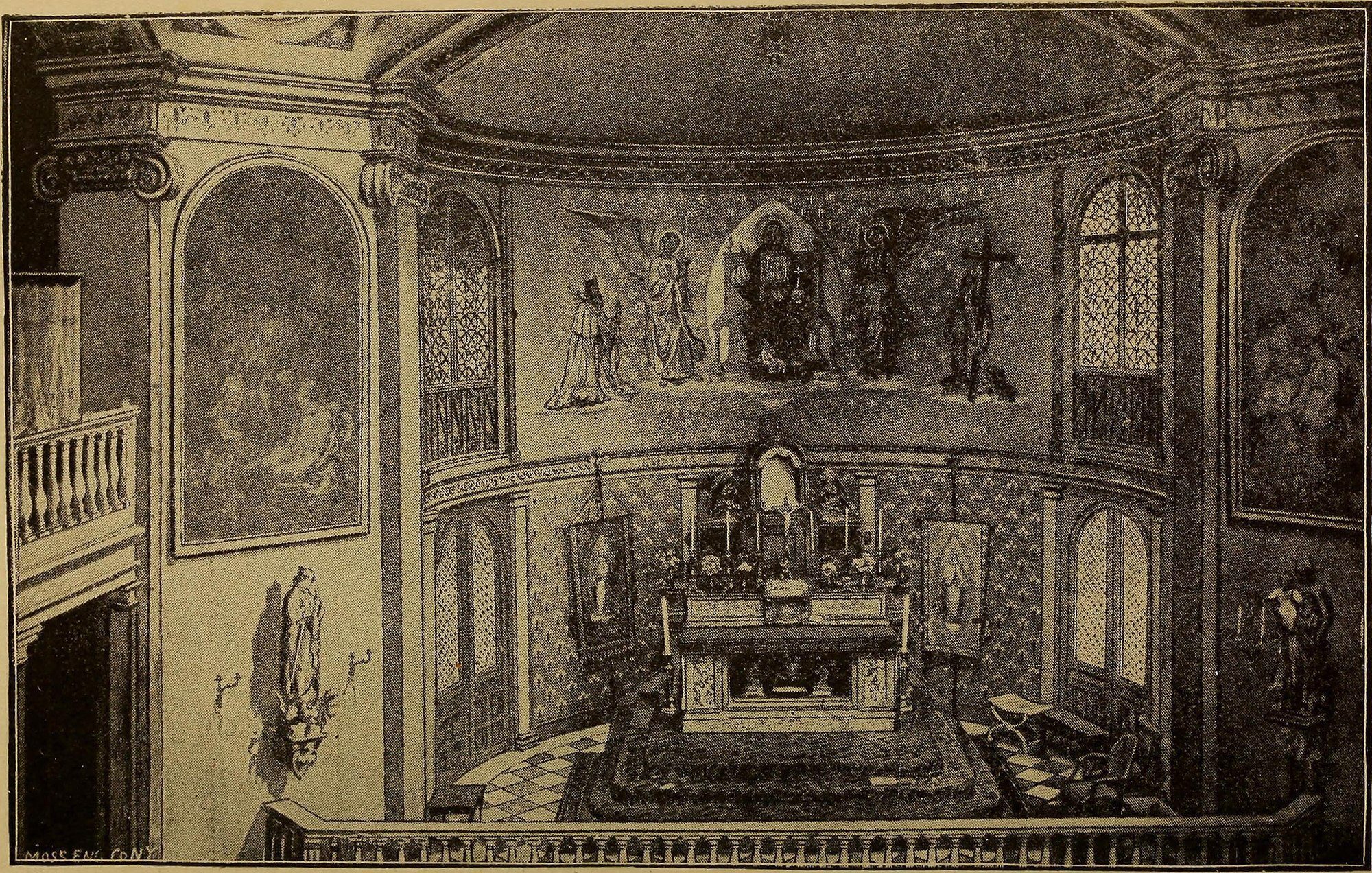
The interior of St. Mary’s Chapel at Lulworth Castle in Dorset, England, where John Carroll of Maryland was consecrated on August 15, 1790, to serve as the first Roman Catholic bishop in the United States.
Carroll’s historic consecration on August 15th was a monumental, deeply significant milestone that officially established the independent institutional framework for the Catholic Church within the newborn United States. Prior to 1790, American Catholics had operated under the remote, highly restrictive jurisdiction of church authorities in London, a subordinate arrangement that grew increasingly untenable following the victory of the Revolutionary War. By securing formal papal approval to serve as the nation’s premier bishop, Carroll successfully severed these colonial ties, choosing to establish his central diocese in Baltimore, Maryland.
A trusted friend to George Washington and a passionate defender of the Enlightenment ideals of religious liberty, Carroll spent his long episcopate working tirelessly to prove that a deep commitment to the Catholic faith was perfectly compatible with the democratic principles of American republicanism. He rejected the traditional, European style of state-mandated religion, choosing instead to champion a vernacular liturgy and founding Georgetown University to train an educated, independent American clergy. His quiet, determined leadership turned a small, widely distrusted religious minority into a stable, highly patriotic institutional anchor that would permanently shape the educational and charitable landscape of the young republic.
