
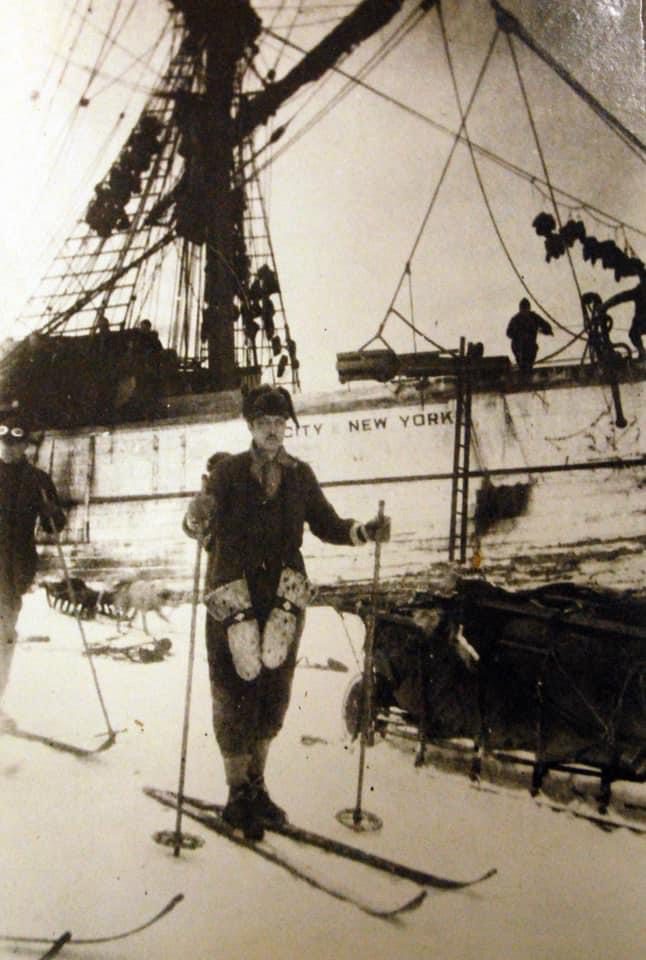
On August 25, 1928, the wooden, ice‑reinforced barquentine City of New York departed the docks of Hoboken, New Jersey, beginning Commander Richard E. Byrd’s First Antarctic Expedition. The voyage marked the start of a bold scientific effort to conduct the first large‑scale aerial reconnaissance of the Ross Ice Shelf and the largely unmapped interior of Antarctica.
Byrd selected a thick‑hulled wooden vessel capable of resisting the crushing pressure of pack ice, a traditional polar design that complemented the expedition’s modern aviation ambitions. After months at sea, the ship reached the Ross Ice Shelf in December 1928, where Byrd’s team established the seasonal base known as Little America, creating a secure platform for long‑range scientific flights.
The expedition fused cutting‑edge aviation with classic geographic exploration. Byrd’s multi‑engine aircraft conducted extensive aerial photography and surveying, while newly developed long‑distance radio systems maintained steady communication with the outside world — a breakthrough in polar operations. These innovations accelerated the pace of Antarctic discovery and demonstrated how air power and radio could transform exploration of the world’s most remote continent.
The departure of City of New York stands as a milestone in international exploration history, capturing the logistical precision and technological ambition required to push human understanding deep into the Antarctic frontier.
Image via Wikimedia Commons, public domain.
