
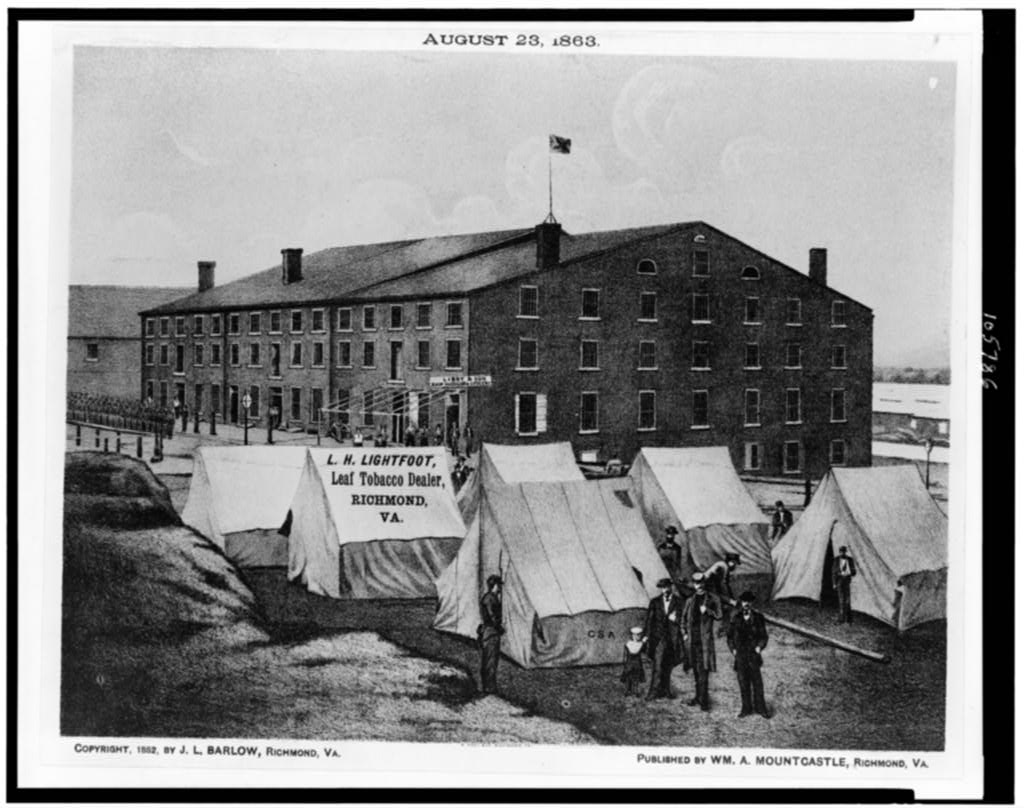
A photograph taken on August 23, 1863, documents the bleak exterior of Libby Prison in Richmond, Virginia, during the height of the American Civil War. Before the outbreak of hostilities, the three-story brick structure had served as a prominent local tobacco warehouse, but it was hastily converted by Confederate authorities into an infamous detention facility exclusively for captured Union officers.
The grim documentation on August 23rd captured a tragic milestone in the breakdown of Civil War prisoner exchange protocols, which led to severe overcrowding across both Northern and Southern camps. By late summer of 1863, Libby Prison had vastly exceeded its maximum capacity of 1,000 inmates, packing thousands of officers into uninsulated, open rooms with minimal ventilation. The lack of proper sanitation, clean drinking water, and adequate food supplies caused a catastrophic wave of disease and malnutrition that claimed the lives of hundreds of Union soldiers within its walls.
The stark image of the converted warehouse stood as a somber monument to the devastating human cost and systemic logistical failures of irregular partisan and total warfare. The harsh conditions inside the facility eventually sparked one of the most daring jailbreaks in military history the following winter, when over a hundred officers successfully tunneled out into the Richmond streets. The historic site remains a powerful reminder of the deep scars left by the sectional conflict, illustrating the profound fragility of human rights when civil governance completely collapses during a total war of attrition.
Image via LOC, no known restrictions.
