
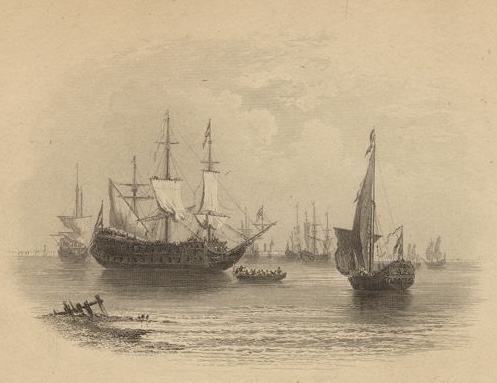
On August 22, 1654, a Jewish pioneer named Jacob Barsimson stepped off the Dutch merchant ship Pear Tree onto the docks of New Amsterdam, becoming the first documented Jewish immigrant to permanently settle in what would become the United States. Arriving entirely alone with little more than his trade skills, his arrival marked the quiet opening chapter of American Jewish history.
Barsimson’s landing on August 22nd was a bold leap of human faith that challenged the rigid social and religious boundaries of the early colonial world. Escaping the escalating threat of religious persecution and economic restriction in Europe, he sought a brand-new home within the bustling fur-trading hub managed by the Dutch West India Company. Though he faced immediate, cold discrimination from local Governor Peter Stuyvesant—who aggressively tried to halt non-Calvinist immigration—Barsimson fiercely petitioned for his civil rights, winning the legal authority to live, trade, and stand guard alongside his fellow colonists.
His unyielding determination laid down the precise architectural stepping stones for a historic wave of twenty-three Sephardic refugees who arrived just weeks later, creating the foundational cornerstone for religious freedom in North America. By refusing to let bureaucratic bigotry erase his economic independence, Barsimson successfully transformed a restrictive corporate outpost into an early embassy of cultural pluralism. His historic arrival remains a permanent, inspiring monument to the immigrant spirit, proving that the earliest blueprints of American identity were forged by ordinary people who fought for the right to be truly seen.
